

Note: This article contains affiliate links. If you click on these links and make a purchase, I may earn a small commission at no extra cost to you. This helps support my research and content. Read my full affiliate disclosure here.
If you need a strong electric pressure washer for cleaning driveways, decks, siding, or large patio furniture, the right choice changes how quickly and safely tasks get done. You want reliable pressure, compatible nozzles, solid build quality, and a unit that stands up to regular outdoor use without fuss. This guide narrows the field to six shortlisted Strong electric pressure washers that suit intensive home and light-commercial cleaning. We focus on real-garden performance: how the machines handle dirt, detergents, and varied surfaces, plus ease of hookup and storage. Read on for the evaluation criteria we used and a clear idea of which features matter most for your yard.
Top Picks at a Glance
| Best Quality Built to a higher standard if you want something more solid | EGO POWER+ HPW3200 3200 PSI Cordless Pressure Washer | 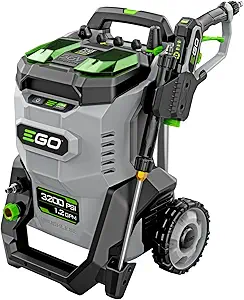 |
| Best Value The sweet spot between price and what you get | Westinghouse ePX3100 Electric Pressure Washer (2300 PSI, 1.76 GPM) |  |
| Best Budget The cheapest option that still gets the job done reliably | LWQ S5 Portable Electric Pressure Washer with 4 Quick-Connect Nozzles and Foam Cannon |  |
| Highest Rated A top-rated pick with lots of positive feedback | commowner 5000 PSI Electric Pressure Washer with Adjustable Pressure & Foam Cannon |  |
| Most Popular A crowd favorite that many people choose with confidence | Westinghouse ePX3500 Electric Pressure Washer (2500 PSI, 1.76 GPM) |  |
| Best Seller A high-volume bestseller chosen again and again | Westinghouse WPX3000e Electric Pressure Washer (3000 PSI, 1.76 GPM) |  |
EGO POWER+ HPW3200 3200 PSI Cordless Pressure Washer

| Power Source | Battery Powered |
|---|---|
| Maximum Pressure | 3200 psi |
| Maximum Flow Rate | 2 gpm |
| Hose Length | 7.62 meters |
| Tank Volume | 2 gallons |
The EGO POWER+ HPW3200 is a cordless electric pressure washer designed for heavy-duty home use where gas-level performance is desired without fumes or a cord. It pairs two 56V ARC Lithium batteries (sold separately) to reach up to 3200 PSI and a maximum 2.0 GPM for fast removal of dirt from driveways, patios, siding, and vehicles. The wand-integrated display and handheld pressure control let you switch ECO, High, and Turbo modes and monitor battery status while working. Setup is straightforward with quick-connect hose and wand fittings and a siphon hose option so you can draw from a fresh water source. A telescopic handle and included 25-foot high-pressure hose plus multiple nozzles and a foam cannon make the unit versatile and easy to move around the yard. Expect up to 60 minutes runtime with two 6.0Ah batteries, but note batteries and charger are not included with the base unit so peak runtime requires buying compatible batteries. The unit is heavier than small electric models and better suited to users prioritizing cordless power and high cleaning performance over lower upfront cost.
Best for: A performance-focused homeowner or DIYer who wants near-gasoline cleaning power in a cordless package for regular heavy cleaning tasks around driveways, decks, and vehicles.
Less Ideal for: Budget buyers who want an all-in-one kit without buying batteries or occasional users who prefer a lighter, lower-cost electric model.
- Delivers up to 3200 PSI and up to 2.0 GPM for strong cleaning power
- Cordless operation with wand display and selectable ECO/High/Turbo modes for control
- Portable design with telescopic handle and 25-foot hose for easy maneuvering
- Includes multiple nozzles, foam cannon, siphon hose and quick-connect fittings for versatile cleaning
- Can run up to 60 minutes with two 6.0Ah ARC batteries for extended jobs
- Batteries and charger are not included with the base unit so runtime requires additional purchase
- Unit is relatively heavy compared with entry-level electric models
Verdict: Choose the HPW3200 if you want cordless, near-gasoline cleaning power with mode control and long runtime for demanding outdoor cleaning jobs.
Westinghouse ePX3100 Electric Pressure Washer (2300 PSI, 1.76 GPM)

| Power Source | ac |
|---|---|
| Maximum Flow Rate | 1.76 gpm |
| Maximum Pressure | 2300 psi |
| Hose Length | 25 feet |
| Tank Volume | 20 fluid ounces |
The Westinghouse ePX3100 is a compact electric pressure washer built to tackle driveway, deck, fence and vehicle cleaning without the complexity of a gas unit. It delivers a 2300 psi maximum pressure and up to 1.76 gpm at the lowest pressure, with a rated operating output of about 1900 psi and 1.24 gpm for sustained cleaning. The unit includes a pro-style steel wand and five quick-connect nozzles including a turbo tip plus an onboard 20 oz detergent tank for foam cleaning. Mobility is a focus: a low center of gravity, four quick-lock wheels and 360 degree steering reduce tipping and make it easy to roll around the yard, while a 25 foot easy-coil nylon-braided hose gives reach without too much fuss. A Total Stop System shuts the pump off when the trigger is released to save energy and reduce wear. Trade-offs are typical for electric models: power and flow lag behind larger gas machines and the hose length and detergent tank limit very large jobs, but for routine strong household cleaning this model balances performance, storage size and user-friendly features well.
Best for: Buyers who want a strong, easy-to-store electric washer for regular home maintenance—cleaning driveways, patios, decks, cars and fences—without the noise and upkeep of gas models.
Less Ideal for: Commercial users, contractors, or anyone who needs continuous high-flow, long-duration cleaning for large properties should consider higher-capacity gas or professional units.
- High peak pressure (2300 psi) and usable rated output (~1900 psi) for strong cleaning on common outdoor surfaces
- Compact, low center of gravity design with four-wheel 360° steering reduces tipping and improves maneuverability
- Includes five quick-connect nozzles and a pro-style steel wand for versatile spray patterns and reach
- Onboard 20 oz detergent tank and 25 ft easy-coil hose simplify detergent use and allow decent working distance
- Total Stop System automatically stops the pump when not in use to conserve energy and extend pump life
- Electric motor/flow (1.24 gpm rated) is less capable than gas units for very large or industrial cleaning tasks
- Detergent tank and hose length limit continuous heavy-duty jobs without refills or extensions
Verdict: A well-balanced electric washer that delivers strong cleaning power and easy mobility for homeowners who want efficient, low-maintenance outdoor cleaning.
LWQ S5 Portable Electric Pressure Washer with 4 Quick-Connect Nozzles and Foam Cannon

| Power Source | ac |
|---|---|
| Maximum Flow Rate | 2.5 gpm |
| Maximum Pressure | 2030 psi |
| Tank Volume | 2.5 gallons |
| Hose Length | 6.3 meters |
The LWQ S5 is a compact, budget-friendly electric pressure washer designed for routine outdoor cleaning tasks. It delivers a maximum pressure of 2030 psi and a 2.5 gpm flow rate, which is strong enough for driveways, patios, fences, cars, RVs and siding. The unit includes four quick-connect metal nozzles covering 0°, 15°, 25° and 40° spray patterns plus a foam cannon for detergent application, letting you switch between targeted stripping and wider rinsing quickly. Practical touches include a 2.5 gallon tank, a 6.3 meter hose, a power-cord hook, nozzle holders and a dual-roller design with an anti-tip base for easier positioning and storage. Because it runs on AC power and has a modest tank and hose, it works best near an outdoor outlet or using a bucket/faucet feed rather than long off-grid jobs. Expect typical limitations of entry-level electric washers: shorter runtime between refills and less torque for extremely stubborn stains compared with larger gas or commercial units. For straightforward home maintenance it offers strong cleaning performance for the price, with easy setup and storage.
Best for: Buyers who want a capable, affordable electric washer for regular home and vehicle cleaning and prioritize straightforward setup, compact storage and value over industrial power.
Less Ideal for: Users needing long off-grid operation, heavy commercial use, or the highest continuous torque for deeply embedded stains should consider a larger gas or commercial model.
- High peak pressure (2030 psi) and 2.5 gpm flow for effective home cleaning
- Four quick-connect metal nozzles plus foam cannon for versatile spray patterns and detergent use
- Long hose (6.3 meters) and included nozzle holders improve reach and organization
- Compact design with power-cord hook and dual rollers for easier storage and mobility
- Runs on AC power so performance is tied to nearby outlet or water source
- 2.5 gallon tank limits uninterrupted run time for large jobs
Verdict: A cost-conscious choice that delivers strong residential cleaning power and useful accessories for routine driveway, deck and vehicle maintenance.
commowner 5000 PSI Electric Pressure Washer with Adjustable Pressure & Foam Cannon

| Maximum Pressure | 5000 psi |
|---|---|
| Maximum Flow Rate | 4 gpm |
| Power Source | ac |
| Hose Length | 23 feet |
The commowner 5000 PSI electric pressure washer is built for heavy-duty home and light professional cleaning where strong, adjustable pressure and safety matter. It produces up to 5000 PSI and 4 gallons per minute while allowing pressure adjustment for gentler tasks like cars or screens. The unit includes a GFCI-equipped cord for electrical safety, a total-stop feature that shuts the pump when you stop spraying to reduce wear, a 23 foot hose, four quick-connect nozzle tips, and a 500 ml foam cannon for detergent work. Setup is straightforward with standard 1/4" quick-connect fittings so you can add surface cleaners or extension wands. Practical limitations include its weight and bulk compared with compact consumer models and the need to respect safety guidance for high-pressure streams that can injure people or damage delicate surfaces. Buyers should also be prepared to manage an AC power connection and hose routing for longer-reach jobs.
Best for: Buyers who prioritize a strong, dependable electric washer for frequent heavy cleaning and value built-in electrical safety and serviceable accessories.
Less Ideal for: People who need a lightweight, highly portable unit for occasional small jobs or those who cannot run a dedicated AC power connection outdoors.
- High maximum pressure (up to 5000 PSI) and 4 GPM flow for fast heavy-duty cleaning
- Adjustable pressure range suitable for both tough surfaces and more delicate jobs
- Built-in GFCI on the power cord for increased safety when working in wet areas
- Universal 1/4" quick-connect fittings plus four nozzle tips and foam cannon for versatile cleaning tasks
- Relatively heavy and bulky compared with compact consumer electric washers
- Requires an AC power source and careful hose management for extended reach
Verdict: Choose this unit if you want a powerful, safety-minded electric pressure washer that handles tough cleaning jobs reliably.
Westinghouse ePX3500 Electric Pressure Washer (2500 PSI, 1.76 GPM)

| Power Source | ac |
|---|---|
| Maximum Flow Rate | 1.76 gpm |
| Maximum Pressure | 2500 psi |
| Hose Length | 25 feet |
| Tank Volume | 20 fluid ounces |
The Westinghouse ePX3500 is a compact electric pressure washer built to tackle driveways, decks, vehicles and outdoor furniture with professional-style power. It produces up to 2500 max PSI and 1.76 max GPM (with a 2000 PSI rated operating point at 1.2 GPM), and comes with a pro-style steel extendable wand and five quick-connect nozzles that cover everything from concentrated scrubbing to wide rinsing and a soap applicator for detergent use. Practical features include a 25 foot easy-coil hose, an onboard 20 ounce detergent tank and four quick-lock wheels plus a low center of gravity for anti-tipping maneuverability. The pump's Total Stop System reduces wear by stopping the motor when the trigger is released. At about 19 pounds and a compact footprint it stores easily and moves around the yard without much effort. Limitations to note are that it is an electric unit so you need an outdoor power outlet and it provides less continuous flow than larger gas washers, which can make long heavy-duty cleaning runs slower. For most homeowners needing strong, convenient cleaning without gas maintenance, this model balances power and portability well.
Best for: Homeowners who want near-professional cleaning strength in a compact, easy-to-maneuver electric unit and who prioritize reliable performance backed by widespread customer approval.
Less Ideal for: People who need extended high-flow cleaning for large commercial surfaces or who require untethered operation away from electrical outlets should look at higher-capacity gas models.
- Strong peak pressure and respectable flow for an electric model (2500 PSI, 1.76 GPM)
- Five quick-connect nozzles and extendable steel wand let you match spray pattern to the task
- Onboard 20 oz soap tank and 25 ft easy-coil hose for convenient detergent use and reach
- Anti-tipping four-wheel design and Total Stop System improve stability and pump longevity
- Electric power limits continuous flow and mobility compared with gas models
- Smaller detergent tank and lower GPM mean longer runs for very large surfaces
Verdict: A compact, well-featured electric washer that delivers strong cleaning power and easy handling for homeowners who want professional-level results without gas maintenance.
Westinghouse WPX3000e Electric Pressure Washer (3000 PSI, 1.76 GPM)

| Power Source | ac |
|---|---|
| Maximum Flow Rate | 1.76 gpm |
| Maximum Pressure | 3000 psi |
| Hose Length | 25 feet |
| Tank Volume | 0.45 gallons |
The Westinghouse WPX3000e is an electric pressure washer built to handle tough residential cleaning tasks without the fuss of gas engines. It produces up to 3000 max PSI (2600 rated PSI at typical flow) and up to 1.76 GPM at its lowest pressure, driven by a 120V AC induction motor and a maintenance-free axial piston pump. The unit includes a 25-foot abrasion-resistant hose, five quick-connect nozzles (including a turbo and soap tip), a 0.45 gallon onboard soap tank, and 10-inch never-flat wheels for easy maneuvering. In practice it cleans driveways, decks, siding, fences and cars effectively while the onboard soap tank and accessories let you switch between degreasing and rinsing quickly. The electric motor and auto-stop pump reduce upkeep compared with gas models and the 35-foot GFCI power cord improves reach. Expect a fairly sizable, moderately heavy machine that is best moved on its wheels rather than carried, and note that electric power limits run time and pressure compared with commercial gas washers.
Best for: Buyers who want a powerful, low-maintenance electric washer for regular home projects like driveways, decks, siding and cars and who prioritize reliability and safety over maximum commercial-grade output.
Less Ideal for: Users who need extended run times or the absolute highest continuous pressure for commercial jobs should consider gas models instead.
- High cleaning power with 3000 max PSI and up to 1.76 GPM for stubborn dirt
- Maintenance-free axial 3-piston pump and electric motor reduce routine upkeep
- Comes with five quick-connect nozzles plus an onboard 0.45 gallon soap tank for versatile cleaning
- Long reach and mobility thanks to a 25 ft abrasion-resistant hose, 35 ft GFCI cord, and 10" never-flat wheels
- Heavier and bulkier than compact electric units so it relies on wheels for transport
- Electric supply limits peak continuous pressure compared with gas-powered commercial washers
Verdict: A strong, low-maintenance electric pressure washer that delivers near-commercial cleaning power while keeping operation simple and reliable for homeowners.
Choosing the Right Strong Electric Pressure Washer: Key Factors to Consider
Pressure and Flow Rate
Pressure (measured in PSI) determines how effectively a machine blasts away stubborn dirt, while flow rate (GPM) controls how quickly larger areas rinse clean. High pressure with low flow can etch delicate wood or paint, and high flow with low pressure may struggle on oil stains. Balancing PSI and GPM matters because real outdoor cleaning often requires bursts of force plus steady rinsing to remove residue.
Consider the jobs you do most often. Concrete and brick usually benefit from higher PSI and moderate flow, while deck boards and siding favor lower pressure with higher flow or variable nozzle options. Look for models that specify sustained pressure under load rather than only peak numbers.
Pump Construction and Longevity
The pump is the heart of an electric pressure washer. Metal, brass, or ceramic pump components typically last longer under heavy use than cheaper plastic parts. A well-built pump resists overheating and maintains pressure without frequent service. Pay attention to whether the pump is oil-lubricated or maintenance-free, and whether homeowners can access common wear parts for repair.
Long-term costs and downtime are tied to pump durability. If you plan to use the washer seasonally but intensively, choose a construction that tolerates occasional exposure to grit and allows straightforward winterization and storage.
Nozzles, Spray Patterns, and Detergent Delivery
A variety of spray tips and an adjustable nozzle let you tailor the spray angle and force to the task, reducing the risk of surface damage. Wide-angle nozzles are best for rinsing large areas quickly; narrow or turbo patterns handle stubborn grime. Integrated detergent tanks or dedicated injector systems simplify soap application and improve cleaning efficiency on greasy surfaces.
Check compatibility of accessories and whether quick-connect fittings are standard. Versatile nozzle setups reduce the need for extra tools and make it easier to switch between gentle and aggressive cleaning while working around plants and delicate finishes.
Hose, Cord, and Mobility
Reach determines how often you need to move the unit and whether you need extension accessories. Longer high-pressure hoses and longer power cords reduce repositioning, but they add weight and can be harder to manage. Look for kink-resistant hoses, secure hose reels or storage points, and cord management to keep work safe and efficient.
Mobility features like wheels, compact frames, and balanced weight distribution affect how easily you can move the washer across gravel, steps, and uneven ground. For rooftop or multi-level tasks, factor in hose drag and the convenience of a lightweight wand.
Ease of Use and Maintenance
Everyday usability includes simple start-up, clear controls, and accessible filters or strainer screens. Quick-start power connections, visible pressure gauges, and easy-to-empty detergent reservoirs save time on regular jobs. Maintenance tasks like cleaning inlet filters, draining the pump for winter, and replacing common seals should be straightforward.
Time spent on maintenance affects ownership satisfaction. Choose models with intuitive layouts and user-serviceable parts to avoid expensive repairs or early replacement.
Safety Features and Noise
Safety features such as trigger locks, thermal shutoff, and automatic shut-down under no-flow conditions protect both user and motor. Lower noise output is important when working in residential areas to avoid disturbing neighbors and to make longer cleaning sessions more tolerable. Well-designed guards and stable feet reduce tipping risk when moving across sloped driveways.
Assess the balance between protective features and convenience so essential safeguards do not make the unit cumbersome to use on common tasks.
Which Surfaces Benefit From Strong Electric Pressure
Different outdoor surfaces respond differently to pressure washing. Concrete, mortar, and stone tolerate higher pressure and benefit from narrower spray tips to dislodge ingrained dirt and algae. Wood decking and painted siding need gentler settings and wider spray patterns to avoid surface damage.
Match nozzle choice and pressure to the surface. When in doubt, test on an inconspicuous area and move the wand with steady passes rather than holding it in one spot.
- Concrete and masonry: higher PSI, 15 to 25 degree tips
- Wood decks and fences: lower PSI, 25 to 40 degree tips
- Painted surfaces: low pressure, long distance, gentler spray
How to Use Detergent Safely Around Plants
Detergents speed cleaning but can harm nearby plants if misapplied. Use plant-friendly cleaners when possible and apply detergent at lower pressure and from a greater distance. Rinse plants with clear water after the cleaning task to reduce residue.
Position sprayer flow away from beds and sensitive greenery, and consider covering or wetting plants first to reduce absorption. Biodegradable or low-alkaline detergents are usually gentler for garden areas.
- Test detergent in a small area first
- Rinse plants immediately after exposure
- Use targeted application to avoid overspray
Winter Storage and Winterization Tips
Cold weather can damage pumps and hoses if water is left inside. Before storing for winter, flush detergent, run clean water through the system, and follow any manufacturer-specified drain procedures. Add pump antifreeze where recommended and store the unit in a dry, frost-free space.
Coil hoses without tight kinks and keep connectors dry to prevent corrosion. Regularly inspect seals and O-rings after storage to catch wear before the next season.
- Flush and drain the pump and hose
- Store indoors or under a weatherproof cover
- Inspect fittings and seals before reusing
Maintaining Performance Over Time
Regular maintenance keeps a strong electric pressure washer operating near peak performance. Clean inlet strainers, check hose integrity, and replace worn tips to avoid reduced spray power. Monitoring for leaks and unusual noises helps you catch small problems early.
Keep a log of usage hours and any maintenance performed. Small preventative steps, such as replacing a worn hose before it bursts, reduce downtime and help the pump last longer.
- Clean inlet filters monthly during heavy use
- Replace nozzle tips when spray pattern degrades
- Service the pump according to manufacturer guidance
Noise Considerations for Neighborhood Use
While electric pressure washers tend to be quieter than gas models, higher-powered electric units can still generate notable sound levels. Consider time-of-day restrictions in residential areas and choose models with quieter motors or additional insulation if noise is a concern.
Use shorter cleaning sessions or scheduled breaks to limit continuous noise. Soft-start features and insulated housings both reduce perceived loudness during operation.
- Check decibel ratings where available
- Prefer insulated housings for calmer operation
- Limit work to daytime hours to be neighbor-friendly
How We Chose the Best Strong Electric Pressure Washer
We looked for Strong electric pressure washers that deliver consistent, usable power for common outdoor chores while remaining safe and manageable for homeowners. Key evaluation criteria included sustained pressure output under load, pump and motor durability, nozzle and accessory range, hose and cord length, and ease of maintenance. We prioritized units with durable pump construction and accessible service points because longevity matters when washers see frequent use on concrete and wooden surfaces. Noise levels and thermal protection features were considered for neighborhood use and longevity. We excluded lightweight consumer units that cannot sustain pressure for larger surfaces and heavy-duty gas-only models that fall outside electric capability. We also filtered out products with nonstandard fittings that make replacing hoses and nozzles difficult. The final list emphasizes machines that balance strong cleaning power with practical features like detergent delivery, quick-connect fittings, and repairable pump elements.
FAQ
Can a strong electric pressure washer handle oil stains on a driveway?
Often yes. High-pressure spray combined with a degreasing detergent and a stiff brush usually lifts oil stains. Success depends on how long the stain has been present and the surface porosity, so multiple treatments may be necessary.
Do electric pressure washers require special outlets or wiring?
Most home models run on standard household outlets, but high-power units may need a dedicated circuit or a heavy-duty extension rated for outdoor use. Check electrical requirements before operation to avoid tripping breakers.
How do I avoid damaging wood siding or deck boards?
Use a wider spray pattern, keep the wand at a greater distance, and test a small area first. Avoid holding the spray in one spot and use detergent appropriate for wood when needed to reduce the need for extremely high pressure.
What maintenance keeps a pressure washer reliable year after year?
Regularly clean inlet strainers, flush detergent from the system, inspect hoses and fittings for wear, and follow any recommended pump service intervals. Winterize the unit if you live in freezing climates to protect internal components.
Is it safe to use a pressure washer near plants and garden beds?
It depends. Low-pressure rinses with plant-safe detergents and immediate rinsing reduce risk. Avoid direct high-pressure spray on foliage and protect sensitive plants with covers when possible.
Final Verdict
Pick a Strong electric pressure washer that matches your most common tasks and site conditions. Prioritize sustained pressure and a robust pump if you clean large paved areas frequently, or favor longer hose length and gentler nozzle options if you mostly clean siding, decks, and furniture. Balance mobility and maintenance needs: a slightly heavier unit with a durable pump will often outlast a lightweight model built for occasional use. With the right tradeoffs in pressure, nozzle versatility, and serviceability, you can choose a machine that delivers reliable, efficient cleaning season after season.
