

Note: This article contains affiliate links. If you click on these links and make a purchase, I may earn a small commission at no extra cost to you. This helps support my research and content. Read my full affiliate disclosure here.
A durable raised garden bed changes how you garden by cutting maintenance and protecting soil structure season after season. When you pick a long-lasting bed, you get steadier moisture control, fewer repairs, and less time wrestling with collapsed corners or rotted boards. This guide looks at seven shortlisted durable raised garden beds that perform in a range of yards and patios. We evaluated construction materials, joint and corner strength, drainage, and maintenance needs to find options suited to heavy use and changing weather. Read on to compare the top contenders and see which build characteristics will matter most for your site.
Top Picks at a Glance
| Best Overall The best all-around choice for most situations | Annoell 8x2x1.5 ft Galvanized Metal Raised Garden Bed — 18" Tall |  |
| Best Quality Built to a higher standard if you want something more solid | DIIYIV Galvanized Metal Raised Garden Bed Kit (2‑Pack) |  |
| Best Value The sweet spot between price and what you get | PASAMIC 8 x 4 x 1 ft Vinyl Raised Garden Bed |  |
| Best Budget The cheapest option that still gets the job done reliably | Utopia Home Galvanized Raised Garden Bed Kit, 4 x 2 x 1 ft |  |
| Highest Rated A top-rated pick with lots of positive feedback | Kozyard 98.9" Raised Garden Bed Kit with HDPE Panels and Aluminum Posts |  |
| Most Popular A crowd favorite that many people choose with confidence | Best Choice Products 72 x 24 x 30 in Fir Wood Raised Garden Bed |  |
| Best Seller A high-volume bestseller chosen again and again | Land Guard Galvanized Raised Garden Bed Kit, 6×3×1 ft Oval Metal Planter |  |
Annoell 8x2x1.5 ft Galvanized Metal Raised Garden Bed — 18" Tall

| Capacity | 22.5 cubic feet |
|---|---|
| Material Type | Metal |
| Finish Types | Powder Coated |
| Other Special Features | Open Base, Reinforcement Rods, Rounded Safety Edges, Rust Resistant |
| Indoor Outdoor Usage | Outdoor |
This Annoell galvanized raised garden bed is a durable, metal planter kit built for season-after-season outdoor use. The corrugated Zn-Al-Mg steel panels are powder coated and reinforced with internal support rods, so the box stays straight without bulging or warping even when filled with soil. It arrives as a modular kit of panels, fasteners, and a simple screwdriver tool, and most buyers can assemble a single 8x2x1.5 ft bed in about 30 minutes. The 18 inch height suits most vegetables and reduces bending at harvest while the open-bottom design improves drainage and lets plant roots access native soil if desired. Rounded, crimped edges and stainless steel hardware make assembly safer and more durable than many sheet-metal beds. The main compromises are that it is metal, so it will warm and cool with ambient temperatures more than wood or composite, and you will need to plan soil depth and foot placement because the kit is a floor-standing, open-base design. For gardeners who want a long-lasting, low-maintenance raised bed that resists rust and keeps a neat, modular layout, this is a solid choice.
Best for: Gardners who want a durable, low-maintenance raised bed that stays straight and safe over multiple seasons and prefer a modular metal solution for vegetables and flowers.
Less Ideal for: People seeking insulated, cold-stable planters or fully contained beds for indoor use should consider wood or composite alternatives designed for thermal buffering.
- Galvanized Zn-Al-Mg steel panels with powder coating for strong rust resistance
- Internal reinforcement rods prevent bulging and keep sides straight under soil load
- 18 inch height accommodates most vegetables and reduces bending during harvest
- Rounded, crimped edges and stainless steel hardware improve safety and longevity
- Metal construction transmits temperature changes to the soil more than wood
- Open-bottom design requires planning for soil depth and ground contact
Verdict: Choose this galvanized steel raised bed if you want a safe, reinforced, and long-lasting outdoor planter that resists rust and holds up season after season.
DIIYIV Galvanized Metal Raised Garden Bed Kit (2‑Pack)

| Material Type | Metal |
|---|---|
| Finish Types | Galvanized |
| Plant or Animal Product Type | Vegetables,Flowers,Herbs,Fruits |
| Unit Count | 2 Count |
This DIIYIV kit delivers two rectangular galvanized metal planter boxes designed for outdoor raised-bed gardening. Each set assembles quickly with the supplied hardware and simple instructions so you can build planting beds without special tools. The galvanized steel construction and finished edges resist corrosion and reduce the risk of leaching compared with low-grade plastics or treated wood, which makes these beds a durable choice for growing food. The kit includes corner protection pads and polished edges to minimize cuts during use and handling. Because the panels are metal, the beds hold soil firmly and stand up to normal garden wear, but they will conduct heat and may warm the soil faster in hot sun compared with wood or composite. The low-profile height of these beds is well suited to intensive vegetable rows, herbs, or seasonal flowers but limits deep-root crops unless you stack soil or pair with deeper units. For someone who wants long-lasting, easy-to-assemble raised beds for productive planting, this kit offers strong performance and straightforward installation.
Best for: Gardeners who prioritize durability and low maintenance and want a ready-to-assemble metal raised bed for productive vegetable, herb, or flower planting.
Less Ideal for: Growers who need very deep root space or who prefer nonmetal materials to avoid soil warming in hot climates should consider taller or different-material beds.
- Galvanized steel construction resists corrosion and is suitable for growing food
- Comes as a two-piece set to provide ample contiguous planting area
- Tool-free or minimal-tool assembly with included instructions and spare screws
- Polished edges and corner pads reduce the risk of cuts during assembly and use
- Low profile limits depth for very deep-rooted crops without adding more soil or using deeper units
- Metal panels can warm soil more quickly in full sun compared with wood alternatives
Verdict: Buy this if you want a hard-wearing, easy-to-assemble galvanized raised-bed kit that delivers long-lasting planting space for productive gardens.
PASAMIC 8 x 4 x 1 ft Vinyl Raised Garden Bed

| Capacity | 239.36 gallons |
|---|---|
| Number of Levels | 1 |
| Other Special Features of the Product | Weather Resistant |
| Material Type | Vinyl |
| Indoor Outdoor Usage | Outdoor |
This PASAMIC 8x4x1 ft vinyl raised bed gives you a low-maintenance, roomy planter for vegetables, herbs, flowers, or small fruiting plants. The interlocking vinyl panels click together without tools for quick assembly, and the smooth, weather-resistant finish wipes clean and will not rot or rust like wood or metal. The open-bottom design lets roots reach native soil and improves drainage, which helps avoid standing water while keeping plants connected to ground moisture and nutrients. At 8 by 4 feet the bed creates a large, shallow planting area that is easy to reach from the edge and works well for intensive row planting or multiple containers of different crops. Because it is modular you can combine standardized panels with other PASAMIC pieces to change layout later. Limitations to note are the shallow 13.3 inch height, which is not ideal for very deep-rooted crops or for adding a very thick soil profile, and the vinyl construction can flex more than rigid composite or heavy-gauge metal under heavy loads. For gardeners wanting a durable, low-upkeep raised bed that installs quickly and keeps soil draining, this is a practical choice.
Best for: Buyers who prioritize low maintenance and quick, practical solutions for backyard vegetable and flower beds and want a durable planter they can set up without tools and adjust over time.
Less Ideal for: Growers who need very deep raised beds for large root vegetables or who prefer rigid heavy-gauge materials for permanent, high-load installations.
- Maintenance-free vinyl resists rust, rot, fading and harsh weather
- Tool-free interlocking assembly for fast setup in about five minutes
- Open-bottom design improves drainage and allows roots to access native soil
- Modular standardized panels let you expand or reconfigure layouts
- Shallow height (about 13.3 inches) limits soil depth for very deep-rooted plants
- Vinyl can be more flexible than heavy-duty metal or thick composite under heavy loads
Verdict: A fast, maintenance-free vinyl raised bed that gives a large planting area and easy tool-free setup for gardeners who want durable, low-effort beds.
Utopia Home Galvanized Raised Garden Bed Kit, 4 x 2 x 1 ft
| Capacity | 216 liters |
|---|---|
| Material Type | Alloy Steel |
| Finish Types | Powder Coated |
| Mounting Type | Floor Standing |
| Indoor Outdoor Usage | Outdoor |
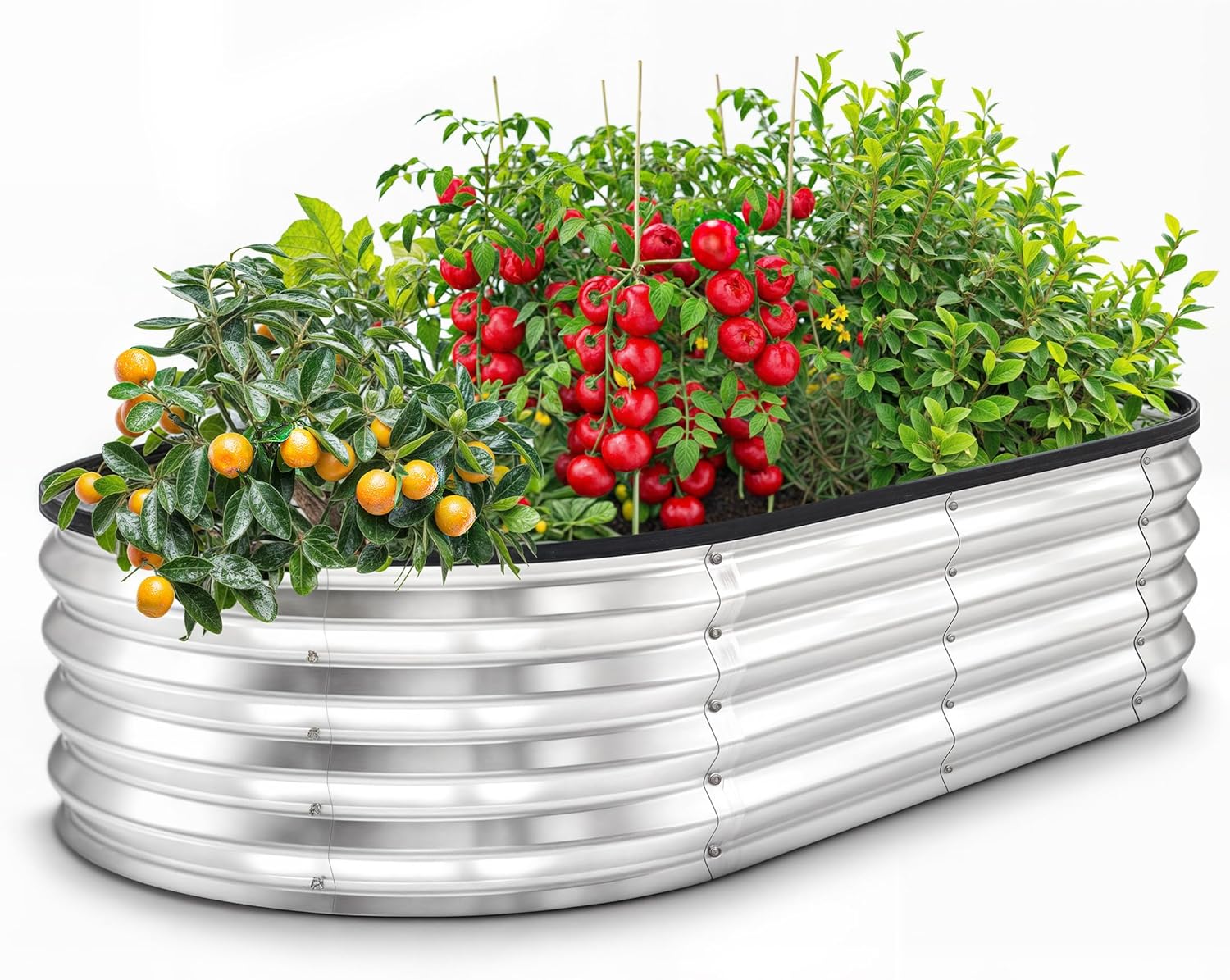
This Utopia Home galvanized raised garden bed is a simple, no-frills metal planter that turns a patch of yard or patio into a contained growing area. The kit arrives as flat panels that lock together around an open base so roots can grow into the ground while the box keeps soil and beds organized. Made from powder-coated alloy steel and described as lightweight, it is corrosion-resistant compared with untreated metal and includes a center support strip for added rigidity. Typical uses are starting vegetables, herbs, or flowers where you want clearer edges, better drainage, and less bending to tend plants. Assembly is straightforward and tool-light, so it is practical for quick seasonal setups or moving around the yard. Limitations are its modest 4 x 2 ft footprint and single-level depth, which limits the number of plants and makes it better for shallow-rooted crops; heavier-duty raised beds with thicker panels or built-in liners will suit long-term heavy use better than this lighter kit.
Best for: Buyers looking for an inexpensive, easy-to-assemble raised bed to start vegetables or herbs in small outdoor spaces and who prioritize low upfront cost and portability.
Less Ideal for: People who need large or permanent heavy-duty beds for long-term, high-yield vegetable production or who prefer deep, multi-level planters.
- Galvanized alloy steel with powder coat offers rust resistance for outdoor use.
- Open-base design allows roots to grow into native soil and improves drainage.
- Lightweight panels make assembly and relocation easy for seasonal use.
- Center support strip increases rigidity compared with basic panel-only kits.
- Small 4 x 2 ft footprint limits planting area for larger vegetable gardens.
- Lightweight construction is less robust than thicker steel or heavy-duty wooden beds.
Verdict: A budget-friendly, rust-resistant galvanized steel raised bed that is quick to assemble and easy to move, ideal for small-scale vegetable and herb gardening.
Kozyard 98.9" Raised Garden Bed Kit with HDPE Panels and Aluminum Posts

| Capacity | 30 gallons |
|---|---|
| Mounting Type | Freestanding |
| Material Type | Aluminum Posts, HDPE Panels |
| Other Special Features of the Product | Easy Assembly |
| Indoor Outdoor Usage | Outdoor |
This Kozyard raised garden bed is built for seasons of low-maintenance outdoor gardening. The HDPE panels paired with reinforced aluminum posts mimic a wood-grain finish while resisting rot, cracking, and rust, so it stands up to sun, rain, and damp soil better than untreated wood. The open-bottom design encourages natural drainage and deeper root growth into native soil, and the included weed barrier cloth helps keep soil tidy and reduces surface weeds. Setup uses a slide-and-lock panel system that needs minimal tools and installs quickly on hard or soft surfaces as a freestanding planter. At about 99 inches long it gives a long, narrow growing area suited to rows of vegetables, herbs, or flowers. Expect the practical benefits of durable, weatherproof materials and easy assembly, but note the low height limits deep-rooted crops and the product is a single-piece kit so it is not easily moved once filled. For gardeners prioritizing a reliable, long-lasting raised bed for regular seasonal use this is a sensible option.
Best for: Gardeners who want a low-maintenance, weatherproof raised bed that stays reliable season after season and prefer quick assembly and long-term durability over traditional wood options.
Less Ideal for: Growers who need very deep soil for large root crops or those who plan to move planters frequently should consider taller or modular alternatives.
- Durable HDPE panels resist rot, warping, and UV damage for long outdoor life
- Reinforced aluminum corner posts provide structural strength and rust resistance
- Open-bottom design improves drainage and allows roots to access native soil
- Includes weed barrier cloth to reduce surface weeds and separate soil from ground
- Slide-and-lock assembly requires minimal tools and is quick to install
- Low height limits suitability for very deep-rooted plants
- Very long, filled bed is heavy and not easily relocated once planted
Verdict: Buy this if you want a weatherproof, low-maintenance raised bed that reliably resists rot and rust for long-term outdoor vegetable and herb gardening.
Best Choice Products 72 x 24 x 30 in Fir Wood Raised Garden Bed

| Capacity | 251 quarts |
|---|---|
| Material Type | Fir Wood |
| Plant or Animal Product Type | Vegetable |
| Other Special Features of the Product | Drainage Hole |
| Indoor Outdoor Usage | Outdoor |
This 72 x 24 x 30 inch wooden raised bed provides a large, elevated planting area that keeps you off the ground while you tend vegetables, herbs, or flowers on a balcony, deck, or patio. Constructed from unfinished Chinese fir, the bed is rigid and naturally weather resistant compared with softer woods, and six drainage holes let excess water escape to reduce root rot and salt build-up. At about 30 inches tall the bed is waist-friendly for most gardeners, which cuts bending and makes frequent maintenance easier. Assembly is straightforward using the included guide and the floor-standing mounting keeps the bed stable on flat surfaces. Limitations include the unfinished wood surface, which will weather and will need sealing or staining for longer life, and the single-piece design means it is heavy to move once filled. The product is practical for seasonal vegetable growing but will require basic upkeep to preserve appearance and longevity.
Best for: Gardeners who prioritize a durable, waist-height bed for comfortable, regular vegetable or herb tending and who want social reassurance from a well-reviewed, established product.
Less Ideal for: People seeking a maintenance-free or movable planter for frequent rearranging or those who prefer a pre-finished, rot-resistant material like composite or metal.
- Generous planting volume suitable for multiple vegetables or large root crops
- Multiple drainage holes to prevent standing water and improve root health
- Ergonomic 30-inch height reduces bending and protects knees and back
- All-wood construction of fir provides natural durability and structural rigidity
- Includes assembly guide for straightforward setup
- Unfinished wood will weather and benefits from sealing to extend service life
- Heavy when filled, making relocation difficult once planted
Verdict: A large, waist-height fir wood raised bed that offers roomy planting and good drainage for comfortable, reliable vegetable gardening.
Land Guard Galvanized Raised Garden Bed Kit, 6×3×1 ft Oval Metal Planter

| Material Type | Q195 galvanized metal sheet |
|---|---|
| Finish Types | Double-layer galvanized |
| Capacity | 15.55 cubic feet |
| Indoor Outdoor Usage | Outdoor |
This Land Guard galvanized raised garden bed is a sturdily built oval planter designed for outdoor vegetable, herb, and flower growing. It arrives as flat panels that lock together and assembles quickly, so you can fill it with soil and plant in minutes. The panels use double-layer galvanizing and a thicker Q195 steel sheet (average 0.78 mm, thicker at stress points) which improves rigidity and reduces the chance of bending or corrosion over seasons. The open base design prevents standing water and encourages healthy root drainage when placed on soil or gravel. Because it is metal, it is more durable than thin plastic beds and lighter to move than some wood alternatives, but it will transfer heat differently and can warm soil faster in strong sun. It also has exposed metal edges typical of panel kits, so lining with landscape fabric before filling helps protect roots and reduce soil contact with the metal. For gardeners who want a low-maintenance, long-lasting raised bed, this model balances strength and simple setup, with the expected metal-care considerations in extreme climates.
Best for: Gardeners who prioritize durability and low maintenance and want a ready-to-assemble raised bed that will hold up to seasons of outdoor use without frequent replacement.
Less Ideal for: Those who need insulated or very deep beds for root crops or gardeners who prefer a fully finished look without adding liners or edge covers.
- Double-layer galvanizing and thicker Q195 steel increases corrosion resistance and rigidity
- Oval shape and wave-structured panels add structural strength at joints
- Open base allows natural drainage to prevent waterlogging
- Quick assembly from interlocking panels so planting can start within minutes
- Metal construction can heat up in direct sun and affect soil temperature
- Exposed panel edges may need a liner to protect roots and prevent abrasion
Verdict: Buy this if you want a quick-to-assemble, rust-resistant metal raised bed built to last for outdoor vegetable and herb growing.
Choosing the Right Durable Raised Garden Bed: Key Factors to Consider
Construction Material
The base material determines most of a raised bed's lifespan. Hardwoods, rot-resistant treated lumber, powder-coated steel, and heavy-gauge composite panels all behave differently in a garden. Materials that naturally resist decay or that are finished to repel moisture require less maintenance and last longer.
Think about how the material will interact with soil, moisture, and sunlight where you garden. Some metals need protective coatings to prevent corrosion. Composites resist rot but can expand and contract with temperature changes. Understanding material behavior helps you choose a bed that matches local climate and your tolerance for upkeep.
Joinery and Corner Reinforcement
How panels connect is as important as the panels themselves. Strong corner posts, metal brackets, or interlocking systems reduce movement when beds are filled, moved, or exposed to freeze-thaw cycles. Weak joints lead to bowing and gaps where soil can escape or pests can enter.
Look for beds with reinforced corners, through-bolts, or bracing that distributes soil pressure. For taller beds, internal framing or slats can prevent bulging. Good joinery also eases long-term repair if a single panel becomes damaged.
Resistance to Moisture and Rot
Raised beds sit in constant contact with damp soil, so water resistance is critical. Some woods are naturally rot-resistant, while other timbers need preservative treatments. Metal options must have coatings or be stainless to avoid rust. Composite materials often offer excellent rot resistance but vary in quality.
Consider local rainfall, irrigation habits, and whether you will line the bed. Proper moisture resistance reduces the chance of structural failure and keeps maintenance low over years of use.
Drainage and Soil Management
A durable bed still fails if soil stays waterlogged. Drainage design affects plant health and the longevity of the structure. Beds that allow excess water to escape reduce internal pressure on sides and lower the risk of material degradation caused by continuous wetness.
Factors like bottom screening, raised footings, or removable slats help water move through. Also think about how easy it is to refresh or amend soil without dismantling the bed; designs that allow partial access extend usability and reduce heavy labor.
Ease of Installation and Maintenance
A long-lasting bed that is difficult to install or maintain can still be impractical. Simple assembly reduces the chance of incorrect joins that cause premature failure. Beds that require heavy tools or complex fastenings increase the likelihood of mistakes during setup.
Maintenance considerations include the ability to tighten fasteners, replace a single side panel, or reapply protective finishes. Choose systems that let you perform straightforward repairs to extend service life rather than full replacement.
Adaptability and Site Fit
Durability also depends on fit. A bed that is overbuilt for a small balcony wastes resources, while an undersized bed in a heavy-rain area may fail sooner. Consider how the bed sits on your surface type, whether you need feet to prevent standing water, or if you need modular sections to work around obstacles.
Adaptable systems let you expand, change soil depth, or add covers and pest netting. Those options keep the bed functional across seasons and uses, reducing the need to replace it as requirements evolve.
Best Materials for Long-Term Outdoor Use
Different materials handle exposure differently. Rot-resistant cedar and some hardwoods age gracefully but still need proper construction details to avoid failure at joins. Powder-coated or galvanized metals offer strong framing but must have quality finishes to resist scratches that lead to rust. Composite boards resist rot and insect damage, though they can disperse heat differently than wood and may affect root zone temperature in hot climates.
Matching material to climate and intended lifespan is key. In wet climates prioritize rot resistance and corrosion protection. In sunny, hot sites consider materials that do not overheat or warp in direct sun.
- Wood offers natural insulation for roots but needs attention at ground contact points.
- Metal is strong and slim but depends on a durable finish to avoid corrosion.
- Composite requires little upkeep but can expand with temperature shifts.
Sizing and Soil Depth for Durable Planting
Soil depth affects plant choice and the load on bed walls. Deeper beds accommodate larger-rooted plants but increase lateral pressure on sides. For a durable build, balance the desired planting depth with corresponding bracing or thicker walls to handle the load.
If you plan heavy crops or frequent season-long watering, choose a design that includes internal supports or thicker panels. For shallow herbs or salad beds, lighter constructions are usually sufficient and easier to relocate.
- 6 to 12 inches suits herbs and shallow-rooted vegetables.
- 12 to 24 inches is preferable for most vegetables and deeper root systems.
- Over 24 inches may require reinforced joinery and a strong base or legs.
Protecting Beds From Ground Moisture and Pests
Keeping the underside of the bed dry extends life. Raised feet, a gravel layer, or a simple bottom screen reduce constant soil-to-wood contact and improve drainage. For metal beds, a protective barrier between soil and metal can reduce corrosive effects from acidic soils or fertilizers.
Pests such as voles and gophers can access beds without proper screening. Durable beds often include or allow for hardware cloth installation under the soil to prevent burrowing without compromising drainage.
- Install a mesh barrier to block burrowers while allowing water flow.
- Elevate the bed slightly to reduce constant ground moisture at contact points.
- Consider removable bottoms or slatted bases for easier soil refreshes.
Seasonal Care That Extends Lifespan
Routine seasonal tasks keep a durable raised bed performing for years. Clean out plant debris to reduce disease pressure, check fasteners each season for loosening, and touch up protective finishes on wood or metal when needed. Removing snow accumulation from removable covers or reinforcing sides before heavy freezes reduces stress on joints.
Simple planned maintenance is often more cost-effective than replacing a degraded bed. Design choices that make maintenance straightforward will pay off in longevity and steady productivity.
- Inspect and tighten corner fasteners at least once per season.
- Refresh mulch and ensure drainage outlets remain clear.
- Reapply water-repellent coatings for wood and repair any scratches on metal finishes.
Modular and Expandable Designs for Changing Needs
If you expect to change your garden layout, modular beds offer durability through adaptability. Systems that let you add sections or increase height with stacked boards reduce the need to buy new units as your garden grows. Make sure connection hardware is strong enough to maintain integrity when modules are joined.
Expandable designs also simplify soil management since you can work on sections independently and replace worn parts without dismantling the whole installation.
- Look for bolt-together modules with robust corner posts for secure joins.
- Stackable boards allow adjusting depth without compromising core structure.
- Modular feet or anchors help keep long runs stable on slopes.
How We Chose the Best Durable Raised Garden Bed
We focused on the attributes that determine how well a raised garden bed stands up to real garden conditions. Primary evaluation criteria included material longevity, resistance to moisture and rot, and structural joinery that prevents warping or separation under soil load. We also assessed drainage design and soil access features because poor drainage shortens lifespan and stresses plants. Ease of assembly and future maintenance needs were considered so gardeners know how much ongoing work is required. Stability under freeze-thaw cycles and UV exposure was included for climates with seasonal extremes. We excluded beds made from untreated softwoods prone to rapid decay, flimsy thin-gauge metals that dent or corrode quickly, and temporary fabric planters intended for short seasons. The final list favors constructions and details that demonstrably extend service life in typical backyard, patio, and community garden settings.
FAQ
How deep should a durable raised garden bed be for vegetables?
Depth depends on the crops. Most vegetables do well in 12 to 24 inches of soil. Deeper beds require stronger side supports to handle the increased lateral load, so plan for thicker panels or internal bracing if you go deeper.
Is it better to use wood or metal for a long-lasting raised bed?
Both can last if chosen and treated appropriately. Wood that resists rot or is properly treated will perform well, while metal needs high-quality coatings or corrosion resistance. Consider climate, maintenance willingness, and how each material affects soil temperature.
Do I need a bottom for a durable raised bed on the ground?
Not always. Leaving a bottom open maintains better drainage and soil contact with the ground ecosystem, but adding a mesh barrier prevents burrowing pests. If you place a bed on a hard surface, a slatted or removable bottom helps with drainage and future soil changes.
How often should I inspect and maintain a durable raised bed?
Inspect beds at least once per season and after extreme weather events. Tighten joints, clear debris, and address any finish damage promptly. Regular light maintenance will extend the service life substantially.
Can I line a durable bed with plastic to prolong life?
Lining can reduce direct moisture contact and slow decay, but it can also trap water and reduce drainage if not installed correctly. Use breathable liners or ensure adequate drainage outlets to avoid creating a moisture trap that shortens material life.
Final Verdict
Prioritize materials and joinery that match your climate and planting plans when choosing a durable raised garden bed. Think beyond initial appearance to how moisture management, corner strength, and accessibility for maintenance will affect service life. Tradeoffs are inevitable: lighter builds are easier to move while heavier constructions resist heavy soils and wet seasons better. Choose the combination of material, reinforcement, and drainage details that fits your site and how intensively you plan to garden to get the longest useful life from your raised beds.
