

Note: This article contains affiliate links. If you click on these links and make a purchase, I may earn a small commission at no extra cost to you. This helps support my research and content. Read my full affiliate disclosure here.
You want a fly spray that actually stops pests without harming people, pets, or plants around your garden or patio. The right choice can reduce nuisance flies quickly, protect fresh produce and outdoor seating, and fit the safety rules of your yard. This guide covers seven shortlisted fly sprays chosen for their outdoor suitability and practical performance. We evaluated knockdown speed, residual control, safety for use near plants and pets, and ease of application to help you decide which product matches your situation. Read on to see how each option performs against the needs gardeners and outdoor hosts commonly face.
Top Picks at a Glance
| Best Overall The best all-around choice for most situations | Raid Flying Insect Killer Spray, 18 oz |  |
| Best Quality Built to a higher standard if you want something more solid | Absorbine UltraShield EX Insecticide & Repellent, 1 Gallon |  |
| Best Value The sweet spot between price and what you get | HOT SHOT Flying Insect Killer Aerosol, 15 fl oz (3 Pack) |  |
| Best Budget The cheapest option that still gets the job done reliably | STEM Plant-Based Fly, Mosquito & Gnat Spray, 10 oz |  |
| Highest Rated A top-rated pick with lots of positive feedback | Tack Shack of Ocala Pyranha Wipe N' Spray Fly Spray for Horses, Gallon |  |
| Most Popular A crowd favorite that many people choose with confidence | ZEVO Flying Insect Spray, 30 fl oz |  |
| Best Seller A high-volume bestseller chosen again and again | Absorbine UltraShield EX Insecticide & Repellent, 32 fl oz |  |
Raid Flying Insect Killer Spray, 18 oz

| Item Form | Spray |
|---|---|
| Target Species | Insects |
| Liquid Volume | 18 fluid ounces |
| Specification Met | EPA |
| Active Ingredients | d-Phenothrin 0.125%, prallethrin 0.100% |
Raid Flying Insect Killer is an aerosol spray designed to kill flies, mosquitoes, gnats, fruit flies, wasps, hornets and other small flying pests on contact and with residual treatment around entry points. Typical use is either misting a closed room with sweeping motions for airborne insects or spraying directly at individual wasps and hornets for fast knockdown; it can also be applied outdoors in calm conditions to treat problem areas. Notable features include an 18 fl oz aerosol can, a water-based formula that dries without greasy residue, and a scent intended to be less chemically persistent than some insecticides. Practical benefits are quick visible knockdown, versatility for indoor and outdoor spot treatments, and clear directions for ventilation and safety. Important limitations are that it is an aerosol under pressure and contains flammable ingredients so it must be stored and used away from heat and open flame, and treated rooms need two hours of downtime and ventilation before re-entry. This product is EPA-specified, so follow the label directions carefully for safe use around people and pets.
Best for: Good for homeowners who want a single, reliable spray to control common flying pests both inside the house and on patios or near entry points, and who are comfortable following safety and ventilation instructions.
Less Ideal for: Not a fit for people seeking non-chemical or pet-safe perimeter solutions that require no room downtime or for large-scale professional treatments.
- Effective against a broad list of flying insects including mosquitoes, flies, gnats, fruit flies, wasps and hornets
- Works both as an airborne mist for room treatment and as a direct-spray for fast knockdown
- Water-based formula that dries without leaving a greasy residue
- Includes clear label directions for indoor and outdoor application and ventilation
- Aerosol contains flammable ingredients and requires careful storage and use
- Requires vacating treated areas and two hours of ventilation before re-entry
Verdict: A versatile, fast-acting aerosol that reliably knocks down a wide range of flying insects for homeowners who need an all-purpose fly spray.
Absorbine UltraShield EX Insecticide & Repellent, 1 Gallon

| Unit Count | 128 Ounce |
|---|---|
| Item Form | Liquid |
| Scent Name | Unscented |
| Recommended Uses For Product | Fly Control |
| Active Ingredients | Pyrethrins |
Absorbine UltraShield EX is a professional-strength, water-based fly spray sold in a 1-gallon ready-to-use jug for frequent, high-volume application around horses, dogs, and barn areas. It combines pyrethrins, permethrin, and synergists to both kill and repel more than 70 species of pests while leaving no greasy residue. The formula includes sunscreens and coat conditioners so it protects and helps maintain coat condition while repelling insects. UltraShield EX uses UltraBond technology to extend effectiveness in challenging conditions and can provide protection for up to 17 days depending on activity and weather. Typical use is full-body spraying of clean, dry hair or spot-treating stalls, doorways, and perimeter areas; the label recommends about 2 ounces per application for a horse. Important limitations are that it contains insecticidal ingredients that require following label safety directions and it is not approved for all species in every formula variation, so check the label before use on dogs or other animals. The large gallon size is excellent for barns and barnside spraying but is less convenient for trail or show day touch-ups without a smaller spray bottle.
Best for: Buyers who need a high-performance, ready-to-use fly control for regular barn use and perimeter treatments and who prioritize long-lasting protection and broad-spectrum efficacy.
Less Ideal for: Casual or infrequent users who prefer small, portable bottles for spot touch-ups or those seeking only natural, pesticide-free repellents.
- Kills and repels 70+ species including flies, mosquitoes, and ticks
- Water-based, ready-to-use formula requires no mixing
- UltraBond technology gives extended weatherproof protection up to 17 days
- Includes sunscreens and coat conditioners to help protect and maintain coat condition
- Contains synthetic insecticides so users must follow label safety precautions
Verdict: For serious barn owners who want broad-spectrum, long-lasting fly control, UltraShield EX delivers heavy-duty, ready-to-use protection you can rely on.
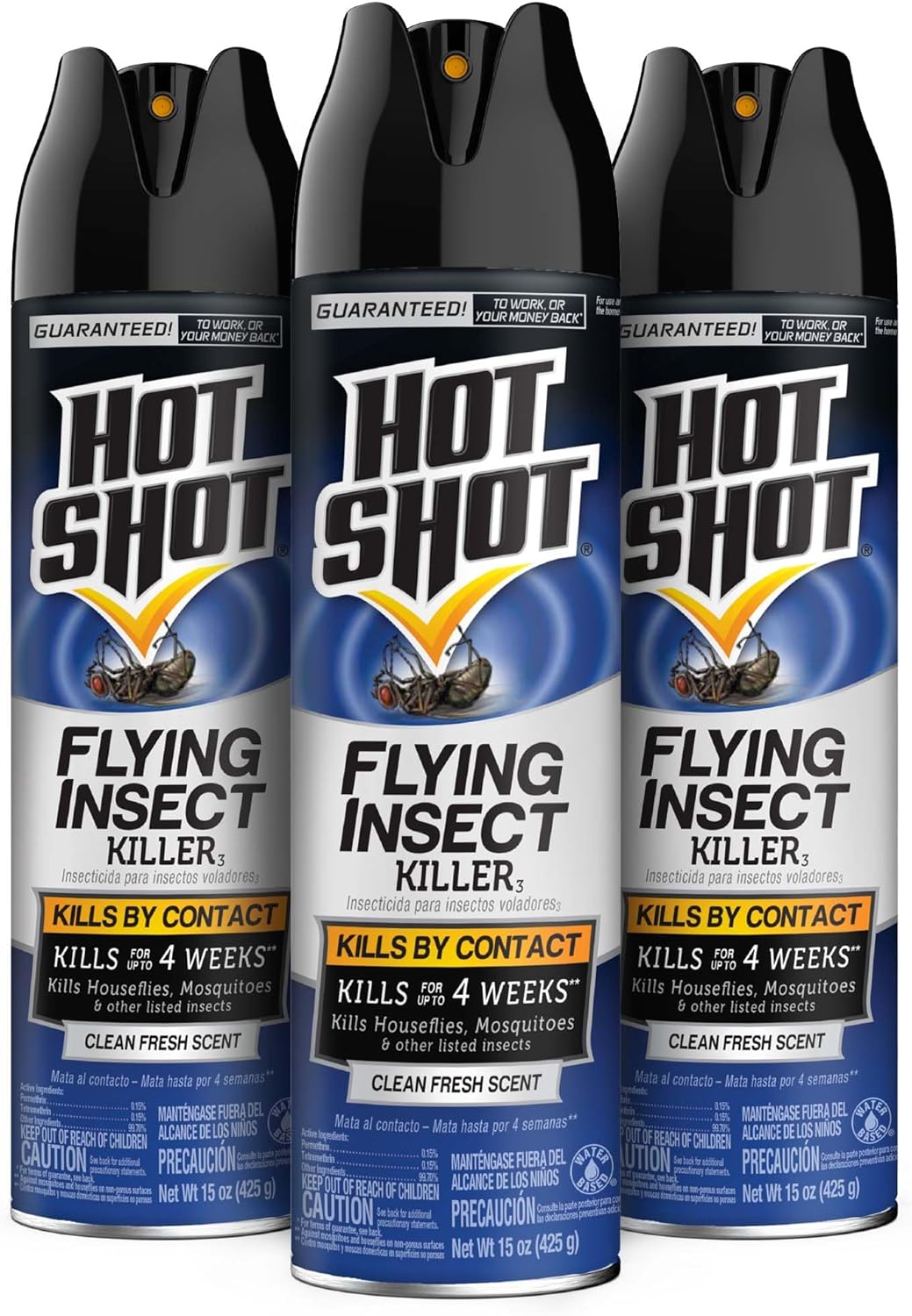
HOT SHOT Flying Insect Killer Aerosol, 15 fl oz (3 Pack)
| Item Form | Aerosol |
|---|---|
| Target Species | Insects |
| Unit Count | 45 Ounce |
| Active Ingredients | Permethrin 0.15%, Tetramethrin 0.15% |
| Specification Met | EPA |
This HOT SHOT Flying Insect Killer is an aerosol spray designed to kill houseflies, mosquitoes and other listed flying insects by contact for indoor and outdoor use. It is typically used as a directed surface spray for screens, door frames and areas where insects enter, or as a short-term space spray indoors when you fill a room with mist then exit and ventilate. The formula contains low concentrations of permethrin and tetramethrin and advertises up to four weeks of control on nonporous surfaces, which makes it useful for treating entry points and light fixtures where insects congregate. Practical benefits include a ready-to-use aerosol can for spot treatments, a clean fresh scent compared with stronger-smelling pesticides, and clear label directions for both space spray and nest treatments. Important limitations are that residual control applies only to nonporous surfaces, the product is toxic to fish and must be kept away from water, and the cans are pressurized so they require careful storage and handling around heat or flames.
Best for: Buyers who want a convenient, ready-to-use spray to reduce nuisance flying insects around entry points, porches, and indoor living spaces and who prioritize quick, practical treatments over specialized application methods.
Less Ideal for: People who need long-term pest control on porous surfaces, sensitive indoor environments like nurseries, or projects near water features should consider non-aerosol or targeted professional options instead.
- Ready-to-use aerosol for quick spot treatments and space-spray use
- Kills a wide range of flying insects on contact including mosquitoes and houseflies
- Advertised residual kill on nonporous surfaces for up to four weeks
- Clean fresh scent is less intrusive than many solvent-based sprays
- Residual effectiveness is limited to nonporous surfaces and may not hold on fabrics or rough areas
- Toxic to aquatic life so unsuitable for use near ponds or open water
Verdict: A practical, ready-to-use aerosol for quickly knocking down and suppressing common flying insects around entryways and indoor spaces.
STEM Plant-Based Fly, Mosquito & Gnat Spray, 10 oz

| Volume | 10 oz |
|---|---|
| Active Ingredients | Geraniol 1.47%; Lemongrass Oil 0.10% |
| Intended Use | Indoor and outdoor use (when used as directed) |
| Manufacturer | SC Johnson |
This 10 oz STEM aerosol spray is a plant-based insecticide formulated to quickly kill common flying pests such as house flies, fruit flies, mosquitoes, and gnats. You use it like a standard aerosol: shake, hold the can 6–12 inches from the target and spray directly onto insects or lightly mist around doorways, windowsills, patios, or furniture. Notable features include botanical active ingredients (geraniol and lemongrass oil), no added dyes or harsh chemical odors, and manufacturer directions that allow indoor and outdoor use when used as directed. In practice it provides a straightforward, low-fuss way to knock down visible flies and mosquitoes and to treat problem spots where gnats congregate. Because it is aerosolized, it works fast but offers only spot treatment rather than long-lasting area protection, and it should not be sprayed directly on people, pets, or edible plants. For routine nuisance control in living spaces and small outdoor areas it is convenient and easy to store with other household pest supplies.
Best for: Buyers who want an affordable, easy-to-use spray for quick control of flies and mosquitoes around the house and small outdoor areas without strong chemical odors.
Less Ideal for: People seeking long-lasting perimeter protection or professional-grade residual control should consider alternative products designed for extended coverage.
- Plant-based active ingredients (geraniol and lemongrass oil) for a less harsh odor profile
- Works indoors and outdoors for flexible spot treatment
- Clear manufacturer directions for safe use around people and pets when used as directed
- No added dye or fragrance to reduce strong chemical smells
- Aerosol provides short-term knockdown but not extended residual protection
- Not intended for direct use on people, pets, or edible plants
Verdict: A budget-friendly, plant-based aerosol that gives fast, convenient knockdown of flies, mosquitoes, and gnats for indoor and small outdoor spaces.
Tack Shack of Ocala Pyranha Wipe N' Spray Fly Spray for Horses, Gallon

| Unit Count | 32 Fluid Ounces |
|---|---|
| Item Form | Liquid |
| Scent Name | unscented |
| Active Ingredients | Geraniol, Clove Oil, Peppermint Oil |
Tack Shack of Ocala Pyranha Wipe N' Spray is a gallon, ready-to-use fly spray designed for regular turnout and show use. The pyrethrum-based formula targets biting flies, mosquitoes, and gnats and is meant to be applied directly to a clean, groomed coat using about two ounces per animal for effective coverage. Notable features include citronella scent, lanolin as a coat conditioner that helps produce a high shine, and a wipe-and-spray style that makes spot application easy. Practical benefits are long-standing knockdown of common pests and a groomed appearance that appeals to show riders. Because the product uses pyrethrum and essential oils, it can separate in storage so thorough shaking before use is important and the scent may bother very scent-sensitive horses. This is a high-volume option best for owners who need consistent, reliable protection for multiple animals or frequent applications rather than single-use convenience packaging.
Best for: Owners who prioritize dependable, show-ready protection and need a large, ready-to-use supply for multiple horses or frequent applications.
Less Ideal for: People looking for unscented, hypoallergenic options for extremely sensitive animals or those who prefer single-use travel-sized packaging.
- Ready-to-use pyrethrum formula effective against flies, mosquitoes, and gnats
- Includes lanolin to condition coat and impart a high shine
- Large gallon supply suitable for multiple horses or frequent use
- Wipe-and-spray application allows targeted spot treatment
- Contains pyrethrum and essential oils which may separate and require shaking before use
- Citronella scent could be objectionable to very scent-sensitive horses
Verdict: Choose this gallon Pyranha formula when you need a reliable, ready-to-use fly spray that repels common biting insects and leaves a show-ready shine.
ZEVO Flying Insect Spray, 30 fl oz

| Item Volume | 30 fluid ounces |
|---|---|
| Target Species | Fly, Fruit Fly, Gnat, Mosquito |
| Included Components | Sprays |
| Brand Name | ZEVO |
The ZEVO Flying Insect Spray is a large 30 fl oz aerosol designed to kill fruit flies, gnats, house flies and mosquitoes on contact. It is typically used as a targeted spray when you see individual or small groups of flying pests in kitchens, bathrooms, patios or living areas. The formula blends rosemary and cornmint oils and is intended to leave little messy residue after wiping, which helps when you need to remove dead insects from counters or floors. Safety guidance and directions are prominent on the label, including keeping spray away from pets, plants and food preparation surfaces and rinsing surfaces if contacted. Practical benefits include a pleasant plant-based scent compared with conventional aerosols and an ample 30 fl oz volume that reduces the frequency of repurchases. Important limitations are that insects must be sprayed directly to be effective and the product should not be used near exposed electrical wiring or on surfaces where food is prepared.
Best for: Buyers who want a fast, on-demand solution for visible flying pests and prioritize a plant-oil formula and clear safety instructions.
Less Ideal for: Not a fit for someone seeking a passive or perimeter insect control solution or for use directly on food-prep areas and plants.
- Kills common flying insects on contact including fruit flies, gnats, house flies and mosquitoes
- Plant-oil formula (rosemary and cornmint) with reduced lingering residue compared with heavier aerosols
- Large 30 fl oz bottle provides extended use between purchases
- Requires direct spray on insects to be effective rather than working as an area spray
- Not safe for use on food-contact surfaces, plants, or near pets without rinsing afterwards
Verdict: Choose ZEVO Flying Insect Spray when you need a quick, plant-oil based aerosol that kills common flying bugs on contact.
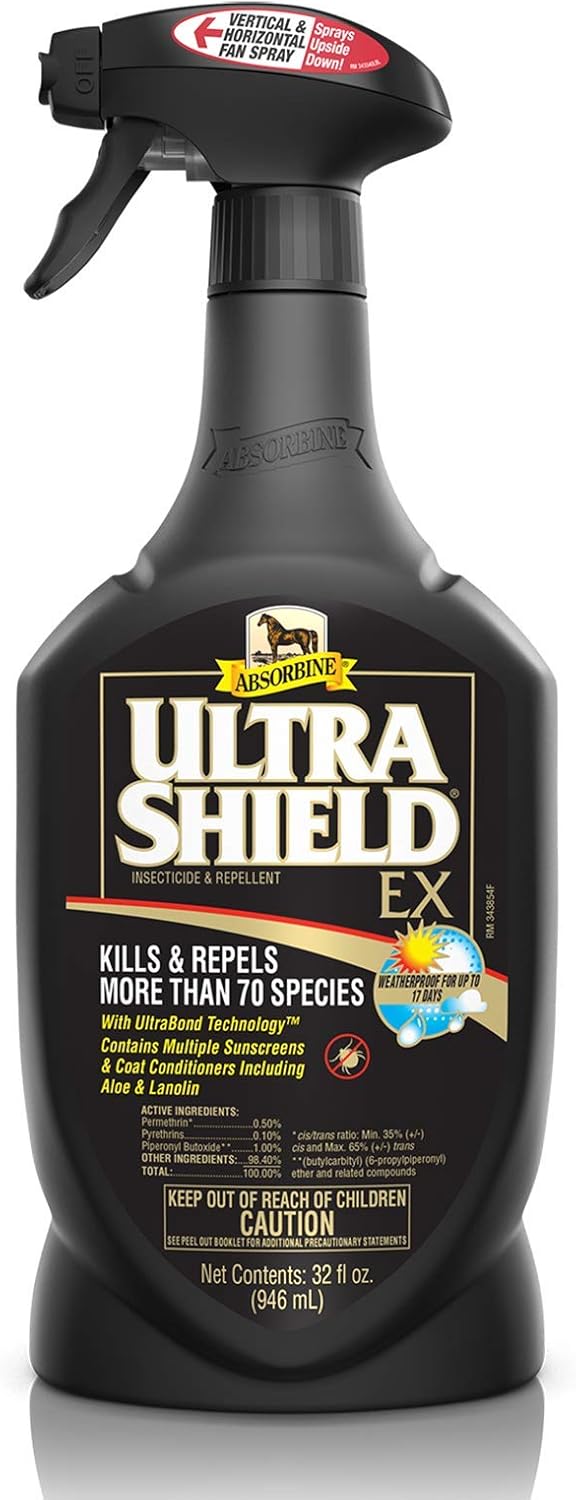
Absorbine UltraShield EX Insecticide & Repellent, 32 fl oz
| Unit Count | 32 Fluid Ounces |
|---|---|
| Item Form | Liquid |
| Scent Name | Unscented |
| Active Ingredients | Pyrethrins |
Absorbine UltraShield EX is a ready-to-use, water-based fly spray formulated to both kill and repel more than 70 species of insects while conditioning the coat. You use it as a spray-on treatment for horses, ponies and around barns or doorways; the label also permits use on dogs and for premise spot treatments. Notable features include UltraBond weatherproof technology for lasting protection of up to 17 days, inclusion of sunscreens and coat conditioners to protect and improve coat appearance, and active insecticidal ingredients such as pyrethrins. In practice the product is straightforward: shake, spray to dampen the coat (about 2 ounces per application), and repeat per label directions when protection wanes. The water-based, no-mix formula avoids greasy residue and is easier to apply than oil-based concentrates. Important limitations are that it contains pyrethrins and related actives so label precautions must be followed for sensitive animals and handlers, and some users will need to reapply more frequently in heavy infestation or after washing. Read and follow the directions and safety information before use.
Best for: Buyers who prioritize dependable, low-effort fly control for horses and barn areas and who want a product backed by a long-running, proven formula.
Less Ideal for: People who prefer completely natural or pyrethrin-free pest control methods or those who need a spray specifically formulated for very young or chemically-sensitive animals not covered by the label.
- Ready-to-use water-based formula requires no mixing and leaves no greasy residue
- UltraBond technology provides weatherproof protection up to 17 days under normal conditions
- Kills and repels a wide range of pests including flies, mosquitoes and ticks
- Contains sunscreens and coat conditioners to help protect skin and improve coat appearance
- Contains pyrethrins and other insecticidal actives so users must follow label safety precautions
Verdict: Choose UltraShield EX when you want a ready-to-use, long-lasting fly spray that kills and repels a wide variety of pests while conditioning the coat.
Choosing the Right Fly Spray: Key Factors to Consider
Knockdown Speed and Initial Effectiveness
How quickly a spray incapacitates flying insects matters when you need immediate relief on a patio or during an outdoor gathering. Fast knockdown reduces visible nuisance and limits the chances flies have to land on food or surfaces. Expect tradeoffs: some fast-acting chemistries work instantly but may have limited residual activity, meaning reapplication could be needed for long events.
Assess label claims for contact knockdown versus repellent action. For gardens where pets or children are present, prefer products that give a clear waiting time before re-entry and that list safe drying or ventilation periods.
Residual Control Duration
Residual control indicates how long treated surfaces remain unattractive or lethal to flies after application. Longer residuals reduce how often you must treat doorways, eaves, or seating areas, which is convenient for busy gardeners and those hosting frequent outdoor meals.
Residual longevity depends on formulation and environmental exposure. Sun, rain, and wind shorten effectiveness, so consider whether the product is rated for shaded areas, under eaves, or directly on fabric. If you rely on long-term control, prioritize sprays with documented hours or days of residual activity and with guidance for reapplication intervals.
Safety Around People and Pets
Because fly sprays are often used where people and animals are present, safety directions should be a primary consideration. Look for products with clear re-entry times, simple cleanup instructions, and labeled first-aid guidance. Lower-toxicity formulations reduce risk but still require following directions for application and drying.
Consider how the spray is applied. Aerosols can drift and expose bystanders more easily than targeted trigger sprays. If you have children, seniors, or sensitive pets, choose options with minimized airborne drift and explicit pet-safety statements.
Plant and Produce Safety
Gardeners need to know whether a fly spray can be used near edible plants or ornamental foliage without causing damage or leaving residues on produce. Some formulations are suitable for treating areas adjacent to vegetable beds or hanging baskets, while others advise against spraying near edible plants.
Check label directions for pre-harvest intervals, recommended proximity to foliage, and whether the product can be applied to container rims, compost areas, or trash bins near plantings. When in doubt, treat hard surfaces and peripheral perimeters rather than spraying directly over planted beds.
Application Ease and Versatility
How simple a product is to apply affects how frequently you will actually maintain control. Trigger sprays, hose-end applicators, and pump bottles each have pros and cons for reach, control, and drift. For spot treatments around doorways or garbage areas, a handheld trigger or pump sprayer gives precision. For larger zones, hose-end or concentrate mixes may be more efficient.
Also evaluate storage stability and mixing requirements. Concentrates that require careful dilution add complexity. Ready-to-use formulas are convenient but can be less economical for large yards. Consider how comfortable you are with measuring and mixing when choosing a product.
Where to Use Fly Spray in the Yard
Target common fly harborage and activity zones rather than blanket-spraying. Effective spots include eaves and overhangs, outdoor trash and compost areas, seating perimeters, and shade structures where flies rest. Treating these focal sites interrupts fly traffic without exposing the entire garden.
Avoid spraying directly over flower beds and open vegetable plantings unless the product label explicitly allows it. For food prep areas, treat surrounding hard surfaces and undersides of picnic tables rather than applying product where food is handled.
- Eaves, porch ceilings, and shaded rafters where flies rest
- Garbage cans, compost lids, and animal waste zones at a safe distance from plantings
- Perimeters of patios, awnings, and outdoor dining areas
Application Best Practices
Follow the label instructions for mixing and timing. Apply on calm days to reduce drift, and avoid treating right before expected rain. Allow treated surfaces to dry fully before letting people or pets return to the area.
Use targeted application to reduce exposure. Hold sprayers close to the surface for spot treatments and use directional nozzles or shields where possible. Wear basic PPE such as gloves and eye protection when handling concentrated mixes.
- Spray when wind is low and temperatures are moderate
- Test a small area first if treating near sensitive foliage
- Rinse application equipment after use and store according to directions
Nonchemical Alternatives to Complement Sprays
Combining sprays with physical and cultural controls reduces reliance on chemicals and improves overall results. Sanitation is the most effective complement: secure trash lids, remove decomposing plant material, and clean up pet waste regularly to remove fly breeding sites.
Physical traps and screens can lower fly numbers without chemicals. Sticky traps, baited traps placed away from seating areas, and fine mesh screening for food prep spaces help reduce pressure and can lengthen the time between chemical treatments.
- Eliminate breeding sites by managing compost and waste
- Use traps strategically downwind of people areas
- Consider fans in dining spaces to disrupt fly flight paths
Managing Resistant or Persistent Infestations
If flies persist despite repeated treatments, reassess sanitation and breeding-site control first. Persistent populations often stem from hidden sources such as clogged gutters, animal bedding, or unnoticed organic debris.
Rotate treatment approaches and application points rather than repeatedly spraying the same surface. Use longer-residual options in low-exposure areas and spot-treat high-traffic zones. For severe, widespread infestations, consult local extension guidance for integrated pest management strategies suited to your region.
- Inspect gutters, drains, and hidden waste pockets for larvae sources
- Alternate treatment methods and minimize repeated heavy applications in one spot
- Document where flies are most active to target future treatments
Storing and Disposing Leftover Products Safely
Store fly sprays in their original containers, locked away from children and pets, and out of direct sunlight. Keep concentrates separate from ready-to-use bottles to avoid accidental misuse. Note recommended storage temperatures on the label.
Dispose of empty containers and unused concentrate according to local hazardous-waste guidance. Do not pour excess product into storm drains or onto soil. When in doubt, contact local waste authorities for safe disposal options.
- Keep containers upright and sealed
- Follow local regulations for hazardous household waste disposal
- Never reuse pesticide containers for other purposes
How We Chose the Best Fly Spray
We focused on products formulated for outdoor and garden use, prioritizing options that balance fast knockdown with responsible safety profiles. Editorial filters included documented efficacy against common house and stable flies, labeled directions for outdoor or near-plants use, and manufacturer safety guidance for people and pets. We looked for clear application methods that gardeners can follow without specialized equipment, and for products offering practical residual control so you do not need to reapply multiple times per day. Excluded items included indoor-only sprays, foggers, and repellents without knockdown claims or that required professional application. We also excluded aerosol-only formulations with no low-drift or targeted-application options. The evaluation emphasized measurable decision dimensions: initial knockdown speed, duration of residual activity, toxicity and safety instructions, application versatility for gardens and patios, and user convenience. These dimensions are reflected in the scoring criteria used across the shortlist.
FAQ
Can I spray near vegetable beds without contaminating produce?
It depends on the product label. Many sprays advise against direct application over edible plants and recommend treating adjacent hard surfaces or perimeters. If you need to use a spray near edible plants, follow label pre-harvest intervals and avoid spraying blossoms or foliage directly.
How soon after spraying can people and pets return to the area?
Re-entry times vary by formulation. Some products are safe once surfaces have dried, while others specify longer waiting periods. Always follow the label's re-entry instructions and ventilate treated areas before allowing people or pets back in.
Are pump or trigger sprays better than aerosols for yard use?
Trigger and pump sprays give more control and cause less drift, making them preferable for targeted outdoor use around plants and seating. Aerosols can be useful for quick spot knockdown but have higher drift and can expose bystanders more easily.
Will rain wash away the spray and make it ineffective?
Rain can reduce residual activity, especially when sprays are applied to exposed surfaces. Some formulations are more rain-fast or are labeled for shaded, protected areas. For lasting control, apply when no rain is expected for the label-recommended period or choose products rated for wetter conditions.
How often should I reapply fly spray around patios?
Reapplication frequency depends on the product's residual duration and environmental conditions. Expect to reapply more often in sunny, windy, or rainy conditions. Follow the label's recommended interval and monitor fly activity to determine if earlier reapplication is needed.
Can I use fly spray around pets' sleeping areas?
Only use products that specifically list pet-safe use and follow all drying and re-entry instructions. Avoid spraying bedding directly and treat nearby surfaces instead. If in doubt, keep pets out of treated areas until the label indicates it is safe.
Final Verdict
Choose a fly spray that matches the scale of the area you need to protect and the level of exposure to people, pets, and edible plants. Prioritize products that balance quick knockdown with acceptable residual control and clear safety directions. For most home gardens and patios, targeted application to harborage spots, combined with sanitation and traps, gives the best long-term reduction in fly pressure. Focus on the tradeoffs between speed, residual duration, and safety to pick the option that fits your outdoor routine.
