

Note: This article contains affiliate links. If you click on these links and make a purchase, I may earn a small commission at no extra cost to you. This helps support my research and content. Read my full affiliate disclosure here.
If you maintain large hedges, long rows, or dense privacy screens, the right gas hedge trimmer makes the work faster and cleaner. Gas models deliver sustained power and longer runtimes than battery options, which matters when you have many feet of hedge or thick growth to cut. This guide covers seven top picks suited to heavy-duty yard work and varied hedge types. We shortlisted models that offer dependable engine performance, usable cutting reach, and features that reduce fatigue. Below you will find practical notes and the evaluation criteria we used to pick these selections.
Top Picks at a Glance
| Best Overall The best all-around choice for most situations | ECHO HCA-2620 21" Gas Articulating Shaft Hedge Trimmer |  |
| Best Quality Built to a higher standard if you want something more solid | Husqvarna 322HD60 24-inch Gas Hedge Trimmer |  |
| Best Value The sweet spot between price and what you get | Sybrioka 26cc Gas-Powered Dual-Sided Hedge Trimmer, 24" Blade |  |
| Best Budget The cheapest option that still gets the job done reliably | TdiriNar 22cc 25-Inch 2-Cycle Gas Dual-Sided Hedge Trimmer with Rotating Handle |  |
| Highest Rated A top-rated pick with lots of positive feedback | ECHO HC-2210 21.2cc Gas Hedge Trimmer with 22" Double-Sided Blade |  |
| Most Popular A crowd favorite that many people choose with confidence | Husqvarna 122LKH Gas Hedge Trimmer with 21" Cutter Bar |  |
| Best Seller A high-volume bestseller chosen again and again | VEVOR 26CC Gas Hedge Trimmer with 23.2-inch Dual Blade and 180° Rotating Head |  |
ECHO HCA-2620 21" Gas Articulating Shaft Hedge Trimmer

| Blade Length | 21 inches |
|---|---|
| Shaft Length | 59 inches |
| Engine Displacement | 25.4 cc |
| Fuel Capacity | 20.6 fl. oz. |
| Blade Type | Double-sided, double-reciprocating |
The ECHO HCA-2620 is a gas-powered articulating-shaft hedge trimmer built for tackling tall and dense hedges. Its 59-inch shaft and articulating gear case that pivots up to 135 degrees let you reach high or awkward angles without a ladder, while the 21-inch double-sided, double-reciprocating RazorEdge blades provide fast, clean cuts on thicker growth. The 25.4 cc two-stroke engine and large 20.6 fl. oz. fuel tank deliver long run times for multi-garden jobs, and the bellows-style fuel transfer plus two-stage air filtration improve starting and reduce field maintenance. Vibration reduction isolates the handles for steadier control and less fatigue during extended use. Expect a solid, tool-friendly service experience thanks to tool-less air filter access, but note this is a gas machine so it requires regular engine upkeep, fueling, and more noise than electric options. Its weight and engine complexity make it better suited to experienced users or professionals rather than those wanting near-silent, low-maintenance tools.
Best for: Gardeners and maintenance pros who need a powerful, reach-capable hedge trimmer for frequent or large-scale pruning and who are comfortable with routine engine upkeep.
Less Ideal for: Casual homeowners with small yards or those who prefer near-silent, low-maintenance electric or battery tools should consider lighter alternatives.
- Articulating shaft with 135° pivot for reaching tall and awkward hedges without a ladder
- 21-inch double-sided, double-reciprocating RazorEdge blades cut efficiently through thick growth
- 25.4 cc two-stroke engine and 20.6 fl. oz. fuel tank provide extended run time for larger jobs
- Tool-less air filter access and two-stage filtration reduce maintenance time
- Vibration-reduction system improves operator comfort during long use
- Requires regular two-stroke engine maintenance and fuel mixing
- Heavier and louder than electric or battery trimmers which can limit use in noise-sensitive areas
Verdict: Choose the ECHO HCA-2620 when you need a powerful, long-reach gas hedge trimmer that handles tall, heavy pruning jobs reliably.
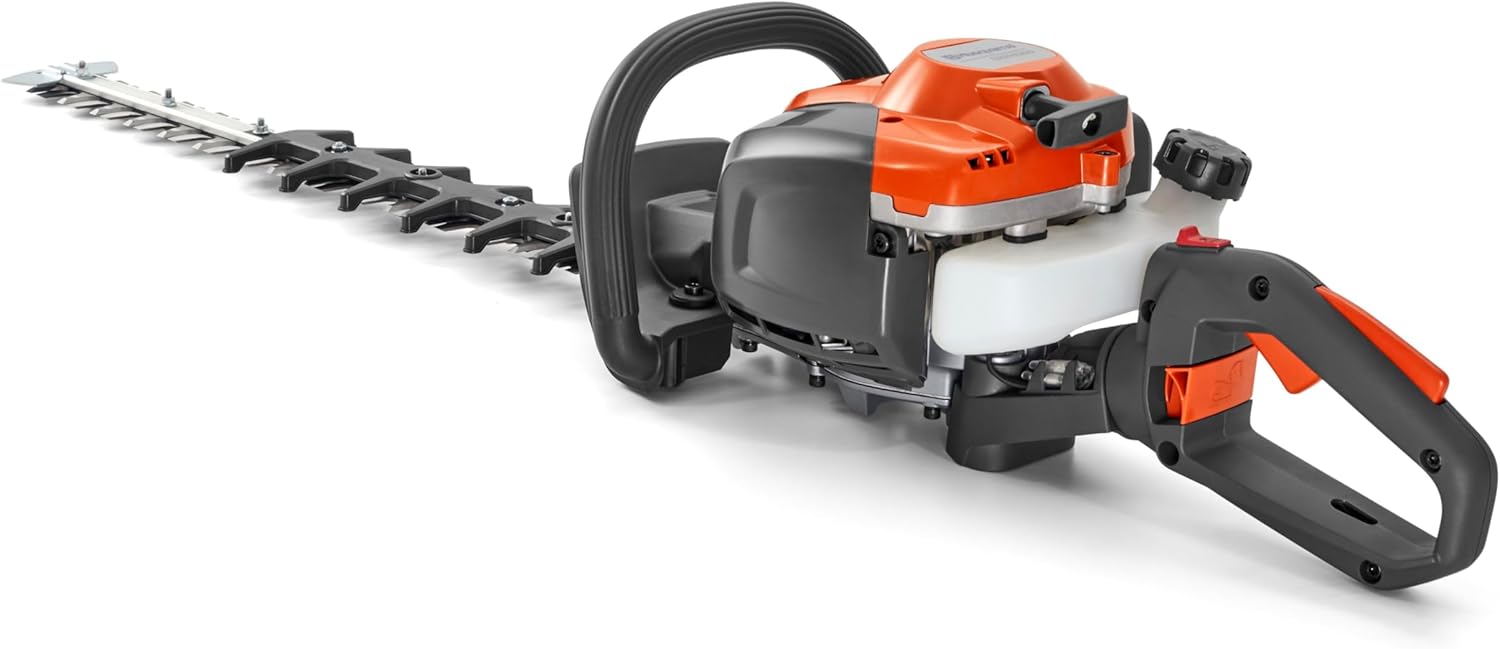
Husqvarna 322HD60 24-inch Gas Hedge Trimmer
| Power Source | Gas Powered |
|---|---|
| Speed | 7800 rpm |
| Blade Material | Hardened Steel |
| Blade Length | 24 inches |
| Material Type | Alloy Steel |
The Husqvarna 322HD60 is a gas-powered double-sided hedge trimmer built for high-capacity residential and light professional work. It uses a 21.7cc two-cycle engine that delivers strong cutting power and a 24-inch dual-action hardened-steel blade that cuts in both directions for faster shaping and fewer passes. An adjustable rear handle and relatively light overall weight make it easier to maneuver around large hedges and tight spots while the durable gearbox and professional-grade knife blades are aimed at frequent use. Typical tasks include trimming mature hedges, reducing overgrowth, and shaping long runs of shrubs where gas power and a long reach speed the job. Important limitations are the need for fuel mixing and routine engine maintenance, and the noise and vibration levels typical of gas tools compared with electric models. If you need long runtime and cutting force for thick stems, this trimmer delivers; if you prefer low-maintenance, quieter operation for smaller yards, an electric or battery model may be more suitable.
Best for: Buyers who prioritize cutting power and long runtime for heavy hedges and frequent trimming tasks and who are comfortable maintaining a gas engine.
Less Ideal for: Casual gardeners with small yards who prefer quieter, low-maintenance electric or battery trimmers.
- Powerful 21.7cc two-cycle engine for cutting thicker stems and long runs
- 24-inch dual-action hardened-steel blade that cuts in both directions for efficient shaping
- Adjustable rear handle and relatively light weight improve maneuverability during extended use
- Durable gearbox and professional-grade knife blades built for frequent residential or part-time professional work
- Requires fuel mixing and regular engine maintenance typical of gas tools
- Higher noise and vibration compared with electric or battery trimmers
Verdict: Choose the Husqvarna 322HD60 when you need gas-powered cutting power and a long dual-action blade for fast, professional-quality hedge work.
Sybrioka 26cc Gas-Powered Dual-Sided Hedge Trimmer, 24" Blade

| Power Source | Gas Powered |
|---|---|
| Blade Length | 24 inches |
| Speed | 7500 rpm |
| Blade Material | Metal |
| Fuel Tank Capacity | 0.65L |
The Sybrioka 26cc gas hedge trimmer is built for straight trimming and heavier pruning where an electric tool may fall short. It uses a 26cc two-stroke engine that runs at about 7500 rpm and drives double-sided metal blades with a 24-inch cutting width, so you can shape long hedgerows and take on thicker stems without frequent passes. Typical use is yard and hedge maintenance on medium to large properties where portability and runtime matter: fill the 0.65L tank, pull the recoil start and work uninterrupted by cords or batteries. The trimmer is comparatively light at 14 pounds and is described with ergonomic, low-vibration features that make longer sessions less tiring. Practical benefits include wide single-pass cutting, reliable gas power for continuous work, and a metal blade set that handles tougher material. Important limits are the two-stroke engine needs mixed fuel and routine engine maintenance, and it will be noisier and require more upkeep than cordless electric models.
Best for: Homeowners and property stewards who prioritize cutting power and uninterrupted runtime for medium to large hedges and want a practical, work-focused trimmer.
Less Ideal for: People who prefer low-maintenance, quiet, or emission-free tools for small urban yards should consider electric or battery models instead.
- 24-inch double-sided metal blade allows wide single-pass trimming and cleaner shaping
- 26cc two-stroke engine provides cordless runtime and consistent power for larger yards
- Relatively lightweight design with low-vibration focus eases extended use
- 0.65L fuel tank and recoil start support long, uninterrupted work sessions
- Two-stroke gas engine requires fuel mixing and periodic maintenance
- Gas operation produces more noise and emissions than battery-electric alternatives
Verdict: Choose this trimmer when you need reliable gas power and a wide 24-inch dual-sided blade to tackle medium to large hedges efficiently.
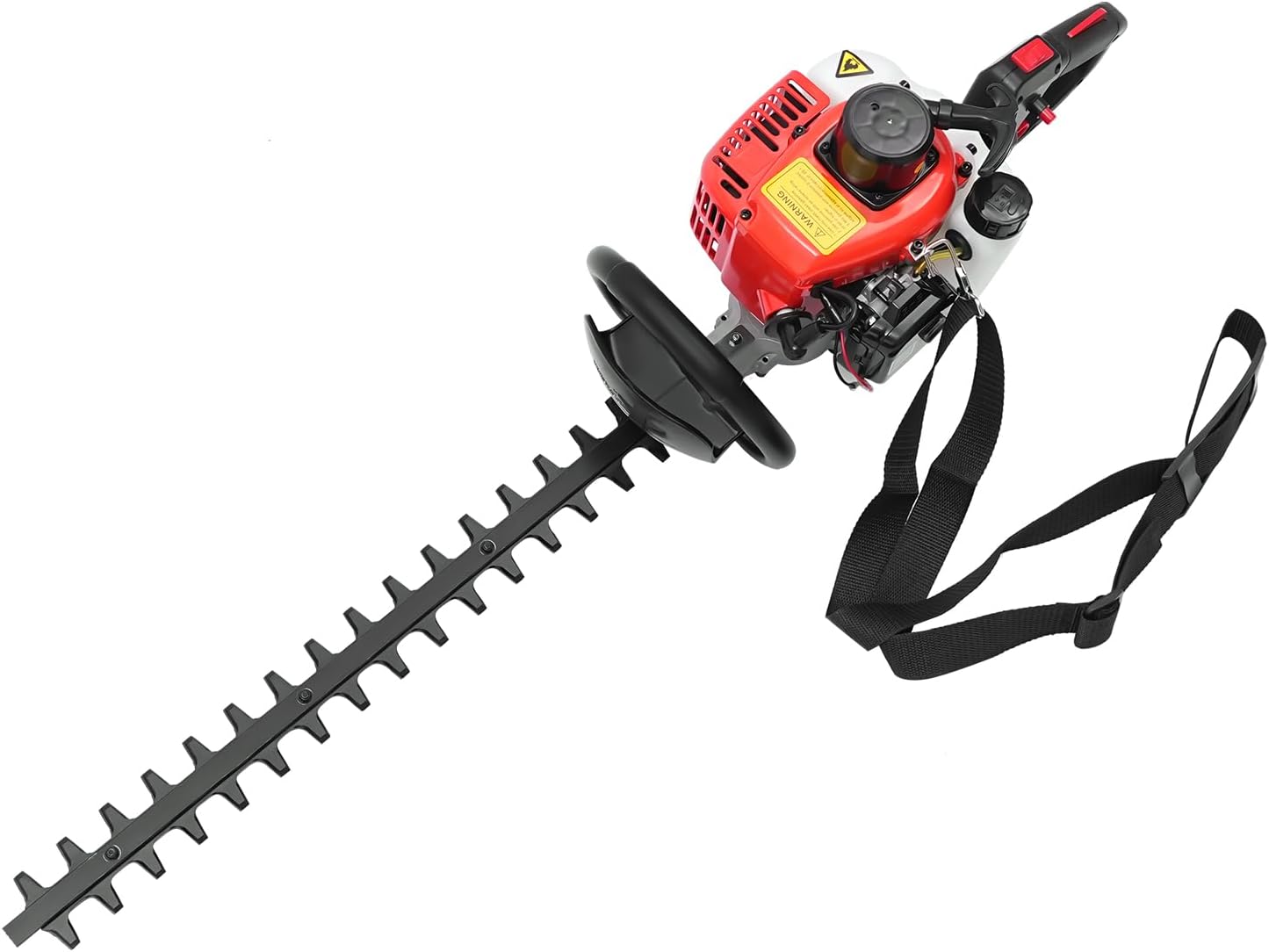
TdiriNar 22cc 25-Inch 2-Cycle Gas Dual-Sided Hedge Trimmer with Rotating Handle
| Power Source | Gas Powered |
|---|---|
| Speed | 12000 rpm |
| Blade Length | 25.59 inches |
| Material Type | Plastic, Iron |
This TdiriNar gas hedge trimmer is a straightforward, no-frills petrol tool aimed at tackling medium to large hedges. It pairs a 22cc two-cycle engine with dual-sided 25.59-inch blades to cut through thicker branches and cover long runs faster than smaller electric models. The 90 degree rotating rear handle and contoured front grip make angled cuts and overhead trimming easier, while built-in shock absorbers reduce vibration for more comfortable use during longer sessions. Practical safety features include a debris stopper and multiple cooling vents to help prevent overheating during heavy work. Expect routine maintenance typical for 2-cycle engines such as mixing fuel, spark plug checks, and blade sharpening. The unit is made from plastic and iron which keeps cost down but may feel less refined than higher-end metal-bodied trimmers. Noise, exhaust, and the need for fuel are inherent to gas power and make it less suitable for quick light-duty jobs where electric or battery models would be cleaner and quieter.
Best for: Buyers who need a low-cost, powerful trimmer to handle large hedges and dense growth and who are willing to do routine engine maintenance to get more cutting power than basic electric tools.
Less Ideal for: If you operate in noise-restricted neighborhoods, prefer low-maintenance tools, or only do small, light trimming jobs, a battery or corded electric trimmer would be a better fit.
- Long 25.59-inch dual-sided blade covers wide swaths quickly
- Rotating 90° rear handle improves access for angled and overhead cuts
- Built-in shock absorbers reduce vibration for more comfortable extended use
- Gas engine delivers higher cutting power for thicker branches than typical electric trimmers
- Requires 2-cycle fuel mixing and regular engine maintenance
- Produces exhaust and high noise levels compared with electric models
Verdict: A budget-friendly gas trimmer that delivers high cutting power and long blade coverage for large or overgrown hedges.
ECHO HC-2210 21.2cc Gas Hedge Trimmer with 22" Double-Sided Blade

| Power Source | gasoline-powered |
|---|---|
| Blade Length | 20 inches |
| Cutting width | 22 inches |
| Material Type | Aluminum |
The ECHO HC-2210 is a straightforward gas-powered hedge trimmer built around a 21.2cc engine and a 22-inch double-sided blade for cutting both sides of a hedge in a single pass. It is typically used for regular maintenance on medium to large hedges and for more demanding trimming where battery runtime or cord length would be limiting. Notable features include an aluminum construction and an OEM Echo X Series design that prioritizes durability and serviceability. In practice the unit delivers consistent cutting power for thicker stems, and the double-sided blade speeds up shaping and reduces the need for follow-up passes. Because it is gasoline-powered it provides longer run time between refuels compared with battery models, but it requires routine engine maintenance, fuel handling, and slightly higher noise and vibration. The trimmer is a good fit for someone who needs reliable, continuous power for frequent or large jobs and prefers a proven commercial-style tool rather than a lightweight consumer model.
Best for: Buyers who prioritize a dependable, workhorse tool for frequent trimming of medium to large hedges and who are comfortable with routine small-engine upkeep.
Less Ideal for: Casual gardeners with small yards who prefer low-noise, low-maintenance cordless tools or who need the lightest possible equipment.
- 21.2cc gasoline engine delivers consistent power for thicker growth
- 22-inch double-sided blade lets you trim both sides without flipping the tool
- Aluminum construction and OEM Echo design aimed at durability
- Suitable for long run sessions since it is not limited by battery life
- Requires regular engine maintenance and fuel handling
- Heavier and louder than equivalent battery models
Verdict: Choose the ECHO HC-2210 if you need a reliable, professional-style gas hedge trimmer that sustains power for larger or frequent trimming jobs.
Husqvarna 122LKH Gas Hedge Trimmer with 21" Cutter Bar

| Blade Length | 21 inches |
|---|---|
| Power Source | Gas Powered |
| Blade Material | Metal |
The Husqvarna 122LKH is a gas-powered hedge trimmer designed for homeowners and landscapers who need extended reach and professional-style cuts. It uses a 21-inch double-sided, double-reciprocating cutter bar to make long, clean strokes on hedges and larger bushes, and the 180-degree adjustable head helps reach awkward angles without repositioning. Smart Start and an air purge system make starting the engine easier than older two-stroke models, and the unit accepts a range of click-on Husqvarna attachments so you can swap to a pole saw, edger, or blower for additional tasks. Practical benefits include strong cutting performance for thick growth and the convenience of one engine powering multiple tools. Important limitations are its gas engine weight and vibration compared with battery models and the ongoing maintenance needs of a gas tool like fuel mixing, tune-ups, and noise. Attachments are sold separately so expanding capability requires extra purchases.
Best for: Buyers who prioritize cutting power and reach and want a single gas engine they can expand into a multi-tool system for regular hedge and yard maintenance.
Less Ideal for: People who prefer lightweight, low-noise, low-maintenance battery tools or who need a compact trimmer for very small yards and occasional use.
- Long 21-inch double-sided cutter bar for fewer passes and cleaner shaping
- 180-degree adjustable head for trimming at different angles and heights
- Smart Start and air purge for easier starting compared with typical two-stroke tools
- Attachment-capable shaft that expands the tool into a multi-purpose system
- Gas engine increases weight, vibration, and maintenance compared with cordless alternatives
- Attachments required for multi-tool use are sold separately
Verdict: Choose the Husqvarna 122LKH if you want gas-powered cutting power and an attachment-capable tool for extended-reach hedge work.
VEVOR 26CC Gas Hedge Trimmer with 23.2-inch Dual Blade and 180° Rotating Head

| Engine displacement | 26CC |
|---|---|
| Cycle type | 2 Stroke |
| Blade length | 23.23 inches |
| Speed | 8500 rpm |
| Full fuel usage time | about 40–45 minutes |
The VEVOR 26CC gas hedge trimmer is a straightforward gas-powered tool aimed at homeowners who need a lot of cutting power without running an extension cord. It uses a 26cc 2-stroke engine that drives a dual-action 23.2-inch alloy-steel blade, giving fast cutting at up to 6500 rpm blade speed for shaping hedges, trimming shrubs, and edging fence lines. The 180° rotating head helps reach awkward angles and the included shoulder strap, gloves, and ear protection make longer sessions more manageable. Practical benefits include a nearly 40-minute runtime on a full tank under moderate load and a metal/plastic construction intended for routine yard maintenance. Important limitations to consider are the typical demands of a 2-stroke gas engine: you must mix fuel correctly, expect louder operation than cordless units, and perform basic maintenance like spark plug and air filter checks. Also the unit is heavier than battery trimmers, so prolonged overhead use can be tiring. For buyers wanting cordless convenience or very light suburban trimming, electric models may be preferable.
Best for: Buyers who want gas-level cutting power for medium to large yards and prefer a robust handheld tool they can maintain and service themselves.
Less Ideal for: Those who prioritize low noise, minimal maintenance, or very light, short-duration trimming where a cordless electric trimmer would be more convenient.
- Powerful 26cc 2-stroke engine for cutting thicker branches and dense growth
- Dual-action alloy-steel blade and 23.2-inch cutting length for faster, cleaner cuts
- 180° adjustable head to trim at multiple angles and reach awkward spots
- Comes with protective accessories and a shoulder strap for safer, more comfortable use
- Up to about 40 minutes continuous runtime on a full tank under moderate load
- Requires mixed fuel and routine 2-stroke engine maintenance
- Louder and heavier than battery-powered trimmers, which can increase fatigue and noise exposure
- Not suitable for regions where a gas-powered unit is restricted
Verdict: Choose this VEVOR 26CC gas trimmer if you need consistent gas-powered cutting performance and a 180° head for precise shaping on medium to large hedges.
Choosing the Right Gas Hedge Trimmer: Key Factors to Consider
Engine Power and Reliability
Engine power dictates how cleanly a trimmer slices through thick branches and dense growth. For large yards you want a motor that holds steady under load so cuts do not bog down and cause jagged edges. Reliability matters because frequent stalls or hard starting add time and frustration on multi-hour jobs.
Look for engines designed for outdoor use with accessible spark plug and carburetor layouts for routine servicing. Consider how easy it is to access maintenance points and whether the design tolerates running at variable throttle during shaping work.
Cutting Reach and Bar Length
Bar length and tooth spacing determine the effective cutting reach and how well the trimmer handles thin shoots versus thicker branches. Longer bars reduce ladder work and extend reach for tall or wide hedges, but they can add torque and handling complexity.
Choose a bar length that matches the typical hedge height and density you will trim. If you often work on formal box hedges or delicate shaping, finer tooth spacing offers smoother finishes. For overgrown or woody hedges, wider spacing and a sturdier bar handle thicker material.
Weight, Balance, and Vibration Control
Weight and how that weight is distributed affect how long you can trim without fatigue. A heavier machine with poor balance puts more strain on wrists and shoulders during extended use. Vibration reduction measures such as rubber mounts or anti-vibe systems make a significant difference in comfort and precision.
Test for how the front and rear handles align with the bar so you can maintain a natural wrist position when cutting overhead or along long faces. Consider attachments or loop-handle designs if you need more control for shaping tasks.
Fuel System and Runtime
Fuel capacity and engine efficiency determine how often you need to stop and refuel. For large properties, longer uninterrupted runtime reduces total job time. Also consider how easy it is to mix fuel, empty tanks, or access the cap without spilling.
A simpler carburetor and accessible fuel-filter arrangement make field maintenance easier. Some designs include visible fuel level indicators or larger filler openings that reduce mess when refilling on ladders or uneven ground.
Maintenance Access and Serviceability
Regular maintenance keeps a gas trimmer running well across seasons. Easy-to-reach air filters, spark plugs, and accessible gearboxes reduce the time and skill required for routine service. A design that accommodates common hand tools and has clear maintenance points will stay reliable longer.
Also consider availability of replacement blades, guards, and drive components. Machines that allow straightforward blade tensioning and sharpening offer lower lifecycle costs and better sustained cutting performance.
Safety Features and User Controls
Safety features that are intuitive and robust make heavy trimming tasks less risky. Dual-trigger systems, blade shields, and reliable kill switches prevent accidental engagement. Guards and hand-protection features help when approaching irregular branches or working from ladders.
Controls should be reachable without shifting your grip drastically. Throttle response should feel predictable so you can feather power for fine shaping or briefly increase RPM for thicker cuts.
Best Practices for Using a Gas Hedge Trimmer
Begin each session with a quick inspection: check blade sharpness, fuel level, air filter condition, and that safety guards are secure. Warm the engine properly to stabilize idle before starting heavy cuts so the machine responds predictably when you need power.
When trimming, make long, smooth strokes rather than hacking at a single spot. Use the whole length of the blade to reduce uneven wear and keep the cutting plane consistent. For tall hedges, trim from the top edge outward, working methodically along the length to maintain an even line.
- Wear eye and ear protection and sturdy gloves to guard against debris and vibration.
- Keep a steady stance and move the trimmer in controlled motions to avoid overreaching.
- Let the engine do the work; avoid forcing the blade through branches that are too thick for the blade spacing.
Sharpening and Blade Care
Sharp blades cut cleaner and reduce engine strain. Regularly inspect blades for nicks and dullness, and sharpen or replace them as needed. Properly sharpened blades also reduce the risk of tearing foliage, which can stress plants and slow recovery.
Clean sap and debris off the blades after use and apply a light coat of protective oil to reduce corrosion. Keep blade bolts torqued to specification and check the gearbox area for lubricant leaks during routine maintenance.
- Use a fine mill file for minor touch-ups and follow the existing bevel angle.
- Balance blade maintenance with safety: always disconnect the ignition and secure the handle before working on the cutting head.
Transporting and Storing Gas Trimmers
Transport trimmers with the blade covered and the engine secure to prevent accidental starts or damage. When storing for the season, run the engine until the carburetor is dry or follow manufacturer guidance to stabilize fuel systems to avoid varnish buildup.
Store in a dry, ventilated area away from direct sunlight to preserve plastic components and rubber seals. Seasonal storage should include cleaning, light lubrication, and removal or protection of spark plugs and air filter elements if the machine will sit for months.
- Always allow the engine to cool before storing in an enclosed space.
- Label fuel containers and keep spare parts in a clearly marked, dry container.
When to Consider Professional Servicing
If the engine smokes excessively, loses significant power under load, or exhibits irregular idling after standard tune-ups, seek a professional inspection. Gearbox noise, excessive play in the blade assembly, or repeated starting problems usually indicate service beyond routine user maintenance.
Seasonal professional checks can extend service life for machines that see heavy use. A technician can perform carburetor adjustments, valve checks, and gearbox servicing that are difficult without specialized tools.
- Professional servicing is recommended for commercial-level hours or when you detect unusual vibration or noise.
- Maintain records of service dates and work performed to track recurring issues.
How We Chose the Best Gas Hedge Trimmer
We focused on attributes that matter on real jobs rather than lab specs. Key evaluation criteria included engine reliability under load, cutting bar length and tooth spacing for different hedge densities, vibration and weight to judge handling during long sessions, fuel efficiency and maintenance ease, and durability of the gearbox and blade components. We prioritized models that start reliably and keep steady RPM under thicker cuts while staying serviceable for scheduled maintenance. We excluded purely specialist or commercial-only units that require pro-level servicing and machines clearly undersized for larger yards. We also filtered out options with poor user ergonomics or safety features. The final selection favors balanced machines that perform well across everyday residential and demanding suburban hedge-trimming tasks and align with the scoring metrics used on each product card.
FAQ
How often should I sharpen the blades on a gas hedge trimmer?
It depends on usage and hedge material. For regular residential trimming, sharpening once or twice per season is common. For heavy use or woody hedges, check and sharpen blades more frequently to maintain clean cuts and reduce engine strain.
Can I use gasoline mixed at different ratios for a two-stroke engine?
Two-stroke engines require the correct fuel-to-oil ratio specified by the manufacturer. Using a different ratio can harm lubrication and shorten engine life. Stick to the recommended mix and use fresh fuel mixed in clean containers to avoid carburetor issues.
What blade length is best for tall versus low hedges?
Longer bars help reach tall or wide hedges with fewer ladder moves, but they add torque and can be harder to control. Shorter bars are easier to maneuver for low, formal hedges and intricate shaping. Match bar length to the most common hedge heights you trim.
Is vibration a sign of a problem or just a feature of gas trimmers?
Some vibration is normal, but excessive or worsening vibration can indicate loose components, damaged blades, or gearbox issues. Address persistent vibration early to prevent user fatigue and mechanical wear.
How should I store fuel over the off-season?
Store fuel in approved containers in a cool, ventilated area and use a fuel stabilizer if you will keep it longer than a month. Avoid storing mixed fuel inside living areas and label containers with mix dates to prevent using stale fuel.
Can a homeowner perform major engine maintenance?
Homeowners can handle routine tasks like spark plug replacement, air filter cleaning, and blade sharpening. Major engine work, carburetor rebuilds, or gearbox repairs are often best handled by a technician unless you have the right tools and experience.
Final Verdict
Prioritize engine reliability, comfortable handling, and the right cutting reach when choosing a gas hedge trimmer for large or demanding yards. Expect tradeoffs between bar length and maneuverability, and match blade spacing to the typical branch thickness you encounter. Focus on models that balance serviceability with vibration control and adequate fuel capacity. With those priorities in mind you can choose a trimmer that reduces fatigue and delivers consistent, clean cuts across long trimming sessions.
