

Note: This article contains affiliate links. If you click on these links and make a purchase, I may earn a small commission at no extra cost to you. This helps support my research and content. Read my full affiliate disclosure here.
Choosing the right 42-inch riding lawn mower matters because it determines how quickly and cleanly you can maintain a medium-sized lawn. The deck width is wide enough to reduce mowing time compared with a walk-behind, yet narrow enough to fit through typical gates and around garden beds. In this guide we shortlist the top options for year-round homeowners who need dependable cutting, straightforward maintenance, and comfortable handling. Each pick below has been evaluated for real-world lawn tasks like dealing with slopes, edging along beds, and handling varying grass heights. We explain the practical strengths of each choice and the criteria we used to judge them, so you can match a mower to your yard layout and maintenance routine.
Top Picks at a Glance
| Best Quality Built to a higher standard if you want something more solid | Husqvarna Special Edition Z242F 42" Zero Turn Mower with Kawasaki 21.5HP Engine |  |
| Best Value The sweet spot between price and what you get | EGO Power+ Z6 e-STEER 42" Zero-Turn Electric Riding Mower (ZT4215S) |  |
| Best Budget The cheapest option that still gets the job done reliably | GIYI Electric Riding Lawn Mower with 42" Deck and Six 40V Batteries |  |
| Highest Rated A top-rated pick with lots of positive feedback | Husqvarna TS 120 42" 19 HP Briggs & Stratton Lawn Tractor |  |
| Most Popular A crowd favorite that many people choose with confidence | EGO Power+ 42" Electric Riding Lawn Mower (TR4204) |  |
Husqvarna Special Edition Z242F 42" Zero Turn Mower with Kawasaki 21.5HP Engine

| Power Source | Gas Powered |
|---|---|
| Cutting width | 42 |
| Maximum Adjustable Cutting Height | 4 inches |
| Number of Positions | 9 |
The Husqvarna Z242F is a performance-focused 42-inch zero-turn mower built around a 21.5HP Kawasaki V-twin and a fabricated two-blade deck for durable, consistent cuts. Typical use is mowing medium to large residential properties where speed and maneuverability matter; the hydrostatic EZT transmission and zero-turn steering let you navigate tight beds and around obstacles quickly. Notable features include a welded steel deck for even cut quality, all-terrain tires and an upgraded seat for operator comfort during extended runs, and a 3.5 gallon fuel tank that reduces refilling stops. Practical benefits include faster job completion compared with walk-behind mowers, a clean finish on established turf, and robust construction that stands up to frequent use. Limitations are its substantial weight and overall footprint which make transport and storage more demanding, and the gas powerplant requires routine maintenance and fuel costs. This mower is built for users who prioritize cutting speed, control, and a professional-quality finish rather than minimal upkeep or compact storage.
Best for: Buyers who need a fast, capable mower for medium to large residential lawns and who prioritize cutting speed, maneuverability, and a professional finish during frequent mowing.
Less Ideal for: Not a good fit for users who need a compact, lightweight machine for tight storage spaces or those who prefer electric or low-maintenance options.
- Powerful 21.5HP Kawasaki V-twin provides strong, consistent performance for large lawns
- Fabricated 42-inch welded deck delivers even cutting and improved durability
- Hydro-Gear EZT transmission with zero-turn steering for precise maneuverability and faster job completion
- Comfort-minded features like an upgraded seat and all-terrain tires reduce operator fatigue during long sessions
- Heavy and bulky which complicates transport and storage
- Gas engine requires regular maintenance and increases operating costs
Verdict: Choose the Husqvarna Z242F if you want a powerful, 42-inch zero-turn mower built for speed, control, and a professional-quality cut on medium to large lawns.
EGO Power+ Z6 e-STEER 42" Zero-Turn Electric Riding Mower (ZT4215S)

| Power Source | Battery Powered |
|---|---|
| Cutting width | 42 inches |
| Number of Positions | 10 |
| Maximum Adjustable Cutting Height | 4.5 inches |
| Minimum Adjustable Cutting Height | 1.5 inches |
The EGO Power+ Z6 e-STEER is a 42-inch electric zero-turn mower designed to give gas-like power with battery convenience. It uses EGO 56V ARC Lithium batteries—configurable up to six packs—to deliver power claimed to match a 24 HP gas engine and can mow up to about 2 acres on a single charge with the included battery set. The e-STEER wheel makes control intuitive and allows tight 360-degree turning for working around trees, beds, and fences, while three driving modes and an adjustable dual-blade system let you trade speed for cut quality. Practical onboard features include a color digital display, USB-C port, LED lights, and a cup holder. Because it is electric there is less routine maintenance than a gas machine and no oil or spark plugs to worry about. Expect a heavy machine and significant battery management compared with a single-engine mower, and plan for charging time and space to store multiple large batteries. For someone focused on efficient mowing and lower upkeep, this is a compelling 42-inch electric zero-turn option.
Best for: Homeowners who want a low-maintenance, high-performance 42-inch zero-turn mower that reduces routine engine upkeep and prioritizes efficient mowing on medium to large yards.
Less Ideal for: Buyers who need a lightweight, low-setup machine for frequent transport or who cannot dedicate space and budget for multiple large batteries.
- Battery-powered zero-turn delivers gas-level power equivalent while eliminating oil and spark plug maintenance
- E-STEER steering wheel provides car-like handling and tight turning for maneuvering around obstacles
- Included multi-battery setup supports up to roughly 2 acres of mowing per charge with compatibility across EGO 56V platform
- Color digital display, USB-C port, LED lights, and multiple driving modes improve usability and control
- Requires managing and storing multiple large batteries and charging time between uses
- Heavy overall weight may limit transport options and requires sturdy storage surface
Verdict: If you want a 42-inch zero-turn that replaces gas performance with lower routine maintenance and tight, intuitive steering, this EGO electric mower is a strong practical choice.
GIYI Electric Riding Lawn Mower with 42" Deck and Six 40V Batteries

| Power Source | Battery Powered |
|---|---|
| Cutting width | 42 inches |
| Number of Positions | 9 |
| Maximum Adjustable Cutting Height | 4.52 inches |
| Minimum Adjustable Cutting Height | 1.37 inches |
This GIYI electric riding lawn mower is a cordless 42-inch tractor designed for residential properties and larger yards. It ships with six 40V 6.0Ah batteries and a charger, giving an advertised runtime of roughly 60 to 80 minutes and the ability to mow around 1.2 acres per charge at speeds up to 6 mph. The stamped steel deck offers nine cutting height settings to handle a range of turf heights, and the belt-free brushless motor reduces routine maintenance compared with gas models. The ergonomic low-back seat and selectable speed make mowing more comfortable across varied terrain and modest slopes up to about 15 degrees. Expect quieter operation and simpler upkeep, but plan for battery management and storage since multiple high-capacity battery packs are required to reach the stated runtime. Assembly, transport, and servicing on heavier electric tractors can be more involved than a push mower, and replacement batteries will be a long-term ownership cost to consider.
Best for: Buyers who want a low-maintenance, quiet 42-inch riding mower for a medium to large residential lawn and who prioritize cordless convenience over upfront simplicity.
Less Ideal for: Homeowners who need the cheapest short-term purchase or who only mow very small lawns with a push mower should look elsewhere.
- Comes with six 40V 6.0Ah batteries and charger for immediate cordless use
- 42-inch stamped steel deck with nine adjustable cutting heights for versatility
- Brushless, belt-free motor design reduces routine maintenance
- Quieter operation and lower onsite emissions compared with gas tractors
- Multiple large batteries increase long-term replacement and storage costs
- Heavy unit weight can make delivery, maneuvering, and storage more difficult
Verdict: A 42-inch cordless riding mower aimed at owners who want quieter, lower-maintenance mowing with enough battery runtime to handle about an acre per charge.
Husqvarna TS 120 42" 19 HP Briggs & Stratton Lawn Tractor
| Cutting width | 42 inches |
|---|---|
| Power Source | Gas Powered |
| Operation Mode | Manual |
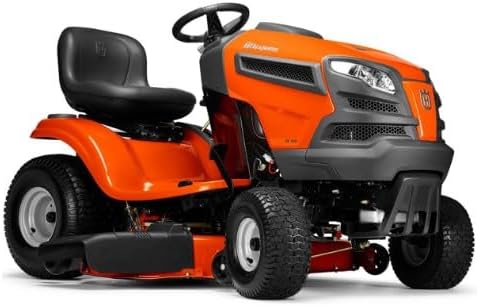
The Husqvarna TS 120 is a straightforward 42-inch riding lawn tractor built for reliable, no-nonsense yard work. It uses a 19 HP Briggs & Stratton gas engine and a pedal-operated hydrostatic transmission so you can control speed smoothly while keeping both hands on the wheel. The stamped twin-blade deck cuts a wide swath for efficient mowing of small to mid-size lawns, and the machine offers side ejection with optional collector or mulching cover for different grass management styles. The operator layout emphasizes comfort and ease of use with ergonomic seating and intuitive controls, which reduces fatigue on longer jobs. Expect solid day-to-day performance with conventional maintenance like oil and filter changes for long life. Limitations include the manual operation mode rather than advanced electronic controls and the tractor’s focus on homeowner rather than commercial heavy-duty use, so it is not optimized for very large acreage or towing heavy loads.
Best for: Homeowners who prioritize a durable, easy-to-operate tractor for maintaining small to mid-size lawns and who value straightforward mechanical reliability over advanced electronics.
Less Ideal for: Those needing a commercial-grade mower for very large properties, heavy towing, or professional landscape work should consider higher-capacity models.
- Reliable 19 HP Briggs & Stratton gas engine suited to regular homeowner use
- Pedal-operated hydrostatic transmission for smooth, intuitive speed control
- 42-inch twin-blade stamped deck covers ground quickly for small to mid-size lawns
- Ergonomic seating and simple controls reduce operator fatigue during longer mows
- Designed for homeowner use rather than commercial heavy-duty applications
- Lacks advanced electronic features or onboard diagnostics
Verdict: A simple, dependable 42-inch homeowner tractor that delivers reliable mowing performance with an easy-to-use hydrostatic drive.
EGO Power+ 42" Electric Riding Lawn Mower (TR4204)

| Power Source | Battery Powered |
|---|---|
| Cutting width | 42 inches |
| Battery Average Life | 60 minutes |
| Maximum Adjustable Cutting Height | 4 inches |
| Number of Positions | 12 |
The EGO Power+ TR4204 is a cordless 42-inch riding lawn mower designed to replace small gas tractors for homeowners who want quieter, low-maintenance operation. It runs on EGO 56V ARC Lithium batteries and ships with six 6.0Ah packs to cut up to about 1.5 acres on a single charge using its dual brushless, belt-free cutting motors. The tractor offers a stamped steel 42-inch deck with 12 cutting positions from 1.5 to 4.5 inches, three blade settings, three drive speeds, and cruise control via a digital LCD display. Practical additions include LED lights, a USB port, Bluetooth, anti-scalp wheels, and a rear tow hitch for hauling small loads. Key benefits are strong, gas-like power without fumes or routine engine maintenance, and predictable run times when fully charged. Important limits are the acreage per charge compared with larger gas machines and the dependence on multiple batteries for maximum runtime, which makes it heavier and requires battery management for long jobs. For homeowners with modest lawns seeking a quieter, low-upkeep mower, this packs a lot of capability into a 42-inch tractor.
Best for: Homeowners with roughly one to two acre lawns who prioritize quiet, low-maintenance mowing and want a battery-first alternative that still feels like a conventional riding tractor.
Less Ideal for: Large-acreage users or commercial landscapers who need long continuous runtime and quick refueling should consider larger gas or higher-capacity battery tractors.
- Battery system (up to six 56V ARC Lithium batteries) delivers power comparable to a 21 HP gas engine
- Dual brushless, belt-free cutting motors reduce maintenance and improve durability
- Customizable controls with digital LCD, three blade settings, three drive speeds, and cruise control
- Convenience features such as LED lights, USB charging port, Bluetooth, and rear tow hitch
- Runtime limited to about 1.5 acres per charge with the included six 6.0Ah batteries, which may be short for larger properties
- Requires management and charging of multiple battery packs which adds complexity compared with a single-tank gas fill
Verdict: Choose the TR4204 if you want a quiet, low-maintenance 42-inch riding mower that delivers gas-like performance using a modular battery system.
Choosing the Right 42-Inch Riding Lawn Mower: Key Factors to Consider
Deck Construction and Cutting System
Deck material, deck shape, and blade configuration directly affect cut uniformity and how grass clippings discharge. Steel decks tend to resist denting and hot spots better than thinner stamped materials, which matters if you frequently mow damp or sandy lawns. The deck's internal baffles and blade overlap determine whether the mower produces a clean striping effect or leaves ragged edges when grass is long.
Deck height adjustment range matters for seasonal changes in grass growth. A mower with a wide and easy-to-use height adjustment makes it simpler to raise the deck for spring cleanup or lower it for a close summer trim. Look for decks with accessible grease points or removable access panels to make blade servicing quicker and safer.
Engine Output and Load Handling
Rated horsepower and, more importantly, torque under load dictate how well the mower holds blade speed in thick or wet grass. Engines with higher low-end torque prevent bogging when you pass over denser patches or climb modest slopes. Carburetion or fuel-delivery design influences cold starts and idling behavior, which affects how readily you can begin early-morning mowing jobs.
Consider how often you will encounter heavy turf, tall weeds, or inclines. If your yard has frequent load spikes, prioritize power and cooling capacity. Also factor in fuel capacity and ease of access for refilling, because shorter refueling stops are helpful when covering an entire medium-sized property.
Steering, Turning Radius, and Maneuverability
A 42-inch deck balances cut width against gate clearance and obstacle navigation. Steering geometry, front wheel size, and chassis length determine the effective turning radius and how easily you can make tight passes around trees or flower beds. A tighter turning radius reduces time spent repositioning and helps protect landscaping features.
Consider front tire traction and suspension for yards with uneven ground. Good front-end tracking keeps the deck aligned with your intended line and prevents scalloped cuts. Controls that are intuitive and well-positioned allow you to make quick adjustments on the fly without stopping.
Comfort, Vibration, and Operator Ergonomics
Comfort affects how long you can mow without fatigue. Seat cushioning, suspension, armrest options, and pedal placement change the mowing experience during longer sessions. High-vibration machines will cause fatigue and can make precise edging more difficult over time.
Noise levels and visibility also matter. Clear sightlines to the deck and to obstacles reduce accidental contact with garden features. A comfortable layout with simple control reach improves accuracy and reduces the number of passes needed to finish a lawn.
Maintenance Accessibility and Serviceability
Routine service tasks like changing oil, sharpening or replacing blades, and cleaning the deck should be straightforward. Easy-to-remove deck panels, accessible oil filters, and clear routing for belts shorten downtime and reduce the chance of improper maintenance.
Consider the availability of replacement parts and the simplicity of common repairs. Machines designed for homeowner use typically allow basic repairs with standard tools. Also weigh how well components are protected from debris and moisture, as poorly shielded parts fail sooner in regular yard work.
Safety Features and Stability
Safety cutoffs for blades, seat-based interlocks, and effective braking are essential for responsible use. Stability matters on slopes and when turning; a low center of gravity and properly sized tires reduce the risk of tip events and improve traction.
Look for clear operator warnings and easy-to-access controls for emergency stops. Stability features are especially important if your yard includes berms, small embankments, or frequent direction changes around obstacles.
Best Uses for a 42-Inch Riding Mower
A 42-inch riding mower is well suited to medium-sized lawns where a walk-behind mower would be time-consuming but a wider commercial deck is unnecessary. It fits through typical residential gates and handles mowing around gardens and landscape features without excessive bulk. Homeowners with 0.5 to 1.5 acres of turf often find this size balances efficiency with maneuverability.
This deck width is also useful if you alternate between open lawn and tighter ornamental beds. The combination of decent cut swath and manageable turning makes it practical for routine weekly mowing schedules while still allowing for precise edge work when needed.
- Medium residential lawns and small acreage
- Properties with standard gate widths and driveway access
- Lawns with mixed open areas and bedded planting
Preparing Your Yard for Riding Mower Use
Before bringing a riding mower into service, clear the lawn of rocks, large sticks, toys, and other debris that can damage blades or be thrown by the deck. Trim low-hanging branches and mark irrigation heads so they are not struck during passes. Regularly removing obstacles reduces wear and lowers the chance of flying debris.
Check grade and slope areas where you plan to mow. Although most 42-inch residential mowers handle gentle slopes, excessively steep areas can reduce traction and increase risk. Plan routes that minimize travel on embankments and position your passes to avoid repeatedly crossing the same steep section.
- Remove debris before each mowing session
- Mark or protect sprinklers and decorative features
- Plan paths that avoid steep slopes and soft ground
Seasonal Care and Deck Management
Adjust deck height according to grass growth and season to prevent scalping in dry periods and to avoid trampling during wet springs. Regularly clean the underside of the deck to prevent grass buildup, which can affect airflow and cutting performance. After mowing damp grass, give the mower a short run to dry out trapped clippings and lower corrosion risk.
Inspect blades regularly for nicks and balance. Dull or damaged blades tear grass rather than cut it cleanly, leading to brown tips and increased disease susceptibility. Keep blades sharp and replace them if excessive wear or damage appears.
- Widen deck height in wet or dormant conditions
- Clear deck buildup after heavy mowing sessions
- Sharpen or replace blades on a seasonal schedule
Storage and Winterizing Tips
Store the mower in a dry, covered space to prevent rust and protect engine components from moisture. Before long-term storage, run the engine to operating temperature, change the oil if due, and either stabilize the fuel or drain the fuel system depending on the manufacturer guidance. Disconnect the battery or use a tender to maintain charge during winter.
Clean the mower thoroughly before storage, focusing on the deck, air filter area, and cooling fins. Addressing minor maintenance tasks before storage simplifies spring startup and reduces the odds of stale fuel or moisture-related problems.
- Store indoors or under a weatherproof cover
- Stabilize or drain fuel and maintain battery charge
- Clean and inspect deck and cooling components before storage
Common Modifications and Accessories
Homeowners often add practical accessories like mulching kits, weight kits for improved traction, or LED work lights for early-morning jobs. Mulching inserts can return finely chopped clippings to the lawn to act as a light fertilizer when mowing frequency is high and clippings are short.
Other popular aftermarket changes include wider tires for softer soil, ballast weights to increase stability on small slopes, and upgraded seats for increased comfort during longer mowing sessions. Choose accessories that preserve the mower's balance and do not overload attachment points.
- Mulching kits for returning nutrients to the turf
- Weight or ballast kits for improved traction
- Comfort upgrades for long mowing sessions
How We Chose the Best 42-Inch Riding Lawn Mower
We focused on attributes that affect everyday performance and long-term ownership for medium lawns. Important evaluation criteria were cutting quality and deck construction, since blade setup and deck durability determine cut consistency and resistance to corrosion. Maneuverability and steering responsiveness were judged for how easily a mower navigates tight beds, driveways, and obstacles. Engine power and torque were evaluated for the ability to maintain blade speed through thick grass and slight inclines. Comfort and ergonomics considered seat support, control placement, and vibration levels during extended mowing sessions. Maintenance accessibility and build durability covered how simple routine tasks are and whether components are likely to last under normal homeowner use. We excluded commercial-grade machines and specialty zero-turn mowers that are beyond the scope of a typical medium residential yard. Also filtered out models lacking basic safety features or those with deck widths substantially different from 42 inches. The final list contains machines that balance reliable cutting, manageable size, and straightforward ownership for typical home landscaping tasks.
FAQ
Is a 42-inch riding mower too wide for standard yard gates?
A 42-inch deck often fits through typical residential gates, but you should measure your gate clearance and factor in tire width and steering angle. Some setups require angling the mower or removing a gate hinge to pass through tighter entries.
How often should I sharpen blades on a 42-inch mower?
For regular weekly mowing, blades usually need sharpening two to four times per season depending on grass type and debris. Inspect blades monthly and after any impact with hard objects, and replace blades if they are excessively worn or bent.
Can a 42-inch riding mower handle small slopes?
Most residential 42-inch mowers handle modest slopes fine, but steep or uneven terrain reduces traction and increases risk. Avoid mowing on very steep embankments and take shorter passes across slopes rather than directly up and down when possible.
What maintenance is most important for long mower life?
Regular oil changes, keeping the deck clean, and maintaining sharp blades will extend the life of a mower. Also follow interval checks for air filters, belts, and tire pressure to prevent preventable wear and mechanical stress.
Should I choose a heavier mower for wet or sandy lawns?
Heavier machines can improve traction in soft conditions, but added weight may compact soil. Consider wider tires or ballast options to increase traction without excessively increasing ground pressure.
Final Verdict
For most medium-sized lawns, prioritize a 42-inch riding mower with a durable deck and enough engine torque to hold blade speed through thicker turf. Balance maneuverability and turning radius against creature comforts like seat support and control layout so routine mowing is efficient and less tiring. Maintenance accessibility and safety features are practical priorities that reduce downtime and risk. Decide which tradeoffs matter most for your yard: choose slightly more power if you face heavy turf or slopes, or emphasize a compact chassis and tight steering if you navigate many beds and gates. Following those priorities will help you select a mower that handles your property with confidence.
