

Note: This article contains affiliate links. If you click on these links and make a purchase, I may earn a small commission at no extra cost to you. This helps support my research and content. Read my full affiliate disclosure here.
Alocasia plants need a potting mix that drains quickly yet keeps roots evenly moist and well aerated. The right soil prevents root rot while supplying steady nutrients to support big leaves and vigorous growth. This guide looks at seven shortlisted soils chosen for different growing conditions and container setups, from small indoor pots to larger specimen containers. We evaluated mixes for aeration, moisture retention, and nutrient capacity so you can pick a blend that suits your watering habits and climate. Below are the top options and the criteria used to compare them.
Top Picks at a Glance
| Best Overall The best all-around choice for most situations | HydraGarden Forbidden Cereal Aroid Potting Mix, 6.5QT |  |
| Best Quality Built to a higher standard if you want something more solid | Rosy Soil Aroid Potting Mix, Chunky Biochar Indoor Soil, 4 Quarts |  |
| Best Value The sweet spot between price and what you get | Top Tier Genetics Aroid Soil Blend for Monstera and Alocasia (4 qt) |  |
| Best Budget The cheapest option that still gets the job done reliably | DUSPRO 8-in-1 Aroid Potting Mix, Chunky Pre-Mixed Soil, 2 qt |  |
| Highest Rated A top-rated pick with lots of positive feedback | Molly's Aroid Potting Mix (Houseplants & Aroids) — 10 Dry Quarts |  |
| Most Popular A crowd favorite that many people choose with confidence | Grow Queen Craft Aroid Potting Mix — Chunky, Peat-Free Soil for Monstera, Alocasia & Tropical Houseplants, 2 qt |  |
| Best Seller A high-volume bestseller chosen again and again | Back to the Roots Organic Indoor Potting Mix, 6 Quart |  |
HydraGarden Forbidden Cereal Aroid Potting Mix, 6.5QT

| Volume | 7.1 liters |
|---|---|
| Unit Count | 6.5 Ounce |
| Ingredients | Orchid Bark, Charcoal, Perlite, Coco Coir, Coco Chips, Worm Castings, LECA |
| Style Name | Houseplants & Aroids |
This potting mix is designed for aroids and other tropical houseplants and uses a chunky, soilless blend to keep roots airy and prevent waterlogging. Typical use is repotting or top-dressing Alocasia and similar plants where drainage and aeration are priorities. The formula lists orchid bark, perlite, coco coir and chips, charcoal, worm castings, LECA clay pebbles and a separate packet of New Zealand sphagnum moss so you can add moisture where needed. In practice the large particles promote fast drainage and reduce the risk of root rot while the organic additives help nutrient retention without peat. The included moss gives flexibility for propagation or a moisture-retaining topper. Because the mix is chunky it retains less free water than traditional peat-based mixes, so watering frequency may need to increase for thirsty cultivars. Overall this is a practical, plant-first mix for growers who want a durable, peat-free medium tailored to aroids.
Best for: Growers who keep aroids like Alocasia and want a stable, airy, peat-free mix that minimizes root rot and makes repotting straightforward.
Less Ideal for: People who prefer a continually moist, peat-heavy potting medium or who want a very fine-textured soil for seedlings and small pots.
- Very high drainage and root aeration from large particles like orchid bark and LECA
- Peat-free, soilless blend with organic amendments such as worm castings and charcoal
- Separate New Zealand sphagnum moss included for propagation or as a moisture-retaining topper
- Ingredients designed to buffer pH and support nutrient absorption
- Chunky texture holds less free water so plants that prefer consistently moist substrate need closer watering
Verdict: Choose this mix if you want a chunky, peat-free medium that prioritizes drainage and aeration for healthy Alocasia roots.
Rosy Soil Aroid Potting Mix, Chunky Biochar Indoor Soil, 4 Quarts

| Unit Count | 128 Ounce |
|---|---|
| Volume | 4 quarts |
| Item Highlight | Peat-Free, Microbially Active, Superior Aeration & Drainage |
| Style Name | Aroid Soil |
This Rosy Soil Aroid Potting Mix is built for aroids like Alocasia, providing a chunky, fast-draining medium that helps prevent root rot and keeps root crowns airy. The mix combines pine bark fines, pumice, and biochar to create real structure so water moves through quickly and the substrate resists compaction—useful when repotting Alocasia or refreshing tired containers. It is enriched with worm castings, mycorrhizae, and compost to support beneficial microbes and steady nutrient availability, which can improve root health and recovery after repotting. Being peat-free and designed to be carbon-negative, it suits growers looking for performance without peat. Practical downsides are bag size and volume for larger plants since the 4 quart bag only fills a few small pots, and the chunky texture may require mixing with finer components if you need a denser moisture-retentive blend for young seedlings. For mature Alocasias and other tropicals that need crisp, airy soil, this mix delivers reliable drainage and a microbially active environment.
Best for: Growers who prioritize fast drainage and root health for aroids like Alocasia and want a microbially active, peat-free mix for repotting mature tropical houseplants.
Less Ideal for: People potting large trees or doing many repots at once who need larger quantities or growers raising seedlings that require a finer, more moisture-retentive medium.
- Chunky blend of pine bark, pumice, and biochar for superior drainage and aeration
- Enriched with worm castings and mycorrhizae to support microbial activity and root health
- Peat-free formulation that uses biochar and pumice to reduce compaction over time
- Designed specifically for aroids and tropical houseplants, matching their root habits
- 4 quart bag provides limited volume for larger plants or multiple repots
- Very chunky texture may be too coarse for seedlings or plants that prefer more moisture retention
Verdict: Choose this aroid mix when you need a chunky, fast-draining, microbially active soil that helps Alocasia roots breathe and recover after repotting.
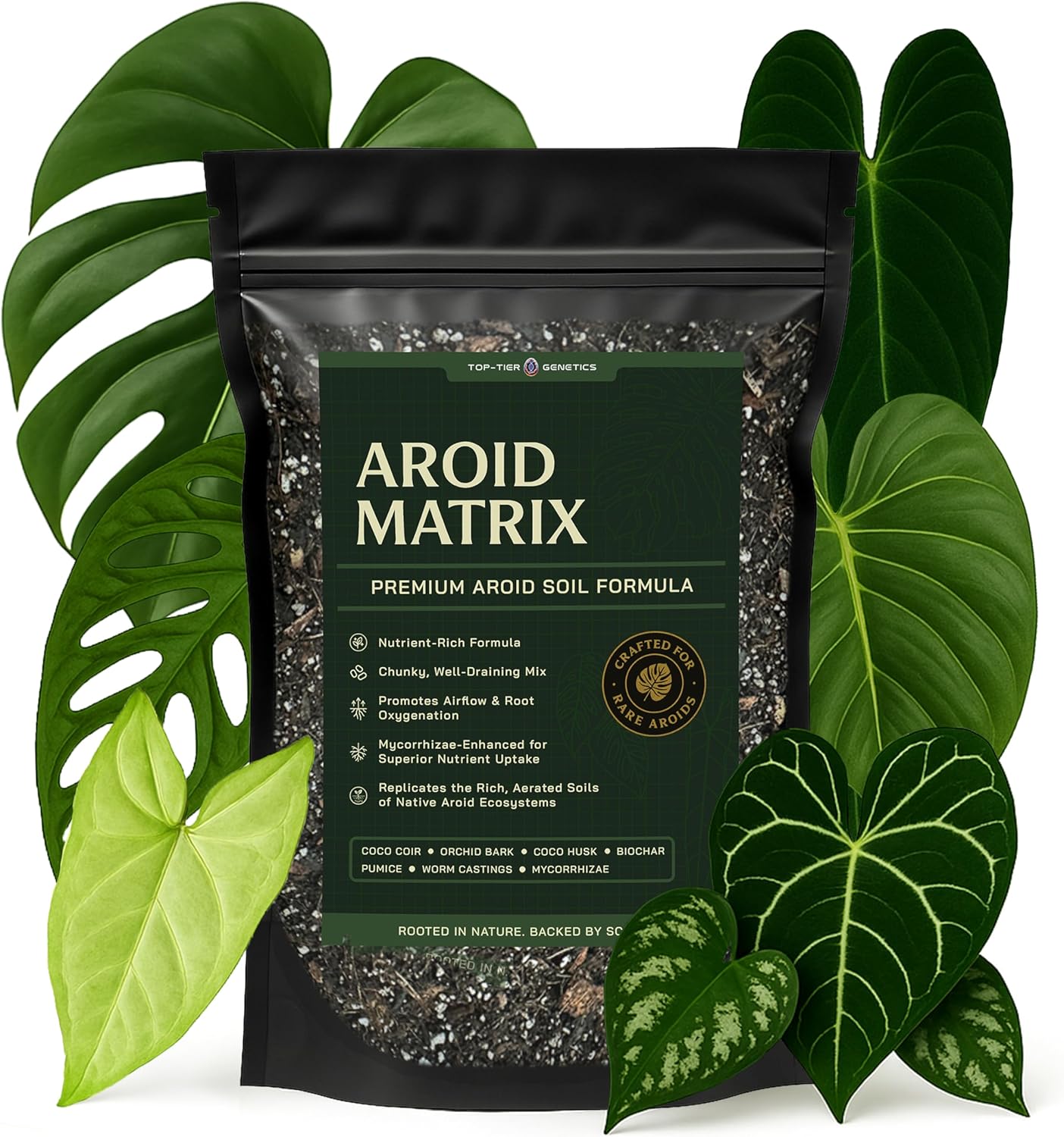
Top Tier Genetics Aroid Soil Blend for Monstera and Alocasia (4 qt)
| Volume | 4 quarts |
|---|---|
| Ingredients | Orchid bark; coco coir; pumice; coco husk; worm castings; biochar; mycorrhizae |
| Unit Count | 64 Ounce |
This ready‑to‑use aroid soil is designed for plants like Alocasia and Monstera and aims to give fast-draining, airy conditions without additional mixing. The mix combines orchid bark, coco coir and pumice for chunky structure that keeps media loose and prevents compaction, while coco husk and coir offer balanced moisture retention so roots stay hydrated but not waterlogged. Worm castings and mycorrhizae add nutrients and beneficial fungi to support early root establishment and leaf growth, and biochar helps hold nutrients and foster microbial life over time. Practical benefits include saving time—you can pot plants straight from the bag—and reducing common aroid problems such as slow drainage and root rot. Limitations are the small 4 quart volume, which means it is best for repotting small to medium plants or for top dressing rather than redoing large specimens, and gardeners who prefer precise DIY mixes may find ready blends less customizable.
Best for: Buyers who want a convenient, ready-made soil that minimizes repotting hassle and targets the drainage and biology needs of Alocasia and other aroids.
Less Ideal for: Growers repotting large specimens or those who prefer to custom-blend exact proportions of bark, coir and pumice should look for larger bags or individual components.
- Chunky, well-aerated mix reduces compaction and improves drainage for aroids
- Includes worm castings and mycorrhizae to support root development and nutrient uptake
- Biochar and organic matter help long-term soil biology and nutrient retention
- Ready to use out of the bag saves time compared with mixing components yourself
- Small 4 quart bag may be insufficient for repotting larger Alocasia plants
- Pre-blended formula limits ability to adjust ratios for individual plant preferences
Verdict: A convenient, biology‑forward chunky mix that gives Alocasia the fast drainage and microbial boost they need without any mixing.
DUSPRO 8-in-1 Aroid Potting Mix, Chunky Pre-Mixed Soil, 2 qt

| Brand | Duspro |
|---|---|
| Volume | 2 quarts |
| Main ingredients | Pine bark, pumice, coir, coco chips, LECA, perlite, zeolite, worm castings |
This DUSPRO aroid potting mix is a pre-mixed, chunky blend made specifically for Monstera, Alocasia and other aroid houseplants. It uses coarse ingredients such as pine bark, coco chips, pumice and LECA mixed with coir, perlite, zeolite and worm castings to create a well-aerated medium that drains quickly while holding some moisture. Use it straight from the bag when repotting or topping up pots with drainage holes; the open texture helps prevent root rot and gives space for thick aroid roots and aerial root development. The 2-quart size is convenient for one or two small repots and saves time compared with sourcing and measuring separate components. Expect some fine dust in the bag from dried natural materials, so handle carefully and open in a ventilated area. The small package means frequent repurchases for larger collections, and experienced growers who prefer to fine-tune mixes may miss the ability to adjust individual components, but for straightforward repotting of Alocasia this blend covers the essentials well.
Best for: Buyers who want an affordable, no-fuss potting mix that works for repotting or topping up Alocasia and other indoor aroids without mixing multiple components.
Less Ideal for: Not the best choice for hobbyists who prefer to custom-blend exact ratios or for growers with many large plants who need bulk quantities.
- Designed for aroids with chunky ingredients that improve airflow and reduce compaction
- Ready-to-use mix saves time versus buying and blending separate components
- Contains moisture-stabilizing elements such as coir, zeolite and worm castings for balanced wet/dry cycles
- Small 2 qt package requires repurchasing for larger plants or collections
- Contains fine dust from dried natural materials that can be irritating when opening
Verdict: A convenient, budget-friendly chunky potting mix that simplifies repotting Alocasia and other aroids by delivering good drainage and aeration straight from the bag.
Molly's Aroid Potting Mix (Houseplants & Aroids) — 10 Dry Quarts

| Volume | 11 liters |
|---|---|
| Item Highlight | Tropical Plant Mix with Coco Coir, Orchid Bark, Worm Castings & Perlite |
| Ingredients | Orchiata Bark, Coco Chips, Worm Castings, Horticultural Charcoal, Mycorrhizae |
Molly's Aroid Potting Mix is a soilless, chunky blend designed for plants like Alocasia, Monstera, and Philodendron. You get a mix of orchid bark, coco chips, perlite, horticultural charcoal and worm castings that keeps the root zone airy and drains quickly, which reduces the chance of root rot in moisture-sensitive aroids. The baged mix includes mycorrhizae to help roots take up water and nutrients and is pH-balanced and mineral-enriched for steady growth. It is clean and lighter than garden soil, so repotting and handling indoors is less messy. Because it is not soil-based, it stays looser over time and requires less frequent repotting, but it will dry faster than heavier mixes so watering rhythm needs adjustment. The resealable bag helps keep the mix fresh between uses and the ingredients list makes it straightforward to top up or amend for specific plants.
Best for: Buyers who prioritize dependable, low-compaction media for tropical houseplants and want a clean indoor-friendly mix that reduces overwatering problems.
Less Ideal for: Gardeners seeking a heavy, moisture-retaining soil for plants that prefer persistently damp conditions should consider peat- or soil-based blends instead.
- Chunky, fast-draining formula reduces compaction and lowers overwatering risk
- Includes mycorrhizae to improve root nutrient and water uptake
- Clean, soilless mix that is lighter and neater for indoor repotting
- Contains organic inputs like worm castings and horticultural charcoal for plant health
- Drains and dries more quickly than soil-based mixes so watering frequency may increase
- Not a ready substitute if you need a moisture-retentive, heavy potting medium
Verdict: A reliable, fast-draining soilless mix tailored for Alocasia and other aroids to reduce overwatering and support healthier roots.
Grow Queen Craft Aroid Potting Mix — Chunky, Peat-Free Soil for Monstera, Alocasia & Tropical Houseplants, 2 qt

| Volume | 2 quarts |
|---|---|
| Ingredients | Tree fern fiber, earthworm castings, lava rock, biochar, coco coir, gypsum, alfalfa meal |
| Plant type | Formulated for aroids and tropical houseplants |
This Grow Queen Craft Aroid Mix is a pre-formulated, ready-to-use potting soil designed for aroids and other tropical houseplants such as Alocasia. The mix combines large bark pieces, pumice, lava rock and tree fern fiber to create an open, airy medium that drains quickly and resists compaction while coco coir and charged biochar hold modest moisture between waterings. It also includes earthworm castings, alfalfa meal and gypsum to support soil biology and provide gentle nutrition from the start. Practical benefits for Alocasia growers are fewer root rot problems thanks to improved aeration and a pH tuned toward slightly acidic conditions these plants prefer. The bag arrives pre-moistened and is easy to use for repotting without additional amendments. Limitations are the small 2 quart size for larger plants or multiple repots and the chunky texture may require some settling in stable pots or breaking up for very small rootballs. For growers who want a peat-free, biologically active mix crafted for tropicals, this handles the core needs well.
Best for: A careful plant owner who prioritizes proven, plant-friendly mixes and wants a peat-free soil that reduces overwatering risk for Alocasia and other tropical houseplants.
Less Ideal for: People who need bulk quantities for many or very large plants or growers who prefer a fine-textured, moisture-retentive mix for seedlings and small-rooted cuttings.
- Chunky, well-aerated formula (bark, pumice, lava rock) reduces risk of waterlogged roots
- Peat-free and perlite-free blend using coco coir and tree fern fiber for sustainability
- Includes charged biochar and organic amendments to supply immediate, gentle nutrients
- pH balanced toward slightly acidic range preferred by aroids
- Small 2 quart bag size is limited for repotting larger Alocasia or multiple plants
- Chunky texture may need breaking up for very small pots or delicate rootballs
Verdict: Choose this peat-free, chunky aroid mix when you want a ready-made, biologically active soil that improves drainage and lowers root-rot risk for Alocasia.
Back to the Roots Organic Indoor Potting Mix, 6 Quart

| Unit Count | 192 Fluid Ounces |
|---|---|
| Item Type Name | Indoor Potting Mix 6qt |
| Item Highlight | Peat-free, 100% organic, made in the USA |
| Ingredients | Coconut Coir, Yucca, Mycorrhizae, Perlite, Horticultural Sand |
This 6-quart indoor potting mix is designed for common houseplants such as pothos, monstera and other aroid varieties like Alocasia. The blend uses coconut coir as a peat alternative, plus yucca extract to help the mix retain moisture and mycorrhizae to support root development and nutrient uptake. You would use it for repotting small to medium indoor plants or topping up containers where steady moisture retention and aeration are important. Practical benefits include peat-free, organic ingredients that reduce pest-prone bark and a balanced dolomitic limestone to help pH stability. Because the bag is a modest 6 quarts it is easy to handle and suitable for risk-averse buyers who prefer a ready-made, consistent mix rather than custom blending. Limitations are the small volume for larger pots and the lack of detailed drainage modifiers beyond horticultural sand and perlite, so very heavy feeders or oversized Alocasias may need additional coarse amendment for extra drainage.
Best for: Buyers who want a ready-to-use, organic indoor potting mix that reduces guesswork and favors steady moisture and root health for houseplants like Alocasia.
Less Ideal for: Growers repotting large specimen plants, nurseries, or those needing bulk quantities or a highly customized super-draining mix.
- Peat-free, 100% organic formula suitable for indoor use
- Includes mycorrhizae to support root growth and nutrient uptake
- Yucca extract helps the mix retain moisture without becoming waterlogged
- Balanced with dolomitic limestone to stabilize pH
- Smaller 6 qt bag is easy to handle and mix into pots
- Only 6 quarts per bag which is small for repotting multiple or large Alocasia plants
- May need extra coarse amendment for very heavy or fast-draining requirements
Verdict: A reliable, peat-free organic potting mix that makes repotting Alocasia and similar houseplants simple and low-risk.
Choosing the Right Soil for Alocasia: Key Factors to Consider
Drainage and Runoff
Alocasia roots are prone to rot if water sits against them. Good drainage ensures excess water escapes quickly after watering, preventing anaerobic conditions around the rhizomes. Look for mixes with coarse components such as perlite, pumice, or coarse sand that create channels for water to move through the pot.
Drainage also affects how often you need to water. A very free-draining mix dries faster and demands more frequent watering, which can be fine in a warm, bright room but problematic in cool, dim locations. Balance drainage with the plant's environment and your schedule.
Moisture Retention
While drainage is essential, Alocasia still require steady access to moisture between waterings. Organic components like coconut coir, well-rotted compost, or peat alternatives hold water in small pores that roots can access without becoming waterlogged.
The ideal mix holds enough moisture to sustain the plant for several days but surrenders excess quickly when you water. Too little retention forces constant watering that stresses the plant; too much retention leads to soft roots and disease.
Aeration and Chunkiness
Chunky particles create air pockets that keep oxygen moving through the root zone. Alocasia benefit from a mix that includes bark fines, coarse perlite, pumice, or orchid-type bark to maintain a loose structure.
Aeration affects root health directly: compacted, fine-textured mixes limit oxygen and encourage root-bound conditions. Choose a blend that stays loose over months of watering and repotting, or plan to refresh the top layer periodically to maintain porosity.
Nutrient Holding Capacity
Alocasia are moderately hungry, especially during active growth. A mix with sufficient organic matter provides a slow-release reservoir of nutrients and supports beneficial microbial activity.
However, overly rich potting mixes can retain salts and become difficult to manage in containers. Look for mixes with balanced organic content or those that allow you to add controlled amendments like slow-release fertilizer or periodic liquid feedings.
pH and Chemical Compatibility
Alocasia prefer a slightly acidic to neutral root environment. Soil pH affects nutrient availability, especially for iron and magnesium, which influence leaf color. Mixes with composted bark or peat alternatives typically sit near the right range, but very alkaline components can reduce access to key micronutrients.
If you use tap water with high alkalinity, choose a mix and feeding routine that compensates for that tendency rather than relying solely on pH adjustments.
Stability and Longevity
Potting mixes can break down over time as organic particles decompose. A stable mix maintains its structure so roots do not become compacted or waterlogged after several months.
Including materials that resist fast breakdown, such as coarse bark and inorganic aggregates, extends the life of the soil. Stability also reduces the frequency of repotting and the risk of sudden shifts in water behavior as a plant matures.
Adjusting Mixes for Different Containers
Container size and material change how a soil performs. Small pots dry out faster and need more moisture-retentive components, while large pots hold more water and can use chunkier mixes to avoid saturation. Porous pots like unglazed terracotta wick moisture from the soil and may require slightly richer mixes to keep roots hydrated.
For tall, narrow pots consider adding more chunky material near the base to improve vertical drainage. For shallow dishes, focus on moisture retention while keeping an aerated top layer to protect crowns from sitting wet.
- Add extra perlite or pumice in large, deep pots to improve vertical drainage.
- Increase coconut coir or compost fraction in small pots to reduce watering frequency.
- Use a saucer or tray to monitor runoff and avoid letting water sit against the pot base.
Custom Amendments Gardeners Often Use
Gardeners commonly tweak store mixes to suit their watering style and environment. Perlite and pumice both boost drainage and aeration, but pumice is heavier and stays put better in mixed pots. Coconut coir and well-aged compost improve moisture retention without the acid load of peat. Horticultural charcoal helps with aeration and reduces odors in older mixes.
When adding amendments, mix them thoroughly so you do not create layers that trap water. Small, incremental changes let you observe how the plant responds and avoid sudden shifts in moisture behavior.
- Perlite for immediate drainage increase and lighter weight.
- Pumice for long-term porosity and structural stability.
- Coconut coir for sustainable water retention.
- Horticultural charcoal for freshness and moisture balance.
How Climate and Indoor Conditions Affect Choice
High-humidity tropical conditions allow for mixes that hold a bit more moisture because evaporation is lower. In dry, heated indoor spaces, choose mixes with more organic water-holding ingredients and increase humidity around the plant. Adjust watering frequency rather than drastically changing the mix when seasons shift.
Light intensity matters too. Under bright, warm light Alocasia use more water and tolerate chunkier soils that dry faster. In lower light, a mix that retains moisture longer helps maintain steady root hydration.
- Warm, bright spots: favor chunkier mixes with lower water retention.
- Cool, dim spots: favor mixes with higher organic water-holding content.
- Seasonal adjustments: increase watering in active growth, reduce in dormancy.
Repotting and Refreshing Old Soil
Repot when the plant shows slowed growth, visible root crowding, or when soil has compacted and drains poorly. Gently remove old soil from the roots and replace with a fresh, well-structured mix. For larger specimens, refresh the top third of the soil annually to restore aeration and nutrient levels without full disturbance.
When repotting, avoid overpacking the new soil. Plant at the same crown depth and press lightly to eliminate large air pockets while preserving the chunkiness that promotes aeration.
- Refresh topsoil yearly for mature plants in the same pot.
- Full repot every 12 to 24 months for fast growers or root-bound specimens.
- Check root health during repotting and prune only dead or rotting roots.
Common Mistakes to Avoid
Using straight garden soil or a heavy potting mix can suffocate Alocasia roots by holding too much water. Conversely, a purely fast-draining succulent mix dries too quickly and stresses the plant. Avoid mixes designed for single-use extremes unless you plan to heavily amend them.
Over-fertilizing in rich mixes causes salt buildup and leaf tip burn. Follow a measured feeding schedule and flush pots occasionally to remove accumulated salts.
- Do not use pure garden soil in containers.
- Avoid succulent-specific mixes without added organic matter.
- Do not overpack soil when potting; preserve porosity.
How We Chose the Best Soil for Alocasia
We shortlisted soils that meet the particular balance Alocasia require: rapid drainage without desiccating the root ball, good aeration around the tubers and rhizomes, and enough organic matter to hold nutrients. Key filters included particle size distribution, presence of chunky components like perlite or bark, and indications of water-holding amendments such as coconut coir or peat alternatives. We also considered mix stability over time so the soil does not compact and suffocate roots after repeated watering. pH compatibility and baseline nutrient content were evaluated because Alocasia perform best in slightly acidic to neutral mixes with steady available nutrients. Finally, we excluded mixes designed exclusively for succulents, pure orchid bark, or straight garden soil because those extremes do not meet the moisture and aeration balance Alocasia need. The resulting list favors blends gardeners can adapt with minor amendments to match pot size and local humidity.
FAQ
How often should I water Alocasia in a fast-draining mix?
It usually depends on pot size and conditions, but with a fast-draining mix you will water more frequently and monitor the top inch of soil. Water when the top 1 to 2 inches feel slightly dry, and reduce frequency in cooler months.
Can I use coco coir alone for Alocasia?
Coco coir holds moisture well and is a good component, but used alone it can compact and lack sufficient aeration. Mix coir with chunky elements like perlite or bark to maintain structure.
Is peat moss a good choice for Alocasia mixes?
Peat retains water effectively but has environmental concerns and can compact over time. If you use peat alternatives, ensure you include coarse particles to keep the mix airy and stable.
What is the best pH range for soil used with Alocasia?
Alocasia generally prefer slightly acidic to neutral soil, roughly pH 5.5 to 7.0. This range keeps most nutrients available while avoiding issues with nutrient lockout.
Should I add slow-release fertilizer to the soil at potting time?
A modest, starter amount of slow-release fertilizer can help young plants, but do not overdo it. Many gardeners prefer light initial feeding and then regular diluted liquid feeds during the growing season.
Final Verdict
Choose a soil that balances good drainage with enough moisture retention and plenty of air around the roots. Prioritize mixes with chunky inorganic components plus a measured amount of organic matter so the root zone stays aerated, hydrated, and nutrient-ready. Consider container size, indoor climate, and how often you can water when selecting or custom-blending a mix. With the right balance you reduce rot risk and support the dramatic foliage Alocasia are grown for.
