

Note: This article contains affiliate links. If you click on these links and make a purchase, I may earn a small commission at no extra cost to you. This helps support my research and content. Read my full affiliate disclosure here.
Choosing the right bagged compost changes how quickly beds recover, how well containers drain, and how new plantings establish. The right compost feeds soil life, improves structure, and reduces the need for frequent feeding. This guide narrows the field to seven well-suited bagged composts for a range of garden uses and growing situations. We looked at material composition, texture, and usability so you can pick a compost that fits raised beds, borders, containers, or quick soil top-ups. Below are the top shortlisted options and the decision factors we used to evaluate them, followed by practical advice on using and storing bagged compost.
Top Picks at a Glance
| Best Overall The best all-around choice for most situations | Espoma Organic Land and Sea Gourmet Compost (1 cu ft) |  |
| Best Quality Built to a higher standard if you want something more solid | Blue Ribbon Organics OMRI Certified Organic Compost (Bag) |  |
| Best Value The sweet spot between price and what you get | BRUT Worm Farms Cow Compost — 10 Quart Bag |  |
| Best Budget The cheapest option that still gets the job done reliably | Gantessa Stone Premium Organic Compost, 2 lb |  |
| Highest Rated A top-rated pick with lots of positive feedback | Wiggle Worm 100% Pure Worm Castings Organic Fertilizer, 30 lb |  |
| Most Popular A crowd favorite that many people choose with confidence | Plantonix Compost Bliss 100% Natural Compost (8 qts) |  |
| Best Seller A high-volume bestseller chosen again and again | R&M Organics Cow Manure Compost Soil Amendment, 10 lb |  |
Espoma Organic Land and Sea Gourmet Compost (1 cu ft)

| Item Form | Granules |
|---|---|
| Specific Uses For Product | Soil Conditioning, Plant Growth, Seed Development, Root Development |
| Applicable Species | Flowers, Vegetables, Trees, Shrubs |
| Ingredients | Aged forest products, sphagnum peat moss, humus, limestone, lobster meal, crab meal |
| Unit Count | 1 Count |
Espoma Organic Land and Sea is a bagged compost designed to enrich native soil and container mixes when planting or transplanting. The formula combines aged forest products, sphagnum peat moss, humus, limestone for pH adjustment, and lobster and crab meal to add organic nutrients, while a proprietary mycorrhizae blend promotes root establishment. Use it worked into garden beds before planting or mixed into potting mixes and window boxes to boost seed development and root growth. Practical benefits include improved soil structure, added slow-release organic fertility from the shellfish meals, and microbial support from the mycorrhizae for better nutrient uptake. The granule form is easy to handle and measure, and the product is labeled for flowers, vegetables, trees and shrubs. Limitations to expect are the relatively small one-bag unit for larger beds and the presence of peat moss, which some gardeners avoid for environmental reasons. Also, like most composts this is a soil conditioner rather than a complete, fast-acting fertilizer, so additional feeding may be needed during heavy fruiting or flowering periods.
Best for: Gardeners looking for a versatile, organic soil conditioner to improve structure and biological activity in beds and containers before planting.
Less Ideal for: Those needing a high-analysis, fast-release fertilizer or anyone planning to renovate very large areas who will want bulk commercial compost instead.
- Organic blend with natural ingredients and no synthetic chemicals listed
- Includes lobster and crab meal for slow-release organic nutrients
- Contains a proprietary mix of endo and ecto mycorrhizae to aid root establishment
- Granular form that is easy to work into beds and containers
- Suitable for a wide range of plants including vegetables, flowers, trees and shrubs
- Sold as a single 1 cubic foot bag which may be insufficient for larger garden projects
- Contains sphagnum peat moss, which some gardeners avoid for sustainability reasons
Verdict: A well-rounded organic bagged compost that adds long-lasting organic fertility and beneficial mycorrhizae to beds and containers, ideal for improving soil health before planting.
Blue Ribbon Organics OMRI Certified Organic Compost (Bag)

| Included Components | Compost |
|---|---|
| Item Type Name | Organic Compost |
| Unit Count | 1 Count |
| Volume | 7.48 gallons |
Blue Ribbon Organics OMRI Certified Compost is a ready-to-use bagged organic compost intended to boost soil health across vegetable beds, flower gardens, lawns, and around trees and shrubs. It is made from recycled food and yard residuals processed at a permitted facility and tested for maturity, pathogens, and weed seed so it can be applied straight from the bag. Typical uses include incorporating 3–4 inches into new beds, topping existing beds with a thin layer to replenish organic matter, topdressing lawns in late fall, or using 2–3 inches as mulch around trees. The product lists measured benefits such as better aeration, increased water retention, pH buffering, and added plant nutrients including nitrogen, phosphorus, and potassium. Certification by OMRI and the US Composting Council provides reassurance for organic gardens. The main limitations are that moisture content can vary between bags, affecting the apparent weight and ease of handling, and a single 7.9-pound/7.48-gallon bag is small for larger projects so multiple bags are typically required for soil-building at scale.
Best for: Gardeners who prioritize measurable soil performance and want a certified organic compost to reliably boost nutrient content and water retention in vegetable beds, flower borders, and small lawns.
Less Ideal for: Those needing bulk compost for large landscapes or commercial applications should choose bulk deliveries or larger-format products instead.
- OMRI certified and US Composting Council approved for organic use
- Balanced, tested compost that improves aeration and water retention
- Versatile application: soil amendment, topdressing, and mulch around trees and shrubs
- Small bag volume makes it inefficient for large-scale projects
- Moisture content can vary between bags which affects handling and actual weight
Verdict: Buy this if you want a tested, OMRI-certified bagged compost that reliably improves soil health in small to medium garden projects.
BRUT Worm Farms Cow Compost — 10 Quart Bag

| Unit Count | 192 Ounce |
|---|---|
| Volume | 10 quarts |
| Brand Name | BRUT WORM FARMS |
| UPC | 860000284295 |
Brut Cow Compost is a ready‑to‑use bagged cow manure compost aimed at improving soil fertility and structure. It is made from 100% composted cow manure that has been finely sifted, which makes it easy to mix into potting mixes, top‑dress containers, or incorporate into garden beds. Notable features include an OMRI listing for organic use, a nutrient profile with nitrogen, calcium and iron, and a low‑odor, non‑burning formula that is safe around seedlings and houseplants. In practice the compost increases microbial activity and helps retain moisture, so plants show healthier foliage and better growth when used regularly. The 10 quart bag is convenient for small gardens, potted plants, or spot treatments without handling bulk loads. Limitations are the modest volume per bag for larger beds and the product is a general amendment rather than a complete, balanced fertilizer, so heavier feeding or specific NPK management may still be needed for high‑demand crops.
Best for: Gardeners who want an easy, certified organic soil amendment to boost soil life and moisture retention in containers, small beds, or targeted spots without handling raw manure.
Less Ideal for: People establishing large garden plots or those seeking a complete NPK fertilizer for heavy feeding crops should consider bulk compost or supplemental fertilizers instead.
- OMRI‑listed organic compost safe for edible and ornamental plants
- Finely sifted, low‑odor formula suitable for indoor use and seedlings
- Adds organic matter and beneficial microbes to improve moisture retention and soil structure
- Versatile application as top dressing, mix‑in amendment, or container soil enhancer
- Small 10 quart volume requires multiple bags for larger garden projects
- Not formulated as a balanced complete fertilizer for high‑demand crops
Verdict: A compact, OMRI‑listed bag of finely composted cow manure that reliably adds organic matter and microbial life to containers and small garden beds.
Gantessa Stone Premium Organic Compost, 2 lb

| Item Form | Solid |
|---|---|
| Application Method | Soil Amendment, Top Dressing, Compost Tea |
| Coverage | Medium |
| Target Species | flowers, vegetables, herbs, and more |
| Unit Count | 32 Ounce |
This compact bag of organic compost is designed for gardeners who need a convenient, ready-to-use soil amendment. It works as a top dressing, can be mixed into potting soil at the recommended 1:2 ratio, or brewed into compost tea to feed plants. The product description emphasizes improved soil structure, moisture retention, and added beneficial microbes, which makes it suitable for flowers, vegetables, and herbs in containers and small beds. Notable features include its screened texture and multiple application methods listed on the label, which make it easy to spread evenly or blend into mixes. Practical benefits are quick handling, low mess compared with loose bulk compost, and usefulness for spot-treatment or trialing compost on small plots. Limitations are the small 2 lb unit size that makes it impractical for large gardens and the lack of detailed nutrient analysis on the label, so users seeking guaranteed N-P-K numbers or bulk coverage will need a larger or more fully specified product.
Best for: Gardeners on a tight budget looking to improve potting mixes, containers, or small vegetable and flower beds with a convenient, trial-size organic compost.
Less Ideal for: Homeowners needing to amend large yards or landscapers who require bulk quantities and specified nutrient guarantees should look elsewhere.
- Screened, easy-to-spread texture suitable for top dressing and potting mixes
- Labeled for multiple application methods including soil amendment and compost tea
- Helps improve soil structure and moisture retention for containers and small beds
- Small bag size is convenient for testing on new plants or for use in urban gardens
- Small 2 lb unit provides limited coverage so multiple bags are needed for larger areas
- No published N-P-K or detailed nutrient analysis on the package
Verdict: A compact, easy-to-use organic compost that lets budget-minded gardeners test and improve small containers and beds without committing to bulk bags.
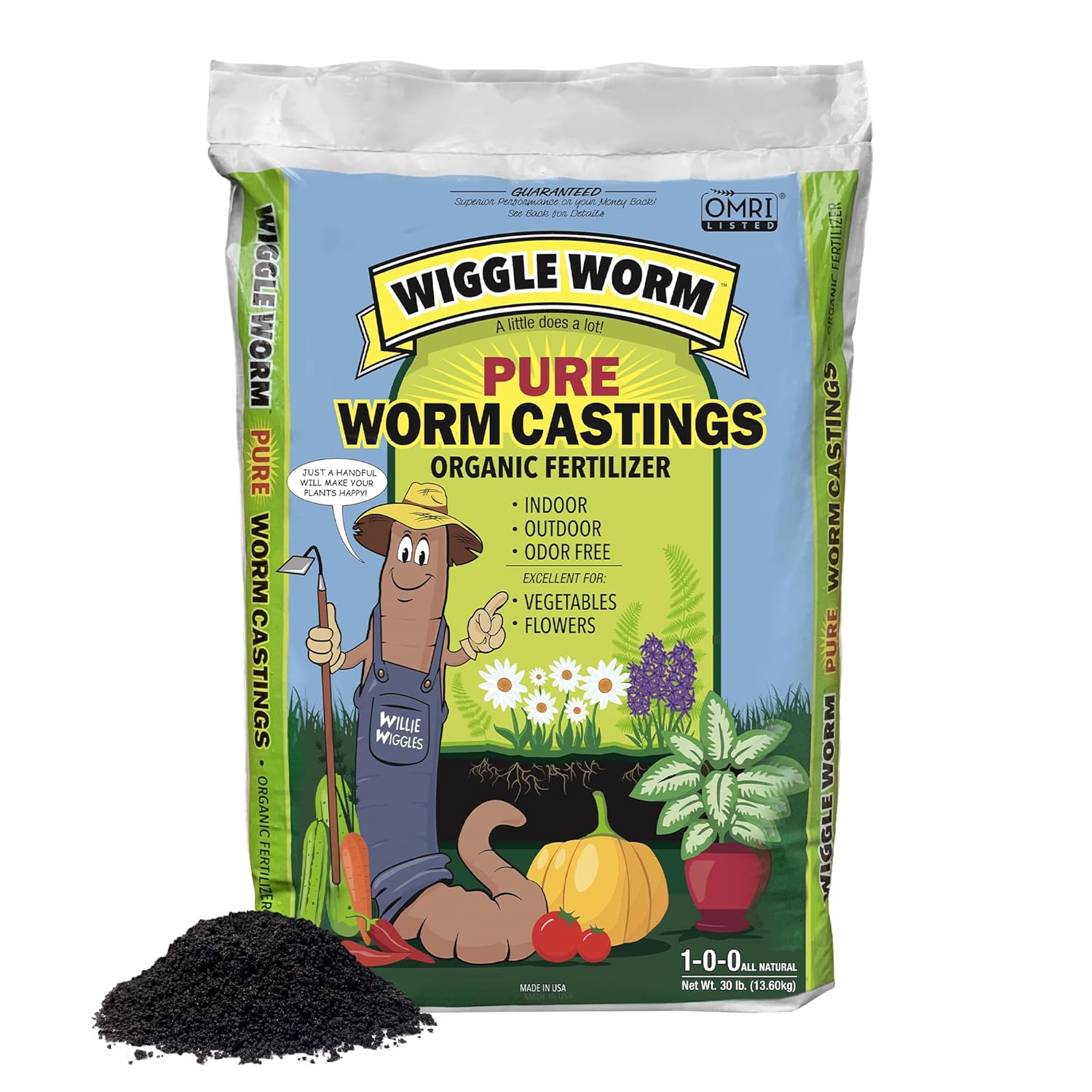
Wiggle Worm 100% Pure Worm Castings Organic Fertilizer, 30 lb
| Item Form | Granules |
|---|---|
| Specific Uses For Product | Soil Conditioning |
| Application Method | Apply to soil |
| Unit Count | 480 Ounce |
Wiggle Worm Pure Worm Castings is a straightforward, all‑organic soil amendment designed to boost soil biology and plant health without chemical fertilizers. You apply it directly to beds, mix it into potting soil, or make a casting tea; the product sheet recommends top‑dressing, mixing ratios for containers, and rates for lawns and trees. The castings are described as screened and free of debris and worm eggs, which makes them easy to sprinkle and mix into existing soil. Practical benefits include improved aeration and water retention, immediate plant‑available nutrients that do not burn roots, and a long‑lasting supply of microbes to support steady growth. Because it is OMRI listed, it fits into certified organic gardens and can replace synthetic feeds for ongoing soil building. The main limitations are general to the category: you will need to buy and store multiple bags for large areas, and a 30 lb bag still requires manual spreading and occasional reapplication rather than delivering instant, high‑N responses that some chemical fertilizers provide.
Best for: Gardeners who prioritize reliable, long‑term soil health and organic compliance and who want an easy, low‑risk amendment for beds, containers, and lawns.
Less Ideal for: People needing a fast, high‑nitrogen response for emergency greening or those unwilling to handle and store multiple bags for larger lawns or landscapes.
- OMRI listed organic and made from 100% pure worm castings
- Screened, debris‑free granules that mix easily into soil or containers
- Provides water‑soluble nutrients for relatively quick plant uptake
- Builds soil biology and improves aeration and water retention
- Versatile instructions for beds, containers, lawns, and making casting tea
- Requires repeated applications for large areas which can be labor intensive
- Not a quick high‑nitrogen boost compared with some synthetic fertilizers
Verdict: Buy this if you want a reliable, OMRI‑listed, all‑organic worm‑casting amendment that builds soil biology and supports steady, long‑term plant health.
Plantonix Compost Bliss 100% Natural Compost (8 qts)

| Brand Name | plantonix |
|---|---|
| Unit Count | 160 Ounce |
| Volume | 8 quarts |
| Style Name | 100% Natural Compost |
Plantonix Compost Bliss is a fully composted, ready-to-use soil amendment designed to mix with potting soil, raised beds, containers, and garden soil. In practice you open the bag and blend it into your existing growing medium to improve texture, moisture retention, and nutrient content without waiting or additional processing. Notable features include its all-organic formula with no synthetic additives and OMRI listing, which makes it suitable for organic systems and seed starting mixes. Because it is a pure compost product it works well combined with perlite, coco coir, or vermiculite when building potting mixes or refreshing tired beds. The compact 8-quart bag is easy to handle for small projects and container gardeners, though larger gardens will require multiple bags. One limitation is that this is a straight compost rather than a balanced potting soil, so gardeners wanting a ready-to-plant potting mix with precise drainage or fertilization levels will need to blend additional components. For gardeners who value a natural, low-maintenance soil amendment, this product provides a convenient, proven way to boost soil health.
Best for: Gardeners who prefer verified organic inputs and want a convenient, ready-made compost to boost soil health in containers, raised beds, and small garden patches.
Less Ideal for: People who need a turn-key potting mix with exact drainage or nutrient formulations or those managing large-scale beds without access to bulk compost options.
- 100% natural, fully composted material suitable for organic gardening
- Ready to use out of the bag with no curing or prep required
- Improves soil structure, moisture retention, and nutrient content when mixed into soil
- OMRI-listed and compatible with seed starting, containers, and raised beds
- Sold in an 8-quart bag that may be small for larger garden projects
- Not a complete potting mix so additional amendments may be needed for specific drainage or nutrient requirements
Verdict: A convenient, OMRI-listed 100% compost in a small bag that reliably improves soil texture and fertility for container and small-plot gardeners.
R&M Organics Cow Manure Compost Soil Amendment, 10 lb

| Item Form | Solid |
|---|---|
| Specific Uses For Product | Organic |
| Application Method | Apply a thin layer around plants or mix into soil |
| Coverage | All-purpose |
| Target Species | fruits, vegetables, flowers, lawns, trees |
This 10 lb bag of R&M Organics compost is a straightforward, ready-to-use soil amendment made from fully composted cow manure. It is intended for mixing into garden beds, raised beds, pots or applying as a thin surface layer around established plants. The product is processed to reduce odor and impurities, so it is practical for both outdoor beds and container gardening where a strong smell would be unwanted. Notable features include a recommended 5:1 mixing ratio and all-purpose coverage suited to vegetables, fruits, flowers, lawns and trees. In use it improves moisture retention and soil texture, which can reduce watering frequency and support healthier root development over time. The 10 pound bag is convenient for small to medium projects but means multiple bags will be needed for larger gardens. Also the product is a general organic soil amendment rather than a balanced fertilizer, so gardeners seeking precise nutrient ratios or quick-release feeding may need to supplement with specific fertilizers.
Best for: Gardeners who prioritize low-risk, simple organic amendments for small to medium vegetable beds, containers and ornamental plantings and want an easy-to-handle, low-odor product.
Less Ideal for: Large-scale gardeners or landscapers covering many beds who need bulk quantities or growers seeking precise fertilizer nutrient ratios for targeted feeding.
- Fully composted cow manure with reduced odor suitable for near-plant use
- Improves soil structure and moisture retention for longer-lasting hydration
- All-purpose application for beds, containers, lawns and trees
- Convenient 10 lb bag size for small to medium gardening projects
- Small bag size requires buying multiple bags for large areas
- Not formulated with specified N-P-K values for targeted feeding
Verdict: A low-odor, fully composted cow manure amendment that makes improving soil texture and moisture retention simple for small to medium garden projects.
Choosing the Right Bagged Compost: Key Factors to Consider
Feedstock Composition
What went into the compost matters because feedstock determines the nutrient profile and long-term soil benefits. A compost primarily made from yard trimmings will differ from one blended with food waste or manure. Manure-enriched composts often release nitrogen more quickly and can be richer in available nutrients, while woody feedstocks yield a longer-lasting organic matter boost but may contain more coarse pieces.
Knowing feedstock helps you predict how the compost will behave when mixed into planting soil or used as a top dressing. It also signals potential odors, salts, or weed seed presence if the original material was not thoroughly processed. Choose a feedstock composition that matches whether you need fast nutrient release or longer-term structure improvement.
Maturity and Stability
Mature, stable compost will not tie up nitrogen or continue decomposing aggressively after application. Look for compost that shows even color, an earthy smell, and no visible hot spots of undecomposed material. Stability reduces the risk of seed germination and prevents short-term nutrient immobilization that can stress seedlings.
For use in seed-starting mixes or immediate transplanting, choose compost labeled as fully cured or screened to a fine texture. For soil-building top dressings where longer-term breakdown is acceptable, slightly coarser, well-aged material can be suitable.
Texture and Particle Size
Texture affects how compost mixes with native soil, how it retains water, and whether it improves drainage in containers. Fine, screened compost blends smoothly into potting mixes and seed flats, while chunkier compost is better for improving heavy clay or adding long-lasting organic matter to beds.
Particle size also influences how easy the bagged compost is to spread and how well it integrates when tilled or forked in. If you plan to use compost on young seedlings or in small pots, opt for a finer product. For broad bed renovation, a coarser grade can be a cost-effective choice.
Nutrient Levels and pH
Compost supplies macro- and micronutrients but varies widely in concentration. Basic nutrient data such as nitrogen, phosphorus, and potassium ranges help you decide whether the compost will reduce your need for additional fertilizer. pH also matters because a very alkaline or very acidic compost can affect sensitive plants and soil biology.
If you maintain edibles, choose compost with modest, balanced nutrient levels and a near-neutral pH. For ornamental beds or woody perennials, a compost with slightly different nutrient emphasis might be acceptable, but always consider soil testing for long-term beds.
Screening and Contaminant Control
Proper screening removes glass, plastic fragments, large sticks, and persistent weed seeds. Bagged compost that discloses its screening process and maximum particle size offers more predictable results in the garden. Contaminants reduce the usefulness of a compost and can create extra cleanup work or plant health risks.
Also consider whether the compost has been tested for heavy metals, persistent herbicide residues, or other contaminants, especially if you plan to grow food crops. Products that report screening and testing give greater confidence for sensitive uses.
Packaging, Moisture, and Shelf Life
Bag size and packaging affect handling, storage, and how easily you can apply the compost. Small bags are easier to carry to containers and raised beds, while larger bags are more efficient for bulk renovation but require equipment or multiple people. Packaging that resists tearing keeps the compost cleaner during transport.
Moisture at sale affects weight and usability; overly wet compost can be heavy and slow to warm up in spring, while very dry compost may be dusty and harder to blend. Consider how long you will store the bags and whether you have a dry, shaded spot to keep them. Proper storage preserves structure and reduces the chance of anaerobic breakdown in the bag.
Best Uses by Garden Situation
Different bagged composts suit different tasks. For raised beds and vegetable plots, aim for a finely screened compost that mixes uniformly with existing soil and does not smother seedlings. For containers, use compost blended into potting mixes rather than straight compost alone to ensure proper drainage and aeration.
For top dressing established beds, thicker, coarser compost can build organic matter over seasons and reduce the need for deep tilling. When renovating heavy clay, choose a compost with a higher proportion of stable organic matter and some coarse fragments to open the soil structure over time.
- Fine compost for seed starting and potting mixes
- Medium texture for mixing into raised beds and borders
- Coarse compost for long-term soil structure improvements
How to Apply Bagged Compost
For new beds, spread compost 2 to 3 inches deep and fork or till it into the top 6 to 8 inches of soil to create a uniform planting medium. For established beds, top dress with a 1 inch layer in spring or fall and allow earthworms and microbes to work it in over the season.
When using compost in containers, blend no more than 20 to 30 percent compost by volume into your potting mix to avoid water retention issues. Always moisten compost before mixing in to prevent dry clumps and to help even distribution.
- Incorporate compost into the topsoil when creating new beds
- Use shallow top dressings for existing beds and lawns
- Limit compost proportion in container mixes to maintain drainage
Storing and Handling Bagged Compost
Store bags in a cool, dry, shaded spot to retain structure and prevent anaerobic breakdown. Keep bags off bare ground on a pallet or scrap wood to avoid moisture pickup and punctures. If you will not use a bag quickly, open it and loosely reclose or transfer compost to a breathable container to avoid mold buildup.
Wear gloves and a dust mask when handling dry compost to minimize irritation. Use a tarp or wheelbarrow for transport to protect turf and paths from spilled material and to speed up repeated applications.
- Keep bags shaded and off the ground
- Re-seal partially used bags or use breathable containers
- Protect work areas from spillage with a tarp
Testing Soil After Compost Use
After adding bagged compost, test your soil within a growing season to track changes in nutrient levels and pH. A basic soil test will show whether added compost has shifted pH or increased phosphorus or potassium levels that could affect future fertilization plans.
Regular testing is particularly important for vegetable beds and long-term perennial borders where nutrient buildup or pH drift can influence plant performance. Adjust inputs in subsequent seasons based on test results rather than assuming compost eliminates the need for monitoring.
- Test soil within a season of major compost additions
- Use results to fine-tune fertilizer and lime applications
Environmental and Sustainability Considerations
Consider the source of the compost and whether it diverts organic waste from landfill. Locally produced compost reduces transport emissions and may use familiar feedstocks, while some commercial blends include imported materials that change the sustainability profile.
Also consider packaging materials and whether bags are recyclable. Choosing compost with transparent sourcing and processing statements supports more sustainable gardening practices.
- Look for disclosed feedstock sources and local production when possible
- Choose recyclable packaging or bulk options to reduce waste
How We Chose the Best Bagged Compost
We shortlisted bagged composts that deliver consistent, garden-ready material sourced from recognizable feedstocks and processed to horticultural standards. Selection prioritized composts with declared nutrient ranges or lab-tested analyses, stable maturity indicators, and manageable texture for both mixing into soil and surface dressing. We favored mixes that support microbial activity without being overly woody or saline. Evaluation criteria focused on nutrient content and balance, physical texture and particle size, organic matter percentage and moisture control, contamination risk and screening, and packaging/usability such as bag size and ease of application. We excluded materials that were unprocessed green waste, raw manure, or unvetted municipal biosolids lacking clear processing data. Products missing basic composition information or with known contamination issues were not considered. These filters ensured the final list favors materials that perform reliably in beds, borders, and containers and that are safe for edible and ornamental plantings.
FAQ
Can I use bagged compost alone to fill containers?
Usually no. Pure compost holds water and can compact, reducing drainage and aeration. Mix compost with potting mix components so the final blend drains well and provides structure for roots.
How much bagged compost should I add when preparing a new vegetable bed?
A common approach is to spread 2 to 3 inches of compost over the bed and mix it into the top 6 to 8 inches of soil. This improves fertility and structure without creating a loose layer that separates from native soil.
Will bagged compost introduce weed seeds to my garden?
Properly processed and hot compost should have few viable weed seeds. Products that note screening and maturity are less likely to introduce weeds. If you suspect poor processing, use the compost as a soil conditioner in areas where weed emergence is easier to manage.
Is bagged compost safe for vegetable gardens?
Often yes, when the compost is fully matured and tested or sourced from reputable processing. For edible crops, prefer compost with clear feedstock disclosure and avoid materials with unknown biosolids or chemical contamination histories.
How long does bagged compost last in storage?
If kept dry and protected from pests, bagged compost can remain usable for a year or more. Over long storage it may lose some microbial activity and absorb moisture, so check for odors or signs of anaerobic conditions before use.
Final Verdict
Choose bagged compost by matching feedstock, texture, and maturity to the task. Fine, screened compost works best for containers and seed starting, while coarser, stable material suits long-term bed rebuilding. Prioritize products with disclosed composition and screening to reduce contamination risk and make nutrient planning easier. Balance immediate nutrient needs with long-term soil structure goals and store bags correctly to preserve quality. With these priorities in mind, you can confidently select a bagged compost that supports healthier soil and stronger plants.
