

Note: This article contains affiliate links. If you click on these links and make a purchase, I may earn a small commission at no extra cost to you. This helps support my research and content. Read my full affiliate disclosure here.
If you want fuller spring blooms and a healthier canopy, choosing the right fertilizer for a lilac tree matters. Lilacs respond to the right balance of nutrients and timing more than heavy feeding, so the fertilizer you pick affects bloom set, leaf vigor, and long-term soil condition. This guide examines a short list of seven top fertilizers selected for use on lilac trees, focusing on nutrient balance, ease of application, and suitability for typical garden soils and climates. Read on to see which kinds of formulations and application methods match your planting situation and maintenance style.
Top Picks at a Glance
| Best Overall The best all-around choice for most situations | ferti-lome Tree & Shrub Food, 19-8-10, 4 lb |  |
| Best Quality Built to a higher standard if you want something more solid | BioAdvanced 12 Month Tree & Shrub Protect and Feed Granules, 4 lb |  |
| Best Value The sweet spot between price and what you get | Jobe's Organics Granular All-Purpose Fertilizer (4 lb) |  |
| Best Budget The cheapest option that still gets the job done reliably | Miracle-Gro Water Soluble All Purpose Plant Food, 1.5 lb |  |
| Highest Rated A top-rated pick with lots of positive feedback | Miracle-Gro Water Soluble All Purpose Plant Food, 12.5 lb |  |
| Most Popular A crowd favorite that many people choose with confidence | Miracle-Gro Shake 'N Feed Flowering Trees & Shrubs Plant Food, 8 lb. |  |
| Best Seller A high-volume bestseller chosen again and again | Miracle-Gro Tree & Shrub Plant Food Spikes (12 spikes) |  |
ferti-lome Tree & Shrub Food, 19-8-10, 4 lb

| Unit Count | 64 Ounce |
|---|---|
| Item Form | Granules |
| Specific Uses For Product | Tree |
| Mixing Ratio | 19-8-10 |
This ferti-lome Tree & Shrub Food is a granulated 19-8-10 fertilizer intended for periodic feeding of trees and shrubs by spreading it around the drip line so nutrients move to the feeder roots without digging. Typical use is twice yearly application for established specimens and lighter, area-based dosing for shrubs; the package instructions give a 1/2 cup per square yard guideline for shrubs and a chart for trees. Its penetrating action and granular form make it easy to apply across the root zone of single specimens or groups of shrubs, and the nitrogen-phosphorus-potassium ratio supports leafy growth and overall vigor useful for flowering trees such as lilacs. The 4 pound size is convenient for small yards or for trying a product before committing to a larger bag, but it will only treat a limited number of trees so recurring purchases are likely for larger plantings. Because it is a general-purpose mix, users wanting slow-release, organic, or bloom-specific formulations may prefer alternatives tailored to flowering shrubs.
Best for: Gardeners who want a straightforward, easy-to-apply, general-purpose fertilizer for periodic feeding of ornamental trees and shrubs and who prioritize simple application over specialty formulations.
Less Ideal for: People seeking an organic certified product, a slow-release formulation, or a large-volume supply for many trees should consider other options.
- Granular formula designed to move nutrients to feeder roots without digging
- Balanced 19-8-10 N-P-K ratio that supports foliage and general vigor
- Clear application instructions for shrubs and trees allowing straightforward use
- Small 4 lb bag is easy to store and suitable for small gardens or trial use
- Small package size means frequent repurchase for multiple trees or larger yards
- Not marketed as a slow-release or organic fertilizer, which some gardeners prefer
Verdict: A simple, easy-to-apply 19-8-10 granular fertilizer that reliably feeds trees and shrubs around the drip line for gardeners wanting straightforward seasonal nourishment.
BioAdvanced 12 Month Tree & Shrub Protect and Feed Granules, 4 lb

| Unit Count | 64 Ounce |
|---|---|
| Item Form | Granules |
| Target Species | Aphids, Leafminers, Japanese Beetles, Scale |
| Special Features | organic |
This granular Protect and Feed product is designed to be a single annual application that delivers systemic insect control while slowly feeding trees and shrubs from the roots upward. You measure with the built‑in cup, sprinkle the granules around the plant base and water in, which makes it simple for beds and container specimens. The formula lists imidacloprid as the active ingredient and targets pests such as aphids, leafminers, scale and Japanese beetles, so it can prevent defoliation and stress that harm flowering trees like lilacs. The slow‑release nitrogen also helps sustain leaf and shoot growth through the season without repeated fertilizing. Important limitations: it contains a neonicotinoid active ingredient and is restricted in several states, so check local regulations and follow safety directions; it is not a foliar spray so control is systemic rather than contact‑kill, and results may take time to appear. Overall this is a low‑effort option for long‑term insect protection paired with steady nutrition for ornamental trees.
Best for: Homeowners who want a low‑maintenance, performance‑focused solution to protect flowering trees and shrubs from insects while providing steady nutrition with a single yearly treatment.
Less Ideal for: People who need instant contact knockdown of active infestations, those who avoid neonicotinoid products, or gardeners in states where this formulation is restricted.
- One annual application provides up to 12 months of systemic insect protection
- Built‑in measuring cup and granular formula make application simple with no mixing
- Slow‑release fertilizer feeds roots to foliage for season‑long nutrition
- Targets common tree pests that commonly damage flowering trees including aphids and Japanese beetles
- Contains imidacloprid, a neonicotinoid active ingredient with regulatory restrictions in some states
- Not a contact spray so not suitable for immediate knockdown of visible pests
Verdict: If you want a single, low‑effort annual treatment that combines systemic insect protection and slow‑release feeding for ornamental trees, this product delivers strong season‑long performance.
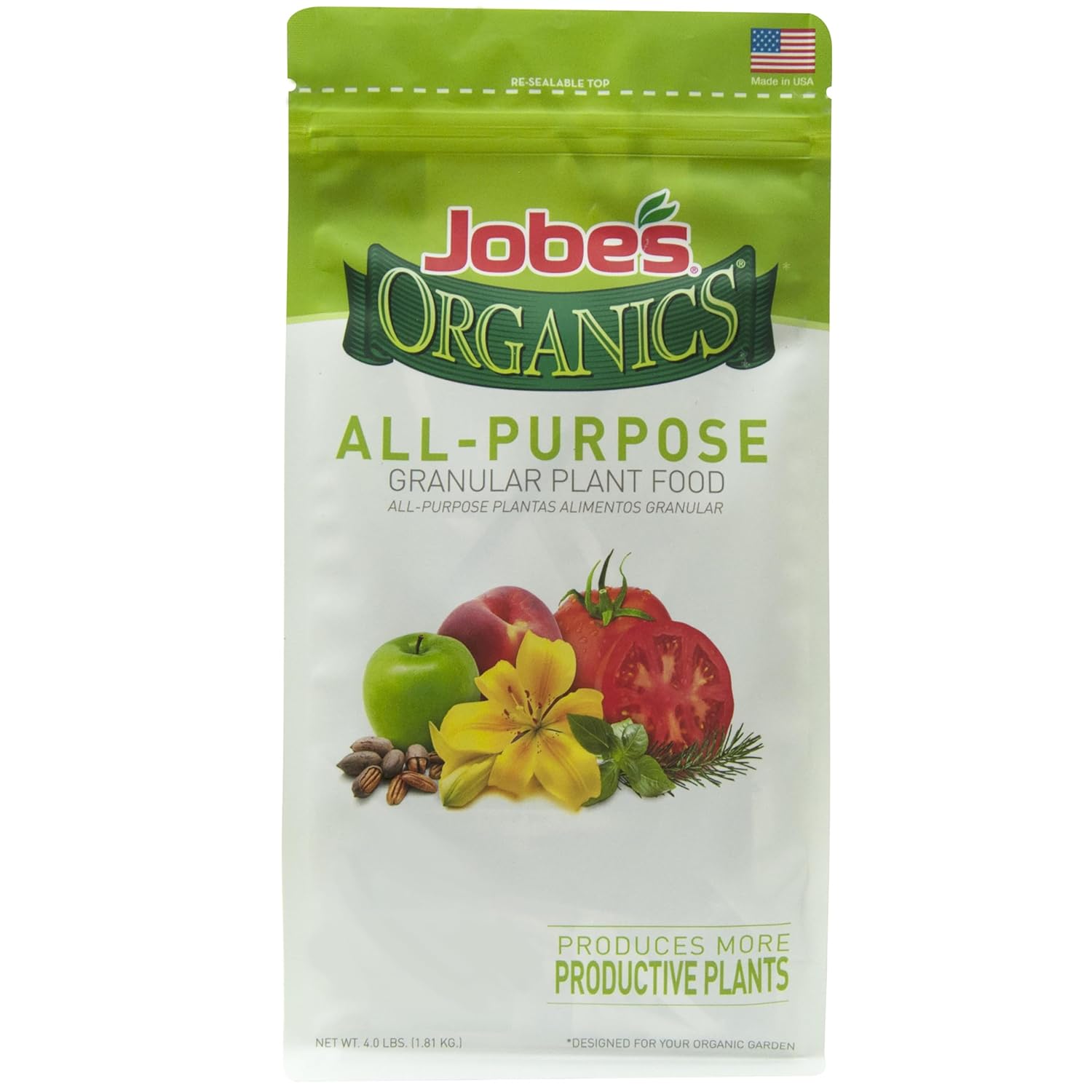
Jobe's Organics Granular All-Purpose Fertilizer (4 lb)
| Item Form | Granules |
|---|---|
| Specific Uses For Product | Gardening |
| Coverage | Resealable |
| Mixing Ratio | 4-4-4 |
| Unit Count | 64 Ounce |
Jobe's Organics Granular All-Purpose Fertilizer is a 4-4-4 organic granular designed to feed plant roots with a balanced, slow-release nutrient mix. In practice you spread the granules around the base of established plants, water them in, and reapply every 2 to 3 weeks during the growing season. The formula lists nitrogen, phosphate, potash, calcium, magnesium, and sulfur and notes organic sources like feather meal and bone meal, which support steady nutrient availability and improved soil microorganism activity. For a lilac tree this product provides general balanced nutrition that encourages healthy growth and flowering without strong spikes of nitrogen that can reduce blooms. It is OMRI-listed for organic use and intended to be safe around people and pets when used per directions. Limitations: it is an all-purpose mix so it does not target bloom-specific needs or adjust pH for plants that prefer particular soil chemistry, and frequent reapplication means more handling than single-application slow-release options.
Best for: Buyers who want a reliable, organic, easy-to-apply general fertilizer for established ornamental trees and garden beds and who prioritize steady root feeding and soil health.
Less Ideal for: Gardeners seeking a one-time, long-duration spike for trees or a fertilizer formulated specifically to force blooms should consider a bloom-focused or slow-release tree formula instead.
- Balanced N-P-K 4-4-4 suitable for general feeding
- OMRI-listed organic formulation made from natural sources
- Granular slow-release form feeds roots and boosts soil microorganisms
- Clear application guidance for watering in and reapplying every 2–3 weeks
- Not formulated specifically to maximize flowering for bloom-focused plants
- Requires repeated applications rather than a single long-duration treatment
Verdict: A straightforward organic granular fertilizer that provides balanced, root-focused nutrition ideal for maintaining healthy lilac trees and garden plantings.
Miracle-Gro Water Soluble All Purpose Plant Food, 1.5 lb

| Item Form | Powder |
|---|---|
| Application Method | Watering Can |
| Target Species | For all flowers, vegetables, trees, shrubs and houseplants |
| Mixing Ratio | 24-8-16 |
Miracle‑Gro Water Soluble All Purpose Plant Food is a powdered fertilizer you mix into water and apply with a watering can or garden feeder to give plants a quick nutrient boost. It contains a 24‑8‑16 NPK ratio meant to promote leafy growth and overall vigor and is labeled safe for a wide range of plants including trees and shrubs. For lilac trees this product can jump‑start leaf and shoot growth when applied to the root zone every 7 to 14 days as directed, and its soluble form gets nutrients to roots faster than granular feeds. The included scoop and clear mixing instructions make regular feedings straightforward for seasonal care. Important limitations: the high nitrogen content favors foliage growth more than flowering, so using it too often or late in the season can reduce bloom production on lilacs; it also requires frequent reapplication compared with slow‑release options. Use it as a short‑term feeding program in spring to encourage establishment or recovery rather than as the only long‑term fertilizer for flowering shrubs.
Best for: Gardeners who want an inexpensive, easy‑to‑use feed to quickly boost lilac vigor in spring or after transplanting and who plan to follow a scheduled feeding routine.
Less Ideal for: Homeowners seeking a single, low‑maintenance annual fertilization for mature flowering lilacs or those prioritizing maximum bloom production without supplementary bloom‑focused feeds.
- Water‑soluble powder for fast uptake by roots
- Clear mixing and application instructions for watering can or garden feeder
- Labeled safe for a wide range of plants including trees and shrubs
- Compact 1.5 lb container covers roughly 600 sq ft for spot or small‑garden use
- High nitrogen formula can encourage leafy growth at the expense of blooms if overused
- Needs frequent reapplication compared with slow‑release fertilizers
Verdict: A budget‑friendly, fast‑acting water‑soluble feed that is ideal for short‑term spring vigor boosts in lilacs when used as part of a broader fertilizing plan.
Miracle-Gro Water Soluble All Purpose Plant Food, 12.5 lb

| Item Form | Powder |
|---|---|
| Specific Uses For Product | Plant Food |
| Coverage | general purpose, suitable for various plants |
| Mixing Ratio | 1 tablespoon per gallon of water |
Miracle-Gro Water Soluble All Purpose Plant Food is a concentrated powder fertilizer you mix with water and apply every 1 to 2 weeks to nourish container and in-ground plants. It supplies an NPK of 24-8-16 intended to boost leaf growth and overall vigor, and the product includes directions and scoop sizes for both indoor and outdoor use. Typical use is dissolving the recommended measure in a watering can or filling a garden feeder to soak soil at the base of plants, which delivers nutrients quickly to roots. The large 12.5 pound container covers roughly 5,000 sq. ft., making it convenient for larger yards or recurring seasonal feeding. For a reliability-minded gardener caring for lilacs, the high nitrogen will support vigorous foliage early in the season but should be used with care during flowering to avoid excessive leaf growth at the expense of blooms. The powder mixes easily and is safe when used as directed, though frequent applications at full strength can encourage leafy growth rather than flowers and may not suit organic programs.
Best for: Gardeners who want a dependable, fast-acting fertilizer to maintain healthy lilac trees and surrounding plantings with predictable results and straightforward application.
Less Ideal for: Growers seeking an organic-certified fertilizer or those who prioritize bloom-enhancing, low-nitrogen formulas for peak lilac flowering should consider alternatives.
- High NPK ratio (24-8-16) for rapid nutrient delivery and visible growth
- Water-soluble powder mixes easily for quick feeding via watering can or feeder
- Large 12.5 lb container covers approximately 5,000 sq. ft. for fewer refills
- Clear mixing directions and included scoop for indoor and outdoor dosing
- High nitrogen formulation can favor leafy growth over blooms if overapplied
- Not an organic product, so not suitable for organic gardening programs
Verdict: A reliable, fast-acting water-soluble fertilizer that makes regular, predictable feeding of lilac trees and nearby plantings easy.
Miracle-Gro Shake 'N Feed Flowering Trees & Shrubs Plant Food, 8 lb.

| Item Form | Granules |
|---|---|
| Application Method | shake evenly onto the soil |
| Target Species | flowering trees, shrubs and other acid-loving plants |
| Mixing Ratio | 18:6:12 |
| Unit Count | 128 Ounce |
This Shake 'N Feed formula is a granular, slow-release fertilizer designed to support flowering trees and shrubs, including acid-loving species. You apply it by shaking or working the granules onto the soil under the branch spread and then watering to activate the feed. Its 18-6-12 NPK ratio and included organic materials such as kelp, earthworm castings, feather meal, and bone meal are intended to nourish soil microbes and support both foliage and bloom development for up to three months per application. In practice it is convenient for seasonal maintenance: one application covers established shrubs or small trees and reduces the need for frequent feeding. The product is suitable for in-ground planting and can be used on container specimens if worked into the potting mix. Limitations to note are that it gives steady low-level feeding rather than a quick nutrient boost, and precise nutrient needs for lilacs vary so soil testing may still be advisable before use. Also the baged granules require careful application to avoid contact with stems and leaves.
Best for: Buyers who want a low-maintenance, seasonal fertilizer for established flowering trees and shrubs and prefer products that support soil biology and steady bloom and foliage performance.
Less Ideal for: Gardeners needing an immediate corrective nutrient boost, or those who prefer a fertilizer formulated for alkaline-soil plants or tailored nutrient regimens for young transplants.
- Formulated specifically for flowering trees and shrubs, including acid-loving plants
- Contains organic amendments (kelp, earthworm castings, feather and bone meal) to support soil microbes
- Feeds continuously for up to three months per application, reducing frequency of reapplication
- Useful for both in-ground and container plants when applied or worked into the soil
- Provides gradual feeding rather than a rapid corrective dose
- Not tailored to specific soil deficiencies so a soil test may still be needed
Verdict: A convenient, microbial-friendly slow-release fertilizer that keeps flowering trees and shrubs fed for up to three months with minimal effort.
Miracle-Gro Tree & Shrub Plant Food Spikes (12 spikes)

| Item Form | Sticks |
|---|---|
| Application Method | Place spikes around the tree's drip line |
| Coverage | 12 spikes per season |
| Target Species | trees, shrubs, evergreens and acid-loving plants |
| Mixing Ratio | 15-5-10 |
These Miracle-Gro Tree & Shrub Plant Food Spikes are pre-measured, slow-release sticks formulated with a 15-5-10 NPK ratio to feed trees, shrubs and acid-loving plants like hydrangeas and azaleas. Use is straightforward: water the soil around the drip line, space the spikes around the drip line about 3 feet apart, then push each spike below the soil surface by stepping on it or tapping with a mallet. The spikes release nutrients directly to the root zone over the season, which can simplify feeding large or established plants and reduce frequent measuring. This 12-spike pack covers a single-season application and is intended for one application in early spring and another in mid-fall. Practical limits are that spikes can be awkward in very compacted or rocky soil and they only provide a seasonal, not continuous, monitoring of nutrient needs. For a risk-averse gardener, they offer predictable, low-effort feeding but you should still check soil health and pH for lilacs, which prefer neutral to slightly alkaline soil, before relying solely on spikes.
Best for: Gardeners who want a low-effort, reliable way to feed established trees and shrubs with minimal measuring and intervention.
Less Ideal for: Growers who prefer frequent, adjustable feeding schedules, precision soil-amendment strategies, or who manage many small container-grown plants.
- Slow-release formula delivers nutrients directly to root zone
- Pre-measured spikes are easy to place and reduce measuring errors
- Suitable for trees, shrubs and acid-loving plants
- Includes 12 spikes for straightforward seasonal coverage
- Designed for one-planting seasonal applications rather than continuous monitoring
- Less effective in very compacted, rocky, or heavily mulched soils
Verdict: A simple, low-effort seasonal feeder that reliably delivers slow-release nutrition to established trees and shrubs.
Choosing the Right Fertilizer for Lilac Tree: Key Factors to Consider
Nutrient Ratio and What Lilacs Need
Lilac trees respond best to fertilizers that support bloom development and woody growth without encouraging excessive leafy growth. A balanced ratio with moderate nitrogen, adequate phosphorus, and potassium for overall plant health matters because too much nitrogen can produce lush foliage at the expense of flowers. Look for clear N-P-K numbers and consider formulations that slightly favor phosphorus when bloom production is the priority.
Understanding how those nutrients interact with your soil and the tree's life stage helps avoid bloom failure and long-term nutrient imbalances. For newly planted or recovering specimens, a gentler, low-concentration starter approach reduces stress while providing root support.
Release Type and Timing
How a fertilizer releases its nutrients affects scheduling and risk of burn. Quick-release liquids or soluble granules give an immediate nutrient boost that can be useful when a tree shows deficiency symptoms or needs a feeding before bloom. Slow- or timed-release products supply nutrients over weeks or months and reduce the need for repeated applications, lowering the chance of salt buildup.
Match release type to your maintenance rhythm. If you prefer a hands-off approach, choose a long-duration formula applied once in the growing season. If you monitor plant condition closely and make staged applications, soluble options let you respond quickly to signs of stress or poor flowering.
Soil pH and Local Soil Conditions
Soil pH influences nutrient availability for lilac trees. Lilacs favor neutral to slightly alkaline soils, and certain fertilizers can change pH over time. Acidifying fertilizers or repeated use of high-ammonium formulas may gradually lower pH and reduce bloom performance.
Test your soil before selecting a product. If your soil is already alkaline, avoid strongly acidifying feeds. In acidic soils, choose products that will not exacerbate pH problems and consider liming as a separate corrective action when needed. Good soil testing narrows fertilizer choices and prevents unnecessary corrective measures.
Application Method and Garden Logistics
Consider how you will apply fertilizer in the landscape. Granular spreads around the dripline are common for mature trees and are easy to work into the root zone. Liquid feeds allow quick foliar or root drench applications but require mixing and more frequent repeat treatments. Spike or tablet formats offer convenience but can deliver uneven distribution if not placed correctly.
Accessibility of the planting, presence of nearby ornamentals or turf, and safety around children or pets should influence the method you choose. Pick a format that fits how often you want to work in the bed and how precise you can be with placement.
Environmental Impact and Salt Management
Fertilizer salts and excess nitrogen can leach into surrounding soil and waterways or build up and damage root systems. Choosing formulations with controlled release, lower salt index, or organic-based sources can reduce runoff risk and long-term salt accumulation.
If your site drains to sensitive areas or you have compacted soils, prefer products with lower leaching potential and follow recommended rates to minimize environmental impact. Incorporating organic matter can also buffer nutrient peaks and support microbial processes that keep nutrients available to the tree.
Plant Age and Condition
The age and vigor of a lilac tree alter fertilizer needs. Young transplants require gentler, root-friendly nutrition focused on establishment rather than heavy bloom stimulation. Mature, established shrubs often benefit from a seasonal feeding timed for bud development and after flowering to support next year's bloom set.
Adjust rates and formulas to match growth stage and observed vigor. Overfeeding mature plants can mask underlying problems such as root damage or disease, so pair fertilization with inspection and basic cultural care.
When To Fertilize Your Lilac Tree
Timing feeds to the lilac's growth cycle increases effectiveness. The best window for most lilacs is early spring as new growth begins and just before bud set so phosphorus and potassium are available during bloom development. Avoid heavy late-summer or fall fertilization that can stimulate tender new shoots vulnerable to winter damage.
If you test and correct a specific nutrient deficiency, a targeted application at the time the deficiency appears is appropriate. For long-release options, a single application in spring can provide season-long support.
- Apply in early spring for bloom support
- Avoid late-season high-nitrogen feeds
- Use targeted applications only when deficiencies are identified
Organic Vs Synthetic Sources
Organic fertilizers release nutrients more slowly and improve soil structure and microbial life. They often carry lower salt loads and are gentler on roots, which is beneficial when improving long-term soil health is a priority. However, organic materials may provide lower immediate nutrient availability for bloom stimulation.
Synthetic formulations deliver predictable nutrient ratios and rapid availability, which helps correct deficiencies and encourage blooms on schedule. If you choose synthetic feeds, select products with controlled-release technology or follow careful application rates to avoid overfeeding.
- Organics build soil health but act slowly
- Synthetics offer predictable, quick results
- Combine approaches if you need both immediate and long-term benefits
Feeding Small or Container-Grown Lilacs
Lilacs grown in containers have smaller soil volumes and different nutrient dynamics than landscape plants. They need lighter, more frequent feedings and careful attention to salt buildup and drainage. Use dilute liquid feeds on a regular schedule during the growing season, and flush container media periodically to prevent accumulation.
Choose a fertilizer formulated for container shrubs or use half-strength solutions of landscape products. Repotting with fresh media and adding organic matter each few years will also refresh nutrient availability.
- Use dilute feeds and frequent, light applications
- Ensure excellent drainage and occasional flushing
- Repot periodically to refresh the growing medium
Signs of Nutrient Problems in Lilacs
Poor bloom production, sparse foliage, or yellowing leaves can indicate nutrient imbalances or pH issues. Pale leaves often point to nitrogen or iron deficiency depending on symptom distribution, while small or few flowers often relate to insufficient phosphorus or poor overwintering of buds.
Address symptoms by testing soil and matching fertilizer choice to the diagnosed need. Correct cultural problems first, such as competition from nearby roots or poor drainage, before increasing fertilizer rates.
- Yellowing leaves may signal nutrient deficiency or pH issues
- Sparse or few blooms often involve phosphorus or bud damage
- Soil testing clarifies what the plant actually needs
Combining Fertilizer With Cultural Care
Fertilizer is one part of a healthy lilac program. Proper pruning, good air circulation, correct sunlight, and regular watering are equally important. Overreliance on feeding can mask pests, disease, or structural issues that reduce bloom performance.
Mulching with organic material helps retain moisture and supplies slow nutrient release while protecting roots. Use mulch properly to avoid piling against the trunk, and pair fertilization with seasonal inspections for a holistic approach.
- Pruning and sunlight affect bloom set as much as nutrition
- Mulch supports soil moisture and gradual nutrient release
- Address pests and disease along with nutrient needs
How We Chose the Best Fertilizer for Lilac Tree
We narrowed choices by focusing on what actually influences lilac performance in the garden. Priority was given to fertilizers with nutrient profiles suited to bloom and woody shrub health, clear application instructions for established and young plants, and formulations that work with common soil types. We assessed ease of use for backyard gardeners, including spreader, granular, liquid, and timed-release forms, plus how each product affects soil pH and microbial life. Longevity of nutrient release and environmental considerations such as runoff risk and salt buildup were also important. We excluded fertilizer types meant only for lawns or for dramatically different plant groups, and avoided products lacking transparent nutrient labeling or clear application guidance. Results favor balanced, low-to-moderate nitrogen formulas, phosphorus for root and bloom support, predictable release behavior, and options that suit different maintenance preferences.
FAQ
How often should I fertilize a lilac tree?
Most established lilacs do well with a single, moderate feeding in early spring. If using quick-release soluble fertilizers, you may apply lighter follow-up feeds during the growing season based on plant condition. Avoid heavy late-season feedings that can stimulate vulnerable new growth.
Can I use lawn fertilizer on my lilac?
Lawn fertilizers often have higher nitrogen levels suited to turf and can encourage too much leafy growth on lilacs, reducing blooms. If you use a lawn product, choose one with a balanced N-P-K ratio and follow reduced rates appropriate for woody shrubs.
Will fertilizing fix poor blooming every year?
Fertilizer helps when poor blooming is caused by nutrient shortage, but many bloom problems stem from pruning errors, winter bud damage, or pH issues. Test soil and inspect plant structure before assuming feeding is the sole solution.
Is a soil test necessary before feeding?
A soil test is highly useful because it reveals pH and specific nutrient levels, guiding the right fertilizer choice. Tests prevent unnecessary applications and help avoid overcorrecting with inappropriate nutrients.
Are organic fertilizers good for lilacs?
Organic fertilizers support soil life and release nutrients slowly, which benefits long-term soil health and reduces salt risk. They may not deliver rapid bloom stimulation, so combine with targeted treatments if quick correction is needed.
How much fertilizer should I apply around a mature lilac?
Follow product guidance adjusted for shrub size and avoid placing fertilizer against the trunk. Typically apply around the dripline where feeder roots are concentrated and use moderate rates to prevent root burn. When in doubt, err on the lower side and monitor plant response.
Final Verdict
Choose a fertilizer for lilac trees that matches your soil conditions, maintenance style, and the tree's age. Prioritize nutrient balance that supports blooms and avoid high-nitrogen formulas that favor leaf growth over flowers. Consider release type, application method, and environmental impact when picking a product. With appropriate timing and cultural care, the right fertilizer helps restore bloom potential and supports long-term shrub health.
