

Note: This article contains affiliate links. If you click on these links and make a purchase, I may earn a small commission at no extra cost to you. This helps support my research and content. Read my full affiliate disclosure here.
Picking the right herb fertilizer matters because herbs respond quickly to different nutrient mixes and feeding methods. The right product can encourage bushier growth, stronger essential oils, and better flavor without causing leaf burn or excessive leafy growth at the expense of aroma. This guide reviews seven top herb fertilizers shortlisted for common herb garden situations, from pots on a sunny balcony to raised beds and indoor windowsills. We evaluate each option on nutrient profile, ease of application, and how they behave in real garden conditions so you can match a fertilizer to your growing setup.
Top Picks at a Glance
| Best Overall The best all-around choice for most situations | TPS Nutrients Herb Plant Food Liquid Fertilizer, 8 oz |  |
| Best Quality Built to a higher standard if you want something more solid | Dr. Earth Organic Tomato, Vegetable & Herb Fertilizer (Granules) |  |
| Best Value The sweet spot between price and what you get | Miracle-Gro Shake 'N Feed All Purpose Plant Food, 1 lb. |  |
| Best Budget The cheapest option that still gets the job done reliably | Miracle-Gro Water Soluble All Purpose Plant Food (1.5 lb) |  |
| Highest Rated A top-rated pick with lots of positive feedback | FoxFarm Grow Big Liquid Plant Food (16 fl oz) |  |
| Most Popular A crowd favorite that many people choose with confidence | Miracle-Gro Indoor Plant Food, Liquid, 8 oz. (2-Pack) |  |
| Best Seller A high-volume bestseller chosen again and again | TPS NUTRIENTS Liquid Plant Food for AeroGarden & Hydroponic Systems, 8 oz |  |
TPS Nutrients Herb Plant Food Liquid Fertilizer, 8 oz

| Item Form | Liquid |
|---|---|
| Application Method | Dilute in water |
| Target Species | Herb |
| Unit Count | 8 Fluid Ounces |
This 8 oz TPS Nutrients Herb Plant Food is a liquid concentrate designed for regular feeding of indoor and outdoor culinary herbs such as basil, mint, and parsley. You dilute the concentrate in water and apply it to potted herbs or garden beds to encourage lush green leaves, stronger roots, and improved aroma and flavor. Notable features include a herb-targeted NPK profile listed in product materials, an easy dilute-in-water application method, and a formulation pitched as gentle enough for container plants to reduce risk of burning or nutrient buildup. In practice it works well for growers who want consistent, frequent feedings without heavy granules or slow-release granules to manage. The bottle size is compact for countertop storage and trial use, but the 8 oz volume means frequent reordering for larger herb collections. If you prefer a one-time bulk solution or an all-season slow-release option, a larger or granular product may be more convenient. For hobbyists and small-scale growers this liquid offers control and visible improvement in leaf vigor and scent.
Best for: Home cooks and small-space gardeners who grow potted or bedded culinary herbs and want a simple, regular liquid feed to boost leaf vigor and aroma.
Less Ideal for: Large-scale herb growers or those who prefer low-maintenance slow-release granules or bulk fertilizers for season-long feeding.
- Formulated specifically for culinary herbs to support flavor and leaf growth
- Liquid concentrate that dilutes in water for easy, even feeding
- Gentle formula suitable for potted herbs without strong risk of burning
- Compact 8 oz bottle is easy to store and convenient for small collections
- Small 8 oz volume requires frequent repurchase for larger gardens
- No detailed NPK breakdown or feeding schedule printed in the provided data
Verdict: A convenient liquid feed tailored to culinary herbs that gives small-scale growers easy control over regular fertilizing to improve leaf health and flavor.
Dr. Earth Organic Tomato, Vegetable & Herb Fertilizer (Granules)

| Item Form | Granules |
|---|---|
| Specific Uses For Product | Organic |
| Coverage | Medium |
| Target Species | Herb |
| Unit Count | 64 Ounce |
Dr. Earth Organic Tomato, Vegetable & Herb Fertilizer is a granular, organic feed designed to boost yields and flavor in vegetable and herb beds. It is typically worked into planting holes, applied at transplanting and used as a mid-season feed or repeat application every six weeks for containers. The formula supplies primary nutrients and contains multiple strains of beneficial microbes plus ecto- and endo-mycorrhizae to improve nutrient uptake and drought tolerance. Because it releases nutrients quickly and continues to feed for several months it can reduce the need for supplemental chemical fertilizers and supports steady growth and fruiting. Practical benefits include suitability for raised beds, containers, and in-ground gardens and the ability to be made into compost tea for foliar or soil drench use. Important limitations are that it is a phosphorus-containing fertilizer, which may be restricted in some areas, and that granular application requires measuring and periodic re-application rather than a single long-term solution.
Best for: Gardeners focused on maximizing flavor and yield from vegetables and herbs who prefer organic inputs and want improved nutrient uptake from soil biology enhancements.
Less Ideal for: People who need a no-maintenance, single-application long-term fertilizer or who are restricted from applying phosphorus in their locale should consider alternatives.
- Organic formulation with no GMOs or chicken manure
- Includes multiple beneficial microbes and mycorrhizae to aid nutrient uptake and drought tolerance
- Works for planting, transplanting, mid-season feeding, containers and raised beds
- Releases nutrients quickly and continues to feed for several months
- Can be used to make compost tea for foliar or soil applications
- Contains phosphorus which may be restricted in some jurisdictions
- Requires periodic re-application and correct pH management for best results
Verdict: Choose this product when you want an organic granular fertilizer that boosts herb and vegetable flavor and yield by combining quick nutrient release with beneficial microbes.
Miracle-Gro Shake 'N Feed All Purpose Plant Food, 1 lb.

| Item Form | Granules |
|---|---|
| Application Method | Shake and work into soil |
| Target Species | Flowers, Vegetables, Herbs |
| Unit Count | 16 Ounce |
| Feeds for | Up to 3 Months |
Miracle-Gro Shake 'N Feed All Purpose is a granular, easy-to-apply fertilizer designed for in-ground beds and containers. You sprinkle it over the root zone or mix it into potting soil at planting, water to activate, and it releases nutrients slowly so you do not need frequent feedings. Notable features include a balanced 10-10-10 mixing ratio listed for guidance, formulation that supplies micronutrients and natural ingredients to support soil microbes, and labeled coverage suitable for small beds. For herb gardeners the main benefits are convenience and steady feeding that supports healthier foliage and stronger roots without weekly dosing. Practical limits: the container is small so it is best for a few pots or a modest herb patch rather than larger vegetable gardens, and application rates must be followed to avoid overfeeding. Also it is a broad all-purpose formula rather than an herb-specific blend, so gardeners seeking high-herb-flavor formulations may prefer a specialty fertilizer.
Best for: Best for gardeners who want a low-maintenance, reliable fertilizer for a small herb garden or several pots and prioritize steady feeding and simple application.
Less Ideal for: Not ideal for growers managing large beds or commercial herb production or those who want a fertilizer tailored specifically to maximize culinary herb flavor.
- Continuous-release granules feed plants up to three months per application
- Simple dry application for both in-ground and container plants
- Includes micronutrients and ingredients that support soil microbes
- Balanced 10-10-10 formulation suitable for general growth of leaves, roots, and blooms
- 1 lb container provides limited coverage so frequent repurchase is needed for larger plantings
- Not a specialized herb formula optimized for flavor or specific herb needs
Verdict: A convenient, easy-to-use granular fertilizer that keeps small herb gardens and container herbs fed for up to three months with minimal effort.
Miracle-Gro Water Soluble All Purpose Plant Food (1.5 lb)

| Item Form | Powder |
|---|---|
| Application Method | Watering Can |
| Target Species | For all flowers, vegetables, trees, shrubs and houseplants |
| Mixing Ratio | 24-8-16 |
This Miracle-Gro water-soluble plant food is a straightforward, fast-acting fertilizer for gardeners who want an easy way to boost herb growth. Mixed into water with the included scoop, it is applied with a watering can or compatible garden feeder and delivers nutrients directly to the roots so plants respond quickly. The 24-8-16 NPK balance favors leafy growth, which is useful for most culinary herbs grown in containers or small garden beds. It is labeled safe for both indoor and outdoor use and the directions let you feed herbs every 7 to 14 days outdoors or every two weeks indoors. Practical benefits include simple mixing ratios, suitability for a broad range of plants, and the convenience of a soluble powder that reaches roots fast. Limitations: the high nitrogen formula can encourage lush foliage but may reduce essential-oil concentration in some herbs if overused, and frequent feedings mean you must remember a regular schedule. For gardeners after a budget-friendly, no-fuss boost to container and kitchen herbs, this is an effective option.
Best for: Herb gardeners on a budget who want a simple, fast-acting feed for container or small-bed herbs and prefer straightforward, repeatable mixing and watering routines.
Less Ideal for: Growers focused on maximizing herb essential oils or who prefer slow-release organic fertilizers should consider specialized low-nitrogen or organic options instead.
- Water-soluble powder mixes easily for quick nutrient uptake
- NPK 24-8-16 supports vigorous leafy growth beneficial to many culinary herbs
- Works indoors and outdoors, suitable for containers and garden beds
- Clear mixing directions for watering can or garden feeder simplify application
- High nitrogen ratio may reduce aromatic oil concentration in some herbs if applied too often
Verdict: A cost-conscious, easy-to-use soluble fertilizer that gives fast leafy growth for kitchen and container herbs.
FoxFarm Grow Big Liquid Plant Food (16 fl oz)

| Item Form | Liquid |
|---|---|
| Specific Uses For Product | Plant Growth |
| Application Method | watering |
| Liquid Volume | 16 fluid ounces |
| Mixing Ratio | 2 teaspoons per 1 gallon |
FoxFarm Grow Big is a fast-acting liquid concentrate designed to boost vegetative growth for vegetables, herbs, ornamental plants and houseplants. It mixes at 2 teaspoons per gallon and can be applied through watering or as a foliar spray, which makes it easy to add to a regular feeding routine. The 6-4-4 NPK balance and low pH formula are intended to keep nutrients stable and available for quick uptake, so you should see stronger stems and fuller foliage when used as directed. Practical benefits include clear mixing instructions, flexible application options, and suitability for both young transplants and established plants. Because it is a concentrated liquid, a small bottle treats many feedings, but users should follow the recommended dilution and feeding frequency to avoid overfertilizing. This product focuses on promoting growth rather than bloom boosting, so switch to a bloom formula when plants need flowering or fruiting support.
Best for: Herb growers and home gardeners who prioritize consistent, reliable vegetative growth and want a straightforward concentrate they can dose into regular watering or foliar feeds.
Less Ideal for: Gardeners seeking a single all-purpose bottle for peak flowering or heavy fruiting stages should consider a bloom-targeted fertilizer instead.
- Concentrated liquid formula for quick nutrient uptake and easy dilution.
- Clear mixing ratio and feeding guidance suitable for regular use.
- Low pH formulation that helps keep micronutrients stable and available.
- Versatile application: works as a soil drench or foliar spray for many plant types.
- Formulated for vegetative growth rather than flowering or fruit production.
- Bottle size may require careful measurement to avoid accidental overfeeding.
Verdict: Choose this concentrated liquid if you want a dependable, easy-to-dose fertilizer that reliably promotes strong vegetative growth for herbs and leafy crops.
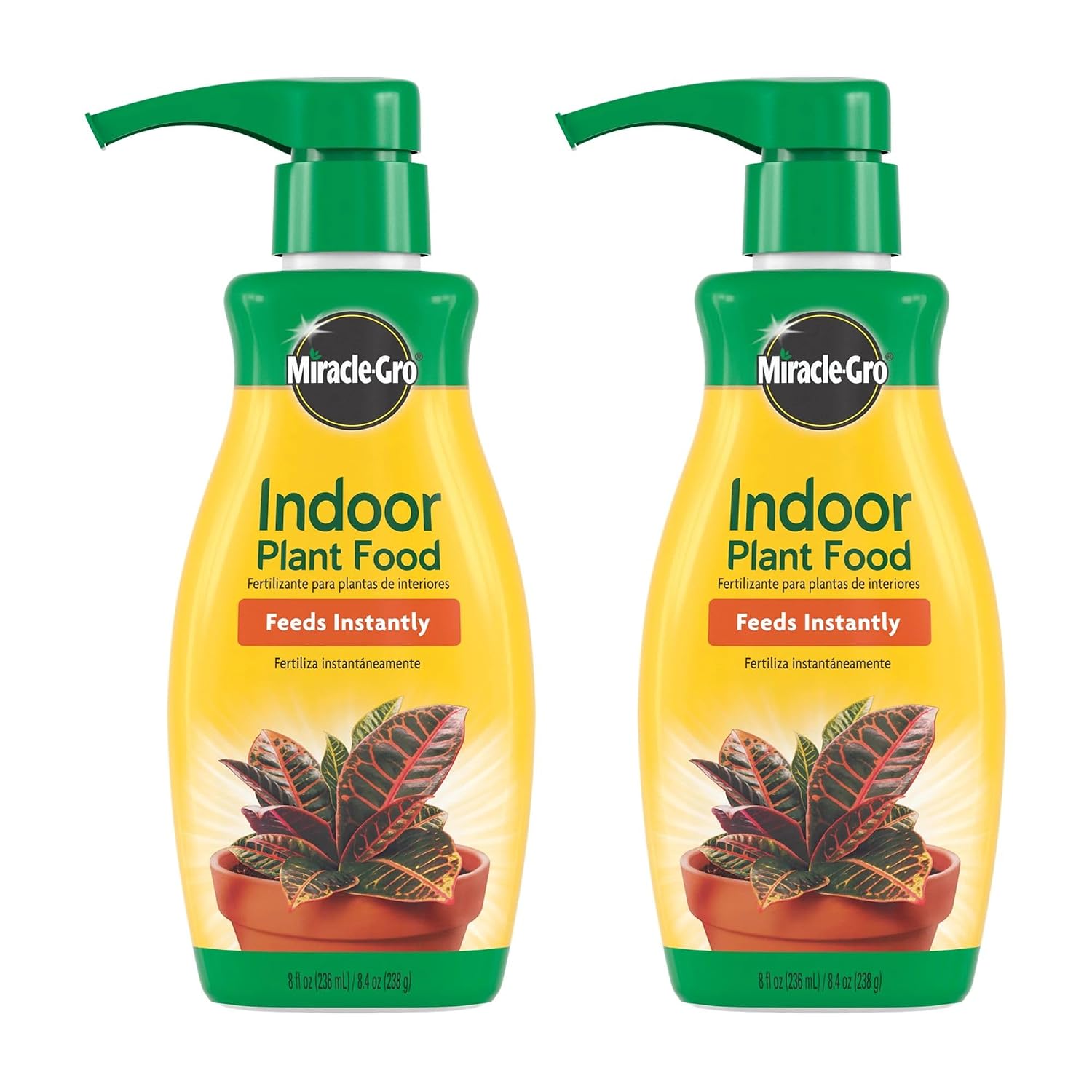
Miracle-Gro Indoor Plant Food, Liquid, 8 oz. (2-Pack)
| Item Form | Liquid |
|---|---|
| Application Method | Apply directly to the soil or mix with water |
| Coverage | Pot size |
| Target Species | Peace Lily,Snake Plant,Croton,Succulents,Herbs |
| Unit Count | 16 Fluid Ounces |
Miracle-Gro Indoor Plant Food is a ready-to-use liquid fertilizer intended for houseplants and container-grown edibles such as herbs. It is applied either directly to the soil with the built-in pump or diluted in a quart of water for watering, with a weekly schedule recommended. The formula feeds plants instantly and lists common indoor species that respond well, including snake plants, peace lilies, succulents and herbs. Practical benefits include easy dosing with the pump, quick uptake compared with granular products, and a small two-bottle pack that keeps a steady supply for a season of potted herbs. Important limitations are that it requires weekly applications to follow the label for best results and safety precautions advised around children and pets; it is a general-purpose feed rather than a herb-specific formulation, so growers seeking tailored NPK ratios or slow-release convenience may prefer specialty or granular options.
Best for: Buyers who want an easy, no-mess way to keep potted herbs and mixed houseplants fed regularly and who value straightforward instructions and social proof from a well-known brand.
Less Ideal for: Those who prefer a single slow-release fertilization per season or growers seeking a fertilizer formulated specifically for herbs and flavor development.
- Ready-to-use liquid with pump for simple, accurate weekly dosing
- Works for a broad range of indoor plants including common herbs and vegetables
- Feeds plants quickly compared with dry or slow-release fertilizers
- Comes as a two-pack so you have spare product on hand
- General-purpose formula not tailored to herbs with specific nutrient ratios
- Requires weekly application to maintain results
Verdict: An easy, pump-dosed liquid fertilizer that reliably keeps potted herbs and mixed indoor plants fed with minimal fuss.
TPS NUTRIENTS Liquid Plant Food for AeroGarden & Hydroponic Systems, 8 oz

| Brand | TPS NUTRIENTS |
|---|---|
| Item Form | Liquid |
| Specific Uses For Product | Plant Growth, Root Development |
| Target Species | Herb, Vegetable |
| Mixing Ratio | 5 mL per quart of feedwater |
This 8 oz liquid plant food is designed for indoor hydroponic units like AeroGarden and similar countertop systems. You mix a small measured dose (5 mL per quart) into the reservoir to supply balanced, water-soluble nutrients aimed at herbs and small vegetables. The product is liquid-formulated for easy mixing and steady nutrient delivery, which helps encourage consistent leaf growth and stronger roots compared with unfed water-alone setups. It is sold by a dedicated hydroponics brand and includes safety and handling guidance for household use. Practical benefits include simple dosing, suitability for edible herbs and greens, and reservoir-safe chemistry intended for frequent feed schedules. Limitations are typical of concentrated hydroponic feeds: you must follow the mixing directions closely to avoid overfeeding and it is formulated specifically for small indoor systems rather than soil gardens or large hydroponic farms. Also the 8 oz bottle is compact so heavy users will need to repurchase more often.
Best for: Buyers who want a straightforward, low-risk nutrient to keep AeroGarden-style herb and small-vegetable kits fed on a regular schedule and who prefer simple dosing and predictable results.
Less Ideal for: People growing in soil, large hydroponic systems, or those who want an all-in-one organic soil fertilizer should consider alternatives better suited to those methods.
- Formulated for AeroGarden and similar indoor hydroponic systems for compatibility with reservoir feeding
- Easy-to-mix liquid concentrate with a clear dosing ratio (5 mL per quart)
- Targets herbs and vegetables, supporting root development and steady growth
- Compact 8 oz bottle is convenient for storing and handling in a kitchen or indoor garden area
- Small 8 oz volume may require frequent replacement for users who run multiple or larger units
- Not intended for soil-based gardening or large-scale hydroponic installations
Verdict: A compact, easy-to-use liquid nutrient that gives AeroGarden-style herb growers a reliable way to maintain steady growth and stronger roots.
Choosing the Right Herb Fertilizer: Key Factors to Consider
Nutrient Ratio and Formulation
Herbs generally need a balanced supply of nitrogen, phosphorus, and potassium, but the ideal ratio depends on whether you want leafy growth, stronger essential oils, or more flowers. A slightly higher nitrogen formula will promote leafiness, which is desirable for most culinary herbs, while balanced or slightly higher phosphorus can help flowering herbs that set seeds or essential oil content. Look at whether nutrients are listed as soluble salts, chelates, or organic sources, because that affects how quickly plants can use them.
Understanding the form of nutrients helps you avoid problems. Fast-release synthetic salts feed quickly but can build up salts in containers. Slow-release or organic formulations supply nutrients more gradually and lower the risk of burn, which is important for smaller pots and less-frequent feeding schedules.
Application Method and Frequency
Herb fertilizers come as water-soluble concentrates, granular slow-release, spikes, and organic amendments. Water-soluble feeds let you adjust strength and apply frequently for quick corrective feeding, which is handy for potted herbs. Granular and slow-release options reduce maintenance by providing steady nutrition but offer less immediate control over nutrient spikes.
Think about how often you can realistically feed. If you have many pots or limited time, a slow-release product or a simple dosing schedule can prevent inconsistent feeding. Conversely, if you grow herbs intensively and harvest often, a soluble feed you can tailor will respond faster to cropping demands.
Container Safety and Salt Management
Containers and small raised beds are more prone to salt buildup because water drains through a limited volume of media. High-salt synthetic fertilizers can accumulate and damage sensitive herb roots over time. Choose low-salt or controlled-release formulas for containers and flush pots occasionally with clear water to leach excess salts.
Pay attention to instructions about maximum concentration and frequency. Products that specify separate rates for containers versus in-ground use are useful because they recognize the different risks. If you reuse potting mix, test or refresh media periodically to avoid compounding salt stress.
Organic Content and Soil Health
Organic fertilizers and amendments add nutrients while also supporting soil biology, which can improve structure and nutrient cycling in long-term pots or garden beds. For herbs grown for flavor and aroma, healthy soil biology encourages root function and steady uptake of micronutrients important for essential oil formation.
Organic options tend to release nutrients more slowly and may require different timing than synthetic feeds. If you prefer organic growing, plan feeding schedules around seasonal growth and consider supplementing with compost or liquid seaweed for trace elements and microbial support.
Ease of Measurement and Packaging
Accurate dosing is essential with herbs because small plants are prone to burn from overfeeding. Concentrated liquids require careful measuring and clear dilution instructions, while granular products should list application rates per pot size or per square foot. Packaging that includes a measuring scoop or clear marks helps prevent mistakes.
Consider storage life and whether the product clumps or degrades after opening. Smaller bottles or resealable dry product packaging reduce waste and keep dosing consistent season to season. Also account for how many plants you need to feed when choosing package size.
Trace Elements and Micronutrients
Beyond N-P-K, herbs benefit from micronutrients such as magnesium, iron, calcium, and boron, which influence leaf color, aroma, and plant resilience. A formula that lists key micronutrients or includes kelp or composted inputs can prevent subtle deficiencies that reduce flavor intensity.
Micronutrient availability depends on pH and media; if you grow in soilless mixes, choose a fertilizer that includes or complements micronutrient additions. Periodic foliar feeds or targeted supplements can correct specific deficiencies faster than soil applications.
Feeding Strategies for Different Herb Setups
Adjust feeding based on where your herbs grow. Potted herbs generally need gentler, more frequent feeding because nutrients leach out with irrigation. In-ground herbs or those in large raised beds can tolerate less frequent applications and may benefit from granular or slow-release products.
Indoor herb gardens often use lightweight soilless mixes that lack mineral reserves. For windowsill herbs, use a dilute water-soluble feed at half the outdoor recommended rate and monitor leaf tips for burn. For outdoor beds, combine an annual soil amendment like compost with periodic top-dressing or liquid feeds during active growth.
- Pots: low-concentration, frequent feeding; watch for salt buildup
- Raised beds: organic amendments plus seasonal boosts
- Indoor: dilute soluble feeds and attention to light levels
Timing Feedings Around Harvest and Growth Stages
Match your feeding schedule to growth phases. During initial establishment and active leaf growth, provide a steady nutrient supply to support root and foliage development. Reduce nitrogen and taper feeding as plants approach flowering if you want to concentrate flavor rather than encouraging excessive leafy growth.
After heavy harvests, give a mild feed to help plants recover. For perennial herbs, cut back heavier feeding in late summer to prepare plants for slower growth periods and to avoid soft new shoots that are susceptible to cold or pests.
- Establishment: moderate feeding to encourage roots
- Active growth: follow label for maintenance doses
- Pre-flower: adjust to reduce excess leafy vigor if needed
Practical Tips to Avoid Overfertilizing
Start at a lower-than-recommended concentration and increase slowly if plants show no response. Many herb problems attributed to poor growth are actually caused by overfeeding or salt stress, especially in containers.
Flush container soils every few months by running clear water through the pot to leach accumulated salts. Use clean water and let excess drain freely. If leaves show tip burn or browning margins, stop feeding and flush the soil, then restart with a milder program.
- Use smaller, more frequent applications rather than heavy single doses
- Monitor leaf condition and soil moisture rather than feeding on a rigid schedule
- Keep good records of feed strength and frequency for each growing spot
Simple DIY Alternatives and Supplements
If you prefer homemade options, compost tea, liquid seaweed, or diluted fish emulsion can supply a range of nutrients and trace elements. These alternatives often support soil life and are gentler than high-concentration synthetic feeds, but they vary in nutrient consistency.
Use DIY supplements as boosters rather than complete replacements unless you test and balance nutrient inputs. For example, a monthly compost tea can complement a light, balanced fertilizer to maintain soil biology and micronutrient levels.
- Compost tea for soil biology and micronutrients
- Liquid seaweed for trace elements and stress resilience
- Diluted fish emulsion for an organic nitrogen boost
Storage, Safety, and Label Reading
Store fertilizers in a cool, dry place out of direct sunlight and away from children and pets. Keep liquids sealed tightly to prevent spills and evaporation, and keep dry products in resealable containers to preserve efficacy.
Read labels carefully for application rates specific to container sizes versus in-ground use. Look for guidance on maximum annual application and any special instructions for sensitive herbs. Proper labeling will also tell you whether a product is safe for edible crops and whether there are withholding periods before harvest.
- Seal packages after use and keep measuring tools dedicated to fertilizers
- Follow label guidance for edible use and pre-harvest intervals if specified
- Dispose of empty containers according to local regulations
How We Chose the Best Herb Fertilizer
We evaluated products that are formulated for herbs or commonly used by herb growers and applied practical garden-focused filters. Priority criteria included nutrient ratio and bioavailability to assess whether the formula supports flower and leaf development typical for culinary and medicinal herbs. Application method and dosing flexibility were judged so gardeners can feed potted herbs, raised beds, or indoor plants without risking overfertilization. Solubility and salt load were reviewed to ensure safe use in containers and to reduce salt buildup. Organic inputs and slow-release characteristics were considered for gardeners wanting steady feeding or lower maintenance. Packaging size and concentration were noted because those affect how easy it is to measure and store for seasonal use. We excluded products designed solely for lawns, high-nitrogen turf formulas, and fertilizers intended only for heavy-feeding vegetables, since those do not match herbs' needs. We also filtered out items without clear nutrient labeling or lacking application instructions suitable for small-scale herb culture.
FAQ
How often should I feed container-grown herbs?
Container herbs often need feeding every two to four weeks with a diluted water-soluble feed during active growth. Slow-release granulars can extend the interval to several months, but monitor leaf health and flush pots periodically to avoid salt build-up.
Can I use general houseplant fertilizer on culinary herbs?
Many houseplant fertilizers will work, but choose a balanced formula and reduce concentration for edible herbs. Avoid high-nitrogen foliage fertilizers that may encourage weak, overly lush growth instead of concentrated flavor.
Are organic fertilizers better for herbs than synthetic ones?
Organic fertilizers support soil life and release nutrients more slowly, which can benefit long-term soil health and subtle flavor development. Synthetic feeds give faster, more predictable nutrient delivery, which can be useful for rapid correction or intensive harvesting. The best choice depends on your growing goals and maintenance preferences.
How can I tell if my herbs are overfertilized?
Signs of overfertilizing include leaf-tip browning, marginal scorch, dark burnt spots, or stunted growth despite ample water. If you suspect overfeeding, stop fertilizing, flush the soil with plenty of water, and resume with a reduced concentration only after plants recover.
Do herbs need micronutrients in addition to N-P-K?
Yes. Micronutrients like magnesium, iron, and manganese affect leaf color, aroma production, and overall plant resilience. Many balanced fertilizers include these elements, or you can supplement with kelp or targeted trace element mixes if deficiencies appear.
When is the best time of day to apply liquid fertilizer to outdoor herbs?
Apply liquid feeds in the morning or late afternoon when temperatures are cooler to reduce stress and evaporation. Avoid feeding during the hottest part of the day to prevent foliar burn and maximize nutrient uptake through roots.
Final Verdict
Match fertilizer type and strength to how and where you grow herbs. Containers and indoor setups need gentler, more controlled feeding and attention to salt buildup, while in-ground and raised bed herbs can handle less frequent, broader applications. Prioritize nutrient balance, clear dosing instructions, and whether you prefer organic soil-building benefits or rapid synthetic correction. Focus on feeding that supports the flavor and growth habit you want. When in doubt, start with lower concentrations, watch plant response, and adjust. That approach reduces risk and helps you choose a fertilizer that keeps your herbs healthy and flavorful.
