

Note: This article contains affiliate links. If you click on these links and make a purchase, I may earn a small commission at no extra cost to you. This helps support my research and content. Read my full affiliate disclosure here.
Choosing the right post emergent weed killer for lawns matters because treatments behave differently across turf species, soil types, and weed pressure. The wrong product can scorch grass or leave behind surviving roots that enable quick regrowth. This guide focuses on solutions formulated specifically for treating active weeds in established lawns and explains how each shortlisted option performs on turf safety, speed of control, and residual effects. We evaluated seven top contenders and narrowed the list to those that balance weed control with minimal harm to common lawn grasses. Below you will find practical buying guidance and decision criteria to match a treatment to your lawn conditions.
Top Picks at a Glance
| Best Overall The best all-around choice for most situations | BASF Drive XLR8 Post-Emergent Crabgrass and Broadleaf Herbicide Concentrate, 64 oz |  |
| Best Quality Built to a higher standard if you want something more solid | Tenacity Turf Herbicide, 8 fl oz |  |
| Best Value The sweet spot between price and what you get | Ortho WeedClear Weed Killer for Lawns with Comfort Wand, 1 gal | 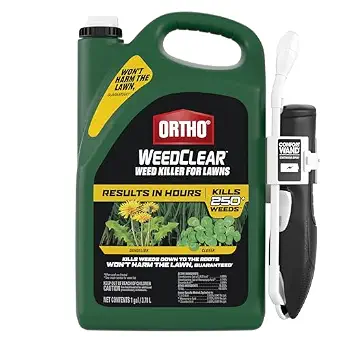 |
| Best Budget The cheapest option that still gets the job done reliably | Ortho WeedClear Lawn Weed Killer Ready-to-Spray, 32 fl. oz. |  |
| Highest Rated A top-rated pick with lots of positive feedback | Target 6 Plus MSMA 48.3% Post-Emergent Turf Herbicide, 2.5 Gallon |  |
| Most Popular A crowd favorite that many people choose with confidence | Scotts Liquid Turf Builder Plus 2 Weed Control Ready‑to‑Spray, 32 fl. oz. |  |
| Best Seller A high-volume bestseller chosen again and again | Prime Source Celsius WG Post-Emerge Weed Control Easy Mix Packet |  |
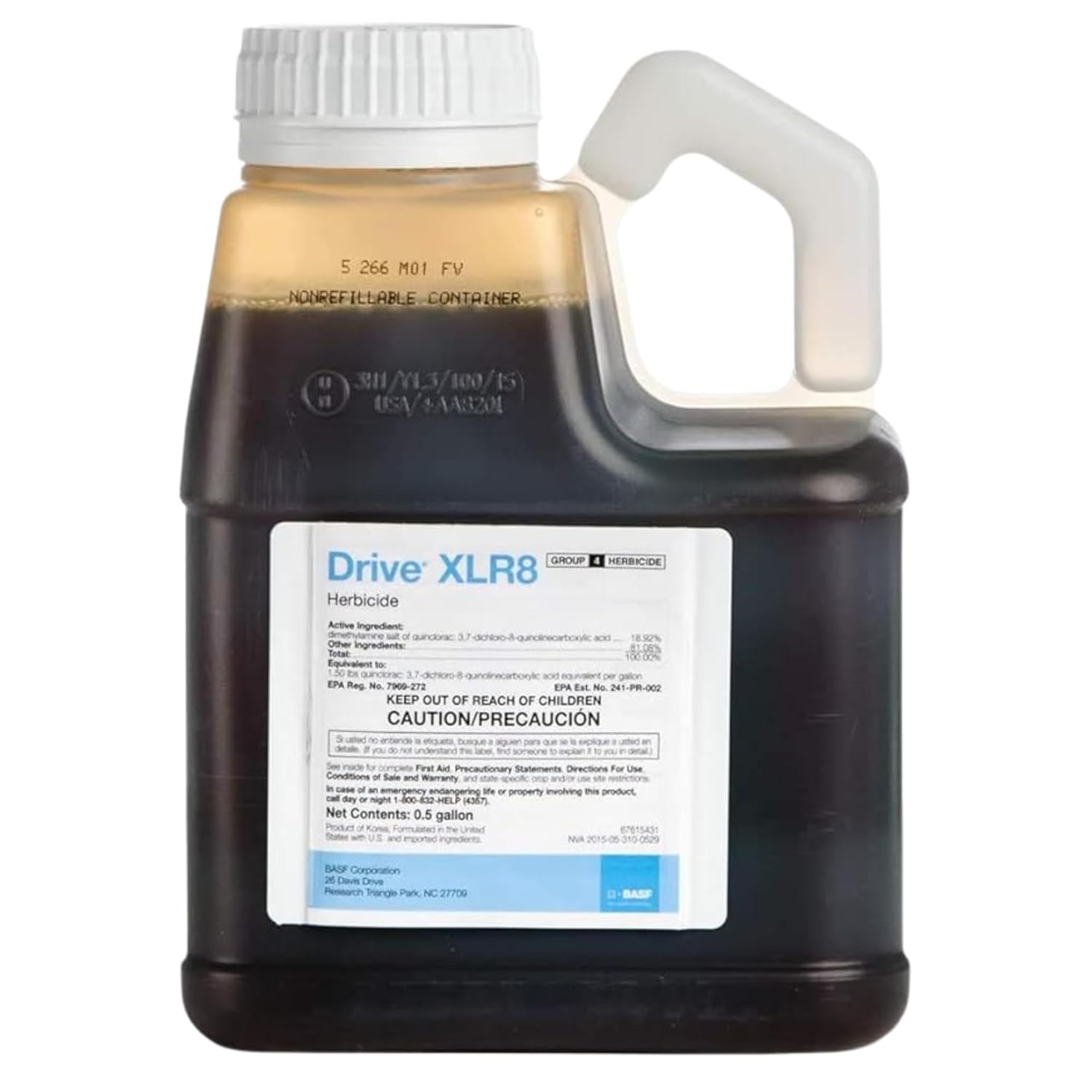
BASF Drive XLR8 Post-Emergent Crabgrass and Broadleaf Herbicide Concentrate, 64 oz
| Unit Count | 64 Ounce |
|---|---|
| Item Form | Liquid |
| Coverage | Full |
| Active Ingredients | Quinclorac 18.92% |
Drive XLR8 is a concentrated, water-based post-emergent herbicide formulated around quinclorac to control crabgrass, foxtail and several broadleaf weeds in lawns. You mix a measured amount with water and a recommended oil adjuvant and spray uniformly over the target area; the label gives a coverage rate of about 1,000 square feet per gallon of prepared spray. Practical strengths are its broad-spectrum activity on common turf weeds, fast uptake from the water-based formula, and a residual window of up to 30 days that can reduce reapplications. The product is labeled for both warm- and cool-season turf and can be tank-mixed with compatible grass and broadleaf products for tougher infestations. Important limitations are the need to follow protective clothing and safety directions, the requirement to avoid mowing two days before and after application, and state-specific restrictions or spot-application rules in some areas. For homeowners who follow label directions, it gives reliable post-emergent control and useful residual suppression of recurring grassy weeds.
Best for: Homeowners and property managers who want a dependable post-emergent solution to target crabgrass and other common turf weeds and who are comfortable following label safety and application steps.
Less Ideal for: Gardeners who prefer non-chemical or organic weed control methods or those who need a product for large broadcast applications where local regulations restrict use.
- Contains 18.92% quinclorac, effective against crabgrass and several grassy weeds
- Water-based formula for quicker plant uptake and visible results
- Provides up to 30 days of residual control to limit repeat treatments
- Concentrate covers about 1,000 sq ft per gallon of prepared spray, allowing economical coverage
- Label allows tank-mixing with other turf herbicides for flexible treatment plans
- Requires careful PPE and handling because it is a potent herbicide
- Mowing restrictions and some state-specific application limits may complicate use
Verdict: Choose Drive XLR8 when you need a concentrated, fast-acting post-emergent herbicide that controls crabgrass and other turf weeds with up to 30 days of residual protection.
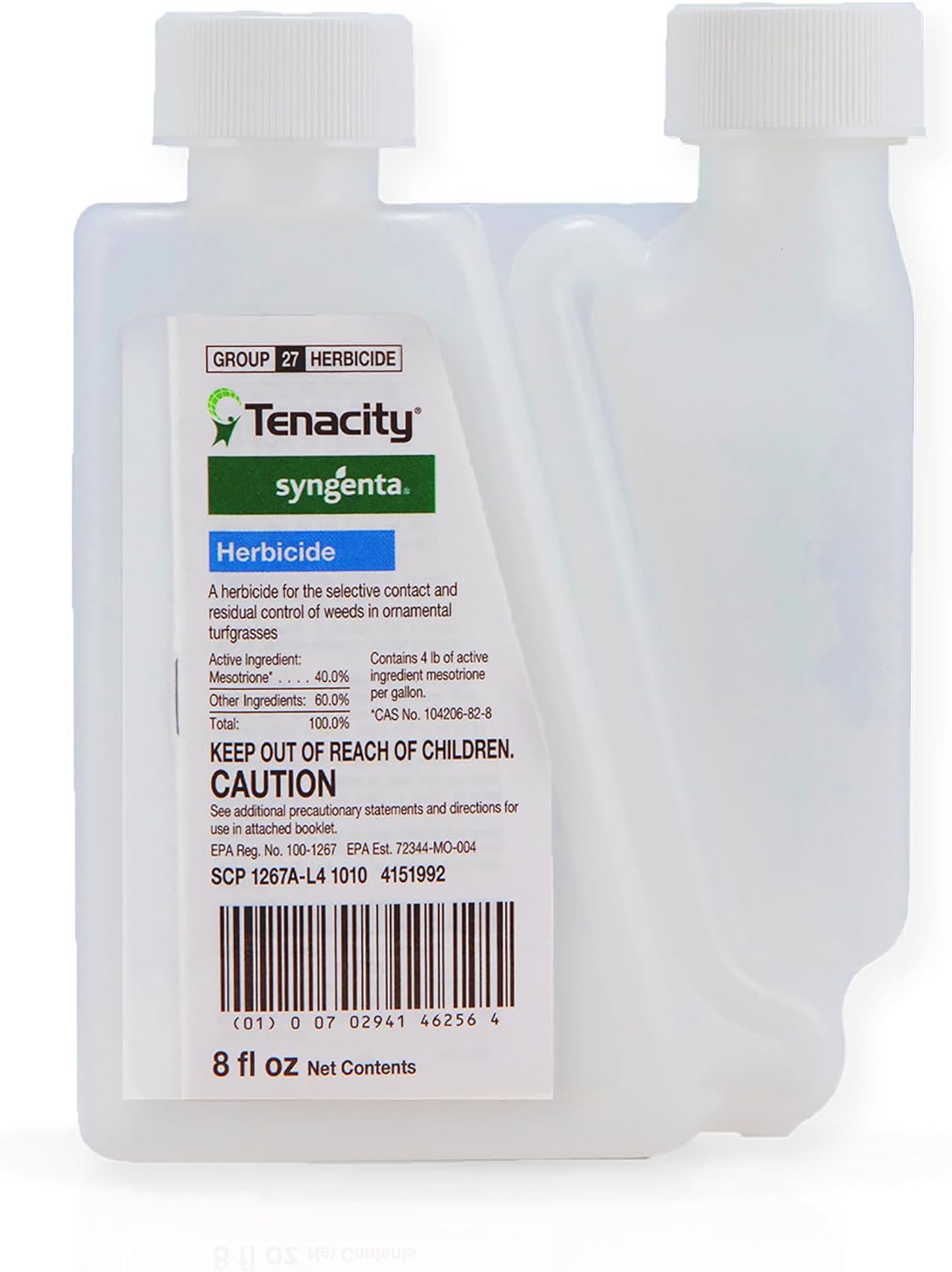
Tenacity Turf Herbicide, 8 fl oz
| Unit Count | 8 Fluid Ounces |
|---|---|
| Item Form | Liquid |
| Coverage | 2000 ft^2 per 1sp of product |
| Active Ingredients | Mesotrione |
Tenacity Turf Herbicide is a concentrated liquid herbicide formulated for both pre-emergent and post-emergent control of common turf weeds. It is typically diluted and applied with a sprayer to lawns where it is absorbed systemically or on contact during weed emergence. Notable features include its active ingredient mesotrione and labeled coverage that can treat large areas from a single 8-ounce bottle when mixed at recommended rates. In practice it controls grassy weeds like crabgrass and foxtail as well as many broadleaf weeds such as clover and dandelion, and it offers residual activity that helps reduce repeat applications. The product requires careful mixing, accurate application timing, and adherence to label directions to avoid off-target effects on desirable plants. It is best used by gardeners who want a professional-strength solution and are comfortable calibrating sprayers and following safety precautions, while casual users may find the mixing and application details more demanding.
Best for: Gardeners and turf managers who prioritize strong, professional-level weed control and are willing to mix and apply a concentrated product precisely for maximum performance.
Less Ideal for: Casual homeowners who want a ready-to-use spray or who prefer minimal handling of concentrated chemicals should consider simpler, user-friendly alternatives.
- Effective on both pre-emergent and post-emergent grassy and broadleaf weeds
- Contains mesotrione, a systemic active ingredient with residual control
- Concentrated 8 fl oz bottle covers a large area when mixed per label
- Can reduce the need for frequent repeat applications because of residual activity
- Requires precise mixing and spray calibration to use safely and effectively
- May harm non-target plants if applied incorrectly or drift occurs
Verdict: Pick Tenacity when you need a concentrated professional-strength herbicide that controls a wide spectrum of turf weeds both before and after emergence.
Ortho WeedClear Weed Killer for Lawns with Comfort Wand, 1 gal

| Unit Count | 128 Fluid Ounces |
|---|---|
| Item Form | Spray |
| Coverage | 16000 square feet |
| Item Highlight | Kills over 250 listed weeds including dandelion and clover |
Ortho WeedClear is a 1 gallon ready-to-use herbicide formulated to kill over 250 common broadleaf lawn weeds down to the root. It ships with a Comfort Wand applicator for continuous, targeted spraying so you can spot-treat individual weeds or dilute for larger broadcast applications. The formula combines three active ingredients to provide visible wilting in hours and becomes rainproof about an hour after drying, which helps with reliable scheduling. In practice the wand makes precision work around plants and hardscape easy and removes the need for separate pump sprayers for small jobs. Important limitations are that it is a chemical herbicide so users must follow safety directions, avoid application above 90°F, and keep people and pets off damp areas until dry. For large acreage, frequent repeated broadcast use will be slower and more costly than concentrate options, but for homeowners optimizing time and results it provides straightforward, fast control of typical lawn weeds.
Best for: Homeowners who want a quick, low-fuss solution to remove common broadleaf weeds and prefer a built-in wand for precise spot treatment or small broadcast jobs.
Less Ideal for: People managing many acres or seeking an economical concentrate for frequent large-scale spraying should consider concentrate or professional alternatives.
- Ready-to-use with Comfort Wand for easy, continuous spot or broadcast application
- Targets over 250 common broadleaf lawn weeds and works to the root
- Visible results within hours and rainproof about one hour after drying
- Lawn-friendly formulation when used as directed so grass is not harmed
- Contains multiple chemical actives so safety precautions and label timing are required
- Not ideal for very large lawns compared with concentrated products
Verdict: Choose this ready-to-use weed killer if you want fast, precise lawn weed control with a built-in comfort wand and visible results in hours.
Ortho WeedClear Lawn Weed Killer Ready-to-Spray, 32 fl. oz.

| Unit Count | 32 Fluid Ounces |
|---|---|
| Coverage | 5000 square_feet |
| Item Form | Spray |
| Active Ingredients | 2,4-D; Quinclorac; Dicamba |
Ortho WeedClear Ready-to-Spray is a hose-end post-emergent weed killer designed for quick removal of common lawn weeds such as dandelion, clover, chickweed and crabgrass. You attach it to a garden hose, flip the on switch and spray until the lawn surface is wet, which makes application fast and simple for DIY homeowners. The formula contains multiple active ingredients that target broadleaf and grassy weeds down to the root and the product claims visible results in hours and rainproofing in about one hour. A single 32 fl. oz. bottle treats up to 5,000 square feet, so it can cover most small-to-medium yards without mixing. Important limitations are the species and temperature restrictions: it should not be used on certain grass types like St. Augustine or centipedegrass and you should avoid treating bermudagrass above 85°F. Also you must keep people and pets off the lawn until sprays have dried and follow safety directions during application. For a ready-made, low-effort post-emergent option this product is practical, but users with sensitive turf types or larger properties may need a different formulation or concentrated product.
Best for: Homeowners who want an inexpensive, no-mix post-emergent spray to quickly treat visible weeds on common northern lawn grasses and who prefer a simple hose-end application.
Less Ideal for: People managing large lawns, those growing disallowed turf species, or gardeners seeking organic or OMRI-listed options should consider concentrates or alternative products.
- Ready-to-use hose-end applicator makes treatment quick and simple without measuring or mixing
- Covers up to 5,000 sq. ft. from a single 32 fl. oz. bottle, suitable for small-to-medium lawns
- Fast-acting formula with multiple active ingredients that target broadleaf and grassy weeds
- Rainproof within about one hour so treatment is less likely to be washed away by light rain
- Not safe for several turf types and has temperature limits for bermudagrass, restricting when it can be applied
- Contains multiple synthetic herbicides which require precautions for people, pets, and nearby ornamentals
Verdict: A low-effort, ready-to-spray post-emergent that quickly clears common lawn weeds and covers up to 5,000 sq. ft., making it a practical budget-friendly choice for small-to-medium yards.
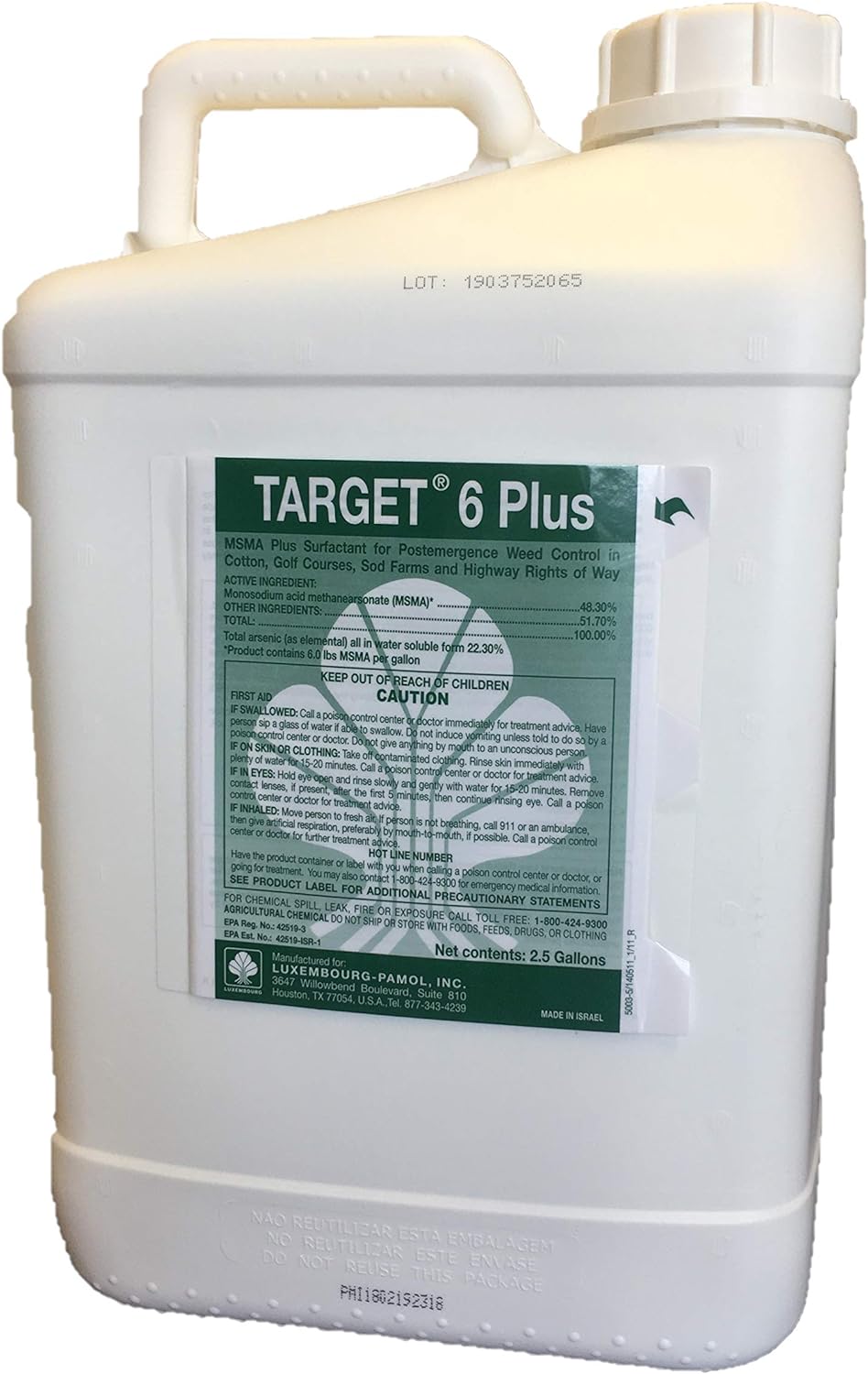
Target 6 Plus MSMA 48.3% Post-Emergent Turf Herbicide, 2.5 Gallon
| Active Ingredients | Monosodium acid Methanearsonate MSMA |
|---|---|
| Unit Count | 320 Fluid Ounces |
| Item Form | Liquid |
| Coverage | Selective: Crabgrass, Dallisgrass, Johnsongrass, Nutsedge, Pigweed, Chickweed |
Target 6 Plus MSMA is a concentrated post-emergent herbicide intended for selective control of crabgrass, dallisgrass, johnsongrass, nutsedge, pigweed, and chickweed in turf. It is mixed at about 2 ounces per gallon and applied as a coarse spray, so most users will use it with a pump sprayer to spot-treat or cover larger areas such as golf course turf, sod farms, or established lawns. The primary strength is its active ingredient, monosodium acid methanearsonate (MSMA), which is effective on weeds that many general lawn products struggle to suppress. The product comes in a 2.5 gallon jug, which provides a substantial supply for repeated treatments across medium to large lawns. Important practical considerations are safety and label directions: the product can be harmful if absorbed or swallowed and must not be applied where food is grown, and protective equipment and careful handling are required. This makes it suitable for experienced users or contractors who follow label instructions, while casual gardeners should exercise caution or seek professional application.
Best for: Buyers who prioritize reliable, contractor-grade control of stubborn post-emergent turf weeds and who are comfortable following strict label safety and application procedures.
Less Ideal for: Casual gardeners, small-plot vegetable or edible growers, or anyone unwilling to use personal protective equipment or follow restricted-use safety guidance.
- High concentration of MSMA effective on hard-to-control grassy weeds
- Large 2.5 gallon volume supports multiple treatments for medium to large turf areas
- Selective post-emergent activity targets both grassy and some broadleaf weeds listed on the label
- Simple mix rate (2 oz per gallon) makes dilution and repeat applications straightforward
- Contains an arsenical active ingredient that requires strict safety precautions and may have regulatory restrictions
- Not intended for use where food is grown and requires protective equipment during handling and application
Verdict: Choose this concentrated MSMA formulation when you need proven, contractor-grade post-emergent control of tough turf weeds and will follow label safety and application requirements.
Scotts Liquid Turf Builder Plus 2 Weed Control Ready‑to‑Spray, 32 fl. oz.

| Item Form | Spray |
|---|---|
| Liquid Volume | 32 fluid ounces |
| Coverage | 6000 square_feet |
| Active Ingredients | Nitrogen |
This ready‑to‑spray bottle from Scotts is designed for homeowners who want a fast, low‑effort way to feed their lawn and kill common broadleaf weeds. You attach the bottle to a garden hose and spray the lawn when weeds are actively growing; the 25‑0‑2 NPK formulation delivers nitrogen for greener turf while the weed control ingredient targets dandelions, clover and a range of listed broadleaf weeds. The product covers up to 6,000 sq ft on warm‑season lawns and 4,000 sq ft on cool‑season lawns and usually shows weed damage within a few days, with stubborn weeds sometimes needing a repeat application in 3 to 4 weeks. Its biggest practical strengths are ease of use and the combination of fertilizing plus weed control in one pass. Important limitations are that it is labeled only for certain grass types, may cause temporary injury on some bermudagrass, and you must avoid watering for 48 hours after application and not use it on garden beds or non‑listed turf areas.
Best for: Homeowners who want a low‑effort, fast way to both feed the lawn and control common broadleaf weeds without mixing products and who prioritize proven brand performance and clear label instructions.
Less Ideal for: People who need herbicide options for non‑listed weeds, have mixed ornamental beds adjacent to turf, or who prefer granular feeding programs and more targeted professional herbicide control.
- Ready‑to‑spray hose‑end applicator makes application quick and tool‑free.
- Combines fertilizer and post‑emergent broadleaf weed control in a single treatment.
- Covers a large area per bottle (up to 6,000 sq ft on warm‑season lawns).
- Starts to show weed damage within days for many common lawn weeds.
- Not labeled for use on garden beds or around vegetables and flowers.
- May cause temporary injury on some bermudagrass varieties.
- Effective only against listed weeds and may require a repeat application for stubborn species.
Verdict: A simple, ready‑to‑spray solution for homeowners who want to fertilize and knock back common post‑emergent broadleaf weeds in one easy step.
Prime Source Celsius WG Post-Emerge Weed Control Easy Mix Packet

| Item Form | Powder |
|---|---|
| Coverage | broad-leaf weeds and grassy weeds |
| Active Ingredients | Dicamba 57.4%, Iodosulfuron-methyl-sodium 1.9%, Thiencarbazone-methyl 8.7% |
| Included Components | Easy Mix Packet, Product Label |
Celsius WG is a post-emergent foliar herbicide supplied as a small easy-mix powder packet intended for spot or broadcast applications on warm-season lawns. It combines three active ingredients to target more than 120 broadleaf and grassy weeds and works fastest when applied to actively growing weeds at daily averages above 60°F. Users typically empty a packet into compatible application equipment, spray evenly while avoiding drift, and expect visible symptoms within hours with plant death over one to four weeks. Practical benefits include the broad weed spectrum, convenient single-dose packaging that reduces measuring mistakes, and a formulation suited for turf types like Bermudagrass, St. Augustine, Zoysia, and Centipede. Important limitations are that it is not labeled for cool-season grasses, it can damage non-target plants if drift occurs, and effectiveness falls off when weeds are drought-stressed or when applied in heavy dew or rain. Follow the label safety instructions carefully and avoid applying near desirable plants or water features.
Best for: Homeowners and groundskeepers with warm-season lawns who want a reliable, ready-to-use post-emergent product and prioritize predictable, label-directed results.
Less Ideal for: Owners of cool-season grass lawns or gardeners who need herbicides safe for use near sensitive ornamentals or water features should consider other options.
- Controls a wide spectrum of broadleaf and grassy weeds in warm-season turf
- Easy-mix single-use packets reduce measuring errors and simplify application
- Fast symptom development with visible effects in hours under warm conditions
- Not labeled for use on cool-season grasses
- Toxic to non-target plants so spray drift must be avoided
- Performance reduced on drought-stressed weeds or when applied in wet/foggy conditions
Verdict: A convenient single-packet post-emergent herbicide that reliably kills a wide range of weeds in warm-season turf when applied according to the label.
Choosing the Right Post Emergent Weed Killer for Lawns: Key Factors to Consider
Turf Safety and Grass Type Compatibility
Different turfgrass species tolerate herbicides differently. Warm-season grasses and cool-season grasses can respond with varying sensitivity, and some active ingredients are labeled only for specific grass types. Knowing your lawn species helps prevent scorch, yellowing, or long-term thinning.
Application timing relative to grass growth stage matters too. Herbicides applied during heat stress or dormancy greatly increase injury risk. Review label restrictions about temperature, recent or upcoming fertilization, and mowing intervals to protect desirable turf.
Target Weed Spectrum
Post emergent products vary in which weeds they control. Some target broadleaf weeds like dandelion, clover, and plantain, while others also handle grassy weeds such as crabgrass when applied at the right growth stage. Identify the predominant weed types and life stages in your lawn before choosing a product.
Many formulations are broad-spectrum but perform poorly on certain perennial weeds with deep roots. For persistent perennials, look for active ingredients listed as effective on established roots or consider integrated control tactics that combine spot treatment with cultural methods.
Timing and Environmental Conditions
Weed susceptibility changes with temperature, moisture, and growth stage. Most post emergent herbicides work best when weeds are actively growing and soil moisture is adequate. Applying during drought, extreme heat, or when plants are stressed reduces uptake and slows control.
Weather windows for safe application also matter. Avoid treating before heavy rain or when wind could cause drift onto ornamentals. Labels will specify recommended temperature ranges and whether a rain-free period is required for uptake.
Residual Activity and Regrowth Control
Some post emergent products offer short residual activity that helps suppress new seedlings for a period after application. Others primarily kill the existing weed with little prevention of reinfestation. If your lawn faces continuous seed rain or persistent perennial roots, a product with residual suppression can reduce repeat treatments.
Consider how residual chemistry interacts with overseeding or reseeding plans. Residual control may delay safe dates for planting new grass seed, so match your herbicide choice to your lawn renovation timeline.
Application Method and Ease of Use
Products come as ready-to-use sprays, hose-end sprayers, or concentrates requiring dilution. Ease of measuring, mixing, and uniform application affects treatment accuracy and safety. Hose-end applicators are convenient for quick spot work but can deliver inconsistent rates; concentrates allow precise rates but require careful mixing.
Also look for clear label instructions, recommended spray volumes, nozzle guidance, and protective equipment requirements. Practical application features, such as built-in shutoffs or non-clogging nozzles, reduce mistakes and off-target damage.
Safety, Restrictions, and Lawn Care Integration
Herbicide labels list protective gear, re-entry intervals, and proximity restrictions near gardens or water features. Consider these constraints when planning treatments around children, pets, or edible plantings. Some active ingredients have buffer zone restrictions near water.
Integrate chemical control with cultural practices. Improved mowing height, fertility management, and aeration reduce weed pressure over time and can make post emergent treatments more effective and less frequent.
When To Treat: Best Windows For Post Emergent Applications
Treat weeds when they are actively growing and not under environmental stress. For many cool-season lawn weeds this means spring and fall growth flushes, while warm-season weed activity often peaks in late spring through summer. Applying during these active growth windows increases herbicide uptake and speeds visible control.
Avoid treating during drought or extreme heat and follow label guidance about temperature ranges. Also plan applications at least a few days away from heavy rains to ensure the product has time to be absorbed.
- Look for new leaf and root growth on weeds before treating.
- Do not apply if forecast shows heavy rain within 24 hours unless label permits.
- Delay application if the lawn is under heat stress or recently fertilized according to label intervals.
Spot Treatment Versus Broadcast Applications
For small, isolated patches of weeds, spot treatment uses less product and reduces risk to surrounding plants. Broadcast applications are better for lawns with widespread infestations but require more careful mixing and even coverage to avoid streaking or missed areas.
When doing broadcast work, calibrate your sprayer to the recommended gallons per 1,000 square feet and overlap spray passes slightly for uniform coverage.
- Spot treat persistent perennials to limit chemical use.
- Use a measured sprayer and walk at a steady pace for broadcast treatments.
- Mark treated areas to avoid double applications.
Combining Chemical Control With Cultural Practices
Herbicides are a tool, not a long-term solution by themselves. Raising mowing height, improving soil fertility based on a soil test, overseeding thin areas, and aerating compacted soil all reduce the niche weeds exploit. Strong, dense turf naturally resists many common weeds.
Plan herbicide timing around cultural tasks. For example, avoid applying products with long residual activity right before overseeding, and schedule aeration when weed pressure is low to minimize disturbing herbicide-treated soil.
- Mow at recommended heights for your grass species to shade out weed seedlings.
- Water deeply and infrequently to favor turf roots over shallow-rooted weeds.
- Use spot herbicide treatments on target weeds after cultural improvements to maintain gains.
Application Safety and Protecting Nearby Plants
Prevent off-target damage by shielding desirable ornamentals and edible plants during spray work. Windy conditions increase drift risk and vapor movement, which can injure sensitive plants. Some herbicide formulations emit vapors that can travel and harm nearby vegetation on hot days.
Wear recommended protective clothing and follow re-entry and pet-safety intervals. Store mixed solutions securely and dispose of leftover product according to label instructions.
- Use low-drift nozzles and keep spray booms low to the target area.
- Avoid spraying on windy days or when temperatures are high.
- Rinse sprayers thoroughly between different product chemistries to avoid tank-mix damage.
Managing Tough Perennials and Reinfestation
Deep-rooted perennials may not die back entirely from a single application. Expect to follow up with spot treatments or combine herbicide use with physical removal when practical. Repeated treatments timed with new shoot growth are often more effective than a single heavy application.
Monitor treated areas for regrowth and address new seedlings early with spot treatment or by improving turf density to compete with weeds.
- Retreat perennials when new growth appears rather than applying extra product at once.
- Use manual removal for small stubborn patches to reduce chemical reliance.
- Keep records of treatment dates to avoid unnecessary overlap with fertilization or seeding.
How We Chose the Best Post Emergent Weed Killer for Lawns
We shortlisted products by prioritizing formulations designed for use on established lawns and evaluated each entry against concrete, garden-relevant dimensions. Key criteria included turf safety across common lawn grasses, spectrum and efficacy against typical broadleaf and grassy weeds, and the speed of visible control. We also measured the expected residual activity and regrowth suppression, application flexibility and ease of use for homeowners, and label clarity with regard to timing, mowing intervals, and temperature restrictions. Excluded items were general landscape or agricultural herbicides not labeled for turf, products intended only for pre-emergent control, and any concentrates lacking clear homeowner application instructions. We favored products with clear guidance for spot treatments and broadcast applications, and those that specify safe use windows relative to temperature, mowing, and fertilizer scheduling. The scoring emphasizes measurable, gardener-facing performance rather than brand reputation or packaging alone.
FAQ
Can I apply post emergent weed killers right after mowing?
Often it is better to wait a day or two after mowing so weeds have enough leaf area to absorb the herbicide. Follow label instructions; some products recommend a short window before or after mowing to maximize uptake and reduce drift.
Will post emergent treatments stop new weeds from germinating?
Most post emergent herbicides control existing weeds but provide limited residual prevention of new seedlings. Some formulas include residual activity that suppresses germination for a short period, but pre-emergent products are usually needed for long-term prevention of seedling weeds.
Are post emergent herbicides safe for kids and pets?
Safety depends on the active ingredient and label guidelines. Many products require a short re-entry interval until spray has dried, and some advise keeping pets off treated turf for a period. Always follow label directions for protective measures and re-entry times.
How soon will I see weeds die after application?
Visible control varies by weed species and product; some broadleaf weeds show browning in a few days, while tougher perennials can take several weeks. Environmental conditions and correct application rates also influence how quickly results appear.
Can I overseed after applying a post emergent herbicide?
That depends on the product and its residual activity. Some herbicides require waiting several weeks to months before seeding to avoid damage to new seedlings. Check the label for recommended intervals and plan treatments around your overseeding schedule.
Is one treatment usually enough to get rid of weeds?
Often one treatment will substantially reduce weeds, but persistent or widely seeded lawns commonly need follow-up applications or integrated cultural measures. Expect to monitor and treat selectively rather than rely on a single pass for long-term control.
Final Verdict
Choose a post emergent weed killer for lawns by matching the product to your dominant grass type, the weeds you need to control, and your lawn-care calendar. Prioritize turf-safe chemistries if you have sensitive grass varieties, and select formulations with residual suppression if you face constant seed pressure. Balance convenience and precision by picking an application method you will use correctly. Combine any chemical control with mowing, fertility, and overseeding to reduce repeat treatments and maintain a healthy, weed-resistant lawn.
