

Note: This article contains affiliate links. If you click on these links and make a purchase, I may earn a small commission at no extra cost to you. This helps support my research and content. Read my full affiliate disclosure here.
Picking the right bloom booster fertilizer changes how your flower beds and containers perform during peak season. The correct formulation delivers the nutrients that support bigger flowers, richer color, and longer bloom periods without causing foliage burn or excessive vegetative growth. This guide covers seven shortlisted bloom boosters selected for common garden situations, from containers and hanging baskets to perennial borders and annual beds. We evaluate each option on nutrient balance, application method, and how predictable results are in a real garden setting. Read on to find a product that fits your planting style and maintenance routine.
Top Picks at a Glance
| Best Overall The best all-around choice for most situations | Miracle-Gro Water Soluble Bloom Booster Flower Food, 4 lb |  |
| Best Quality Built to a higher standard if you want something more solid | FoxFarm Big Bloom Liquid Plant Food, 1 Quart |  |
| Best Value The sweet spot between price and what you get | Miracle-Gro Water Soluble Bloom Booster Flower Food, 5.5 lb |  |
| Best Budget The cheapest option that still gets the job done reliably | RAINFLOW 10-30-20 Blossom Booster Water-Soluble Fertilizer (11.28 oz) |  |
| Highest Rated A top-rated pick with lots of positive feedback | FoxFarm Tiger Bloom Liquid Plant Food (16 fl oz) |  |
| Most Popular A crowd favorite that many people choose with confidence | FoxFarm Soil Liquid Trio Pack (Big Bloom, Grow Big, Tiger Bloom) — 48 fl oz |  |
| Best Seller A high-volume bestseller chosen again and again | TPS Nutrients Orchid Fertilizer Bloom Boosting Liquid Plant Food, 8 oz |  |
Miracle-Gro Water Soluble Bloom Booster Flower Food, 4 lb

| Item Form | Powder |
|---|---|
| Application Method | Water Soluble |
| Target Species | flowers |
| Mixing Ratio | 1 tablespoon per gallon |
This Miracle-Gro Bloom Booster is a water-soluble powder designed to increase flower production and color in container and in-ground flowering plants. You mix it into a watering can (1 tablespoon per gallon for outdoor use, 1/2 teaspoon per gallon for indoor plants) or use it with the Miracle-Gro Garden Feeder to feed plants every 7 to 14 days. The 10-52-10 NPK formula delivers a high phosphorus dose that encourages bud set and fuller blooms, and the powder dissolves quickly for fast uptake. It is straightforward to apply and works across a wide range of flowers, roses, hydrangeas and other ornamentals where extra blooms are desired. Limitations to note are that it is focused on bloom promotion rather than balanced long-term nutrition and should be used according to directions to avoid overfeeding; indoor and sensitive plants require the much weaker indoor mix. For gardeners wanting quick, visible increases in flowering during the growing season, this product is an easy, targeted option.
Best for: Gardeners who prioritize bigger, more frequent blooms and want a simple, repeatable feeding routine for containers and flower beds during the growing season.
Less Ideal for: People looking for an all-season balanced fertilizer or a single product to meet all plant nutrition needs should consider a more general-purpose formula instead.
- High phosphorus 10-52-10 formula tailored to boost blooms and color
- Water-soluble powder that dissolves quickly for fast feeding
- Can be applied with a watering can or the Miracle-Gro Garden Feeder for easy distribution
- Suitable for both containers and in-ground flowering annuals and perennials
- Focused primarily on bloom promotion rather than providing balanced long-term nutrition
Verdict: Use this water-soluble, high-phosphorus booster when you want fast, noticeable increases in bloom count and color.
FoxFarm Big Bloom Liquid Plant Food, 1 Quart

| Item Form | Liquid |
|---|---|
| Unit Count | 32 Fluid Ounces |
| Mixing Ratio | 4 tbsp per gallon of water |
| Specific Uses For Product | Plant Food |
FoxFarm Big Bloom is a liquid concentrate intended to boost flowering and fruit production by supplying readily available organic nutrients such as earthworm castings and bat guano. It is mixed at 4 tablespoons per gallon and can be applied every other watering, with compatibility for hose-end sprayers, siphon mixers, or drip systems for larger beds. Typical use is with fruiting and flowering ornamentals and edibles when you want more blooms, fuller buds, or improved fruit flavor. The formula’s low NPK numbers emphasize bloom support rather than vigorous vegetative growth, and the liquid form promotes fast uptake so results are visible sooner than with dry amendments. Important limitations are that it contains phosphorus so local runoff rules may restrict use on turf and it is sold in a single quart size which may require frequent repurchase for large gardens. For growers who prefer organic-derived inputs and want an easy-to-mix bloom booster, this delivers targeted feeding without complicated schedules.
Best for: Gardeners focused on maximizing flower and fruit production who want an easy-to-use, organic-derived liquid feed they can apply regularly.
Less Ideal for: People looking for a high-nitrogen general-purpose fertilizer for leafy growth or those managing very large landscapes who need bulk economy options.
- Liquid concentrate mixes quickly for fast nutrient uptake
- Contains organic inputs like earthworm castings and bat guano for bloom support
- Works with hose-end sprayers, siphon mixers, or drip systems for convenient application
- Simple dosing guidance (4 tablespoons per gallon) makes feeding easy
- Contains phosphorus which may be restricted by local regulations for non-agricultural turf
- Available only in a 1 quart unit which may be small for large gardens
Verdict: Choose Big Bloom when you want a convenient, organic-derived liquid booster to increase blooms and improve fruit quality in flowering and fruiting plants.
Miracle-Gro Water Soluble Bloom Booster Flower Food, 5.5 lb

| Item Form | Powder |
|---|---|
| Application Method | Mix with water |
| Target Species | Flower |
| Mixing Ratio | 1:Water |
| Liquid Volume | 0.5 gallons |
Miracle-Gro Water Soluble Bloom Booster is a powdered, water‑soluble fertilizer designed to increase flower production and color by delivering a high phosphorus formula (10-52-10) directly to the root zone. You mix the powder with water and apply it with a watering can, garden feeder, or watering system every 7 to 14 days during bud set and bloom. In practice it is straightforward to use: small indoor plants get a half teaspoon per gallon, while outdoor beds use larger scoop measures or the Garden Feeder for bigger areas. The product covers a large area from a single 5.5 lb container and feeds quickly because nutrients are dissolved and available to plants immediately. Notable features include a focused bloom‑boosting NPK and a soluble form that works in containers and in-ground beds. Important limitations are that frequent feeding is required during bloom periods and the high phosphorus balance makes it a bloom specialist rather than an all‑purpose fertilizer for foliage or long‑term soil building.
Best for: Gardeners who want a simple, effective way to maximize flower production during the blooming season and prefer quick visible results with repeat, scheduled feedings.
Less Ideal for: Buyers looking for an all‑purpose or slow‑release fertilizer for year‑round feeding or those who prefer organic or soil‑building approaches.
- High phosphorus NPK (10-52-10) specifically formulated to promote more blooms
- Water‑soluble powder mixes quickly for fast nutrient uptake
- Suitable for both container and in‑ground flowering plants
- Covers a large area from one 5.5 lb container
- Easy to apply with a watering can or Miracle-Gro Garden Feeder
- Requires regular applications every 7 to 14 days during bloom periods
- Not formulated for long‑term soil building or general foliage feeding
Verdict: Use this water‑soluble bloom booster when you want a fast, easy way to amp up flower production and color during the active blooming season.
RAINFLOW 10-30-20 Blossom Booster Water-Soluble Fertilizer (11.28 oz)

| Item Form | Granules |
|---|---|
| Application Method | Water-soluble |
| Target Species | Flowers |
| Unit Count | 11.28 Ounce |
This RAINFLOW 10-30-20 Blossom Booster is a small, water-soluble granule fertilizer formulated to push bloom production and enhance flower color for azaleas, hydrangeas, bougainvillea and similar ornamentals. You mix measured granules into water and apply to soil or potted plants, where the high phosphorus ratio supports bud set and visible flowering without complex application. The blue granules dissolve quickly for fast absorption, making it handy for seasonal feeding or targeted bloom boosts before shows or heavy flowering periods. Its compact 11.28 ounce package is convenient for home gardeners and greenhouse users who need a single-season supply or want to test a bloom-specific feed. Expect noticeably stronger bloom development when used during the flowering stage, but you will need to reapply according to plant needs since the small unit covers limited area compared with larger commercial bags. Also it is focused on flowering benefits rather than balanced all-season nutrition, so pair it with general-purpose feeds for vegetative growth if needed.
Best for: Home gardeners on a budget who want an easy-to-mix bloom booster for potted plants, beds, or seasonal flowering displays and who prioritize visible flower production over all-purpose feeding.
Less Ideal for: Large-scale gardeners or those seeking a single all-purpose feed for both foliage and long-term soil building should consider bulk or balanced fertilizers instead.
- High phosphorus NPK (10-30-20) targets bud set and stronger blooms
- Water-soluble granules dissolve quickly for fast nutrient uptake
- Compact 11.28 oz package is easy to store and carry for home gardeners
- Blue granules make measuring and mixing more straightforward
- Small unit size provides limited coverage for larger gardens
- Formulation emphasizes flowering so it is not a complete all-season fertilizer
Verdict: Choose this compact 10-30-20 water-soluble booster when you want an inexpensive, easy-to-apply feed that quickly increases bloom size and color.
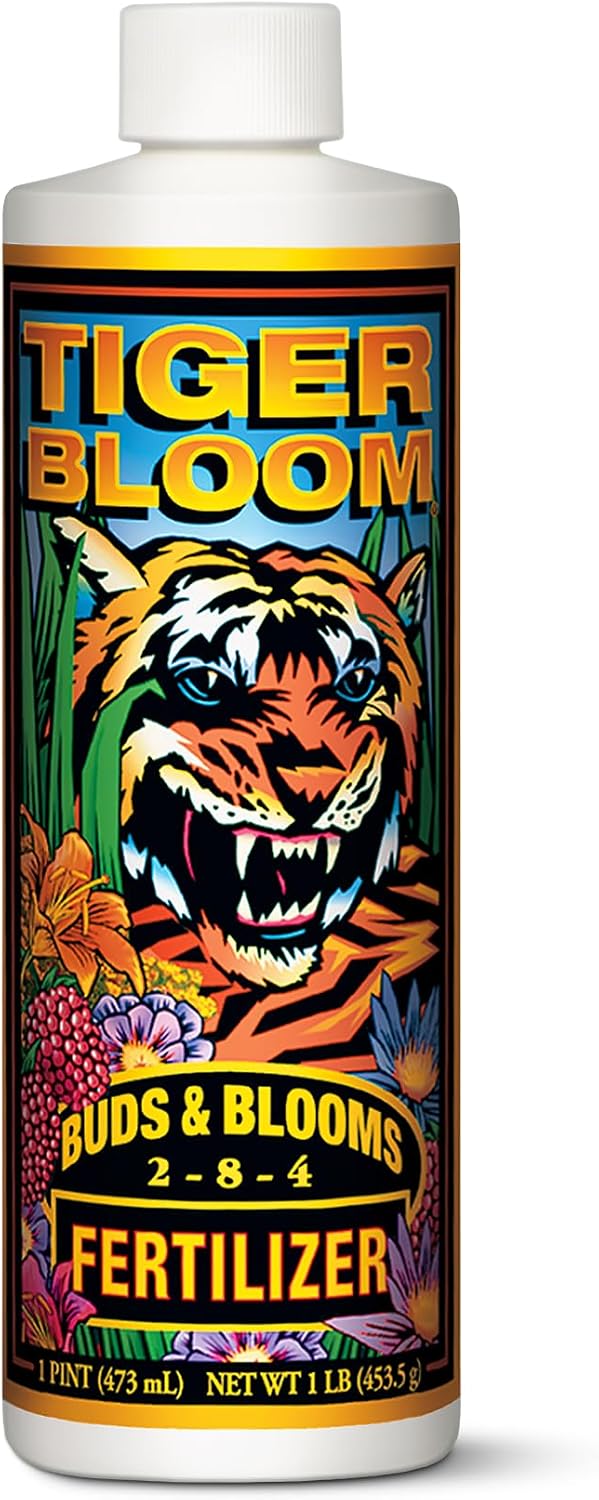
FoxFarm Tiger Bloom Liquid Plant Food (16 fl oz)
| Unit Count | 16 Fluid Ounces |
|---|---|
| Item Form | Liquid |
| Specific Uses For Product | Hydroponic |
| Application Method | Watering; Foliar spraying |
| Mixing Ratio | 1:200 or 1:300 (1 part fertilizer to 200 or 300 parts water) |
FoxFarm Tiger Bloom is a concentrated liquid fertilizer designed to push plants into a stronger flowering and fruiting phase. You mix 2 to 3 teaspoons per gallon (heavier feeding up to 4 tsp) and apply through watering or as a foliar spray every other watering, which makes it easy to add into routine feed schedules for both soil and hydroponic setups. The 2-8-4 N-P-K ratio emphasizes phosphorus to support bud set and bloom development, and the formula includes micronutrients and a low pH for stability and quick uptake. In practice it helps plants put on fuller blooms and more consistent fruiting when used at the recommended rates during flowering. Important limitations are that it is phosphorus-rich so it may be restricted for use on lawns in some jurisdictions and it is a concentrated liquid that requires careful measuring and consistent feeding to avoid overapplication. For growers who prefer predictable bloom boosts, Tiger Bloom offers a straightforward, widely used solution when paired with a regular feeding routine.
Best for: Gardeners who want a reliable, repeatable bloom booster for flowering plants and value predictable results across soil or hydroponic setups. Ideal for growers who follow a regular feeding routine and prefer a concentrated liquid they can measure precisely.
Less Ideal for: Casual gardeners who prefer slow-release granular fertilizers or those who need a no-measure, low-maintenance option. Not suited for users unable to follow local regulations on phosphorus use.
- Bloom-focused 2-8-4 N-P-K ratio supports bud and flower development
- Works in both soil and hydroponic systems for flexible use
- Liquid concentrate mixes easily for precise dosing
- Includes micronutrients and low pH for faster nutrient availability
- Phosphorus content may be regulated in some areas and requires checking local restrictions
- Requires careful measuring and consistent schedule to avoid overfeeding
Verdict: Choose Tiger Bloom when you need a dependable, easy-to-dose liquid fertilizer that reliably boosts blooms and fruit during the flowering stage.
FoxFarm Soil Liquid Trio Pack (Big Bloom, Grow Big, Tiger Bloom) — 48 fl oz

| Brand | FoxFarm |
|---|---|
| Item Form | Liquid |
| Unit Count | 48 Fluid Ounces |
| Specific Uses For Product | Plant Food |
| Coverage | Organic |
The FoxFarm Soil Liquid Trio combines Big Bloom, Grow Big, and Tiger Bloom into a simple program to support plants from vegetative growth through heavy bloom and fruit set. In practice you use Grow Big during vegetative stages to encourage leafy growth, Big Bloom as an all-stage tonic to boost flowering and soil biology, and Tiger Bloom when buds form to push flower and fruit development. The set is a concentrated liquid formula, so small measured doses mix into water for container gardens, raised beds, or in-ground plantings. Users will appreciate clear stage guidance and the brand's long track record for consistent greenhouse testing. The main limitations are that it is a concentrated chemical/organic blend requiring careful dosing and safe handling around children and pets, and it is not a pre-mixed ready-to-spray product. For gardeners who follow directions, it is a flexible trio that makes it easy to run a complete bloom-boosting nutrition plan across multiple plant types.
Best for: Gardeners who want a proven, stage-specific feeding plan to maximize blooms and fruit and who prefer following tested instructions and community-backed results.
Less Ideal for: People seeking a single all-in-one ready-to-spray solution or those uncomfortable handling concentrated fertilizers should consider simpler liquid feeds or pre-diluted products.
- Three complementary formulas cover vegetative growth, flowering, and fruit set for a full-season program
- Concentrated liquid format lets you control dosage and treat multiple plants from one kit
- Formulas are greenhouse tested and widely used, providing strong social proof of effectiveness
- Requires careful measuring and mixing; not usable straight from the bottle as a spray
- Contains concentrated nutrients that need safe storage and handling away from children and pets
Verdict: Buy this trio if you want a trusted, stage-by-stage liquid fertilizer program that reliably boosts blooms and fruit when used as directed.
TPS Nutrients Orchid Fertilizer Bloom Boosting Liquid Plant Food, 8 oz

| Item Form | Liquid |
|---|---|
| Application Method | foliar spray |
| Coverage | Medium |
| Target Species | orchids |
| Unit Count | 8 Fluid Ounces |
This 8 oz TPS Nutrients orchid fertilizer is a liquid, foliar-spray plant food designed specifically to support flowering and root health in indoor orchids. It delivers a kelp-enriched nutrient mix meant to encourage new bloom spikes and richer color in foliage, and the liquid form absorbs quickly when applied as a spray. Typical use is straightforward: dilute per the included mixing guidance and spray the leaves and growing medium on a routine schedule to support blooms and root uptake. Its compact bottle is convenient for hobbyists and small collections and the product focuses on flowering results rather than heavy vegetative growth. Limits to consider are the small unit size for larger collections and the lack of detailed NPK ratios on the main listing, so users who track exact fertilizer balance may want to supplement with a general-purpose orchid feed or test mixes first. For cautious growers, the foliar method reduces waste and can be spot-applied to individual plants.
Best for: Buyers who want a simple, bloom-focused foliar feed for indoor orchids and prefer a ready-to-use liquid that is easy to apply to individual plants.
Less Ideal for: Growers managing large collections, greenhouse operations, or those who require exact NPK ratios for strict fertilization schedules should consider bulk or fully specified alternatives.
- Formulated specifically for orchids to encourage bloom spikes and flowering.
- Kelp-enriched liquid promotes root health and nutrient uptake.
- Foliar spray application allows quick absorption and targeted feeding.
- Compact 8 fl oz bottle is easy to store and handy for small collections.
- Small 8 oz volume may require frequent repurchasing for multiple plants.
- Product listing does not provide a full NPK breakdown in the visible details.
Verdict: A convenient kelp-enriched foliar liquid that makes it easy to boost orchid blooms and support root health in small indoor collections.
Choosing the Right Bloom Booster Fertilizer: Key Factors to Consider
Nutrient Profile and Ratios
The ratio of nitrogen, phosphorus, and potassium guides plant response. Bloom boosters typically emphasize phosphorus and potassium relative to nitrogen to encourage flower formation rather than leafy growth. Understanding label numbers helps you match a product to your goals.
Also consider nutrient forms. Soluble phosphate that is readily available will produce faster bloom responses in actively growing plants, while slow-release phosphorus provides steadier support over weeks. Micronutrients such as magnesium and boron can influence flower set and color saturation, so check for these if you have specific bloom quality goals.
Application Method and Timing
Different application formats suit different garden setups. Water-soluble concentrates or powders let you feed containers and hanging baskets quickly and can be applied more frequently. Granular or slow-release bloom formulas are lower maintenance and work well in landscape beds where you do not want frequent dosing.
Timing matters: apply bloom boosters when plants are entering active flowering and avoid heavy phosphorus late in the season for plants that set fruit. Follow label guidance for frequency to prevent nutrient burn and avoid overfeeding that can reduce bloom quality.
Plant Type Compatibility
Not every flowering plant responds the same way to bloom-focused feeding. Tender annuals and bedding plants often show quick improvements with soluble feeds, while established perennials and shrubs may need balanced or slower-release formulations. Some bulbs and native wildflowers prefer low-nitrogen blends to encourage flower production without excessive foliage.
Read product recommendations for plant groups and adjust strength and frequency for young plants, newly transplanted specimens, or heat-stressed containers to avoid shock.
Solubility and Uptake Speed
How fast a fertilizer dissolves and becomes available dictates how quickly you will see visual results. Water-soluble feeds show effects within days on actively watered containers and pots, which is useful for timed displays. Slow-release granules or coated pellets offer gradual uptake that keeps beds supplied for weeks without repeated applications.
Consider your watering pattern and rainfall. Infrequent watering or heavy mulching can slow nutrient availability from granular feeds, while constant irrigation can flush soluble feeds faster, requiring more frequent feeding.
Instruction Clarity and Safe Dosing
Clear label instructions reduce the risk of overfeeding, which can cause leaf scorch or reduced flowering. Good directions include dosing amounts by container size or square footage, reapplication intervals, and cautions about mixing with other products.
Safety information matters when you garden around children, pets, or pollinators. Choose products with straightforward precautions and guidance for rinsing spills, and follow recommended application windows to protect beneficial insects when possible.
When to Start a Bloom Feeding Program
Begin boosting flowers once plants have established a robust root system and show early vegetative growth, not immediately after transplanting. For many annuals and container plants, that means waiting a few weeks after planting so roots can settle and the risk of fertilizer burn is lower.
For perennials and bulbs, start feeding as flower buds form or when the first signs of bloom development appear. Avoid heavy bloom feeding during extreme heat or drought, when plants are stressed and less able to use extra nutrients effectively.
- Start feeding at bud formation for reliable bloom response
- Delay after transplanting to reduce transplant shock risk
- Skip or reduce feeding during severe heat or drought
Feeding Containers Versus In-Ground Beds
Containers and hanging baskets dry out and exhaust nutrients faster, so they often need more frequent, light feedings with soluble bloom boosters. In-ground beds typically need less frequent inputs, and a slow-release product can maintain bloom support without the same maintenance.
If you use liquid feeds in containers, monitor salinity buildup by occasionally leaching the pot with clear water to avoid root damage. In beds with heavy organic matter, a granular bloom formula may provide steady results without altering soil structure significantly.
- Use soluble feeds for quick response in containers
- Prefer slow-release granules for low-maintenance beds
- Leach containers periodically to avoid salt buildup
Organic Versus Synthetic Bloom Boosters
Organic bloom boosters often rely on composted manures, bone meal, rock phosphate, and seaweed extracts that release nutrients more slowly and improve soil biology. They are gentler on plants and soil life but usually act more slowly than synthetic options.
Synthetic bloom boosters typically supply immediately available phosphorus and potassium in soluble forms for faster visible results. They are useful when you need rapid improvement for a display, but they require careful dosing and may not contribute to long-term soil health.
- Organics build soil health but act slowly
- Synthetics act fast for timed displays
- Consider combining approaches for immediate and lasting effects
Avoiding Common Feeding Mistakes
Overfeeding is the most common error and can reduce flowering or scorch foliage. Always follow the lower end of dosing ranges for young plants and increase only if plants show no signs of improvement. Do not double up feeds after heavy rain until you understand how nutrients move through your soil or containers.
Mixing multiple fertilizer products can create imbalanced nutrition. When switching formulas, flush pots or water beds deeply before beginning a new schedule to prevent buildup. Also avoid applying high-phosphorus feeds to plants that have no documented need for it, such as many leafy ornamentals.
- Start with the lowest recommended dose
- Avoid mixing different feeds without flushing soil
- Watch plants for burn or reduced flowering as warning signs
Combining Fertilizer With Cultural Practices
Good pruning, deadheading, and correct light exposure are as important as feeding for prolific flowering. Removing spent blooms redirects energy into new buds, and proper pruning shapes plants to produce more flowers.
Soil moisture and pH influence nutrient availability. Maintain consistent watering to help plants take up nutrients and test soil pH if blooms remain weak despite feeding, since incorrect pH can lock up phosphorus and micronutrients.
- Deadhead to encourage repeat blooming
- Maintain even moisture for consistent uptake
- Test soil pH if feeding has no effect
How We Chose the Best Bloom Booster Fertilizer
We focused on characteristics that matter to gardeners aiming for more and better blooms. Key evaluation criteria included nutrient profile and bioavailability, because the balance and form of phosphorus, potassium, and micronutrients determine flowering response and plant safety. Application method and dosing clarity mattered next, since soluble feeds, granular coatings, and slow-release options behave very differently in containers and landscape beds. We also assessed compatibility with common plant types and planting situations, checking whether products are safe for tender annuals, established perennials, and mixed-species containers. Speed of visible results and consistency under typical watering and light regimes were considered. Finally, we looked at formulation additives such as bloom-enhancing micronutrients and pH buffering, plus instructions that reduce misuse risks. Excluded from the shortlist were products intended primarily for lawns, general-purpose all-season feeds with no bloom emphasis, or fertilizers designed only for woody ornamental fruiting trees. We avoided items that lack clear nutrient labeling or dosing guidance. The scoring labels used below reflect these selection filters and the practical needs gardeners face when aiming for bigger, longer-lasting flowers.
FAQ
How often should I apply a bloom booster to container plants?
It depends on the product format. Water-soluble feeds are often applied every one to two weeks at a reduced strength, while slow-release granules may only need application every four to twelve weeks. Always follow label dosing and reduce frequency during very hot or dry weather.
Will a bloom booster hurt foliage if I use it too much?
Yes, overapplication can lead to leaf scorch, stunted roots, or reduced flowering. Symptoms often include brown leaf tips or slowed growth. If that happens, flush the soil with clear water and pause feeding until plants recover.
Can I use a bloom booster on native wildflowers and pollinator mixes?
Many native wildflowers prefer lower nutrients and can be harmed by heavy feeding, so use bloom boosters sparingly or avoid high-phosphorus formulas. Choose gentle, low-strength organic options if you need to support flowering in native plantings.
Are bloom boosters safe to use around edible herbs and vegetables?
Some bloom boosters are formulated for ornamentals and may not be ideal for edible crops. If using near herbs or vegetables, choose products labeled safe for edibles and follow withholding guidelines. For vegetables, balanced fertility timed to crop needs is usually preferable.
Do slow-release bloom fertilizers work in containers?
They can, but their release depends on soil temperature and moisture. In containers that dry quickly, slow-release prills may not hydrate enough to release nutrients evenly, so combining a small slow-release dose with occasional soluble feeds can provide both steady supply and quick responses.
Final Verdict
Focus on matching the fertilizer format and nutrient ratio to your planting situation. Use soluble bloom boosters for rapid results in containers and displays, and choose slow-release or organic formulas for low-maintenance beds and long-term soil health. Prioritize clear dosing instructions and plant compatibility to avoid burn or nutrient imbalance. With the right approach, you can boost flower size, color, and longevity while managing tradeoffs between speed and lasting soil benefits.
