

Note: This article contains affiliate links. If you click on these links and make a purchase, I may earn a small commission at no extra cost to you. This helps support my research and content. Read my full affiliate disclosure here.
When mosquitoes and biting flies push people indoors, the right backyard insect repellent changes how you use patios, lawns, and play areas. You want protection that holds up through twilight, covers the area you host in, and fits how you use the space: casual evenings, active play, or yard work. This guide presents the top shortlisted backyard insect repellents chosen for real outdoor situations and explains the practical strengths gardeners and homeowners care about. We evaluated coverage, active ingredient safety, application method, and weather resistance to help you pick the best fit for your yard. Below are our top picks for common backyard setups and the criteria we used to evaluate them.
Top Picks at a Glance
| Best Quality Built to a higher standard if you want something more solid | Wondercide Outdoor Pest Control Spray, Ready-to-Use, 32 oz |  |
| Best Value The sweet spot between price and what you get | Spectracide Triazicide Insect Killer Concentrate, 32 oz |  |
| Best Budget The cheapest option that still gets the job done reliably | Repel Outdoor Camp Fogger Aerosol, 16 oz |  |
| Highest Rated A top-rated pick with lots of positive feedback | MKNXYD Natural Mosquito Repellent Pouches, Citronella/Lemongrass/Peppermint, 14-Pack |  |
| Most Popular A crowd favorite that many people choose with confidence | Cutter Backyard Bug Control Spray Concentrate, 32 oz (2-Pack) |  |
| Best Seller A high-volume bestseller chosen again and again | Ortho Home Defense Insect Killer for Indoor & Perimeter, 1.33 gal with Comfort Wand |  |
Wondercide Outdoor Pest Control Spray, Ready-to-Use, 32 oz

| Format | Pre-mixed hose-end spray |
|---|---|
| Volume | 32 oz |
| Active ingredients | Cedarwood oil 12.63%, Sesame oil 2.73% |
| Coverage | Up to 5,000 sq ft (general); 2,500 sq ft (ticks/mosquito repellent) |
Wondercide Ready-to-Use Outdoor Pest Control is a pre-mixed hose‑end spray that brings plant-based pest control to the whole yard with minimal setup. You attach the sprayer to a garden hose and walk the perimeter and lawn with a sweeping motion; the bottle is rated to treat up to 5,000 square feet for general pests and up to 2,500 square feet for ticks and mosquito repellency. The formula is built on cedarwood and sesame oils with a small amount of surfactant, so it targets pests while being marketed as safe around pollinators when used as directed. Practical benefits include no dry time so family and pets can re-enter treated areas quickly and an easy rinse-and-repeat routine after heavy rain. Important limitations are that effectiveness depends on thorough coverage and water pressure, and the label warns against spraying in full sun or above 90°F because it can burn sensitive plants. For someone prioritizing an effective, low‑toxicity yard spray, this combines convenience with broadly useful pest control but requires careful application to avoid plant damage.
Best for: Gardeners who want a high‑coverage, ready‑to‑use yard spray that balances strong pest control with plant‑based ingredients and fast reentry for family and pets.
Less Ideal for: People who need a nonplant-based, long‑lasting professional pesticide solution or those who routinely spray during hot, sunny conditions where plant sensitivity is a concern.
- Pre-mixed hose-end sprayer for quick, whole-yard application without measuring
- Plant-based active ingredients (cedarwood and sesame oils) that target common yard pests
- Covers a large area up to 5,000 sq ft for general pests and 2,500 sq ft for ticks/mosquito repellency
- No dry time required so family and pets can return to treated areas quickly
- Can cause phytotoxic burn if applied in full sun or when temperatures exceed 90°F
- Performance depends on water pressure, walking speed, and thorough overlap of treatment
- Not registered with the EPA and may require reapplication after heavy rain
Verdict: Choose this ready-to-use, plant-powered yard spray when you want broad, convenient pest control across a large backyard without long reentry wait times.
Spectracide Triazicide Insect Killer Concentrate, 32 oz
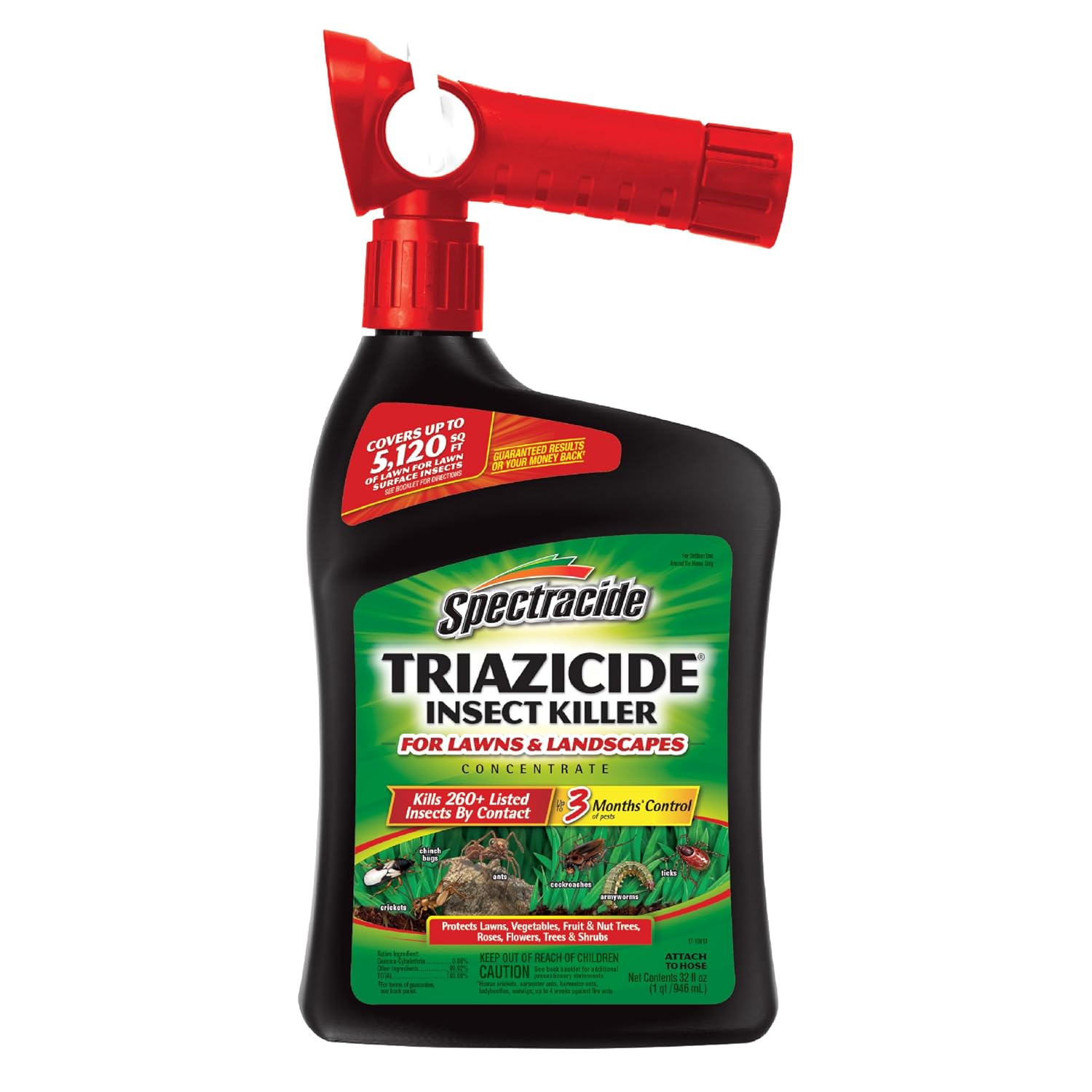
| Unit Count | 32 Ounce |
|---|---|
| Item Type Name | Lawn Insect Killer |
| Active Ingredients | Gamma-Cyhalothrin (0.08%) |
| Liquid Volume | 32 fluid ounces |
Spectracide Triazicide is a concentrate designed to control more than 260 listed insects across lawns, flower beds, trees, shrubs and edible gardens when used as directed. You mix the 32-ounce bottle with water and apply it with a tank sprayer or hose-end attachment to treat surface pests like ants, fleas and Japanese beetles and soil pests such as grubs; the product claims protection that can last up to three months. Notable features include a fast contact kill window and broad labeled coverage for common backyard pests, plus a ready-to-spray option for easier application. In practical use it lets you cover large areas without repeated spot treatments and can be applied before populations peak for best results. Important limitations are safety and environmental restrictions: it is highly toxic to fish and bees and requires careful application to avoid drift or runoff, and label directions on timing and reapplication frequency must be followed. Expect effective, broad-spectrum control when used responsibly and according to label instructions.
Best for: Buyers who want a single, powerful product to manage a wide range of backyard pests over large areas and who are comfortable following label directions and safety precautions.
Less Ideal for: People who prioritize pollinator safety, live near fish-bearing water, or prefer organic or nonchemical pest control methods should consider alternatives.
- Broad-spectrum label covering 260+ listed insect species for lawns and landscapes
- Concentrate mixes with water so one bottle treats large areas when applied correctly
- Fast contact action with claims of visible control within 24 hours
- Available in a ready-to-spray hose-end format for easier application without separate equipment
- Highly toxic to aquatic life and bees so cannot be used near water or when pollinators are active
- Requires careful mixing and adherence to label rates and timing to avoid environmental harm
Verdict: Choose this concentrate if you need a fast-acting, broad-spectrum insect control solution for treating large lawns and landscapes and are prepared to follow safety and application directions.
Repel Outdoor Camp Fogger Aerosol, 16 oz

| Item Volume | 16 fluid ounces |
|---|---|
| Item Form | Aerosol |
| Indoor Outdoor Usage | Outdoor |
| Target Species | Mosquito |
The Repel Outdoor Camp Fogger is a portable aerosol spray designed to quickly knock down mosquitoes and a range of other flying and crawling insects around campsites, patios and backyards. You use it by spraying into the air or toward insect activity when conditions are calm or slightly downwind; the formula lists tetramethrin and phenothrin as active ingredients and is intended for occasional spot treatments rather than continuous protection. Its strengths are fast knockdown and convenience in outdoor settings where you need immediate reduction of biting pests. The product is best for temporary use during a gathering or while setting up a campsite since the aerosol covers a localized area and instructions limit reapplication to once per day. Important limitations are that it is a contact insecticide with short residual effect and contains chemicals that carry health warnings for certain populations, so follow label directions and avoid indoor use. For budget-conscious buyers wanting quick, on-demand relief for small outdoor areas, this is a straightforward choice.
Best for: Homeowners and campers who need an inexpensive, on-demand spray to quickly reduce mosquitoes and other nuisance insects in small outdoor areas during events or while setting up camp.
Less Ideal for: People seeking day-long continuous protection for large yards or those who need a low-chemical or long-residual solution should consider alternative repellent strategies.
- Fast knockdown of mosquitoes and other listed flying and crawling insects on contact
- Portable aerosol format is easy to carry to campsites and use in yards or patios
- Unscented formula avoids strong fragrances during outdoor gatherings
- Clear label instructions for outdoor use and reapplication limits reduce misuse
- Short-lived residual protection because it is a contact aerosol rather than a repellent with long-lasting effect
- Contains chemicals with health warnings that require careful handling and exclusion of vulnerable people
Verdict: A low-cost, portable aerosol for quick, short-term knockdown of mosquitoes and other listed outdoor insects when you need immediate relief.
MKNXYD Natural Mosquito Repellent Pouches, Citronella/Lemongrass/Peppermint, 14-Pack

| Scent Name | Citronella, Lemongrass, and Peppermint oils |
|---|---|
| Item Form | Granule |
| Material Features | Natural |
| Number of Items | 14 |
These MKNXYD mosquito repellent pouches are small, natural-scented sachets designed to keep mosquitoes away from patios, yards, and other outdoor spots. Each pouch contains a granule blend of citronella, lemongrass, and peppermint oils and comes in a mesh bag for hanging or placement around seating areas, doorways, or campsites. The manufacturer states each pouch covers about 120 square feet and provides roughly 30 to 60 days of protection, so a 14-pack can be distributed across multiple zones or swapped out through the season. Practical benefits include easy setup with no electricity or spraying, a scent profile that is pleasant to most people, and suitability for use around children and pets because the ingredients are marketed as natural. Limitations are that protection is localized where pouches are placed and effectiveness depends on wind and placement, so they are best used as part of a layered approach rather than a sole solution for large open yards. For buyers seeking a low-maintenance, chemical-free option to reduce mosquito activity near seating areas, these pouches are a reliable, simple choice.
Best for: Buyers who want a low-maintenance, natural mosquito deterrent for patios, porches, or camping areas and prioritize consistency and predictable placement over high-powered area control.
Less Ideal for: People needing whole-lawn or large-acreage mosquito control or those who prefer an immediacy of knockdown from chemical sprays should consider other solutions.
- Natural active oils (citronella, lemongrass, peppermint) for chemical-free repellent
- Easy to place or hang using included mesh pouch
- Each pouch reportedly covers up to 120 sq. ft and lasts 30 to 60 days
- Suitable for use around people, children, and pets according to product information
- Effectiveness is localized and can be reduced by wind or large open spaces
- Duration and coverage are manufacturer estimates and may vary with conditions
Verdict: A simple, natural, and low-effort way to reduce mosquitoes around patios and small outdoor seating areas with predictable placement and multi-week protection per pouch.
Cutter Backyard Bug Control Spray Concentrate, 32 oz (2-Pack)

| Unit Count | 64 Fluid Ounces |
|---|---|
| Item Form | Spray |
| Target Species | Insects |
| Active Ingredients | Lambda Cyhalothrin |
This Cutter Backyard Bug Control Spray Concentrate is a hose‑end concentrate designed for broad outdoor insect control on lawns, landscapes, trees and shrubs. You attach the included QuickFlip hose‑end sprayer, flip the switch and walk the yard; the product mixes automatically with water so there is no measuring or stirring. It lists lambda‑cyhalothrin as the active ingredient and is labeled to kill mosquitoes, ants, fleas and other listed insects while providing up to 12 weeks of control against many species. Practical benefits include fast knockdown, simple hose‑end application that treats large areas (up to 5,000 sq ft per bottle) and the ability to use it as a foliar spray on plants for more targeted coverage. Important limitations are that it is a synthetic insecticide requiring careful adherence to label directions, reentry restrictions until surfaces are dry, and local use restrictions near sensitive aquatic areas; it also can stain some siding so testing is recommended. For gardeners who follow safety instructions, it is an efficient way to reduce pest pressure across a typical backyard.
Best for: Buyers who want a fast, no‑fuss backyard treatment to substantially reduce biting and nuisance insects across lawns and landscape beds and who will follow label safety directions.
Less Ideal for: People seeking organic or pet‑safe-only solutions, or those with yards immediately adjacent to sensitive water bodies where use may be restricted.
- Hose‑end QuickFlip sprayer for no‑mix, walk‑and‑spray convenience
- Covers up to 5,000 sq ft per bottle for large yards
- Active lambda‑cyhalothrin formulation delivers fast knockdown and multi‑species control
- Labeled for lawn, landscape and foliar applications for flexible use
- Contains a synthetic broad‑spectrum insecticide that requires strict label compliance and safety precautions
- Not suitable for application where runoff to aquatic habitats could occur and has state‑specific restrictions
Verdict: A convenient hose‑end concentrate that quickly treats large yards for a broad range of backyard pests when used according to label directions.
Ortho Home Defense Insect Killer for Indoor & Perimeter, 1.33 gal with Comfort Wand

| Unit Count | 170.24 Fluid Ounces |
|---|---|
| Item Form | Spray |
| Target Species | Insects |
| Liquid Volume | 1.33 gallons |
| Active Ingredients | Bifenthrin 0.05%, Zeta-Cypermethrin 0.0125% |
This ready-to-use Ortho Home Defense spray is formulated to kill a wide range of common household and yard insects and to create a protective barrier around your home. It comes as a 1.33 gallon container with a battery-powered Comfort Wand that gives a continuous spray for easy application to foundations, patios, doorways and indoor non-porous surfaces. The formula lists bifenthrin and zeta-cypermethrin as active ingredients and is designed to dry clear with no fumes, so treated areas can be reoccupied once dry. Typical use is a perimeter treatment outdoors and targeted indoor bands around windows, doors and baseboards for preventative or reactive control. Practical benefits include long-lasting barrier control for ants, roaches and spiders when applied indoors, and simplified spraying without bending or pumping. Important limitations are that it is a chemical pesticide so users should follow safety directions, it is meant for non-porous indoor surfaces for the 12-month claim, and it does not replace professional services for severe infestations.
Best for: Homeowners who want a straightforward, long-lasting perimeter and indoor barrier they can apply themselves and who prioritize low-fuss application and predictable results.
Less Ideal for: People looking for organic or non-chemical options or those with very large properties or persistent heavy infestations that may need professional treatment.
- Kills a broad list of common household and perimeter insects on contact
- Comfort Wand delivers continuous spray for easier, less tiring application
- Formula dries clear with no noticeable fumes so treated areas can be re-entered once dry
- Provides up to 12 months barrier protection against ants, roaches and spiders on non-porous indoor surfaces
- Contains synthetic insecticides so users must follow safety and application instructions
- 12-month protection claim applies specifically to indoor non-porous surfaces and may not translate to all outdoor conditions
Verdict: A ready-to-use perimeter and indoor spray that delivers an easy continuous application and long-lasting household barrier against common bugs.
Choosing the Right Backyard Insect Repellent: Key Factors to Consider
Coverage Area
Coverage area determines how much of your yard a single application will protect. For households that host gatherings or have large lawns, a product rated for wider coverage reduces the need for multiple treatments and simplifies planning. Coverage varies with application method: broadcast sprays and foggers typically treat larger zones, while spot treatments or torches concentrate protection in smaller areas.
Be realistic about the area you need to guard. Wind, vegetation, and layout can create sheltered pockets where biting insects still congregate. Choosing a repellent with clear square-footage guidance and conservative coverage estimates helps ensure you get the protection you expect without overapplying.
Active Ingredient Safety
Active ingredients define both effectiveness and safety profile. Some ingredients are highly effective against mosquitoes and flies but have specific restrictions around children, pets, or edible garden areas. Consider whether the repellent is intended for use near food-preparation zones, children's play areas, or near pollinator plants. Look for products with transparent labeling about re-entry times and any necessary buffer distances from edible plants.
If you have pets, check toxicity guidance and whether treated areas should be kept off-limits until dry. Natural or botanical actives may appeal for perceived safety, but their longevity and efficacy can differ from synthetic options. Weigh efficacy against exposure concerns to match the product to how you and your household use the yard.
Application Versatility
How you apply a repellent affects both convenience and effectiveness. Some products are designed for perimeter barriers applied to fences and hedgerows, others for area broadcast treatments, and some for targeted spot treatment around seating and play zones. Choose a format that fits your routine: pump or trigger sprays for quick touch-ups, foggers for larger events, or granular or liquid perimeter treatments for lower-maintenance protection.
Versatility also means compatibility with existing equipment. If you already own a hose-end sprayer, a product that attaches to that tool can save time. Conversely, specialized equipment adds complexity and may limit where you can use the repellent.
Weather Resistance
Outdoor repellents face sun, rain, dew, and wind. Weather resistance influences how often you must reapply. Products that adhere to foliage or form a longer-lasting barrier will hold up better against dew and light rain than those that wash off quickly. UV degradation can also reduce effectiveness over hours.
Consider typical local conditions and seasonal patterns. If evening storms are common, plan for shorter protection windows or choose treatments timed to after-storm reapplications. The ideal product will balance lasting protection with straightforward reapplication instructions so you do not lose control of insect pressure when conditions change.
Impact On Non-Target Organisms
Backyards are multiuse habitats that often include beneficial insects like pollinators and predatory insects that help control pests. Some repellents can harm beneficials if applied directly to flowering plants or if runoff reaches pollinator foraging zones. Evaluate labeling for pollinator safety and recommended application locations to minimize collateral impact.
If supporting pollinators is a priority, favor spot treatments away from blooms and consider barrier approaches that focus on human activity zones rather than blanket coverage over garden beds. Understanding how the product behaves when it contacts foliage or soil helps protect beneficial species while managing biting pests.
Reapplication Frequency And Maintenance
How often you need to reapply affects total time and effort across the season. Some backyard repellents require reapplication after rainfall or every few hours of activity, while others provide multi-day protection. Factor in how often you host, how long events last, and whether you prefer periodic maintenance or event-based application.
Maintenance also includes storage, safe disposal, and whether consumables or refills are needed. Products with simple refills or that integrate with reusable dispensers reduce waste and make seasonal maintenance easier.
Matching Repellent Formats to Backyard Use
Different repellent formats suit different backyard routines. For social nights on a patio, targeted devices or torches that create a treated perimeter can keep seating areas comfortable without treating the whole yard. For lawns where children play, short-duration spot treatments around play zones reduce exposure compared with whole-yard broadcasts.
If you host irregularly, portable solutions that can be placed and removed as needed are convenient. For a more permanent approach, perimeter treatments applied to fences and hedges can create a standing barrier that reduces insect pressure for longer stretches between applications.
- Portable spot treatments for temporary gatherings
- Perimeter applications for continuous low-maintenance protection
- Broadcast or fogging for large, infrequent events
Timing Applications for Maximum Effect
Apply repellents with timing in mind. Many biting insects are most active at dawn and dusk, so applying treatments shortly before these windows improves protection when you need it most. Evening application also reduces exposure during drying time for some products.
Avoid applying during windy conditions which can disperse treatments and reduce coverage. Check label instructions for recommended reapplication intervals after rain or heavy dew and plan outdoor activities accordingly.
- Treat 30 to 60 minutes before peak insect activity when feasible
- Reapply after significant rainfall or as label guidance indicates
- Avoid windy windows to reduce drift and uneven coverage
Reducing Mosquito Habitat Alongside Repellents
Repellents work best when combined with habitat reduction. Removing standing water from gutters, plant saucers, and low spots cuts breeding sites and lowers overall mosquito abundance. Even simple measures like flipping containers and clearing clogged drains can reduce the pressure on any repellent strategy.
Vegetation management also helps. Thinning dense, shaded areas where mosquitoes rest will make chemical or perimeter measures more effective because there are fewer sheltered refuges for insects to escape treatment.
- Eliminate standing water to limit breeding
- Trim dense vegetation to reduce resting sites
- Maintain pool filters and water features to prevent stagnant pockets
Protecting Pollinators While Controlling Pests
If you grow flowers or support pollinators, plan applications to avoid direct contact with blooms. Apply repellents to non-flowering vegetation or hardscape buffer zones rather than across flowering beds. Timing applications for evening hours when pollinators are less active also reduces exposure.
Choose application methods that concentrate treatment where people gather rather than blanket-spraying entire garden beds. This targeted approach preserves beneficial insect activity while still providing human comfort.
- Avoid spraying flowering plants
- Use buffer zones between treated areas and pollinator beds
- Apply treatments when pollinators are least active
Safe Storage, Handling, And Disposal
Store repellents in a cool, dry place away from children and pets and follow label instructions for disposal. Many leftover concentrates require special handling; check local guidelines for hazardous household waste if the label advises it. Keep original containers and instructions until the product is finished.
When mixing or applying, use appropriate personal protection recommended on the label and avoid drift onto edible plants. If accidental exposure occurs, follow first aid instructions and contact a professional if symptoms persist.
- Keep containers locked away from children and pets
- Follow label disposal and local hazardous waste guidance
- Wear recommended protective gear during mixing and application
How We Chose the Best Backyard Insect Repellent
We focused on factors that matter in real backyard use. First, we assessed effective coverage, meaning how large an area a single application protects and how consistently it reduces biting insects in typical yard conditions. Next, we evaluated active ingredient profile and safety, looking for options with established efficacy and clear guidance for family, pet, and pollinator considerations. Application versatility was another filter: products that work for stationary zones, perimeter treatments, or spot applications scored higher. Durability in weather and UV exposure was considered because repellents that wash off or break down quickly are less useful outdoors. Ease of application and maintenance, including refillability or simple re-application routines, was also part of the selection. We excluded specialty products designed only for camping, pocket-sized personal repellents, or devices that require extensive installation. We prioritized options intended for sustained backyard use and those with clear labeling on coverage and safety. Final choices reflect a balance of area protection, proven active ingredients, practical application methods, and resistance to common outdoor conditions.
FAQ
How often do I need to reapply backyard insect repellent?
Reapplication frequency depends on the product and weather. Many area repellents need reapplication after heavy rain or every few hours of continuous activity, while some perimeter treatments can last multiple days. Follow label directions for the most accurate guidance.
Are botanical repellents as effective as synthetic ones?
Botanical repellents can provide good short-term protection but often break down faster in sunlight and may require more frequent application. Effectiveness depends on the active ingredient and formulation, so consider usage patterns and reapplication needs when choosing between types.
Will backyard repellents harm pollinators or pets?
Some repellents can affect non-target organisms if applied directly to flowering plants or if pets contact fresh treatments. Check label safety statements and buffer recommendations. Using targeted applications and avoiding blooms reduces risk to pollinators and limits pet exposure.
Can I use repellents near edible garden areas?
Many repellents advise keeping treatments away from edible crops or recommend waiting periods before harvesting. Choose products with clear guidance for use near food-prep zones and follow any re-entry or pre-harvest intervals listed on the label.
What is the best way to protect a patio during an evening gathering?
Targeted perimeter treatments, portable spot devices, or placing treated barriers around seating areas are effective strategies. Time applications shortly before guests arrive and avoid windy conditions to maintain coverage during the event.
Do foggers or broadcast sprays offer better control for large yards?
Foggers and broadcast sprays can treat larger areas quickly, which is useful for infrequent large events. However, they may require more preparation and offer shorter residual protection than perimeter or longer-lasting treatments. Consider how often you host and whether you need immediate short-term control or ongoing coverage.
Final Verdict
Choosing the right backyard insect repellent comes down to matching format and active ingredient to how you use your outdoor space. Prioritize coverage area and weather resistance if you need continuous protection across large gatherings. If safety around children, pets, or pollinators is a primary concern, select products with clear labeling and use targeted applications away from blooms. Balance convenience against longevity: portable spot treatments are flexible for occasional gatherings, while perimeter or longer-lasting options suit ongoing outdoor living. Use repellent strategies alongside habitat reduction to lower overall insect pressure and make whatever repellent you choose more effective in practice.
