

Note: This article contains affiliate links. If you click on these links and make a purchase, I may earn a small commission at no extra cost to you. This helps support my research and content. Read my full affiliate disclosure here.
If you need a dependable chainsaw without overspending, choosing a solid option for under $300 matters for safe, efficient work around your yard. You want enough cutting power to fell small trees and limbing capability for storm cleanup, plus safety features that reduce kickback risk and make handling predictable. This guide looks at seven shortlisted chainsaws for under $300 and explains the practical differences that matter to homeowners and weekend woodcutters. We evaluate motor or engine power, bar and chain quality, safety systems, and ease of maintenance to help you pick the right tool for your tasks.
Top Picks at a Glance
| Best Overall The best all-around choice for most situations | Husqvarna 120 Mark III Gas Chainsaw, 16-Inch Bar |  |
| Best Quality Built to a higher standard if you want something more solid | Husqvarna 120 Mark III 14" Gas Chainsaw | |
| Best Value The sweet spot between price and what you get | Oregon CS1500 15A Corded Electric Chainsaw with PowerSharp Self-Sharpening |  |
| Best Budget The cheapest option that still gets the job done reliably | DNLBBO 6" Mini Cordless Chainsaw with 21V Battery |  |
| Highest Rated A top-rated pick with lots of positive feedback | Milwaukee M18 FUEL 16 in. Cordless Chainsaw (Tool Only) |  |
| Most Popular A crowd favorite that many people choose with confidence | Seesii M6 Lite 6" Cordless Mini Chainsaw with Two Batteries |  |
| Best Seller A high-volume bestseller chosen again and again | SEESII 12-Inch Cordless Brushless Electric Chainsaw |  |
Husqvarna 120 Mark III Gas Chainsaw, 16-Inch Bar

| Power Source | Gas Powered |
|---|---|
| Horsepower | 1.88 hp |
| Chain Length | 16 inches |
The Husqvarna 120 Mark III is a compact gas chainsaw built for routine yard work: limb pruning, light felling and cutting firewood. It pairs a 38-cc X-Torq two-stroke engine with a 16-inch bar and an automatic oiler so you can keep cutting without frequent lubrication fiddling. Features aimed at ease of use include an air purge to simplify starting, a combined choke/stop control to reduce flooding, a simple chain tensioner for quick adjustments, and LowVib dampening to lower operator fatigue. Safety is addressed with an inertia-activated chain brake. The Air Injection centrifugal system helps keep the air filter cleaner for longer, which is useful if you run the saw regularly in dusty conditions. Expect a capable, user-friendly tool for homeowners who want dependable gas power in the sub-$300 range, but professional users needing long daily runtimes or larger cutting capacity should consider heavier commercial models.
Best for: Homeowners and weekend landscapers who want a reliable, easy-to-use gas chainsaw for pruning, small felling and firewood without the complexity of professional equipment.
Less Ideal for: Commercial loggers or users who need a high-hour production saw or larger cutting capacity for big timber should choose a heavier-duty model instead.
- Easy starting with air purge and combined choke/stop control
- LowVib technology reduces vibration and operator fatigue
- Air Injection centrifugal system extends time between air filter cleanings
- Simple chain tensioning and automatic oiler for low-maintenance use
- 16-inch bar and 38-cc engine are best for light to medium tasks, not heavy professional felling
Verdict: A user-friendly, gas-powered 16-inch chainsaw that balances easy starting, low vibration, and low maintenance for homeowners seeking dependable cutting power under $300.
Husqvarna 120 Mark III 14" Gas Chainsaw
| Power Source | Gas Powered |
|---|---|
| Horsepower | 1.88 hp |
| Chain Length | 14 inches |
The Husqvarna 120 Mark III is a straightforward gas chainsaw that delivers solid cutting performance for pruning, limb work, and small tree felling. Powered by a 38-cc X-Torq two-cycle engine and a 14-inch bar, it provides enough torque and cleaner combustion for efficient cuts without complicated features. Notable design elements include Air Injection to keep debris away from the air filter, LowVib vibration damping for more comfortable handling during extended use, an inertia-activated chain brake for safety, and an automatic oiler for continuous chain lubrication. It is typically used by homeowners tackling yard cleanup, firewood prep, and occasional property maintenance where portability and raw power matter more than pro-level features. Limitations are its 14-inch bar which constrains maximum log diameter and the inherent maintenance needs of a gas engine compared with battery models. For buyers seeking a simple, durable gas saw that emphasizes cutting performance and fuel efficiency, this model is a practical choice under $300.
Best for: Buyers who prioritize cutting performance and dependable gas power for regular homeowner tasks like pruning, small tree work, and firewood prep.
Less Ideal for: If you need to cut large-diameter trees frequently or prefer low-maintenance, emissions-free operation, a larger gas saw or a battery/electric model would be a better fit.
- Efficient 38-cc X-Torq engine for good power and improved fuel economy
- Air Injection system reduces debris reaching the air filter to extend engine life
- LowVib technology reduces vibration for more comfortable handling
- Inertia-activated chain brake and automatic oiler add practical safety and convenience
- 14-inch bar limits cutting capacity for larger trees or thick logs
- Requires regular gas engine maintenance and fuel handling
Verdict: A capable, fuel-efficient 14-inch gas saw that delivers reliable cutting performance for homeowners who want straightforward, power-focused results.
Oregon CS1500 15A Corded Electric Chainsaw with PowerSharp Self-Sharpening

| Power Source | Corded Electric |
|---|---|
| Motor Power | 15 Amp / 2400 watts |
| Chain Length | 18 inches |
| Manufacturer Warranty Description | 2 year |
The Oregon CS1500 is a corded electric chainsaw designed for homeowners who want reliable, low-maintenance cutting for limbs, pruning, and light firewood work. It starts instantly and runs quieter than gas models because it is electric, and the 15-amp motor delivers steady power through an 18-inch bar suitable for medium branches and small logs. The standout convenience is the integrated PowerSharp system that sharpens the chain in roughly 3 to 5 seconds at the pull of a lever, cutting downtime and keeping cutting performance consistent. Tool-less chain tensioning and an automatic oiler make routine upkeep simple, and the built-in chain brake improves safety during use. Trade-offs are typical of corded saws: you need access to an extension cord and you lack the range and raw torque of larger gas engines, so it is best for yard work rather than heavy felling. For buyers who prioritize ease of use and low maintenance, the CS1500 delivers practical performance at home.
Best for: Homeowners who want a low-maintenance, easy-to-use chainsaw for routine yard pruning, limb removal, and light firewood cutting and who prioritize convenience over off-grid power.
Less Ideal for: Users who need a cordless or gas saw for remote jobs, long runs without power, or heavy commercial felling should consider other options.
- Integrated PowerSharp self-sharpening keeps the chain sharp in seconds
- Automatic oiler maintains bar and chain lubrication during use
- Tool-less chain tensioning simplifies routine adjustments
- Instant electric start and lower noise compared with gas saws
- Corded design limits reach and requires a suitable outdoor extension cord
- Less powerful than typical gas chainsaws for heavy felling tasks
Verdict: If you want a low-maintenance, homeowner-friendly chainsaw that sharpens itself and is ready to run instantly, the Oregon CS1500 is a practical choice.
DNLBBO 6" Mini Cordless Chainsaw with 21V Battery
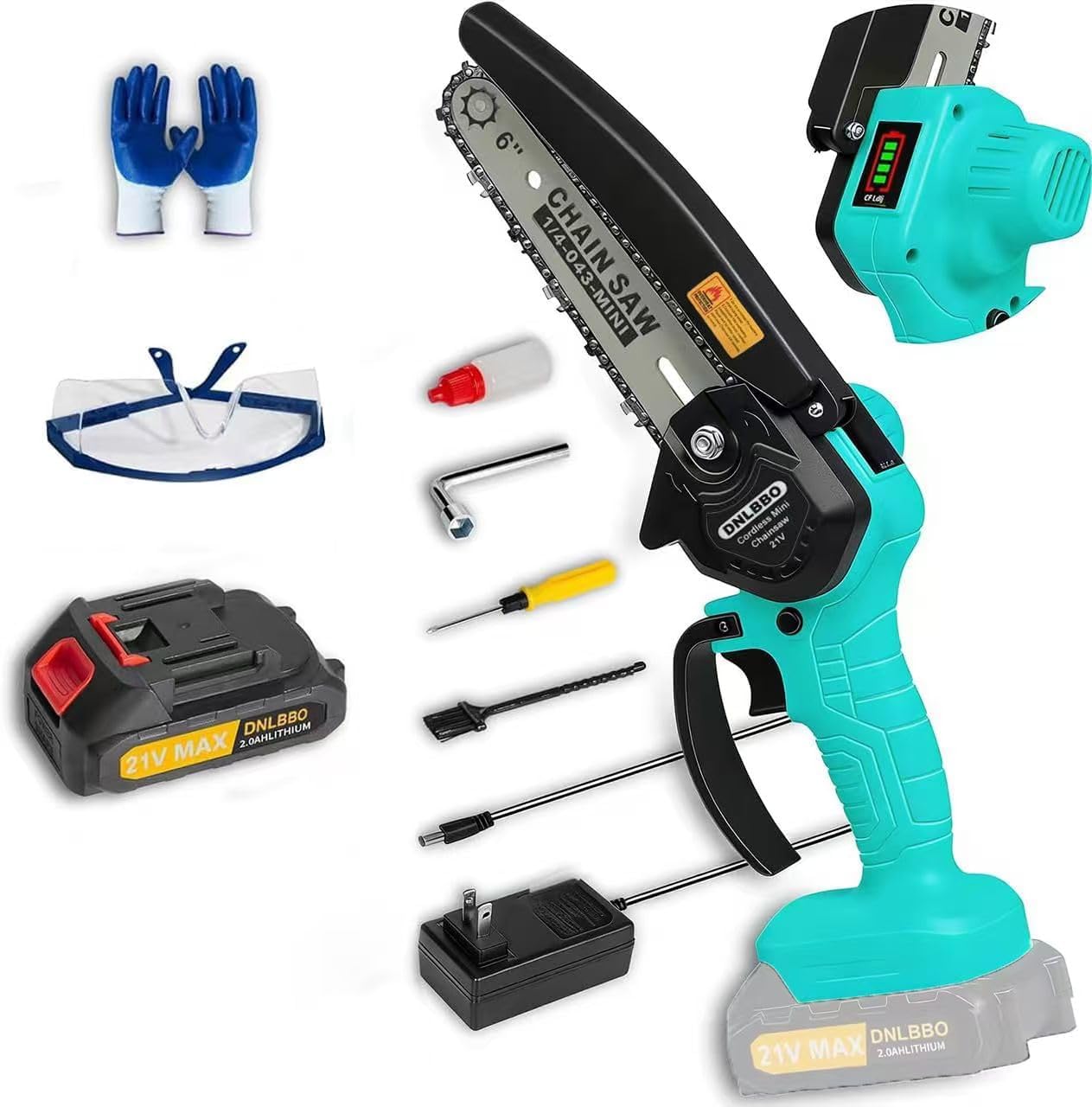
| Power Source | Battery Powered |
|---|---|
| Horsepower | 700 watts |
| Chain Speed | 19.7FT/S |
| Chain Length | 6 inches |
This DNLBBO 6-inch mini cordless chainsaw is a compact, battery-powered tool aimed at light yard and pruning work. It pairs a 700W motor with a 21V 2000mAh lithium battery and is built for one-handed, fatigue-minimizing use. Typical jobs include trimming small branches, cutting 6-inch logs, and general garden cleanup; the manufacturer says a full battery delivers about 30 to 40 minutes of continuous cutting depending on wood type. Notable features are a safety dual-switch start, an automatic chain lubricant recommendation, an anti-rust coated high-carbon chain, and basic safety accessories including gloves and goggles. The small footprint and included accessories make it convenient for homeowners who need a portable saw without the noise and fumes of gas models. Limitations are inherent to its category: the short 6-inch bar limits it to small-diameter work and heavier or continuous tasks will require spare batteries or a larger saw, and users should plan routine chain lubrication and cleaning to prevent corrosion in humid conditions.
Best for: Homeowners and weekend gardeners who need an affordable, portable cordless saw for branch trimming, light pruning, and quick yard tasks and who prioritize ease of use over heavy-duty cutting power.
Less Ideal for: Professional landscapers or anyone who regularly cuts large-diameter timber or needs long continuous runtimes should choose a full-size chainsaw or a model with longer bars and higher battery capacity.
- Powerful 700W motor for a mini chainsaw capable of cutting a 6-inch log quickly
- Compact and lightweight one-handed design reduces user fatigue for short jobs
- Includes battery, charger, safety gloves and goggles so you can start using it right away
- 21V 2000mAh battery provides roughly 30–40 minutes of continuous use per charge
- 6-inch bar limits use to small branches and logs and is unsuitable for large or continuous cutting
- Single included battery may be insufficient for extended jobs without buying extras
- Requires regular chain lubrication and cleaning to avoid rust in humid conditions
Verdict: A compact, budget-friendly cordless mini chainsaw that delivers quick, convenient cutting for small branches and light yard work.
Milwaukee M18 FUEL 16 in. Cordless Chainsaw (Tool Only)

| Power Source | Battery Powered |
|---|---|
| Horsepower | 5.3 hp |
| Chain Length | 16 inches |
The Milwaukee M18 FUEL 16-inch cordless chainsaw is a tool-first saw aimed at homeowners and pros who want gas-level cutting without the fuss of fuel. It uses the M18 platform so it runs on Milwaukee batteries (battery and charger sold separately) and the Oregon bar and chain plus an automatic oiler keep the chain cutting smoothly. The variable-speed trigger gives controlled power for different cuts and Milwaukee advertises up to 150 cuts per charge depending on battery capacity. In practice this saw delivers strong, consistent performance on hardwoods and mid-size limbs while staying quieter and cleaner than a gas saw. Notable conveniences are the automatic lubrication and compatibility with high-capacity M18 packs for longer run time. Key limitations are that you must already own or purchase M18 batteries and a charger and runtime depends heavily on which battery you pair with it. The saw is also a tool-only package so initial cost can rise if you need the battery system.
Best for: Buyers who prioritize a dependable, professional-feeling cordless saw and either already own Milwaukee M18 batteries or are ready to invest in that battery ecosystem for consistent performance.
Less Ideal for: Casual users who want an all-in-one package with battery and charger included or those who need very long, uninterrupted runtime without investing in high-capacity battery packs.
- Strong cutting performance comparable to gas models for hardwoods
- Automatic oiler and Oregon bar/chain for reliable chain lubrication and cutting
- Variable-speed trigger provides controllable power for different tasks
- Works with the M18 battery platform so higher-capacity packs extend runtime
- Sold as tool only so battery and charger are required but not included
- Runtime varies widely with battery choice and is not fixed by the saw alone
Verdict: If you want a reliable, gas-competitive cordless chainsaw and either have or will buy into the M18 battery system, this Milwaukee M18 FUEL 16 in. saw delivers the performance and durability to justify the choice.
Seesii M6 Lite 6" Cordless Mini Chainsaw with Two Batteries

| Power Source | Battery Powered |
|---|---|
| Horsepower | 900 watts |
| Chain Speed | 29ft/s |
| Chain Length | 6 inches |
The Seesii M6 Lite is a lightweight cordless mini chainsaw built for yard pruning, small log cutting, and general garden maintenance. It uses a 900W motor and a 6-inch chain to cut through branches and small timbers quickly, and the kit includes two 21V 2000mAh batteries so you can work longer between charges. Its one-handed ergonomic body and low recoil make it comfortable for users who prefer a compact tool rather than a full-size saw, and the double safety lock plus chain guard reduce accidental starts and flying debris. Practical benefits include fast setup out of the box since the bar and chain arrive installed, and the included spare chain, gloves, and charger get you cutting immediately. Important limitations are its short bar length, which restricts it to small-diameter wood and makes it unsuitable for felling or larger timbers, and the brushed motor design lacks some durability and efficiency advantages of higher-end brushless units. For typical home pruning and light cutting under $300 it is a convenient, easy-to-handle option, but it is not a replacement for a full-size chainsaw when you need extended heavy-duty performance.
Best for: Buyers who want an easy-to-use, low-fatigue pruning tool for regular yard maintenance and small woodcutting jobs, and who prioritize compactness and convenience over heavy-duty capacity.
Less Ideal for: Users who need a saw for felling trees, cutting large-diameter logs, or continuous heavy-duty work should choose a full-size gas or higher-power brushless electric chainsaw instead.
- Includes two batteries and charger for extended run time without swapping external packs
- Compact 6-inch bar and one-handed ergonomic design reduce user fatigue for pruning tasks
- Comes ready to use with spare chain, basic tools, and protective gloves in the box
- Safety features include a double lock and chain guard to lower accidental activation and debris risk
- 6-inch bar limits cutting to small branches and logs, not suitable for felling or large timbers
- Uses a brushed motor which may be less efficient and shorter-lived than brushless alternatives
- Manufacturer lists oil included but actual bottle may require separate chain oil purchase
Verdict: A lightweight, ready-to-use cordless mini chainsaw that delivers fast, low-fatigue pruning and light log cutting for homeowners seeking a convenient under-$300 option.
SEESII 12-Inch Cordless Brushless Electric Chainsaw

| Power Source | Battery Powered |
|---|---|
| Horsepower | 1200 watts |
| Chain Length | 12 inches |
The SEESII 12-inch cordless chainsaw is built for homeowners and weekend users who need portable power without gas maintenance. It uses a 1200W brushless motor and comes with two 4.0Ah batteries, which provide longer runtime for pruning, cutting storm debris, and light lumber tasks around the yard. Auto-oiling and a 60 mL oil tank mean you do not have to constantly top up lubrication during a job, and tool-free chain tensioning speeds setup and adjustments. The saw is lightweight for its class and cordless operation removes the hassle of cords or fuel mixing, making it convenient for remote or rooftop work. Downsides to expect are the 12-inch bar limits how large a log you can cut in one pass and battery runtime will depend on cut thickness and user technique, so very heavy or continuous commercial use may need spare batteries or a larger gas saw. For typical homeowner chores this model balances cutting performance and easier maintenance.
Best for: Homeowners and weekend landscapers who want a cordless, low-maintenance chainsaw for pruning, storm cleanup, and light to medium yard tasks and who prefer avoiding gas engines.
Less Ideal for: Commercial users or anyone who regularly cuts large diameter logs or needs continuous, all-day cutting should consider a gas-powered saw or a larger professional electric model.
- 1200W brushless motor for strong, efficient cutting power
- Includes two 4.0Ah batteries for extended runtime compared with single-battery kits
- Automatic oiling system with 60 mL tank reduces chain maintenance during use
- Tool-free chain tensioning simplifies setup and adjustments
- 12-inch bar limits capacity for very large logs or heavy-duty commercial cutting
- Battery runtime will vary with workload and may require spare batteries for long jobs
Verdict: A user-friendly cordless chainsaw that delivers strong cutting power and low-maintenance features for homeowners tackling routine yard work under $300.
Choosing the Right Chainsaw for Under $300: Key Factors to Consider
Cutting Power and Engine Type
Cutting power determines how quickly a chainsaw slices through wood and how reliably it handles tougher cuts. For homeowner work under $300, you will usually be choosing between smaller two-stroke gas engines and battery-electric motors. Gas models typically deliver higher peak torque for felling larger diameter trees, but they require fuel mixing and more engine maintenance. Electric battery models provide instant throttle response, quieter operation, and simpler upkeep, but run time is limited by battery capacity.
Think about the diameter of material you expect to cut. Regularly felling trees larger than a car tire may push you beyond this price range, while trimming, limbing, and cutting firewood from small to medium trees is realistic. Consider how often you can recharge or refuel and whether you prefer the portability of gas or the lower vibration and emissions of electric.
Bar Length and Chain Compatibility
Bar length affects cutting capacity and maneuverability. Shorter bars (12 to 14 inches) are easier to control for pruning and limbing and usually lighter. Longer bars allow cutting larger logs in a single pass but add weight and reduce ease of use for one-handed or overhead work. For under $300, common bar lengths hit a practical balance between 12 and 18 inches.
Also check chain pitch and gauge compatibility. A usable saw should allow straightforward replacement chains and commonly available sizes so you can maintain sharpness and performance over time. Tool-free tensioners or simple adjustment screws make bar and chain maintenance much easier in the field.
Safety Systems and Kickback Reduction
Safety features are critical because kickback can cause sudden, dangerous movement. Look for an inertia-activated chain brake, a low-kickback chain design, and a responsive throttle/interlock system. A front hand guard and rear hand protection reduce the risk of injury from debris and chain contact. Chain catchers and a robust handgrip with slip-resistant texture help control the tool if a chain breaks or derails.
Under $300, you can expect basic but effective safety systems. Verify that the brakes engage cleanly and that anti-vibration mounts and hand positioning make it less likely for a hard kickback to reach the operator. Proper personal protective equipment should be used regardless of the saw's built-in features.
Ergonomics, Weight, and Vibration
Comfort and control matter for accuracy and user fatigue. Lighter saws are easier to maneuver around branches and overhead tasks, while heavier units can be steadier during long cuts. Look for balanced designs where the center of gravity keeps the saw stable during both vertical and horizontal work. Anti-vibration systems and cushioned handles reduce hand numbness and help maintain control for longer sessions.
If you plan multiple hours of occasional woodland work, prioritize weight and vibration damping. For short, infrequent jobs, a slightly heavier saw with better cutting power might be acceptable. Consider how you will carry and store the saw as well, and whether you need a model that fits easily in the trunk of a car or a small shed.
Maintenance and Serviceability
Regular maintenance keeps a chainsaw safe and effective. Easy-to-access air filters, tool-free chain tensioners, and straightforward bar removal speed up routine upkeep. For gas saws, simple spark plug access and clear carburetor adjustment points are valuable. For battery saws, check how the battery locks in and whether spare batteries are easy to swap.
Also consider availability of replacement parts like chains, bars, sprockets, and air filters. A saw that is easy to maintain at home will have lower lifetime frustration and cost of ownership. Under $300, maintenance-friendly designs often deliver better long-term value than slightly higher initial cutting power that is hard to service.
Durability and Build Materials
Durability influences how a chainsaw holds up to knocks, sawdust, and seasonal storage. Look for corrosion-resistant coatings on the bar, sealed or shielded bearings, and sturdy plastic or metal housings for the motor or engine. Reinforced areas where the handle meets the body reduce stress failure points during heavy use.
Even budget chainsaws can last for years when built with sensible materials and proper maintenance. Consider the typical environment where you will store the saw. If it faces wet conditions or heavy-duty garden use, prioritize rust resistance and replaceable components that can be serviced without specialized tools.
Comparing Gas and Battery Options
Gas and battery chainsaws each have tradeoffs that matter in everyday yard work. Gas models usually provide longer runtime and stronger torque for repeated large cuts, but they require routine engine maintenance and produce exhaust. Battery saws are quieter, start instantly with a button, and simplify maintenance, but you must manage battery charge and replacement for longer sessions.
Decide based on how far you are from a power source, frequency of use, and tolerance for engine upkeep. For isolated properties or extended clearing work, a gas unit may be more practical. For suburban yards and quick cleanup tasks, a battery saw reduces hassle and noise impact on neighbors.
- Gas: higher torque, longer continuous runtime, more maintenance
- Battery: quieter operation, easier startup, limited by battery life
Basic Field Maintenance Routines
A few simple checks before each use keep any chainsaw running safely. Inspect chain tension and sharpness, check bar oil levels if the saw has an automatic oiler, and verify that safety features engage. Clean sawdust from vents and around the sprocket area to prevent overheating and premature wear.
Sharpening the chain and replacing damaged links promptly maintains cutting efficiency and reduces strain on the motor. Keep a small toolkit and a spare chain or battery ready so you can finish a job without long interruptions.
- Check chain tension and lubrication before cutting
- Clean vents and remove debris after use
- Sharpen chain regularly and inspect sprocket wear
Safe Handling Practices for Homeowners
Proper technique reduces the chance of accidents. Maintain a firm two-handed grip with thumbs wrapped around the handles, stand with stable footing, and never cut above shoulder height. Plan escape paths before felling any tree and watch for limbs that can pin the saw or cause unpredictable tension.
Wear appropriate personal protective equipment: eye protection, hearing protection, gloves, and chainsaw chaps rated for the chain speed. Even a saw with good built-in safety features requires responsible handling to prevent injury.
- Use two-handed grip and stable stance
- Avoid cutting above shoulder height
- Wear eye, ear, and leg protection
Bar Length Recommendations by Task
Match the bar length to typical jobs around your property. Short bars around 12 to 14 inches work well for pruning, limbing, and cutting small-diameter firewood. They are lighter and easier to control. If you regularly cut 12 to 18 inch logs, consider a 16-inch bar to avoid multiple passes and reduce cutting time.
Longer bars increase the saw's reach but add weight and reduce maneuverability. In this budget range, a mid-length bar often gives the best balance for homeowners handling a variety of tasks.
- 12 to 14 inch: pruning and light limbing
- 16 inch: general-purpose cutting and firewood
- 18 inch: larger logs but heavier handling
Storage and Winter Care
Store chainsaws in a dry, ventilated area and protect battery units from freezing temperatures which can harm capacity. For gas models, run the engine until the carburetor is dry or use a fuel stabilizer before long storage to prevent gum deposits. Clean the bar and chain, remove excess oil and sawdust, and lightly oil the chain to prevent rust.
During seasonal storage, keep spare chains and maintenance parts in labeled containers and ensure any fuel is stored safely according to local codes. Proper winter care reduces startup problems and extends the life of components.
- Store batteries above freezing for best longevity
- Drain or stabilize fuel in gas saws for long storage
- Keep replacement chains and tools organized and dry
How We Chose the Best Chainsaw for Under $300
We focused on features and specifications that predict real-world performance and user experience for homeowners using a chainsaw for under $300. Key evaluation criteria included engine or motor output and torque for cutting capability, bar and chain quality and compatibility for cutting speed and longevity, safety features such as chain brakes and anti-kickback components, and user ergonomics including weight distribution and vibration control for comfortable handling during extended tasks. We also assessed maintenance accessibility, including tool-free chain tensioning and ease of bar removal, and durability factors like build materials and corrosion resistance. Products were excluded if they lacked basic safety components, had poor user maintenance access, or were clearly underspecified for typical homeowner jobs such as limb removal, small tree felling, and firewood cutting. We prioritized models that balance usable cutting power with accessible maintenance and safety, rather than focusing on top-end professional specs that exceed the set budget.
FAQ
What bar length should I choose for general yard work?
For most homeowners doing pruning, limbing, and occasional firewood, a 12 to 16 inch bar balances control and cutting capacity. Shorter bars are easier to handle while mid-length bars let you cut larger logs without multiple passes.
Are battery chainsaws powerful enough for cutting down small trees?
Battery chainsaws can handle small trees and regular limbing, especially with modern high-capacity packs. Their runtime limits repeated large cuts, so for frequent felling of medium trees you may prefer a gas option or carry spare batteries.
How often should I sharpen the chain?
Sharpen the chain whenever you notice slower cuts, increased sawdust instead of chips, or the saw requires extra pressure. For regular seasonal use, a quick sharpening after every few hours of cutting is common; heavy use may require more frequent attention.
What safety gear is essential when using a chainsaw?
At minimum wear eye protection, hearing protection, cut-resistant gloves, and chainsaw-rated chaps or pants. A hard hat and steel-toe boots are recommended when felling or working under overhead branches.
How do I reduce kickback risk when cutting?
Use proper cutting technique, avoid contacting the upper quadrant of the bar nose, maintain a sharp chain, and rely on built-in safety features like an inertia chain brake and low-kickback chains. Keep both hands on the saw and stand clear of the bar tip during operation.
Final Verdict
Choosing a chainsaw for under $300 means balancing cutting capability, safety, and ease of upkeep. Prioritize the features that match your routine tasks: moderate bar length and dependable cutting power for general yard work, clear safety systems to reduce kickback risk, and maintenance-friendly designs that you can service at home. Decide whether runtime or convenience matters more by choosing between gas and battery options, and be realistic about the maximum log diameter you will cut. With attention to safety practices and regular maintenance, a well-chosen budget chainsaw will provide reliable service for years.
