

Note: This article contains affiliate links. If you click on these links and make a purchase, I may earn a small commission at no extra cost to you. This helps support my research and content. Read my full affiliate disclosure here.
Getting plant food right is one of the simplest ways to improve vegetable yields and keep plants vigorous across a season. The wrong fertilizer can burn seedlings, throw off soil biology, or leave crops nutrient-starved at critical stages. This guide focuses on plant food for vegetable gardens and summarizes the top options we shortlisted for typical home plots, raised beds, and large container setups. We assessed products using practical gardener-facing criteria like nutrient balance, application ease, and effect on soil health. Read on to see the picks and the evaluation framework so you can choose plant food that matches your garden size, crop mix, and long-term soil goals.
Top Picks at a Glance
| Best Overall The best all-around choice for most situations | Osmocote Smart-Release Plant Food for Flowers & Vegetables, 2 lb |  |
| Best Quality Built to a higher standard if you want something more solid | FoxFarm Happy Frog Tomato & Vegetable Fertilizer, 5-7-3, 4 lb |  |
| Best Value The sweet spot between price and what you get | Miracle-Gro Shake 'N Feed Tomato, Fruit & Vegetable Plant Food, 1 lb |  |
| Best Budget The cheapest option that still gets the job done reliably | Miracle-Gro Water Soluble Tomato Plant Food, 1.5 lb |  |
| Highest Rated A top-rated pick with lots of positive feedback | Miracle-Gro Water Soluble All Purpose Plant Food, 1.5 lb |  |
| Most Popular A crowd favorite that many people choose with confidence | Miracle-Gro Water Soluble All Purpose Plant Food, 5 lb |  |
| Best Seller A high-volume bestseller chosen again and again | Miracle-Gro Watering Can Singles All Purpose Plant Food, 24 Packets | 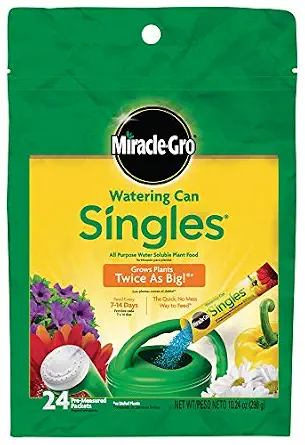 |
Osmocote Smart-Release Plant Food for Flowers & Vegetables, 2 lb

| Item Form | Granules |
|---|---|
| Specific Uses For Product | Plant Growth, Root Development, Seed Development |
| Application Method | Mix into 1 – 3” of soil |
| Coverage | 80 sq. ft. |
Osmocote Smart-Release Plant Food is a granular, slow-release fertilizer designed for vegetable gardens, flowers and perennials. You mix the granules into the top 1–3 inches of soil or into raised bed mix, where soil temperature gradually controls nutrient release so plants get steady feeding for up to four months. The 14-14-14 formula supports balanced top growth, root development and seed set, making it useful at planting or as a seasonal feed. An included applicator and stated coverage (about 1 lb per 40 sq ft) make dosing straightforward for small beds and containers. Practical benefits include less frequent applications compared with soluble feeds and a low risk of burning even if accidentally over-applied. Limitations are that it is a general-purpose, single-pack formula so gardeners wanting tailored micronutrients or organic certification will need a different product, and large garden areas may require multiple bags and careful spreading to maintain even coverage.
Best for: Gardeners who want a low-maintenance, reliable fertilizer to support steady growth in small to medium vegetable beds and flowering borders across a growing season.
Less Ideal for: Growers seeking certified organic fertilizers, custom nutrient blends, or wholesale solutions for very large vegetable plots should consider other options.
- Slow-release granules that feed up to four months reducing reapplication frequency
- Balanced NPK 14-14-14 suitable for promoting foliage and fruit development
- Easy application with included applicator and clear mixing instructions
- Low risk of fertilizer burn even if over-applied as stated by manufacturer
- Not marketed as organic and ingredients are not specified
- Single NPK ratio may not address specific micronutrient deficiencies
Verdict: A dependable, low-maintenance slow-release fertilizer that delivers balanced nutrients over months to simplify feeding vegetable gardens.
FoxFarm Happy Frog Tomato & Vegetable Fertilizer, 5-7-3, 4 lb

| Item Form | Granules |
|---|---|
| Specific Uses For Product | Vegetables, Tomatoes, Soft Fruits, and Berries |
| Mixing Ratio | 5:7:3 |
| Unit Count | 64 Ounce |
FoxFarm Happy Frog Tomato & Vegetable Fertilizer is a granular 5-7-3 feed designed for vigorous feeders like tomatoes, peppers, and berries. It is typically applied around established plants or mixed into potting mixes for container and in-ground use to support vegetative growth and abundant fruit development. Notable features include added calcium to reduce blossom end rot and mycorrhizal fungi intended to improve root nutrient and water uptake. The granule form makes it easy to broadcast or side-dress and the product includes clear mixing instructions. Practical benefits for a vegetable gardener include improved fruit set and stronger root performance, plus organic certification that fits organic or low-chemical growing systems. Limitations are that specific application rates must be followed for different crops and stages to avoid overfeeding, and granular products require watering in or incorporation to be fully effective compared with soluble feeds for fast corrective treatments.
Best for: Gardeners who prioritize crop performance and consistent fruit production for tomatoes and other heavy-feeding vegetables and who follow a planned feeding schedule.
Less Ideal for: Growers needing an immediate corrective feed or those who prefer liquid fertilizers for frequent foliar or fast-acting applications.
- Balanced 5-7-3 N-P-K blend tailored to fruiting vegetables
- Includes calcium to help prevent blossom end rot
- Contains mycorrhizal fungi to support root nutrient and water uptake
- OMRI listed for use in organic gardening systems
- Granular form is slower to correct acute nutrient deficiencies compared with soluble fertilizers
- Requires proper application and watering in to avoid uneven nutrient availability
Verdict: Choose this fertilizer when you want an organic, performance-focused granular feed that supports strong vegetative growth and abundant fruiting in vegetable gardens.
Miracle-Gro Shake 'N Feed Tomato, Fruit & Vegetable Plant Food, 1 lb

| Item Form | Granules |
|---|---|
| Target Species | Tomato, Fruit & Vegetable Plant Food |
| Item Type Name | Continuous Release Plant Food Plus Calcium |
| Unit Count | 16 Ounce |
| Feeds up to | 3 Months |
Miracle-Gro Shake 'N Feed Tomato, Fruit & Vegetable is a granular, slow-release fertilizer designed for in-ground and container vegetable beds. You apply it dry by shaking or mixing into the top soil and then watering to activate feeding; a single application claims to feed plants for up to three months. The formula includes natural ingredients to support soil microbes and added calcium to strengthen cell walls and reduce common calcium-related disorders in edible crops. For practical gardeners this product simplifies seasonal fertilizing because it removes the need for frequent liquid feeding and can be worked into planting soil or sprinkled around established plants. It is best used at planting or as a quarterly topdress for tomatoes, peppers, berries and other garden vegetables. Limitations to note are that it is a general-purpose feed rather than a crop-specific regimen and it must be applied to soil rather than used as a foliar spray, so results depend on correct placement and watering to start nutrient release.
Best for: Gardeners who want a low-maintenance, quarterly fertilizing solution for edible beds and container vegetables and who prioritize consistent feeding without frequent mixing or daily attention.
Less Ideal for: Growers seeking precise, crop-specific nutrient programs or those who need rapid correction of a diagnosed nutrient deficiency should consider targeted or water-soluble alternatives.
- Continuous-release granules that feed plants for up to three months, reducing application frequency
- Contains natural ingredients that support soil microbes for improved nutrient availability
- Includes calcium to help prevent blossom end rot and improve fruit quality
- Suitable for both in-ground beds and container vegetables for flexible use
- Not formulated for foliar feeding or quick corrective applications
- General-purpose formula may not meet specific micronutrient needs of specialty crops
Verdict: A convenient, quarterly granular fertilizer that keeps vegetable beds and containers fed with minimal effort.
Miracle-Gro Water Soluble Tomato Plant Food, 1.5 lb

| Item Form | Liquid |
|---|---|
| Application Method | Water Soluble |
| Target Species | Tomatoes and vegetables |
| Mixing Ratio | 18-18-21 |
| Coverage | Medium |
This Miracle-Gro water-soluble tomato plant food is designed to give vegetables a fast nutrient boost when mixed into a watering can or used with the Miracle-Gro Garden Feeder. The 18-18-21 NPK mixing ratio provides balanced nutrition plus extra potassium to support fruit development, and the powder dissolves readily for quick uptake. Typical use is to mix one tablespoon per gallon for outdoor plants and feed every 7 to 14 days through the growing season. Practical benefits include easy application, compatibility with common watering tools, and rapid results compared with not feeding. It covers a medium area for a 1.5 lb package, so a single container can support a small to medium vegetable patch for multiple feedings. Important limitations are that frequent applications are required during active growth and it is a soluble feed only, not a slow-release option, so it must be reapplied regularly and stored carefully to avoid moisture exposure.
Best for: Home vegetable gardeners watching their budget who want an easy-to-mix, quick-acting fertilizer to boost tomato and vegetable yields during the growing season.
Less Ideal for: Gardeners who prefer low-maintenance, slow-release feeding or who manage very large plots where granular or bulk fertilizers are more economical.
- Balanced 18-18-21 formulation supports foliage and fruit development
- Water-soluble formula mixes quickly for use with a watering can or Garden Feeder
- Starts working quickly so you can see improvements between feedings
- Requires reapplication every 1–2 weeks since it is not slow-release
- Sold in a single-size powder that can clump if exposed to moisture
Verdict: A budget-friendly, fast-acting water-soluble feed that makes it simple to boost tomato and vegetable yields with regular applications.
Miracle-Gro Water Soluble All Purpose Plant Food, 1.5 lb

| Item Form | Powder |
|---|---|
| Application Method | Watering Can |
| Target Species | For all flowers, vegetables, trees, shrubs and houseplants |
| Mixing Ratio | 24-8-16 |
Miracle-Gro Water Soluble All Purpose Plant Food is a powder fertilizer that dissolves in water to feed vegetables, flowers, shrubs and houseplants. You mix the powder into a watering can or garden feeder and apply at the soil near plant roots every 7 to 14 days for outdoor gardens or every two weeks for houseplants. The 24-8-16 NPK formulation supplies a high dose of nitrogen for leafy growth plus phosphorus and potassium to support fruiting and overall vigor, and because it is water-soluble it starts working quickly compared with granular feeds. Practical benefits include easy measuring with the included scoop, suitability for containers and in-ground beds, and coverage of roughly 600 sq ft from the 1.5 lb container. Important limitations are that it is a quick-release, high-nitrogen product rather than a slow-release or organic fertilizer, so it requires regular reapplication and careful dosing to avoid overfeeding specific crops or acid-sensitive plants.
Best for: Gardeners who prioritize consistent, reliable feeding and want a fast-acting fertilizer to support steady vegetable growth in containers or raised beds.
Less Ideal for: Growers seeking organic or slow-release nutrition, or those who prefer minimal-feeding systems that do not require frequent reapplication.
- Fast-acting water-soluble formula that delivers nutrients to roots quickly
- Clear application instructions and scoop included for straightforward mixing
- Designed for use on a wide range of plants including vegetables and container crops
- Feeds both indoor and outdoor plants and can be used with a garden feeder
- High quick-release nitrogen content means more frequent applications than slow-release options
- Not an organic or slow-release fertilizer, which some vegetable gardeners prefer
Verdict: Use this fast-acting, water-soluble plant food when you want a dependable, regular boost to support bigger, healthier vegetable plants.
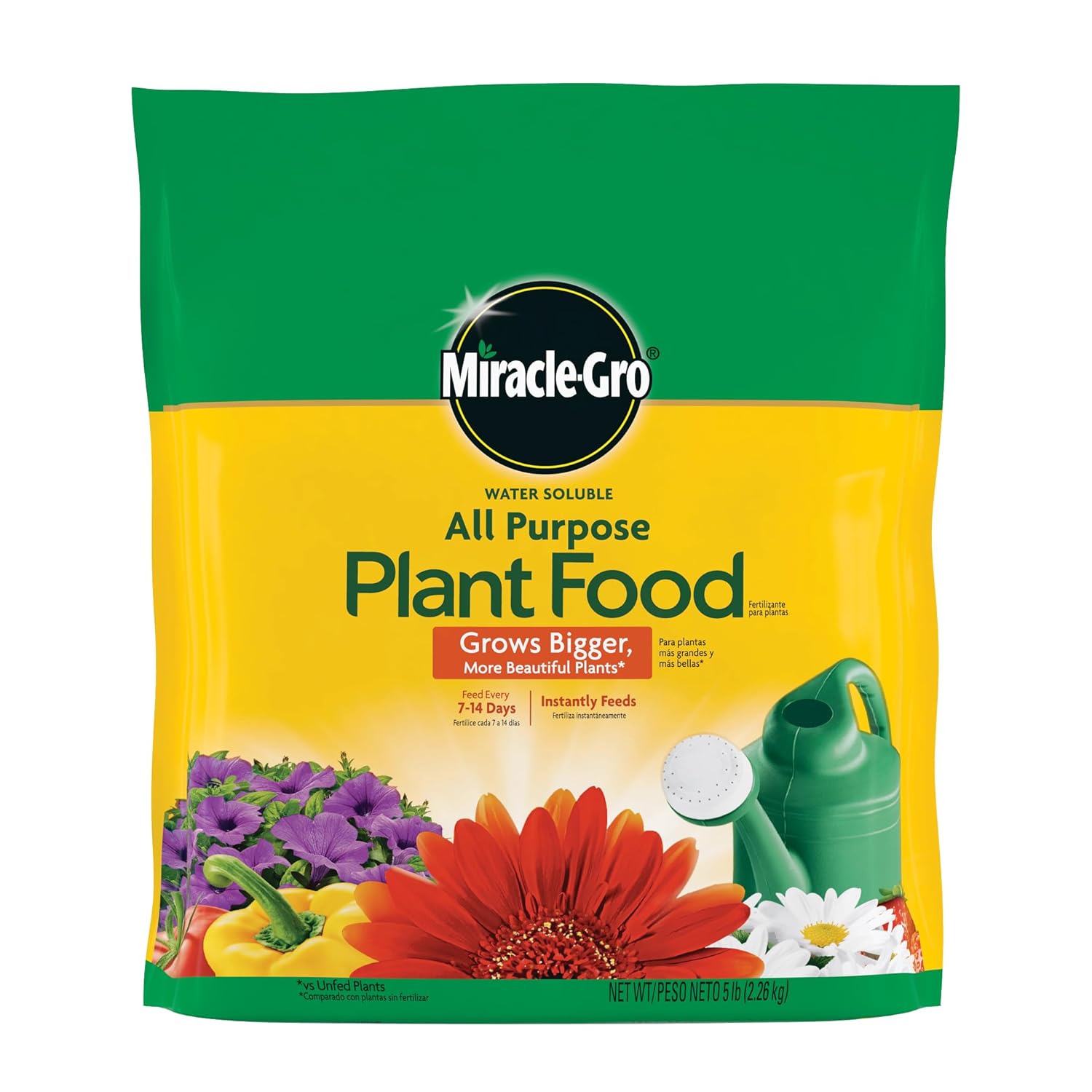
Miracle-Gro Water Soluble All Purpose Plant Food, 5 lb
| Item Form | Powder |
|---|---|
| Application Method | watering can |
| Target Species | all plants |
| Mixing Ratio | 24-8-16 |
| Unit Count | 80 Ounce |
This water-soluble Miracle-Gro formula is designed to give vegetables, flowers and houseplants a quick nutrient boost by dissolving in water and delivering NPK 24-8-16 straight to the root zone. It is typically mixed into a watering can or a garden feeder and applied every 7 to 14 days for outdoor vegetables or every 14 days for indoor plants. The powder format dissolves easily and starts working quickly, which is useful during the active growing season when leafy growth and fruit set matter. A single 5 lb bag covers a large area and the included scoop makes measuring straightforward. Important limitations: because it is a high-nitrogen, fast-release feed it favors quick growth and may need to be balanced with lower-nitrogen or bloom-focused fertilizers if you want more flowers or fruit quality over sheer foliage. Also it requires regular reapplication rather than providing long-term slow release, so plan for repeated treatments during the season.
Best for: Gardeners who want a reliable, quick-acting fertilizer to promote vigorous vegetable growth and who prefer products with broad use and strong customer acceptance.
Less Ideal for: Growers seeking a single application, slow-release fertilizer or those prioritizing low-nitrogen or specialty bloom/fruit formulas for flavor and flowering control.
- Fast-acting water-soluble formula that delivers nutrients quickly to roots
- All-purpose NPK 24-8-16 suitable for a wide range of vegetables and other plants
- Includes a scoop for easy measuring and mixing with a watering can or feeder
- One 5 lb bag feeds a large garden area, reducing the need for frequent purchases
- High-nitrogen formula is not a long-term slow-release feed and requires repeated applications
Verdict: A fast-acting, all-purpose water-soluble fertilizer that reliably boosts vegetable growth when applied regularly.
Miracle-Gro Watering Can Singles All Purpose Plant Food, 24 Packets

| Number of Packs | 24 |
|---|---|
| Application Method | watering can |
| Specific Uses For Product | Plant Food |
| Mixing Ratio | 1 teaspoon per 1 gallon of water |
Miracle-Gro Watering Can Singles are single-use, pre-measured soluble fertilizer packets meant to be mixed with water in a watering can and applied while you water. Each packet is formulated for all-purpose use across vegetables, flowers, houseplants, shrubs and trees and is intended to be applied every 7 to 14 days during active growth. The main convenience is the no-mess, consistent dosing: tear a packet into the can, add water and pour, which removes measuring errors that can over- or under-fertilize. The packets cover about 10 sq. ft. each for outdoor areas and specify different dilution for indoor versus outdoor containers. Practical benefits for vegetable gardeners include easy, regular feeding without liquid concentrate handling and predictable coverage for bed or container plots. Limitations to note are frequent reapplication compared with slow-release granular fertilizers and dependence on regular watering to distribute nutrients, so it adds maintenance if you prefer lower-effort feeding schedules.
Best for: Vegetable gardeners who want a safe, easy-to-use feeding routine that removes measuring mistakes and lets you feed while you water.
Less Ideal for: Gardeners who prefer low-maintenance, set-and-forget fertilizing or who want long-term slow-release nutrition without frequent applications.
- Pre-measured packets eliminate guesswork and reduce risk of over- or under-dosing
- Water-soluble formula delivers nutrients immediately when applied with watering can
- Labeled for use on vegetables as well as flowers and houseplants
- Convenient single-use format keeps storage tidy and prevents spills
- Requires feeding every 7 to 14 days, which is more frequent than slow-release options
Verdict: If you want a simple, risk-free way to feed vegetable beds and containers while you water, these pre-measured soluble packets make regular feeding easy and consistent.
Choosing the Right Plant Food for Vegetable Gardens: Key Factors to Consider
Nutrient Ratio and Completeness
Vegetables need a predictable mix of nitrogen, phosphorus, and potassium at different stages. A feed with clear N-P-K ratios helps you match fertilizer to the crop phase: higher nitrogen during leafy growth and more phosphorus and potassium as plants set flowers and fruit. Micronutrients like calcium, magnesium, and boron matter for preventing blossom end rot and other common deficiencies.
Look for plant foods that list guaranteed nutrient analysis and include meaningful amounts of micronutrients when your soil test indicates need. Overapplication of a single nutrient can create imbalances and reduce uptake of others, so a balanced formulation is usually safer for mixed vegetable beds.
Soil Biology and Structure
How a plant food affects soil life is as important as the nutrients it supplies. Organic-based feeds, compost-amendment blends, and slow-release formulations tend to support microbial communities that help nutrient cycling and structure. Synthetic salts can feed plants quickly but may harm beneficial microbes or raise soil electrical conductivity if used excessively.
Consider plant foods that complement your composting and mulching routine. Products that include organic matter or that do not concentrate salts will better support long-term tilth, moisture retention, and root health across seasons.
Application Method and Flexibility
Vegetable gardens are diverse: transplants, succession rows, and containers all need different feeding approaches. Granular feeds are easy for preplant incorporation and side-dressing, while water-soluble or liquid feeds are convenient for quick corrections and containers. Slow-release granules reduce reapplication frequency but can be harder to calibrate for small pots.
Choose a formulation that fits how you garden. If you grow in many containers, a soluble feed with clear dilution rates is practical. If you prefer low-maintenance raised beds, a slow-release or soil-building product that feeds for weeks is more convenient.
Release Pattern and Longevity
Immediate-release fertilizers supply a fast nutrient boost but wear off quickly and can require frequent reapplication. Slow-release feeds and organic amendments provide a steadier supply that reduces the risk of nutrient spikes and transplant burn. Understanding a product's release profile helps you plan feeding intervals and avoid overfeeding.
For heavy-feeding crops like tomatoes, a combination approach often works: an initial slow-release baseline plus targeted soluble feeds during peak fruiting. For quick growers and leafy greens, shorter-acting feeds allow you to tailor nitrogen levels between plantings.
Salt Content and Seedling Safety
Young seedlings and recently transplanted vegetables are sensitive to high salt levels that can cause root burn or poor establishment. Soluble synthetic fertilizers can be high in salts, so formulations intended for seedlings or transplants should advertise low burn risk and include safe dilution instructions.
If you start many seeds or move transplants regularly, favor plant foods labeled safe for young plants or use very dilute liquid feeds until roots are established. This reduces transplant shock and supports steady early growth without damage.
Formulation Suitability for Containers and Beds
Containers and raised beds differ in volume, drainage, and replacement frequency, so not every product fits both situations equally well. High-solubility feeds work well in containers where frequent, measured watering and feeding are practical. Larger beds benefit from bulk granular or soil-amending feeds that condition the root zone and reduce application labor.
Evaluate feeding schedules against the container sizes you use and how often you refresh potting mix. Products that offer clear guidance for different container volumes and bed depths will be easier to manage and reduce the risk of under- or overfeeding.
Timing Feed Applications for Common Vegetables
Match feeding to crop stage rather than calendar date. Leafy greens benefit from nitrogen-rich feeds early and may need little additional phosphorus or potassium. Fruiting crops need steady phosphorus and potassium once flowers appear to support fruit set and development.
For beds, apply a base dressing at planting then plan lighter side-dressing or liquid feeds during the growing season. For containers, follow a regular dilute liquid schedule to avoid rapid nutrient depletion between waterings.
- Start seedlings with low-strength feeds and increase concentration after true leaves form.
- Side-dress heavy feeders when plants are established and showing vigorous growth.
- Switch to bloom/fruit-focused feeding when flowers start appearing.
Balancing Organic and Synthetic Inputs
Many gardeners blend organic matter with targeted soluble feeds to gain both long-term soil benefits and short-term nutrient control. Compost and well-aged manures supply a steady baseline of nutrients and improve structure, while soluble fertilizers can correct specific deficiencies quickly.
If you prefer organic management, look for plant foods that list plant-derived inputs and predictable nutrient analysis. If you use synthetic feeds, maintain soil organic matter separately with regular compost additions to sustain biology.
- Use compost as a baseline and supplement with targeted feeds for specific growth stages.
- Avoid overlapping high-salt synthetic feeds with fresh uncomposted manures to reduce burn risk.
Reading Labels and Matching Dosage to Garden Size
Product labels give the N-P-K ratio and application rates per square foot or per container volume. Translate those directions into your bed sizes and pot capacities before you buy so you understand how long a bag or bottle will last.
For larger plots, choose feeds sold in bulk or those with simple broadcast instructions. For small urban gardens, concentrates and small-pack liquid feeds provide more control and less waste.
- Calculate square footage of beds and the number of pots to plan annual needs.
- Follow dilution instructions exactly for seedlings and small containers to avoid damage.
Addressing Common Nutrient Disorders
Symptoms like yellowing between leaf veins, blossom end rot, or stunted growth point to specific nutrient issues. Use soil testing combined with visual diagnosis to pick a feed that corrects the deficiency without overloading other nutrients.
Calcium and magnesium shortages are common in heavy-feeding fruiting crops and respond well to targeted amendments rather than blanket high-phosphorus applications. Correcting soil structure and pH often improves nutrient availability more than increasing fertilizer rates.
- Test soil pH and basic nutrient levels before starting corrective feeding.
- Treat visual deficiencies with targeted applications while addressing the underlying soil condition.
Sustainability and Long-Term Soil Management
Consider how a chosen plant food fits your long-term soil strategy. Regular reliance on quick-release high-salt feeds can lead to degraded soil life, whereas integrating organic amendments and slow-release fertilizers builds resilience over seasons.
Plan rotation of crops, green manures, and mulch to reduce reliance on corrective feeding. Over time, modest, consistent inputs combined with good organic matter management yield more predictable harvests.
- Include cover crops or green manures in off-seasons to rebuild nutrients.
- Use mulches to conserve moisture and reduce nutrient leaching.
How We Chose the Best Plant Food for Vegetable Gardens
We prioritized criteria that matter to vegetable gardeners across seasons and setups. Primary evaluation points were nutrient completeness and ratios, because vegetables have distinct needs at transplanting, vegetative growth, flowering, and fruiting. We assessed how well a product provides balanced macronutrients and useful micronutrients without excessive salts. Soil impact was a second core filter. Products that supported or at least did not harm soil biology and structure scored higher. We looked for inputs that reduced compaction risk, did not spike soil salts, and complemented common organic matter management strategies. Application ease and flexibility were scored next, favoring formulations that suit broadcast, side-dress, or container use and that offer clear dosing for common vegetable crops. Longevity and release pattern were included to distinguish quick-release feeds from slow-release or fertilizer-plus-soil-conditioning solutions. Safety and burn risk for seedlings and young transplants were also considered. We excluded products intended solely for lawns, ornamentals, or non-edible crops, and we omitted specialty lab or hydroponic formulations that do not match typical garden soil use. The final shortlist balances fertility, soil health, practical application, and predictable results for home vegetable production.
FAQ
How often should I feed vegetables during the growing season?
It depends on the feed type. Slow-release or organic amendments may only need reapplication once or twice per season, while soluble feeds are often used every two to four weeks. Adjust frequency based on crop demand and plant vigor.
Can I use the same plant food for seedlings and mature plants?
Not always. Seedlings are sensitive to salts and benefit from dilute, low-strength feeds until roots establish. Mature plants can handle higher concentrations or different N-P-K ratios suited to their growth stage.
Will adding more fertilizer always increase yields?
No. Excessive fertilizer can cause imbalances, increase pest problems, or harm soil biology. Better results come from matching nutrient supply to plant needs and correcting soil issues rather than simply adding more.
Do I need to test my soil before choosing a plant food?
Soil testing is highly useful. A basic test reveals pH and macronutrient levels and helps you pick a plant food that corrects deficiencies without creating imbalances. Testing reduces guesswork and costly overapplication.
Is organic plant food always better for vegetable gardens?
Organic feeds support soil life and structure, but they can release nutrients slowly and may not correct acute deficiencies quickly. The best approach depends on your goals: combine organic baseline inputs with targeted feeds when needed.
Final Verdict
Choosing plant food for vegetable gardens is a balance between immediate crop needs and long-term soil health. Prioritize a formulation that matches crop stage, offers the right nutrient ratios, and fits your application routine. Remember that maintaining organic matter and monitoring soil tests often produces better, more reliable harvests than increasing fertilizer rates alone. Focus on the tradeoffs between quick-release correction and sustained nutrition, and pick a feeding plan that supports both vigorous growth and healthy soil life for seasons to come.
