

Note: This article contains affiliate links. If you click on these links and make a purchase, I may earn a small commission at no extra cost to you. This helps support my research and content. Read my full affiliate disclosure here.
Choosing the right plant food for flowers matters because feeding affects bloom size, color intensity, and how often a plant flowers. The wrong fertilizer or feeding schedule can cause leggy growth, few blooms, or burned roots. In this guide we shortlisted the most practical options for flowering annuals, perennials, and container plants and explain how they behave in real garden and patio situations. You will find products that suit different application styles and gardener goals. We evaluated options for nutrient balance, ease of use, and how they support repeated bloom cycles to help you pick a feed that matches your flowers and routine.
Top Picks at a Glance
| Best Overall The best all-around choice for most situations | Miracle-Gro Water Soluble Bloom Booster Flower Food, 5.5 lb |  |
| Best Quality Built to a higher standard if you want something more solid | Osmocote Smart-Release Plant Food Plus Outdoor & Indoor, 1 lb |  |
| Best Value The sweet spot between price and what you get | Miracle-Gro Water Soluble All Purpose Plant Food, 10 lb |  |
| Best Budget The cheapest option that still gets the job done reliably | Miracle-Gro Water Soluble Bloom Booster Flower Food, 10-52-10, 1 lb |  |
| Highest Rated A top-rated pick with lots of positive feedback | Miracle-Gro Water Soluble All Purpose Plant Food (1.5 lb) |  |
| Most Popular A crowd favorite that many people choose with confidence | Miracle-Gro Indoor Plant Food for All Plants, Liquid, 8 fl. oz. (2-Pack) |  |
| Best Seller A high-volume bestseller chosen again and again | TPS NUTRIENTS Indoor Plant Food Liquid Fertilizer, 8 oz |  |
Miracle-Gro Water Soluble Bloom Booster Flower Food, 5.5 lb

| Item Form | Powder |
|---|---|
| Application Method | Mix with water |
| Target Species | Flower |
| Mixing Ratio | 1:Water |
Miracle‑Gro Water Soluble Bloom Booster is a powdered, water‑mix fertilizer designed to be dissolved and applied every 7 to 14 days to flowering plants. It carries a high middle number NPK (10‑52‑10) so it delivers an extra boost of phosphorus to encourage bud set and larger blooms, and it can be used for in‑ground beds, containers and indoor flowering plants when diluted to the package directions. The included mixing guidance and scoop make it straightforward to dose for small containers or larger garden areas, and one 5.5 lb container covers a substantial area. Practical benefits include fast uptake when watered in at the base of plants and compatibility with common feeders or a watering can. Limitations are that the concentrated phosphorus focus is for flowering performance rather than overall foliage growth and it requires regular reapplication through the blooming season rather than a single slow‑release feed. Also users should follow safety directions when handling and avoid overfeeding sensitive or newly transplanted plants.
Best for: Gardeners who prioritize showy, frequent blooms and want a product they can apply regularly to flower beds and containers during the flowering season.
Less Ideal for: People looking for an all‑season, low‑maintenance slow‑release fertilizer or those who need a balanced feed for foliage and establishment of new transplants.
- High phosphorus NPK (10-52-10) targets bud set and bloom production
- Water‑soluble powder mixes quickly for fast feeding and easy use in a watering can or garden feeder
- Suitable for both in‑ground beds and container flowering plants including roses and hydrangeas
- Covers a large area from a single 5.5 lb container when used to label directions
- Requires frequent applications during bloom period rather than providing long‑term slow release
- Formulation focuses on flowering so it is less balanced for leafy growth or general maintenance
Verdict: Choose this bloom booster if your goal is bigger, more frequent flowers by feeding a high‑phosphorus, fast‑acting soluble fertilizer during bloom season.
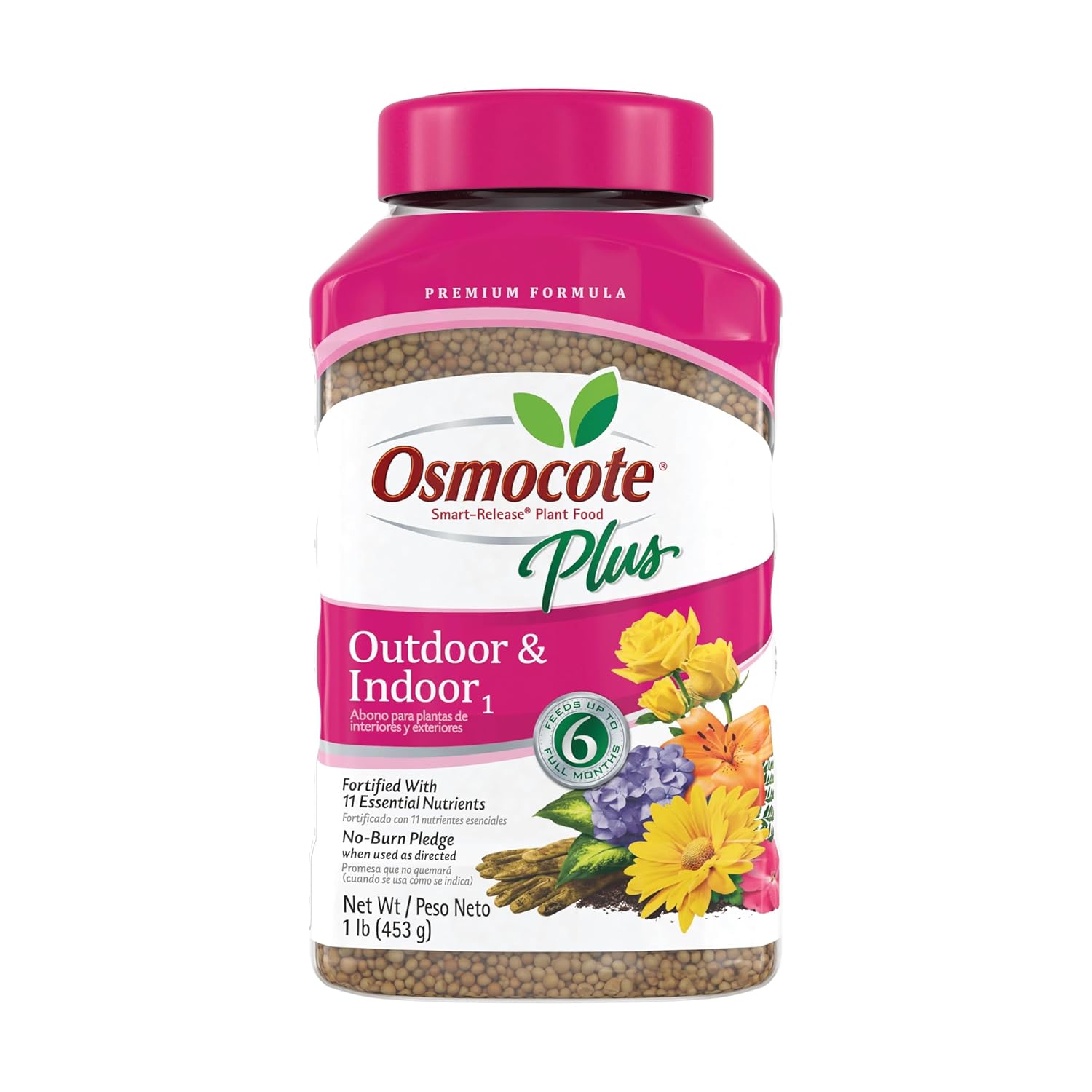
Osmocote Smart-Release Plant Food Plus Outdoor & Indoor, 1 lb
| Item Form | Granules |
|---|---|
| Specific Uses For Product | Plant Food |
| Application Method | sprinkle around the base and work into the soil |
| Target Species | Plants |
| Unit Count | 16 Ounce |
Osmocote Smart-Release Plant Food Plus is a granular, time-release fertilizer intended to feed flowering plants, vegetables, shrubs, and houseplants for up to six months from a single application. You sprinkle the granules into the top inch or so of potting mix or garden soil, water them in, and the resin coating slowly releases nutrients based on soil temperature and moisture. In practice it is easy to use for containers and garden beds and reduces the need for frequent feeding during the growing season. Notable features include an 11-nutrient formula, a no-burn pledge when used as directed, and clear dosing guidance for pots and square footage. The practical benefits are steady bloom and leaf support without frequent reapplication and predictable coverage for small planting areas. The main limitation is that a single 1 lb container covers only about 37 sq ft, so gardeners managing larger beds or many containers will need more product or more frequent repurchase. Also, time-release fertilizer offers less ability to correct specific nutrient deficiencies quickly compared with soluble feeds.
Best for: Gardeners who want reliable, low-maintenance feeding to support steady blooms and foliage without frequent applications, especially for containers, flower beds, and mixed plantings.
Less Ideal for: Growers who need rapid correction of nutrient problems, those managing large landscapes who prefer bulk fertilizers, or hobbyists who like customized, frequent fertilizing schedules.
- Controlled-release resin coating feeds plants gradually for up to six months
- Formulated with 11 essential nutrients suitable for flowers and a wide range of plants
- Simple application for containers and beds with clear dosing instructions
- No-burn pledge when used as directed reduces risk of root damage
- Small 1 lb package only covers about 37 sq ft, requiring more product for larger gardens
- Cannot quickly correct acute nutrient deficiencies the way liquid or soluble fertilizers can
Verdict: Use this to get steady, long-lasting nutrition for flowering plants with minimal upkeep so you can focus on blooms rather than frequent feeding.
Miracle-Gro Water Soluble All Purpose Plant Food, 10 lb

| Item Form | Granules, Powder |
|---|---|
| Application Method | watering can |
| Target Species | All flowers, vegetables, trees, shrubs and houseplants |
| Unit Count | 160 Ounce |
| Fertilizer Analysis (NPK) | 24-8-16 |
Miracle-Gro Water Soluble All Purpose Plant Food is a concentrated, water‑soluble formula meant to give flowers and other plants a fast nutrient boost. You mix the powder into a watering can or garden feeder and apply every 7 to 14 days depending on whether plants are indoors or outdoors. The 24-8-16 NPK balance provides a noticeable nitrogen-driven growth lift, which helps leafy growth and supports larger, more vigorous flowering when combined with regular care. Its soluble form means nutrients reach roots quickly compared with granular slow-release feeds, so you can correct deficiencies or stimulate growth on a tighter schedule. The product is safe for a wide range of species and includes dosing guidance for containers and in-ground beds. Limitations to consider are the frequent feeding interval for sustained results and the higher nitrogen ratio, which may prioritize foliage over bloom size until plants are established; careful following of the mixing directions is important to avoid overfeeding. The large 10 lb container feeds extensive garden areas, making it practical for repeat applications across many flower beds or pots.
Best for: Gardeners who want a dependable, fast-acting fertilizer to keep flower beds and container plants growing vigorously and who prioritize regular, hands-on feeding to optimize results.
Less Ideal for: Growers who prefer low-maintenance, slow-release feeding or who want a bloom‑specific high-phosphorus formula tailored only to flowering promotion.
- Water‑soluble formula delivers nutrients to roots quickly
- Broad compatibility for flowers, vegetables, trees, shrubs and houseplants
- Clear dosing instructions for containers and in‑ground use
- Large 10 lb package covers extensive garden area
- Starts working immediately compared with granular fertilizers
- Higher nitrogen-heavy NPK may encourage foliage more than blooms early on
- Requires regular feeding every 1–2 weeks for best results
Verdict: Choose this if you need a fast-acting, widely compatible fertilizer to quickly boost growth and keep flower beds and containers fed on a regular schedule.
Miracle-Gro Water Soluble Bloom Booster Flower Food, 10-52-10, 1 lb

| Item Form | Liquid |
|---|---|
| Application Method | Water Soluble |
| Coverage | 500 square feet |
| Target Species | all blooming plants |
| Mixing Ratio | 1 tablespoon/gallon (outdoor), 1.5 teaspoons/gallon (indoor) |
Miracle-Gro Bloom Booster is a concentrated, water-soluble flower food designed to promote stronger blooms and richer color in flowering annuals and perennials. You mix it into a watering can or use it with a garden feeder and apply every 7 to 14 days during bud set and bloom. The 10-52-10 NPK ratio delivers a high phosphorus dose that targets root and flower development, so you typically see faster, more plentiful blooms than with balanced general-purpose feeds. It is simple to use, works on both in-ground plantings and containers, and is safe when used according to the label. Practical benefits include quick uptake when dissolved, straightforward mixing ratios for outdoor and indoor plants, and enough coverage for several hundred square feet per pound. Limitations are that it is focused on flowering plants rather than overall foliage growth and requires regular reapplication during the bloom period, which means ongoing purchases for seasonal use.
Best for: Gardeners who want a straightforward, bloom-focused fertilizer to boost flower size and color in containers and beds without complex dosing.
Less Ideal for: Growers looking for an all-purpose or slow-release fertilizer for long-term soil improvement should consider other products.
- High phosphorus formula specifically promotes bigger, more abundant blooms
- Water-soluble for fast uptake through roots and leaves
- Simple mixing instructions for watering can or garden feeder
- Suitable for both containers and in-ground flowering annuals and perennials
- Formulation emphasizes blooms over foliage so not ideal as a general-purpose feed
- Needs reapplication every 7–14 days during bloom period for best results
Verdict: Use this water-soluble, high-phosphorus formula when you want faster, more abundant blooms from annuals and perennials.
Miracle-Gro Water Soluble All Purpose Plant Food (1.5 lb)

| Item Form | Powder |
|---|---|
| Application Method | Watering Can |
| Target Species | For all flowers, vegetables, trees, shrubs and houseplants |
| Mixing Ratio (NPK) | 24-8-16 |
This Miracle-Gro is a fast-acting, water-soluble plant food designed for use on flowers, vegetables, shrubs, trees and houseplants. You mix the powder into a watering can or a garden feeder and apply to soil at the plant base; indoors use the small scoop and outdoors use the larger scoop for regular feedings. The 24-8-16 NPK delivers a strong nitrogen boost that promotes rapid leafy growth and helps support bigger blooms when used on flowering plants as part of a regular feeding schedule. It is convenient for routine maintenance because it dissolves quickly, is safe when used as directed, and covers roughly 600 sq ft from the 1.5 lb container. The main limitation is the high nitrogen ratio, which favors foliage growth over flowering in some situations, so timing and frequency matter for bloom-focused gardeners. Also it requires repeated applications every 1 to 2 weeks rather than providing slow-release nutrition, so you should be prepared for more frequent watering-can feedings or use with a compatible feeder for larger areas.
Best for: Gardeners who want a dependable, easy-to-use feed for regular maintenance of mixed flower beds and container plants and who prioritize consistent, noticeable plant response.
Less Ideal for: Those who prefer low-maintenance slow-release fertilizers or who need a bloom-specific low-nitrogen formula for peak flowering performance.
- Water-soluble powder that mixes easily for quick nutrient uptake
- Broad compatibility with indoor and outdoor plants including flowers and vegetables
- Clear mixing directions and included scoop make dosing straightforward
- Feeds up to approximately 600 sq ft from the 1.5 lb container
- High nitrogen-heavy formula may encourage leafy growth more than blooms if overused
- Requires frequent reapplication (every 7–14 days) rather than long-term slow release
Verdict: A reliable, fast-acting soluble feed that makes regular maintenance simple and delivers quick, visible growth for flower beds and container plants.
Miracle-Gro Indoor Plant Food for All Plants, Liquid, 8 fl. oz. (2-Pack)

| Item Form | Liquid |
|---|---|
| Application Method | Apply directly to soil or mix with water |
| Target Species | Houseplants |
| Liquid Volume | 8 fluid ounces |
| Mixing Ratio | 4 pumps per 1 quart of water |
This Miracle-Gro indoor plant food is a pump-dosed liquid fertilizer meant for regular feeding of potted indoor plants and flowering houseplants. You use it by mixing the recommended number of pumps into a quart of water or applying directly to the soil, then watering as usual; the product recommends feeding every two weeks. The twin 8 fl. oz. bottles make it easy to keep a routine for multiple pots and the pump dosing simplifies measuring for small containers. Practical benefits include fast nutrient delivery, compatibility with many common houseplants and clear directions for larger pots. Limitations are that the formulation is a general all-purpose NPK concentrate so it is not tailored for bloom-boosting or specialty plants that need specific ratios, and frequent two-week feeding may be more than some light-feeding species require. Expect to pair this with good potting mix and to monitor plants for overfeeding if you already use other fertilizing products.
Best for: Buyers who want an easy, repeatable feeding routine for a mixed indoor plant collection and prefer simple dosing and established brand formulas.
Less Ideal for: Growers seeking a specialized bloom-boosting fertilizer or growers who prefer slow-release granular or organic-only feeding approaches.
- Pump-dosed liquid makes measuring simple and repeatable
- Clear instructions for mixing and application suitable for routine feeding
- Suitable for a wide range of indoor plants including flowering houseplants, herbs and vegetables
- Sold as a two-pack so you have extra supply for ongoing care
- All-purpose formula not specifically formulated as a bloom booster for flowering plants
Verdict: A convenient, pump-dosed liquid fertilizer that makes routine feeding of flowering houseplants and mixed indoor collections quick and consistent.
TPS NUTRIENTS Indoor Plant Food Liquid Fertilizer, 8 oz

| Item Form | Liquid |
|---|---|
| Application Method | Watering can |
| Coverage | Medium |
| Unit Count | 8 Fluid Ounces |
| Mixing Ratio | 2:1 (oz/gallon) or 1:64 (tbsp/gallon) |
TPS NUTRIENTS Indoor Plant Food is a ready-to-mix liquid fertilizer designed for routine feeding of houseplants. It mixes with water and is applied with a watering can at the recommended ratio, making it easy to incorporate into a weekly care routine. The formula is kelp-enriched and described as gentle, so it supports fuller, greener leaves, steady new growth, and stronger root development without aggressive feeding schedules. An 8-ounce bottle is convenient for home use and covers a medium amount of plants when diluted to the directions. Practical benefits include simple dosing instructions and versatility across common indoor species such as pothos, monstera, and peace lilies. Limitations are the small bottle size if you maintain many plants and the need to follow dilution guidance carefully since concentrates require correct mixing to avoid overfeeding. For someone who wants predictable, gentle results with minimal fuss, this product integrates well into regular watering habits.
Best for: Buyers who want a low-risk, easy-to-use indoor fertilizer to maintain healthy foliage and steady new growth as part of a regular watering routine.
Less Ideal for: Growers focused specifically on maximizing flowering or commercial producers with many plants who need larger-volume or bloom-formulated fertilizers.
- Liquid concentrate mixes easily with water for simple weekly feeding
- Kelp-enriched formula aims to promote fuller foliage and new growth
- Gentle formulation suitable for a wide range of common indoor plants
- Clear mixing directions provided for straightforward application
- 8 oz bottle may require frequent repurchasing for large collections
- No specific flower-boosting NPK ratio listed for bloom-targeted feeding
Verdict: A gentle, easy-to-use liquid concentrate that fits into weekly watering routines to keep indoor plants leafy and healthy.
Choosing the Right Plant Food for Flowers: Key Factors to Consider
Nutrient Ratio and Timing
The ratio of nitrogen, phosphorus, and potassium determines whether a feed encourages foliage, blooms, or root growth. Flowering plants generally need higher phosphorus and potassium relative to nitrogen during bud set and bloom to support flower formation and color. Feeding too much nitrogen can produce lush leaves but few flowers.
Timing also matters. Slow-release formulas provide background nutrition over weeks but may delay visible bloom response, while water-soluble or liquid feeds deliver a quick burst of nutrients for bud development. Match the nutrient ratio and release speed to the flowering stage you want to influence.
Application Method and Frequency
Plant food comes in liquids, soluble powders, granular slow-release, and spikes. Liquids and soluble powders allow precise control and faster uptake, which is useful when you want to push a plant into bloom before an event. Granular and slow-release options reduce maintenance by feeding over several weeks but may not correct nutrient deficiencies quickly.
Consider how often you want to feed. Containers usually need more frequent, lighter feedings because potting mix holds fewer nutrients and washes out with watering. In-ground beds can often rely on slower-release products or seasonal applications.
Solubility and Uptake Speed
How fast the nutrients become available affects how quickly plants show results. Water-soluble or liquid feeds make nutrients immediately available to roots and foliage, producing noticeable changes in days to weeks. Slow-release granules rely on temperature and moisture to release nutrients gradually, giving steadier growth and less risk of overfeeding.
For flowering plants that need a rapid boost before peak bloom, choose a soluble feed. For low-maintenance bedding or mixed containers, a slow-release option reduces the chance of nutrient spikes and burn.
Salt Index and Root Safety
Some fertilizers have a high soluble salt index, increasing the risk of root burn if applied too concentrated or too frequently. Salt buildup is a particular risk in containers where leaching is limited. Choosing formulations with lower salt risk or following dilution and leaching guidelines protects roots and supports steady bloom production.
Check product guidance on maximum concentrations, and flush containers occasionally to prevent salt accumulation. When establishing new transplants, use gentler feeds until roots are better developed.
Compatibility With Soil and Potting Mixes
The starting fertility and pH of your soil or potting mix affect how plant food behaves. Acid-loving bedding plants will access nutrients differently than those preferring neutral soil. Some feeds include micronutrients and pH-buffering agents that correct common deficiencies, while others assume a neutral, fertile substrate.
Test or consider your existing soil conditions when choosing a feed. For containers, choose products formulated for potting mixes to reduce the risk of nutrient lockup or uneven release.
Pollinator and Environmental Safety
Flowering plants are often grown to attract bees and other pollinators, so feed choices should minimize risks to beneficial insects. Avoid products that contain pesticides or adjuvants not intended for flowering foliage and follow timing guidance to reduce exposure during peak pollinator activity.
Environmental considerations include runoff from heavy feeding in beds and the use of organic versus synthetic sources. Selecting a product with clear labeling on pollinator safety and runoff reduction helps protect garden biodiversity.
When To Start Feeding Flowering Plants
Begin feeding after plants are established and actively growing, usually several weeks after transplanting or when new growth appears. Starting too early on small transplants can damage tender roots, while starting too late may miss the period when buds form.
For perennials, time initial feedings in spring as new shoots emerge and follow up during the main bloom cycle. For annuals and containers, regular light feedings through the bloom season keep flowers coming.
- Wait until plants show steady growth before applying concentrated feeds
- Match the feed type to the plant life stage for best results
- Increase frequency for containers and decrease for mature in-ground shrubs
Feeding Containers Versus In-Ground Beds
Containers need more frequent, lower-dose feedings because potting mix has limited nutrient reserves and is subject to leaching. Use water-soluble or liquid feeds every one to two weeks at reduced strength for most flowering containers.
In-ground beds benefit from a season-long slow-release product or a few targeted liquid applications during bud set and peak bloom. Soil organic matter helps buffer nutrients in beds, so heavy-handed feeding is rarely necessary.
- Flush containers periodically to prevent salt buildup
- Topdress beds with slow-release granules in spring for longer feeding
- Use reduced-strength solutions on small containers to avoid burning roots
Organic Versus Synthetic Options
Organic feeds release nutrients more slowly as microbes break down the material, which reduces the chance of sudden nutrient spikes. They often improve soil structure and support beneficial soil life, but they can be slower to correct deficiencies.
Synthetic feeds are predictable and can be formulated with higher available phosphorus for bloom promotion. They are useful when you need a rapid response but require careful dosing and attention to salt buildup. Many gardeners combine both approaches depending on timing and plant needs.
- Use organics for steady long-term soil health
- Use synthetic soluble feeds for quick bloom stimulation
- Consider a mixed approach: slow-release organics with targeted liquid boosts
Feeding Schedule for Peak Bloom
To build toward a peak bloom, apply a bloom-focused feed every two to three weeks starting as buds form. Use a formulation with balanced phosphorus and potassium to support healthy florets and stem strength. Reduce nitrogen slightly during heavy bloom periods to prevent foliage overgrowth that competes with flowers.
Monitor plants for signs of overfeeding, such as tip burn or excessive leaf growth. If you see those signs, pause feeding and flush container soils or reduce granular application rates in beds.
- Start bloom-focused feeding when buds first appear
- Space liquid feeds for quick response and slow-release for maintenance
- Adjust nitrogen down slightly during full flower
Common Feeding Mistakes to Avoid
Overconcentration is a frequent issue with water-soluble feeds, especially in small containers. Always follow dilution instructions and err on the side of weaker solutions if you are unsure. Underfeeding is another mistake for heavy-blooming varieties that demand more nutrients than foliage-focused plants.
Applying feed at the wrong time of day can stress plants; feed in the morning or early evening when temperatures are moderate to improve uptake and reduce evaporation. Avoid feeding stressed or drought-affected plants until they recover.
- Do not exceed recommended concentrations for liquids
- Avoid feeding during heat stress or drought
- Match feed frequency to plant vigor and bloom intensity
How We Chose the Best Plant Food for Flowers
We focused on attributes that directly affect flowering success and everyday usability in gardens, beds, and containers. Primary evaluation criteria were nutrient formulation and bloom feeding, application method and frequency, solubility and uptake speed, and safety for roots and pollinators. We favored products that deliver phosphorus and potassium in forms readily available to flowering plants while still supplying sufficient nitrogen for foliage without encouraging excessive leafy growth. We also considered practical factors such as whether the product is easy to apply at recommended rates, how quickly plants respond after feeding, and compatibility with container mixes and garden soils. Products that require specialized equipment, carry high application risk for common garden situations, or are formulated only for lawns were excluded. The final shortlist balances bloom-promoting nutrient profiles with clear instructions and predictable garden performance.
FAQ
How often should I feed container-grown flowering plants?
Containers generally need light feeding every one to two weeks with a water-soluble or liquid feed. Frequency depends on pot size, plant vigor, and the type of feed; slow-release granules can cut down on liquid applications.
Can I use a general houseplant fertilizer on outdoor bedding flowers?
You can in a pinch, but bedding plants and flowering outdoor varieties often benefit from a feed with slightly higher phosphorus and potassium when setting buds. Check the nutrient ratio and adjust timing to encourage blooms rather than foliage.
Will feeding increase bloom size immediately?
Liquid or soluble feeds can produce visible improvement within days to weeks, but slow-release products act more gradually. Immediate bloom increases depend on plant health, existing nutrient status, and correct application.
Is organic plant food as effective for blooms as synthetic options?
Organics improve soil health and supply nutrients steadily, which supports sustained blooming. They are usually slower to act than synthetic soluble feeds, so synthetics may be preferred when a quick bloom boost is needed.
How can I avoid burning roots when feeding?
Use manufacturer dilution rates or choose reduced-strength applications and increase only if plants respond well. Flush containers periodically and avoid applying granular products directly against stems or crowns.
Final Verdict
Selecting a plant food for flowers means balancing nutrient ratios, application style, and how quickly you need results. Prioritize bloom-supporting phosphorus and potassium during bud set while avoiding excess nitrogen that encourages leaf growth at the expense of flowers. Consider container needs, root safety, and pollinator-friendly formulations when making a choice. Focus on the factors that match your routine and garden conditions. If you want rapid results for events, choose a soluble bloom feed. If you prefer low-maintenance care, opt for a slow-release or organic option that feeds steadily through the season.
