

Note: This article contains affiliate links. If you click on these links and make a purchase, I may earn a small commission at no extra cost to you. This helps support my research and content. Read my full affiliate disclosure here.
Choosing the right potting soil for fruit trees matters more than many gardeners expect. In containers or for initial planting, soil influences root oxygen, moisture balance, and nutrient availability, all of which affect tree vigor and fruit set. This guide looks at a short list of top potting soils selected for fruit trees, highlighting mixes that promote drainage, hold moisture appropriately, and supply steady nutrition. We evaluated options across common container and nursery situations and focused on practical criteria gardeners care about. Below are our top picks and the evaluation factors we used to judge mixes and blends.
Top Picks at a Glance
| Best Overall The best all-around choice for most situations | Soil Sunrise Citrus Tree Potting Soil Mix (30 Quarts) |  |
| Best Quality Built to a higher standard if you want something more solid | FoxFarm Happy Frog Potting Soil (2 cu ft) with 2 Plant Tags |  |
| Best Value The sweet spot between price and what you get | Miracle-Gro Potting Mix, 16 qt. (2-Pack) |  |
| Best Budget The cheapest option that still gets the job done reliably | Doter Citrus Tree Potting Soil Mix (1 qt) |  |
| Highest Rated A top-rated pick with lots of positive feedback | E.B. Stone Organics Citrus & Palm Mix Potting Soil, 1.5 cu ft |  |
| Most Popular A crowd favorite that many people choose with confidence | Miracle-Gro Organic Outdoor Potting Mix, 16 qt. |  |
| Best Seller A high-volume bestseller chosen again and again | Back to the Roots Organic Expanding Coco Coir Potting Soil Brick |  |
Soil Sunrise Citrus Tree Potting Soil Mix (30 Quarts)

| Volume | 30 quarts |
|---|---|
| Ingredients | Peat moss, perlite, sand, worm castings, lime |
| Style Name | Sandy |
| Unit Count | 1 Count |
Soil Sunrise Citrus Tree Potting Soil is a ready-to-use 30-quart mix designed for growing and repotting container citrus like Meyer lemons, key limes, and dwarf mandarins. The blend pairs peat moss with coarse sand and perlite to create an open texture that drains well while still holding moisture around roots. Worm castings provide organic nutrients for steady growth and lime helps stabilize the slightly acidic pH citrus prefer. In practice this mix suits indoor or outdoor pots and is useful when repotting a young tree or refreshing topsoil in an established container. The natural ingredient list means no synthetic fillers and the sandy, airy composition reduces the risk of root rot from overwatering. Expect improved root aeration and easier watering control compared with plain garden soil. Limitations are that it is a potting medium only and will not replace regular fertilizing schedules for heavy fruiting trees, and the peat-based formula will slowly compress over time and may need refreshing after a season or two.
Best for: Gardeners who want a ready-made, natural potting mix tuned for container citrus and prefer a balanced product that prioritizes drainage, nutrient support, and ease of watering.
Less Ideal for: Growers who need an all-in-one fertilizing solution or who prefer strictly peat-free or very large in-ground plantings should consider other specialized soils or amendments.
- Formulated specifically for citrus with lime to help maintain appropriate pH
- Good drainage and aeration from perlite and coarse sand to reduce root rot risk
- Includes worm castings for organic nutrient support
- All-natural ingredient list with no additives or fillers
- Suitable for indoor and outdoor container use
- Peat-based mix will compact over time and may require periodic top-up or repotting
- Not a complete fertilizer so additional feeding is needed for heavy fruit production
Verdict: A balanced, natural potting mix that gives container citrus the drainage, aeration, and organic nutrients they need to establish and fruit well.
FoxFarm Happy Frog Potting Soil (2 cu ft) with 2 Plant Tags

| Brand | FoxFarm |
|---|---|
| Item Highlight | Ready-to-Use Amended Container Blend with Soil Microbes, Earthworm Castings, Bat Guano, and Aged Forest Products |
| Volume | 2 cubic feet |
| Style Name | Container Garden |
FoxFarm Happy Frog Potting Soil is a ready-to-use container mix designed to give potted trees and larger container plants a nutrient-rich growing medium. It combines earthworm castings, bat guano, aged forest products, and a custom microbial blend to support root development and nutrient uptake, which is useful when roots cannot access ground soil. In practice you fill the recommended container, position roots at the correct depth, water in, and expect stronger vegetative growth and improved flowering or fruiting over basic bagged soils. Notable features are the live microbes and mycorrhizal-friendly components that expand root reach and the inclusion of plant tags for tracking varieties and dates. Practical benefits are faster establishment for transplanted fruit trees in pots and less need for immediate supplemental feeding. Limitations are that it is a finished potting mix rather than a long-term fertilizer program, so heavy feeders may still need periodic fertilizer, and a 2 cu ft bag requires planning for multiple or large containers.
Best for: Gardeners who prioritize strong, measurable performance for container-grown fruit trees and shrubs and want a premium, biologically active potting mix that helps transplanted roots establish quickly.
Less Ideal for: Those who need a balanced, multi-year fertilizer plan bundled with soil or gardeners filling many large pots where bulk soil quantity is the priority.
- Amended with earthworm castings and bat guano for immediate organic nutrient content
- Contains beneficial microbes and mycorrhizal-friendly ingredients to enhance root growth
- Ready-to-use mix labeled for container-grown trees, shrubs, and roses
- Includes two plant tags to track varieties and planting dates
- Provides a finished medium but not a complete long-term fertilizer regimen for heavy fruiting trees
- Only supplied in 2 cu ft bag which may be small for multiple or very large containers
Verdict: Choose this potting soil when you want a biologically active, nutrient-rich mix that helps container fruit trees establish faster and produce better than basic bagged soils.
Miracle-Gro Potting Mix, 16 qt. (2-Pack)

| Volume | 16 quarts (per bag) |
|---|---|
| Number of Packs | 2 |
| Feeds | Up to 6 months |
| Ingredients | Sphagnum Peat Moss, Peat, Perlite, Compost, Fertilizer |
Miracle-Gro Potting Mix is an all-purpose container soil designed to support outdoor potted plants, and this listing bundles two 16-quart bags. It is typically used to fill planters, hanging baskets, and large pots; the mix contains peat, perlite, compost, and a time-release fertilizer so it drains quickly while delivering nutrients for up to six months. That combination makes planting and repotting straightforward: fill a pot about one third, set the root ball, top off, and water through until drainage runs clear. For gardeners, the main practical benefits are consistent drainage to reduce root rot risk and built-in feeding that delays fertilizing chores for a season. Limitations to consider are that this is formulated for containers rather than in-ground beds and the peat-based base may compact over time so annual refresh or repotting is recommended. Also, heavier or specialty trees may need more structural media or amended mixes tailored to fruit tree root requirements.
Best for: Gardeners who want a low-effort, ready-to-use potting mix for outdoor containers and prefer to minimize monthly feeding and maintenance.
Less Ideal for: People planting fruit trees directly in the ground or those needing a heavy, long-term structural root medium for large trees should choose a soil blend formulated for in-ground fruit tree planting.
- Feeds plants for up to six months with incorporated time-release fertilizer
- Fast-draining blend (peat and perlite) that reduces risk of overwatering in containers
- Pre-mixed with compost to provide immediate organic matter and nutrients
- Convenient 2-pack of 16-quart bags covers multiple containers or one large repotting session
- Formulated specifically for containers and not intended as a garden bed soil
- Peat-based mix can compact over time and typically needs annual replacement or refresh
Verdict: A convenient, fast-draining potting mix that keeps outdoor container plants fed for months and cuts down on routine fertilizing.
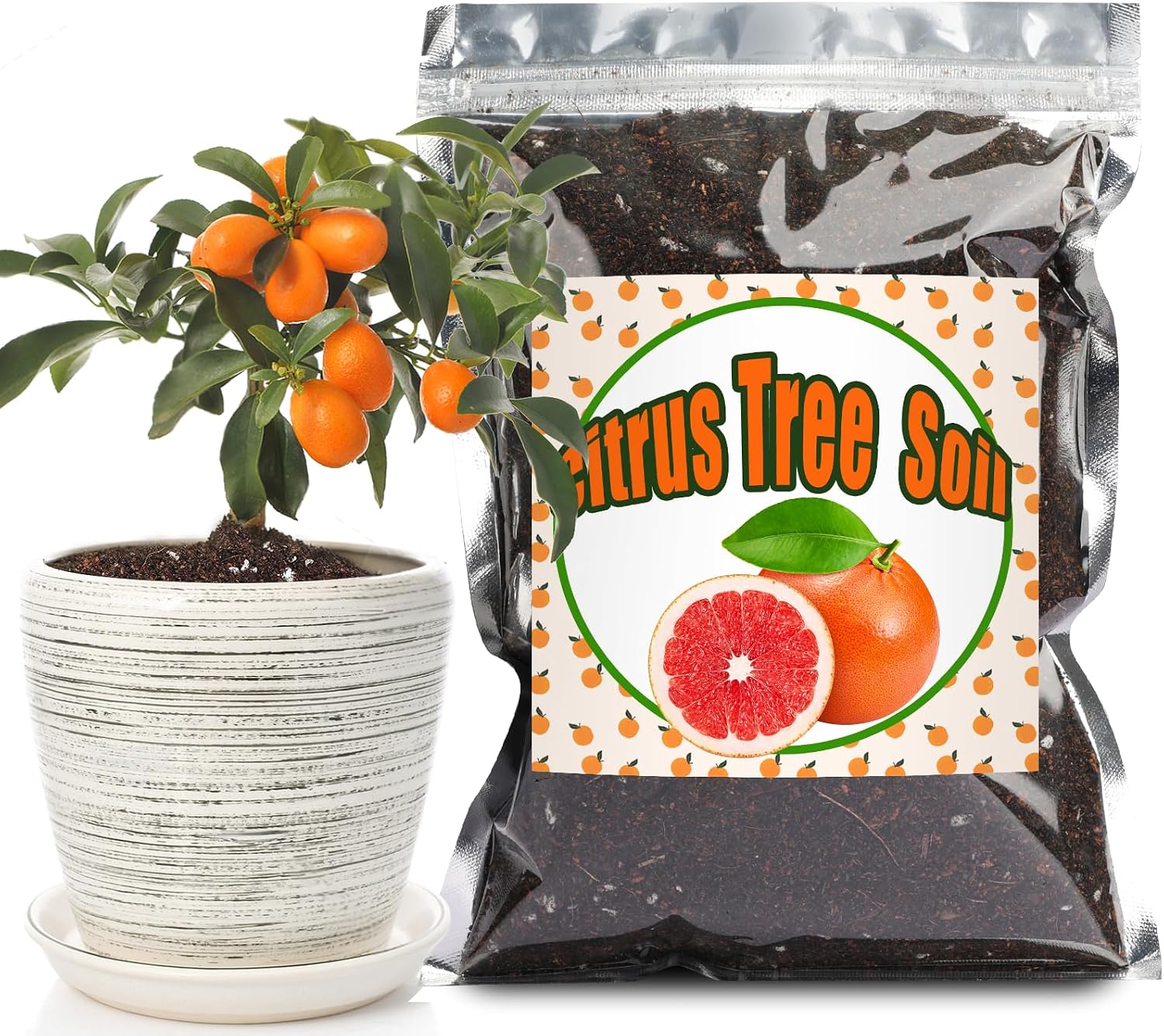
Doter Citrus Tree Potting Soil Mix (1 qt)
| Brand Name | Doter |
|---|---|
| Item Type Name | Garden soil |
| Volume | 1 quarts |
| Item Weight | 224 g |
This Doter Citrus Tree Potting Soil is a small, ready-to-use 1 qt mix formulated to give potted lemon, lime, orange and grapefruit trees a balanced growing medium. It is described as pH-balanced (about 6.0–7.1), enriched with organic and mineral nutrients, and blended for improved drainage and aeration—features that help reduce root rot in containers and support fruiting. Typical use is repotting young citrus saplings or topping up container soil for established patio trees; because it is lightweight and pre-mixed you can use it straight from the bag without amendment. Practical benefits include better water flow through the root zone, a nutrient base to encourage growth and ease of use for quick maintenance. Limitations are the very small 1 qt volume, which means this is best for small pots, sample trials or as a component in a larger repotting plan rather than the sole supply for larger containers or multiple trees. For big pots you will need multiple bags or to mix this with larger quantities of other amendments.
Best for: Gardeners who want an affordable, ready-made citrus mix for small pots, repotting seedlings, or topping up containers without custom blending.
Less Ideal for: Owners of larger patio citrus trees or those repotting several trees who need bulk soil or a full bag replacement.
- Formulated for citrus with an advertised pH of 6.0–7.1 suitable for nutrient uptake
- Enhanced drainage and aeration to help prevent waterlogged roots in containers
- Pre-enriched with organic and mineral nutrients to support growth and fruiting
- Sold in a very small 1 quart bag so it is not practical as the only soil for larger containers or multiple trees
Verdict: A convenient, budget-friendly 1 qt citrus mix that makes topping up small pots and repotting seedlings quick and easy.
E.B. Stone Organics Citrus & Palm Mix Potting Soil, 1.5 cu ft

| Brand | E.B. Stone Organics |
|---|---|
| Volume | 1.5 cubic feet |
| Intended use | Citrus, palms, avocado & tropical plants |
This potting mix is designed for fruit trees with deep, hungry root systems and works as a ready-to-use medium for containers or to amend planting holes in the garden. The blend of aged fir bark and pumice creates a fast-draining, airy structure that helps prevent waterlogging and root rot while still retaining enough moisture for steady uptake. Added mycorrhizae and organic matter support nutrient and water absorption, which is helpful for establishing citrus and avocado trees and for maintaining potted palms and tropicals. Because it is formulated specifically for these plant types, you do not need to add perlite or other drainage amendments for most uses. The 1.5 cubic foot bag is convenient for repotting small to medium trees or for mixing into planting holes, but larger plantings will require multiple bags. This is a solid, low-fuss choice for gardeners who want a purpose-built, organic mix that encourages healthy root development without extra preparation.
Best for: Gardeners who prioritize predictable, plant-specific results and want a low-effort, organic potting mix for citrus, avocado and tropical container or in-ground plantings.
Less Ideal for: Large-scale orchard planting projects or buyers needing bulk soil for multiple mature trees should consider larger-volume landscape mixes or soil delivery options.
- Formulated specifically for citrus, palms, avocado and tropical plants
- Aged fir bark and pumice provide fast drainage and good aeration
- Contains beneficial mycorrhizae to improve nutrient and water uptake
- Ready to use straight from the bag for potting or planting
- 1.5 cu ft bag is small for large trees or multiple plantings
Verdict: Choose this mix if you want a reliable, ready-made organic soil that promotes drainage and root health for citrus and other tropical fruit trees.
Miracle-Gro Organic Outdoor Potting Mix, 16 qt.

| Volume | 16 qt. |
|---|---|
| Feeds up to | 2 months |
| OMRI Listed | Yes |
| Intended use | Outdoor container plants |
This 16‑quart Miracle‑Gro Organic Outdoor Potting Mix is designed for planting and repotting outdoor containers such as pots for fruit trees grown in containers, patio citrus, and other edible container specimens. The mix is peat‑based and blended with upcycled green waste and a quick‑release natural fertilizer that feeds for up to two months, so newly potted trees get an initial nutrient boost without immediate additional feeding. It is OMRI listed, which makes it suitable for organic gardening, and the manufacturer guidance describes filling a pot, loosening the root ball, positioning the plant, and watering to settle the soil. Practical benefits include good moisture retention for outdoor exposure and a ready‑to‑use texture that reduces repotting hassle; Miracle‑Gro also recommends repotting biannually to avoid compaction and refresh nutrients. Limitations for fruit tree growers are that a single 16 qt. bag only fills a modest container (about a 12‑inch pot) and the peat base means you may want to amend over time with compost or coarser material for larger trees to improve long‑term structure and drainage.
Best for: Buyers who want an easy, certified organic potting mix to establish or repot small to medium fruit trees in containers and prefer a ready‑to‑use product with initial fertilization included.
Less Ideal for: Gardeners planting large or mature fruit trees in big containers or in‑ground beds who need bulk soil, long‑term soil structure, or mixes with higher inorganic drainage amendments.
- Formulated for outdoor containers with moisture retention suited to outdoor conditions
- Contains quick‑release natural fertilizer that feeds up to two months for an easy start
- OMRI listed, making it acceptable for organic container gardening
- Includes responsibly sourced peat and upcycled green waste for a more sustainable ingredient mix
- Small 16 qt. bag covers only one small to medium pot so multiple bags are needed for larger container trees
- Peat‑based mix may compact over time and benefit from periodic amendments for larger or long‑term fruit trees
Verdict: A convenient OMRI‑listed potting mix that gives container fruit trees a ready nutrient boost and good moisture retention for easy establishment.
Back to the Roots Organic Expanding Coco Coir Potting Soil Brick

| Item Highlight | 10 lb compressed coco coir brick; peat-free; OMRI Listed |
|---|---|
| Item Type Name | Coconut Coir |
| Volume | 2 cubic feet |
| Ingredients | Coconut Coir |
This compressed coco coir brick is designed to expand into a light, airy potting medium for pots, containers, seed starting, and soil amendment. You hydrate the 10 lb block, break it up, and it fluffs into roughly 2 cubic feet of pH-balanced, peat-free coir that holds moisture while improving aeration and root access. That makes it useful for repotting container fruit trees or blending into existing garden soil to loosen heavy clay. The product is OMRI listed and labeled organic which suits gardeners who prefer certified inputs. Its compressed format is easy to store and reduces messy bag handling compared with loose soil. Limitations are that it is a single-ingredient coco coir with no added nutrients, so plan to mix in compost or a balanced fertilizer for long-term feeding of fruit trees, and you will need to adjust water and feeding routines compared with standard potting mixes that contain fertilizer or slow-release nutrients.
Best for: Buyers who want a clean, peat-free, conservative choice for improving container or in-ground soil structure and who prefer certified organic inputs and easy storage.
Less Ideal for: Gardeners who want an all-in-one potting mix with built-in fertilizer or those who prefer a ready-to-use, nutrient-rich commercial potting soil.
- Expands to about 2 cubic feet from a compact brick for easy storage and transport
- Peat-free, OMRI listed organic coco coir suitable for organic gardens
- Improves water retention and aeration when used alone or mixed into soil
- Simple to prepare and beginner-friendly compared with loose coir or bagged mixes
- Contains only coconut coir with no added nutrients or fertilizer
- Requires pre-hydration and mixing which adds prep time
Verdict: A compact, certified organic coco coir brick that reliably expands into a moisture-retentive, airy medium—ideal for gardeners who want a simple, peat-free base to improve soil for container fruit trees.
Choosing the Right Potting Soil for Fruit Trees: Key Factors to Consider
Drainage and Aeration
Fruit trees need steady oxygen at the roots to avoid root rot and support fine root growth. In containers and raised beds, potting soil must allow excess water to move away from root zones and hold open pore space so oxygen can penetrate. A mix that packs down or becomes waterlogged after repeated watering will suffocate roots and invite disease.
Look for coarser components like pine bark, coarse perlite, or horticultural sand in the formula. Those components create larger pores that improve air flow while still letting the mix hold enough moisture between waterings.
Moisture Retention
While drainage is critical, fruit trees also need consistent moisture during the growing season, especially when flowering and fruiting. Potting mixes that dry out too fast stress trees and reduce fruit set. Conversely, mixes that retain water without adequate drainage encourage shallow roots and disease.
Good potting soil balances moisture-holding elements such as coconut coir or well-composted organic matter with coarse particles. Consider the container size and local climate: smaller pots and hot, windy sites call for mixes with higher water-holding capacity.
Nutrient Release Profile
Fruit trees have steady nutrient needs over the season, including nitrogen for leaf growth and potassium and phosphorus for flowering and fruit development. Some potting soils include slow-release fertilizers or well-aged compost to supply nutrients gradually, while others rely entirely on supplemental feeding.
Choose a mix that matches how you plan to fertilize. If you prefer minimal feeding, pick a blend with a balanced slow-release nutrient package. If you fertilize regularly with liquid or granular feeds, a cleaner inert mix gives you more control.
Organic Matter Quality
The type and maturity of organic matter in potting soil affects structure, nutrient availability, and microbial life. Well-composted materials provide stable nutrients and help retain moisture without tying up nitrogen. Fresh or immature compost can cause nitrogen drawdown or uneven decomposition, harming young roots.
Seek mixes that list composted bark, leaf compost, or well-stabilized organic components. Avoid mixes that rely heavily on raw manures or unaged green waste unless you plan to age the mix first.
Physical Stability and Longevity
Containers and nursery pots experience repeated watering, drying, and root expansion. Some potting mixes break down quickly, becoming compacted and reducing aeration. Long-lasting structural components keep a stable pore network so trees develop deep, healthy root systems.
Durable mixes often include inert aggregates such as pumice, perlite, or coarse bark that resist decomposition. Consider how often you want to repot and how long the soil should perform before refurbishment is needed.
pH and Salt Levels
Fruit trees vary in pH preference, but many common fruit species do best in slightly acidic to neutral conditions. Potting soils can vary in pH depending on ingredients and fertilizers used. High soluble salts from certain amendments can stress roots and reduce water uptake.
Check the expected pH range and whether the mix is described as low-salt or suitable for acid-loving fruit. If you grow sensitive varieties, choose a neutral, low-salt mix and monitor with periodic soil tests.
Container Size and Soil Volume
Container size directly affects how often you water and how well the soil buffers temperature swings. Larger pots give roots more room and keep soil moisture more stable, while small containers dry quickly and require mixes with higher water-holding capacity.
Match the potting soil to the container size you plan to use. For large patio tubs, prioritize good drainage and structural stability. For smaller pots or growing shelves, choose finer-textured blends that still include some coarse particles to avoid compaction.
- Large containers: lean toward coarser mixes with long-term structure
- Small containers: choose mixes with greater moisture retention
- Always ensure the pot has drainage holes and adequate depth for root systems
Preparing Mixes for Planting and Repotting
Many potting soils perform best when amended slightly for fruit trees. Simple adjustments include adding extra coarse material for better drainage or folding in a measured slow-release fertilizer at planting. For trees being repotted from nursery containers, teasing out circling roots and refreshing the surrounding soil helps acclimation.
Avoid overcompacting the root ball when backfilling. Place the root flare at the correct height and water thoroughly to settle the mix around roots, then allow the top layer to dry to the appropriate depth before the next watering.
- Add 10 to 30 percent coarse bark or pumice for improved aeration
- Amend with compost only if it is well-aged and stable
- Do not bury the root flare when setting the tree in its new soil
Watering Rhythm and Mulch in Containers
Soil choice influences how you water. Fast-draining mixes may need more frequent but shorter waterings, while mixes with higher water-holding capacity let you water less often. Monitor moisture with a finger test or a moisture meter until you learn the mix behavior in your climate.
Top mulch in containers with a thin layer of well-aged bark or leaf mulch to help moderate evaporation and maintain steady moisture. Avoid deep mulches that prevent water from reaching the soil surface quickly.
- Use a moisture meter or finger test to gauge watering needs
- Mulch can reduce watering frequency but adjust for container size
- Watch for signs of overwatering such as yellowing leaves or slow growth
Feeding Strategy for Potted Fruit Trees
Decide whether your approach will rely on a nutrient-rich potting mix or on scheduled fertilization. Both work if matched correctly. If a mix includes slow-release fertilizer, expect reduced initial feeding but still plan season-long nutrient checks. If the mix is inert, establish a regular feeding routine with balanced fertilizers targeted to flowering and fruit set.
Monitor tree growth and leaf color as practical cues for nutrient needs. A light foliar feed or targeted fertilizer application during bloom and fruit development can improve results for many species.
- Slow-release amendments reduce early feeding but do not eliminate the need for seasonal nutrients
- Liquid feeds offer quick correction for deficiencies
- Adjust fertilizer timing to the tree's growth and fruiting cycle
Winter Care and Soil Freeze Protection
Potting soils in containers are more exposed to temperature swings than ground soil. During freezing weather, roots in small containers are vulnerable. A soil mix with good structure reduces freeze-thaw settling, and insulating the container can protect roots.
For trees that remain in containers over winter, consider moving pots to sheltered locations or insulating the exterior. Avoid allowing the potting mix to become completely waterlogged before freeze events, as excess moisture increases frost damage risk.
- Insulate containers in exposed sites to protect roots
- Reduce watering as growth slows in autumn but do not let the mix dry to dust
- Use structurally stable mixes that resist compaction from freeze-thaw cycles
How We Chose the Best Potting Soil for Fruit Trees
We shortlisted mixes that match the needs of fruit trees in containers or nursery repotting. Evaluation focused on factors that directly affect root health and long-term production: drainage and aeration, moisture retention, nutrient profile and slow-release feeding, organic matter quality and stability, and physical stability under watering and root growth. We checked typical ingredient lists and analyzed how those ingredients perform in real garden conditions rather than relying on marketing claims. Excluded items included plain garden soils and heavy topsoils not designed for containers, unamended potting mixes lacking structure, and media intended only for seedlings or short-term use. We prioritized blends formulated for woody plants and fruiting trees, those that balance water-holding components with coarse materials for oxygen, and mixes with a reasonable organic nutrient base or clear guidance for fertilization. Durability under repeated wet-dry cycles and compatibility with common container sizes were also part of the filters.
FAQ
Can I use regular potting soil for vegetable containers for fruit trees?
Often regular potting soil formulated for vegetables can work, but many of those mixes are finer-textured and may compact under a tree's root system. For long-term container fruit trees, a mix with better structural components and drainage is usually preferable.
How often should I repot a fruit tree grown in a container?
Repotting frequency depends on growth rate and container size. Young, fast-growing trees may need repotting every one to three years to refresh soil and reduce root crowding. Larger, slower-growing trees can often remain in the same soil longer if you refresh the top layer and monitor root health.
Is coconut coir a good component for fruit tree potting mixes?
Coconut coir is an effective water-holding component and resists compaction better than some peats. It pairs well with coarse materials to balance moisture and aeration. Ensure the coir is buffered or rinsed if salt content is a concern.
Should I add fertilizer to the potting soil at planting?
It depends on the mix. If the potting soil includes a measured slow-release fertilizer or well-aged compost, additional feeding at planting may be minimal. If the mix is inert, incorporate a starter fertilizer according to guidelines or plan a feeding schedule shortly after planting.
How important is pH for container-grown fruit trees?
pH matters because it affects nutrient availability. Many fruit trees prefer slightly acidic to neutral soil. Use a soil test or pH meter and choose a mix with a compatible pH range, or amend gradually to adjust pH rather than making large sudden changes.
Final Verdict
Choose potting soil that matches your container size, climate, and feeding preferences. Prioritize mixes that balance drainage with moisture retention and include stable organic matter so roots can grow deeply and access nutrients without staying waterlogged. Tradeoffs are common: mixes with high water holding reduce watering frequency but need good aeration; very free-draining mixes require more regular feeding and watering. For confident choices, match the mix structure to your container and plan a feeding and repotting routine that keeps the soil lively. That approach yields healthier roots and better fruit production over time.
