

Note: This article contains affiliate links. If you click on these links and make a purchase, I may earn a small commission at no extra cost to you. This helps support my research and content. Read my full affiliate disclosure here.
Stink bugs are persistent indoor invaders that squeeze into gaps around windows, doors, and eaves. Picking the right bug spray matters because some products kill on contact but offer little lasting protection, while others leave a residual barrier that reduces repeat incursions. This guide looks at seven shortlisted bug sprays for stink bugs, chosen for their balance of knockdown, residual control, and user safety considerations. You will find practical notes on how these sprays perform around typical household entry points, what to expect after application, and which product features matter most for seasonal stink bug pressure. Below are our top picks followed by guidance on selecting and using sprays effectively in and around the home.
Top Picks at a Glance
| Best Overall The best all-around choice for most situations | HARRIS Stink Bug Killer Gallon (128 fl oz) |  |
| Best Quality Built to a higher standard if you want something more solid | Kate's Home & Garden Peppermint & Cedarwood Oil Pest Spray (16 oz) |  |
| Best Value The sweet spot between price and what you get | VermExon Peppermint Oil Insect & Pest Control Spray, 16 oz |  |
| Best Budget The cheapest option that still gets the job done reliably | Motrapso 16 oz Plant-Based Stink Bug Spray |  |
| Highest Rated A top-rated pick with lots of positive feedback | NatureStop Stink Bug Repellent (16 oz) |  |
| Most Popular A crowd favorite that many people choose with confidence | HARRIS Home Insect Killer 1‑Gallon Liquid Spray with Extended Trigger |  |
| Best Seller A high-volume bestseller chosen again and again | Atticus Talak 7.9% Bifenthrin Indoor/Outdoor Insecticide Concentrate (32 oz) |  |
HARRIS Stink Bug Killer Gallon (128 fl oz)

| Unit Count | 128 Fluid Ounces |
|---|---|
| Item Form | Spray |
| Target Species | Insects |
| Liquid Volume | 128 fluid ounces |
| Specification Met | EPA |
This one-gallon HARRIS Stink Bug Killer is a ready-to-use liquid spray formulated with deltamethrin to kill stink bugs and similar winter-invading insects after the spray dries. Typical use is around door frames, window sills, eaves and other entry points where stink bugs congregate; the included extended trigger sprayer makes it easy to coat gaps and exterior surfaces without mixing. The formula is EPA registered for indoor residential use and advertises long residual control, so treated surfaces continue to be effective for weeks. Practical benefits include large volume for repeated treatments and an odorless, non-staining formula suitable for use near fabrics when label directions are followed. Important limitations are that the product contains an insecticide so label safety precautions must be followed and it is not available for sale in California, which restricts buyers in that state. This product is best suited to homeowners who want a cost-effective, long-lasting contact and residual spray to reduce stink bug infestations before they overwinter indoors.
Best for: Buyers who want a straightforward, no-mix solution to reduce stink bugs around home entry points and value long residual control and quantity for repeated applications.
Less Ideal for: People seeking a pesticide-free or low-toxicity approach, those who need a product approved for sale in California, or users who prefer aerosol or bait-format treatments.
- Large 1 gallon volume allows multiple applications without frequent repurchase
- Ready-to-use with extended trigger sprayer for easy spot and perimeter treatments
- Odorless and non-staining formula safe for use near fabrics when used as directed
- EPA registered formulation with long residual activity against stink bugs
- Contains a synthetic insecticide so users must follow label safety and application restrictions
- Not available for sale in California
Verdict: A high-volume, ready-to-use spray that delivers long-lasting, odorless control of stink bugs for homeowners needing repeated perimeter treatments.
Kate's Home & Garden Peppermint & Cedarwood Oil Pest Spray (16 oz)

| Ingredients | Cedarwood Oil, Peppermint Oil, Sodium Lauryl Sulfate, Soybean Oil, Soap, Water |
|---|---|
| Volume | 16 oz |
| Usage | Indoor & outdoor; spray entry points and surfaces |
| Made in | USA |
Kate's Home & Garden Peppermint & Cedarwood Oil Spray is a 16 oz plant-based repellent formulated to keep spiders, ants, stink bugs and other crawling insects away from entry points and living areas. You use it like a household surface spray: shake, then mist around doors, window sills, baseboards, under sinks and patios from 8–12 inches. The dual-oil formula pairs peppermint, which disrupts navigation for ants and spiders, with cedarwood, which targets moths, silverfish and stink bugs, so it covers more species than peppermint-only products. It is non-toxic, biodegradable, and labeled safe for use around children and pets when directions are followed, and the company says it will not stain surfaces. Expect to reapply weekly or after heavy rain outdoors; a 16 oz bottle is advertised to deliver up to about 1,500 sprays. Limitations are that this is a repellent rather than a lethal pesticide so immediate knockdown of heavy infestations is unlikely, and effectiveness can vary by species and environmental conditions, requiring consistent application to keep pests away.
Best for: Buyers who prioritize non-toxic, plant-based pest control and want a preventative spray to reduce stink bugs and other household pests around entry points and living spaces.
Less Ideal for: People needing a fast-acting insecticide for large or established infestations or users seeking a one-time permanent solution.
- Dual natural oils (peppermint and cedarwood) broaden pest coverage beyond a single essential oil.
- Marked safe for use around children and pets when used as directed and made from biodegradable ingredients.
- Spray-ready bottle suitable for treating common entry points and indoor surfaces.
- Manufacturer states it will not stain furniture or carpet and leaves a fresh peppermint scent.
- Repellent action requires regular reapplication and will not rapidly eliminate established infestations.
- Performance can vary by pest species and environmental conditions, so results are not guaranteed for all bugs.
Verdict: If you want a pet- and child-safe, plant-based spray to repel stink bugs and a broad set of household pests around doors and windows, this dual-oil formula is a practical preventive choice.
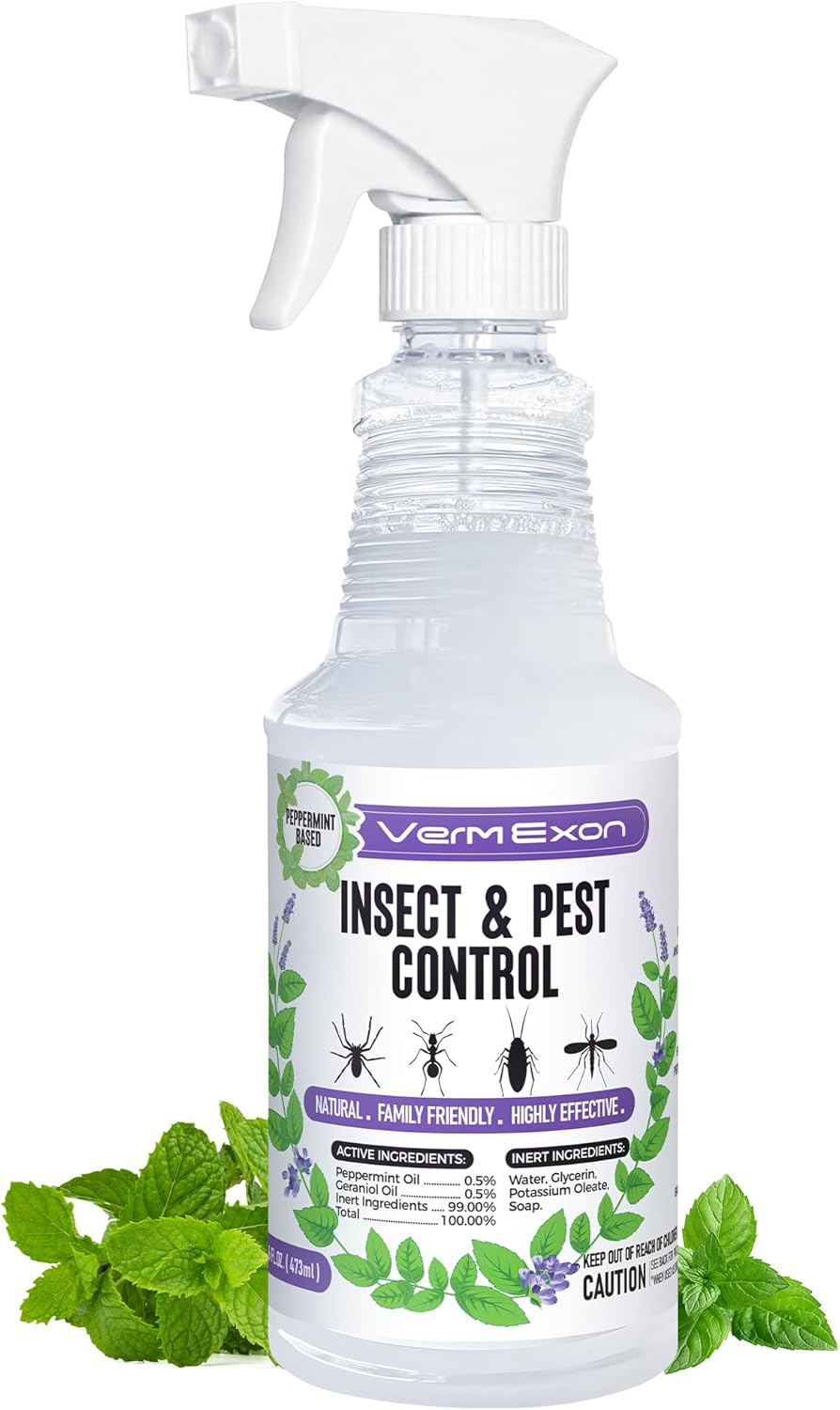
VermExon Peppermint Oil Insect & Pest Control Spray, 16 oz
| Volume | 16 oz |
|---|---|
| Active ingredient | Peppermint Oil |
| Intended use | Indoor and outdoor spot treatment |
This 16 oz VermExon spray uses a peppermint oil plant-based formula to kill a wide range of common indoor pests by contact and to create a short-term barrier when applied to entry points and problem areas. Typical use is to shake, spray baseboards, doorways, corners, and other hiding spots until damp but not soaked, then repeat once weekly for at least two weeks. The nozzle gives controlled application for cracks and crevices and the product is marketed as gentle on indoor air and furniture with no visible residue. Practical benefits include a natural scent instead of chemical odor, suitability for routine preventive spraying, and an easy trigger sprayer for spot treatments. Important limitations are that effectiveness relies on repeated applications rather than a single lasting treatment and results can vary by pest and infestation size; the label also warns to avoid contact with eyes and food surfaces and to test on delicate finishes.
Best for: Buyers who prioritize a safer, plant-based indoor pest spray for regular preventive and spot treatments and who want a low-odor option for kitchens, living areas, and entryways.
Less Ideal for: People facing large or persistent infestations that need professional-grade residual control or a single-application long-lasting solution.
- Plant-based peppermint oil formula that provides a more natural scent than synthetic insecticides
- Trigger sprayer for precise application to baseboards, entryways, and crevices
- Safe for routine indoor use when directions are followed and leaves minimal visible residue
- Suitable for both targeted spot treatments and weekly preventive spraying
- Requires repeated weekly applications for prolonged protection rather than a long-lasting residual
- Effectiveness is contact-based and may be limited against large or established infestations
Verdict: A practical, low-odor peppermint oil spray for routine indoor spot treatment and weekly prevention against common household insects.
Motrapso 16 oz Plant-Based Stink Bug Spray

| Volume | 16 oz |
|---|---|
| Formulation | Plant-based oils and water |
| Intended use | Indoor and outdoor repellent |
| Manufacturer | Motrapso |
This 16 oz plant-based stink bug spray is a ready-to-use aerosol-style product intended to keep stink bugs away from fabrics, windows, patios, and garden areas. You spray it directly where stink bugs congregate — curtains, couches, carpets, door frames, eaves, and garden plants — and the botanical oils form a repellent barrier without mixing or setup. Notable features are its plant-oil formulation and suitability for both indoor and outdoor spots, which makes it appropriate for homes with kids or pets when used as directed. Practical benefits include quick application, a fresh scent instead of chemical odors, and the convenience of a packaged spray bottle. Limitations are that it is a deterrent rather than an insecticide so it may not kill heavy infestations, and effectiveness can vary with weather and surface type; regular reapplication may be needed outdoors after rain. For small to moderate stink bug problems this offers a low-fuss, lower-toxicity option compared with harsher pesticides.
Best for: Buyers who want an easy, lower-toxicity way to discourage stink bugs around the house and garden without mixing chemicals and who prioritize simple, ready-to-use solutions.
Less Ideal for: People facing large or established infestations who need a contact insecticide or professional pest control services should look for stronger control methods.
- Plant-based formula suitable for use around homes and gardens
- Ready-to-use spray requires no mixing or preparation
- Designed for both indoor and outdoor application for flexible use
- Fresh scent that avoids strong chemical odors
- Works as a repellent rather than a fast-acting insect killer
- May require frequent reapplication outdoors, especially after rain
Verdict: A convenient, plant-based spray for budget-minded buyers who want an easy, low-toxicity way to deter stink bugs around home and garden.
NatureStop Stink Bug Repellent (16 oz)

| Net volume | 16 oz |
|---|---|
| Intended use | Indoor and outdoor perimeter deterrent |
| Formula type | Plant-based active ingredients |
| Manufacturer | NATURE STOP |
NatureStop Stink Bug Repellent is a 16-ounce, ready-to-use spray that uses plant-based active ingredients to deter stink bugs around homes and structures. You apply it to stink bug–prone locations like windows, doors, siding, foundations, garages, and other entry points to create a less inviting perimeter when used on a regular schedule. The formula is presented as pet- and family-friendly when directions are followed, so it is suited to households that want to avoid harsh chemical treatments. Because it is formulated for deterrence rather than instant kill, expect the product to reduce steady incursions and discourage congregating rather than provide immediate broad-spectrum elimination of every insect. Regular reapplication is recommended to maintain effectiveness, and performance will depend on treating the likely entry and harborage sites thoroughly. The spray is manufactured in the USA and packaged for convenient spot-and-perimeter use around structures.
Best for: Buyers who prioritize a dependable, lower-toxicity approach to reducing stink bug presence around homes and want an easy, repeatable perimeter treatment for windows, doors, siding, and foundations.
Less Ideal for: People seeking a fast-acting insecticide to kill large, established infestations or those who need wholesale eradication across broad outdoor landscapes.
- Plant-based formula suitable for households avoiding harsh chemical pesticides
- Ready-to-use spray bottle for quick perimeter and spot treatments
- Designed specifically to target stink bug gathering spots like windows, siding, and entry points
- Made in the USA and intended for regular application to help prevent recurring activity
- Formulated as a deterrent so it may not provide immediate knockdown or complete elimination of existing infestations
- Requires repeated applications to maintain a protective effect
Verdict: Choose this ready-to-use, plant-based spray when you want a reliable, family-friendly perimeter treatment to reduce recurring stink bug activity around the home.
HARRIS Home Insect Killer 1‑Gallon Liquid Spray with Extended Trigger

| Item Form | Spray |
|---|---|
| Target Species | Insects |
| Liquid Volume | 1 gallons |
| Specification Met | EPA |
This HARRIS Home Insect Killer is a one‑gallon liquid spray formulated for perimeter and spot treatments around homes. It comes with an extended trigger sprayer for getting into cracks, door frames, gutters, and other hiding spots where stink bugs and similar pests enter. The odorless, non‑staining formula sits dry and provides residual control that the manufacturer says lasts for weeks against roaches, ants, stink bugs and other insects. Because it is EPA registered for residential use, it is suitable for treating the exterior foundation band and targeted indoor entry points when used according to label directions. Practical benefits include treating large areas from a single container and the reach of the extended sprayer for targeted applications. Important limitations are that it must remain dry to maintain residual activity and it is not labeled for sale in several states, so check local rules; as with any pesticide, careful reading of the label and keeping children and pets away during application is required.
Best for: Homeowners who want a high‑volume, EPA‑registered spray to establish a protective perimeter and treat obvious entry points for stink bugs and other common household insects.
Less Ideal for: People who need a ready‑to‑use indoor spot treatment only or who cannot comply with local sale restrictions should consider other options.
- Large 1 gallon volume for multiple perimeter applications
- Extended trigger sprayer for reaching cracks, weep holes and other hiding spots
- Odorless, non‑staining formula suitable for treated fabrics and near living areas
- EPA registration for residential indoor and outdoor use
- Requires dry conditions to maintain residual effectiveness
- Not available for sale in some states
Verdict: Choose this product if you need a gallon‑size, odorless perimeter spray with extended reach and long residual control for stink bugs and other household insects.
Atticus Talak 7.9% Bifenthrin Indoor/Outdoor Insecticide Concentrate (32 oz)

| Active Ingredients | Bifenthrin |
|---|---|
| Formulation | Suspension Concentrate |
| Liquid Volume | 32 fluid ounces |
| Length of Control | Up to three months |
Talak 7.9% is a concentrated bifenthrin insecticide designed to be mixed with water and sprayed as a contact and residual treatment around homes and in turf and landscape areas. It targets more than 75 pests and is intended for perimeter barrier sprays, spot treatments along baseboards and eaves, and lawn or mound drenches for colonies like fire ants. The formula dilutes easily, dries clear, and is odor‑free so treated surfaces and plants show no visible residue, and people and pets can re‑enter once the spray is dry. Label instructions provide specific dilution rates for lawns, landscapes, indoor surfaces, and mosquito control, which makes it straightforward to dose for different tasks. Important limitations are that it is a pesticide containing bifenthrin so following label safety directions is essential, it cannot be used in foggers, and mixed solutions should not be stored overnight. It is not sold in all states, so check local registration before planning treatments.
Best for: Buyers who prioritize reliable, label‑driven pest control and want a single concentrate they can mix to treat both indoor perimeters and outdoor landscapes with predictable instructions.
Less Ideal for: People seeking fragrance‑free natural or nonchemical pest controls or those who prefer ready‑to‑use sprays rather than measuring and mixing concentrates.
- Broad spectrum control covering 75+ labeled insect pests including stink bugs, ants, roaches, and mosquitoes
- Water‑based concentrate that dilutes with water, dries clear, and leaves no odor or visible residue
- Flexible use indoors and outdoors for perimeter barriers, spot treatments, lawns, and mound drenches
- Long residual activity—label claims up to three months of control when applied as directed
- Convenient bottle with pour markings to measure small doses when mixing
- Contains a synthetic pyrethroid active ingredient so label precautions and protective equipment are required
- Mixed spray cannot be stored and must be prepared fresh for each application
- Not approved for use in certain states and not usable in foggers
Verdict: A versatile, water‑based bifenthrin concentrate that gives long‑lasting, label‑driven indoor and outdoor control of stink bugs and many other pests.
Choosing the Right Bug Spray for Stink Bugs: Key Factors to Consider
Knockdown and Kill Mechanism
How quickly a spray incapacitates or kills stink bugs determines whether you can remove live insects immediately or expect some survivors to wander indoors. Fast-acting contact insecticides show visible effects within minutes, which is useful for indoor encounters and tight spaces near entry points.
Different active ingredients work via different modes of action. Some provide rapid paralysis while others take longer but maintain longer residual activity. Consider whether you need immediate control for indoor sightings or a product intended mainly for perimeter knockdown and subsequent residual control.
Residual Control and Longevity
Residual control is the period after application during which treated surfaces remain lethal or repellent to invading stink bugs. Longevity matters because repeated autumn migrations and seasonal influxes mean a short residual requires frequent reapplication.
Residual duration varies with active ingredient, formulation, and the surface treated. Porous surfaces and exposure to rain and sunlight reduce effective life. For exterior perimeter work, look for sprays rated for multi-week residual activity and follow label guidance on reapplication schedules.
Application Surface and Coverage
Where you apply the spray affects both product choice and technique. Stink bugs hide on siding, window frames, door trim, eaves, and dense vegetation near the foundation. A spray that produces a consistent droplet size and wide cone helps cover cracks and crevices without excessive runoff.
Some formulations are better for spot treatments while others are formulated for broader perimeter spraying. Consider nozzle type, tank or ready-to-use convenience, and whether the product allows targeted treatment of tight seams without overspray to plants or patios.
Safety and Label Restrictions
Label directions determine where and how a product can be used safely. Indoor use near food prep areas, pets, and children requires careful attention to ventilation, drying time, and permitted indoor surfaces. Outdoor applications often have restrictions regarding use near edible plants, water features, or pollinator habitat.
Understand re-entry intervals, personal protective equipment recommendations, and any environmental precautions. Safer handling and clear label instructions reduce the risk of accidental exposure and make post-application cleanup straightforward.
Impact on Non-targets and Environment
Insecticidal sprays can affect pollinators and beneficial arthropods if applied to flowering plants or indiscriminately to landscape beds. Stink bug treatments focused on building perimeters and structural seams reduce non-target exposure compared with broadcast spraying of ornamental beds.
Prefer options that allow targeted application and follow timing recommendations to avoid spraying during pollinator activity. Consider formulations with lower environmental persistence when treating near sensitive areas such as rain gardens or bird feeders.
Practicality and Frequency of Reapplication
How easy a product is to use influences whether you will follow the recommended schedule. Ready-to-use sprayers, hose-end applicators, and low-mix concentrates each have tradeoffs in convenience and cost per application.
Also account for how often you will need to retreat high-traffic entry zones. A longer lasting product reduces labor but may carry stricter safety or environmental limitations. Balance convenience against label directions for intervals and maximum seasonal applications.
Where Stink Bugs Enter And How Sprays Help
Stink bugs typically enter homes by crawling through small gaps around doors, window frames, eaves, utility penetrations, and siding seams. They are also attracted to lighted windows and south- or west-facing walls on cool autumn evenings. Treating the immediate perimeter creates a barrier that reduces numbers moving indoors.
Sprays work best when applied to the narrow band of surfaces bugs use most. Focus on door and window trim, soffits, foundation seams, and the first few feet of siding and vegetation adjacent to the building. This targeted approach minimizes unnecessary exposure to non-target plants and animals.
- Treat cracks and crevices where insects hide rather than broad landscape beds
- Time treatments for calm, dry days to avoid drift and wash-off
- Combine perimeter spraying with sealing obvious entry points for best results
Application Techniques For Better Coverage
Good technique extends the useful life of an application. Hold the nozzle at the manufacturer-recommended distance and move at a steady pace to lay an even film. For tight seams use a narrow spray or a targeted stream to push product into gaps without overspray.
Allow exterior treatments to dry before cleaning or exposure to heavy rain. When treating around windows and doors, avoid spraying directly onto weatherstripping or into gaps where product could migrate indoors. If indoor use is permitted, ventilate the area and keep people and pets out until surfaces have dried.
- Use a narrow cone for trim and a wider cone for siding
- Apply when wind is below 5 mph to limit drift
- Record treated areas and dates to track reapplication timing
Combining Sprays With Nonchemical Controls
Physical exclusion and habitat modification reduce reliance on chemicals. Seal cracks with caulk, repair damaged screens, and replace worn weatherstripping to block common entry points. Removing outdoor lighting or switching to yellow 'bug' bulbs can lower the number of insects attracted to doors and windows.
Landscape choices also matter. Keep vegetation trimmed back from foundations to reduce hiding spots. When sprays are used as part of an integrated approach, you often need fewer applications and achieve better long-term control.
- Seal gaps before or after applying perimeter sprays
- Keep shrubs and vines trimmed 12 to 24 inches from siding
- Reduce outdoor lighting when stink bug pressure is high
Timing Treatments For Seasonal Peaks
Stink bug activity often spikes in late summer and autumn when adults seek overwintering sites. Apply perimeter sprays before peak migration begins to create an effective barrier. A follow-up application timed according to label residual recommendations can maintain protection through high-risk weeks.
Avoid unnecessary spring broadcast treatments. Focus on late-season perimeter work and spot treatments indoors when live insects appear.
- Treat preemptively in late summer to early autumn
- Plan reapplication around residual label guidance and weather
- Use spot treatments indoors for occasional sightings
Indoor Use Considerations
Not all exterior sprays are labeled for indoor use. When an indoor application is allowed, choose formulations with clear directions for use on baseboards, window sills, and entry cracks. Apply sparingly and follow re-entry and ventilation instructions to minimize exposure.
For indoor sightings, prioritize surface treatments that dry quickly and avoid prolonged fumes. Nonchemical options such as vacuuming migrants and sealing entry points are useful complements to any indoor spray application.
- Check label for permitted indoor surfaces and re-entry times
- Ventilate treated rooms until residues have dried
- Use spot treatments rather than room-wide spraying when possible
How We Chose the Best Bug Spray for Stink Bugs
We prioritized products that combine immediate knockdown with measurable residual control because stink bug management needs both quick removal and prevention of re-entry. Our evaluation focused on four to six concrete, garden- and home-relevant criteria: knockdown speed against common outdoor invaders, length of residual protection on siding and trim, spray coverage and droplet consistency for perimeter treatments, safety and label directions for indoor and outdoor use, and ease of application including nozzle type and mixing requirements. We excluded products designed only for agricultural broadcast use or those without clear homeowner label instructions. We also filtered out formulations that rely solely on repellency with no kill rate or that require commercial equipment for application. The shortlisted sprays were chosen for practical homeowner use around doors, windows, eaves, and foundation gaps where stink bugs concentrate, and because their labels allow the typical backyard user to create effective perimeter barriers.
FAQ
Can I use outdoor bug spray for stink bugs inside my house?
It depends on the label. Some sprays are approved for indoor use on baseboards and window frames, while many are restricted to exterior surfaces. Always read and follow the label because it lists permitted indoor uses, re-entry intervals, and safety precautions.
How often should I reapply a perimeter treatment for stink bugs?
Reapplication frequency depends on the product's residual duration and weather exposure. Many perimeter sprays recommend reapplication every few weeks during peak migration, but follow the specific label interval and consider rain or heavy sun that can shorten effectiveness.
Will spraying my siding harm plants or pollinators?
Targeted perimeter spraying on siding and trim reduces risk to plants and pollinators compared with broad landscape spraying. Avoid spraying flowering plants and follow label precautions about treating near pollinator habitat. Timing applications when pollinators are inactive also lowers exposure.
What is the safest way to apply a bug spray around doors and windows?
Use a targeted spray pattern, keep a steady distance from surfaces, and avoid spraying directly into gaps that lead indoors. Wear recommended protective gear, keep people and pets away until residues dry, and ventilate indoor spaces if an indoor-labeled product is used.
Do repellents work against stink bugs or is a killing spray better?
Repellents can reduce immediate attraction but may not stop established infestations. For reducing numbers quickly and preventing re-entry, a product that provides both contact kill and residual control is usually more effective than repellency alone.
Final Verdict
Choosing the right bug spray for stink bugs means balancing quick knockdown with sufficient residual control, safe application, and targeted coverage of common entry points. Prioritize products labeled for perimeter use and those with clear indoor instructions if you plan to treat inside. Combine chemical treatments with exclusion and habitat changes to reduce future pressure and cut down on repeat applications.
