

Note: This article contains affiliate links. If you click on these links and make a purchase, I may earn a small commission at no extra cost to you. This helps support my research and content. Read my full affiliate disclosure here.
Choosing the right soil for container gardening has a bigger effect on plant health than many gardeners realize. In pots and planters roots have limited space, so the wrong mix can lead to waterlogged roots, rapid nutrient depletion, or poor structure that compacts and suffocates plants. This guide highlights seven shortlisted soils chosen for common container situations, from small balcony pots to large patio planters. We evaluated mixes for drainage, water retention, nutrient content, and structure to help you match a soil to the plants you grow and how you water. Read on to find the mixes best suited to your container setup and growing style.
Top Picks at a Glance
| Best Overall The best all-around choice for most situations | Miracle-Gro Moisture Control Potting Mix, 16 qt. (2-Pack) |  |
| Best Quality Built to a higher standard if you want something more solid | FoxFarm Ocean Forest Potting Soil, 12 qt |  |
| Best Value The sweet spot between price and what you get | Miracle-Gro Potting Mix, 16 qt. |  |
| Best Budget The cheapest option that still gets the job done reliably | Doter Organic Potting Soil Mix for Small Indoor & Outdoor Containers, 1 qt |  |
| Highest Rated A top-rated pick with lots of positive feedback | FoxFarm Happy Frog Potting Soil, 2 cu ft (Container Garden) with 2 Plant Tags |  |
| Most Popular A crowd favorite that many people choose with confidence | Miracle-Gro Potting Mix, 16 qt. (2-Pack) |  |
| Best Seller A high-volume bestseller chosen again and again | Back to the Roots Organic Expanding Coco Coir Potting Soil Brick |  |
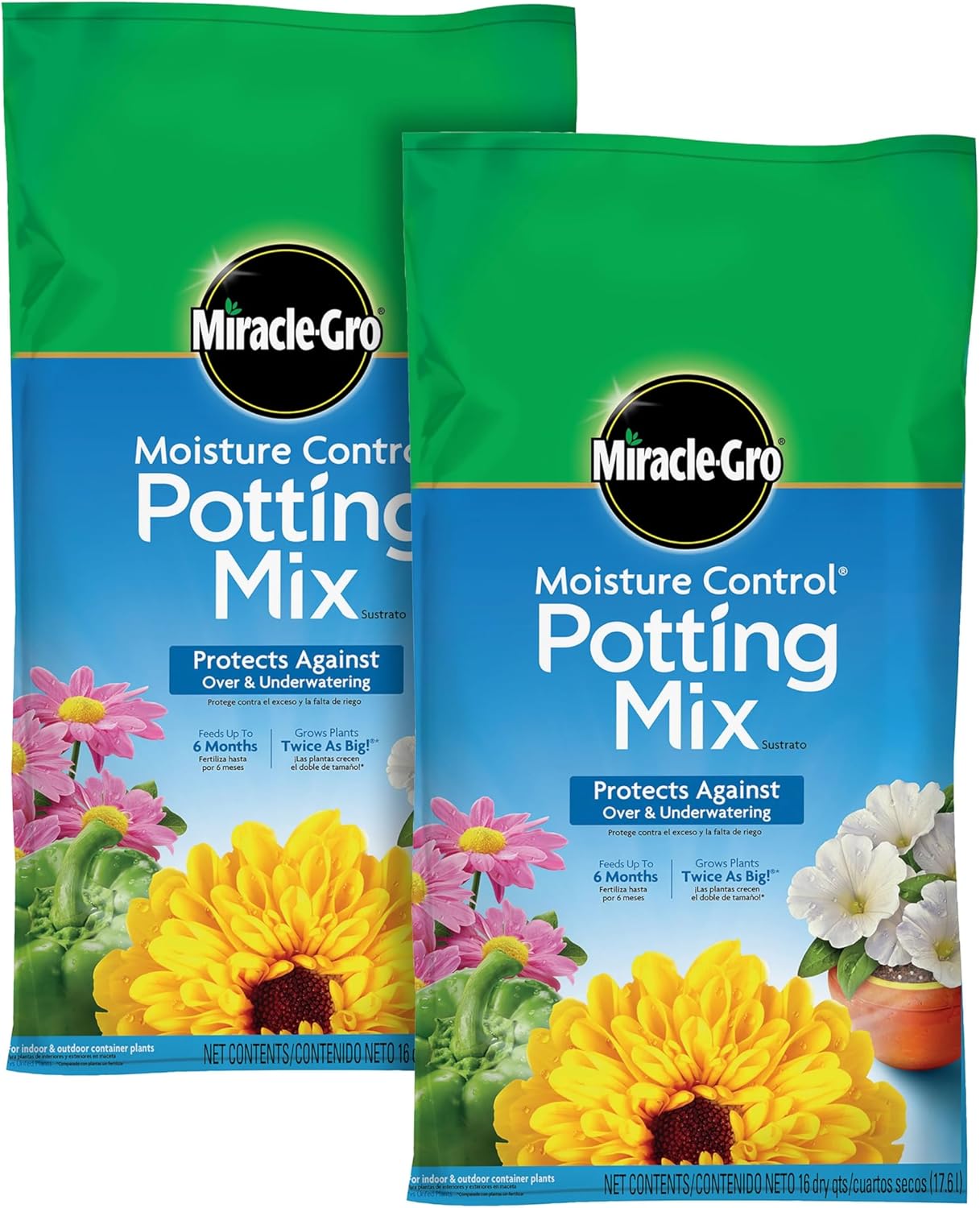
Miracle-Gro Moisture Control Potting Mix, 16 qt. (2-Pack)
| Number of Packs | 2 |
|---|---|
| Item Highlight | Plant Soil For Container Plants, Protects against Over- and Under-Watering |
| Feeds Plants | Up to 6 months |
| Style Name | 16 qt. |
Miracle-Gro Moisture Control Potting Mix is designed specifically for containers and hanging baskets where inconsistent watering is common. The mix uses an AquaCoir formula with peat, coir, and a wetting agent so it soaks up to 33% more water than basic potting soils and helps protect plants from both over- and under-watering. It also includes slow-release nutrition that feeds potted plants for up to six months, reducing how often you need to fertilize. In practice you fill pots with the mix, loosen and plant the root ball, water through until excess drains, and allow the surface to dry between waterings. The texture is airy for good root aeration and works well for flowers, vegetables, annuals, perennials, and shrubs grown in containers. Limitations: it is formulated for container use rather than in-ground beds, and like any pre-mixed media it will compact over time so annual repotting or topping up is recommended to maintain drainage and nutrient levels.
Best for: Gardeners who want a low-maintenance, reliable potting mix for outdoor containers and want to reduce watering and feeding frequency while supporting healthy root growth.
Less Ideal for: Those planting directly in garden beds or building custom soil blends for advanced raised-bed vegetable plots should choose a product formulated for in-ground use or amend native soil instead.
- Specifically formulated to reduce over- and under-watering by absorbing more water than basic potting soils
- Feeds container plants for up to six months with built-in slow-release nutrition
- Airy texture that promotes root aeration and works well in pots and hanging baskets
- Suitable for a wide range of container plants including flowers, vegetables, annuals, perennials, and shrubs
- Designed for container use only and not intended as a replacement for in-ground garden soil
- Can compact over time so containers typically need annual repotting or refresh
Verdict: A practical, low-maintenance potting mix that keeps container plants evenly watered and fed for months, making it an easy choice for most container gardeners.
FoxFarm Ocean Forest Potting Soil, 12 qt

| Item Form | Granules |
|---|---|
| Specific Uses For Product | Dry Fertilizer |
| Coverage | 4.8 sq ft |
| Mixing Ratio | 1:1 |
FoxFarm Ocean Forest is a pre-mixed potting soil formulated to give container plants a strong start without immediate feeding. It combines aged forest products, sandy loam and sphagnum peat moss to create a light, aerated texture that promotes drainage and root aeration while retaining moisture. The mix is amended with fish meal, crab meal and earthworm castings so seedlings and plant starts get an initial nutrient boost; the bag notes no additional fertilizer is needed for the first 30 days. Typical use is direct potting for houseplants, patio containers or top-dressing beds and then watering thoroughly. Practical benefits include easier transplanting because of the loose texture and reduced need for early fertilization. Limitations to consider are that the product is a finished potting mix rather than a long-term slow-release fertilizer, so regular feeding after the initial month is still required for heavy feeders, and the bagged volume covers only a few small pots at a time, so larger containers or many plants will need multiple bags or blending with bulk soil.
Best for: Gardeners who want a high-performing, out-of-the-bag potting mix to get container plants and seedlings off to a vigorous start and who prioritize quick results over blending their own media.
Less Ideal for: People looking to fill large raised beds or who prefer to customize every component of their soil mix; commercial-scale growers will likely need bulk alternatives.
- Ready-to-use, pre-amended mix so no immediate fertilizer is necessary
- Light, aerated texture improves drainage and root development
- Contains natural amendments (fish meal, crab meal, earthworm castings) for early growth support
- Suitable for seedlings, houseplants and container gardens without additional preparation
- 12 quart bag provides limited coverage so multiple bags are needed for larger projects
- Not a long-term fertilizer solution; plants will need feeding after the first month
Verdict: Choose this potting soil when you want a nutrient-rich, ready-to-use mix that promotes fast, healthy starts for container-grown plants.
Miracle-Gro Potting Mix, 16 qt.

| Unit Count | 592 Ounce |
|---|---|
| Volume | 16 quarts |
| Item Highlight | Feeds up to 6 Months |
| Ingredients | Peat, processed forest products, perlite, fertilizer, wetting agent |
Miracle-Gro Potting Mix is a general-purpose container soil designed to give potted flowers, vegetables and shrubs a good start without extra amendments. It is used straight from the bag: fill a pot with drainage, place the plant, top up with mix and water. The formula combines peat/coir/processed wood products with perlite for drainage plus a slow-release fertilizer intended to feed plants for up to six months. In practice that means less frequent feeding early in the season and a lighter, well-draining medium that helps roots establish and reduces compaction compared with garden soil. The bag size fills roughly a 12-inch container, which is handy for repotting one plant at a time. Limitations to expect are modest nutrient percentages compared with concentrated fertilizers and the single 16 qt. bag is small for larger projects, so this works best for individual pots or touch-up repots rather than filling many containers at once.
Best for: Buyers who want a convenient, low-effort soil to repot or refresh individual container plants and reduce early-season feeding chores.
Less Ideal for: Not a good choice for landscapers or gardeners who need to fill many large planters at once or who want a custom-blend high-performance mix for specialty plants.
- Ready-to-use mix formulated specifically for container gardening
- Includes slow-release fertilizer that feeds up to six months
- Designed for good drainage and reduced soil compaction compared with garden soil
- One 16 qt. bag is sized to fill a typical 12-inch pot for easy repotting
- Nutrient concentrations are modest so additional fertilizing may be needed later in the season
- 16 qt. bag is small if you need to fill multiple or large containers
Verdict: A convenient, ready-to-use potting mix that simplifies repotting and supplies slow-release nutrients to keep individual container plants healthy for months.
Doter Organic Potting Soil Mix for Small Indoor & Outdoor Containers, 1 qt

| Brand | Doter |
|---|---|
| Unit Count | 37 Ounce |
| Volume | 1 quarts |
This 1-quart Doter organic potting soil is a ready-to-use mix aimed at small containers, seed starts, and herb pots. It blends peat moss, coconut coir, perlite, and worm castings to provide a balance of moisture retention, aeration, and drainage that helps roots establish quickly. Typical use is filling small pots or topping up planters for herbs, houseplants, or vegetables in containers; the coarse perlite in the mix speeds drainage and reduces risk of waterlogging while the organic amendments support steady growth. The small bag size is convenient for trialing on a few pots or for repotting a single plant, and the mix is premixed so you do not need to measure or amend it before use. The main limitations are the very small volume for larger projects and the lack of detailed nutrient analysis or guaranteed fertilization schedule, so you may need to supplement for long-term potted plants or multiple containers. For budget-focused gardeners who need a simple, natural potting medium for a few containers, it is a practical choice.
Best for: Buyers who want an inexpensive, ready-mixed organic potting medium for a few herbs or small container plants and prefer not to blend amendments themselves.
Less Ideal for: Gardeners planning to pot many containers, fill large planters, or who need a soil with specified fertilizer content for long-term feeding.
- Ready-to-use organic blend with peat moss, coconut coir, perlite, and worm castings
- Good drainage and aeration thanks to chunky perlite, reducing risk of root rot
- Small 1 qt size is convenient for single pots, trials, or topping up containers
- Formulation geared toward herbs and small container vegetables for quick establishment
- Only 1 quart volume makes it impractical for repotting multiple plants or large containers
- No detailed N-P-K or guaranteed fertilizer content provided for long-term feeding
Verdict: A compact, budget-friendly organic potting mix that delivers good drainage and is ideal for trying out or maintaining a few herb and small container plants.
FoxFarm Happy Frog Potting Soil, 2 cu ft (Container Garden) with 2 Plant Tags

| Brand Name | FoxFarm |
|---|---|
| Item Highlight | Ready-to-Use Amended Container Blend with Soil Microbes, Earthworm Castings, Bat Guano, and Aged Forest Products |
| Volume | 2 cubic feet |
| Style Name | Container Garden |
FoxFarm Happy Frog Potting Soil is a premixed container blend formulated to give potted plants a nutrient-rich, biologically active medium right out of the bag. It is typically used to fill planters, window boxes, and larger containers for ornamentals, shrubs, and small fruit trees where plants cannot access garden soil. Notable features include added soil microbes and mycorrhizal fungi, plus organic amendments such as earthworm castings, bat guano, and aged forest products that support root growth and nutrient availability. In practice this means easier transplanting, improved early vigor, and better flowering or fruiting compared with plain bagged soil. The product arrives pH adjusted for uptake and comes with two plant tags for simple labeling. The main limitations are that it is a container-specific mix so gardeners who need a universal garden topsoil or bulk landscaping material will need a different product, and heavier containers may require occasional amendment or fertilizer top-ups over time as nutrients are used. For reliable, low-hassle container starts, this delivers consistent, plant-friendly results.
Best for: Home gardeners who want a dependable, ready-made potting mix that promotes healthy root growth and consistent results in planters and container beds.
Less Ideal for: Gardeners needing large volumes of general-purpose topsoil or those building in-ground beds who should choose products formulated for landscape use.
- Ready-to-use blend tailored for containers, no mixing required
- Contains beneficial microbes and mycorrhizal fungi that support root development
- Amended with organic inputs like earthworm castings and bat guano for natural nutrients
- pH adjusted to improve nutrient uptake for a wide range of container plants
- Formulated specifically for containers so it is not intended as bulk garden topsoil
- Nutrients will be depleted over time and may require periodic fertilization for long-term plantings
Verdict: Choose this potting soil when you want a reliable, pre-amended container mix that jump-starts root health and reduces setup work for potted plants.
Miracle-Gro Potting Mix, 16 qt. (2-Pack)

| Number of Packs | 2 |
|---|---|
| Item Highlight | Feeds up to 6 Months |
| Volume | 16 quarts |
| Ingredients | Sphagnum Peat Moss, Peat, Perlite, Compost, Fertilizer |
Miracle-Gro Potting Mix is a ready-made container soil intended for outdoor pots, hanging baskets, and planters. It combines peat-based material, perlite, compost, and built-in fertilizer so you can fill a pot, plant, and water without adding extra amendments for roughly one growing season. Typical use is straightforward: choose a drained container, fill about a third with mix, set the root ball, top off, and water until drainage runs clear. The product is formulated to drain quickly and help roots breathe, which reduces risk of compaction and helps prevent root rot in containers. Built-in feed that lasts up to six months means less frequent fertilizing for annuals, vegetables, herbs, and ornamental shrubs in pots. Limitations to note are that this is a potting mix for containers rather than garden beds and it will need replenishing or repotting after the feeding period as nutrients are depleted; heavy feeders may require additional fertilizer sooner. Also, like most peat-based mixes it can dry out faster in hot, exposed locations, so plan watering accordingly.
Best for: Gardeners who want a convenient, reliable potting mix for outdoor containers and prefer a low-maintenance option that reduces early-season feeding and soil prep.
Less Ideal for: People looking to amend in-ground beds or who want a long-term soil solution for large shrubs and trees in the ground should choose a product formulated for in-ground use.
- Formulated for containers with fast drainage to reduce compaction and root rot risk
- Includes fertilizer that feeds plants for up to six months, reducing early-season feeding chores
- Versatile for many outdoor container plants including vegetables, herbs, annuals and perennials
- Designed for container use only and not intended as in-ground garden soil
- Nutrient boost is time-limited so soil needs refreshing or added fertilizer after the feeding period
Verdict: A dependable, ready-to-use potting mix that gives outdoor container plants an easy six months of feed and good drainage, perfect for low-effort container gardening.
Back to the Roots Organic Expanding Coco Coir Potting Soil Brick

| Item Highlight | 10 lb compressed coco coir brick; peat-free; OMRI Listed |
|---|---|
| Item Type Name | Coconut Coir |
| Volume | 2 cubic feet |
This expanding coco coir brick is a compact, peat-free potting medium aimed at container gardeners who want an easy, shelf-stable soil base. Add water to the 10 lb compressed block and it fluffs into roughly 2 cubic feet of loose, pH-balanced coir that can be used alone for pots and seed starting or mixed with existing soil as an amendment. It improves aeration and water retention compared with heavy bagged soils, so roots get oxygen while containers retain moisture longer. The product is OMRI listed and labeled organic, which matters if you prefer certified inputs. Because it is a single-ingredient coconut coir, it lacks added fertilizer or specific nutrient blends so you will need to feed containers separately for sustained growth. The brick format is easy to store and transport, but requires an initial mixing step and some measuring to hit the right texture for different plants. For cautious gardeners wanting a clean, consistent base for herbs, vegetables, or flowers in containers, this is a reliable, low-mess option.
Best for: Gardeners who prefer a clean, consistent, peat-free base for container vegetables, herbs, and seed starting and who value certified organic inputs and easy storage.
Less Ideal for: Buyers who want an all-in-one potting mix with built-in fertilizer or people who prefer ready-to-use bagged soils without any prep work.
- Expands from a compact 10 lb compressed brick to about 2 cubic feet, saving storage space
- Peat-free, OMRI listed organic coco coir suitable for organic container growing
- Light, fluffy texture improves aeration and water retention in pots and seed trays
- Versatile use: can be used alone for seed starting or mixed as an amendment
- Contains only coconut coir with no added nutrients, so regular fertilizing is required
- Needs soaking and mixing before use which adds an extra prep step
Verdict: A tidy, OMRI-listed coco coir brick that expands into a lightweight, peat-free potting medium ideal for reliable container gardening when you plan to add your own feeding regimen.
Choosing the Right Soil for Container Gardening: Key Factors to Consider
Drainage and Percolation
Good drainage prevents water from pooling at the bottom of a pot and causing root rot. In container gardening you want a mix that sheds excess water quickly while still holding enough moisture in the root zone. That balance is often achieved with coarse components such as perlite, pumice, or coarse sand blended with finer organic matter.
Drainage also affects how frequently you need to water. Fast-draining mixes run drier and require more frequent watering but reduce disease risk. Slow-draining mixes hold moisture longer but can suffocate roots if the container lacks adequate drainage holes. Match drainage characteristics to plant type and container size.
Water Retention Balance
Water retention describes how much plant-available water a soil holds after excess water has drained away. In containers the total water-holding capacity is limited by pot volume, so a mix that retains some moisture reduces daily watering demands without staying soggy.
Amendments like coconut coir, compost, and peat alternatives increase moisture-holding capacity while still allowing airflow. Consider your climate and how often you can water: hot, windy spots benefit from mixes with higher retention, while shaded or cool areas can use faster-draining blends.
Nutrient Content and Fertility
Containers have no access to surrounding soil, so the potting mix must supply or retain nutrients for the plant. Pre-fertilized mixes or those containing well-aged compost and slow-release fertilizers provide a head start and reduce early feeding chores.
Contrast that with inert mixes that rely entirely on fed nutrients; these offer control but require a feeding schedule. Think about what you will grow and how much maintenance you want to do when choosing a nutrient approach.
Structure, Compaction, and Root Space
Soil structure governs root penetration, air space, and long-term performance. A well-structured container soil contains a mix of particle sizes so roots can explore without the medium collapsing. Fine-only mixes compact faster, especially when they dry and rewet repeatedly, which reduces oxygen and stresses roots.
Look for mixes formulated to resist compaction or consider adding chunky amendments like pine bark fines or coarse perlite to maintain porosity over the season.
pH and Suitability for Plant Types
Soil pH affects nutrient availability. Most common container plants prefer a near-neutral to slightly acidic range, but acid-loving plants need a different balance. Pre-mixed soils sometimes state pH ranges or are labeled for broad plant categories, which helps match mixes to acid-loving annuals, herbs, or vegetables.
If you grow a mix of species in containers, choose a general-purpose neutral mix and adjust fertilization, or use separate mixes tailored to plant groups to avoid pH-based nutrient issues.
Weight and Handling
Potting soils vary widely in weight. Heavier mixes can make moving containers difficult and place extra load on balconies or rails. Lightweight ingredients such as perlite, pumice, or lightweight expanded aggregates reduce the total weight without sacrificing drainage.
If you plan to move pots frequently or have load restrictions, prioritize lightweight mixes. For permanent, ground-level planters weight is less of a concern and denser mixes can help stabilize tall plants.
Matching Mix to Container Size
Small pots dry out faster and have a limited root zone, so pick a mix that retains a bit more moisture without becoming waterlogged. Incorporate moisture-holding components and avoid very coarse-only blends in small diameters.
Large planters have greater volume and buffer swings in moisture and temperature. They tolerate faster-draining mixes because the larger root mass can access more stored water. For large containers, focus on structure and long-term nutrient supply.
- Small pots: prioritize water retention and slow-release feed
- Medium pots: aim for balanced drainage and aeration
- Large planters: prioritize structure and long-term fertility
Adjusting Soil for Specific Plants
Annual flowers and most edibles prefer a fertile, well-draining mix with moderate moisture retention. Add compost or a slow-release fertilizer to boost feeding in vegetable containers.
Succulents and cacti need a much faster-draining soil with more mineral grit and less organic matter. Avoid mixes high in compost for these plants.
Acid-loving plants do best in mixes formulated with peat alternatives or acidifying components to maintain the lower pH they prefer.
- Vegetables: higher fertility and good moisture balance
- Flowers: balanced fertility and consistent moisture
- Succulents: gritty, fast-draining mixes
How to Refresh Container Soil
Top up old containers each season by removing the top few inches and adding fresh mix plus any needed fertilizer. For deep refreshes, repot and replace most of the old soil, preserving any healthy root ball.
Refresh approaches depend on plant type and container size. Small annual pots often get a full refresh annually, while large established shrubs in containers can be refreshed less frequently by replacing a portion of the soil and adding slow-release nutrients.
- Seasonal top-up: remove 2 to 3 inches and add fresh mix
- Full repot: replace most soil every 1 to 3 years for many containers
- Rejuvenate soil: add compost and slow-release feed during growing season
Storage and Handling of Bagged Soil
Store unopened bags in a dry place away from direct sunlight to prevent nutrient breakdown and decomposition. Once opened, keep bags sealed or transfer mix to airtight containers to retain moisture and prevent pests.
When moving heavy bags, use tools or ask for help to avoid strain. For small projects, split large bags into smaller containers to make handling easier.
- Keep mixes dry and sealed to preserve structure
- Avoid freezing and prolonged wet storage which can harm organic components
- Label split containers with the mix type and purchase date
Sustainable and Recycled Ingredients
Sustainable components such as recycled coconut coir, aged compost, and locally sourced bark reduce peat use and the environmental footprint of mixes. These materials can provide excellent moisture-holding and structure when processed appropriately.
When choosing eco-friendly mixes, check for clarity about ingredient sourcing and any certification claims. Sustainable does not automatically mean best for every container situation, so balance environmental goals with plant needs.
- Coco coir: peat alternative with good moisture retention
- Aged compost: boosts nutrients and microbial life
- Bark and wood-based components: add long-lasting structure
How We Chose the Best Soil for Container Gardening
We narrowed options by focusing on the attributes that matter most in confined containers. Primary evaluation criteria were drainage behavior, water retention balance, and nutrient profile because these determine how often you must water and feed potted plants. Structure and aeration were judged to assess root space and compaction risk, while organic content and slow-release nutrient sources were included to gauge fertility and feed longevity. Ingredient transparency and absence of excessive fillers were considered so gardeners know what they are buying. We also looked at suitability for common container uses such as annual flowers, vegetables, and container shrubs. Products that are essentially topsoil, unamended garden loam, or heavy clay were excluded because they tend to compact and retain too much water in pots. Very specialized mixes meant only for a narrow crop were also excluded unless they performed well across multiple container uses. The goal was to recommend versatile, pot-ready soils that balance drainage, moisture retention, and nutrient supply for typical container gardening situations.
FAQ
Can I use garden soil in pots?
Garden soil is usually too dense for containers and tends to compact, reducing oxygen to roots. It can work if heavily amended with coarse materials, but most gardeners are better off using purpose-formulated container mixes.
How often should I water containers with potting mix?
Watering frequency depends on pot size, plant type, and mix. Small pots often need daily water in hot weather, while large planters can be watered every few days. Choose a mix that matches how often you can realistically water.
Do I need to fertilize potting soil?
Many potting mixes include starter nutrients or slow-release fertilizer, but containers will still need regular feeding during the growing season. Monitor plant growth and add liquid feed or slow-release granules as needed.
How long does potting soil last in a container?
Soil structure and nutrient content decline over time. Many gardeners refresh container soil annually or replace most of it every 1 to 3 years depending on plant type and how intensively the container is used.
Is peat-free soil okay for containers?
Peat-free mixes, often based on coconut coir or composted bark, perform well in containers when formulated for water retention and structure. Check the moisture characteristics to ensure they match your plants and watering routine.
Final Verdict
Choose a container soil by balancing drainage, moisture retention, and nutrient supply for the plants and pot sizes you have. Faster-draining gritty mixes suit succulents and large planters, while mixes with more organic matter work better in small pots and for food crops. Consider weight, pH, and sustainability goals when selecting a mix. Prioritize the attributes you cannot change after planting: drainage and structure are hardest to fix in tight containers, so make them your first filter. With the right mix, containers will require less corrective care and reward you with healthier plants.
