

Note: This article contains affiliate links. If you click on these links and make a purchase, I may earn a small commission at no extra cost to you. This helps support my research and content. Read my full affiliate disclosure here.
If you spend time in the yard, on trails, or caring for a property, picking the right natural tick repellent matters for both safety and comfort. Natural repellents behave differently from synthetic insecticides: some use essential oils for short bursts of protection while others rely on botanical compounds formulated for longer wear. This guide summarizes seven top-rated natural tick repellent options shortlisted for typical outdoor situations and personal use. We evaluated each option for how well it protects skin and clothing, how long it lasts in real outdoor conditions, and how easy it is to apply and reapply. Read on to compare product types and find the best fit for hiking, gardening, or daily yard work.
Top Picks at a Glance
| Best Overall The best all-around choice for most situations | Murphy's Naturals Tick Repellent Spray, Plant-Based, 4 fl oz (2-pack) |  |
| Best Quality Built to a higher standard if you want something more solid | YAYA Organics Tick Ban All-Natural Extra Strength Tick Repellent, 16 oz Spray |  |
| Best Value The sweet spot between price and what you get | Murphy's Naturals Lemon Eucalyptus Insect Repellent Spray, 2 fl oz (3-pack) |  |
| Best Budget The cheapest option that still gets the job done reliably | Grandpa Gus's Natural Tick and Mosquito Repellent Spray, DEET-Free, 4 oz |  |
| Highest Rated A top-rated pick with lots of positive feedback | Badger Natural Tick Repellent Spray, DEET-Free, Essential Oils, 4 fl oz |  |
| Most Popular A crowd favorite that many people choose with confidence | Murphy's Naturals Lemon Eucalyptus Insect Repellent Spray (4 fl oz, 2-pack) |  |
| Best Seller A high-volume bestseller chosen again and again | Vet's Best Flea & Tick Home Spray for Dogs, Plant-Based, 14 oz |  |
Murphy's Naturals Tick Repellent Spray, Plant-Based, 4 fl oz (2-pack)

| Active ingredient | Oil of Lemon Eucalyptus (30%) |
|---|---|
| Other ingredients | Water and Corn Ethanol (70%) |
| Use | On skin and clothing |
| Protection time | Up to 4 hours for deer ticks; up to 8 hours against some tick species |
Murphy's Naturals Tick Repellent is a DEET-free spray that uses oil of lemon eucalyptus as its active ingredient to repel ticks and other insects during outdoor activities. It is designed for direct use on exposed skin and on clothing or gear, making it convenient for hiking, camping, yard work, and family outings. The label notes protection against deer ticks for up to four hours and longer protection against lone star and brown ticks in some cases. The formula is mostly water and ethanol with 30% oil of lemon eucalyptus, so it has a light lemon-eucalyptus scent that fades as it dries and is described as fabric- and gear-friendly. Directions recommend liberal application and reapplication every four hours. Limitations to expect are shorter protection windows compared with high-concentration synthetic repellents and the need to reapply during long trips or heavy sweating. Safety directions advise external use only and to avoid eyes and children’s reach.
Best for: Buyers who want a natural, DEET-free repellent for family outdoor use and who prioritize a plant-based formula that can be sprayed on both skin and clothing.
Less Ideal for: People who need all-day, single-application protection during extended high-risk exposure or heavy sweating should consider longer-lasting synthetic alternatives.
- Plant-based active ingredient (oil of lemon eucalyptus) effective against common tick species
- Suitable for use on skin and clothing so it protects both body and gear
- Light, natural lemon-eucalyptus scent that dissipates as it dries
- Clear reapplication guidance for practical outdoor use
- Shorter listed protection time than some synthetic DEET products, requiring reapplication for extended exposure
- Contains ethanol and should be kept away from eyes and children
Verdict: A practical DEET-free option that gives effective short-term protection for families who want a plant-based spray for skin and gear.
YAYA Organics Tick Ban All-Natural Extra Strength Tick Repellent, 16 oz Spray
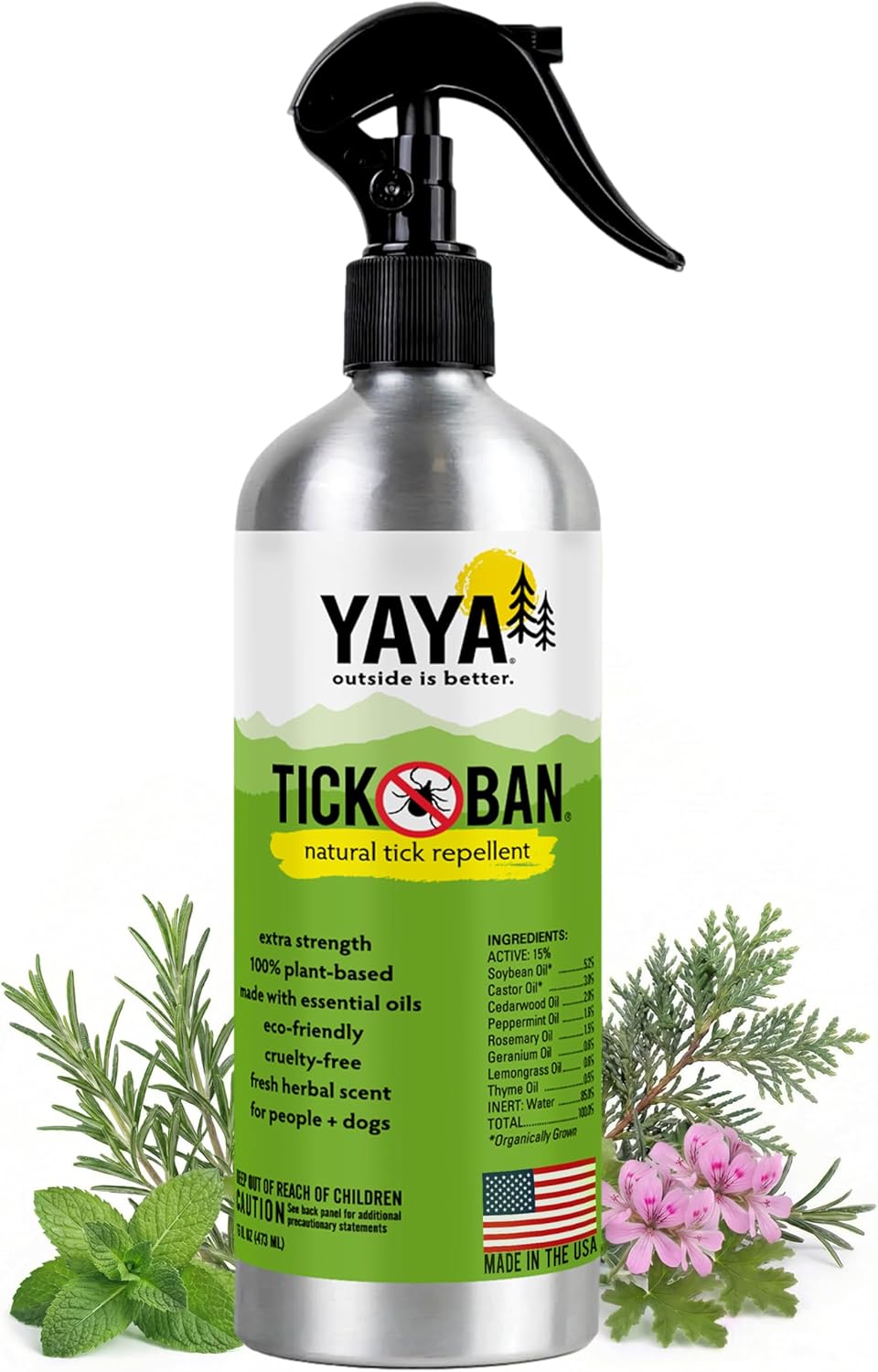
| Active ingredients | Soybean oil, castor oil, cedarwood, peppermint, rosemary, geranium, lemongrass, thyme |
|---|---|
| Bottle size | 16 oz |
| Formulation | Alcohol-free, plant-based |
| Intended use | People, dogs, horses, clothing and gear |
YAYA Organics Tick Ban is an extra-strength, DEET-free tick repellent that uses a blend of plant oils to repel ticks and other biting insects. It is typically sprayed on clothing, gear, or directly on skin and is marketed for family use, including adults, children, dogs, and horses. The formula lists soybean and castor oils as primary active ingredients plus cedarwood, peppermint, rosemary, geranium, lemongrass, and thyme essential oils, which together create a strong herbal aroma and insect-repelling effect. Practical benefits include a large 16 ounce aluminum spray bottle that is reusable and recyclable, an alcohol-free base that is gentle on fabrics and skin, and broad applicability for hiking, camping, yard work, and other outdoor recreation. Limitations to note are that effectiveness can vary by environment and user, the scent is noticeable and may not suit everyone, and plant-based repellents generally require more frequent reapplication than long-lasting synthetic options.
Best for: Buyers who prioritize natural, non-chemical protection and want a family-safe repellent for regular outdoor use across activities like hiking, camping, and yard work.
Less Ideal for: Users seeking a single-application, long-duration synthetic repellent or those who need an entirely scent-free solution.
- DEET-free, plant-based active ingredients suitable for family use
- Broadly usable on skin, clothing, gear, and animals as listed by the brand
- Large 16 oz aluminum spray bottle designed for reuse and recycling
- Alcohol-free formula that is gentler on fabrics and sensitive skin
- Natural formula may require more frequent reapplication than synthetic repellents
- Strong herbal scent may be off-putting to some users
Verdict: Choose this if you want a strong, family-safe, plant-based tick repellent for frequent outdoor use without DEET.
Murphy's Naturals Lemon Eucalyptus Insect Repellent Spray, 2 fl oz (3-pack)

| Active ingredient | Oil of Lemon Eucalyptus (30%) |
|---|---|
| Protection duration (mosquitoes) | Up to 6 hours |
| Protection duration (ticks) | Up to 4 hours |
This Murphy's Naturals spray uses 30% oil of lemon eucalyptus as its active ingredient to provide up to about six hours of mosquito protection and roughly four hours against ticks. It is applied as a light mist to exposed skin, clothing, or gear and is formulated to be non-greasy with a fresh lemon scent that absorbs quickly. The small 2 fl oz bottles in this pack make it convenient to carry for day hikes, family outings, or short camping trips, and the brand notes the formula will not damage fabrics or plastics the way some synthetic repellents can. Practical advantages include plant-based active ingredients and an easy, familiar spray format that works on both people and equipment. Important limitations are the shorter duration against ticks compared with some synthetic options and the need to reapply for extended outdoor exposure. Follow label directions for safe use on children and to avoid spraying the face directly.
Best for: Buyers who prioritize natural, DEET-free protection and want a portable spray they can use for short hikes, backyard time, and family outdoor activities.
Less Ideal for: People who need long-duration tick protection for multi-day backcountry trips or who prefer pharmaceutical-grade repellents with longer single-application effectiveness.
- Plant-based active ingredient (30% oil of lemon eucalyptus) that is DEET-free
- Lightweight, non-greasy formula with a mild lemon scent that absorbs quickly
- Small 2 fl oz bottles are portable and convenient for travel or day trips
- Safe for use on skin and gear when directions are followed and formulated not to damage fabrics or plastics
- Provides shorter tick protection window (about 4 hours) than some synthetic repellents
- Must be reapplied for longer outings or heavy exposure to ticks and mosquitoes
Verdict: A portable, DEET-free spray that delivers reliable short-term mosquito and tick protection for everyday outdoor use.
Grandpa Gus's Natural Tick and Mosquito Repellent Spray, DEET-Free, 4 oz

| Active ingredients | Geraniol, lemongrass, peppermint oils |
|---|---|
| Protection duration | Ticks up to 8 hours, mosquitoes up to 6 hours |
| Bottle size | 4 oz |
| Directions | Spray 4–6 inches from skin, rub in, reapply every 8 hours |
This 4 oz spray from Grandpa Gus's uses plant-derived actives like geraniol, lemongrass, and peppermint to repel ticks up to 8 hours and mosquitoes up to 6 hours without DEET. It comes in a small, easy-to-carry bottle that you shake and spray 4 to 6 inches from skin or clothing, then rub in; the directions also recommend treating pant legs and sleeves because ticks climb. The formula is non-greasy, dermatologist-tested, and marketed as safe for kids when applied by an adult, making it convenient for short hikes, yard work, and family outings. Practical benefits include a natural scent profile and minimal fabric staining. Limitations are the relatively small single-bottle size for frequent or extended use and that plant-based repellents generally provide shorter duration and lower knockdown power than DEET or picaridin products, so more frequent reapplication may be necessary in high-tick areas.
Best for: Buyers looking for a family-friendly, plant-based repellent for day hikes, yard work, and casual outdoor activities who prioritize natural ingredients over the maximum possible protection.
Less Ideal for: People planning multi-day backcountry trips, heavy exposure in high-tick regions, or those who need the longest-lasting, highest-efficacy chemical repellents.
- Uses plant-based active ingredients (geraniol, lemongrass, peppermint) rather than DEET
- Advertised protection up to 8 hours against ticks which reduces reapplication for typical day hikes
- Non-greasy, dermatologist-tested formula suitable for family use when applied by an adult
- Spray format is simple to apply to exposed skin and clothing for targeted coverage
- Small 4 oz bottle may require carrying spares for longer trips or frequent use
- Plant-based repellents typically do not match the longer-lasting insecticidal power of DEET or picaridin
Verdict: Choose this spray if you want a compact, DEET-free repellent that provides several hours of tick protection with a family-friendly, plant-based formula.
Badger Natural Tick Repellent Spray, DEET-Free, Essential Oils, 4 fl oz

| Net volume | 4 fl oz |
|---|---|
| Active ingredients | Geraniol, Cinnamon oil, Thyme oil |
| Claims | DEET-free, vegan, cruelty free |
| Tested duration | 6+ hours |
This Badger tick repellent is a DEET-free, plant-based spray designed to protect people during outdoor activities like hiking, camping, and backyard play. It uses organic geraniol, cinnamon, and thyme oils in a water-based formula and is supplied in a lightweight recyclable aluminum bottle with a one-handed pump spray for easy application to skin, clothing, shoes, and gear. Lab testing indicates at least six hours of effectiveness, and the manufacturer recommends reapplying after heavy sweating or swimming. The formula is marketed for sensitive skin and for family use, and it avoids synthetic fragrances and harsh chemicals. Practical strengths are its travel-friendly bottle, clear application method, and a gentle scent that is less irritating than many synthetic repellents. Limitations are that its protection is focused on ticks rather than a broad spectrum of biting insects, and essential-oil repellents generally require more frequent reapplication than higher-concentration synthetic options in very high-risk areas.
Best for: Buyers who prioritize a natural, family-friendly repellent that has lab-backed duration and is easy to use on skin and clothing for routine outdoor activities.
Less Ideal for: People who need broad-spectrum insect protection in very high-risk areas or those who require the longest-lasting synthetic repellents for heavy exposure.
- Plant-based formula with geraniol, cinnamon, and thyme oils that is DEET-free
- Lab tested for at least six hours of tick repellency
- Lightweight recyclable aluminum bottle with one-handed pump for easy application
- Gentle formula suitable for sensitive skin and family use
- Targets ticks specifically and may not provide strong protection against mosquitoes or other biting insects
- Essential-oil based repellents can need more frequent reapplication in heavy sweat or water exposure
Verdict: Choose this spray if you want a lab-tested, natural DEET-free tick repellent that is gentle enough for family use and easy to carry on outdoor trips.
Murphy's Naturals Lemon Eucalyptus Insect Repellent Spray (4 fl oz, 2-pack)

| Active ingredient | Oil of Lemon Eucalyptus (30%) |
|---|---|
| Protection duration (mosquitoes) | Up to 6 hours |
| Protection duration (ticks) | Up to 4 hours |
| Formulation | Spray, non-greasy |
This two-pack of Murphy’s Naturals spray uses a 30% oil of lemon eucalyptus formulation to repel mosquitoes and ticks without DEET or picaridin. You apply it as a light mist to exposed skin, clothing, or gear and reapply according to activity and label directions. The formula is non-greasy, has a fresh lemon scent, and is safe to use on camping and outdoor equipment because it does not damage plastics or fabrics. Practical benefits include family-friendly labeling, EPA registration of the active ingredient, and reasonably long protection windows for a plant-based repellent. Limitations to note are that protection on ticks is shorter than for mosquitoes so more frequent reapplication may be needed in high-risk tick areas, and the product must be applied correctly to exposed skin and avoided near eyes or broken skin. Users sensitive to essential oils should test a small skin area first.
Best for: Buyers who prioritize natural, EPA-registered alternatives to synthetic repellents and want a family-friendly spray for everyday outdoor activities like hiking, camping, and backyard use.
Less Ideal for: People who need the longest-possible continuous protection in heavy tick or mosquito zones or who require an odorless prescription-strength repellent should consider stronger alternatives.
- Uses 30% oil of lemon eucalyptus, an EPA-registered plant-based active ingredient
- DEET- and picaridin-free formula that is less likely to damage gear or plastics
- Non-greasy, light lemon scent that wears comfortably for outdoor use
- Family-friendly directions suitable for kids and adults when used as directed
- Tick protection duration is shorter than mosquito protection and may require more frequent reapplication
Verdict: A reliable plant-based spray for buyers who want EPA-registered, DEET-free protection for family outdoor use.
Vet's Best Flea & Tick Home Spray for Dogs, Plant-Based, 14 oz

| Unit Count | 14 Fluid Ounces |
|---|---|
| Item Form | Spray |
| Scent Name | Peppermint |
| Target Species | Dog |
| Active Ingredients | eugenol, peppermint oil |
Vet's Best Flea & Tick Home Spray is a plant-powered spray designed for spot treatment of pets and their environments. You use it as a light mist on dog bedding, carpets, upholstery, patio furniture and directly on dogs 12 weeks and older to kill fleas, flea eggs, ticks and mosquitoes on contact while leaving a fresh peppermint scent. The formula relies on certified natural oils such as peppermint oil and eugenol from clove rather than synthetic insecticides, which makes it appealing for households seeking gentler pest control. Practical benefits include multi-surface use, a non-staining claim, and straightforward directions for repeat application where infestations persist. Important limitations are that it is an external, topical/environmental treatment rather than a systemic monthly preventer, and natural-oil formulas can require more frequent application to maintain protection compared with prescription products. Follow label age and species guidance and spray in well ventilated areas to avoid respiratory irritation.
Best for: Buyers who prefer low-toxicity, vet-formulated pest control and want a natural, multi-surface product to treat dogs and their living spaces safely and simply.
Less Ideal for: Owners seeking a single long-duration flea/tick prevention method or veterinary prescription-level control should consider systemic monthly products instead.
- Plant-based formula using peppermint oil and eugenol that kills and repels multiple pests on contact
- Safe for use on dogs 12 weeks and older and on home surfaces like bedding and upholstery when used as directed
- Non-staining formula with a light peppermint scent suitable for indoor and outdoor use
- Versatile for treating both pets and areas around the home to help interrupt the flea life cycle
- Not a systemic or long-lasting prescription-strength preventative so protection may require frequent reapplication
- Label limits species and age; not validated for animals other than those listed
Verdict: A gentler, plant-based spray that kills and repels fleas and ticks on pets and in the home, ideal for risk-averse owners wanting a natural spot-treatment option.
Choosing the Right Natural Tick Repellent: Key Factors to Consider
Active Ingredient and Mode of Action
Knowing what the active botanical is and how it repels ticks matters because different compounds work in different ways and last for different lengths of time. Some natural repellents use essential oils such as those derived from lemon eucalyptus or cedar that interfere with tick host-detection. Others rely on plant-derived compounds formulated to cling longer to fabric or skin.
Understanding the mode of action helps set realistic expectations: oil-based botanicals often provide quick onset but shorter duration, while formulated actives can extend protection. Check ingredient lists and any cited laboratory or field data to match the repellent's mode of action with the exposure time you expect during outdoor activities.
Duration of Protection
Duration is a primary practical concern because it determines how often you need to reapply. Natural options vary widely: some need reapplying every hour in high-exposure situations, while others claim multiple hours of protection when properly applied to clothing or gear.
Consider typical outing length and environmental conditions. For short yard tasks, a shorter-duration spray may suffice. For long hikes or all-day garden work, look for formulations or application methods that advertise extended wear or that are intended for clothing and gear rather than skin alone.
Skin Sensitivity and Allergies
Botanical products can still cause irritation or allergic reactions, especially those containing concentrated essential oils. If you have sensitive skin, choose products labeled hypoallergenic or designed for sensitive skin and perform a patch test before extended use.
Look for fragrance-free variants when possible, and consider application patterns that minimize skin contact, such as treating clothing or using barrier creams. If you care for children or pets, factor their skin sensitivity into product selection and follow age-appropriate usage guidance.
Application Method and Ease
How a repellent is applied affects effectiveness and convenience. Options include sprays for skin and clothes, wearable treatments for footwear and gear, lotions for direct skin application, and wipes for targeted areas. Each method has pros and cons for coverage, reapplication frequency, and user comfort.
Sprays offer broad coverage but can be messy and require careful application to avoid inhalation. Lotions provide controlled dosing but take time to rub in. Wipes are handy for quick reapplications. Choose the form that matches how you spend time outdoors and how often you can realistically reapply.
Compatibility with Clothing and Gear
Some natural repellents are formulated to bond with fabric fibers for longer protection, while others are intended only for skin. If you prefer treating clothing, confirm the product is safe for common fabrics and will not stain or degrade waterproofing on jackets and tents.
Treating clothing can extend effective duration and reduce skin exposure. For heavy vegetation or known tick habitats, pairing a clothing treatment with targeted skin application can give layered protection without relying solely on frequent reapplication.
Environmental and Pet Safety
Gardeners should consider the impact of a repellent on pollinators, beneficial insects, and nearby water features. Natural does not automatically mean benign for all organisms. Choose formulations with low toxicity to bees and soil life, and avoid spraying flowering plants or water bodies.
If you have pets, review directions for concurrent use around animals and avoid applying human formulations directly to pets unless explicitly approved. Consider alternate strategies like treating leashes and footwear rather than broad garden spraying when pets are present.
How to Use Natural Repellents Safely
Apply according to label directions and respect reapplication intervals. When using sprays, avoid inhaling the mist and apply in a well-ventilated outdoor area. For essential oil-based products, dilute as recommended and test a small skin area first to check for irritation.
Treat clothing and gear when possible to reduce skin exposure. Allow treated fabrics to dry fully before wearing to minimize transfer to skin. Keep repellents away from eyes, mouth, and open wounds, and store them out of reach of children and pets.
- Patch-test new products on inner forearm and wait 24 hours for reactions.
- Reapply after heavy sweating, swimming, or prolonged exposure.
- Avoid spraying directly onto food, open water, or flowering plants.
Layered Protection Strategies
Relying on a single product may not be the best approach in high-risk areas. Combine treated clothing, protective footwear, and a topical or spray repellent for layered defense. Tucking pants into socks and wearing light-colored clothing makes ticks easier to spot.
Check yourself, family members, and pets regularly after spending time in tick habitat. A quick visual and tactile check is an effective complement to repellents because no topical offers absolute protection.
- Treat boots and pant cuffs to block ticks before they reach skin.
- Use a separate clothing treatment for gear and a skin-safe spray for exposed areas.
When to Choose Clothing Treatments Over Skin Applications
Clothing treatments are useful when you expect long exposure or want to minimize direct skin contact with essential oils. They often last longer between applications and can be reactivated by heat or friction during wear. For gardeners who spend hours outside, treating trousers and footwear can reduce the need for frequent skin reapplication.
If you have sensitive skin, prioritize clothing and gear treatments and reserve skin-applied products for short periods or high-risk moments, such as walking through dense brush.
- Clothing treatments are better for prolonged yard work and trail use.
- Use skin-safe sprays for hands, neck, and other exposed areas as needed.
Managing Repellent Use Around Pollinators and Water
Avoid applying repellents directly to flowering plants where pollinators forage. If you need to treat a garden area, do so when flowers are not open or when pollinator activity is minimal, such as late evening. Rinse-treated gear away from ponds and streams to prevent runoff into wildlife habitat.
For small gardens, consider spot treatments on pathways and borders rather than blanket sprays. This reduces non-target exposure while still lowering tick presence in frequently used areas.
- Time applications to reduce pollinator contact.
- Keep treated runoff away from ponds, birdbaths, and drains.
Practical Tips for Long Outdoor Days
If you expect to be out all day, plan reapplication times into your schedule and bring travel-sized wipes or sprays. Carry a small bottle of repellent and a compact mirror to apply to hard-to-see areas like the back of the neck.
Wear light-colored, tightly woven clothing to make ticks easier to find and harder to attach. Consider a hat and gaiters for dense vegetation where ticks are common.
- Pack a reapplication kit for hikes or work shifts.
- Inspect clothing and shake garments before entering vehicles or indoor spaces.
How We Chose the Best Natural Tick Repellent
We selected products that prioritize botanical active ingredients and low-toxicity formulations suitable for routine outdoor use. Our editorial filters focused on safety profiles for skin and pets, documented efficacy against ticks or known tick-repellent botanicals, and real-world durability under sun, sweat, and light rain. Evaluation criteria included measured repellency duration or equivalent lab data, skin tolerability or hypoallergenic formulation, application form and convenience, and environmental impact around gardens and lawns. We excluded products that relied primarily on synthetic repellents or that lacked any efficacy data or transparent ingredient lists. We also considered packaging and labeling clarity so gardeners can follow reapplication timing and safe-use directions. Products that required specialized application equipment or carried high toxicity warnings were filtered out. The final shortlist balances practical protection with lower chemical exposure for people, pets, and outdoor spaces.
FAQ
Are natural tick repellents effective compared with synthetic options?
Natural repellents can be effective for reducing tick bites, but effectiveness depends on the active botanical, formulation, and exposure time. Some natural actives provide several hours of protection when used correctly, while others need more frequent reapplication.
Can I use essential-oil repellents on children and pets?
Many essential-oil products are formulated for adults only and may irritate children's or pets' skin. Follow age-appropriate labeling, perform patch tests, and prefer products specifically labeled as safe for children or pets when available.
How often should I reapply a natural repellent?
Reapplication intervals vary by product and conditions. Expect to reapply more often after heavy sweating, swimming, or in hot sun. Follow the product label for guidance and plan extra applications for long outdoor periods.
Will treating clothing with a natural repellent stain or damage fabric?
Some formulations can affect delicate fabrics or waterproof coatings. Check the product label for fabric compatibility and test on an inconspicuous area before treating entire garments.
Can natural repellents be used around vegetable gardens?
Avoid spraying repellents directly onto edible plants. Use spot treatments on pathways and borders, or treat clothing and footwear instead of applying repellents broadly in planting areas.
Final Verdict
Choosing the right natural tick repellent means balancing protection time, skin comfort, and the way you spend time outdoors. Prioritize products with documented repellency duration if you need hours of protection, and favor clothing or gear treatments when skin sensitivity or pollinator safety is a concern. For most gardeners, a layered approach that combines fabric treatment with targeted skin application gives the best mix of safety and coverage. Focus on practical tradeoffs-how long you will be outside, where ticks are likely to be encountered, and who will be exposed-then select the formulation that fits that pattern.
