

Note: This article contains affiliate links. If you click on these links and make a purchase, I may earn a small commission at no extra cost to you. This helps support my research and content. Read my full affiliate disclosure here.
Cabbage responds strongly to fertilizer choices, so picking the right product can mean the difference between loose, spindly leaves and tight, market-quality heads. In this guide we shortlisted the top options for cabbage plants and explain how each type supports stages from early leaf growth to final head formation. You will get practical guidance on nutrient ratios, application timing, and how fertilizers behave in different soils and garden setups. Use the evaluation criteria below to match a fertilizer to your plot, whether you are growing in-ground, in raised beds, or in large containers.
Top Picks at a Glance
| Best Overall The best all-around choice for most situations | Jack's Classic 20-20-20 All Purpose Water-Soluble Fertilizer (24 oz) | 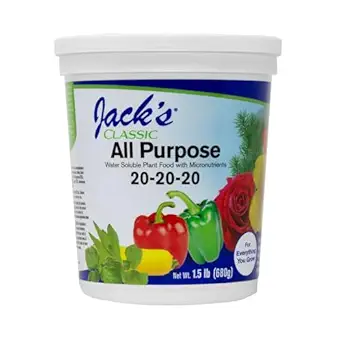 |
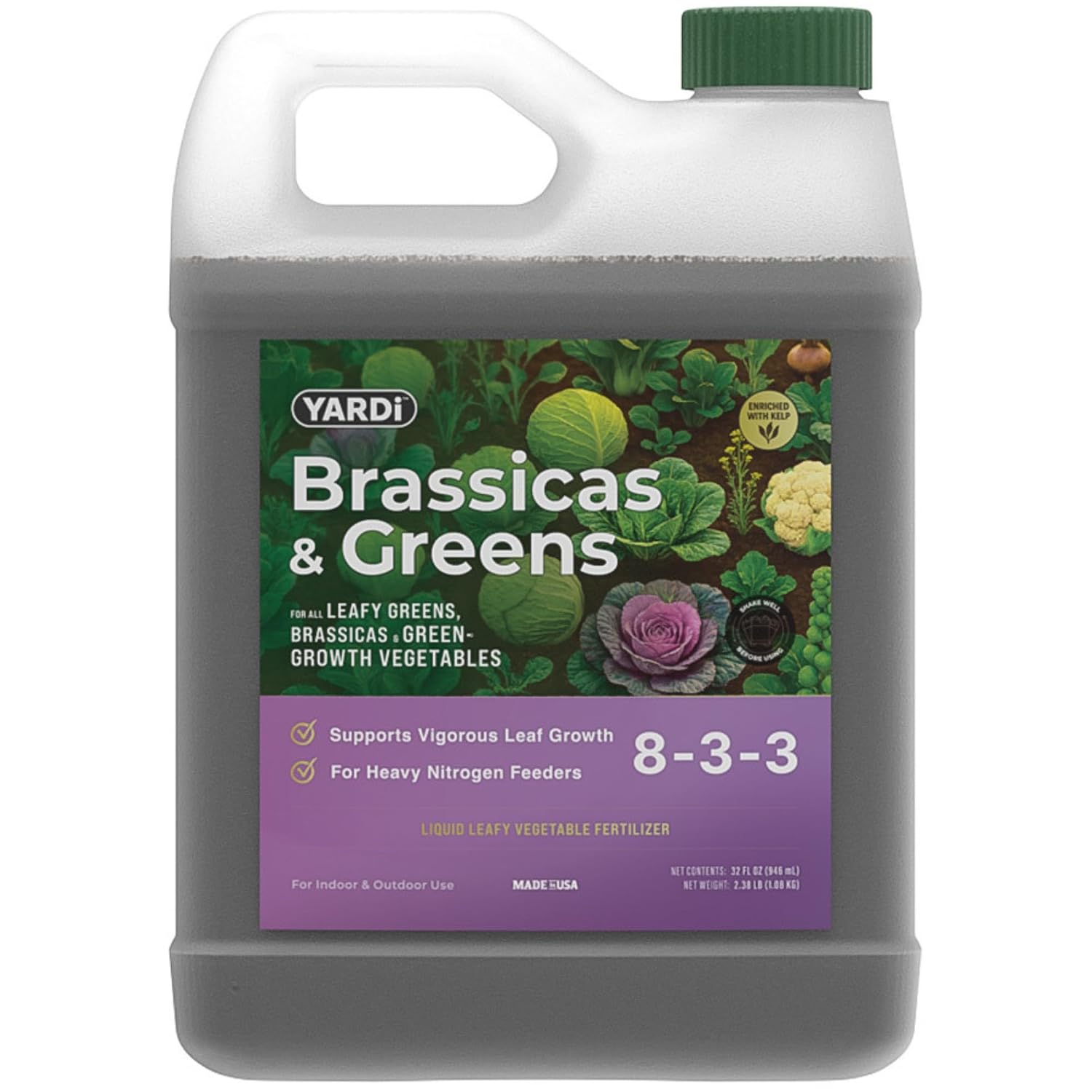
| Best Quality Built to a higher standard if you want something more solid | YARDi Brassicas & Greens Liquid Plant Food 8-3-3, 32 oz |  |
| Best Value The sweet spot between price and what you get | Miracle-Gro Water Soluble All Purpose Plant Food, 3 lb |  |
| Best Budget The cheapest option that still gets the job done reliably | Miracle-Gro Water Soluble All Purpose Plant Food, 1.5 lb |  |
| Highest Rated A top-rated pick with lots of positive feedback | FoxFarm Grow Big Liquid Plant Food (16 fl oz) |  |
| Most Popular A crowd favorite that many people choose with confidence | Miracle-Gro Shake 'N Feed Tomato, Fruit & Vegetable Plant Food (1 lb) |  |
| Best Seller A high-volume bestseller chosen again and again | Miracle-Gro Liquid All Purpose Plant Food Concentrate, 32 oz |  |
Jack's Classic 20-20-20 All Purpose Water-Soluble Fertilizer (24 oz)

| Item Form | Powder |
|---|---|
| Specific Uses For Product | Plant Growth |
| Coverage | All |
| Mixing Ratio | 0.22 |
Jack's Classic 20-20-20 is a professional‑grade, water‑soluble powder fertilizer intended for general feeding of indoor and outdoor plants. You dissolve the measured spoonfuls in water and apply as a root drench or foliar spray every 7 to 14 days, or use weaker mixes for seedlings and cuttings. The even 20-20-20 NPK formula promotes quick green‑up and leaf expansion, while included micronutrients support overall plant health. Because it is a powder concentrate, a small tub makes multiple gallons of feed, which is convenient for regular maintenance across beds, containers, and ornamentals. The product ships with a measuring spoon and clear directions, so it is easy to dose consistently. Limitations to note are that it is a generalist formula rather than crop‑specific booster, so plants with specialized needs may do better with targeted blends, and it requires careful handling and dilution to avoid overfeeding. Protective handling is recommended since the powder can irritate skin and eyes.
Best for: Gardeners who want a reliable, easy-to-use all‑around fertilizer for regular maintenance of outdoor beds, containers, and ornamentals and who value predictable, balanced nutrition.
Less Ideal for: Growers seeking a specialized bloom booster or a fertilizer tailored to a single crop should choose a targeted formula instead.
- Balanced 20-20-20 NPK supports fast green-up and leaf growth across many plant types
- Water‑soluble powder stretches farther than comparable liquid feeds so one tub makes multiple gallons
- Usable as both foliar spray and root feed for flexible application
- Includes measuring spoon and clear mixing directions for consistent dosing
- Added micronutrients reduce need for separate supplements
- General all-purpose formula is not optimized for bloom or fruit boosting
- Requires accurate measuring and dilution to avoid fertilizer burn
Verdict: A straightforward, professional‑grade balanced fertilizer that delivers reliable, easy-to-dose nutrition for maintaining healthy outdoor plants.
YARDi Brassicas & Greens Liquid Plant Food 8-3-3, 32 oz
| Item Form | Liquid |
|---|---|
| Specific Uses For Product | Leafy Greens |
| Target Species | Vegetables |
| Unit Count | 32 Fluid Ounces |
YARDi Brassicas & Greens is a liquid 8-3-3 fertilizer designed to drive vigorous leafy growth in cabbage, kale, broccoli and other greens. It mixes at 1 to 2 teaspoons per gallon and can be applied as a soil drench, foliar spray, through drip irrigation, or with a hose-end, so it fits into most outdoor garden workflows. The higher nitrogen ratio and added micronutrients help produce fuller heads and deeper green color when used through the growing season. Practical benefits include quick uptake when applied as a foliar feed and easy dilution for targeted spot treatments or whole-bed feeding. As a concentrated liquid it is convenient for frequent applications every 2 to 3 weeks, but that also means you need to measure and mix properly to avoid overfeeding. It is formulated specifically for vegetables and leafy species, so users should pair it with a balanced fertility plan if their bed also needs phosphorus or potassium at certain growth stages.
Best for: Growers who prioritize visible, fast leafy growth and want a convenient liquid feed to push cabbage and other brassicas through the season.
Less Ideal for: Gardeners seeking an all-in-one granular program for flowering or fruiting vegetables or those who prefer low-frequency slow-release fertilizers.
- High nitrogen 8-3-3 formula supports strong leafy development in cabbage and other brassicas
- Liquid concentrate mixes easily for foliar, soil drench, drip irrigation or hose-end application
- Contains micronutrients that support color and vigor throughout the growing season
- Clear directions for dilution and a repeat application schedule for steady feeding
- Focused on nitrogen-forward feeding and may not supply enough phosphorus or potassium for root development or fruiting stages
Verdict: Use this high-nitrogen liquid concentrate when you want fast, sustained leafy growth and deeper green, productive cabbage heads throughout the season.
Miracle-Gro Water Soluble All Purpose Plant Food, 3 lb

| Item Form | Powder |
|---|---|
| Application Method | Mix with water in a watering can |
| Fertilizer Analysis (N‑P‑K) | 24-8-16 |
| Unit Count | 48 Ounce |
| Coverage | Feeds approximately 1,200 sq. ft. |
Miracle‑Gro Water Soluble All Purpose Plant Food is a powdered NPK 24‑8‑16 formula that dissolves in water to give plants a quick nutrient boost. You mix measured scoops into a watering can and apply to the soil at the base of plants every 7–14 days for outdoor use or every 14 days for houseplants. Notable features include a high nitrogen content for leafy growth, compatibility with containers and in‑ground beds, and guidance for use with a Miracle‑Gro Garden Feeder for larger areas. In practical terms this is a fast‑acting feed that encourages bigger, greener foliage and works well in regular maintenance of perennials like hostas. Limitations are that it is a fast‑release fertilizer rather than a slow‑release option, so it requires regular reapplication and careful measuring to avoid overfeeding. Also, the 24‑8‑16 balance is geared toward vegetative growth, so it is not optimized if you want to prioritize flowering or bloom boosting.
Best for: Buyers who want a reliable, fast‑acting feed to maintain lush, leafy perennials and container plants and who value proven products with broad user endorsement.
Less Ideal for: Gardeners seeking a single, long‑lasting granular fertilizer or a bloom‑focused formula should consider alternative slow‑release or high‑phosphorus products.
- Water‑soluble powder mixes easily for quick uptake by roots
- High nitrogen formula promotes robust leafy growth ideal for shade plants
- Clear mixing and application instructions for both indoor and outdoor use
- Suitable for containers and in‑ground gardens and compatible with garden feeders
- Requires frequent applications so it is not a low‑maintenance, slow‑release option
- High nitrogen ratio is less suitable when the primary goal is more flowers than foliage
Verdict: A fast‑acting, water‑soluble fertilizer that reliably produces bigger, greener hosta leaves when used as directed.
Miracle-Gro Water Soluble All Purpose Plant Food, 1.5 lb

| Item Form | Powder |
|---|---|
| Application Method | Watering Can |
| Target Species | For all flowers, vegetables, trees, shrubs and houseplants |
| Mixing Ratio | 24-8-16 |
Miracle-Gro Water Soluble All Purpose Plant Food is a powder concentrate you mix with water to give a quick nutrient boost to flowers, vegetables, houseplants, shrubs and trees. It is typically dissolved in a watering can or used with a compatible garden feeder to soak soil at the base of plants, delivering nitrogen-heavy nutrition that shows effects faster than granular fertilizers. Notable features include an easy scooping method for indoor and outdoor dosing, compatibility with containers and in-ground planting, and clear directions for feeding every one to two weeks. In practice this makes the product a convenient option when you want visible growth and greener foliage quickly, and the 1.5 lb container covers roughly 600 sq. ft. Important limitations are that it is a fast-release, high-nitrogen formula best used as a regular quick feed rather than a long-term slow-release solution, and it requires careful measuring to avoid overfeeding. For routine maintenance combine with good watering and follow the label to avoid nutrient imbalance.
Best for: Buyers who prefer proven, easy-to-use feeding routines and want noticeable growth quickly for a variety of garden and houseplants, guided by established usage directions and broad user experience.
Less Ideal for: Gardeners seeking a single, long-term slow-release solution or those who prefer organic or low-nitrogen fertilizers for sensitive plantings should consider alternative products.
- Water-soluble powder starts working quickly at the roots when mixed and applied
- Clear, simple dosing for indoor and outdoor use with included scoop guidance
- Suitable for a wide range of plants including vegetables, flowers, shrubs and houseplants
- Covers a large area from a small container (about 600 sq. ft. per 1.5 lb)
- Fast-release formula means benefits are short-term compared with slow-release granular fertilizers
- Requires precise measuring and regular reapplication to avoid overfeeding
Verdict: A reliable, fast-acting water-soluble plant food for gardeners who want easy, repeatable feeding and quick visible results.
FoxFarm Grow Big Liquid Plant Food (16 fl oz)

| NPK | 6-4-4 |
|---|---|
| Form | Liquid |
| Unit Count | 16 Fluid Ounces |
| Mixing Ratio | 2 teaspoons per 1 gallon |
FoxFarm Grow Big is a 6-4-4 liquid concentrate designed to boost vegetative size and structure for vegetables, roses and houseplants. Mix at the manufacturer recommendation (2 teaspoons per gallon) and apply as part of your watering or as an early-morning foliar spray; the low pH formula helps keep micronutrients stable for reliable uptake. For tomato growers it delivers a nitrogen-forward balance that supports leafy growth and strong vines during the pre-flowering and fruit-set stages, and the pint concentrate is easy to store and measure. Notable features include quick-soluble liquid delivery and clear feeding guidance so you can feed every other watering without extensive guesswork. Limits to consider are that this is a vegetative feed rather than a bloom/fruit-specific formula, so you will want to switch to a bloom or fruit-focused fertilizer at flowering to optimize fruit development, and a pint will require careful dilution for larger vegetable beds or multiple plants. Overall it is a dependable, easy-to-use vegetative booster when you want predictable growth before tomatoes set heavy fruit.
Best for: Gardeners who prioritize consistent, predictable vegetative growth for tomato plants and want a straightforward, low-fuss feeding routine. Ideal for growers who value reliable nutrient uptake and clear instructions over experimental blends.
Less Ideal for: Growers seeking an all-in-one bloom and fruit booster or those managing large-scale tomato plantings who need bulk quantities of fertilizer.
- Concentrated liquid formula for fast nutrient uptake and easy mixing.
- Low pH formulation that helps keep micronutrients stable and available.
- Clear mixing instructions and flexible application by watering or foliar spray.
- Nitrogen-focused NPK (6-4-4) that promotes robust vegetative growth and strong vines.
- Not formulated specifically for flowering or heavy fruiting stages so a bloom/fruit fertilizer is needed later.
- Pint size may be small for larger vegetable gardens and requires frequent repurchasing.
Verdict: A dependable, easy-to-use liquid concentrate that reliably promotes vigorous vegetative growth in tomatoes during the pre-flower stages.
Miracle-Gro Shake 'N Feed Tomato, Fruit & Vegetable Plant Food (1 lb)

| Item Form | Granules |
|---|---|
| Target Species | Tomato, Fruit & Vegetable Plant Food |
| Unit Count | 16 Ounce |
| Item Type Name | Continuous Release Plant Food Plus Calcium |
| Coverage | Full |
Miracle-Gro Shake 'N Feed Tomato, Fruit & Vegetable is a granular, continuous-release fertilizer aimed at vegetable gardens and container-grown edibles. You apply it dry to the soil surface or mix it into potting mix at planting, then water to activate feeding that lasts up to three months. The formula includes natural ingredients that feed soil microbes and added calcium to strengthen cell walls and reduce common calcium-related disorders in fruiting crops. For container cucumbers this product provides steady nutrition without weekly liquid feeding and is simple to dose at planting or between seasons. Limitations include the fixed N-P-K profile and that it is not water-soluble for immediate foliar feeding, so rapid correction of major nutrient deficiencies will require a soluble supplement. It also requires correct incorporation or surface application and watering to avoid uneven distribution in small pots. Overall it is a low-effort option to keep container cucumbers producing through a season when used alongside regular watering and good potting mix.
Best for: Gardeners who want a low-maintenance fertilizing routine for container-grown cucumbers and value steady month-to-month feeding over frequent liquid feeds.
Less Ideal for: Growers who need rapid correction of a diagnosed nutrient deficiency or who prefer precise, water-soluble dosing for each watering cycle.
- Continuous-release granules feed plants for up to three months reducing application frequency
- Contains calcium to help prevent blossom end rot and improve fruit quality
- Formulated for fruits and vegetables and suitable for both in-ground and container use
- Feeds soil microbes via natural ingredients which can improve root health and nutrient availability
- Not water-soluble so it will not correct acute nutrient deficiencies quickly
- Fixed formulation may not match specific soil test recommendations for containers
Verdict: A convenient, slow-release granular feed that keeps container cucumbers nourished for months with minimal fuss.
Miracle-Gro Liquid All Purpose Plant Food Concentrate, 32 oz

| Item Form | Liquid |
|---|---|
| Specific Uses For Product | Plant Growth, Root Development |
| Application Method | Mix with water in a watering can |
| Mixing Ratio | 1:10 (concentrate to water, estimate) |
Miracle-Gro Liquid All Purpose is a water-soluble concentrate you mix into a watering can and apply every 1 to 2 weeks to container and in-ground plants. It is formulated for general plant growth and root development and is marketed for flowers, vegetables, shrubs and houseplants, so it works as a straightforward feed for flowering bulbs like calla lilies. The bottle’s mixing guidance (cap measures for garden application and 1 teaspoon per gallon for containers) makes it easy to dose for pots or small beds. Practical benefits include fast uptake through the soil when applied as directed and compatibility with routine watering schedules. Limitations to note are that it is an all-purpose formula rather than a bloom-focused or calcium-rich fertilizer tailored specifically to calla lilies, so growers seeking targeted bloom enhancement or specialty nutrition may want a supplement. Also, frequent use at higher-than-recommended strength can risk fertilizer burn, so follow the mixing directions and schedule.
Best for: Buyers who want an affordable, easy-to-use liquid fertilizer to keep calla lilies and other flowering plants regularly fed without fuss.
Less Ideal for: Growers seeking a specialist bloom-boost or a fertilizer formulated for specific micronutrient needs should consider a targeted or bloom-specific product instead.
- Concentrated liquid mixes easily with water for quick application
- Clear dosing instructions for both garden beds and container plants
- Suitable for a wide range of plant types including flowering bulbs and houseplants
- General all-purpose formula not specifically formulated for enhancing blooms of calla lilies
Verdict: A budget-friendly, easy-to-use liquid concentrate that reliably feeds calla lilies and other common garden plants on a regular schedule.
Choosing the Right Fertilizer for Cabbage Plants: Key Factors to Consider
Nutrient Ratios and Stage-Specific Needs
Cabbage needs different nutrient emphasis through its life cycle. Early vegetative growth benefits from higher nitrogen to build large, healthy leaves that will form the head. As the plant transitions to heading, a shift toward moderate nitrogen with adequate phosphorus and potassium helps set firm, dense heads and supports root function.
Reading guaranteed analysis on fertilizer labels tells you the percent of N-P-K and helps you plan a feeding regimen. Too much nitrogen late in the cycle can produce loose heads and increase pest pressure, while insufficient potassium can lead to weak, cracked, or undersized heads. Pick a fertilizer whose ratio you can adjust with application timing rather than relying on a single constant feed.
Release Type: Fast-Release Vs Controlled-Release
Fast-release fertilizers deliver nutrients quickly, which is useful for correcting deficiencies or giving a short-term boost after transplant. These are often water-soluble and will show results within days, but they can flush out of sandy soils and may require more frequent reapplication.
Controlled-release and slow-release formulations release nutrients over weeks to months and reduce the risk of burn from overapplication. They are especially helpful in raised beds and long-season plantings where consistent feeding matters. Think about your watering frequency and soil drainage when choosing release type so nutrient delivery matches plant uptake.
Application Method and Ease
Consider how the fertilizer will be applied in your typical garden routine. Granular products can be broadcast and worked into soil or used as side-dressings, while water-soluble or liquid fertilizers are convenient for quick foliar feeds and immediate uptake.
If you grow in containers or have limited mobility, soluble feeds or hose-end injector-compatible options reduce labor. For large in-ground beds, bulk granular products or controlled-release pellets minimize repeat applications. Choose a form that fits your workflow to keep feeding consistent.
Soil Texture and Organic Matter Interaction
Soil type strongly affects nutrient retention and availability. Sandy soils drain quickly and benefit from more frequent, smaller nutrient applications or controlled-release formulas to prevent leaching. Heavy clay holds nutrients but can tie them up if pH and organic matter are low.
Adding compost or using organic-based fertilizers improves cation exchange capacity and helps retain applied nutrients. Match fertilizer concentration and timing to your soil's tendency to hold or lose nutrients so cabbage plants receive steady nutrition without waste.
Secondary Nutrients and Micronutrients
Beyond N-P-K, elements like magnesium, calcium, boron, and sulfur can influence cabbage quality. Calcium and boron are linked to firm tissue and reduced internal tip burn, while magnesium supports chlorophyll and even leaf color. Sulfur contributes to typical brassica flavor but is only needed in small amounts.
A fertilizer that supplies or allows easy supplementation of these secondary nutrients avoids common physiological issues. If your soil test shows deficiencies, choose a fertilizer program that addresses those gaps or pair a general fertilizer with targeted amendments.
Salt Index and Risk of Root Burn
High-soluble-salt fertilizers can harm young transplants or root systems if applied too close to roots or concentrated in dry soil. The salt index varies by formula and affects how much you should dilute or how far from the plant you should place product.
When starting transplants, use lower-salt feeds or apply a milder solution and follow with regular watering. For older, well-established plants a higher strength feed can be tolerated, but always follow label directions and consider split applications to reduce stress.
Feeding Schedule From Transplant to Harvest
Establishing a predictable feeding schedule helps cabbage build size without excess vegetative growth late in the season. After transplant, give a modest starter feed to support root establishment, then move to more frequent nitrogen-rich feeds during rapid leaf expansion.
As heads start forming, reduce nitrogen frequency and switch to a balanced or slightly higher potassium feed to promote firmness. Many gardeners use a combination of a base granular application at planting followed by 2 to 4 side-dressings or soluble feeds spaced two to three weeks apart depending on product release characteristics.
- Starter application: balanced, low-salt at transplant
- Vegetative stage: moderate to higher nitrogen for leaf size
- Heading stage: lower nitrogen, maintain phosphorus and potassium
- Final weeks: avoid heavy nitrogen to prevent loose heads
Soil Testing and Tailoring Your Program
A soil test is the single most effective step to match fertilizer choice to your plot. Tests show pH, organic matter, and existing nutrient levels so you can correct calcium or magnesium shortages before they limit yield.
Use soil test results to decide whether to prioritize a balanced fertilizer or to add targeted amendments like lime for pH adjustment or gypsum for calcium without raising pH.
- Test before planting and every couple of years after
- Adjust pH first; nutrients are more available in the right range
- Supplement micronutrients only when tests indicate deficiency
Organic Vs Synthetic Options for Cabbage
Organic fertilizers release nutrients more slowly and improve soil structure through added organic matter. They are well suited to long-season plots and gardeners who prefer building soil biology, but they may require earlier application to supply enough nitrogen during peak growth.
Synthetic fertilizers are predictable and fast-acting, which is useful for correcting deficiencies or for intensive production schedules. Both approaches can produce excellent cabbage when timed correctly; the choice depends on your soil management goals and labor tolerance.
- Organics: build long-term fertility, slower release
- Synthetics: fast correction, precise NPK ratios
- Consider hybrid approaches: organic base with targeted soluble feeds
Addressing Common Cabbage Nutrient Disorders
Cabbage shows nutrient problems in visible ways: pale or yellowing older leaves often indicate nitrogen shortage, while small or split heads can point to insufficient potassium or calcium. Internal tip burn is associated with calcium or boron deficiency and irregular moisture.
Corrective feeding can help if issues are caught early, but prevention through balanced feeding and even watering is more reliable. Foliar sprays can address certain micronutrient shortages quickly, while soil-applied corrections take longer to show results.
- Nitrogen deficiency: yellowing lower leaves, poor growth
- Potassium shortage: weak heads, edge browning or cracking
- Calcium/boron issues: internal tip burn and crumbly tissue
Practical Tips for Application and Timing
Always follow label rates and avoid placing granular fertilizer in direct contact with roots. For side-dressing, apply fertilizer a few inches from the plant stem and lightly work it into the soil or cover with mulch to reduce volatilization and runoff.
Water thoroughly after applying granular or soluble feeds to move nutrients into the root zone. For foliar feeding, apply in the cooler parts of the day to reduce leaf burn and improve uptake.
- Side-dress 2 to 4 inches from stem and water in
- Apply foliar feeds during morning or late afternoon
- Split applications reduce risk of overfertilization
How We Chose the Best Fertilizer for Cabbage Plants
We focused on attributes that directly affect cabbage growth and harvest outcomes. Key evaluation criteria included guaranteed nutrient ratios with particular attention to nitrogen, phosphorus, and potassium balance for leaf growth and head set; release type and feeding schedule because steady nutrient availability reduces tip burn and uneven heads; ease of application for common home garden methods such as broadcasting, side-dressing, and foliar feeding; compatibility with soil types and organic matter levels since clay, sandy, and raised-bed soils change nutrient retention; and environmental safety, including salt index and risk of overfertilization near shallow roots. We also reviewed product labels for secondary nutrients like magnesium and calcium that help prevent disorders such as internal tip burn. Exclusions: products aimed only at lawns, houseplants, or turf formulas with incompatible NPK ratios were filtered out. Items that lacked clear nutrient guarantees or had application instructions unsuitable for vegetable gardens were not considered.
FAQ
How often should I fertilize cabbage plants?
Frequency depends on fertilizer type. Fast-release feeds may be applied every 1 to 3 weeks during rapid growth, while controlled-release products often cover several weeks to months. Monitor growth and adjust timing based on plant vigor and soil type.
What NPK ratio is best for cabbage?
Early growth benefits from a higher nitrogen proportion relative to phosphorus and potassium. During heading, move to a more balanced ratio or one with increased potassium to support head formation. Exact ratios vary by product but plan to reduce nitrogen late season.
Can I use compost alone for cabbage fertility?
Compost supplies steady nutrients and improves soil structure but may not supply enough immediately available nitrogen for peak leaf growth unless applied in large amounts well before planting. Many gardeners use compost as a base and add targeted fertilizers for peak-demand periods.
Will foliar feeding prevent nutrient deficiencies?
Foliar feeding supplies micronutrients quickly and can correct certain shortages faster than soil applications. It is not usually a substitute for sufficient soil fertility because roots supply most of the plant's nutrient needs, especially macronutrients like nitrogen.
How can I avoid fertilizer burn on young cabbage transplants?
Use low-salt starter feeds, dilute soluble fertilizers, and avoid placing granules against roots. Water new transplants well after application to move nutrients into the soil and reduce concentration around the root zone.
Does soil pH affect fertilizer choice for cabbage?
Yes. Soil pH alters nutrient availability. Most cabbage varieties prefer a slightly acidic to neutral pH where key nutrients are accessible. Adjust pH before relying on fertilizers to correct deficiencies.
Final Verdict
Choose a fertilizer program for cabbage by prioritizing the nutrient needs at each growth stage and matching release type to your soil and watering habits. Plan a base soil amendment, then use side-dressings or soluble feeds to manage vegetative growth and head formation. Pay attention to secondary nutrients and salt index to avoid disorders and root stress. With a clear feeding schedule and soil testing, you can confidently pick a product that delivers firm, well-formed heads.
