

Note: This article contains affiliate links. If you click on these links and make a purchase, I may earn a small commission at no extra cost to you. This helps support my research and content. Read my full affiliate disclosure here.
Growing a lemon tree in a pot brings big rewards and specific challenges. Container citrus have limited root space and rely entirely on what you feed them, so choosing the right fertilizer makes the difference between sparse growth and steady flowering and fruit set. This guide shortlists the top options suited for lemon trees grown in containers and explains how we evaluated them for nutrient balance, release type, and ease of use. Read on for practical advice about feeding frequency, forms of fertilizer, and what to expect in a season of care.
Top Picks at a Glance
| Best Overall The best all-around choice for most situations | Miracle-Gro Water Soluble All Purpose Plant Food, 3 lb |  |
| Best Quality Built to a higher standard if you want something more solid | Espoma Organic Citrus-Tone 5-2-6 Organic Fertilizer for Citrus, Fruit, Nut & Avocado Trees, 4 lb |  |
| Best Value The sweet spot between price and what you get | GARDENWISE Professional Citrus Slow-Release Granular Fertilizer (1 lb) |  |
| Best Budget The cheapest option that still gets the job done reliably | Perfect Plants Liquid Lemon Tree Fertilizer, 8 oz |  |
| Highest Rated A top-rated pick with lots of positive feedback | Leaves & Soul Lemon Tree Liquid Fertilizer, 6-4-6, 8 oz |  |
| Most Popular A crowd favorite that many people choose with confidence | TPS Nutrients Lemon Tree Fertilizer Liquid, 8 fl oz |  |
| Best Seller A high-volume bestseller chosen again and again | Miracle-Gro Shake 'N Feed Citrus, Avocado, Mango Plant Food, 4.5 lb |  |
Miracle-Gro Water Soluble All Purpose Plant Food, 3 lb

| Item Form | Powder |
|---|---|
| Application Method | Mix with water in a watering can |
| Fertilizer Analysis (N‑P‑K) | 24-8-16 |
| Unit Count | 48 Ounce |
| Coverage | Feeds approximately 1,200 sq. ft. |
Miracle‑Gro Water Soluble All Purpose Plant Food is a powdered NPK 24‑8‑16 formula that dissolves in water to give plants a quick nutrient boost. You mix measured scoops into a watering can and apply to the soil at the base of plants every 7–14 days for outdoor use or every 14 days for houseplants. Notable features include a high nitrogen content for leafy growth, compatibility with containers and in‑ground beds, and guidance for use with a Miracle‑Gro Garden Feeder for larger areas. In practical terms this is a fast‑acting feed that encourages bigger, greener foliage and works well in regular maintenance of perennials like hostas. Limitations are that it is a fast‑release fertilizer rather than a slow‑release option, so it requires regular reapplication and careful measuring to avoid overfeeding. Also, the 24‑8‑16 balance is geared toward vegetative growth, so it is not optimized if you want to prioritize flowering or bloom boosting.
Best for: Buyers who want a reliable, fast‑acting feed to maintain lush, leafy perennials and container plants and who value proven products with broad user endorsement.
Less Ideal for: Gardeners seeking a single, long‑lasting granular fertilizer or a bloom‑focused formula should consider alternative slow‑release or high‑phosphorus products.
- Water‑soluble powder mixes easily for quick uptake by roots
- High nitrogen formula promotes robust leafy growth ideal for shade plants
- Clear mixing and application instructions for both indoor and outdoor use
- Suitable for containers and in‑ground gardens and compatible with garden feeders
- Requires frequent applications so it is not a low‑maintenance, slow‑release option
- High nitrogen ratio is less suitable when the primary goal is more flowers than foliage
Verdict: A fast‑acting, water‑soluble fertilizer that reliably produces bigger, greener hosta leaves when used as directed.
Espoma Organic Citrus-Tone 5-2-6 Organic Fertilizer for Citrus, Fruit, Nut & Avocado Trees, 4 lb

| Item Form | Granules |
|---|---|
| Specific Uses For Product | Agriculture,Gardening,Plant Growth |
| Application Method | Spread evenly over the entire tree or plant area |
| Target Species | Citrus, Fruit Trees, Nut Trees, Avocado |
Espoma Citrus-Tone is a ready-to-use granular organic fertilizer designed specifically for citrus and other fruit and nut trees, including avocados. You apply it by spreading the measured amount around the tree drip line and watering it in; the product requires no mixing. The 5-2-6 NPK formula with 5% calcium and the Bio-tone microbial blend supports steady vegetative growth, flowering and fruit set while feeding soil biology. As a granular, slow-release option it is convenient for seasonal feedings in late winter, after bloom and in fall. It is certified for organic production and contains no inert sludges or fillers, so it fits an organic care program. Limitations are the small 4 lb package size for larger trees or multiple specimens and the need to reapply seasonally rather than provide continuous feeding like some slow-release spikes or timed-release products. For home gardeners managing a few avocado trees this product gives targeted, organic nutrition in an easy-to-apply format.
Best for: Home gardeners who want an organic, easy-to-apply fertilizer to support flowering and fruiting on one or a few avocado trees and who prefer simple seasonal feedings.
Less Ideal for: Large-scale growers or anyone seeking a single-season, low-maintenance slow-release system for many large trees should consider higher-capacity or different delivery formats.
- Organic, certified input suitable for organic avocado production
- 5-2-6 NPK with 5% calcium supports fruit set and overall tree health
- Ready-to-use granules require no mixing and are simple to apply
- Includes Bio-tone microbial blend to support soil biology
- Small 4 lb bag may be insufficient for large mature trees or multi-tree yards
- Granular application requires seasonal reapplication rather than long-term timed release
Verdict: A compact, certified organic granular fertilizer that delivers targeted nutrition and soil biology support for home avocado trees in a simple seasonal application.
GARDENWISE Professional Citrus Slow-Release Granular Fertilizer (1 lb)

| Item Form | Granules |
|---|---|
| Specific Uses For Product | Citrus trees winter period |
| Application Method | Sprinkle around the base and water |
| Guaranteed Analysis | N 6% P2O5 4% K2O 6% |
This granular citrus fertilizer is designed to feed citrus trees with a balanced nutrient mix and a suite of micronutrients in a slow-release coating. You apply by sprinkling the granules around the root zone or mixing into backfill for new plantings, then watering to activate release. Its guaranteed analysis shows a balanced NPK (6-4-6) with added magnesium, sulfur and trace elements such as iron, zinc and copper that support leaf color, flower set and fruit development. The slow-release polymer coating means one application can supply nutrients for several weeks, reducing how often you need to feed potted lemon trees. Practical advantages are ease of use, targeted citrus formulation, and measurable micronutrients that help stressed or nutrient-deficient plants recover. Limitations are that the bag is a modest unit size so frequent repurchasing may be needed for multiple or large containers and precise dosing is required for small pots to avoid overfeeding. It is best used as part of regular seasonal care rather than a one-time cure for severe deficiencies.
Best for: Buyers who want a low-effort, reliable citrus fertilizer for potted lemon trees and prefer predictable, periodic feeding to keep container-grown trees healthy.
Less Ideal for: Gardeners needing a bulk supply for many trees or those who require an aggressive high-nitrogen program for very vigorous growth should consider larger or different formulations.
- Balanced NPK mix formulated for citrus to support growth, flowering, and fruiting
- Includes micronutrients (Fe, Zn, Cu, Mg, B, Mn, Mo) that address common citrus deficiencies
- Polymer-coated slow-release granules reduce feeding frequency
- Simple application by sprinkling around the root zone or mixing into soil
- Small 1 lb/16 fl oz unit may not be cost-efficient for many or large container collections
- NPK is lower than some fruit-specific fertilizers so additional feedings may be needed for heavy-bearing trees
Verdict: A straightforward slow-release citrus fertilizer that makes seasonal feeding of potted lemon trees easy and reliable.
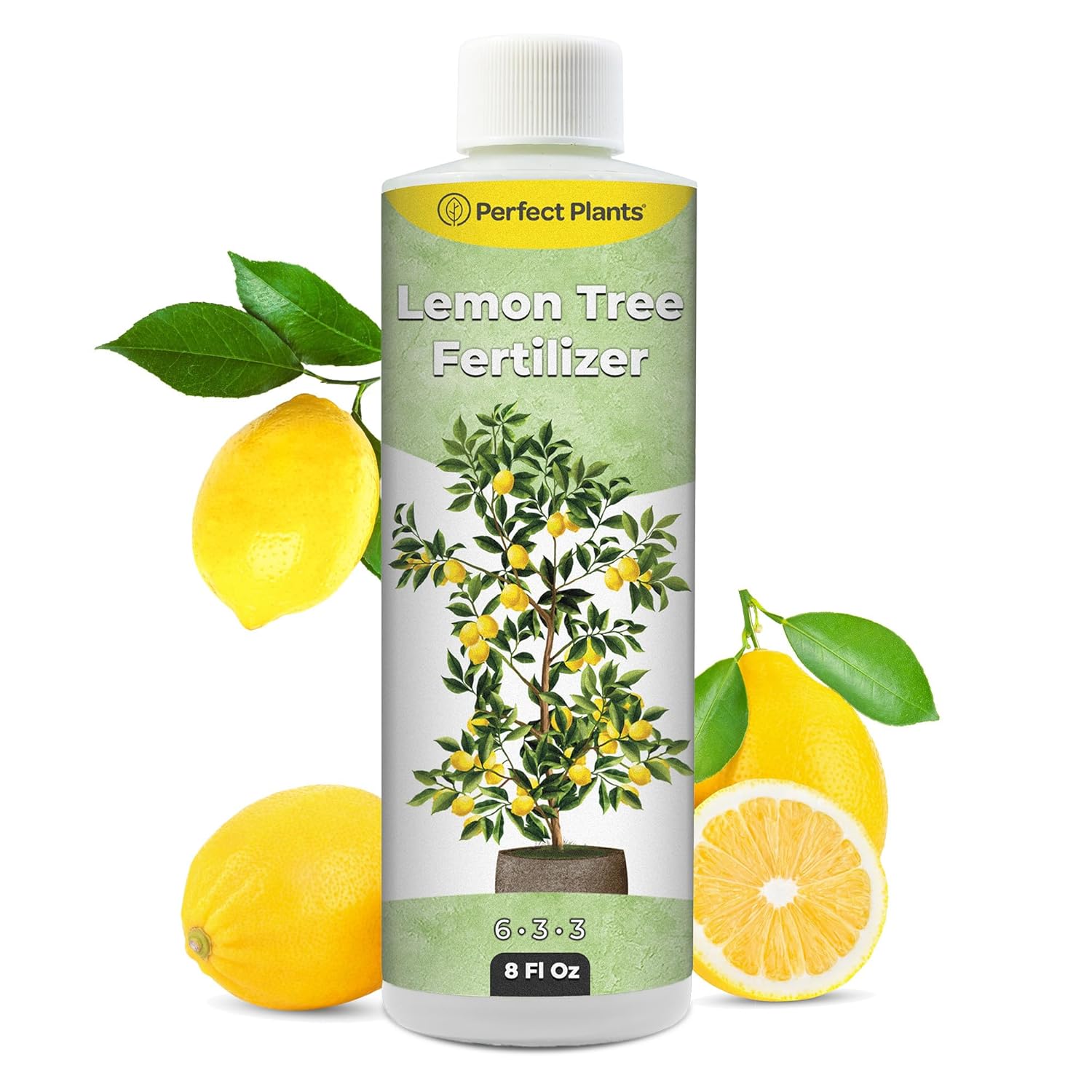
Perfect Plants Liquid Lemon Tree Fertilizer, 8 oz
| Item Form | Liquid |
|---|---|
| Application Method | Watering can |
| Target Species | Lemon, Citrus |
| Mixing Ratio | 2 tablespoons per gallon |
This 8 oz Perfect Plants liquid fertilizer is designed to boost citrus vigor and fruiting with a 6-3-3 NPK formula that includes zinc and manganese. It is used by mixing two tablespoons per gallon of water and applying with a watering can every 3 to 4 weeks during the growing season, which makes it straightforward for potted Meyer lemons and landscape citrus alike. The concentrated liquid form delivers nutrients quickly to the root zone, encouraging more flowers and fruit without the need for spikes or slow-release granules. Practical benefits include easy dosing, suitability for different citrus varieties, and US-based nursery formulation. Limitations are the small bottle size, which means frequent repurchases for larger trees or multi-tree yards, and the product is a single-season application type rather than a long-term slow-release option. For gardeners on a budget it provides quick, targeted feeding, but those who prefer lower-maintenance or bulk solutions may want a larger or slow-release fertilizer instead.
Best for: Budget-minded gardeners who want an easy, effective way to feed one or a few potted or small landscape citrus trees and see faster results than with slow-release products.
Less Ideal for: Large-property owners or those who prefer low-maintenance, infrequent feeding should consider bulk granular or slow-release fertilizers instead.
- Citrus-focused 6-3-3 NPK formula with added zinc and manganese to support fruiting
- Concentrated liquid that is simple to mix and apply with a watering can
- Quick nutrient availability to boost plant vigor and flower production
- Made by a long-established nursery in the USA
- Small 8 oz bottle may not last for larger trees or multiple citrus
- Requires regular liquid applications rather than providing long-term feeding
Verdict: A simple, citrus-specific liquid feed that delivers fast results and fits a tight gardening budget for one to a few lemon trees.
Leaves & Soul Lemon Tree Liquid Fertilizer, 6-4-6, 8 oz

| Item Form | Liquid |
|---|---|
| Application Method | Watering can, Sprinkler, Drip irrigation |
| Target Species | Citrus |
| Liquid Volume | 8 fluid ounces |
| Mixing Ratio | 2 tablespoons per gallon |
Leaves & Soul Lemon Tree Liquid Fertilizer is a fast-absorbing, water-mixable concentrate with a 6-4-6 NPK ratio designed for routine feeding of lemon and other citrus trees. You mix 2 tablespoons per gallon of water and apply the diluted solution to the root zone every 2–4 weeks during the growing season, or monthly in cooler months. The formula includes micronutrients and natural additives intended to support greener foliage, stronger roots, and flowering that leads to fruit set. Its liquid form makes it easy to deliver nutrients through watering, which is convenient for container-grown trees and drip or hand-watering setups. The 8 oz bottle is a compact option for small gardens or potted citrus while a larger size is available for more frequent use. Limitations to note are the low stated coverage and the need to track overall nutrient inputs if you also use compost or other fertilizers, since the product requires dilution and regular scheduling rather than single, long-lasting feeding. It is best used as part of a consistent care routine focused on watering, light, and soil health.
Best for: Gardeners who want a simple, reliable liquid feed to maintain steady nutrient levels for citrus trees and container-grown lemons and prefer measured, water-based applications as part of regular care.
Less Ideal for: People seeking a single, long-lasting slow-release fertilizer or those who do not want a regular feeding schedule for large landscape citrus trees.
- Balanced 6-4-6 NPK formula aimed at supporting roots, foliage, flowering, and vigor
- Fast-absorbing liquid concentrate that mixes with water for root-zone delivery
- Includes micronutrients and natural additives for broader nutritional support
- Flexible application methods compatible with watering cans, sprinklers, and drip irrigation
- Small 8 oz size provides limited coverage for larger trees or multiple plants
- Designed for regular, frequent applications rather than long-term slow release
Verdict: A dependable, easy-to-mix liquid 6-4-6 feed for gardeners who want consistent, measured nutrition to keep citrus trees healthy and productive.
TPS Nutrients Lemon Tree Fertilizer Liquid, 8 fl oz

| Item Form | Liquid |
|---|---|
| Application Method | Watering can, hose end sprayer, or leaf misting |
| Target Species | Lemon Trees |
| Mixing Ratio | 1:200 |
| Liquid Volume | 8 fluid ounces |
This 8 fl oz liquid fertilizer from TPS Nutrients is made specifically for lemon and other citrus trees and is used by diluting at the recommended 1:200 ratio and applying with a watering can, hose‑end sprayer, or by leaf misting. It is designed to promote fruit production, support healthy leaves and shoots, and build stronger roots so trees absorb water and nutrients more effectively. The liquid form delivers nutrients quickly for potted trees on patios as well as in-ground specimens, and the medium coverage makes it suitable for individual trees or small groups. Practical benefits include fast absorption, simple dilution and multiple application methods that fit common garden routines. Limitations are the small 8 ounce bottle size, which means frequent repurchasing for larger citrus collections, and lack of detailed NPK values on the label for gardeners who prefer exact nutrient ratios. Overall this is a convenient, citrus-focused supplement for home growers seeking straightforward feeding for Meyer and dwarf varieties.
Best for: Home gardeners who want a ready-to-use, citrus-specific feed for one or a few lemon trees and prefer simple dilution and flexible application methods.
Less Ideal for: Growers managing larger orchards or multiple mature trees who need bulk quantities or exact NPK formulations should consider commercial‑scale fertilizers instead.
- Formulated specifically for lemon and citrus so nutrients suit citrus needs.
- Liquid concentrate with 1:200 mixing for quick uptake and flexible application.
- Multiple application methods: watering can, hose‑end sprayer, or foliar misting.
- Suitable for both potted and in‑ground citrus, useful for patios and small orchards.
- Small 8 fl oz bottle may not last for multiple trees or large plantings.
- Product listing does not provide explicit NPK numbers for precise nutrient planning.
Verdict: A convenient liquid concentrate tailored to lemon and citrus that makes regular feeding easy for home growers with one or a few trees.
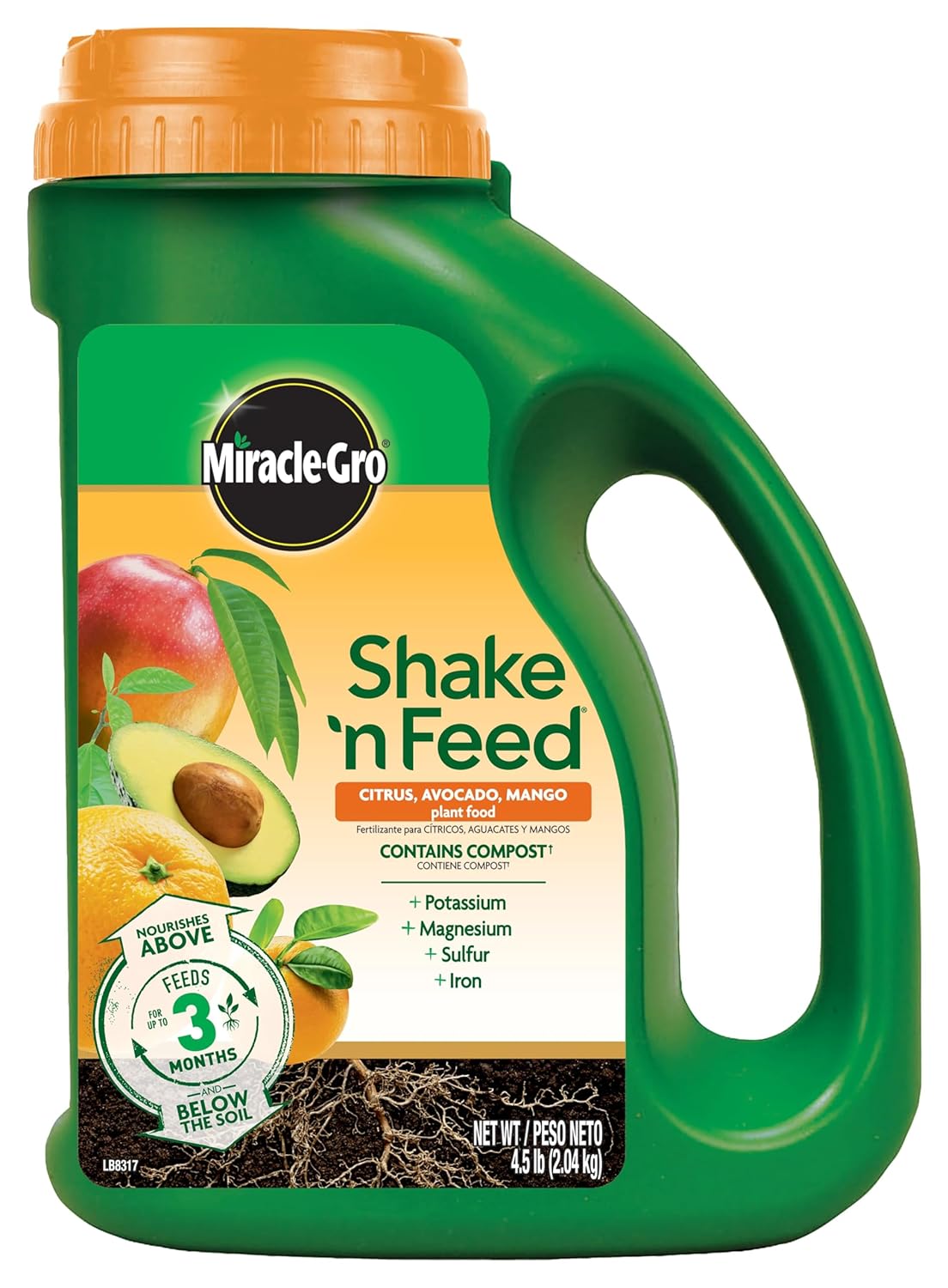
Miracle-Gro Shake 'N Feed Citrus, Avocado, Mango Plant Food, 4.5 lb
| Item Form | Granules |
|---|---|
| Application Method | Shake evenly onto soil |
| Target Species | citrus, avocado, mango |
| Mixing Ratio | 8-2-10 |
| Coverage | Medium |
This Shake 'N Feed formula is a granular, slow-release fertilizer made for citrus, avocado and mango trees in containers or in-ground. You shake the granules evenly onto the soil within the branch spread or mix into potting mix at planting, then water to start feeding; one application feeds plants for up to three months. The N-P-K listed (8-2-10) and added micronutrients such as potassium, magnesium, sulfur and iron help correct common deficiencies and support root development through microbes in the mix. It is practical for seasonal feeding and reduces the frequency of applications compared with quick-release fertilizers. Limitations include that it is a general fruit-tree feed rather than a lemon-specific formula and needs correct placement to avoid contact with trunks or foliage. For established trees you must follow label rates to avoid overfeeding and reapply every three months to maintain nutrition through the growing season.
Best for: Practical gardeners who want an easy, low-maintenance feeding schedule for lemon and other citrus trees and prefer a single product that works in pots and beds.
Less Ideal for: Growers who need a custom nutrient program based on soil tests or who want a fast-acting liquid feed for quick corrections should consider more targeted products.
- Slow-release formula provides up to 3 months of feeding per application
- Contains N-P-K 8-2-10 plus micronutrients to address common deficiencies
- Works for both container and in-ground citrus and other fruit trees
- Easy shake-and-feed application that reduces application frequency
- Not a lemon-specific formulation so may lack tailor-made ratios for particular soil tests
- Requires careful placement and incorporation to avoid trunk or foliage contact
Verdict: Use this to keep lemon trees consistently fed with a convenient, three-month slow-release granular fertilizer.
Choosing the Right Fertilizer for Lemon Tree in Pot: Key Factors to Consider
Nutrient Ratio and Balance
Container lemon trees need a fertilizer with an appropriate ratio of nitrogen, phosphorus, and potassium to support leafy growth, flowering, and fruit development. Too much nitrogen can push vegetative growth at the expense of blooms, while too little reduces fruit set. Look for balanced formulas or citrus-specific analyses that emphasize steady nitrogen with adequate phosphorus for blooms and potassium for fruit quality.
Consistency in feeding matters because pots hold limited soil and nutrients can be depleted between applications. A predictable N-P-K profile helps you plan feedings and avoid sudden imbalances that show up as yellowing leaves or weak fruiting.
Micronutrients and Chelation
Lemon trees commonly show deficiencies in micronutrients such as iron, magnesium, zinc, and manganese when grown in pots. These elements are essential for photosynthesis, enzyme function, and fruit development. A fertilizer that includes chelated iron or a full micronutrient package reduces the risk of chlorosis and improves overall vigor.
Chelated forms stay available in a wider pH range, which is important because container soils can shift pH more quickly than garden beds. When a fertilizer lists micronutrients and chelation, you spend less time diagnosing yellow leaves and more time enjoying blooms and fruit.
Release Method and Feeding Frequency
Fertilizers come as slow-release granules, water-soluble powders, liquids, or spikes, and each behaves differently in a pot. Slow-release pellets provide steady nutrients over weeks or months and reduce the risk of overfeeding, which is useful for busy gardeners. Water-soluble feeds let you correct deficiencies quickly and can be applied more frequently during active growth.
Consider how often you want to feed and how much control you need. Potted lemons often benefit from a mixed approach: a base slow-release at the start of the growing season with occasional liquid boosts during bloom and fruit set.
Salt Index and Root Health
High-salt fertilizers increase soluble salts in the potting mix and can cause root burn or reduced water uptake, particularly in containers with limited drainage. Over time, salts accumulate and cause leaf-tip burn, yellowing, and reduced vigor. Choose fertilizers labeled as low salt or designed for frequent container use to minimize buildup.
Regular flushing with water and occasional repotting can manage salt accumulation, but starting with a fertilizer appropriate for containers reduces the need for remedial steps and protects fine feeder roots that are essential to nutrient uptake.
Application Ease and Compatibility
How you apply fertilizer affects how consistently you will feed your lemon tree. Liquid and water-soluble feeds integrate easily into watering routines. Granules and slow-release products require less frequent attention but need correct placement and rate to avoid hotspots. Compatibility with irrigation systems, such as drip lines or automatic soakers, is important if you use them.
Also consider whether the fertilizer can be used as a foliar feed for quick correction of deficiencies. Ease of measurement, clear label instructions, and flexibility for different pot sizes make a product more useful in real-world container gardening.
Container Size and Root Volume
The size of your pot changes how quickly nutrients are used and how often you must feed. Small pots have less buffer capacity and require more frequent, lighter feedings, while larger containers hold more reserves and tolerate longer intervals between applications. Match the fertilizer dose and form to pot size to avoid overfeeding small specimens or underfeeding larger trees.
Root-bound trees also respond differently; compacted roots may need repotting more than higher fertilizer rates. Managing container volume, soil quality, and fertilizer strategy together leads to healthier citrus.
When to Feed Your Potted Lemon Tree
Timing feedings to the tree's growth cycle keeps nutrients available when they are most needed. Increase feeding in spring as new shoots and flowers form, maintain moderate feedings through summer, and taper off in late fall as growth slows. Avoid heavy applications in winter dormancy periods when uptake is low.
Check the tree for signs that indicate immediate feeding, such as pale new growth, slow shoot extension, or poor fruit set. Follow fertilizer label guidance for seasonal adjustments and reduce frequency if you see leaf burn or poor water uptake.
- Start a structured feeding program in early spring.
- Switch to maintenance or lower rates once heavy fruiting is finished.
- Adjust frequency for small pots or trees showing deficiency signs.
How to Apply Different Fertilizer Forms
Water-soluble fertilizers are mixed with water and applied during regular watering. They supply nutrients quickly and are useful for correcting deficiencies or supporting bloom and fruit set. Follow recommended dilution rates and avoid applying to dry soil to minimize salt concentration at the root zone.
Slow-release granules are worked into the top layer of potting mix or placed on the surface and watered in. They reduce labor but require correct placement and even distribution to prevent localized overfeeding. Liquids and foliar sprays are best for quick corrections and can be used alongside a slow-release program for steady-plus-boost feeding.
- Dissolve water-soluble feeds fully before applying.
- Spread slow-release granules evenly and water after application.
- Use foliar sprays for fast correction of micronutrient deficiencies.
Adjusting Feed for Soil and Water Conditions
Potting mixes and irrigation water chemistry change how nutrients behave. Hard water can raise soil pH and make iron less available, increasing the need for chelated iron or acidifying feeds. Conversely, very acidic mixes can increase micronutrient availability and risk toxicity if you oversupply.
Test irrigation water and observe leaf color and vigor. If you notice persistent chlorosis despite feeding, evaluate pH and consider an acidifying approach or soil amendment. Regular top-dressing and periodic repotting maintain a healthy root environment that supports effective fertilization.
- If irrigation water is alkaline, prioritize chelated micronutrients.
- Flush pots occasionally to reduce salt build-up.
- Repot every few years to refresh potting mix and root health.
Feeding Young Versus Established Container Lemon Trees
Young trees in small pots benefit from milder, more frequent feedings because their root systems are still establishing and they use nutrients quickly. Light doses of water-soluble feed every few weeks during the growing season can support steady growth without overwhelming fragile roots.
Established trees in larger containers tolerate less frequent, higher-dose applications and may benefit from a base slow-release product combined with occasional liquid boosts during flowering and fruit set. Monitor canopy vigor and fruit quality to fine-tune your program.
- Use gentler concentrations for seedlings and young trees.
- Combine slow-release base with targeted liquid boosts on mature trees.
- Watch for leaf burn as a sign to reduce concentration or frequency.
Managing Salt Buildup and When to Flush
Salts concentrate in pots because water evaporates faster than in-ground soil. Symptoms include brown leaf tips, reduced growth, and poor water uptake. To manage salts, flush the pot thoroughly with water until runoff is clear, then allow the pot to drain well.
Schedule flushing after a season of regular fertilizing or if you observe salt-related symptoms. Use rainwater or low-salt water if possible, and consider repotting if salts have severely compacted or damaged the root zone.
- Flush pots every few months if you feed frequently.
- Use ample water to wash salts out of the drainage holes.
- Repot with fresh mix if flushing does not restore vigor.
How We Chose the Best Fertilizer for Lemon Tree in Pot
We focused on fertilizers that support citrus needs in confined root spaces and selected candidates based on measurable, gardener-relevant criteria. Key evaluation points included nutrient formulation and ratio to ensure adequate nitrogen, phosphorus, and potassium while supplying essential micronutrients like iron and magnesium. Release method was examined because slow-release, water-soluble, and liquid feeds behave differently in pots and change how often you must feed. Application ease and flexibility mattered for gardeners who water by hand or with automated drip systems. Salt build-up and suitability for frequent use in containers were assessed through ingredient lists and recommended application rates. We excluded general-purpose garden fertilizers that lack micronutrients or have high salt indices inappropriate for potted citrus. Products that required specialized equipment to apply were also left out. The final list favors balanced formulas that reduce leaf yellowing, support flowering, and limit root-salt stress in container-grown lemon trees.
FAQ
How often should I feed a lemon tree in a pot?
It depends on the fertilizer form. Slow-release products often last several months, while water-soluble feeds are typically applied every 2 to 4 weeks during active growth. Adjust frequency for pot size and tree vigor.
Can I use a general houseplant fertilizer for potted lemons?
General fertilizers may lack the right N-P-K balance and micronutrients citrus need. They can work short term, but formulas with citrus-specific ratios and chelated micronutrients give more reliable results.
What signs indicate my potted lemon needs more micronutrients?
Interveinal chlorosis on new leaves, stunted growth, or poor flowering often point to iron or magnesium deficiencies. A fertilizer listing iron, magnesium, and other trace elements or a targeted foliar spray can correct these issues.
Will fertilizing more make my lemon tree fruit sooner?
Appropriate fertilizing supports flowering and fruit development, but excess nitrogen can delay fruiting by promoting leafy growth. Balanced feeding timed for bloom is more effective than simply increasing fertilizer amounts.
How do I avoid fertilizer burn in container citrus?
Use labeled rates, avoid applying concentrated soluble feed to dry soil, and prefer slow-release products if uncertain. Regularly flush containers and repot periodically to reduce salt buildup that contributes to burn.
Final Verdict
For lemon trees in pots, prioritize a fertilizer that balances macronutrients with chelated micronutrients and a release method that matches your watering and maintenance habits. Small pots need gentler, more frequent feeding while larger containers tolerate longer-acting products. Watch for salt buildup and adjust feed type or frequency if you see leaf-tip burn or chlorosis. With the right combination of nutrient balance, application method, and attention to container conditions, you can maintain vigorous growth and steady fruiting through the season.
