

Note: This article contains affiliate links. If you click on these links and make a purchase, I may earn a small commission at no extra cost to you. This helps support my research and content. Read my full affiliate disclosure here.
If you have limited windows, a narrow shelf, or a dim hallway, choosing the right small low light plants makes the difference between a green accent and a plant that struggles. Small-format, shade-tolerant plants let you add texture and color to tight or poorly lit spots without frequent moves or special lighting. This guide presents six shortlisted small low light plants that perform well in limited light. We evaluate each pick on light tolerance, watering and maintenance demands, and how well it stays compact so it fits shelves, desks, and small planters. Read on to match a low-light plant to your space and routine.
Top Picks at a Glance
| Best Overall The best all-around choice for most situations | Tropical Plants of Florida ZZ Plant (Zamioculcas zamiifolia) in 6" Nursery Pot |  |
| Best Quality Built to a higher standard if you want something more solid | Plants for Pets Marble Queen Pothos live plant in 4" nursery pot |  |
| Best Value The sweet spot between price and what you get | Altman Plants Live Snake Plant (Laurentii) — 4 in Grower Pot |  |
| Best Budget The cheapest option that still gets the job done reliably | Hirt's Gardens Haworthia Succulent Plant (2" Pot) |  |
| Highest Rated A top-rated pick with lots of positive feedback | Janet Craig Compacta Dracaena Live Houseplant (4" Grower Pot) |  |
| Most Popular A crowd favorite that many people choose with confidence | Costa Farms Snake Plant Live Indoor 3-Pack (Small, 8–12 in) in Grower Pots |  |
Tropical Plants of Florida ZZ Plant (Zamioculcas zamiifolia) in 6" Nursery Pot

| Indoor Outdoor Usage | Indoor, Outdoor |
|---|---|
| Other Special Features | Air Purification, Drought Tolerant, Low Maintenance |
| Sunlight Exposure | Partial Sun |
| USDA Hardiness Zone | 9, 10, 11 |
| Moisture Needs | Little To No Watering |
The ZZ Plant is a sturdy, compact houseplant that brings glossy upright foliage to small indoor spaces with very little fuss. It ships in a 6-inch grower pot and is typically used on desks, shelves, or corners where light is limited. Notable features include strong drought tolerance, low maintenance care instructions to water only when the top inch of soil is dry, and resilience to lower light conditions while still preferring bright indirect light for best growth. Practical benefits are straightforward: it tolerates neglect, needs infrequent watering, and helps improve indoor air quality with its foliage. Because it is compact, it fits tight spots without needing frequent repotting or pruning. Important limitations are that overwatering quickly causes yellowing so drainage and cautious watering are necessary, and while it tolerates low light it will grow more slowly and remain smaller in dim locations. For someone seeking a reliable, sculptural green that requires minimal time, the ZZ Plant is a strong choice for small, low-light rooms or office setups.
Best for: Buyers who want a fuss-free, attractive houseplant for small or dim spaces and prioritize easy care and reliability over fast growth.
Less Ideal for: People who want a fast-growing, flowering, or high-maintenance statement plant that requires frequent watering and active grooming.
- Very low watering needs; tolerates periods of neglect
- Performs well in low to bright indirect light, suitable for offices and small rooms
- Compact size from 6-inch nursery pot makes it easy to place on desks and shelves
- Glossy foliage contributes to indoor air purification
- Sensitive to overwatering and requires good drainage to avoid yellowing roots
Verdict: A compact, low-light-tolerant houseplant that delivers attractive, low-effort greenery for small spaces.
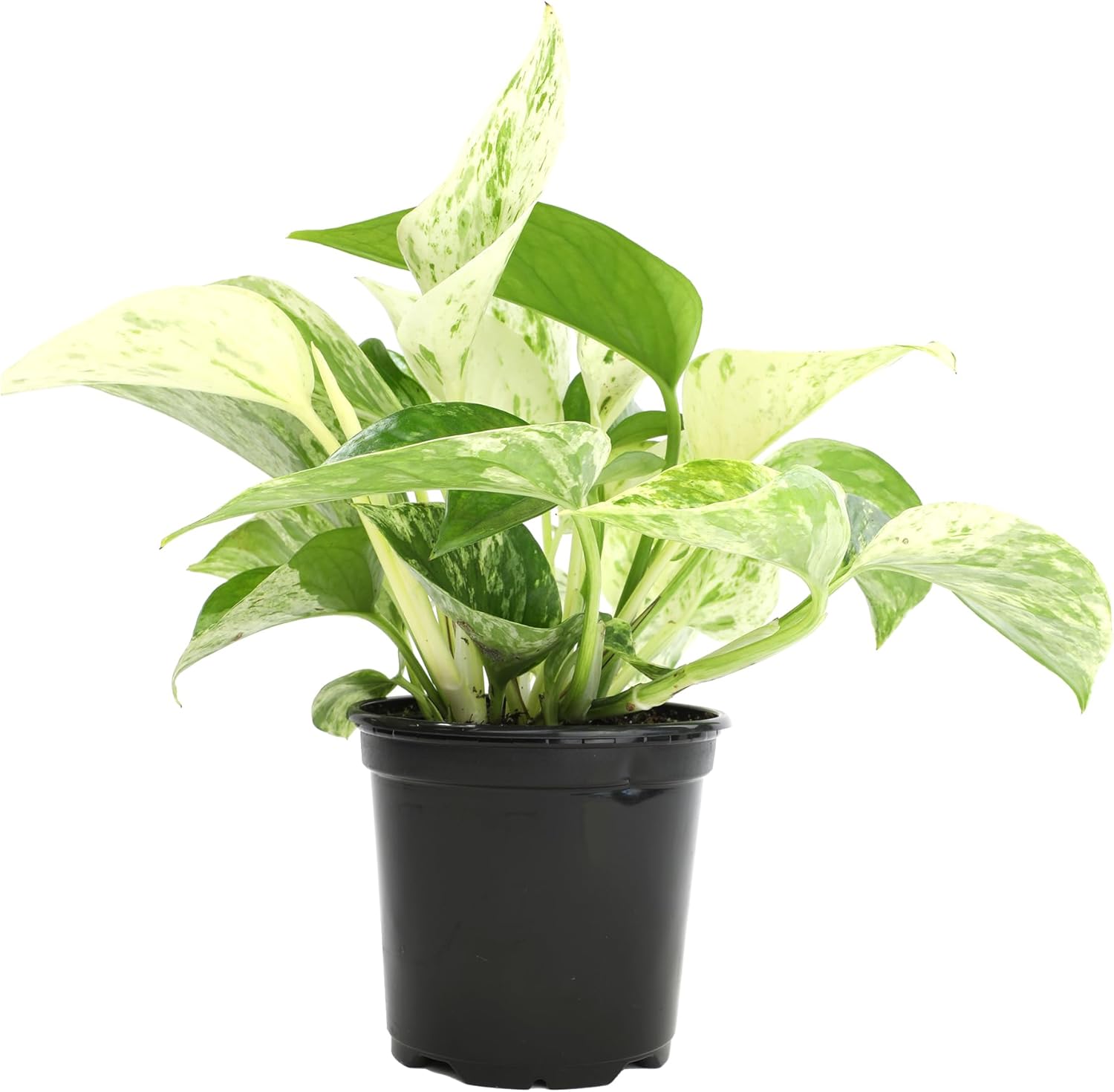
Plants for Pets Marble Queen Pothos live plant in 4" nursery pot
| Indoor Outdoor Usage | Indoor |
|---|---|
| Other Special Features of the Product | Air Purification |
| Moisture Needs | Moderate Watering |
| Material Features | Natural |
The Marble Queen pothos arrives fully rooted in a 4" nursery pot and provides immediately usable foliage for desks, shelves, or small hanging spots. This cultivar produces heart-shaped leaves with striking green-and-cream marbling that brightens dim corners without needing direct sun. Typical care is simple: place in bright, indirect or low light, water when the top inch of soil dries, and feed lightly during the growing season. Notable features include compact size on arrival, tolerance of lower light levels, and a natural air‑purifying reputation that makes it useful in bedrooms and offices. Because it ships in a small nursery pot it is easy to pot up into a hanging basket or decorative container, but buyers should plan to repot as it grows. Important limitations are its pet toxicity and sensitivity to overwatering, so it is not suited to locations where pets have access or to owners prone to watering too frequently. For someone who wants an attractive, low‑maintenance variegated vine for small low‑light spaces, this plant delivers immediate impact with minimal fuss.
Best for: Buyers who want a low‑maintenance, visually striking vine for desks, small shelves, or hanging displays in low‑light indoor rooms and who prioritize quick visual impact over large mature size.
Less Ideal for: People with curious pets or households that cannot keep plants out of reach should avoid this variety; also not the best choice for buyers who want a large mature specimen immediately.
- Arrives fully rooted and ready to display from a 4" nursery pot
- Tolerates low to bright indirect light, suitable for small indoor spaces
- Distinctive green-and-cream variegated foliage that brightens dim areas
- Contains compounds toxic to cats and dogs if ingested
- Small nursery pot means you will likely need to repot as it establishes
Verdict: A compact, low‑light tolerant variegated pothos that delivers instant decorative impact for small indoor spaces.
Altman Plants Live Snake Plant (Laurentii) — 4 in Grower Pot

| Indoor Outdoor Usage | Indoor, Outdoor |
|---|---|
| Other Special Features of the Product | Low Maintenance |
| USDA Hardiness Zone | 10, 11, 12 |
| Soil Type | Sandy Soil |
| Moisture Needs | Regular Watering |
The Altman Plants Laurentii is a small, fully rooted snake plant that brings the classic green-and-yellow variegation of Sansevieria to tight indoor spaces. It arrives in a 4-inch grower pot and is aimed at easy, low-effort upkeep: it tolerates low to bright indirect light, only needs watering when the top few inches of soil dry, and can handle occasional neglect. Practical benefits include its compact size for desks or shelves, resilience in variable light, and air-cleaning qualities that improve indoor environments. Because it is a living plant, expect normal variation in leaf size and occasional adjustment as it settles into a new home. This cultivar is not fussed about frequent watering but will grow more steadily with brighter indirect light and occasional feeding. For buyers wanting a no-fuss, small houseplant that adds structure and color, Laurentii is a sensible choice; those wanting a fast-growing statement plant or a specific bloom season should look elsewhere.
Best for: Ideal for busy households or office workers who want a dependable, low-effort houseplant that fits small spaces and requires minimal ongoing care.
Less Ideal for: Not the best choice for collectors seeking fast growth, frequent repotting projects, or a plant grown primarily for flowers.
- Very low maintenance and tolerant of irregular watering
- Performs well in low to bright indirect light, suited for small interiors
- Compact grower pot size fits desks, shelves, and narrow spaces
- Variegated foliage adds visual interest and structure to rooms
- Limited expected height and slow growth mean it will not rapidly fill a room
Verdict: A compact, virtually indestructible snake plant that delivers low-light tolerance and minimal care for busy small-space growers.
Hirt's Gardens Haworthia Succulent Plant (2" Pot)

| Sunlight Exposure | Partial Sun |
|---|---|
| Soil Type | Sandy Soil |
| Moisture Needs | Moderate Watering |
| Unit Count | 1 Count |
This Haworthia is a compact, slow-growing succulent that works well as an easy-care houseplant for low-light spots. It is typically kept in its small pot on a windowsill or desk where it receives bright indirect light; water only after the soil has dried to the touch. Notable features include drought tolerance, textured green leaves that may show color change with sun stress, and suitability for beginners who want a fuss-free plant. The practical benefits are minimal upkeep, a small footprint for tight spaces, and resilience to occasional missed waterings. Limitations are inherent to the plant size and container: it will remain small and may need repotting if you want larger growth, and the 2-inch pot holds little soil so watering frequency can vary with indoor conditions. If you need a very showy centerpiece or a large specimen plant this is not the right choice, but for a low-effort, space-saving green accent it performs as expected.
Best for: Buyers who want an affordable, low-effort indoor plant to brighten small, low-light spaces without much ongoing care.
Less Ideal for: Gardeners seeking a dramatic focal plant, a large specimen, or a colorful seasonal display should choose a larger or more showy species instead.
- Very low maintenance and drought tolerant
- Small size fits tight spaces like desks and shelves
- Good for low to bright indirect light conditions
- Slow growth reduces need for frequent repotting
- Supplied in a very small 2-inch pot so it may need repotting for long-term growth
- Limited visual impact compared with larger or more colorful plants
Verdict: A tiny, budget-friendly succulent that delivers reliable low-light, low-maintenance greenery for small indoor spaces.
Janet Craig Compacta Dracaena Live Houseplant (4" Grower Pot)

| Indoor Outdoor Usage | Indoor |
|---|---|
| Sunlight Exposure | Partial Shade |
| Moisture Needs | Moderate Watering |
| Soil Type | Peat Soil |
| Other Special Features of the Product | Air Purification |
The Janet Craig Compacta is a compact Dracaena chosen for low-light corners and minimal upkeep. It ships in a plastic grower pot with drainage holes and arrives pre-potted so you can place it straight into a home or office spot that gets partial shade. The plant tolerates moderate watering and prefers peat-based soil, so typical care is watering only when the top half of the potting mix dries and avoiding bright direct sun. Its deep green foliage offers a tidy, slow-growing profile that works well on shelves, desks, or narrow floor spaces. Practical benefits include straightforward maintenance, suitability for lower light, and a modest natural air-purifying quality. Important limitations are its small expected mature height and that plant appearance can vary since items are handpicked and soil may shift during shipping, so you should be prepared to stabilize and rehydrate the plant on arrival. This is a no-fuss choice for someone wanting a reliable, space-saving houseplant rather than a showy specimen.
Best for: Buyers who want a dependable, easy-care houseplant for low-light rooms and prefer a plant that requires minimal attention and immediate placement.
Less Ideal for: People seeking a large, fast-growing showpiece or those who need a plant with very specific variegation or exact cosmetic appearance on delivery.
- Tolerates low to medium light, suitable for shaded indoor spots
- Arrives pre-potted in a grower pot with drainage holes for immediate placement
- Low maintenance care with moderate watering needs
- Compact, slow-growing habit fits small spaces and narrow corners
- Noted for air purification properties
- Small mature size limits use as a focal statement plant
- Appearance can vary because plants are handpicked and photos are representative
Verdict: A fuss-free, reliable compact Dracaena for low-light rooms that you can pot and place immediately.
Costa Farms Snake Plant Live Indoor 3-Pack (Small, 8–12 in) in Grower Pots

| Indoor Outdoor Usage | Indoor |
|---|---|
| Other Special Features | Air Purification, Drought Tolerant, Low Maintenance |
| Sunlight Exposure | Partial Sun |
| Moisture Needs | Little To No Watering |
This Costa Farms Snake Plant 3-pack delivers three ready-to-display Sansevieria plants that work well on desks, shelves, or windowsills where space is limited. Each plant arrives in a grower pot about 8 to 12 inches tall and is billed as tolerant of low light and infrequent watering, so typical use is simply unboxing and placing them in bright indirect to partial sun or dim corners. Notable features include drought tolerance, low maintenance care instructions, and claimed air-purifying benefits. Practical advantages are immediate vertical decor without needing repotting right away and a forgiving nature that suits busy households or first-time plant owners. Limitations to expect are basic plastic grower pots rather than decorative planters and the small size if you want a larger floor specimen; also these are houseplants that do not bloom. Overall this pack is a convenient, low-effort way to add living greenery to small spaces, particularly when you want plants that survive occasional neglect rather than ones that require precise care.
Best for: Buyers who want an easy, low-effort way to add living greenery to small rooms or workspaces and prefer plants that tolerate missed waterings and varied light.
Less Ideal for: Gardeners seeking flowering houseplants or those who need a large statement floor plant right away should look elsewhere.
- Very low maintenance and drought tolerant, suitable for busy or new plant owners
- Ships as a ready-to-display trio for instant cohesive styling across small spaces
- Adapts to a wide range of light conditions including low light
- Includes plants at a usable 8–12 inch size so no waiting for visible impact
- Comes in basic plastic grower pots so you may want to repot for decor or long-term growth
- Small size is not suitable if you want an immediate floor-standing specimen
Verdict: Choose this three-pack when you want instant, low-maintenance greenery that thrives in small, low-light spaces and survives occasional neglect.
Choosing the Right Small Low Light Plants: Key Factors to Consider
True Low-Light Tolerance
Not all plants labeled 'low light' perform the same in dim interiors. True low-light tolerance means a plant can maintain growth and color in north-facing windows, narrow rooms, or corners with only indirect ambient light. Consider how quickly a plant loses vigor or leaf color when light decreases; species that go dormant or drop leaves with reduced light are poor fits for consistently dim spots.
Also think about seasonal light swings. A plant that tolerates winter gloom but needs brighter summer exposure can still be a good choice if you can rotate or move it to a slightly brighter location for part of the year. If you cannot move plants, choose species known for steady low-light performance rather than those that merely tolerate short stretches of shade.
Mature Size and Growth Habit
Small indoor spaces demand plants that stay compact without constant shaping. Look at mature height and spread, plus how quickly the plant produces new stems or runners. A slow to moderate growth rate that remains under tabletop height is ideal for shelves and desks.
Consider growth habit too. Upright rosettes, small clumping forms, or trailing plants that stay short can be easier to place in narrow spots. Avoid plants that develop long, floppy stems unless you want to allow trailing over edges or plan on regular pruning to maintain size.
Watering Frequency and Drainage Needs
Low-light plants generally need less frequent watering because lower light reduces evaporation and growth. However, tolerance for occasional overwatering varies by species. Choose plants whose moisture preferences match your routine. If you prefer a simple schedule, select species that thrive on infrequent, deep watering and tolerate short dry spells.
Also assess drainage needs. Some small low light plants are happy in standard potting mixes with good drainage, while others require exceptionally fast-draining or peaty mixes. Matching pot and soil type to the plant reduces root-rot risk and makes day-to-day care more forgiving.
Light Placement and Microclimates
Even within a single room light varies substantially near windows, under eaves, or in hallways. Check how a plant responds to nearby artificial light sources, drafts from doors, and heating or cooling vents. Microclimates can make a difference: a plant placed close to a lamp or on a bathroom shelf with occasional steam may do better than the same species in a cold, drafty corridor.
Account for proximity to other plants as well. In small groupings plants can create slightly higher humidity, which benefits some low-light species. Conversely, crowding can reduce airflow and increase disease risk, so place plants with their microclimate preferences in mind.
Leaf Texture and Aesthetic Impact
When space and light are limited, leaf shape, color, and texture become the primary way plants contribute to a room. Bold, glossy leaves read well in dim light, while finely divided foliage can disappear. Pick species with leaf contrast that matches the room scale and color palette.
A plant that maintains variegation or glossy sheen in low light will provide more visual payoff than one that becomes pale or leggy. Consider whether you want a trailing accent, a tight rosette, or architectural foliage to complement furniture and decor in a small setting.
Tolerance For Indoor Conditions
Indoor environments vary in temperature stability, humidity, and air circulation. Plants that tolerate typical household temperatures and lower humidity are more forgiving for most gardeners. If you do not use a humidifier, avoid species that demand constant high humidity.
Also factor in tolerance to occasional temperature swings from windows or doors. Sturdier plants that shrug off short cold drafts or warm blasts from heaters reduce the need for constant monitoring and relocation.
Best Spots For Small Low Light Plants
Small low light plants can brighten narrow shelves, desks, and bathrooms with limited windows. Ideal spots include north-facing windowsills with a few feet of depth, the top of low bookcases, or stair landings that receive ambient daylight rather than direct sun.
Place plants where they get consistent, indirect light rather than intermittent bright rays. Rotating plants every few weeks helps even out growth when one side faces the room or a window. Avoid placing delicate low-light species directly under heating vents or in drafty doorways.
- Bathroom shelves with occasional steam are good for humidity-loving species.
- Desks and nightstands benefit from compact, slow-growing plants that do not need daily care.
- Hallway corners with ambient light are suitable for tolerant clump-forming species.
Potting and Soil Tips For Dim Interiors
Choose pots with drainage holes and match pot size to the plant's root system. Oversized pots hold excess moisture and increase root-rot risk when growth is slow in low light. Use a well-draining potting mix adapted to the species; mixes with added perlite or orchid bark improve aeration.
For trailing or compact plants, shallow wide pots help stabilize top growth while allowing roots room to spread. Repot only when roots are clearly pot-bound to avoid unnecessary disturbance; many small low light plants prefer slightly snug conditions.
- Use a saucer or tray to protect furniture but avoid standing water.
- Top-dress with fine bark or pebbles to reduce soil splash and slow moisture evaporation modestly.
Light Alternatives When Natural Light Is Limited
If natural light is extremely limited, supplemental lighting can help but choose a low-intensity option that mimics indirect daylight. LED grow lights with a broad spectrum are efficient and produce little heat, making them safe near small plants and close to shelving.
Position lights to provide even illumination without blasting plants from one angle. A few hours of supplemental light during darker months or for a few days a week is often enough to maintain foliage for tolerant species; adjust duration based on plant response rather than strict schedules.
- Use a timer to provide consistent supplemental light without daily attention.
- Place lights 12 to 24 inches away from small plants to balance intensity and coverage.
Common Care Mistakes To Avoid
The biggest mistakes are overwatering and expecting rapid growth. In low light plants use less water and grow more slowly, so watering on a schedule designed for bright conditions causes root problems. Always check soil moisture an inch or two down before watering.
Another misstep is over-trimming or fertilizing heavily. Fertilizer should be reduced in dim conditions since plants do not use nutrients as quickly. Prune only to remove dead or damaged foliage and to maintain size; heavy pruning can stress a plant already coping with low light.
- Do not assume a plant labeled low light needs daily misting.
- Avoid moving plants frequently from bright to dark spots as repeated changes can trigger leaf drop.
Styling Small Low Light Plants Indoors
Group small plants with similar moisture and light needs to create mini displays that are easier to water and maintain. Use varied pot heights and textures to add depth in dim corners where color contrast is limited. Pair glossy-leaved species with matte foliage to create visual interest.
Consider vertical arrangements on wall shelves or plant ladders to maximize floor space. Trailing plants can soften edges of furniture while compact rosettes act as focal points on small surfaces.
- Mix leaf forms rather than only color for more visual impact in low light.
- Place plants at eye level or below for the best silhouette in dim rooms.
How We Chose the Best Small Low Light Plants
We focused on plants that stay genuinely small while tolerating low indoor light and normal household conditions. Our selection filters emphasized several concrete dimensions: consistent low-light tolerance across typical indoor windows, natural compact growth habit, predictable watering and humidity needs, resistance to common indoor pests and diseases, and general ease of maintenance for nonexpert gardeners. Plants that require bright indirect light, frequent repotting, or aggressive pruning were excluded to keep the list practical for truly dim spaces. We also prioritized species with a history of adapting to fluctuating household temperatures and routine care patterns. Finally, we favored plants that display useful aesthetic variation-leaf shape, color, or texture-so small plantings still add visual interest without needing larger specimens.
FAQ
Can small low light plants survive without any natural light?
Most cannot survive indefinitely without natural light. A few hardy species tolerate very low ambient light for long stretches, but most will benefit from at least occasional natural daylight or brief supplemental lighting to maintain healthy growth.
How often should I water small plants in dim rooms?
Watering often depends on species and potting mix, but generally water less frequently in low-light settings. Check soil moisture with your finger an inch or two down and only water when that layer feels dry. Overwatering is a common cause of decline in dim interiors.
Will variegated plants keep their pattern in low light?
Variegated plants often need brighter indirect light to maintain clear patterning. In low light variegation can fade or leaves may become greener as the plant produces more chlorophyll to capture available light.
Are small low light plants good for bathrooms?
Bathrooms can be an excellent spot if there is some natural light or occasional ventilation. The higher humidity in bathrooms suits many low-light species, but ensure there is at least ambient daylight or provide occasional supplemental light for best results.
Do small low light plants need fertilizer?
They require less fertilizer than plants in bright conditions. Apply a diluted balanced fertilizer sparingly during the main growing season and reduce or skip feeding in winter or when growth slows significantly.
How do I prevent pests on indoor low light plants?
Inspect plants regularly, especially underside of leaves and leaf axils. Maintain good airflow, avoid overwatering, and isolate new plants for a few weeks. Treat infestations early with appropriate nonchemical or low-toxicity measures suited for indoor use.
Final Verdict
Prioritize species that combine steady low-light tolerance with a naturally compact habit and modest watering needs. Match plant moisture preferences to your routine and the microclimate of the intended spot to reduce maintenance and stress. Keep expectations realistic about growth rate and color in dim conditions, and favor plants that offer the visual texture you want without demanding frequent moves or heavy care.
