

Note: This article contains affiliate links. If you click on these links and make a purchase, I may earn a small commission at no extra cost to you. This helps support my research and content. Read my full affiliate disclosure here.
Choosing the right soil mix for citrus trees makes a dramatic difference in how well they grow, flower, and set fruit. Citrus have specific needs for drainage, aeration, and steady nutrient supply whether they live in pots on a balcony or in a backyard bed. This guide covers seven shortlisted tree soil mixes chosen for citrus situations, each evaluated for how it handles water, nutrients, and root health in real garden use. Read on to see the evaluation criteria we used and practical notes to help you pick the right mix for your planting conditions.
Top Picks at a Glance
| Best Overall The best all-around choice for most situations | GARDENWISE Citrus Potting Soil Mix (10 Quarts) |  |
| Best Quality Built to a higher standard if you want something more solid | Soil Sunrise Citrus Tree Potting Soil Mix (30 Quarts) |  |
| Best Value The sweet spot between price and what you get | Duspro Pre-Mixed 4-in-1 Citrus Tree Potting Soil Mix, 10 Quarts |  |
| Best Budget The cheapest option that still gets the job done reliably | Doter Citrus Tree Potting Soil Mix (1 qt) |  |
| Highest Rated A top-rated pick with lots of positive feedback | E.B. Stone Organics Citrus & Palm Mix Potting Soil, 1.5 cu ft |  |
| Most Popular A crowd favorite that many people choose with confidence | Miracle-Gro Cactus, Palm & Citrus Potting Mix, 8 qt. |  |
| Best Seller A high-volume bestseller chosen again and again | Miracle-Gro Potting Mix, 16 qt. (2-Pack) |  |
GARDENWISE Citrus Potting Soil Mix (10 Quarts)

| Unit Count | 320 Ounce |
|---|---|
| Included Components | Perlite, coarse sand, coconut coir, vermiculite, compost, peat moss, dolomite, organic fertilizer |
| Volume | 10 quarts |
This citrus potting soil is a purpose-built mix for planting and repotting citrus trees indoors or in containers outdoors. The blend pairs extra perlite and coarse sand for quick drainage with coconut coir and vermiculite for lightness and aeration, while garden compost and peat moss help retain the right amount of moisture. The mix is adjusted to a slightly acidic pH and includes dolomite lime to stabilize acidity, which simplifies pH management for citrus species that prefer 5.5 to 6.5. It also contains added organic fertilizer and micronutrients such as iron, magnesium, and manganese to support leaf color and fruit development. Practical benefits include lower risk of root rot in containers, better root oxygenation, and reduced need for immediate supplemental feeding. Limitations are that this is a container/potting mix sold in a 10 quart unit so you may need multiple bags for larger trees or full repots, and the included peat and acidic components mean you should follow the safety recommendation to avoid dust inhalation and wear gloves when handling.
Best for: Gardeners who want an off-the-shelf potting mix optimized for citrus so they can plant or repot container citrus with minimal pH fiddling and solid nutrient support.
Less Ideal for: Those restoring large in-ground citrus orchards or needing bulk landscape soil should choose a garden-scale soil or blended topsoil instead.
- Formulated pH range of 5.5–6.5 tailored for citrus nutrient uptake
- Perlite and coarse sand improve drainage to reduce waterlogged roots
- Coconut coir and vermiculite keep the mix airy for good root aeration
- Includes organic compost and fertilizer plus micronutrients for fruit development
- Small 10 quart bag may be insufficient for repotting larger trees
- Contains peat and fine components that can produce dust during handling
Verdict: Choose this mix when you want a ready-made, slightly acidic potting soil that improves drainage and supplies nutrients specifically for healthy container citrus growth.
Soil Sunrise Citrus Tree Potting Soil Mix (30 Quarts)

| Volume | 30 quarts |
|---|---|
| Ingredients | Peat moss, perlite, sand, worm castings, lime |
| Style Name | Sandy |
| Unit Count | 1 Count |
Soil Sunrise Citrus Tree Potting Soil is a purpose-built container mix for lemons, limes, mandarins and other dwarf citrus. The blend pairs peat moss for moisture retention with coarse sand and perlite for fast drainage and good aeration, while worm castings supply slow‑release nutrients and lime helps stabilize pH for citrus preferences. In practice this mix makes repotting and routine top‑ups straightforward: it drains well enough to reduce root rot risk yet holds enough moisture to avoid constant watering for indoor plants. The resealable bag and 30 quart volume suit multiple repots or a couple of medium containers. Limitations are that it is not a complete fertilizer program so you will still need periodic feeding for fruit production, and the peat base means it is not the most sustainable option for gardeners avoiding peat. For someone focused on strong, healthy container citrus growth this mix reduces common soil problems and speeds establishment when potting or repotting trees.
Best for: Experienced home growers and serious hobbyists who want a ready‑made potting mix tuned for container citrus and value strong plant performance during repotting and establishment.
Less Ideal for: Gardeners seeking a peat‑free or fully fertilized all‑in‑one soil solution should consider alternative mixes or add-ons tailored to those priorities.
- Formulated for citrus with lime and worm castings to support nutrient availability and pH.
- Good drainage and aeration from perlite and coarse sand to reduce root rot risk.
- Large 30 quart bag covers multiple repots or several container trees.
- 100% natural ingredients with no additives or fillers listed.
- Contains peat moss which some gardeners avoid for sustainability reasons.
- Not a standalone fertilizer so additional feeding is needed for fruiting and long‑term vigor.
Verdict: Choose this mix if you want a performance‑focused, citrus‑specific potting soil that improves drainage, pH balance, and nutrient support for potted lemon and lime trees.
Duspro Pre-Mixed 4-in-1 Citrus Tree Potting Soil Mix, 10 Quarts

| Blend | Coco coir, coco fiber, perlite, vermiculite |
|---|---|
| Intended use | Potted citrus trees and container plants |
| Style Name | 10 Quarts |
| Item Weight | 1.24 kg |
This Duspro citrus potting mix is a convenient premixed blend designed to simplify repotting and upkeep of potted lemon, lime and other citrus trees. It combines coco coir and fiber for moisture retention, vermiculite for even water distribution, and perlite to improve drainage and root aeration. Use it straight from the bag to fill a drainage-equipped pot, center the tree, backfill around roots and water—no measuring or ingredient sourcing required. The double-screened texture reduces large debris and makes pouring cleaner during repotting. Practical benefits include predictable moisture balance for container citrus and better airflow around roots compared with plain garden soil, which helps lower the risk of root rot. The mix is sold in multiple volumes so you can pick a size that fits one or several standard 8-inch pots. Limitations to expect are a naturally dry, dusty texture on opening and that it is a general-purpose citrus mix rather than tuned to a single variety or fertilization schedule, so you may still need to add fertilizer or adjust with specialty amendments for specific trees or local conditions.
Best for: Gardeners who want a no-fuss, ready-to-use mix to repot and maintain potted citrus trees efficiently without custom blending ingredients.
Less Ideal for: Growers seeking a specially fertilized or variety-specific citrus substrate or those who prefer building a custom mix from individual components.
- Pre-mixed 4-in-1 formula (coco coir, coco fiber, perlite, vermiculite) saves time and avoids measuring ingredients
- Balanced moisture retention and improved drainage suited to container citrus root health
- Double-screened texture for cleaner, easier pouring and repotting
- Available in multiple volumes to match repotting needs for one or several pots
- Dry, dusty on opening which may require caution or a mask when unpacking
- Not fertilized or tailored to specific citrus varieties so additional feeding may be needed
Verdict: Buy this if you want a clean, pre-mixed potting medium that saves time and provides balanced moisture and drainage for container citrus trees.
Doter Citrus Tree Potting Soil Mix (1 qt)
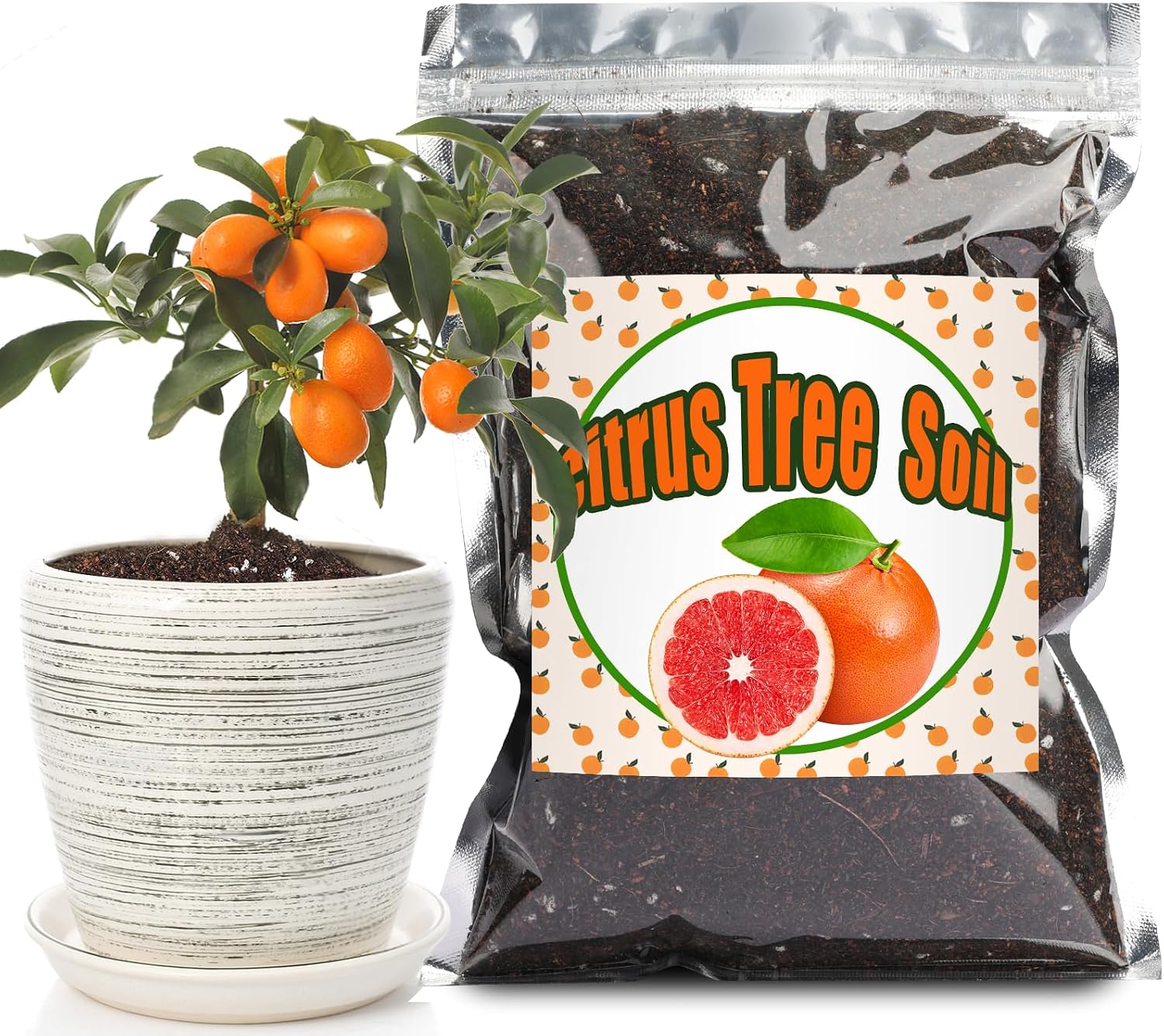
| Brand Name | Doter |
|---|---|
| Item Type Name | Garden soil |
| Volume | 1 quarts |
| Item Weight | 224 g |
This 1-quart Doter Citrus Tree Potting Soil is a small, ready-to-use mix designed specifically for potted citrus like lemon, lime, and orange trees. It keeps pH in the recommended 6.0–7.1 range so trees can take up nutrients efficiently, and the blend emphasizes drainage and aeration to reduce the risk of root rot in containers. The formula is enriched with organic and mineral nutrients to support growth and fruiting, making it useful for repotting young saplings or refreshing the top layer in established container trees. In practice the bag is convenient for trialing a new mix or amending soil in small pots, but the 1-quart volume means you will need multiple bags for larger containers or full repotting. It is straightforward to use straight from the bag and pairs well with additional amendments like perlite or compost if you want faster drainage or more long-term fertility. Expect a practical, citrus-focused mix best suited to small-scale container work rather than large landscape plantings.
Best for: Buyers who want an affordable, citrus-specific potting mix for small container trees, trialing soil blends, or topping up pots without mixing ingredients themselves.
Less Ideal for: Gardeners who need large volumes for in-ground planting or full repots of mature trees should choose bulk soils or commercial landscaping mixes instead.
- Formulated pH (6.0–7.1) tailored for citrus nutrient uptake
- Enhanced drainage and aeration to help prevent waterlogged roots
- Contains organic and mineral nutrients to support growth and fruiting
- Ready-to-use mix suitable for container citrus and quick top-dressing
- Small 1-quart volume requires multiple bags for full repotting of medium to large trees
- No detailed ingredient proportions or guaranteed analysis provided
Verdict: A convenient, citrus-tailored potting mix that makes it easy and inexpensive to top-dress or pot small container citrus trees.
E.B. Stone Organics Citrus & Palm Mix Potting Soil, 1.5 cu ft

| Brand | E.B. Stone Organics |
|---|---|
| Volume | 1.5 cubic feet |
| Suitable for | Citrus, palms, avocado, tropical plants |
This E.B. Stone Organics Citrus & Palm Mix is a purpose-built potting soil for citrus, palms, avocado and other tropical or deep-rooted plants. It combines aged fir bark and pumice to keep the mix fast-draining and well aerated, while added mycorrhizae help roots access water and nutrients; that makes it useful both for container repotting and for amending planting holes in the ground. The bag is ready to use straight away so you can pot up young trees or refill containers without blending amendments yourself. In practice the mix performs well where root oxygenation matters, reducing the chance of soggy conditions that lead to root rot, and it holds enough moisture and nutrients for steady growth between feedings. Limitations are the single 1.5 cu ft bag size if you need to fill multiple large containers or a tree planting large root balls, and there is no detailed NPK or amendment schedule on the label so you may want to plan a fertilizing routine for heavy feeders.
Best for: Gardeners who prioritize a dependable, plant-specific soil that reduces soggy roots and supports steady growth for citrus and tropical trees in pots or newly planted beds.
Less Ideal for: Large-scale plantings or landscapers who need bulk volumes for many trees should seek bulk soil or palletized product options.
- Formulated specifically for citrus, palms, avocado and tropical plants
- Aged fir bark and pumice provide fast drainage and improved aeration
- Contains beneficial mycorrhizae to enhance root nutrient and water uptake
- Ready-to-use blend suitable for both container potting and in-ground planting
- Only supplied in a single 1.5 cubic foot bag which may be small for planting multiple trees
- No specific NPK fertilizer information included on the product details
Verdict: Pick this mix when you want a reliable, ready-made soil that promotes drainage and healthier root establishment for citrus and other tropical trees.
Miracle-Gro Cactus, Palm & Citrus Potting Mix, 8 qt.
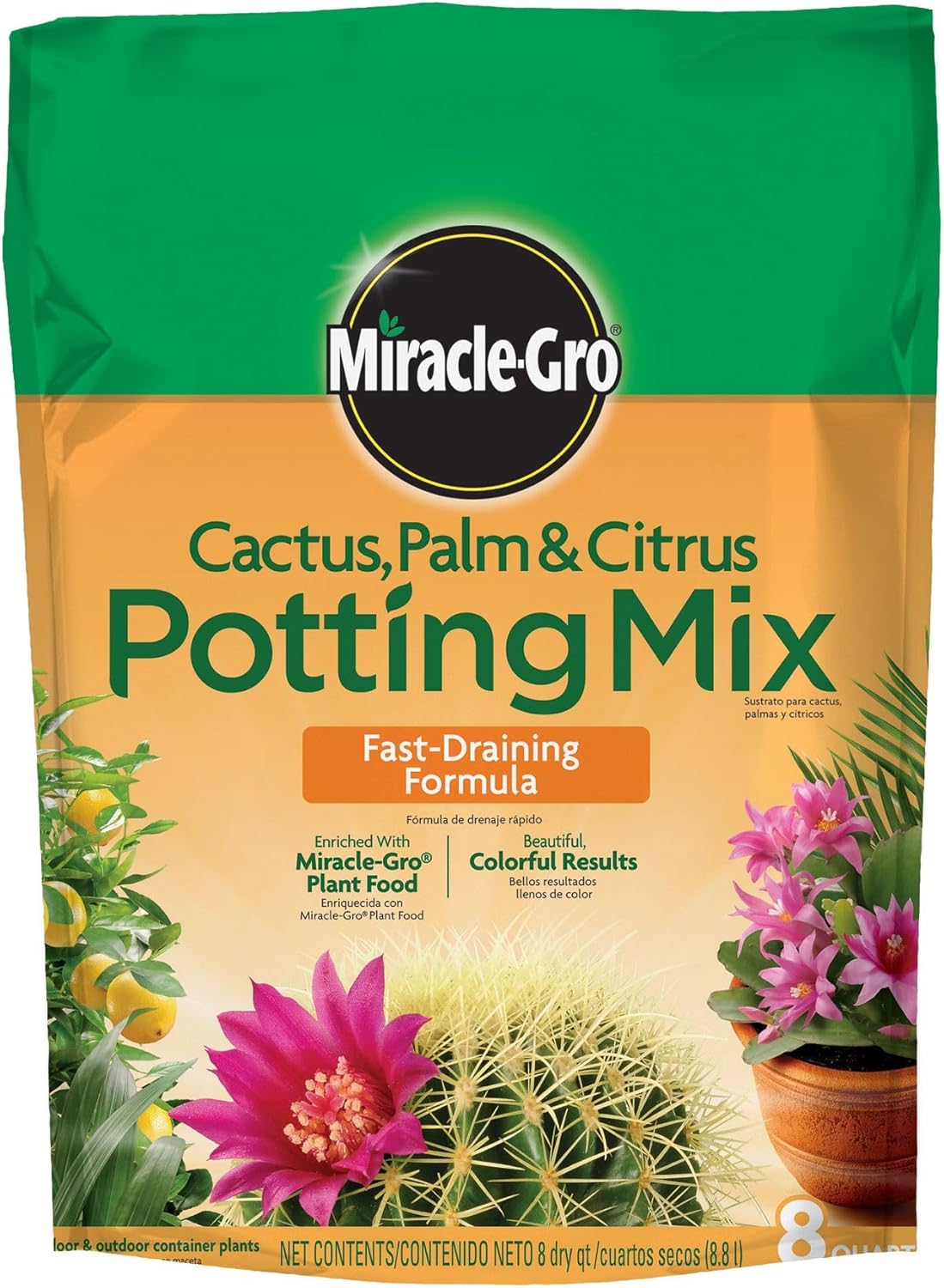
| Brand Name | Miracle-Gro |
|---|---|
| Volume | 8 quarts |
| Item Weight | 16 ounces |
| Style Name | Potting Mix |
This 8-quart Miracle-Gro mix is designed for container-grown succulents, palms, and citrus, combining peat moss, sand, perlite, and forest products to create a light, fast-draining media. It arrives enriched with Miracle-Gro plant food so newly potted trees and citrus get an initial nutrient boost without an extra fertilizer step. Typical use is filling a drain-holed container, placing the root ball, topping up with mix, then watering through and allowing the soil to dry between waterings. The coarse components help prevent compaction and improve drainage, which is important for citrus grown in pots where root rot is a risk. Because the bag is small, it is convenient for repotting smaller trees or topping up larger containers but you will need multiple bags for larger specimen trees. The included fertilizer makes a good starter, but you should plan a regular feeding schedule afterward for continued fruiting and growth. Overall, it is a practical, easy-to-use potting mix for people repotting container citrus who want dependable drainage and a built-in nutrient lift.
Best for: Buyers repotting or maintaining citrus in containers who prioritize reliable drainage and an easy, ready-to-use mix supported by broad customer use.
Less Ideal for: Growers establishing citrus in-ground or those needing a large-volume, custom-formulated orchard mix should look for bulk soil or professional blends.
- Fast-draining blend reduces risk of root rot in container-grown citrus.
- Pre-enriched with plant food to give newly potted plants an immediate nutrient boost.
- Contains perlite and sand to help prevent soil compaction and promote aeration.
- Suitable for indoor or outdoor containers and easy to use when repotting.
- Small 8 qt. bag means multiple bags are needed for larger citrus trees or multiple containers.
Verdict: A convenient, fast-draining potting mix with built-in plant food that makes repotting container citrus quick and low-effort.
Miracle-Gro Potting Mix, 16 qt. (2-Pack)

| Item Highlight | For Container Plants, Flowers, Vegetables, Shrubs, Annuals, Perennials, Potting Soil Mix, Feeds up to 6 Months |
|---|---|
| Number of Packs | 2 |
| Volume | 16 quarts |
| Ingredients | Sphagnum Peat Moss, Peat, Perlite, Compost, Fertilizer |
Miracle-Gro Potting Mix is a lightweight, fast-draining container soil designed to support outdoor potted plants, sold here as two 16-quart bags. It contains peat moss, perlite, compost, and built-in fertilizer so it both improves aeration and supplies nutrients for up to six months, which simplifies planting and reduces how often you need to feed. Typical use is filling pots and planters with good drainage, setting plants at nursery depth, and watering through until runoff. For citrus trees grown in containers, the mix’s drainage and nutrient boost help avoid waterlogging and give young trees an easier start compared with plain garden soil. Limitations for citrus include that this is a general all-purpose potting mix rather than a citrus-specific formula, so mature trees or heavy feeders may need supplemental fertilizer and occasional repotting to refresh media and prevent compaction. The bags are convenient for small to medium containers but may require multiple bags for larger specimen pots or rootball changes.
Best for: Gardeners who want a low-effort, reliable container potting mix to get citrus saplings or container fruit trees established and reduce early feeding and watering chores.
Less Ideal for: Growers with established, large citrus in big pots or in-ground trees who need a citrus-tailored soil or long-term, high-nutrient media should look for specialized blends or bulk amendments.
- Ready-to-use mix with perlite for good drainage in containers
- Contains compost and fertilizer that feeds plants up to six months
- Lightweight bag format suited to filling pots and planters
- Formulation supports root aeration to reduce risk of root rot in containers
- Not formulated specifically for citrus so additional fertilization may be needed for heavy feeders
- Small 16 qt. bag size means multiple bags are required for large containers or trees
Verdict: A convenient, drainage-focused potting mix that gives container citrus a nutrient boost and an easier start for up to six months.
Choosing the Right Tree Soil Mix for Citrus Trees: Key Factors to Consider
Drainage Vs Water Retention
Citrus roots need oxygen as much as they need moisture. A mix that drains too slowly encourages root rot and fungal issues, while a mix that sheds water too quickly leaves roots dehydrated between waterings. Look for a particle mix with coarse components like pine bark or perlite to create macropores that speed drainage, combined with finer organic material that holds plant-available water.
In containers this balance is even more critical because pots limit the volume of soil available. In-ground plantings have more buffering but still benefit from amended mixes that prevent waterlogging in heavy native soils.
Soil pH and Nutrient Availability
Citrus prefer a slightly acidic to neutral pH where micronutrients like iron and manganese remain available. A soil mix should either be near that range out of the bag or be easy to adjust with lime or sulfur. pH affects how well fertilisers work, so a stable pH reduces the need for corrective feeding.
Good mixes include organic matter that slowly releases nutrients and has buffering capacity so pH does not swing wildly after each feeding. Avoid mixes with unknown additives that can drive pH toward extremes.
Organic Matter Quality
Organic components provide slow-release fertility and improve particle adhesion, but their stage of decomposition matters. Well-aged compost or humus contributes nutrients without tying up soil nitrogen, while fresh, high-carbon materials can temporarily immobilize nitrogen and stress young trees.
Choose mixes that list mature compost, decomposed bark, or coconut coir rather than raw wood chips. Quality organic matter also helps the mix retain moisture between waterings without turning gummy or compacting.
Particle Size and Structure
Particle-size distribution determines aeration, drainage, and resistance to compaction. A mix with a range of particle sizes creates a stable structure where larger particles keep air channels open and smaller ones retain water around roots. Uniformly fine mixes compact and reduce oxygen, while mixes with too many large pieces may not hold enough moisture.
Look for explicit mention of screened components and proportions, or for ingredients that imply a balanced texture such as pine bark fines plus perlite or pumice.
Salt Levels and Fertilizer Compatibility
Citrus can be sensitive to salt buildup, especially in containers where salts from water and fertilizer accumulate. A good mix will have low soluble salt content initially and allow for periodic leaching through thorough watering. It should also be compatible with common citrus feeding schedules so nutrients remain available rather than binding to soil particles.
If you rely on slow-release fertilizers, choose a mix with stable organic matter and good cation-exchange capacity so those nutrients are held in the root zone rather than flushed away at the next heavy watering.
Longevity and Replanting Ease
Soil mixes break down over time as organic particles decompose and fine material accumulates, changing drainage and water-holding traits. For container citrus, mixes that maintain structure for multiple seasons reduce repotting frequency. For in-ground trees, an initial planted berm or amended planting hole should remain stable while root systems establish.
Consider how often you are willing to repot or refresh media and choose mixes with more inert components if you want longer intervals between refreshes.
Best Mixes for Container Citrus
Container-grown citrus need a fast-draining yet moisture-retentive mix because pots restrict root volume and concentrate salts. Favor mixes with a good proportion of airy amendments like pumice or perlite combined with fibrous organic matter that holds water but does not compact.
Also consider drainage holes, pot shape, and watering routine when choosing a mix. In practice, a well-structured container mix reduces watering frequency while protecting roots from standing water.
- Use coarse drainage materials only as part of the full mix, not as a bottom layer.
- Prefer mixes that explicitly list particle sizes or percentages.
Adjusting Mix pH and Feeding Regimen
If a mix is not in the ideal pH range, simple adjustments can help. For mildly acidic mixes that need raising, powdered lime can be incorporated before planting. For alkaline mixes, sulfur or acid-forming fertilizers help over time. Test pH after the first growing season to see whether the mix buffers changes from water and fertilizer.
Match your fertilizer type to the mix. Water-soluble feeds work quickly but can increase salt levels; slow-release formulas reduce that spike but rely on the mix to hold nutrients.
- Test potting mix pH annually for container trees.
- Flush containers periodically to prevent salt buildup.
Preparing Planting Holes and In-Ground Amendments
When planting citrus in the ground, avoid over-amending large volumes of the surrounding soil because roots quickly extend beyond the planting hole. Instead, amend the planting backfill to improve drainage and structure while leaving the native perimeter intact so roots transition gradually.
Dig a hole slightly wider than the root ball and blend the native subsoil with the chosen citrus mix at about a 1:1 ratio for heavy soils. This creates better drainage without creating a confined pocket that could trap water.
- For clay soils, increase coarse components to break up compaction.
- For sandy soils, add organic matter to boost water-holding capacity.
Repotting and Mix Refresh Strategies
Citrus in pots typically need repotting every 2 to 4 years depending on growth rate and mix breakdown. When you repot, remove the outer degraded media and refresh with a fresh mix to restore aeration and nutrient balance. Inspect roots for girdling or excessive circling and correct at repotting.
Top-dressing with compost or a light layer of fresh mix can extend time between full repots, but a full refresh gives the most predictable improvement in drainage and nutrient availability.
- Repot during active growth in spring for fastest recovery.
- Avoid planting deeper than the nursery root flare to prevent rot.
Watering and Seasonal Considerations
Adjust watering frequency by season and by mix. Fast-draining mixes dry faster in heat and wind, so water more often but with measured amounts. In winter, reduce water to avoid soggy conditions when root activity slows.
Mulches on the soil surface can reduce surface evaporation but avoid thick mulch against the trunk. For container trees, monitor the top few inches of mix and the overall pot weight to judge moisture levels.
- Weigh pots to estimate remaining moisture before watering.
- Use consistent watering practices to reduce stress during fruit set.
How We Chose the Best Tree Soil Mix for Citrus Trees
We selected mixes that address the key physiological needs of citrus trees and that perform reliably in common garden and container settings. Our editorial filters favored mixes formulated to balance fast drainage with enough water-holding capacity to reduce stress between waterings. We prioritized blends with stable physical structure so roots can access oxygen while fine particles retain soluble nutrients. Evaluation criteria included drainage rate under typical watering, water-holding capacity during dry periods, nutrient retention and release characteristics, pH buffering suited to citrus preferences, and organic matter quality and stability. We also considered mix particle size distribution and the presence of components that resist rapid compaction. Excluded items included unamended native garden soil, mixes designed only for succulents or true bog plants, and experimental blends lacking ingredient transparency. These filters ensure the shortlisted mixes suit a variety of citrus planting situations from patio containers to in-ground beds, and that they deliver predictable watering intervals, good root aeration, and the nutrient profile citrus need to fruit consistently.
FAQ
How often should I water citrus in a fast-draining mix?
Often depends on pot size and climate, but expect to water more frequently in hot weather. Check the top 2 inches of the mix and the pot weight; when the top mix feels dry and the pot is noticeably lighter, water thoroughly until excess drains.
Can I use garden soil mixed with potting media for citrus?
It usually depends on your native soil. Heavy clay garden soil can impede drainage even when mixed, so blend conservatively and add coarse amendments. If your soil is sandy, adding organic matter helps retain moisture. Avoid using raw unamended soil alone in containers.
What pH range should a citrus soil mix target?
Citrus generally do best in a slightly acidic to neutral range, roughly pH 5.5 to 7.0. Aim for a mix near that range or one that is easily adjusted, and retest periodically to ensure micronutrients remain available.
How can I prevent salt buildup in container citrus soil?
Leach pots occasionally by watering thoroughly until excess drains from the bottom, and schedule partial flushes after several feedings. Using low-salt water sources and following label guidance on fertilizer rates also reduces buildup.
Is it better to repot citrus yearly or less often?
Usually less often. Most container citrus need repotting every 2 to 4 years depending on growth and mix breakdown. Frequent repotting can stress trees; refresh only when drainage or root crowding becomes an issue.
Should I add slow-release fertilizer to the soil mix at planting?
Often a small amount of slow-release fertilizer at planting helps establish young trees, but avoid heavy initial charges that can scorch roots. For established trees, match fertilizer timing to growth cycles and the nutrient-holding properties of the mix.
Final Verdict
Pick a mix that balances quick drainage with enough water-holding capacity to keep roots hydrated between feedings. Prioritize particle structure, stable organic matter, and a pH near the slightly acidic range citrus prefer. Consider your planting situation – container or in-ground – and choose a blend that maintains structure for the expected interval between repots. Focusing on drainage rate, nutrient retention, and aeration will help you avoid common problems like root rot or nutrient lockup. With those priorities in mind, you can confidently select a tree soil mix that supports steady growth and reliable fruiting.
