

Note: This article contains affiliate links. If you click on these links and make a purchase, I may earn a small commission at no extra cost to you. This helps support my research and content. Read my full affiliate disclosure here.
Choosing the right soil for citrus matters more than many gardeners realize. Citrus trees need a mix that sheds excess water, keeps roots oxygenated, and supplies steady nutrients through the growing season. The wrong medium can slow growth, reduce fruiting, or lead to root diseases. This guide covers seven shortlisted options designed for citrus use, and explains the traits that make each mix appropriate for containers, raised beds, and in-ground plantings. We evaluate drainage, nutrient balance, texture, and long-term stability to help you pick the best soil for your situation.
Top Picks at a Glance
| Best Overall The best all-around choice for most situations | Soil Sunrise Citrus Tree Potting Soil Mix (30 Quarts) |  |
| Best Quality Built to a higher standard if you want something more solid | GARDENWISE Citrus Potting Soil Mix (10 quarts) |  |
| Best Value The sweet spot between price and what you get | Duspro Pre-Mixed 4-in-1 Citrus Tree Potting Soil Mix (6 Quart) |  |
| Best Budget The cheapest option that still gets the job done reliably | Doter Citrus Tree Potting Soil Mix (1 qt) |  |
| Highest Rated A top-rated pick with lots of positive feedback | E.B. Stone Organics Citrus & Palm Mix Potting Soil, 1.5 cu ft |  |
| Most Popular A crowd favorite that many people choose with confidence | Miracle-Gro Indoor Potting Mix for Cactus & Succulent, 8 qt. (2-Pack) |  |
| Best Seller A high-volume bestseller chosen again and again | Miracle-Gro Cactus, Palm & Citrus Potting Mix, 8 qt. |  |
Soil Sunrise Citrus Tree Potting Soil Mix (30 Quarts)

| Volume | 30 quarts |
|---|---|
| Ingredients | Peat moss, perlite, sand, worm castings, lime |
| Style Name | Sandy |
This 30-quart Soil Sunrise citrus potting mix is designed specifically for potted lemons, limes, mandarins, and other container citrus. The formula combines peat moss, perlite, coarse sand, worm castings, and lime to give a light, airy texture that drains well while retaining enough nutrients for steady growth. Typical use is repotting or top-filling indoor and patio citrus in containers where root aeration and avoiding waterlogged soil are priorities. Notable features are the inclusion of worm castings for slow-release nutrients and lime to help stabilize pH for citrus-friendly conditions. In practice the mix makes watering more forgiving, reduces root rot risk compared with heavy garden soils, and supports healthier root development and flowering. Limitations: it is a potting blend rather than a complete fertilizer so periodic feeding is still required for fruiting plants, and peat-based mixes can dry relatively quickly in hot, sunny settings which means more frequent watering may be needed.
Best for: Home gardeners who want a ready-made, citrus-focused potting mix that balances drainage, aeration, and feeding for indoor or patio container trees.
Less Ideal for: Growers who need an all-in-one fertilizing and feeding solution or those preferring completely peat-free or purely organic-certified potting media.
- Formulated specifically for container citrus with lime to help maintain citrus-friendly pH
- Light, well-aerated texture from peat, perlite, and sand to reduce soggy roots
- Contains worm castings to provide natural, slow-release nutrients
- Suitable for indoor and outdoor potted citrus, making repotting straightforward
- Does not replace regular fertilization for mature, fruiting citrus
- Peat-based mix can dry out faster in hot, exposed conditions
Verdict: Choose this mix when you want a citrus-specific, well-draining potting soil that helps prevent root rot and supports healthy potted citrus growth.
GARDENWISE Citrus Potting Soil Mix (10 quarts)

| Unit Count | 320 Ounce |
|---|---|
| Included Components | Perlite, coarse sand, coconut coir, vermiculite, compost, acidic compost, peat moss, dolomite, organic fertilizer |
| Volume | 10 quarts |
| Brand Name | GARDENWISE |
This Citrus Potting Soil Mix is built specifically to support citrus trees from planting through fruiting. The blend combines extra perlite and coarse sand for fast drainage with coconut coir and vermiculite to keep the mix light and airy so roots can access oxygen and avoid waterlogging. Garden compost and peat moss provide moisture retention while organic acidic compost and dolomite lime help target and stabilize the recommended citrus pH range of 5.5 to 6.5. The mix also includes a special organic fertilizer and micronutrients such as iron, magnesium, and manganese to support leaf health and fruit development. Typical use is potting new dwarf or container citrus, top-dressing older pots, or refreshing root zones before transplanting. Practical benefits include fewer pH tweaks, lower risk of root rot, and a balanced nutrient profile tailored for citrus performance. Limitations are that the bag is small for larger trees or orchards and the product warns about dust and skin irritation, so gloves and a mask are sensible when handling.
Best for: Gardeners focused on maximizing citrus health and fruit production who want a purpose-built, ready-to-use potting mix for containers or small trees.
Less Ideal for: People planting large landscape citrus or those who need bulk quantities for multiple trees should consider larger-volume garden soils or custom field mixes.
- Formulated for citrus with target pH 5.5–6.5 to reduce adjustment needs
- Good drainage from perlite and coarse sand to help prevent root rot
- Light, airy texture from coconut coir and vermiculite that promotes root aeration
- Includes compost and organic fertilizer for steady nutrient supply
- Contains key micronutrients (iron, magnesium, manganese) important for fruit quality
- 10 quart volume is small for mature trees or multiple containers
- Contains peat moss and produces dust so protective gear is advised
Verdict: Buy this if you want a ready-made, citrus-specific potting mix that balances drainage, moisture retention, and pH for better fruiting in containers and small trees.
Duspro Pre-Mixed 4-in-1 Citrus Tree Potting Soil Mix (6 Quart)

| Style Name | 6 Quarts |
|---|---|
| Item Weight | 0.81 kg |
| Brand Name | Duspro |
This Duspro 4-in-1 citrus potting soil is a pre-mixed blend designed for repotting lemon, lime, orange and other container citrus. It pairs coco coir and coco fiber with perlite and vermiculite so the medium holds moisture without staying soggy while the perlite improves drainage and root aeration. Use it straight from the bag to fill a pot with drainage holes, or blend it with extra pumice or compost if you prefer a more draining or nutrient-rich mix. The product is double-screened for consistent texture, which makes pouring and potting less messy, though the dried mix can be dusty when opened so handle it outdoors or use a mask. Available in small sizes suitable for one to a few 8-inch pots, this is convenient for indoor citrus and other container plants that need balanced moisture and airflow at the roots. It does not include fertilizers, so plan to feed trees separately as they establish and grow.
Best for: Buyers who want a reliable, ready-to-use potting mix to repot or top-dress potted citrus without mixing components themselves and who prioritize consistent texture and balanced moisture control.
Less Ideal for: Gardeners who need an all-in-one fertilized soil or those repotting very large citrus specimens that require bulk commercial quantities.
- Pre-mixed 4-in-1 formula saves time by combining coco coir, coco fiber, perlite and vermiculite
- Balanced moisture retention with perlite for improved drainage and root airflow
- Double-screened texture for cleaner, easier pouring and repotting
- Suitable sizes for standard container citrus so you can choose quantity by pot count
- No built-in fertilizer so you must amend or feed plants separately
- Smaller pack sizes may require multiple bags for larger trees or several pots
Verdict: A convenient, pre-blended citrus potting mix that delivers balanced moisture and good drainage for potted lemon, lime and orange trees.
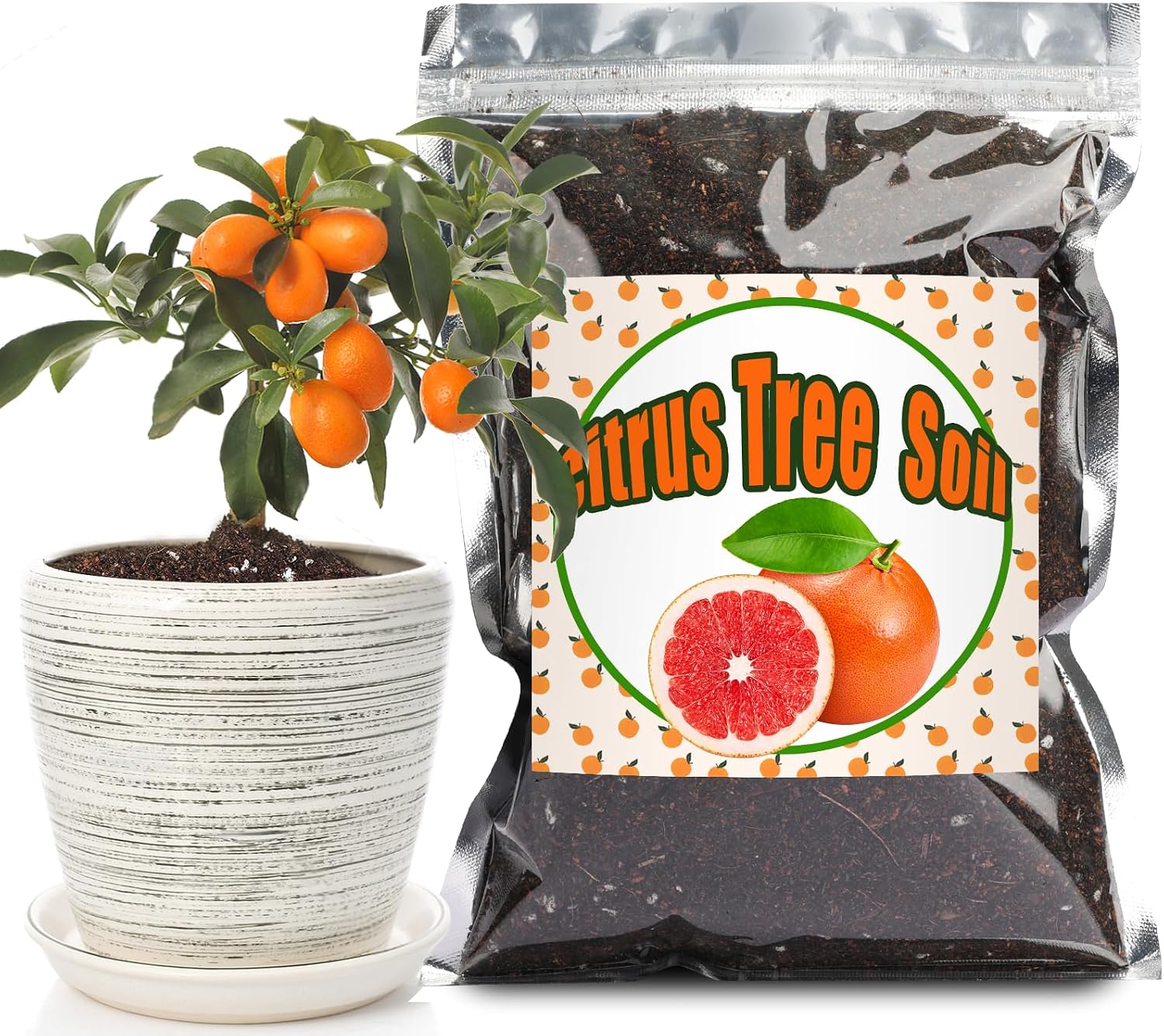
Doter Citrus Tree Potting Soil Mix (1 qt)
| Brand Name | Doter |
|---|---|
| Item Type Name | Garden soil |
| Volume | 1 quarts |
This 1-quart Doter citrus potting mix is designed to give potted lemon, lime, orange and other citrus trees the soil conditions they prefer. The blend is marketed as pH balanced at about 6.0–7.1 and contains organic and mineral components to improve drainage and nutrient availability, so it is useful for repotting young trees or topping up containers. In practice the loose, loamy texture helps prevent waterlogging that causes root rot while still holding enough moisture for regular watering. The small pack is convenient for testing the mix on a single plant or for hobbyists managing a few containers, and it arrives ready to use without amendments. Limitations are the tiny 1-quart volume and lack of detailed ingredient percentages, so larger trees or multiple pots will need more product or a bulk alternative, and heavy feeders may require additional fertilizer over time.
Best for: Home gardeners who want a convenient, citrus-specific potting mix to repot or top-dress one or two container citrus trees without mixing components themselves.
Less Ideal for: Growers tending multiple citrus trees, larger patio trees, or those needing precise nutrient formulation should choose larger-volume or professionally specified potting soils instead.
- Formulated pH range suited to citrus (approx. 6.0–7.1) to aid nutrient uptake
- Loose, well-draining texture that reduces risk of waterlogged roots
- Enriched with organic and mineral nutrients to support growth and fruiting
- Ready-to-use small package ideal for single pots or trialing a mix
- Only 1 quart per package so not practical for repotting larger trees or multiple containers
- No full ingredient breakdown or nutrient analysis provided
Verdict: A convenient, citrus-focused 1-quart mix that delivers balanced pH and good drainage for repotting or refreshing a single container citrus tree.
E.B. Stone Organics Citrus & Palm Mix Potting Soil, 1.5 cu ft

| Brand | E.B. Stone Organics |
|---|---|
| Volume | 1.5 cubic feet |
| Suitable for | Citrus, palms, avocado, tropical plants |
| Components | Aged fir bark, pumice, mycorrhizae |
This ready-to-use Citrus & Palm Mix is built for deep-rooted citrus, palms and tropical plants, supplying a balance of drainage, aeration and moisture retention. The blend combines aged fir bark and pumice to keep roots oxygenated and reduce risk of waterlogged soil while organic components and added mycorrhizae support nutrient uptake and healthier root development. It can be used straight from the bag to repot containers or worked into planting holes for in-ground citrus and palms, which makes it convenient for both potted patio trees and landscape plantings. The 1.5 cubic foot bag is a practical size for small projects or topping a few pots, but larger plantings will require multiple bags. This mix focuses on performance rather than fertilizer load, so you may still need to feed established trees on a regular schedule for sustained fruiting and growth. For gardeners who want an organic, problem-avoidant medium that reduces root rot risk and encourages strong root systems, this mix performs exactly as intended.
Best for: Home gardeners who prioritize a reliable, low-risk soil for citrus and tropical containers or small landscape plantings and want an organic, ready-made mix that supports healthy roots.
Less Ideal for: Large-scale plantings or commercial growers who need bulk volumes or a soil mix with built-in long-term fertilizer; those projects are better served by bulk landscape mixes or custom blends.
- Formulated specifically for citrus, palms and tropical plants to match their root needs
- Aged fir bark and pumice improve drainage and aeration to reduce root rot risk
- Contains beneficial mycorrhizae to help roots access water and nutrients
- Ready to use for potting or as a planting amendment with no mixing required
- 1.5 cubic foot bag is small for larger landscape plantings and requires buying multiple bags
Verdict: Choose this mix when you want a dependable, organic, fast-draining soil that reduces root rot and supports healthy roots for citrus and tropical plants.
Miracle-Gro Indoor Potting Mix for Cactus & Succulent, 8 qt. (2-Pack)

| Item Highlight | Fast-Draining Cactus and Succulent Potting Mix with Plant Food |
|---|---|
| Number of Packs | 2 |
| Included Components | 2 bags |
| Item Type Name | Soil |
| Ingredients | Sphagnum Peat Moss, Sand, Perlite |
This two-pack of Miracle-Gro Indoor Potting Mix is a peat- and perlite-based, fast-draining soil designed for desert-type houseplants and other indoor containers. It is used straight from the bag for repotting cacti, succulents and small citrus or sun‑loving container plants where drainage is important. The formula blends sphagnum peat moss, sand, forest products and perlite, and is enriched with Miracle-Gro plant food to give newly potted plants an initial nutrient boost. In practice the mix fills several 6-inch pots per bag, is lightweight to work with, and helps prevent soggy roots when paired with a pot that has drainage holes. Limitations to note are the modest bag volume for larger citrus specimens and the peat content, which some growers avoid for sustainability reasons. For established larger citrus trees or in-ground planting you will likely need more volume or a heavier amendment strategy, but for small indoor citrus or regular repotting of succulents this mix simplifies the job and reduces mixing time.
Best for: Buyers who want a convenient, fast-draining ready mix for repotting indoor succulents, cacti or small citrus in containers and who value an included nutrient boost over DIY blends.
Less Ideal for: Gardeners repotting large citrus trees, filling big containers, or those seeking peat-free or in-ground soil solutions should consider larger-volume or different-formula options.
- Formulated for fast drainage to reduce root rot risk in succulents and cacti
- Includes plant food to give newly potted plants an initial nutrient boost
- Ready-to-use mix eliminates the need to blend separate components
- Perlite and sand improve aeration for small container citrus or sun‑loving indoor plants
- Each bag is small for larger citrus specimens so multiple bags are needed for big repots
- Contains sphagnum peat moss which some buyers avoid for environmental reasons
Verdict: A convenient, plant-food enriched fast-draining mix that simplifies repotting small indoor succulents and container citrus.
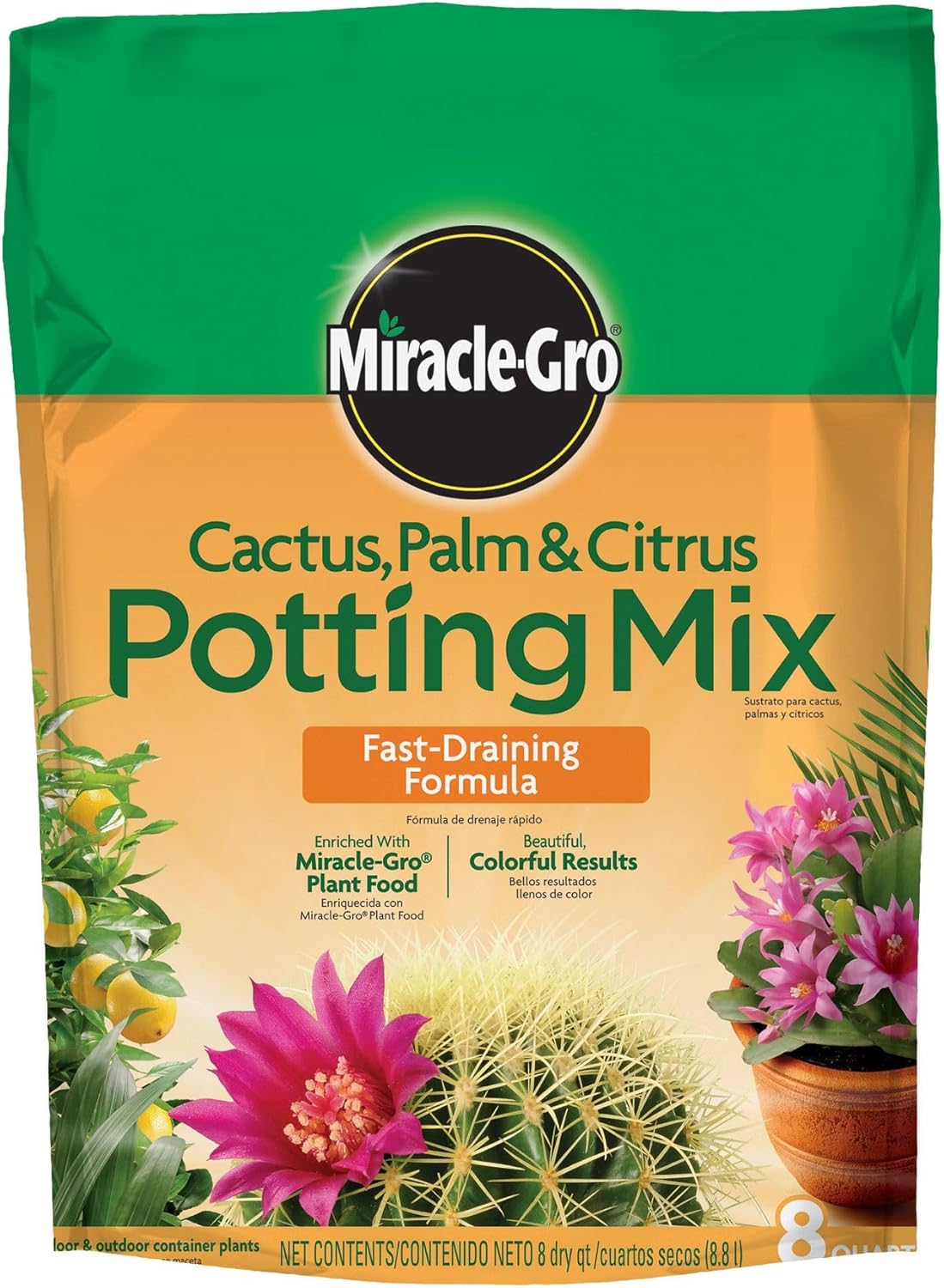
Miracle-Gro Cactus, Palm & Citrus Potting Mix, 8 qt.
| Volume | 8 quarts |
|---|---|
| Item Weight | 16 ounces |
| Intended use | Cactus, palm & citrus container plants |
| Formula | Fast‑draining, enriched with plant food |
This 8 qt. Miracle‑Gro potting mix is designed for container cacti, palms, and citrus and combines peat moss, sand, perlite and forest products to deliver a loose, well‑draining medium. It arrives enriched with starter plant food so newly potted citrus gets nutrients from the first watering and the formulation helps prevent soil compaction for better root airflow. Use it in any pot with drainage: fill the container, set the root ball, top off and water thoroughly, then allow the surface to dry between waterings as recommended. Practical benefits include easier watering management for drought‑sensitive succulents and citrus, and one bag typically fills two 8‑inch pots which makes repotting small trees straightforward. Limits to expect are bag size for larger citrus that need frequent repotting and that the included nutrients are starter feed only so a regular feeding schedule is still necessary for long‑term fruit production. For cautious gardeners this mix offers a familiar, low‑risk foundation for healthy container citrus when used with pots that drain well.
Best for: Home gardeners who prefer a low‑risk, ready‑to‑use soil for potted citrus and succulents and want consistent, easy watering and repotting results.
Less Ideal for: Growers who need bulk soil for large outdoor citrus plantings or who want to custom‑mix their own specialty soil recipes.
- Fast‑draining blend reduces risk of root rot in container citrus and succulents
- Pre‑enriched with Miracle‑Gro plant food to support initial growth
- Contains perlite and sand to prevent compaction and improve aeration
- Suitable for indoor or outdoor containers and easy to use for repotting small trees
- Only an 8 qt. bag so you will need multiple bags for medium or large citrus trees
- Starter nutrients require a separate feeding program for sustained fruiting
Verdict: A convenient, fast‑draining pre‑fertilized mix that takes the guesswork out of potting container citrus for cautious gardeners.
Choosing the Right Soil for Citrus: Key Factors to Consider
Drainage and Aeration
Citrus roots need steady oxygen. A soil that drains too slowly will stay waterlogged after irrigation or rain, creating low-oxygen conditions that encourage root rot and reduce nutrient uptake. Look for mixes with coarse particles such as horticultural sand, perlite, pumice, or pine bark to create pore space and allow excess water to move away from the root ball.
Good aeration also helps roots explore and grow, improving drought tolerance and overall vigor. For container-grown citrus, drainage is even more critical because pots hold water against roots; a free-draining mix shortens wet-dry cycles and supports healthy root architecture.
Nutrient Profile and Buffering
Citrus trees require steady supplies of nitrogen, potassium, and micronutrients like iron and magnesium. A suitable soil should contain a modest reserve of organic matter and slow-release nutrient sources so you do not have to correct deficiencies constantly. Blends that include well-composted organic matter or controlled-release components provide baseline fertility while reducing fertilizer shock.
Buffering capacity is important because citrus prefer slightly acidic to neutral conditions. Soils with adequate organic content and mineral components resist rapid pH swings when you water or fertilize, which helps maintain nutrient availability over time.
Soil Texture and Particle Size
Texture affects water retention, compaction, and root penetration. A medium-fine texture that mixes coarse aggregates and finer organic particles gives a balance between water-holding capacity and porosity. Too fine a texture compacts and holds water; too coarse a texture drains excessively and can require more frequent irrigation.
Pay attention to particle size distribution. Coarse sand or pumice chunks improve structure, while pine bark fines and compost supply water retention and nutrients without collapsing under repeated wetting and drying cycles.
pH Compatibility
Most citrus species perform best in slightly acidic soils, typically in the pH range of about 5.5 to 6.5. Soil pH affects the availability of iron, zinc, manganese, and other micronutrients that citrus need to set healthy fruit and maintain green foliage. Choosing a mix with neutral to slightly acidic tendencies, or one that is easy to adjust with standard garden amendments, will save corrective work.
Avoid mixes that are highly alkaline or contain large amounts of crushed limestone unless you are prepared to acidify the root zone. Regular testing helps track pH trends, especially in containers where pH can drift faster.
Longevity and Organic Matter Stability
Organic components break down over time and change how a soil behaves. Rapidly decomposing materials may compact and retain more water as they age, altering drainage and aeration. Choose soils with well-aged compost and stable components such as pine bark or coir rather than raw, fresh organics that settle quickly.
For long-lived citrus in containers or planted beds, a stable mix reduces the need for frequent repotting or major soil replacement. It also helps maintain consistent nutrient release profiles and physical structure over multiple seasons.
Suitability for Containers Vs In-Ground Planting
Container and in-ground citrus soils serve different roles. Container mixes need to be lighter, faster-draining, and more stable under wet-dry cycles because pots limit rooting volume and retain salts. In-ground soils can rely more on native soil structure but may still require amendment to improve drainage and nutrient retention.
Consider root-zone depth, container size, and local rainfall patterns when choosing a mix. A mix that performs well in a large container might be excessive for an established tree in a well-draining garden bed, and vice versa.
Preparing Existing Garden Soil for Citrus
If you are planting citrus in the ground, improving native soil is often the most practical route. Start by testing drainage and pH. If drainage is slow, incorporate coarse amendments such as coarse sand, crushed rock, or pumice and add well-aged organic matter to improve structure and nutrient content.
Work amendments into the planting hole and the surrounding root zone, rather than relying on a concentrated pocket of potting mix. Mixing improves rooting into the native soil and reduces the risk of water pooling at the interface between different textures.
- Dig a wide planting hole at least twice the root ball width to encourage lateral roots.
- Blend 20 to 50 percent coarse amendment or stable compost into heavy soils.
- Avoid raw manures or fresh green waste that can overheat or tie up nutrients.
Container Potting Practices for Citrus
Containers amplify the effects of soil choice. Use a light, well-draining potting mix with stable organic matter and chunky minerals to prevent compaction. Ensure pots have adequate drainage holes and consider adding a layer of coarse material at the bottom to speed runoff only when needed; avoid creating a perched water table by relying solely on coarse bottom layers.
Topdress with slow-release fertilizer or feed regularly with a balanced citrus formulation because container media have limited nutrient reserves. Repot on a schedule that matches root growth and avoid excessively deep pots that hold cold, wet soil in cool climates.
- Choose terracotta or breathable containers in hot climates to reduce overwatering.
- Use saucers only when you can monitor and remove standing water promptly.
- Repot every 2 to 4 years depending on growth and media breakdown.
Amendments and Additives That Help Citrus
Certain amendments reliably improve citrus root environments. Pumice, coarse sand, and perlite increase porosity and lower bulk density. Well-composted bark or coir provides stable organic matter without rapid settlement. Mycorrhizal inoculants can aid early root establishment but are not a substitute for a properly structured soil.
Avoid using large amounts of fresh compost or uncomposted wood chips in the planting zone as they can immobilize nitrogen during decomposition. Instead, use finished compost as a minor component to supply nutrients and beneficial microbes.
- Add iron chelate or foliar iron if you see chlorosis and pH adjustments do not fix availability.
- Use gypsum only when sodium or clay issues require it; it does not change pH significantly.
- Topdress with compost annually rather than mixing large quantities into the established root zone.
Managing pH and Nutrient Needs Over Time
Monitor soil or media pH annually, especially in containers where pH can drift more quickly. Use targeted amendments to correct pH slowly. For mild alkalinity, sulfur or organic acidifying amendments can help. For low pH, lime may be appropriate but is rarely needed for citrus which favors slightly acidic ranges.
Feed citrus with a balanced program tailored to growth stage. Young trees need a steady baseline of nitrogen for vegetative growth, while mature fruiting trees need additional potassium and micronutrients. Regular foliar checks for iron and zinc deficiency allow early corrective action.
- Perform a simple soil test every 1 to 2 years and a foliar nutrient test if leaves show persistent defects.
- Adjust fertilizer frequency rather than using heavy single applications to avoid salt buildup.
Seasonal Care and Watering Strategies
Watering schedule depends on soil mix, container size, and climate. In free-draining mixes expect more frequent waterings but shorter saturation times. Check moisture by probe or finger rather than clock schedules. Water deeply and let the top portion of the root zone dry slightly between cycles to encourage deeper rooting.
Reduce watering in cooler months when growth slows. Mulch established in-ground trees to moderate soil temperature and moisture, but keep mulch off the trunk to prevent collar rot.
- Use a moisture meter for large containers or new plantings to avoid overwatering.
- Increase irrigation in fruit expansion periods to prevent split fruit and stress.
How We Chose the Best Soil for Citrus
We selected soils that are appropriate for citrus trees based on measurable horticultural properties rather than brand reputation. Key evaluation criteria included drainage and aeration, nutrient profile and buffering capacity, organic matter content and stability, pH suitability, and suitability for container versus in-ground use. We favored mixes with particle sizes and components that promote oxygen at the root zone and evacuate excess moisture quickly, because citrus roots are prone to rot in poorly drained media. We excluded generic potting mixes designed primarily for annual flowers, heavy clay soils that lack structure, and products without clear ingredient information. Also filtered out blends that require complex, frequent corrective fertilization to perform. The listed soils are those that meet practical garden standards for citrus cultivation across climates, container sizes, and planting methods.
FAQ
Can I use general-purpose potting soil for citrus in containers?
General-purpose mixes often retain too much moisture for citrus. They can work if you amend them for drainage with coarse sand, pumice, or bark and monitor watering closely. A purpose-formulated citrus or cactus-style mix is usually an easier path to good results.
How often should I repot a citrus tree in a container?
Repotting typically happens every 2 to 4 years depending on growth rate and media breakdown. Repot when roots circle the pot, drainage slows, or the mix has compacted. Refreshing the soil restores aeration and nutrient reserves.
What pH range should I aim for with citrus soil?
Aim for a slightly acidic range, roughly 5.5 to 6.5. That range makes iron and other micronutrients more available and suits most citrus species. Test periodically and make gradual adjustments when needed.
Should I add slow-release fertilizer to the soil at planting?
Including a modest slow-release fertilizer at planting can provide a nutrient base for early growth. Avoid overdoing it, and supplement with regular feedings appropriate to the tree's age and fruiting stage to maintain steady nutrition.
How can I improve drainage in heavy clay soil before planting citrus?
Work coarse aggregates and stable organic matter into the native soil to break up compaction. Increasing planting hole width and depth and planting slightly raised will also help. In extreme clay, consider building a raised bed filled with a well-structured mix for better control.
Final Verdict
Choose a soil for citrus that prioritizes drainage and stable organic matter over simply high water retention. For containers, favor mixes with coarse particles and tested slow-release nutrients. For in-ground plantings, improve native soil structure and pH where required. Balance the tradeoffs between moisture holding and aeration based on your climate and planting method. When you pick a soil that matches drainage needs, nutrient supply, and long-term stability, you make most other care steps easier and greatly reduce common root and nutrient problems.
