

Note: This article contains affiliate links. If you click on these links and make a purchase, I may earn a small commission at no extra cost to you. This helps support my research and content. Read my full affiliate disclosure here.
Choosing the right soil mix matters for indoor plants because it controls moisture, root oxygen, and nutrient delivery in a confined pot. If you pick a mix that holds too much water, roots can rot; a mix that drains too quickly will stress thirsty species and force more frequent watering. This guide looks at the top shortlisted plant soils for houseplants and explains which mixes work best for typical indoor conditions, plant types, and container sizes. We evaluate mixes on drainage, nutrient retention, texture, and ease of use so you can match a soil to how you garden indoors.
Top Picks at a Glance
| Best Overall The best all-around choice for most situations | Miracle-Gro Moisture Control Potting Mix, 8 qt. (2-Pack) |  |
| Best Quality Built to a higher standard if you want something more solid | FoxFarm Ocean Forest Potting Soil, 12 qt |  |
| Best Value The sweet spot between price and what you get | Miracle-Gro Indoor Potting Mix for All Plants, 16 qt. |  |
| Best Budget The cheapest option that still gets the job done reliably | Back to the Roots Organic Indoor Potting Mix, 6 Quart |  |
| Highest Rated A top-rated pick with lots of positive feedback | circle soil Houseplant Potting Mix (Peat-Free, 4 qt) |  |
| Most Popular A crowd favorite that many people choose with confidence | Miracle-Gro Indoor Potting Mix for All Plants, 6 qt., 2-Pack |  |
| Best Seller A high-volume bestseller chosen again and again | Back to the Roots Organic Indoor Potting Mix, 12 Quart |  |
Miracle-Gro Moisture Control Potting Mix, 8 qt. (2-Pack)

| Number of Packs | 2 |
|---|---|
| Unit Count | 512 Ounce |
| Feeds Plants | Up to 6 months |
| Style Name | 8 qt. |
Miracle-Gro Moisture Control Potting Mix is a ready-to-use container soil designed to protect potted plants from both over- and under-watering while delivering nutrients for up to six months. You use it the same way as any potting mix: pick a pot with drainage, fill, loosen roots, plant, top off and water through. Its AquaCoir formula (sphagnum peat moss, coir and a wetting agent) claims to absorb about 33% more water than basic mixes, which helps maintain more consistent moisture between waterings and reduces how often you need to water houseplants. The mix is described as airy so roots can breathe, making it suitable for most indoor container plants, including flowers and vegetables kept in pots. Important limits are that it is formulated for containers rather than in-ground beds and that nutrients are time-limited, so you should repot or refresh soil annually to avoid compaction and depleted fertility. Also follow safety guidance to avoid skin or eye contact and keep out of reach of children.
Best for: Best for houseplant owners and container gardeners who want a low-maintenance potting mix that evens out watering and supports steady growth.
Less Ideal for: Not a good choice for gardeners planting directly in garden beds or those who need a permanent soil amendment for in-ground landscaping.
- Designed to reduce over- and under-watering by holding more moisture than basic potting soils
- Feeds plants for up to six months so containers receive continuous nutrition
- AquaCoir blend promotes good aeration for healthy root growth
- Ready-to-use formulation suitable for a wide range of indoor potted plants
- Not intended for in-ground garden beds or long-term in-ground use
Verdict: A convenient, moisture‑control potting mix that helps container houseplants hold water longer and stay fed for up to six months.
FoxFarm Ocean Forest Potting Soil, 12 qt

| Item Form | Granules |
|---|---|
| Specific Uses For Product | Dry Fertilizer |
| Coverage | 4.8 sq ft |
| Mixing Ratio | 1:1 |
FoxFarm Ocean Forest is a ready-to-use potting soil designed to get houseplants and container-grown starts off to a strong start. The mix combines aged forest products, sandy loam and sphagnum peat moss for loose, well-aerated texture and reliable drainage while retaining moisture where roots need it. It is amended with fish meal, crab meal and earthworm castings so seedlings and transplants have an immediate source of organic nutrients and typically do not need additional fertilizer for the first month. Practical benefits include easy planting straight from the bag, good root aeration for preventing compaction in small pots, and suitability for top-dressing or blending with other mixes. Important limitations are that it is a nutrient-rich, pre-amended soil so growers who prefer precise synthetic feeding schedules or very low-organic media for succulents may find it richer than needed, and the bagged mix will compress over time if stored improperly. Follow the included directions for watering and wear gloves during handling to avoid irritation.
Best for: Houseplant owners and container gardeners who want a high-performance, nutrient-rich potting medium that promotes quick establishment and healthy root development.
Less Ideal for: Growers seeking a very low-organic or inert substrate for cacti, succulents, or hydroponic systems should consider alternative, leaner media.
- Ready-to-use straight from the bag for quick planting in containers and houseplants
- Loosely textured blend that promotes aeration and drainage to reduce root rot risk
- Contains organic amendments (fish meal, crab meal, earthworm castings) to feed young plants
- Works well as a top-dressing or to blend with other FoxFarm soils for custom mixes
- Pre-amended and nutrient-rich which may be stronger than desired for very low-feed plants
- Bag needs proper storage to avoid compression and moisture exposure over time
Verdict: Choose this potting soil if you want a performance-focused, ready-to-use mix that jump-starts houseplants with built-in organic nutrients and excellent aeration.
Miracle-Gro Indoor Potting Mix for All Plants, 16 qt.

| Unit Count | 128 Ounce |
|---|---|
| Item Type Name | Soil |
| Item Highlight | Feeds for up to 6 Months |
| Style Name | All Purpose Indoor Potting Mix |
| Volume | 16 quarts |
Miracle-Gro Indoor Potting Mix is a lightweight, ready-to-use soil designed for common houseplants, herbs, tropicals, foliage plants, and flowering indoor containers. It blends sphagnum peat moss, coconut coir, and perlite to retain moisture while allowing excess water to drain, so roots stay aerated and less prone to rot. The formula is bark- and compost-free, which helps reduce habitat for fungus gnats. Use it straight from the bag to repot plants or to fill new containers; one 16 qt. bag is sized to refill multiple 8-inch pots. The mix includes nutrients meant to feed plants for up to six months, but you will want to start a regular feeding schedule after that period for actively growing specimens. Practical gardeners will appreciate the consistent texture and the ease of use, though heavy feeders or plants with specialized needs may still require custom amendments or more frequent fertilizing.
Best for: Houseplant owners who want a low-effort, reliable potting mix for everyday repotting and container refreshes and prefer a product that minimizes common indoor pest issues.
Less Ideal for: Growers who manage high-demand vegetables, orchids, or carnivorous plants that require specialized media or precise nutrient and pH management should choose a purpose-made substrate.
- Ready-to-use balanced blend suitable for a wide variety of indoor plants
- Contains peat moss, coir, and perlite for good water retention and drainage
- Bark- and compost-free formula that helps reduce fungus gnat habitat
- Feeds plants for up to six months, reducing immediate need for fertilizer
- Nutrient boost lasts about six months so additional feeding is required afterward
- Not formulated for specialty crops that need very high nutrient levels or specific pH
Verdict: A convenient, all-purpose indoor potting mix that makes repotting and maintaining healthy houseplants quick and low effort.
Back to the Roots Organic Indoor Potting Mix, 6 Quart

| Volume | 6 quarts |
|---|---|
| Unit Count | 192 Fluid Ounces |
| Item Type Name | Indoor Potting Mix |
| Item Highlight | Peat-free, 100% organic, made in the USA |
| Ingredients | Coconut Coir, Yucca, Mycorrhizae, Perlite, Horticultural Sand |
This 6‑quart Back to the Roots indoor potting mix is built for everyday houseplant use. It blends coconut coir, yucca extract, mycorrhizae and horticultural sand to improve moisture retention, encourage root development and keep drainage balanced for plants like pothos, monstera and ferns. Typical uses are repotting small to medium houseplants, topping up containers, or starting seedlings in indoor pots. Notable features include peat-free organic ingredients, yucca to help the mix stay hydrated, and added mycorrhizae for root support. Practically, it reduces reliance on frequent watering and is less likely to attract indoor gnats compared with bark-heavy mixes. Because it comes in a 6‑quart volume, it is convenient for one-off repots or small collections but may require buying multiple bags for larger plantings. The mix is designed for general houseplant conditions rather than specialty needs like cacti or heavy-feeding tropicals, so fertilizers or soil amendments may be needed for specific plants or long-term container growing.
Best for: Buyers who want an affordable, eco-conscious potting mix for routine repotting and small indoor collections and who prioritize ease of use and lower watering frequency.
Less Ideal for: Not the best choice for growers with many large containers, specialist plants that need very fast draining mixes, or those who need a fertilized long-term potting medium.
- Peat-free organic blend reduces environmental impact
- Yucca extract helps soil retain moisture between waterings
- Contains mycorrhizae to support root growth and nutrient uptake
- Formulated for common houseplants and less prone to indoor gnats
- Small 6-quart volume may not be enough for multiple or larger repots
- Not formulated for specialized plants like succulents or heavy feeders
Verdict: A compact, eco-friendly indoor potting mix that boosts root health and holds moisture, making it a practical, budget-friendly choice for routine houseplant repotting.
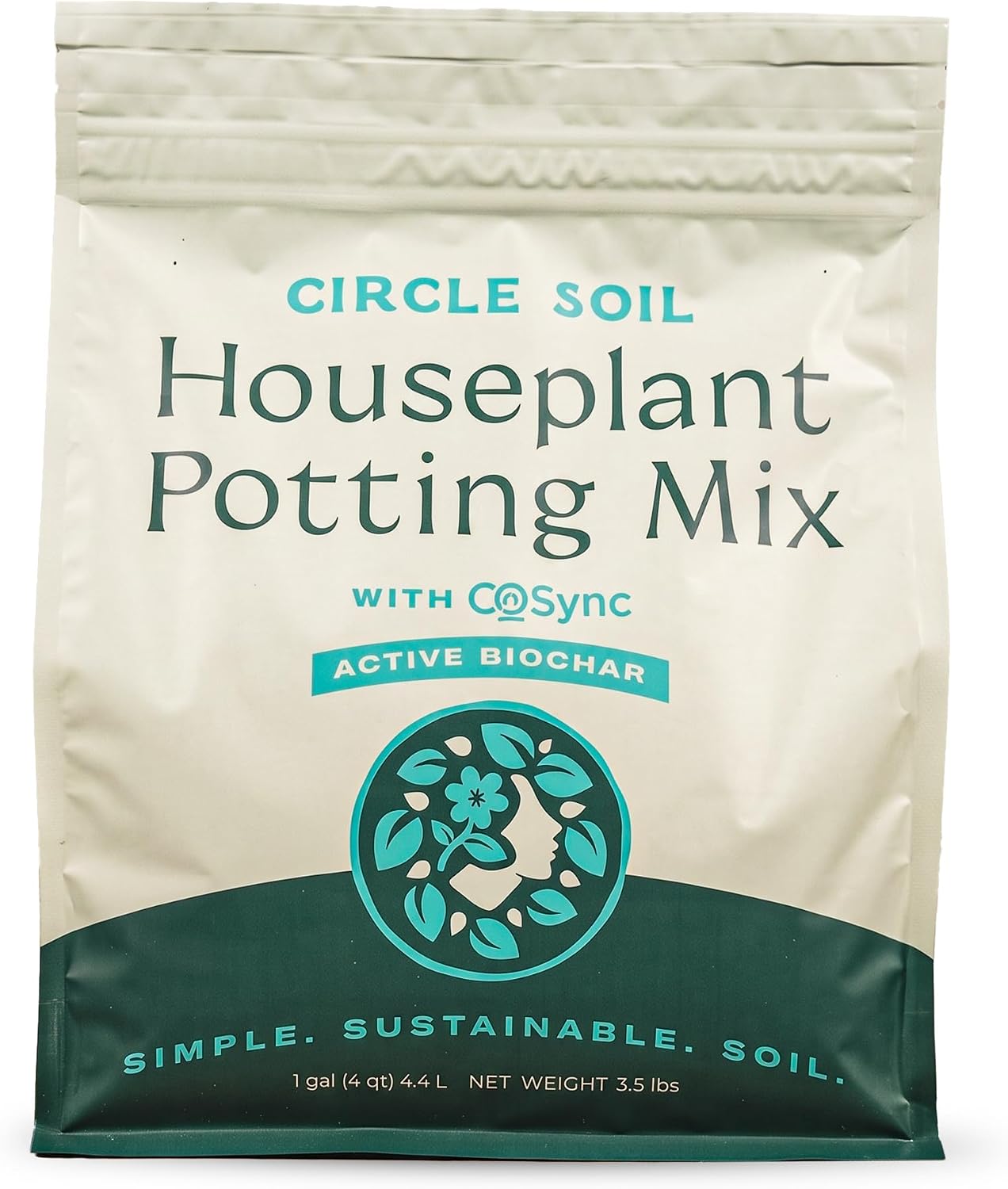
circle soil Houseplant Potting Mix (Peat-Free, 4 qt)
| Item Highlight | Active Biochar, Worm Castings, Expanded Shale, Peat-Free, Organic |
|---|---|
| Unit Count | 56 Ounce |
| Number of Packs | 1 |
| Manufacturer | Circle Soil |
This circle soil Houseplant Potting Mix is a ready-to-use indoor potting medium designed to keep common houseplants healthy between repots. It blends active biochar, coconut coir, expanded shale and worm castings to improve aeration, retain accessible moisture, and feed microbes around the root zone. Use it for repotting potted herbs, tropicals and many succulents where you want better drainage than straight peat mixes but some moisture retention compared with gritty cactus soils. The resealable recyclable bag and modest 4 quart size make it convenient for small indoor projects and quick top-ups. Practical benefits include reduced risk of waterlogged roots thanks to expanded shale, improved nutrient availability from worm castings and longer-lasting structure from biochar. The main limitation is the small unit size, which means frequent purchases for larger collections, and it is not formulated as an ultra-fast-draining mix for hardcore cacti growers.
Best for: Buyers who prioritize reliable, low-maintenance potting soil for everyday indoor plants and want a sustainable peat-free option that supports healthy roots and microbial life.
Less Ideal for: Large-scale repotters or growers who need bulk quantities in one purchase or those seeking an extremely gritty, ultra-draining cactus-only mix.
- Peat-free formula using biochar and coconut coir for sustainable moisture management
- Includes worm castings and local compost to supply living nutrients
- Expanded shale improves aeration and reduces risk of root rot
- Resealable packaging keeps remaining mix fresh between uses
- Only a 4 quart unit which is small for larger plant collections
- Not specifically formulated for very fast drainage needs of desert cacti
Verdict: Choose this peat-free, biochar-enriched mix when you want a dependable, sustainable potting soil that balances drainage and moisture for everyday houseplants.
Miracle-Gro Indoor Potting Mix for All Plants, 6 qt., 2-Pack

| Number of Packs | 2 |
|---|---|
| Item Highlight | Feeds for up to 6 Months |
| Ingredients | Sphagnum Peat Moss, Coir, Perlite, Fertilizer, Wetting Agent |
| Unit Count | 400.58 Ounce |
This Miracle-Gro Indoor Potting Mix is a lightweight, ready-to-use soil blend aimed at indoor container plants. It combines sphagnum peat moss, coconut coir, and perlite to retain moisture while allowing excess water to drain, so it suits common houseplants, herbs, tropicals, and flowering containers. The bagged mix includes a built-in fertilizer that the brand says feeds plants for up to six months, reducing the frequency of supplemental feeding for casual growers. Because the formula is bark- and compost-free, it should be less attractive to fungus gnats than mixes that include chunky organic debris. Typical use is simple repotting: fill a drained pot, set the root ball, backfill and water; one 6 qt. bag is sized to fill several small pots. Practical limitations are that this is an all-purpose indoor mix so it is not specialized for orchids, cacti, or succulents that need very fast drainage, and the precharged fertilizer means you should wait before applying other feeds. For buyers who value consistent, low-effort results backed by a widely used brand, this mix is a convenient baseline potting soil.
Best for: For houseplant owners who want a low-effort, reliable potting mix that supports a broad range of indoor plants and reduces pest-prone ingredients. Ideal for people who prefer an all-in-one product that minimizes mixing and frequent fertilizing.
Less Ideal for: Not the best choice for growers who need a specialist substrate for orchids, cacti, succulents, or for people who prefer to control and customize every component of their potting medium.
- Ready-to-use blend of peat moss, coir, and perlite for balanced moisture retention and drainage
- Included fertilizer formulated to feed indoor plants for up to six months
- Bark- and compost-free formula reduces habitat for fungus gnats
- Convenient two-pack provides enough mix for repotting multiple small pots
- Not formulated specifically for orchids, cacti, or succulents that require extra-fast drainage
- Pre-mixed fertilizer may require waiting before adding additional plant food
Verdict: A convenient, low-maintenance indoor potting mix that delivers balanced moisture control and built-in nutrition for most houseplants.
Back to the Roots Organic Indoor Potting Mix, 12 Quart

| Volume | 12 quarts |
|---|---|
| Item Type | Indoor Potting Mix |
| Organic | 100% organic |
| Origin | Made in the USA |
This indoor potting mix is designed specifically for houseplants such as pothos, monstera and ferns. It contains organic yucca extract to help retain moisture and mycorrhizae to support root development and nutrient uptake, which makes it a good choice when repotting or refreshing container soil. The blend is peat‑free and balanced with dolomitic limestone to stabilize pH, and the manufacturer positions it as beginner friendly and low on indoor pests because it does not include bark or compost. In practice you can use it straight from the bag for potting new plants, top dressing, or filling containers for seed starts. Expect reliable moisture retention without the dense compaction of some mixes, but very wet conditions will still need proper drainage and occasional fertilization because organic mixes can be lower in soluble nutrients. For someone who prefers an organic, low‑maintenance indoor mix, this product delivers predictable results and reduces peat use while supporting healthy roots.
Best for: Home plant owners who prefer an organic, low‑odor indoor mix that supports root health and predictable moisture retention without peat.
Less Ideal for: People who need a high‑fertility, nutrient‑dense mix for heavy feeders or for growers who want a pre‑fertilized potting soil that reduces follow‑up feeding.
- Peat‑free and 100% organic formulation for lower environmental impact
- Contains yucca extract to improve moisture retention for indoor conditions
- Includes mycorrhizae to support root growth and nutrient uptake
- Balanced with dolomitic limestone to help maintain neutral pH
- Organic mixes may supply fewer immediate soluble nutrients, so supplemental feeding is often needed
- Will still require well‑draining pots or added drainage amendments to avoid overwatering issues
Verdict: A reliable, peat‑free organic potting mix that makes repotting and indoor container gardening easier by improving moisture retention and root health.
Choosing the Right Plant Soil for Houseplants: Key Factors to Consider
Drainage and Aeration
Potted houseplants need a soil that allows excess water to leave the root zone and lets air reach fine roots. Good drainage reduces the risk of root rot in containers where standing water cannot disperse like in garden beds. Look for coarse particles such as perlite, pumice, or chunky bark pieces that create voids and prevent the soil from becoming a solid mass.
Drainage also affects how you water. Faster-draining mixes tolerate heavier watering schedules and benefit plants that prefer to dry between waterings. Denser mixes are better suited to moisture-loving species but require careful monitoring to avoid oxygen-poor conditions at the root crown.
Water Retention and Moisture Balance
Water retention is the flip side of drainage: the mix must hold enough moisture for plant uptake without staying soggy. Ingredients like coir, aged compost, or sphagnum peat alternatives retain moisture while still releasing it to roots. The ideal balance depends on the plant: succulents need low retention, tropical foliage often prefers moderate retention, and seed-starting demands steady moisture.
Consider your environment. Warm, dry homes increase evaporation and may push you toward mixes with higher water-holding capacity, while humid or cool interiors let you use lighter, faster-draining blends.
Nutrient Profile and Longevity
Some mixes come pre-charged with slow-release fertilizers or composted materials that feed plants for weeks to months. That reduces the need for frequent feeding but can complicate nutrient management for species that require low fertility. Other mixes are intentionally low-nutrient to give you full control with liquid feeds.
Think about how often you want to repot. A long-lasting nutrient profile suits plants kept in the same pot for a year or more, while short-term mixes are fine for seasonal rehousing or for growers who prefer custom fertilizing schedules.
Texture, Structure, and Compaction Resistance
Soil texture affects root growth and long-term pot performance. Fine-textured mixes pack down faster, reducing aeration and impeding root exploration. Coarse, well-structured soils maintain air spaces longer and resist compaction from watering and root growth. The presence of fibrous components, wood-based aggregates, or mineral grit improves structure.
Also consider the finished feel. A mix that remains light and crumbly is easier to repot and encourages fibrous root systems, while heavy, compacted mixes can stress roots and make pots top-heavy.
pH and Salt Levels
Soil pH influences nutrient availability and varies by base ingredients. Many houseplant mixes aim for a neutral to slightly acidic range, which suits most indoor species. If you grow acid-loving or alkaline-preferring plants you may need to check the mix pH or choose amendments accordingly. Salt accumulation from tap water or fertilizers can also build up in a closed pot. Look for mixes with low initial soluble salt content if you rely on regular fertilization.
Flushing routines and occasional repotting manage salts, but starting with a moderate-salt mix reduces stress on sensitive plants.
Ease of Use and Handling
Practical handling matters when you bring soil into the house. Dusty mixes create a mess and can be irritating; wet, clumpy mixes are difficult to portion into small pots. Ready-to-use mixes that are screened to remove large sticks and oversized pieces speed up repotting. Others require pre-moistening or blending before use.
Also think about weight. Soil intended for tall ceramic pots or hanging baskets should be lighter to avoid tipping hazards and reduce strain during lifting.
Matching Soil Texture to Plant Types
Match the soil texture to your plant's natural habitat. Succulents and cacti come from gritty, fast-draining substrates and do best in mixes with high proportions of mineral grit and coarse aggregates. Tropical foliage plants prefer mixes with more organic matter and moisture retention while still allowing air to reach the roots.
If you keep a mixed collection, consider a versatile indoor potting mix that provides moderate drainage and moisture retention, and then tweak texture with small additions of perlite or bark per pot to suit individual species.
- Add pumice or coarse sand to increase drainage for succulents.
- Add coir or compost for moisture-loving tropicals, but monitor for compaction.
- Use a screened, lightweight mix for hanging baskets to reduce weight.
How to Amend Store-Bought Mixes
Most ready mixes are fine as a starting point but can be adjusted. For faster drainage, fold in perlite, pumice, or chunky orchid bark. To increase water retention without losing aeration, add a small portion of coir or well-aged compost.
Amending allows you to tailor a base mix to specific pots and plants without building custom soil from scratch. Make changes gradually and test with one or two pots to observe how the amended blend affects watering frequency and root health.
- Start with a 10 to 20 percent amendment by volume and adjust in future repots.
- Avoid adding too much fresh compost, which can increase soluble salts and heat during decomposition.
Repotting Tips and When to Replace Soil
Repot when roots circle the pot, drainage slows, or the soil smells sour. Many houseplants benefit from fresh soil every 12 to 24 months depending on growth rate. When repotting, gently tease roots and replace old mix with a similar texture to maintain expected moisture dynamics.
If soil has compacted or shows white crusts from salts, consider a full replacement rather than a top dressing. Use the opportunity to check root health and correct water schedules.
- Repot larger plants less frequently but monitor drainage and root health.
- Top-dress with fresh mix for minor refreshes; fully replace for heavy compaction or salt buildup.
Managing Watering with Different Mixes
Soil choice should inform your watering routine. Lighter, airier mixes dry faster and need more frequent watering but are forgiving of occasional overwatering. Heavier mixes retain moisture longer, reducing watering frequency but increasing the risk of soggy conditions if you water too often.
Use a moisture meter or the finger test to check the root zone rather than relying solely on a calendar. Adjust watering volume and frequency based on pot size, plant size, and indoor microclimate.
- Allow the top inch of soil to dry for many tropicals before watering again.
- Let soil dry more thoroughly for succulents and certain bulbs to prevent rot.
Indoor Environmental Considerations
Light, temperature, and humidity all affect how soil performs indoors. Bright light and warm temperatures speed evaporation, making a higher water-holding capacity useful. In low light or cool rooms, use a faster-draining mix to avoid prolonged wetness.
Humidity from cooking, showers, or humidifiers can reduce evaporation and change how often you need to water. Observe the combination of soil, plant behavior, and environment and tweak the mix or routine accordingly.
- Increase aeration in low-light rooms to minimize long-term wetness.
- Use heavier retention mixes in bright, dry rooms to reduce watering frequency.
How We Chose the Best Plant Soil for Houseplants
We shortlisted mixes that meet common indoor gardening demands and avoided experimental formulas intended for outdoor beds or agricultural use. Our editorial filters focused on four to six category-specific dimensions that matter for potted houseplants: drainage and aeration, water retention balance, nutrient profile and longevity, texture and compaction resistance, and user handling (mix readiness and dust control). We reviewed technical specs and manufacturer ingredient lists to identify soil base components such as peat alternatives, bark, perlite, pumice, and added fertilizers. We excluded soils formulated purely for seedlings, outdoor vegetable beds, or hydroponic media since those have different requirements. Our selection favored mixes that perform reliably across a range of pot sizes and common indoor species, and that require minimal on-site amendment for typical household watering routines.
FAQ
How often should I repot houseplants into fresh soil?
It depends on growth rate, but many houseplants benefit from fresh soil every 12 to 24 months. Fast-growing species or those in small pots may need annual repotting, while slow growers can go longer. Replace soil sooner if you see compaction, poor drainage, or salt buildup.
Can I use garden soil or outdoor potting soil for houseplants?
Outdoor garden soil is usually too dense for containers and can compact, leading to poor aeration and drainage. Outdoor potting soils formulated for beds also often contain materials that do not perform well in pots. Choose mixes designed for container culture or amend garden soil heavily with coarse materials before using indoors.
What is the best way to improve drainage in a heavy mix?
Increase coarse inorganic components such as perlite, pumice, or coarse sand and add chunky bark or orchid bark to create more air space. Avoid relying on drainage holes alone; improving the internal structure of the mix helps roots breathe and prevents waterlogging.
Should I choose a soil with fertilizer already added?
Pre-fertilized mixes can be convenient because they supply nutrients for weeks to months, but they may be too rich for sensitive species or long-term pots. If you prefer control over feeding schedules, pick a low-nutrient base and apply liquid or slow-release fertilizer according to plant needs.
How does pot material affect soil performance?
Porous pots like unglazed terracotta increase evaporation from the root zone, which can make lighter mixes dry faster. Nonporous containers retain moisture longer, so you may want a faster-draining mix in those pots. Consider pot size and material together with soil choice when planning watering.
Can I mix soils to get a custom blend for my collection?
Yes, combining a quality indoor potting mix with measured amounts of perlite, pumice, coir, or bark is a common approach. Start with small test pots to refine proportions so you learn how the custom blend affects watering and root behavior before applying it to prized specimens.
Final Verdict
Focus first on how the soil affects water management and root oxygen. Prioritize a mix that matches your plants' native preferences: coarse, low-retention substrates for succulents and grittier mixes with more organic matter for tropical foliage. Expect tradeoffs between ease of watering and the need for periodic fertilizing or repotting. Choose a versatile base mix if you keep assorted species, then fine-tune per pot with small amendments. That approach gives you consistent handling across your collection while allowing targeted adjustments for plants with special needs.
