

Note: This article contains affiliate links. If you click on these links and make a purchase, I may earn a small commission at no extra cost to you. This helps support my research and content. Read my full affiliate disclosure here.
Picking the right soil mix for aloe vera matters because these succulents need a potting medium that dries quickly, resists compaction, and supplies moderate nutrients without holding excess water. The wrong mix leads to soggy roots and disease, while the right blend encourages steady growth and reliable flowering in warm, bright spots. This guide covers seven top soil mixes selected for growing aloe vera in containers and small garden beds. We evaluated mixes for drainage, aeration, pH control, and how they support occasional feeding. Below you will find clear criteria used to choose each entry and practical guidance to match a mix to your growing setup.
Top Picks at a Glance
| Best Overall The best all-around choice for most situations | Leaves and Soul Professional Aloe Plant Soil Mix (2.2 Quart) |  |
| Best Quality Built to a higher standard if you want something more solid | Happy Trees Premium Cactus & Succulent Potting Soil Mix, 8 qt |  |
| Best Value The sweet spot between price and what you get | Hoffman Organic Cactus & Succulent Soil Mix (4 Quart) |  |
| Best Budget The cheapest option that still gets the job done reliably | Doter Aloe Vera Potting Soil Mix, 1 qt |  |
| Highest Rated A top-rated pick with lots of positive feedback | Miracle-Gro Succulent Potting Mix, 4 qt |  |
| Most Popular A crowd favorite that many people choose with confidence | Miracle-Gro Indoor Potting Mix for Cactus & Succulent, 8 qt. (2-Pack) |  |
| Best Seller A high-volume bestseller chosen again and again | Back to the Roots Organic Succulent & Cacti Soil, 6 Quart |  |
Leaves and Soul Professional Aloe Plant Soil Mix (2.2 Quart)

| Volume | 2.2 quarts |
|---|---|
| Unit Count | 81.92 Ounce |
| Made in | USA |
This ready-to-use aloe soil blend combines pine bark, peat moss, and coarse sand to create a fast-draining medium meant to reduce prolonged wetness around roots and encourage root expansion. It is typically used for repotting or planting Aloe vera, pups, seedlings, and compatible succulents in pots with drainage holes. The coarse sand and pine bark improve aeration and drainage while peat adds some structure and modest moisture retention, so you get a balance that helps prevent root rot without leaving plants bone-dry immediately after watering. The product comes in a resealable 2.2 quart bag that is convenient for single plants or small collections and is labeled made in the USA. Important limitations are that it still requires correct watering technique and appropriate containers to work well and that peat adds some moisture-holding capacity so very arid mixes may prefer less peat or extra grit. For most indoor aloe owners this mix simplifies repotting and reduces the need for additional amendments.
Best for: Buyers who want a convenient, purpose-made potting mix for indoor Aloe vera and similar succulents and who prefer a balanced medium that reduces overwatering risk without extra preparation.
Less Ideal for: Growers who need large volumes for multiple pots or who prefer a completely inorganic, ultra-gritty cactus mix should consider other options.
- Fast-draining formula reduces risk of prolonged root wetness
- Blend of pine bark and coarse sand improves aeration and root expansion
- Ready-to-use in a resealable bag for easy repotting and storage
- Made in the USA with a formulation targeted to aloe and succulents
- Contains peat which retains some moisture and may not suit growers who prefer a very gritty mix
- 2.2 quart size is small for multiple plants or larger repots
Verdict: A convenient, ready-to-use fast-draining soil mix tailored to Aloe vera that simplifies repotting and reduces the chance of overwatering.
Happy Trees Premium Cactus & Succulent Potting Soil Mix, 8 qt

| Brand Name | Happy Trees Hemp |
|---|---|
| Item Highlight | Professional Mix for Agaves, Aloes, Echeverias, Euphorbias and cacti, Fast Draining, With Biochar, Made in USA |
| Volume | 8 quarts |
| Item Weight | 10 pounds |
This Happy Trees mix is built for desert plants and performs like a grower-grade substrate for aloe vera and other succulents. The coarse mineral texture—pumice, lava rock, coarse sand and fir bark fines—creates rapid drainage and strong airflow to roots, which helps prevent root rot and encourages healthy, compact growth in aloe. The inclusion of porous biochar improves structure and retains a small amount of moisture without becoming heavy. It is peat-free and ready to use straight from the bag, so repotting or amending containers is quick and predictable. For performance-focused growers the consistency between batches matters and this product is described as mixed to high standards and suitable for both indoor pots and outdoor containers. Limitations are that the 8 quart bag is a modest volume for larger repots or multiple plants and you may need to supplement with extra pumice or grit for very large specimens or extremely fast-draining custom mixes.
Best for: Growers who prioritize performance and consistency for aloe vera and other drought-tolerant succulents and want a ready-made, high-drainage substrate that reduces root rot risk.
Less Ideal for: Those repotting many large plants or creating large raised beds who will need bulk soil quantities or want to heavily customize texture ratios.
- Specifically formulated for cacti and succulents with coarse mineral components for fast drainage
- Includes biochar to improve soil structure and retain modest moisture
- Peat-free, ready-to-use mix suitable for indoor pots and outdoor containers
- Contains a blend of pumice, lava rock, sand and fir bark for good aeration and root stability
- Only an 8 quart bag which may be small for repotting multiple or large aloe plants
- Not a customizable mix out of the bag if you prefer a much coarser or sandier ratio
Verdict: Pick this mix when you need a ready-made, high-drainage substrate that helps aloe vera establish healthy roots and avoid overwatering.
Hoffman Organic Cactus & Succulent Soil Mix (4 Quart)

| Unit Count | 40 Ounce |
|---|---|
| Style Name | Organic |
| Ingredients | Compost, Peat Moss, Sand, Limestone |
This Hoffman organic cactus and succulent mix is a pre-blended potting medium designed to give succulents and cacti the fast drainage they need. It is typically used straight from the bag for repotting or topping small containers without having to measure and mix peat, sand, and compost. The formula lists compost, peat moss, sand, and limestone, which helps balance acidity while promoting airflow around roots and faster drying between waterings. For aloe vera specifically, the mix offers improved drainage and reduced risk of root rot compared with ordinary potting soil, and the small 4 quart bag is convenient for single plants or small repotting jobs. Limitations are the bag size for multiple or large plants and that the product does not list precise particle sizes or added perlite/pumice, so heavier-duty drainage needs may require amendment. The easy-pour bag and ready-to-use nature make this a low-effort option for routine succulent care.
Best for: Buyers who want a low-effort, ready-made soil that improves drainage for individual aloe or succulent pots and prefer convenience over custom mixing.
Less Ideal for: Growers repotting many plants, large specimens, or those who require a specific coarse mix should choose bulk product or amend this mix further.
- Pre-mixed, ready-to-use so you can repot without measuring ingredients
- Contains sand and compost for improved drainage and nutrient content
- Includes limestone to help neutralize pH for many succulents
- Compact 4 quart bag is easy to store and pour for small projects
- Small volume not suitable for multiple large pots or full garden beds
- No detailed spec for particle size or explicit perlite/pumice content
Verdict: A convenient, ready-mixed organic soil that gives aloe and similar succulents better drainage without the fuss of mixing your own.
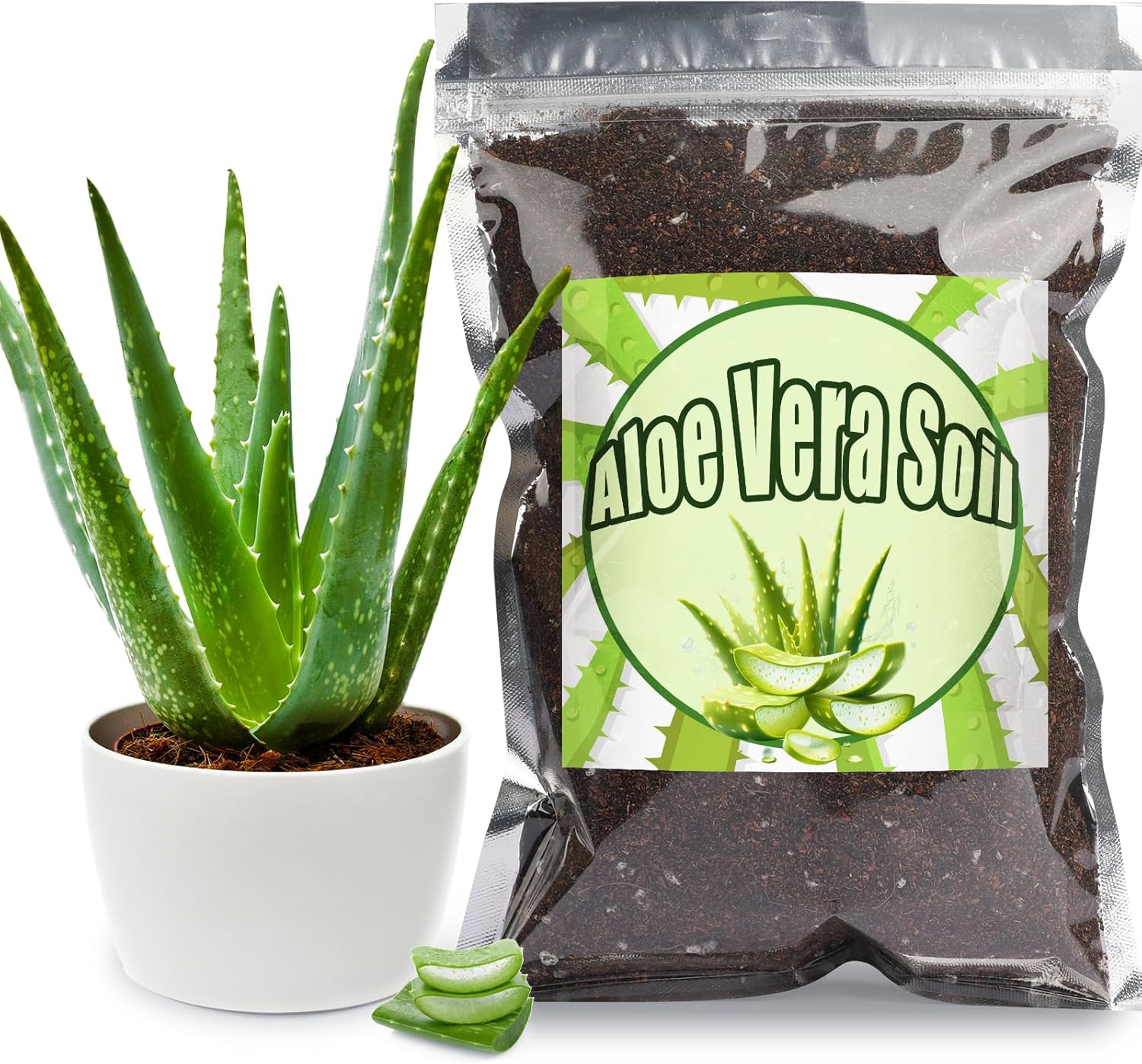
Doter Aloe Vera Potting Soil Mix, 1 qt
| Brand Name | Doter |
|---|---|
| Item Type Name | Garden soil |
| Manufacturer | Doter |
| Volume | 1 quarts |
This 1-quart Doter aloe vera potting mix is a small, ready-to-use bagged soil aimed at giving succulents the fast-draining, aerated medium they need. It is formulated to improve drainage and airflow while supplying a modest amount of nutrients and a balanced pH that helps young plants and repotted aloe vera maintain plump leaves. Typical use is filling small pots, topping off established containers, or mixing with coarse additives for larger specimens. The practical benefits are ease of use straight from the bag, a light texture that reduces risk of waterlogging, and a nutrient profile suited to slow-growing succulents so you do not need to amend immediately. Important limitations are the small 1-quart volume which is only enough for seedlings or a single small pot and the lack of detailed ingredient percentages, so gardeners who want exact amendments or large quantities will need to supplement or buy multiple bags.
Best for: Buyers who want an inexpensive, ready-mix solution for potting or topping off small aloe vera plants and seedlings and prefer a fuss-free product they can use immediately.
Less Ideal for: Gardeners repotting large mature aloe plants or those who need precise, recipe-grade soil components should look for larger bags or customizable mix ingredients.
- Formulated for good drainage to reduce root rot risk
- Balanced pH and added nutrients to support aloe vigor
- Light, aerated texture suitable for succulents and seedlings
- Small 1‑quart volume requires multiple bags for larger plants or repotting
Verdict: A convenient, budget-friendly 1‑quart mix that gives aloe vera seedlings and small pots fast-draining, ready-to-use soil.
Miracle-Gro Succulent Potting Mix, 4 qt

| Volume | 4 quarts |
|---|---|
| Unit Count | 128 Ounce |
| Intended Use | Indoor succulents and cacti |
| Ingredients | Sphagnum peat moss, processed forest products, fertilizer, wetting agent |
Miracle-Gro Succulent Potting Mix is a small, 4-quart bag of ready-made soil intended for indoor succulents like aloe vera and small cacti. The mix combines sphagnum peat moss, processed forest products, a wetting agent, and Miracle-Gro plant food so you can pot or repot plants quickly without blending your own components. It is typically used to fill an 8-inch container (manufacturer notes), where you set the root ball, top up with mix, and water to drain. Practical benefits include improved moisture retention from peat and an added nutrient boost that helps young or recently repotted succulents establish. The built-in wetting agent makes the mix easier to moisten evenly after a dry shipment. Important limitations are the small volume per bag, which means multiple bags are required for several pots or larger containers, and the peat-heavy base may retain more moisture than gritty, commercial cactus mixes, so drier watering schedules are still needed for mature aloe plants.
Best for: Buyers who want a reliable, ready-made soil to repot indoor succulents quickly and with minimal fuss, prioritizing consistent, predictable results over custom blends.
Less Ideal for: Growers who prefer a very coarse, fast-draining gritty cactus mix or who need bulk quantities for many or large pots should consider other options.
- Formulated specifically for succulents and cacti, simplifying repotting for indoor aloe plants
- Contains Miracle-Gro plant food to give new plantings an initial nutrient boost
- Wetting agent helps the peat-based mix absorb water evenly after dry storage
- Small 4 qt size is convenient for single-pot repotting or trying a new mix
- 4 quart bag only fills a single 8-inch pot so it is not economical for multiple or larger containers
- Peat-based blend is less coarse than gritty cactus mixes and can hold more moisture than some growers prefer
Verdict: A convenient, nutrient‑ready potting mix that makes repotting indoor aloe and other succulents quick and dependable.
Miracle-Gro Indoor Potting Mix for Cactus & Succulent, 8 qt. (2-Pack)

| Item Highlight | Fast-Draining Cactus and Succulent Potting Mix with Plant Food |
|---|---|
| Number of Packs | 2 |
| Included Components | 2 bags |
| Ingredients | Sphagnum Peat Moss, Sand, Perlite |
| Volume | 8 quarts |
This Miracle-Gro indoor potting mix is a pre-mixed soil blend designed to give succulents and cacti a fast-draining, low-retention medium. It combines sphagnum peat moss, sand, perlite and forest products with added plant food so you can pot aloe vera and other desert plants without mixing amendments yourself. Typical use is simple: choose a pot with drainage, fill around the root ball and water through so excess can drain. The mix’s sand and perlite content helps prevent waterlogging that causes root rot in aloe, while the included plant food supplies an initial nutrient boost for established indoor succulents. Because it is formulated for indoor container use, it is convenient for repotting small to medium aloe plants and filling multiple 6-inch pots from each bag. Limitations are that it is a packaged, peat-based blend so very large specimens may need more volume or supplemental coarse grit for extra drainage, and long-term growers should repot every couple of years to refresh media and nutrients.
Best for: Buyers who want an easy, low-effort soil to repot aloe vera and other indoor succulents and who prioritize a reliable, ready-made mix over customizing their own blend.
Less Ideal for: Growers managing large or mature aloe plants that need very coarse, highly aerated media or those who prefer fully organic or peat-free mixes.
- Fast-draining formula with sand and perlite reduces risk of overwatering for aloe vera
- Enriched with plant food to give an initial nutrient boost after potting
- Ready-to-use mix saves time versus blending separate amendments
- Sold as a two-bag bundle so you can pot multiple small plants
- Peat-based blend may compact over time and requires repotting to refresh nutrients
Verdict: A convenient, plant-food-enriched fast-draining potting mix that makes repotting aloe vera and other indoor succulents quick and low-effort.
Back to the Roots Organic Succulent & Cacti Soil, 6 Quart

| Volume | 6 quarts |
|---|---|
| Item Highlight | Fast-draining cactus and succulent soil |
| Ingredients | Dolomitic Limestone, Perlite, Horticultural Sand, Aged Bark, Plant Food |
| Made in | USA |
This 6-quart succulent and cacti mix from Back to the Roots is formulated to give aloe vera and other desert plants an airy, fast-draining medium that reduces the risk of overwatering. It combines aged bark, perlite and horticultural sand to improve aeration and speed water runoff, while added plant food supplies starter nutrients for transplants and potted specimens. Typical use is repotting aloe into containers with good drainage or refreshing the top layer of older pots; the coarse components make it easy to work with and help roots establish without sitting in wet soil. Because it is peat-free and made in the USA, it appeals to buyers who prefer organic ingredients and traceable sourcing. Limitations are the small 6-quart size for multiple plants and the recommendation to supplement nutrients a few weeks after planting if you want sustained feeding beyond the initial charge. For a cautious gardener wanting a low-risk soil for aloe, this mix simplifies watering and helps prevent root rot.
Best for: Buyers who prioritize a low-risk, beginner-friendly soil for potted aloe and want a ready-made, fast-draining mix that reduces the chance of overwatering.
Less Ideal for: Gardeners who need bulk soil for many plants or large containers should choose larger-volume or bulk potting mixes instead.
- Formulated with perlite, sand and aged bark for fast drainage and good aeration
- Includes plant food to give seedlings and newly potted plants an initial nutrient boost
- Peat-free and made in the USA, which suits buyers looking for organic or traceable ingredients
- Designed specifically for succulents and cacti so it matches aloe vera watering needs
- Small 6‑quart bag may require multiple purchases for several pots or larger repots
- Needs additional organic fertilizer after a few weeks for longer-term nutrition
Verdict: A compact, organic, fast-draining soil mix that makes repotting aloe simple and lowers the risk of root rot.
Choosing the Right Soil Mix for Aloe Vera: Key Factors to Consider
Drainage and Water Movement
Aloe vera roots are prone to rot if kept wet. Drainage determines how quickly water leaves the root zone after watering which directly affects root health and disease risk. Look for mixes with coarse, inert components that create channels for water to move through and reduce waterlogged pockets.
Drainage also influences how often you need to water. Faster-draining mixes require more frequent, lighter watering while slower mixes hold moisture longer and increase risk of overwatering. Consider your watering habits and container type when balancing drainage and moisture retention.
Particle Size and Porosity
Particle mix-proportions of sand, grit, pumice, perlite, and organic fines-controls porosity and compaction. Larger, angular particles keep voids open so roots get oxygen; fine particles or too much peat collapse and trap water. For aloe, a higher fraction of coarse material produces a stable, airy soil structure that resists settling.
Porosity also affects root anchoring. Blends that are too chunky may not support tall offsets well, while mixes with some fine material provide just enough cohesion without sacrificing aeration.
pH and Salt Levels
Aloe vera prefers a slightly acidic to neutral root environment. Soil pH affects nutrient availability and microbial activity. Mixes that drift alkaline or accumulate salts from fertilizers can stress plants and hinder nutrient uptake. Choose mixes with neutral starting pH and low inherent salt content, or amend with neutral components if testing shows drift.
If you water with hard water or use frequent fertilization, monitor salt buildup and flush the container occasionally. pH stability matters more in containers where the medium cannot buffer large shifts.
Nutrient Content and Buffering
Aloe vera needs light feeding. A mix with modest, slow-release nutrient buffering gives plants enough minerals without encouraging rapid, succulent-soft growth. Highly fertile mixes push lush leaf growth that is more susceptible to cold damage and rot. Look for blends that provide minimal starter fertility, or those that allow you to control feeding with diluted liquid fertilizer.
Nutrient buffering also affects long-term maintenance. Blends with some organic matter hold nutrients for longer but may require occasional rejuvenation or replacement after several growing seasons.
Weight, Container Choice, and Stability
The weight of a soil mix interacts with the container you use. Heavy mixes with fine mineral content and high water retention can increase tipping risk in top-heavy aloe plants. Lighter mixes with pumice or perlite reduce overall pot weight but may need a heavier pot to stabilize large rosettes.
Think about the placement of your pot. For outdoor containers exposed to wind or for tall varieties, choose a heavier or wider container and adjust the mix to ensure the plant stays upright while retaining good drainage.
Longevity and Ease of Repotting
Some soil mixes break down quickly and compact, requiring repotting or amendment every year. Durable components like coarse pumice and crushed gravel retain structure longer. Choose mixes that maintain porosity across seasons so you do less maintenance and your plant experiences fewer stress cycles.
Ease of repotting matters if you plan to divide offsets. A mix that crumbles cleanly makes it simpler to remove plants and inspect roots without disturbing healthy root balls.
Matching Mix to Growing Situation
Decide if your aloe will live in a small indoor pot, a deep patio container, or an outdoor raised bed. Indoor pots with limited drainage need a much coarser mix to avoid waterlogging, while outdoor plantings in fast-draining beds can tolerate a bit more organic matter because excess water escapes into the ground. Adjust coarse-to-fine ratios based on container depth and exposure to rain.
Also account for climate. In humid regions, increase the proportion of chunky mineral components to speed drying. In arid climates, a modest increase in fine organic matter helps retain enough moisture between waterings without creating soggy conditions.
- Indoor shallow pots: higher coarse fraction, less organic matter
- Deep containers: balance stability with aeration
- Outdoor beds: moderate organic matter if soil underneath drains well
Simple DIY Aloe Soil Recipes
You can build reliable mixes from a few common components. A basic fast-draining recipe pairs two parts coarse mineral (pumice, crushed lava rock, or coarse perlite) with one part coarse builder's sand and one part quality cactus mix or well-aged composted bark. That structure gives drainage with a touch of nutrient and moisture buffering.
For an even lighter indoor potting medium, replace the builder's sand with additional pumice or coarse perlite and reduce organic content to a single part. Always use coarse, not fine, sand to avoid compaction.
- Balanced mix: 2 parts pumice, 1 part coarse sand, 1 part cactus potting mix
- Very airy indoor mix: 3 parts pumice, 1 part cactus mix
- Outdoor bed adjustment: add 1 part native loam if site drains fast
How to Test and Adjust Soil pH and Salts
Use a simple soil pH meter or a test kit to check the mix before planting. If the pH trends above neutral, add a small amount of slightly acidic organic material like pine bark fines or use a neutralizing amendment recommended for container mixes. Avoid heavy lime additions unless a test shows a persistent alkaline trend.
To check salts, observe leaf tips and new growth. Browning or slowed growth after regular feeding can signal salt buildup. Flush containers thoroughly with water every few months and replace the top inch or two of mix annually if salt accumulation seems likely.
- Test pH when you make or repot into a new mix
- Flush containers periodically to reduce salts from fertilizers
- Replace or refresh media if structure collapses or salts accumulate
Pot Selection and Drainage Practices
Always use a pot with drainage holes. Even the best soil mix cannot protect roots in a sealed container. If you must use a decorative outer pot without holes, keep the plant in a drainable nursery pot inside it and remove excess water after watering.
Place a coarse layer of broken pottery or large gravel at the pot bottom only if it helps stabilize the plant. This does not improve drainage by itself but can prevent soil from washing out of the drainage holes and add weight for stability.
- Use pots with sufficient diameter to accommodate the wide rosette of mature aloes
- Elevate pots slightly to allow water to escape freely
- Avoid burying drainage holes; keep them clear
Seasonal Care: Watering and Repotting Timing
Aloe vera has a distinct active growth phase in warm months and a slower winter rest. Reduce watering in cool periods and only water deeply when the soil is dry at least an inch below the surface. Repot in spring when active growth begins to reduce stress and allow roots to recover quickly.
Refresh or top-dress the mix every one to three years depending on how fast the medium breaks down. Replace compacted media rather than repeatedly adding amendments, which can create layered zones with different drainage characteristics.
- Water deeply then allow drying between waterings during active growth
- Cut back watering and stop feeding in winter
- Repot in spring and refresh media if structure has collapsed
How We Chose the Best Soil Mix for Aloe Vera
We shortlisted soil mixes that match the moisture and root-air needs of aloe vera. Our evaluation prioritized four to six measurable criteria: drainage rate, particle size and porosity, pH stability, nutrient buffering and slow-release content, and ease of repotting. Drainage rate measures how quickly excess water moves through the mix under typical indoor or patio watering. Particle size and porosity assess the proportion of coarse components such as pumice, coarse sand, or grit that prevent compaction and keep air in the root zone. pH stability checks whether the mix keeps levels in the slightly acidic to neutral range that aloe prefers. Nutrient buffering looks at how the mix holds and releases nutrients without causing salt buildup. We excluded mixes formulated for heavy feeders, continuous moisture, or large-scale landscape turf use because those do not match succulent needs. We also filtered out mixes with high percentages of peat or fine garden soil that compact quickly. The final list favors blends and components that reliably create a fast-draining, airy environment suited to container-grown aloe vera.
FAQ
Can I use standard potting soil for aloe vera?
Standard potting soil often contains fine organic matter that retains too much moisture for aloe. You can use it if you aggressively amend it with coarse mineral components to increase porosity and drainage.
How much sand or grit should I add to a cactus or succulent mix?
A moderate approach is one part coarse sand or grit to two parts cactus or base mix. Use coarse builder's sand rather than fine play sand to avoid compaction. Adjust based on how quickly the mix dries in your environment.
What is the best container for an aloe planted in a fast-draining mix?
A shallow terracotta or ceramic pot with drainage holes is ideal because it breathes and helps the mix dry faster. Choose a pot wide enough for the rosette and heavy enough to prevent tipping.
How do I tell if my mix is holding too much moisture?
Signs include yellowing or soft leaves, stem collapse near the soil line, and a musty smell from the pot. Check moisture an inch below the surface; if it stays damp long after watering, the mix is retaining too much water.
Can I refresh an old aloe soil instead of repotting?
You can top-dress with fresh coarse components and lightly loosen the surface, but if the entire mix has compacted or shows salt buildup, full repotting is the better option to restore porosity and root health.
Should I add fertilizer to a fast-draining aloe mix?
Aloe benefits from light feeding during the active season. Use a balanced, diluted liquid fertilizer sparingly. Because fast-draining mixes leach nutrients, feed occasionally rather than relying on a highly fertile mix.
Final Verdict
Choose a soil mix for aloe vera that prioritizes drainage and stable porosity. Balance coarse mineral components with a small amount of organic matter for modest nutrient buffering and root support. Match the mix to your container type and climate, and plan seasonal care that reduces watering in cool months. Focus on the tradeoff between aeration and nutrient retention. If you prefer lower maintenance, pick a coarser mix and accept more frequent watering. If you want fewer waterings, allow a touch more organic fines but monitor for compaction and root rot.
