

Note: This article contains affiliate links. If you click on these links and make a purchase, I may earn a small commission at no extra cost to you. This helps support my research and content. Read my full affiliate disclosure here.
Growing flowering plants in pots concentrates both opportunity and risk. Containers limit root volume and deplete nutrients faster than garden beds, so the right fertilizer keeps blooms abundant without burning roots or causing salt buildup. This guide covers seven top fertilizers selected for container flowers and explains how each type handles nutrient delivery, salt control, and ease of application. You'll get clear, gardener-focused evaluation points that matter for patio planters, balcony pots, and mixed-container arrangements. Below are our shortlisted fertilizer types and formulations that fit the needs of potted flowering plants, followed by practical buying guidance and answers to common container-growing questions.
Top Picks at a Glance
| Best Overall The best all-around choice for most situations | Miracle-Gro Bloom Booster Water-Soluble Flower Food (10-52-10), 1 lb |  |
| Best Quality Built to a higher standard if you want something more solid | FoxFarm Big Bloom Liquid Plant Food, 16 fl oz |  |
| Best Value The sweet spot between price and what you get | Osmocote Smart-Release Plant Food Plus Outdoor & Indoor, 1 lb |  |
| Best Budget The cheapest option that still gets the job done reliably | Miracle-Gro Indoor Plant Food Spikes for All Plants, 48 Count |  |
| Highest Rated A top-rated pick with lots of positive feedback | Miracle-Gro Water Soluble All Purpose Plant Food, 12.5 lb |  |
| Most Popular A crowd favorite that many people choose with confidence | Miracle-Gro Indoor Plant Food for All Plants, Liquid, 8 fl. oz. (2-Pack) |  |
| Best Seller A high-volume bestseller chosen again and again | TPS Nutrients Orchid Fertilizer Liquid Bloom Boost, 8 fl oz |  |
Miracle-Gro Bloom Booster Water-Soluble Flower Food (10-52-10), 1 lb

| Item Form | Liquid |
|---|---|
| Application Method | Water Soluble |
| Coverage | 500 square feet |
| Target Species | all blooming plants |
| Mixing Ratio | 1 tablespoon/gallon (1.5 tsp/gal indoor) |
Miracle-Gro Bloom Booster is a water-soluble plant food with a high middle number (10-52-10) that is aimed at producing more and bigger blooms in flowering plants. It is typically mixed with water (one tablespoon per gallon for outdoor use, reduced for indoor plants) and applied every 7 to 14 days either with a watering can or the Miracle-Gro garden feeder. The formula feeds both through roots and leaves, starts working quickly, and covers around 500 square feet per feeder refill packet. Practical benefits include strong bloom promotion for containers and window boxes, easy mixing and application, and a clear dosing schedule that reduces the risk of overfeeding when directions are followed. Limitations are that this is a bloom-focused formula so it is not balanced for leafy growth or general-purpose feeding, and repeated use without complementary nutrient inputs can skew soil nutrient balance over time. Users should also follow label safety instructions to avoid accidental ingestion or contact.
Best for: Gardeners who want an easy-to-use, bloom-focused feed for potted flowering annuals and perennials and prioritize visible flower production over vegetative growth.
Less Ideal for: Growers seeking an all-purpose or foliage-promoting fertilizer for vegetables, lawns, or non-flowering plants should choose a different balanced product.
- High phosphorus formulation specifically formulated to boost flower production
- Water-soluble formula easy to mix and apply with a watering can or garden feeder
- Ready dosing guidance supports safe regular feeding every 7–14 days
- Works quickly to produce visible bloom improvement in containers and beds
- Specialized for blooms rather than general balanced nutrition
- Not a complete long-term fertilizer if used exclusively over a season
Verdict: Use this if you want a simple, water-soluble booster that reliably increases blooms in potted flowering plants.
FoxFarm Big Bloom Liquid Plant Food, 16 fl oz

| Item Form | Liquid |
|---|---|
| Specific Uses For Product | Organic |
| Application Method | watering can, sprayer, or drip system |
| Liquid Volume | 16 fluid ounces |
FoxFarm Big Bloom is a concentrated liquid bloom fertilizer designed to boost flowers and fruit by supplying natural, fast-acting nutrients. It is mixed into water (manufacturer suggests 4 tablespoons per gallon) and can be applied with a watering can, sprayer, or through drip systems, which makes it easy to use on potted plants. The formula contains organic inputs such as bat guano and earthworm castings and is OMRI listed, so it can be used in organic container gardens. In practice it provides quick uptake that helps perk up struggling specimens and extend flowering and fruiting later into the season. The product is versatile across growth stages, so you can feed regularly every time you water if needed. Limitations are the small 16 fl oz size for larger container collections and the inclusion of phosphorus, which some local regulations restrict for turf and may require cautious runoff management when using outdoors.
Best for: Gardeners who prioritize bloom performance and want an organic, fast-acting feed for potted flowering and fruiting plants that is easy to apply with common watering systems.
Less Ideal for: People managing very large container gardens who prefer granular slow-release feeding or gardeners restricted by local phosphorus regulations for outdoor use.
- Organic, OMRI-listed formula with bat guano and earthworm castings for nutrient-rich feeding
- Quick nutrient uptake that can revive struggling flowering or fruiting plants
- Simple application with watering can, sprayer, or drip systems suitable for pots
- Works across all growth stages so one product can be used through vegetative to bloom
- Small 16 fl oz bottle may require frequent replenishment for multiple or large containers
- Contains phosphorus which requires cautious use near runoff-sensitive areas
Verdict: Choose Big Bloom if you want an easy-to-apply, organic liquid feed that reliably boosts blooms and fruit in potted plants.
Osmocote Smart-Release Plant Food Plus Outdoor & Indoor, 1 lb
| Item Form | Granules |
|---|---|
| Specific Uses For Product | Plant Food |
| Application Method | sprinkle around the base and work into the soil |
| Coverage | Full |
| Unit Count | 16 Ounce |
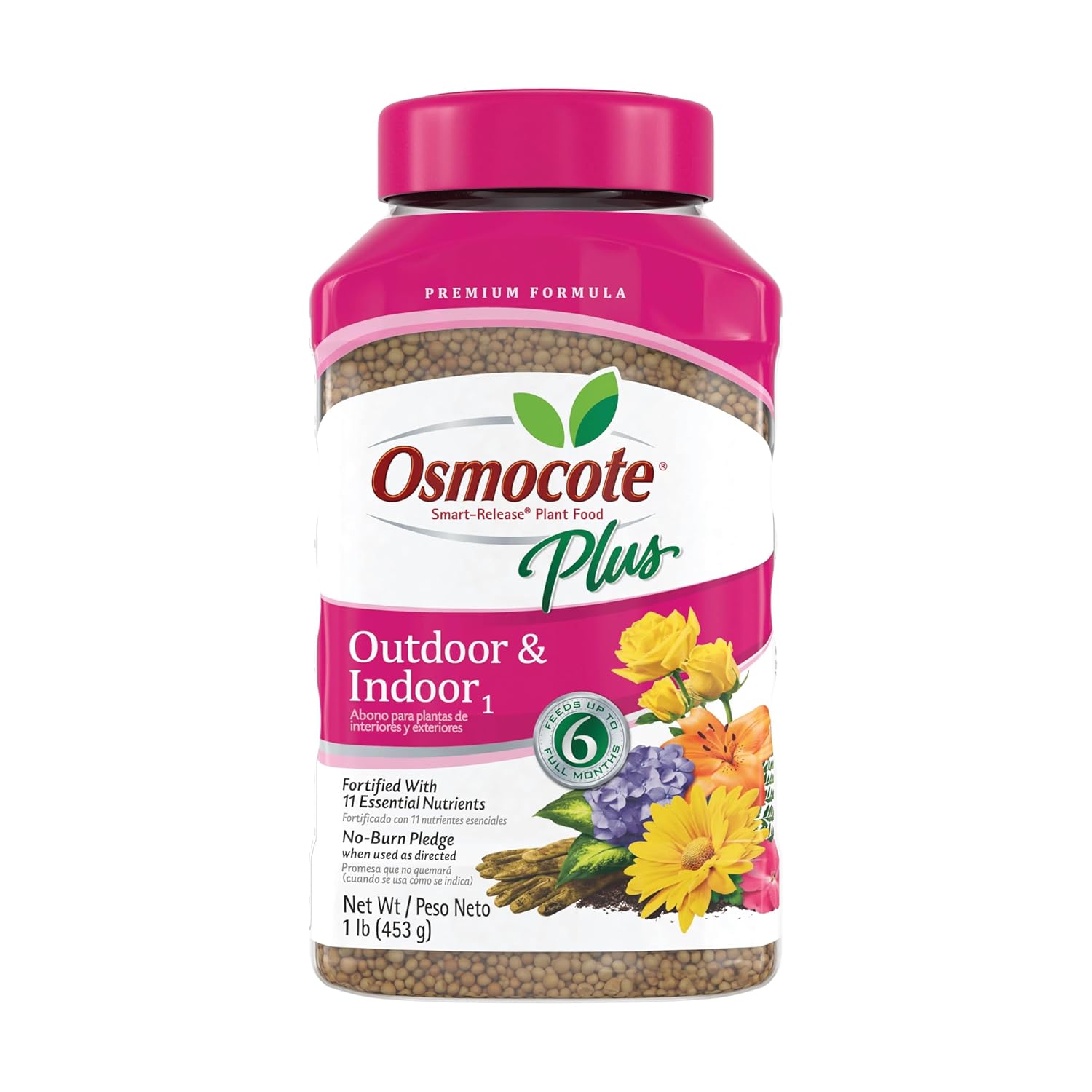
This Osmocote Smart-Release granular plant food is designed to give potted flowering plants steady nutrition for up to six months from a single application. You sprinkle the recommended amount into the top inch or two of potting mix, water it in, and the resin-coated granules release nutrients gradually with moisture and temperature, reducing the need for frequent feeding. It works for a wide range of plants including flowers, vegetables and container ornamentals, and the package includes dosing guidance for indoor pots versus outdoor beds. Practical benefits for container growers include long feeding intervals, a no-burn pledge when used as directed, and coverage that stretches across several small pots from one 1 lb container. The main limitations are that you must follow the dosing closely for small indoor pots and reapply only every six months, so rapid corrections for visible deficiencies require supplemental soluble feedings. Also this format is granular only, so it is not designed for foliar feeding or hydroponic systems.
Best for: Gardeners who want a low-maintenance feeding plan for flowering pots and mixed container plantings and prefer scheduled, long-lasting nutrition over frequent liquid feeds.
Less Ideal for: Growers who need rapid nutrient correction, foliar feeding, or who manage hydroponic systems should choose a soluble or system-specific fertilizer instead.
- Slow-release resin coating feeds plants up to six months, reducing watering-time feeding frequency
- Formulated with 11 essential nutrients suitable for flowering plants, vegetables and ornamentals
- No-burn pledge when used as directed provides safer application for container plants
- Easy granular application that can be mixed into top soil or sprinkled around the base
- Granular format offers no quick corrective feeding for acute nutrient deficiencies
- Small 1 lb size covers limited square footage, requiring more frequent repurchase for larger container collections
Verdict: A convenient slow-release granular fertilizer that keeps flowering potted plants fed for months with minimal fuss.
Miracle-Gro Indoor Plant Food Spikes for All Plants, 48 Count

| Item Form | Sticks |
|---|---|
| Application Method | Insert spike into soil |
| Coverage | Full |
| Target Species | Houseplants |
| Unit Count | 48 Count |
Miracle-Gro Indoor Plant Food Spikes are preformed fertilizer sticks designed to simplify feeding for houseplants, flowering potted plants, herbs and small vegetables. You use the included Miracle-Aerator to make a hole, press a spike into the soil and cover it; each spike slowly releases nutrients for about two months so you do not need to measure or mix liquid feeds regularly. The pack of 48 provides enough spikes to treat multiple pots and the coverage guidance (2 spikes for small 3–4 inch pots up to 6 for 11–12 inch pots) makes dosing straightforward. Practical benefits include minimal mess, predictable slow-release feeding and convenience for busy or forgetful plant owners. Limitations are that spikes release a fixed NPK blend so they are less customizable than liquid feeds and they may not be ideal for very large containers or specific nutrient needs during heavy bloom cycles. For flowering potted plants they work well as a steady maintenance feed between more targeted bloom fertilizers.
Best for: Houseplant and container gardeners who want an inexpensive, low-effort way to keep multiple flowering pots fed without frequent mixing or monitoring.
Less Ideal for: Growers seeking precise NPK control for peak flowering, or those who manage very large containers or heavy-feeding specimens that need customized feeding schedules.
- Pre-measured spikes eliminate mixing and measuring for low-maintenance feeding
- Feeds continuously for up to two months per application
- Clear dosing guidance by pot size simplifies use across multiple containers
- Large 48-count pack treats many pots before restocking
- Fixed nutrient formulation limits tailoring to specific bloom-boosting needs
- Not formulated for very large containers where more frequent or higher-dose feeding may be required
Verdict: An affordable, no-fuss way to keep potted flowering plants fed for weeks with simple insert-and-forget spikes.
Miracle-Gro Water Soluble All Purpose Plant Food, 12.5 lb

| Item Form | Powder |
|---|---|
| Unit Count | 200 Ounce |
| Mixing Ratio | 1 tablespoon per gallon of water |
| Target Species | all plants |
Miracle-Gro Water Soluble All Purpose Plant Food is a powder fertilizer you mix with water to feed container and in‑ground plants. It contains a balanced NPK formula designed to deliver quick nutrients to roots when applied with a watering can or a compatible garden feeder. Typical use is straightforward: measure with the included scoop, dissolve in water, and soak soil at the base of flowering pots every 1 to 2 weeks. Notable features include clear mixing directions, a large 12.5 lb container that covers roughly 5,000 sq ft, and compatibility with virtually any ornamental, vegetable, or houseplant. The practical benefit for potted flowering plants is rapid nutrient delivery that supports bigger blooms versus unfed plants. Limitations to consider are that it is a general all‑purpose formula rather than a bloom‑boosting high‑phosphorus mix, so growers seeking specialized bloom formulas may prefer a dedicated flower food. Also as a soluble powder it requires regular mixing and application rather than a single slow‑release treatment.
Best for: Gardeners who prioritize consistent, dependable feeding for a variety of potted flowering plants and want a straightforward, repeatable routine that produces visible growth.
Less Ideal for: Growers who want a specialized bloom‑boosting formula or who prefer hands‑off, slow‑release fertilizers that need less frequent application.
- Water‑soluble powder feeds plants quickly when mixed and applied
- Clear mixing ratios and included scoop make dosing simple
- Large 12.5 lb container provides broad coverage for many pots and beds
- Suitable for both indoor and outdoor plants, including vegetables and ornamentals
- All‑purpose NPK rather than a high‑phosphorus bloom booster for flowering‑only needs
- Requires regular mixing and applications instead of single‑application slow release
Verdict: A reliable, easy‑to‑use soluble fertilizer that delivers fast, general nutrition to potted flowering plants on a regular feeding schedule.
Miracle-Gro Indoor Plant Food for All Plants, Liquid, 8 fl. oz. (2-Pack)

| Item Form | Liquid |
|---|---|
| Application Method | Apply directly to soil or mix with water |
| Target Species | Houseplants |
| Mixing Ratio | 4 pumps per 1 quart of water |
| Unit Count | 16 Fluid Ounces |
Miracle-Gro Indoor Plant Food is a ready-to-use liquid fertilizer intended for regular feeding of potted indoor plants, including flowering container plants. It is used by pumping a measured amount into a quart of water (mixing ratio 4 pumps per quart) or by applying directly to the soil and watering after. The formula feeds instantly so you can combine feeding with routine watering every two weeks, which helps maintain steady bloom and foliage health in flowering pots. Notable features are the simple pump dispenser, compatibility with most houseplants, and the convenience of a two-bottle bundle for continued use. Practical benefits include easy dosing that helps prevent overfeeding and a quick nutrient boost that supports blooms and vigor between repots. Important limitations are that this is a general all-purpose indoor formula rather than a bloom-specific high-phosphorus fertilizer, and the product relies on correct dosing and schedule for best results. For gardeners seeking tailored NPK ratios for heavy bloom production, a dedicated bloom booster may be a better addition alongside this product.
Best for: Houseplant owners who want a low-effort, dependable liquid fertilizer to keep potted flowering plants healthy between repots and prefer straightforward dosing tied to regular watering.
Less Ideal for: Growers chasing maximum flowering with precise NPK schedules or professional growers who need specialized bloom-boosting formulas and granular long-release options.
- Simple pump dispenser and clear mixing ratio for easy, repeatable dosing
- Formulated for a wide range of indoor potted plants including flowers and herbs
- Feeds instantly so you can apply during regular watering every two weeks
- Sold as a two-pack which helps maintain a feeding routine without frequent repurchase
- All-purpose formula rather than a bloom-focused high-phosphorus fertilizer
Verdict: An easy-to-use liquid fertilizer that reliably maintains the health and blooms of potted indoor flowering plants with minimal fuss.
TPS Nutrients Orchid Fertilizer Liquid Bloom Boost, 8 fl oz

| Item Form | Liquid |
|---|---|
| Application Method | foliar spray |
| Coverage | Medium |
| Target Species | orchids |
| Unit Count | 8 Fluid Ounces |
This 8 oz TPS Nutrients Orchid Fertilizer is a liquid, foliar-spray formula made specifically for orchids in pots. You apply it as a foliar spray or dilute per the label to feed leaves, roots, and developing flower spikes; the kelp-enriched mix and nutrient profile are intended to promote more frequent and vivid blooms and support root health. In potted flowering plants the fast-absorbing liquid delivery helps nutrients reach the plant quickly, which is useful for indoor orchids that rely on regular, gentle feeding rather than heavy soil fertilization. The product is compact and easy to store, and the 1:0 mixing ratio on the label simplifies preparation for routine use. Limitations to expect are the small 8 ounce volume, which means frequent repurchase for multiple pots, and the formula is tailored to orchids so it may not be optimal for non-flowering houseplants with different nutrient needs.
Best for: Buyers who want a straightforward, low-risk orchid fertilizer for potted flowering plants and prefer an easy-to-use foliar liquid for steady bloom support.
Less Ideal for: Gardeners managing many pots or larger flowering shrubs outdoors should consider larger-volume or general-purpose fertilizers instead.
- Designed specifically for orchids so feeding targets flowering and spike development
- Liquid foliar formula delivers nutrients quickly for indoor potted plants
- Kelp-enriched mix supports root health and nutrient uptake
- Clear mixing ratio simplifies preparation and routine use
- Small 8 fl oz volume may not last for multiple plants or long feeding schedules
Verdict: A simple, kelp-enriched foliar fertilizer that makes regular bloom support for potted orchids easy and reliable.
Choosing the Right Fertilizer for Flowering Plants in Pots: Key Factors to Consider
Nutrient Ratio and Bloom Focus
The N-P-K ratio directly influences how a fertilizer affects flowering plants. Higher phosphorus and potassium support bud set and flower development, while excessive nitrogen drives leafy growth at the expense of blooms. For containers, choose a ratio that leans toward bloom support but still supplies enough nitrogen for healthy foliage.
Because pots have limited soil, small imbalances show up quickly. A bloom-focused fertilizer helps sustain repeat flowering in annuals and keeps perennials productive. Also consider formulations that include soluble micronutrients to avoid deficiencies that can reduce flowering intensity.
Release Profile and Timing
How a fertilizer releases nutrients determines how often you must feed and how steady the plant's nutrient supply will be. Fast-release liquids provide an immediate boost and are useful during peak bloom, but they require regular applications and careful dosing. Slow-release granules or coated prills deliver nutrients over weeks or months, reducing maintenance and lowering risk of sudden nutrient spikes.
For container-grown flowers, matching release profile to your watering frequency and the pot size matters. Small pots dry faster and may benefit from more frequent, lower-dose applications, while larger containers can usually use extended-release products with fewer applications.
Salt Load and Residue
Many fertilizers raise soluble salt levels in the potting mix as they dissolve. High salt concentrations can cause root desiccation and leaf tip burn in potted plants because roots have nowhere to escape concentrated salts. Choose formulations known for low residual salt or that are designed for container use to minimize buildup.
Regular leaching during routine watering can manage salts, but products with lower salt indices make that task easier. Also look for directions about occasional flushes and for formulations that break down cleanly without leaving hard residues.
pH Stability and Micronutrient Availability
Container mixes can drift in pH, which affects the availability of iron, manganese, and other micronutrients essential for flowering. Fertilizers that include chelated micronutrients or that help stabilize pH keep those elements accessible to roots. This prevents common container symptoms such as interveinal chlorosis that weaken plants and reduce bloom production.
When choosing a fertilizer, consider whether it supports micronutrient balance in typical potting soil pH ranges and whether it supplies trace elements in plant-available forms.
Formulation Convenience for Container Care
Ease of use matters when you maintain many pots or have limited time. Liquid concentrates dose quickly and let you tailor feeding strength, granules are tidy and slow-release, and water-soluble powders are a middle ground for periodic feeding. Consider storage, mixing time, and how the application fits into your watering routine.
Also factor practical issues like measuring small doses for tiny pots, the need to avoid splashing fertilizer onto foliage, and whether the product requires multiple steps such as pre-soaking or agitation before use.
Compatibility with Potting Mix and Watering Practices
Fertilizers interact with potting mixes, organic amendments, and your watering schedule. A high-organic fertilizer may work well in mixes rich in compost or bark, while mineral-focused feeds pair better with inert mixes. Consider the water you use as well: hard water can raise salt levels and alter nutrient dynamics, amplifying the need for low-salt fertilizer choices.
Think about how often you repot or refresh topsoil and whether you prefer to treat containers as high-maintenance showpieces or low-effort plantings. That preference should guide which formulation and concentration you pick.
Liquid Fertilizers for Quick Bloom Response
Liquid feeds deliver nutrients immediately into the potting mix and are ideal for correcting short-term deficiencies or stimulating blooms during peak flowering. They allow precise control of concentration and frequency, which is useful when plants are in small pots or when you need a fast corrective feed.
Use liquids at half-strength for smaller containers to avoid salt stress and always water first before feeding if the mix is dry to reduce the risk of root burn.
- Best when you need fast color or to correct nutrient deficiency
- Requires more frequent application than slow-release options
- Easier to tailor strength for different pot sizes
Slow-Release Granules for Low-Maintenance Containers
Slow-release granules are convenient for gardeners who want steady nutrition without weekly dosing. They release nutrients gradually as the soil warms and moistens, which stabilizes growth and reduces the chance of nutrient shocks that can suppress flowering.
Choose a granule with an expected release period that matches your watering and repotting schedule, and avoid over-application in small pots where a full recommended dose for a larger container would be excessive.
- Good for busy gardeners and larger planters
- Release varies with temperature and moisture
- Less control over immediate feeding compared with liquids
Water-Soluble Powders for Flexible Feeding
Water-soluble fertilizers bridge the gap between liquid concentrates and slow-release granules. They dissolve quickly, making them useful for routine feedings or when you want to boost flowering before an event. These powders allow consistent dosing across many pots and can be used as a soil drench or foliarly where appropriate.
Be careful to measure correctly and dissolve fully to prevent undissolved particles from concentrating at the pot surface.
- Flexible dosing schedule and good for frequent feeding
- Requires accurate mixing to avoid overfeeding
- Can be used for foliar sprays in moderation
Organic Options and Pot Container Health
Organic fertilizers release nutrients more slowly and improve microbial activity in the potting mix. For flowering containers, they can enhance long-term soil health and provide steadier, gentler nutrition that reduces the likelihood of dramatic vegetative flushes.
Organic feeds often require slightly higher application rates or combined use with soluble boosters during peak bloom to deliver visible flower increases without stressing the plants.
- Improves potting mix biology over time
- Less risk of salt burn but slower to show bloom response
- Pair with occasional soluble feeding if rapid bloom is desired
Managing Salt Buildup and Periodic Leaching
Regular leaching by thoroughly watering pots until water runs from the drainage holes helps remove excess salts that build up from dissolved fertilizers and hard water. Over time, salts concentrate in container mixes and can reduce water uptake and flower quality.
Schedule a deep flush a few times per season, especially when using fast-release or high-salt-index products. Repotting with fresh mix every year or two also resets salt levels and refreshes nutrient reserves.
- Flush containers when salt buildup symptoms appear
- Use collected flush water responsibly in the garden if safe
- Consider water quality when planning feed frequency
Feeding Schedules for Annuals Versus Perennials
Annual flowering plants often benefit from more frequent, lighter feedings to maintain continuous bloom through the season. Perennial container plants can need less frequent feeding once established but still require timely nutrients during bloom and after pruning or cutback.
Adjust schedule according to pot size, plant vigor, and observed flowering. Smaller pots dry and deplete nutrients faster, which generally calls for increased feeding frequency compared to large planters.
- Annuals: steady, regular feeding for continuous blooms
- Perennials: targeted feeding during bloom and recovery
- Scale doses to pot size and plant density
How We Chose the Best Fertilizer for Flowering Plants in Pots
We prioritized traits that matter specifically for flowering plants grown in containers. Key evaluation criteria included nutrient ratio and bloom focus to ensure adequate phosphorus and potassium without excessive nitrogen, formulation type and release profile so feeders match container watering schedules, salt load and soluble salt management to avoid root burn in confined root zones, and root-friendly delivery including pH stability and chelation for micronutrient availability. We also considered application convenience for typical container gardeners, such as liquid dosing, granule solubility, or slow-release longevity. We excluded formulations intended only for lawns, alkaline-heavy soil amendments that disrupt container pH, and bulky soil blends that are not practical for small pots. We focused on products and formulations that work across common potting mixes and in typical container sizes from 6-inch to 18-inch diameters. Finally, we looked for options suited to both flowering annuals and tender perennials so the shortlist serves a wide range of container bloomers.
FAQ
How often should I fertilize flowering plants in small pots?
Often depends on the fertilizer type. Weekly to biweekly light feedings with a water-soluble or liquid fertilizer are common for small pots. If using slow-release granules, a single application may last several months but monitor bloom vigor and leaf color to adjust frequency.
Can I use a houseplant fertilizer on outdoor potted flowers?
It depends on the N-P-K balance and concentration. Some houseplant formulas are low in phosphorus and not optimized for heavy flowering. If you use a houseplant feed, check the ratio and reduce strength for outdoor pots, watching for reduced bloom response.
Will more fertilizer produce more flowers?
Not necessarily. Excessive nitrogen encourages foliage rather than flowers and raises salt levels that harm roots. Using the correct nutrient balance and following application instructions typically produces better blooms than increasing dose size.
How can I tell if my pot has salt buildup from fertilizer?
Common signs include white crust on the soil surface or pot rim, leaf tip browning, and reduced water uptake. Performing a thorough flush and observing recovery helps confirm salt-related issues. If symptoms persist, repotting into fresh mix may be needed.
Is foliar feeding effective for flower production in containers?
Foliar feeding can quickly supply micronutrients and correct some deficiencies, but it is a temporary measure and does not replace balanced root feeding. Use foliar sprays sparingly and follow label guidance to avoid leaf burn.
Should I change feeding in hot, dry weather?
Yes. Containers dry faster in heat, concentrating nutrients and salts. Reduce feed strength or frequency during heat stress, and ensure regular watering to prevent root damage. Consider switching to gentler, more frequent feeds rather than larger doses.
Final Verdict
For flowering plants in pots, prioritize a fertilizer that balances bloom-supporting nutrients with low salt impact and a release profile that matches your watering habits. Liquids and water-soluble feeds give immediate control, while slow-release granules reduce maintenance for larger planters. Organic options improve potting-mix health but may need occasional soluble boosts for peak bloom. Balance convenience against the particular needs of your pots and plants. If you manage many small containers, favor frequent, low-strength feeds. For low-effort setups, choose a reliable slow-release product and plan periodic leaching. That approach will keep blooms productive while protecting fragile container root systems.
