

Note: This article contains affiliate links. If you click on these links and make a purchase, I may earn a small commission at no extra cost to you. This helps support my research and content. Read my full affiliate disclosure here.
Choosing the right fertilizer for garden plants makes a big difference in bloom, fruit set, and overall vigor. Different formulations feed plants in different ways, and matching nutrient ratios, release speed, and application method to your soil and seasonal goals helps prevent waste and stress. This guide collects six top-rated options suitable for garden beds, containers, and mixed borders, shortlisted for real-world garden performance. We evaluate each pick by nutrient balance, how the fertilizer releases nutrients, ease of use, and suitability for common garden tasks, so you can find a product that fits your soil and schedule.
Top Picks at a Glance
| Best Overall The best all-around choice for most situations | Miracle-Gro Shake 'N Feed All Purpose Plant Food, 4.5 lb. |  |
| Best Quality Built to a higher standard if you want something more solid | FoxFarm Soil Liquid Trio Pack (Tiger Bloom, Grow Big, Big Bloom) – 48 fl oz |  |
| Best Value The sweet spot between price and what you get | Miracle-Gro Pour & Feed Liquid Plant Food, 32 fl. oz. | 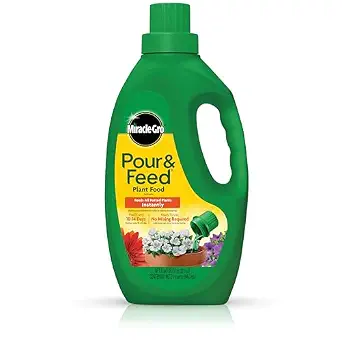 |
| Best Budget The cheapest option that still gets the job done reliably | Miracle-Gro Water Soluble Tomato Plant Food, 1.5 lb |  |
| Highest Rated A top-rated pick with lots of positive feedback | Miracle-Gro Water Soluble All Purpose Plant Food, 1.5 lb |  |
| Most Popular A crowd favorite that many people choose with confidence | Miracle-Gro Water Soluble All Purpose Plant Food, 3 lb |  |
Miracle-Gro Shake 'N Feed All Purpose Plant Food, 4.5 lb.

| Item Form | Granules |
|---|---|
| Application Method | Shake onto soil and work into top 1-3 inches |
| Target Species | flowers, vegetables, herbs |
| Feeds For | up to 3 months |
| Unit Count | 72 Ounce |
Miracle-Gro Shake 'N Feed All Purpose is a granular, continuous-release fertilizer meant for regular garden and container use. You shake or sprinkle the granules onto soil, work them lightly into the top inch or three, then water to activate a slow feed that lasts up to three months. The formula includes micronutrients and organic inputs that support soil microbes and root development, which can help flowering, vegetables, and herbs produce stronger, more resilient growth compared with no feeding. It covers an estimated 180 sq ft from the 4.5 lb container and requires no mixing, which makes it quick to apply across beds or around established plants. Limitations are that it is a general-purpose product rather than a crop-specific formula, so gardeners seeking tailored NPK ratios for tomatoes or heavy feeders may prefer a specialized feed. Also, like all granular fertilizers, it must be applied to soil and watered in to avoid uneven feeding or potential burn if used incorrectly.
Best for: Gardeners who want a low-effort, once-every-few-months fertilizer to keep mixed flower beds and vegetable plots healthy without fuss.
Less Ideal for: Growers who need crop-specific feeding plans, precise NPK management, or liquid feeds for rapid correction of nutrient deficiencies.
- Continuous-release granules that feed for up to three months reducing application frequency
- Easy dry application with no mixing required for quick spot or bed treatments
- Contains micronutrients and natural ingredients to support soil microbes and root development
- Suitable for both in-ground beds and containers and labeled for flowers, vegetables, and herbs
- All-purpose formula is not tailored to high-demand crops that may need specific NPK ratios
- Requires manual spreading and watering to activate so missed watering reduces effectiveness
Verdict: A convenient, low-maintenance granular fertilizer that feeds a wide range of garden and container plants for three months with a single application.
FoxFarm Soil Liquid Trio Pack (Tiger Bloom, Grow Big, Big Bloom) – 48 fl oz

| Brand | FoxFarm |
|---|---|
| Item Form | Liquid |
| Unit Count | 48 Fluid Ounces |
| Specific Uses For Product | Plant Food |
| Target Species | Plants |
The FoxFarm Soil Liquid Trio pairs three concentrated liquid fertilizers—Grow Big, Big Bloom, and Tiger Bloom—into a single feeding program aimed at maximizing plant performance through every stage. In practice you use Grow Big during vegetative growth to boost leaf and stem development, Big Bloom as a gentle all-purpose bloom and root tonic, and Tiger Bloom to push fruiting and flower set once buds appear. The formulas are greenhouse tested and designed to mix into regular watering schedules, letting you tailor feed strength to indoor or outdoor garden crops such as tomatoes, roses and vegetables. Notable features include clearly staged directions, concentrated liquid form for quick uptake, and a low pH Tiger Bloom that helps micronutrient stability. The main limitations are that precise dosing is required to avoid overfeeding and that the set does not include a soil test or pH adjustment products, so growers who need exact nutrient analysis will need additional tools. For growers focused on strong, staged performance this trio offers a ready-made, time-tested feeding progression.
Best for: Gardeners who prioritize measurable plant performance and want a ready-made, stage-based feeding plan for vegetables, ornamentals and houseplants.
Less Ideal for: Beginners who prefer one-step granular feeds or those who need complete soil analysis and pH management bundled with their fertilizer purchase.
- Three-stage program covers vegetative growth, general bloom support, and flowering/fruit set
- Concentrated liquid formulas allow quick nutrient uptake and easy mixing into watering
- Greenhouse-tested formulas from an established brand with consistent results
- Low pH Tiger Bloom helps maintain micronutrient availability during storage and use
- Requires careful measuring and schedule adherence to avoid nutrient burn
- No soil test, pH adjustment, or nutrient ratio guidance included for precise tuning
Verdict: Choose this trio when you want a proven, stage-specific liquid feeding program to push vigorous growth and bigger blooms in garden plants.
Miracle-Gro Pour & Feed Liquid Plant Food, 32 fl. oz.

| Item Form | Liquid |
|---|---|
| Application Method | Directly to the soil |
| Specific Uses For Product | Plant Food |
| Target Species | potted plants |
| Liquid Volume | 32 fluid ounces |
Miracle-Gro Pour & Feed is a ready-to-use liquid fertilizer designed specifically for potted plants, applied by measuring capfuls directly onto the soil every 10 to 14 days. It removes the need to mix with water or use a watering can, which speeds routine feeding for houseplants, balcony containers, and outdoor pots. The bottle includes a cap measurer and directions for different container sizes, and the liquid form delivers nutrients immediately to the root zone. For practical gardeners this product makes regular feeding simple and tidy, helping plants stay vigorous with minimal fuss. Limitations to consider are that it is intended for container-grown plants only and the regular 10 to 14 day schedule requires consistent application to see steady results. Also, because it is a general all-purpose formula, gardeners seeking specialty NPK ratios for specific vegetables or flowering phases may prefer a targeted product.
Best for: Busy plant owners and practical gardeners who want a low-effort way to keep houseplants and container gardens fed on a regular schedule without mixing concentrates.
Less Ideal for: Gardeners growing in-ground beds or those who need precise NPK control for fruiting vegetables or bloom boosting should look at products formulated for those specific purposes.
- Ready-to-use liquid requires no mixing, so feeding is quick and low-effort
- Cap measurer and clear label directions make dose control easy for different container sizes
- Formulated for both indoor and outdoor containers so one product covers multiple locations
- Installs directly at the soil to deliver nutrients quickly to roots
- Not intended for in-ground garden beds or soil amendment of in-ground plants
- General all-purpose formula may not match specialized nutrient needs for certain crops
Verdict: A convenient, ready-to-use liquid fertilizer that makes regular feeding of indoor and outdoor container plants fast and simple.
Miracle-Gro Water Soluble Tomato Plant Food, 1.5 lb

| Item Form | Liquid |
|---|---|
| Application Method | Water Soluble |
| Target Species | Tomatoes and vegetables |
| Mixing Ratio | 18-18-21 |
Miracle-Gro Water Soluble Tomato Plant Food is a concentrated, water-soluble fertilizer meant to be mixed with a watering can or used with a hose-fed Garden Feeder to feed vegetables and tomatoes every 7 to 14 days. Its 18-18-21 NPK mixing ratio delivers balanced nutrients that start to work immediately, helping driven gardeners push faster leaf and fruit development. The bottle is convenient for routine feeding of in-ground beds and containers and includes clear mix rates for outdoor and indoor use. Practical benefits include quick nutrient delivery, compatibility with common watering gear, and suitability for frequent, controlled applications during the growing season. Important limitations are that this is a synthetic, fast-acting formula so it is not a slow-release or organic option, and frequent use requires careful measuring to avoid overfeeding. Coverage claims are oriented around use with the Garden Feeder, so expect actual area fed to vary by application method and plant spacing.
Best for: A gardener focused on getting fast, reliable growth from vegetable beds or container tomatoes on a tight budget who prefers an easy-to-mix, repeatable feeding routine.
Less Ideal for: Gardeners seeking organic, slow-release nutrition or those who avoid synthetic fertilizers should consider organic or granular alternatives.
- Water-soluble formula feeds plants quickly when mixed into water
- Clear mixing directions for watering can and Garden Feeder simplify routine use
- Balanced NPK (18-18-21) tailored for vegetables and tomatoes
- Works with common watering equipment for easy application
- Not an organic or slow-release fertilizer so it requires repeated applications
- Coverage estimates are dependent on application method and may vary
Verdict: A cost-effective, easy-to-use water-soluble fertilizer that quickly boosts tomato and vegetable growth when used regularly.
Miracle-Gro Water Soluble All Purpose Plant Food, 1.5 lb

| Item Form | Powder |
|---|---|
| Application Method | Watering Can |
| Target Species | For all flowers, vegetables, trees, shrubs and houseplants |
| Mixing Ratio | 24-8-16 |
Miracle-Gro Water Soluble All Purpose Plant Food is a concentrated powder you mix with water to give plants a fast nutrient boost. It is designed for regular feedings of flowers, vegetables, trees, shrubs and houseplants and is applied with a watering can or compatible garden feeder. The 24-8-16 formula supplies a high dose of nitrogen for quick leafy growth while also providing phosphorus and potassium to support roots and flowering. Typical use is every 7 to 14 days outdoors and every two weeks for houseplants; the product includes dosing guidance for both applications and small and large scoop measures for convenience. The powder dissolves quickly and starts working at the roots, so results are faster than granular feeds, but it requires frequent reapplication to maintain levels. It is safe when used as directed and can cover roughly 600 sq ft from the 1.5 lb container. If you want steady low-maintenance feeding you will need a slow-release alternative because this is meant for more regular watering-and-feed routines.
Best for: Gardeners who prioritize predictable, reliable feeding and want a fast, easy-to-mix fertilizer for regular maintenance of mixed beds, containers, and houseplants.
Less Ideal for: People seeking a low-maintenance, slow-release solution for large landscapes or those who prefer organic-only fertilizers should consider other options.
- Fast-acting water-soluble formula that feeds through the roots quickly.
- Clear dosing instructions and included scoop for indoor and outdoor use.
- Broadly suitable for many plant types including vegetables, flowers, shrubs and houseplants.
- Compact 1.5 lb container covers approximately 600 sq ft, useful for small to medium gardens.
- Requires regular reapplication every 1 to 2 weeks, so higher maintenance than slow-release fertilizers.
- High nitrogen ratio may favor leafy growth over flowering if overused.
Verdict: Choose this if you want a dependable, fast-acting soluble fertilizer that makes regular, predictable feeding simple for garden plants.
Miracle-Gro Water Soluble All Purpose Plant Food, 3 lb

| Item Form | Powder |
|---|---|
| Application Method | Mix with water in a watering can |
| Fertilizer Analysis | 24-8-16 |
| Unit Count | 48 Ounce |
| Coverage | Feeds approximately 1,200 sq. ft. |
Miracle-Gro Water Soluble All Purpose Plant Food is a powdered NPK 24-8-16 fertilizer designed to be mixed with water and applied with a watering can or garden feeder. It is intended for use on flowers, vegetables, houseplants, trees, shrubs and container or in-ground plantings. The product dissolves quickly and starts delivering nutrients to roots almost immediately, which gardeners typically use every 7 to 14 days for outdoor plantings and every 2 weeks for indoor pots. Notable features include a concentrated formulation that covers a large area from a single 3 lb container and simple dosing via the included scoop. Practical benefits are fast green-up and more vigorous growth compared with unfed plants, plus flexibility to feed many plant types with one product. Limitations are that it is a high-nitrogen all-purpose mix rather than a targeted formula for acid-loving plants, and repeated applications are needed because water-soluble feeds act quickly but do not provide long-term slow release. Users should measure carefully and avoid direct contact with skin and eyes when handling the powder.
Best for: Gardeners who want a reliable, proven feed to quickly boost growth across a mixed garden of flowers, vegetables and houseplants and who value clear usage instructions and wide user acceptance.
Less Ideal for: People seeking a single specialty fertilizer for acid-loving plants, flowering-only boost, or a long-term slow-release regimen should consider a more targeted or granular product.
- Fast-acting water-soluble formula that delivers nutrients to roots quickly.
- Broadly labeled for indoor and outdoor use across flowers, vegetables, trees and houseplants.
- Concentrated 3 lb container provides substantial coverage for typical gardens.
- Easy to apply with a watering can or compatible garden feeder and includes a measuring scoop.
- High nitrogen ratio may not be ideal for bloom-only or acid-loving plant needs.
- Requires regular reapplication since it is not a slow-release fertilizer.
Verdict: Choose this if you want a fast-acting, widely applicable water-soluble fertilizer that reliably boosts growth across a mixed garden.
Choosing the Right Fertilizer for Garden Plants: Key Factors to Consider
Nutrient Ratio and Plant Needs
Different garden plants require different proportions of nitrogen, phosphorus, and potassium. Leafy vegetables and heavy-feeding annuals often need higher nitrogen for green growth, while flowering and fruiting plants benefit from higher phosphorus and potassium during bloom and fruit set. A balanced fertilizer suits mixed borders and general maintenance, but targeted formulations can give measurable benefits when timed with growth stages.
Matching the N-P-K ratio to what your garden actually needs reduces waste and the risk of nutrient imbalance. A soil test helps determine deficiencies so you can select a fertilizer that corrects specific shortfalls rather than applying a generic mix every time.
Release Method and Feeding Frequency
How a fertilizer releases nutrients strongly influences how often you must feed and the risk of burning tender roots. Quick-release fertilizers deliver nutrients immediately and are useful for fast-responding crops or corrective feeding, but they require more frequent application. Slow-release or controlled-release formats provide steady nutrition over weeks or months, which is useful for low-maintenance beds and container plants.
Organic fertilizers release nutrients as microbes break them down, so they improve soil structure and microbial life over time but act more slowly. Consider how much time you want to spend feeding and whether steady supply or rapid correction is the priority when choosing a release method.
Application Method and Garden Compatibility
Fertilizers come as granules, liquids, spikes, or water-soluble powders, and each form suits different garden tasks. Granules and slow-release pellets work well when broadcasting across beds or top-dressing containers. Liquids and water-soluble powders are best for quick foliar feeds or precise feeding through watering cans and hoses. Spikes and tablets are convenient for individual shrubs and container specimens but can be less flexible in mixed beds.
Choose a format that matches how you garden. If you rotate many crops or have mixed containers, a versatile liquid or granular option with clear dosing instructions reduces mistakes.
Soil Type and pH Effects
Soil texture and pH influence nutrient availability. Sandy soils drain quickly and often require more frequent feeding or slow-release products that reduce leaching. Clay soils hold nutrients longer but can tie up certain elements if pH is off. Some fertilizers include elements to help correct pH-related issues, while others are neutral.
Testing and amending soil first helps fertilizers work effectively. Select a product whose soluble behavior matches your soil: soluble feeds for quick response in heavy soils, and slow-release or organic for light, free-draining soils that need sustained delivery.
Plant Stage and Seasonal Timing
Feeding needs change through the season. Early-season growth benefits from nitrogen to build foliage and roots. As plants approach flowering and fruiting, switch to blends higher in phosphorus and potassium to support blooms and crop development. Many gardeners use different fertilizers or change application rates through the season to match these stages.
Consider whether the fertilizer you choose is suitable across growth stages or whether you will need supplemental products. Timed-release solutions reduce the need to switch products mid-season, while quick feeds let you correct visible deficiencies promptly.
Environmental and Safety Considerations
Excess fertilizer can runoff into waterways or burn plant roots if overapplied. Organic options and controlled-release formulas lower the risk of leaching and support soil biology. Nonvolatile, well-labeled products reduce the chance of user error when dosing.
Think about storage safety, runoff risk near water features, and whether the product contains slow-release coatings or benign organic matter. Gardeners with pollinator beds or vegetable plots may prefer formulations that minimize salt buildup and encourage soil life.
Matching Fertilizer Type to Garden Situations
Different garden situations call for different fertilizer approaches. For mixed borders with perennials and annuals, a balanced granule or organic mix provides steady maintenance without frequent intervention. Containers and small raised beds benefit from controlled-release granules or regular liquid feeds because pots dry out faster and nutrients leach more readily.
For heavy-feeding vegetables or newly planted shrubs, consider a higher-nitrogen starter or an initial correction feed followed by a balanced maintenance product. Work the fertilizer into the topsoil for granular products or apply liquids to moist soil to improve uptake.
- Use slow-release or organic for low-maintenance beds
- Choose liquids or water-soluble feeds for quick correction
- Prefer controlled-release for containers to reduce feeding frequency
Using Soil Tests to Guide Fertilizer Choice
A basic soil test reveals pH and nutrient levels so you can pick a fertilizer that corrects deficiencies rather than masking them. Many gardeners test every one to three years, especially before planting major beds or starting a new vegetable plot.
If your soil is low in phosphorus, choose a formulation with higher middle number in the N-P-K ratio for bloom and fruiting. If pH is off, address that first because nutrient availability depends on soil acidity or alkalinity.
- Test before major planting projects
- Target shortages, do not overapply macronutrients
- Adjust pH before chasing nutrient symptoms
Application Tips to Avoid Burn and Runoff
Follow label rates closely, especially with quick-release synthetics that can burn roots if concentrated near stems. Watering in granular applications helps move nutrients into the root zone and reduces surface loss. In sandy soils, split applications or slow-release products reduce leaching.
For containers, feed more frequently with diluted liquid feeds or use slow-release granules formulated for pots. Sweep excess granules away from plant crowns to prevent crown rot and salt build-up.
- Measure applications rather than eyeballing
- Water after granular application to settle nutrients
- Prefer split feeds in sandy soil to reduce leaching
Organic Vs Synthetic: Long-Term Soil Effects
Organic fertilizers build soil structure and microbial life over repeated use and often supply secondary nutrients and organic matter. They are slower acting and require patience but improve soil tilth and water-holding capacity over time. Synthetic fertilizers deliver predictable, fast-acting nutrients and are useful for immediate corrections or high-demand crops.
Many gardeners combine both approaches: use organics to build soil and synthetics for targeted, quick responses. Consider crop type, timeline, and environmental priorities when choosing a strategy.
- Organics improve soil structure over time
- Synthetics provide rapid, predictable nutrient delivery
- Combine approaches for long-term soil health and short-term corrections
Storing and Handling Fertilizers Safely
Store fertilizers in a cool, dry place away from moisture and out of reach of children and pets. Keep original labels and measure doses with dedicated tools to avoid cross-contamination. Dispose of unused or expired product according to local guidance to avoid environmental harm.
When mixing concentrates or liquids, prepare only what you will use and avoid splashes. Clean application tools after use, and avoid overapplication near water bodies or drainage paths.
- Keep products dry and labeled
- Use dedicated measuring tools
- Avoid application near watercourses
How We Chose the Best Fertilizer for Garden Plants
We prioritized fertilizers that perform reliably in typical home and community garden settings. Selection criteria focused on nutrient formulation, release mechanism, ease of application, suitability across common garden plant types, and environmental impact. We favored balanced N-P-K options and targeted blends where relevant, plus variants designed for container use or flowering and fruiting stages. Release mechanism included quick-release, slow-release, and organic breakdown profiles because that affects feeding frequency and risk of burn. Ease of application assessed packaging, measurement clarity, and compatibility with common spreading or watering routines. Exclusions: we excluded niche formulas intended solely for large-scale commercial production, lawn-only fertilizers, and products requiring specialized licensing or equipment. We also excluded items with unclear labeling about nutrient analysis or application rates. The final short list reflects products that combine clearly labeled nutrient content, predictable release behavior, practical application methods, and lower risk of overfeeding. Those dimensions align with the scoring criteria used throughout the guide.
FAQ
How often should I feed garden plants with fertilizer?
It depends on the product. Quick-release fertilizers often need feeding every two to six weeks, while slow-release formulas can last several months. Organic amendments feed more slowly and can be applied at planting and once or twice during the season.
Can I use the same fertilizer for containers and in-ground beds?
Often you can, but containers lose nutrients faster and usually benefit from more frequent feeding or slow-release formulas made for pots. Choose a product with clear dosing for both situations or use a liquid feed for containers and a granular product for beds.
Will fertilizer change my soil pH?
Some fertilizers can influence pH over time, especially those containing ammonium-based nitrogen or sulfur. Major pH adjustments are better handled with dedicated soil amendments. Test soil pH before making long-term fertilizer choices.
Are organic fertilizers as effective as synthetic ones?
Organic fertilizers work more slowly because microbes have to break them down, but they improve soil health over time. Synthetic fertilizers act faster and are more predictable for immediate needs. Effectiveness depends on your goals, timeline, and soil condition.
How do I avoid overfertilizing and burning plants?
Follow label rates, avoid applying concentrates directly against stems, and water granular products in after application. When in doubt, underapply and monitor plant response; symptoms like leaf scorch or wilting after feeding indicate excess salts.
Final Verdict
Choosing the best fertilizer for garden plants comes down to matching nutrient ratios, release behavior, and application form to your soil, plant types, and schedule. Prioritize a product that addresses measured soil needs and suits your maintenance preferences-slow-release or organic options for low-maintenance beds, and soluble feeds for quick correction and container work. Balance short-term plant responses with long-term soil health to get reliable results across the season.
