

Note: This article contains affiliate links. If you click on these links and make a purchase, I may earn a small commission at no extra cost to you. This helps support my research and content. Read my full affiliate disclosure here.
Picking the right natural fertilizer for indoor plants changes how well foliage, new growth, and root systems develop in pots and containers. Indoor conditions limit nutrient replenishment from soil microbes and outdoor inputs, so the right feed can prevent yellowing, slow growth, and repeated repotting. This guide covers five well-vetted natural fertilizer formats suited for houseplants and explains the practical tradeoffs: nutrient profile, application rhythm, safety around pets, and compatibility with common potting mixes. Below you will find a clear explanation of how we evaluated options and the reasons each shortlisted product type works in an indoor setting.
Top Picks at a Glance
| Best Overall The best all-around choice for most situations | Grow Queen Organic Liquid Indoor Plant Food 5-5-5 with Sea Kelp, 8 oz | 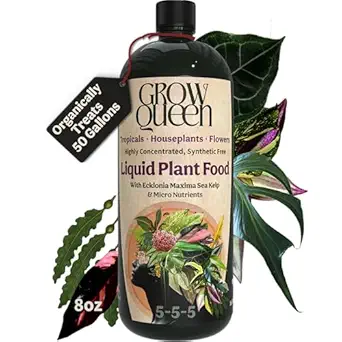 |
| Best Quality Built to a higher standard if you want something more solid | BLESS YOUR SOIL Big Green Leaves Indoor Plant Food, 1 lb Concentrated Powder |  |
| Best Value The sweet spot between price and what you get | Purived 16 oz All-Purpose Liquid Plant Fertilizer |  |
| Best Budget The cheapest option that still gets the job done reliably | True Organic All Purpose Liquid Plant Food, 16 oz (NPK 3-2-2) |  |
| Most Popular A crowd favorite that many people choose with confidence | TPS NUTRIENTS Indoor Plant Food Liquid Fertilizer, 8 oz |  |
Grow Queen Organic Liquid Indoor Plant Food 5-5-5 with Sea Kelp, 8 oz

| Item Form | Liquid |
|---|---|
| Specific Uses For Product | Plant Growth |
| Application Method | Watering |
| Mixing Ratio | 1:1 |
This Grow Queen liquid plant food is a concentrated, balanced 5-5-5 organic fertilizer formulated for houseplants and tropicals. It mixes at about 1 capful (4 ml) per gallon, so an 8 oz bottle treats up to 50 gallons and can last through months of routine watering. The formula includes Ecklonia maxima sea kelp and trace micronutrients, which support greener foliage, stronger stems and improved root health. Use it as a soil drench or light foliar feed every one to three weeks during active growth, and it pairs well with slow-release mixes for a fuller feeding program. Practical benefits include low burn risk from the gentle NPK ratio, concentrated dosing that reduces container volume waste, and suitability for both soil and oxygenated hydroponic setups. Limitations are that the kelp gives a noticeable ocean scent and the brand recommends avoiding standing reservoirs since organic nutrients can form a film in non-aerated water; users of passive water systems will need frequent reservoir changes or fresh mixes.
Best for: Buyers who want an easy, natural all-purpose fertilizer they can use regularly across a mixed indoor plant collection and who prioritize gentle, nutrient-balanced feeding.
Less Ideal for: People who rely on passive, non-aerated water reservoirs or who need a fragrance-free fertilizer for odor-sensitive indoor spaces.
- Balanced 5-5-5 NPK suitable for regular feeding of a wide range of houseplants.
- Includes sea kelp and trace micronutrients for improved leaf color and root strength.
- Concentrated formula treats up to 50 gallons from an 8 oz bottle, reducing refill frequency.
- Versatile application as a soil drench or foliar feed and compatible with aerated hydroponic systems.
- Contains organic kelp which can produce an ocean-like odor when mixed.
- Not recommended for standing, non-aerated reservoirs because organic nutrients may form a film.
Verdict: A concentrated, gentle 5-5-5 organic liquid fertilizer with sea kelp that makes regular, all-purpose feeding of houseplants simple and effective.
BLESS YOUR SOIL Big Green Leaves Indoor Plant Food, 1 lb Concentrated Powder

| Item Form | Powder |
|---|---|
| NPK Ratio | 12-4-8 |
| Application Method | Soil drench, foliar feed, hydroponic systems |
| Included Components | Measuring scoop |
| Liquid Volume | 44.01 gallons |
Big Green Leaves is a dry, water‑soluble houseplant fertilizer designed to boost foliage growth and root health in tropical indoor plants. It dissolves quickly and the included pre‑measured scoop makes mixing straightforward; one teaspoon per gallon yields a complete feed for soil drench or foliar spray, and the pouch can make roughly 90 gallons of solution. The 12-4-8 NPK emphasizes nitrogen for vigorous leaf and stem growth while potassium and phosphorus support transport and roots, and the sea kelp plus chelated micronutrients (iron, manganese, zinc, copper, boron, molybdenum) help with uptake and long‑term plant health. Practical benefits include compatibility with soilless media, LECA and hydro systems, low salt formulation to reduce buildup, and compact resealable packaging that saves storage space. Expect clearer, faster foliage response on pothos, monsteras and other leafy tropicals when fed every 2–4 weeks during the growing season. Limitations: it is formulated for leafy tropicals rather than cacti, succulents or high‑phosphorus flowering plants and requires careful dilution and regular feeding to avoid overapplication in low‑light or dormant periods.
Best for: Buyers who prioritize rapid, visible foliage performance for indoor tropical and leafy houseplants and who prefer a concentrated, science‑backed feed regimen.
Less Ideal for: Casual plant owners wanting a set‑and‑forget slow‑release product or growers focused on succulents, cacti, or bloom‑intensive flowering plants.
- High nitrogen 12-4-8 formula that promotes noticeable leafy growth in tropical houseplants.
- Contains sea kelp and chelated micronutrients to support root zone biology and improve nutrient uptake.
- Very concentrated powder yields about 90 gallons from one pouch, offering strong value per gallon.
- Versatile application: soil drench, foliar feed, hydroponic and LECA compatible.
- Resealable pouch and pre-measured scoop make mixing and storage tidy and repeatable.
- Not recommended for cacti, succulents, or flowering plants that need higher phosphorus.
- Requires regular dilution and scheduled feeding rather than a single slow‑release application.
Verdict: If you want concentrated, fast‑acting nutrition to drive bigger, greener leaves on tropical houseplants, this powder fertilizer delivers measurable results and excellent value per gallon.
Purived 16 oz All-Purpose Liquid Plant Fertilizer

| Item Form | Liquid |
|---|---|
| Application Method | soil drench, foliar feed, full & semi hydroponics |
| Target Species | Houseplants |
| Mixing Ratio | 320:1 |
| Liquid Volume | 16 fluid ounces |
Purived 16 oz All-Purpose Liquid Plant Fertilizer is a concentrated, water-soluble feed formulated for houseplants and compatible with soil drench, foliar feeding, and full or semi-hydroponic systems. One 16 ounce bottle stretches a long way when mixed at the listed 320:1 ratio, so it is convenient for plant owners who want an economical, low-odor option. The formula lists primary macro- and micronutrients including nitrogen, phosphorus, potassium, iron, magnesium and trace elements that support green growth and general vigor. Typical use is mixing one capful per gallon and applying during regular watering or as a foliar spray for faster uptake. Practical benefits include easy measuring, flexible application methods, and a long shelf life for occasional users. Important limitations are that exact N-P-K numbers are not shown on the provided details and safety precautions are needed around children and pets because it is a concentrated chemical solution. Expect straightforward, repeatable feeding but plan feeding frequency based on your plants and observe for signs of over- or under-fertilizing.
Best for: Plant owners who prioritize an economical, multi-use fertilizer that is easy to measure and works across soil and hydroponic setups.
Less Ideal for: Those who need a labeled organic or slow-release granular fertilizer or growers who require precise N-P-K ratios for specialised feeding programs.
- High concentration stretches one 16 oz bottle into up to 50 gallons of feed
- Suitable for soil drench, foliar feed, and full or semi-hydroponic systems
- Contains a range of macro- and micronutrients for general houseplant nutrition
- Low odor formula with a two year shelf life for occasional use
- Product information does not list specific N-P-K ratios
- Concentrated formula requires careful measuring and safe storage
Verdict: A concentrated, versatile liquid feed that gives practical, long-lasting value for houseplant owners who want one product for soil and hydroponic feeding.
True Organic All Purpose Liquid Plant Food, 16 oz (NPK 3-2-2)

| Unit Count | 16 Ounce |
|---|---|
| Item Form | Liquid |
| Mixing Ratio | 2 fl oz per gallon |
| NPK | 3-2-2 |
True Organic All Purpose Liquid Plant Food is a ready-to-mix liquid fertilizer designed for routine feeding of houseplants and garden plants. It is typically diluted at 2 fl oz per gallon and applied to soil every two weeks during the growing season, which makes it simple to integrate into a regular watering schedule. The formula uses organic inputs such as fish solubles, kelp extract, molasses and soy protein to provide macronutrients and support soil microbial activity rather than relying on synthetic salts. Practical benefits include gentle, low-burn feeding for potted plants and the potential to improve soil life over time, which is useful for herbs, foliage plants and edible houseplants. Limitations are that nutrient analysis is mild compared with high‑N quick-boost formulas, so it may not produce rapid green-up for severely deficient plants and requires recurring applications. For buyers who want an organic, multipurpose liquid feed that is straightforward to mix and use, this is a convenient option; impatient gardeners seeking fast corrective feeding may need a more concentrated product.
Best for: Houseplant owners who prioritize organic, gentle nutrition and want a simple feed schedule to maintain healthy foliage and edible potted herbs.
Less Ideal for: Plant owners needing a fast-acting corrective fertilizer for severe nutrient deficiencies or rapid growth pushes should consider a higher-concentration or targeted supplement.
- OMRI listed and made from organic inputs suitable for edible houseplants
- Easy to mix and apply with a straightforward 2 fl oz per gallon dilute rate
- Contains a mix of biological nutrients (fish solubles, kelp, molasses) that support soil microbes
- Made in the USA with farm-grade ingredients
- Relatively low NPK (3-2-2) so results are gradual rather than immediate
- Requires regular biweekly applications during the growing season
Verdict: A gentle, OMRI-listed liquid feed that keeps houseplants and edible pots healthy with easy biweekly applications.
TPS NUTRIENTS Indoor Plant Food Liquid Fertilizer, 8 oz

| Item Form | Liquid |
|---|---|
| Application Method | Watering can |
| Target Species | Plants |
| Liquid Volume | 8 fluid ounces |
| Mixing Ratio | 2:1 (oz/gallon) or 1:64 (tbsp/gallon) |
This TPS NUTRIENTS indoor plant food is a liquid concentrate designed to mix with water and be applied with your normal watering routine. It is labeled as gentle enough for weekly feeding and formulated with kelp to support leaf vibrancy, new shoots, and root strength. Typical use is to dilute per the provided ratio and water houseplants such as pothos, philodendron, snake plant, and fiddle leaf fig; the small 8 ounce bottle is easy to store and makes measuring straightforward. Practical benefits include fast mixing, suitability for a wide range of indoor species, and a formulation aimed at improving foliage color and encouraging steady new growth. Limitations are the small bottle size if you have many or large plants and the medium coverage designation, which means frequent repurchasing for larger collections. The product carries clear mixing directions and standard safety guidance which helps reduce user error when preparing feedings.
Best for: Buyers who want a straightforward, ready-to-mix liquid feed to keep houseplants looking healthy and producing new growth and who prefer products with visible customer acceptance.
Less Ideal for: People managing large indoor gardens who need high-volume or long-lasting bulk fertilizer solutions.
- Liquid concentrate mixes easily with water for quick, routine feedings
- Kelp-enriched formula aimed at improving leaf color and encouraging new growth
- Labeled as gentle for weekly use across common indoor plant varieties
- Clear mixing ratio and directions reduce guesswork when preparing feed
- 8 oz volume gives limited coverage for larger collections and needs frequent replacement
Verdict: A convenient, kelp-enriched liquid feed that makes weekly feeding of common houseplants simple and effective.
Choosing the Right Natural Fertilizer for Houseplants: Key Factors to Consider
Nutrient Profile and Ratios
Houseplants have varied needs: leafy foliage typically benefits from higher nitrogen, while flowering species need more phosphorus and potassium. A natural fertilizer will often list nutrient sources like fish, kelp, composted manures, or bone meal rather than synthetic N-P-K salts. Read labels to see both the total nutrient percentages and the source materials.
Natural sources release nutrients differently than synthetic formulations. Low but steady nutrient concentrations are usually preferable in containers because roots are limited by pot volume and can be damaged by salt buildup. Choose a product whose nutrient proportions line up with the kinds of houseplants you keep most often.
Release Pattern and Timing
Slow-release natural feeds release nutrients through microbial action or gradual dissolution, which gives potted roots steady access to nutrients. Liquid extracts and teas provide a quick boost but require a consistent feeding schedule to avoid deficiencies. Consider whether you want a maintenance-style product that feeds lightly over months or a periodic booster to use during active growth.
Timing matters with indoor light cycles and seasonal growth. Many houseplants grow actively in spring and summer and need more frequent feeding then. If you travel or prefer low-maintenance care, a predictable slow-release option reduces the risk of missed feedings causing stress.
Form and Application Method
Natural fertilizers come as dry granules, pellets, liquid concentrates, powdered teas, or ready-to-use solutions. Granules and pellets are easy to apply at repotting or top-dress but can be uneven if not mixed into the soil surface. Liquids let you water and feed in one step, which is convenient for small pots and mixed collections.
Think about how you normally care for plants. If you repot frequently and keep a dedicated potting bench, a granular amendment may work well. If you water weekly and prefer tidy bottle applications, choose a liquid or soluble product with clear dosing for small containers.
Compatibility With Potting Mix and Soil Biology
Potted mixes vary from peat- or coir-based soilless blends to heavier mixes with compost or topsoil. Natural fertilizers that rely on microbial mineralization work best in mixes with active biology; soilless sterile mixes can slow nutrient release from organic sources. If you use sterile mixes, select products with partially soluble components or supplement with microbial inoculants.
Also consider pH interactions. Some organic amendments can acidify or alkalize the root zone over time. Match the feed to your mix and the pH preferences of the plant group to avoid secondary nutrient lockups.
Safety Around Pets and People
Household plants share space with children and pets. Natural does not automatically mean non-toxic. Animal-attractive sources like bone meal or certain manures can tempt pets to dig into pots. Liquid seaweed and compost teas are typically lower risk for ingestion, but any feed should be stored securely and used according to label instructions.
Also account for handling safety during mixing. Some dry organic powders produce dust that irritates lungs or eyes. Choose easy-to-handle forms if you are sensitive or keep animals that may come near treated pots soon after application.
Ease of Measurement and Dosing for Small Pots
Garden products are often formulated with large beds in mind, but houseplant containers need tiny, repeatable doses. Look for fertilizers that provide clear guidance for small pot sizes or that are effective at low-strength dilutions. Products that require complex dilution math increase the chance of overfeeding.
Built-in measuring caps, pre-measured sachets, or instructions with tablespoons and teaspoons for typical pot diameters help you apply the right amount. Consistency in dosing prevents common indoor problems like leaf burn or salt accumulation.
Natural Fertilizer Formats Explained
Each natural fertilizer format behaves differently in a pot. Granular slow-release feeds deliver steady nutrients but depend on moisture and microbes. Liquids and soluble powders provide quick availability and make it easy to feed small containers. Concentrates require dilution and careful measurement to avoid overapplication.
Compost teas and fermented extracts add microbes and trace nutrients in addition to macro elements, which can improve root health over time when used consistently. Choose a format that suits your watering rhythm and the size of your collection.
- Granules and pellets: low-maintenance, good for top-dressing and repotting
- Liquid feeds: fast, easy to meter for small pots
- Teas and extracts: add microbes and trace elements, require regular use
- Powdered mixes: flexible strength but need careful dissolving
Feeding Schedules for Typical Houseplants
Most tropical foliage plants do well with light feeding during active growth months and a reduced schedule in cooler, low-light seasons. A common approach is a diluted liquid feed every two to four weeks or a single slow-release application at the start of the growth season.
Flowering houseplants and heavy feeders need more frequent applications or a fertilizer with higher phosphorus and potassium. Track plant response: slow, steady growth with deep green leaves usually means your schedule and product are aligned.
- Low-light plants: feed lightly, 6-8 weeks or diluted monthly
- Active growers: diluted liquid every 2-4 weeks or slow-release at season start
- Flowering plants: supplemental bloom feed during bud set and flowering
Common Indoor Plant Deficiencies and How Fertilizers Help
Yellowing between veins, slow new growth, and weak stems are common signs of nutrient shortfalls in potted plants. A balanced natural fertilizer can restore nitrogen for foliage and supply micronutrients that are often absent in potting mixes.
Micronutrients like iron and magnesium are crucial for chlorophyll production; choosing a feed that supplies or unlocks these elements can resolve common indoor issues. When diagnosing problems, correct cultural factors such as light and watering before increasing feed strength.
- Interveinal chlorosis often indicates iron or magnesium needs
- Pale overall foliage typically responds to modest nitrogen increases
- Weak stems and poor flowering may need phosphorus or potassium support
Storing and Handling Natural Fertilizers Safely
Keep natural fertilizers in sealed containers away from direct sunlight and moisture to preserve potency and prevent mold. Store them up and out of reach of children and pets, and label containers clearly if you decant into smaller jars.
When applying dry amendments, work outdoors or with good ventilation to avoid inhaling dust. Rinse hands after handling and avoid placing fresh amendments directly on exposed surfaces where pets might contact them until they are watered in.
- Store in cool, dry place in sealed containers
- Avoid dust inhalation when handling powders
- Keep away from pet and child reach, especially manures or bone-based feeds
Adjusting Fertilizer Use for Repotting and Soil Refresh
Repotting offers a natural opportunity to recharge media with slow-release natural amendments. Mix granules into fresh potting mix at repotting to reduce the need for near-term feeding. For plants kept in the same pot year after year, lighter but regular liquid feeds can prevent depletion without disrupting the root ball.
If you add compost or aged amendments during repotting, reduce supplemental feeding in the first few months while microbes mineralize the new material. Monitor growth and resume a maintenance schedule once the plant shows steady new growth.
- Mix slow-release amendments into fresh mix at repotting
- Delay strong supplemental feeds after adding compost
- Use liquids for maintenance between repots
How We Chose the Best Natural Fertilizer for Houseplants
We focused on fertilizers formulated from natural or minimally processed ingredients and that are appropriate for container-grown indoor plants. Selection started with products that explicitly list plant-available nitrogen, phosphorus, and potassium sources derived from organic materials rather than synthetic salts. We prioritized options that deliver predictable release patterns, since steady feeding is safer for potted roots than sudden nutrient spikes. Practical performance factors guided inclusion: nutrient balance for foliage versus flowering houseplants, ease and safety of application around pets and people, compatibility with common potting mixes and soilless media, and clarity of dosing instructions for container sizes. We excluded garden-only soil amendments that require outdoor incorporation, industrial-strength concentrates meant for commercial growers, and any feed that relied on undisclosed proprietary chemistry. Final selection emphasized predictable indoor results, clear labeling, and a range of formats to suit different gardener preferences. The evaluation criteria used here match the scoring metrics below and reflect what actually matters in everyday indoor plant care.
FAQ
How often should I feed my houseplants with a natural fertilizer?
It depends on the product format and plant type. Slow-release granules often only need one application per season, while liquid feeds are typically applied every two to four weeks during active growth. Reduce or pause feeding in low-light, cooler months.
Are natural fertilizers safe around cats and dogs?
Many natural fertilizers are safer than concentrated synthetic salts, but some organic materials like bone meal or manures can attract animals or upset stomachs if ingested. Store products securely and follow label safety instructions to minimize risks.
Can I use garden compost as a fertilizer for indoor potted plants?
Compost can supply nutrients and microbes, but garden composts vary widely in maturity and salt content. Use well-aged, weed-free compost sparingly in pots or blend it with potting mix. Sterile soilless mixes may not release nutrients from compost effectively without microbial activity.
Will natural fertilizers change the pH of my potting mix?
Some organic amendments can gradually shift pH depending on their source. For example, acidic inputs like certain peat-based feeds can lower pH, while shell-based or lime-rich amendments can raise it. Monitor pH-sensitive plants and adjust choices accordingly.
How can I avoid overfeeding houseplants with natural fertilizers?
Use the lowest recommended dose for small pots, dilute liquids more than label rates for container sizes, and watch for leaf burn or salt crusting at the soil surface. When in doubt, err on the side of underfeeding and increase frequency before concentration.
Final Verdict
Choose a natural fertilizer that matches the feeding rhythm and nutrient needs of your indoor plants. For low-maintenance collections, predictable slow-release formats minimize fuss. If you tend a diverse group or prefer control, diluted liquids and teas let you tailor feeding strength and frequency. Prioritize clear dosing for small pots, safety around pets and people, and compatibility with your potting mix. With those tradeoffs in mind, you can pick a natural feed that supports steady growth without risking salt buildup or root stress.
