

Note: This article contains affiliate links. If you click on these links and make a purchase, I may earn a small commission at no extra cost to you. This helps support my research and content. Read my full affiliate disclosure here.
Flies are more than a nuisance in outdoor spaces; they can contaminate food and make time on the patio less pleasant. Picking the right natural fly repellent matters because some products protect an entire seating area while others work best as spot treatments or on fabrics and surfaces. This guide shortlists the top natural fly repellents for outdoor and patio use, with practical notes about how each option behaves in a real garden setting. We evaluated coverage, duration, scent profile, and plant safety to help you choose an approach that fits your space and routine.
Top Picks at a Glance
| Best Overall The best all-around choice for most situations | Wondercide Flea, Tick & Mosquito Spray for Pets and Home, Lemongrass, 16 oz |  |
| Best Quality Built to a higher standard if you want something more solid | Wondercide Outdoor Pest Control Spray, Ready-to-Use 32 oz |  |
| Best Value The sweet spot between price and what you get | Wondercide Indoor Pest Control Spray, Lemongrass, 16 oz |  |
| Best Budget The cheapest option that still gets the job done reliably | STEM Plant-Based Fly, Mosquito & Gnat Spray, 10 oz |  |
| Most Popular A crowd favorite that many people choose with confidence | Mighty Mint Peppermint Oil Insect Repellent Spray, 16 oz |  |
Wondercide Flea, Tick & Mosquito Spray for Pets and Home, Lemongrass, 16 oz

| Unit Count | 16 Fluid Ounces |
|---|---|
| Item Form | Spray |
| Scent Name | Lemongrass |
| Target Species | Dog |
| Active Ingredients | Cedarwood Oil |
Wondercide Flea, Tick & Mosquito Spray is a plant-powered topical and household spray formulated to kill and repel fleas, ticks, and mosquitoes on contact while interrupting the pest life cycle. You can mist it directly onto a pet’s coat (avoiding eyes and not soaking the fur) or spray bedding, carpets, and pet areas to treat eggs, larvae, and adults. The active formulation centers on cedarwood and lemongrass oils plus mild surfactants, so it provides a natural-smelling alternative to chemical treatments and doubles as a home repellent. Practical benefits include suitability for all life stages when used as directed and the convenience of a single product for both pet and environment. Limits to expect are that essential-oil sprays generally require more frequent application than monthly spot-on treatments and lemongrass can temporarily discolor very light fur or fabrics, so spot testing is advised. For buyers wanting a plant-based, multiuse option, this makes routine protection and area treatment simple and low-odor compared with harsher products.
Best for: Buyers who want a natural, multipurpose solution to protect pets and treat indoor pet areas without harsh chemicals and who prioritize routine, hands-on maintenance.
Less Ideal for: Owners seeking a single, long-duration prescription-style prevention method for heavy infestations or who prefer veterinarian-prescribed systemic products.
- Plant-based active ingredients that both kill and repel pests.
- Usable on pets and in the home for treating bedding, furniture, and floors.
- Formulated for all life stages so it targets eggs, larvae, and adults.
- Lemongrass scent freshens treated areas compared with strong chemical smells.
- Typically needs more frequent reapplication than long-acting chemical preventives.
- Lemongrass oil may temporarily discolor light fur or fabrics if not spot-tested.
Verdict: A convenient plant-based spray that protects pets and home areas from fleas, ticks, and mosquitoes while avoiding harsh chemical fragrances.
Wondercide Outdoor Pest Control Spray, Ready-to-Use 32 oz

| Format | Pre-mixed hose-end spray |
|---|---|
| Active ingredients | Cedarwood oil, sesame oil, sodium lauryl sulfate |
| Coverage (general) | Up to 5,000 sq ft |
| Coverage (ticks/mosquito repellent) | Up to 2,500 sq ft |
| Volume | 32 oz |
Wondercide Ready-to-Use Outdoor Pest Control is a hose-end spray formulated from plant-derived actives, primarily cedarwood oil, designed to kill and repel common yard pests. You attach the pre-mixed 32 oz bottle to a garden hose and sweep it over lawns, patios, foundation perimeters and garden beds; the brand claims treatment coverage up to 5,000 square feet for general pests and 2,500 square feet for ticks and mosquito repellency. The ready-to-use format makes frequent preventative applications quick with no wait time before reentry, and the cedarwood-based formula is marketed as safer for pollinators when used as directed. Practical benefits include easy application, broad pest coverage, and a plant-powered ingredient list that avoids synthetic insecticide residues. Important limitations are sensitivity to high heat and direct sun where the label warns of possible phytotoxic leaf burn, and the need to reapply after heavy rain or frequent irrigation; efficacy will also depend on water pressure and application technique. For performance-focused users, consistency of application is key to getting reliable control compared with professional treatments or stronger synthetic options.
Best for: Buyers who prioritize a natural, easy-to-apply yard treatment and want a practical, repeatable spray to reduce mosquitoes, ticks and fleas around family and pets.
Less Ideal for: Users seeking a one-time, long-lasting knockdown comparable to professional synthetic treatments or those who need a product usable in very hot, full-sun conditions year-round.
- Pre-mixed hose-end sprayer for fast, low-effort backyard coverage
- Plant-based active ingredients (cedarwood oil) that target a wide range of pests
- Covers large areas per bottle (up to 5,000 sq ft for general pests)
- No dry time so yard is usable immediately after application
- Can cause phytotoxic burn on plants if applied in temperatures over 90°F or in full sun
- Effectiveness reduced by heavy rain or very high pest pressure requiring reapplication or more frequent treatments
Verdict: If you want a plant-powered, ready-to-use yard spray that makes frequent, family- and pet-friendly pest control simple, this is a strong natural-performance option.
Wondercide Indoor Pest Control Spray, Lemongrass, 16 oz

| Item Form | Spray |
|---|---|
| Target Species | Ants, Roaches, Spiders, Flies, Fleas, Ticks, Mosquitoes, Silverfish, Moths, Gnats |
| Liquid Volume | 16 fluid ounces |
| Active Ingredients | 4.2% Cedar Oil; 2.2% Sodium Lauryl Sulfate; 1.5% Lemongrass Oil; 0.1% Sesame Oil |
Wondercide Indoor Pest Control is a ready‑to‑use lemongrass‑scented spray that targets flying and crawling insects around the home. You spray it on baseboards, entry points, under sinks, in cabinets and directly on visible pests to kill or repel ants, roaches, flies, fleas, mosquitoes and other common household bugs. The formula relies on essential oils (cedarwood and lemongrass) plus mild surfactants, so it can be used multiple times per week and is labeled safe around dogs and cats when directions are followed. Practical features include a trigger sprayer with adjustable mist or targeted stream and multi‑surface use in kitchens, bathrooms and living areas. Expect quick knockdown of insects you hit directly and ongoing repellent effect when applied to perimeter areas, but it is not a long‑term structural treatment for heavy infestations and it can irritate eyes or sensitive skin if mishandled. The natural scent may slightly tint very light fabrics, so spot testing is recommended. For everyday, preventive pest control in pet households this product is a convenient, lower‑toxicity option.
Best for: Buyers who want a practical, lower‑toxicity spray to reduce and repel common indoor insects around a home with pets and who prioritize easy, repeatable treatments over professional pest control.
Less Ideal for: People dealing with severe, long‑standing infestations or who need a residual, long‑term structural solution should consider professional pest control or stronger targeted products.
- Plant‑based active ingredients (cedarwood and lemongrass oils) that provide knockdown and repellent action
- Labeled safe for use around people and pets when directions are followed, suitable for frequent applications
- Adjustable trigger sprayer for full mist or targeted spray and multi‑surface use
- Kills and repels a wide range of indoor pests including flies, ants, roaches, fleas and mosquitoes
- Not intended as a professional structural treatment for heavy infestations
- Can cause eye or skin irritation if contact occurs and may slightly discolor very light fabrics
Verdict: A convenient plant‑powered indoor spray that practical buyers can use frequently around pets and living spaces to quickly kill and repel common flies and household pests.
STEM Plant-Based Fly, Mosquito & Gnat Spray, 10 oz

| Active Ingredients | Geraniol 1.47% ; Lemongrass Oil 0.10% |
|---|---|
| Formulation | Aerosol spray |
| Net Volume | 10 oz |
| Intended Use | Indoor and outdoor spot/perimeter treatment |
This STEM aerosol spray is formulated with botanical actives such as geraniol and lemongrass oil to kill flies, mosquitoes, and gnats around the home and yard. It is intended for spot treatment and perimeter misting—shake well and spray 6–12 inches from the target area, then reapply after rain or cleaning. The formula is designed to be low-odor with no added dyes or fragrances and is labeled safe for use around people and pets when directions are followed. Practical benefits include a compact 10 oz can that is easy to keep on hand, entomologist testing noted by the brand, and clear directions for indoor and outdoor use. Limitations are typical for botanical aerosols: protection is short-term and requires repeat applications, and instructions warn against spraying directly on people, pets, edible plants, or food-contact surfaces. This product fits a natural-minded approach to fly control but works best as part of a broader plan that includes sanitation and exclusion measures.
Best for: Shoppers who prioritize a more natural, low-odor insecticide for occasional indoor and outdoor use and who want an affordable, easy-to-store aerosol for spot treatments.
Less Ideal for: People needing long‑lasting, one-time coverage for heavy infestations or those who require a topical personal repellent for bites.
- Uses plant-based active ingredients (geraniol and lemongrass oil) rather than synthetic pyrethroids
- No added dyes or strong chemical fragrances for a milder smell indoors
- Suitable for both indoor spot treatment and outdoor perimeter applications
- Compact 10 oz aerosol is easy to store and reapply as needed
- Provides short-term control that requires frequent reapplication compared with residual insecticides
- Not for direct use on people, pets, or edible plants so it cannot replace topical repellents or systemic pest controls
Verdict: A budget-friendly, plant-based aerosol that gives quick, low-odor knockdown of flies, mosquitoes, and gnats for spot treatments around the home and patio.
Mighty Mint Peppermint Oil Insect Repellent Spray, 16 oz
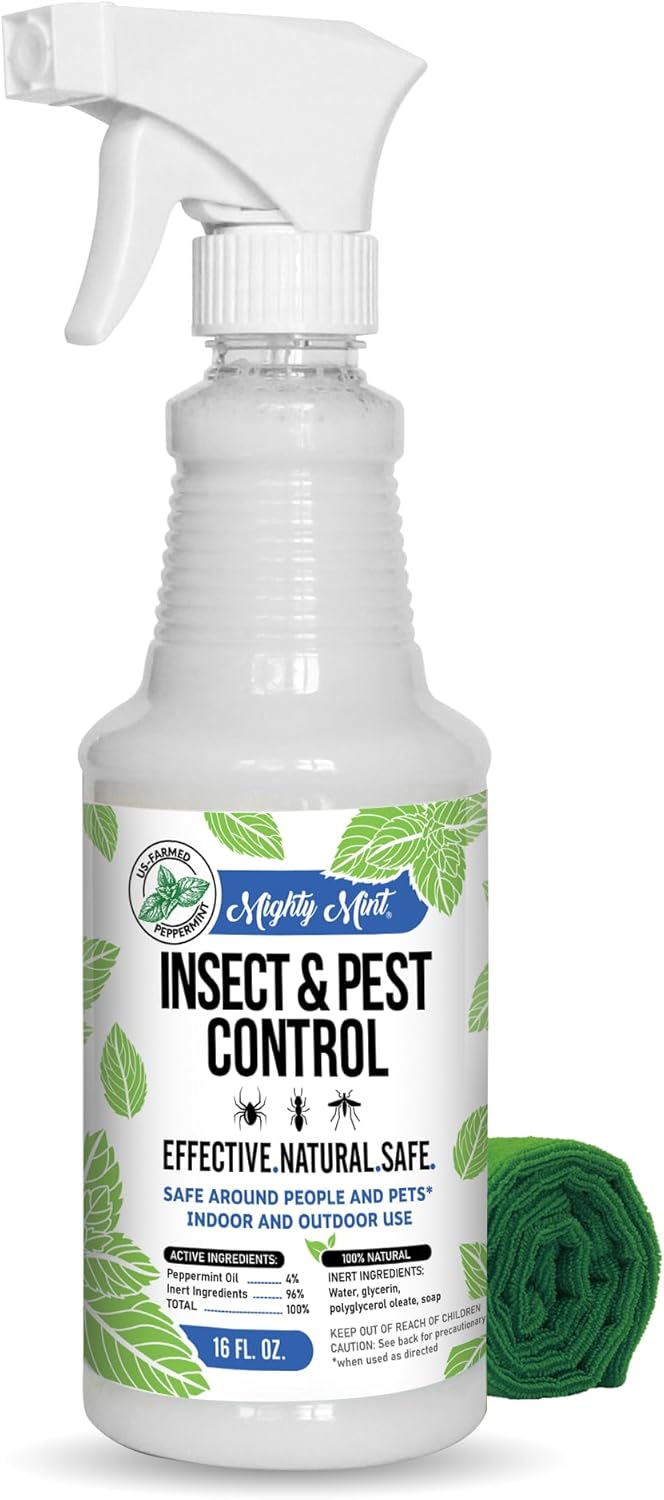
| Ingredients | Water, Glycerine, Polyglycerol oleate, Soap, Peppermint oil |
|---|---|
| Intended use | Indoor / Outdoor |
| Pests | Spiders, ants, roaches and other common insects |
| Directions | Spray problem areas and repeat at least twice per week |
Mighty Mint is a 16 oz ready-to-use spray that uses concentrated peppermint oil to deter spiders, ants, roaches and other common pests around the home and yard. You spray it along baseboards, entryways, patios and similar areas for targeted protection; directions recommend repeating applications at least twice per week for best results. The formula is plant-based and free of synthetic fragrances, so it leaves a noticeable mint scent rather than harsh chemical fumes and is marketed for use around pets and children when applied as directed. Practical benefits include simple targeted application from a trigger spray, versatility for indoor and outdoor spots, and a scent many people find pleasant. Important limitations are that it is a repellent rather than a kill-all pesticide so persistent or large infestations may need stronger treatment, and the peppermint scent is strong enough to bother some sensitive users. Also avoid spraying when pollinators are present and keep the spray off skin and out of eyes.
Best for: Buyers who want a safer, plant-based spray to deter common household insects in and around living areas and who prioritize products with visible social proof and safety claims.
Less Ideal for: People facing large established infestations or who need a contact pesticide that kills on contact should consider professional treatments or stronger insecticides.
- Plant-based peppermint oil formula avoids synthetic fragrances and strong chemical fumes
- Ready-to-use 16 oz trigger bottle for quick, targeted indoor or outdoor applications
- Works on a wide range of common household pests including spiders, ants and roaches
- Marketed for use around pets and children when used according to directions
- Acts mainly as a repellent and requires repeated applications rather than providing long-term eradication
- Strong peppermint scent may bother scent-sensitive users
- Must be kept away from pollinators and not applied to skin
Verdict: Choose this peppermint oil spray if you want a pet-friendly, plant-based repellent for routine indoor and outdoor pest prevention.
Choosing the Right Natural Fly Repellent: Key Factors to Consider
Active Ingredients and Mode of Action
Understanding what botanicals are used and how they deter flies is essential. Some natural repellents rely on essential oils like lemongrass, citronella, eucalyptus, or geraniol that confuse or repel flies' sensory receptors. Others use botanical extracts combined with carrier agents that improve persistence on surfaces.
Knowing the mode of action helps set expectations. Volatile oils often provide immediate airborne repulsion but can dissipate quickly in wind. Less volatile extracts or surface-bound formulations may offer shorter airborne protection but better localized control when applied to fences, trash-areas, or seating surfaces.
Coverage Area and Application Method
Different formats deliver protection in different ways. Candles and diffusers produce a protective bubble over a seating area but lose effectiveness in breezy conditions. Sprays and mists can treat fabrics, table surfaces, and plants directly for spot control. Paste or wipe products can be applied to eaves, screens, or trash lids for targeted barrier protection.
Consider how large the treated area needs to be and whether you need portable protection for picnics or a longer-lasting solution for a fixed patio. Coverage determines how many units or what volume you will need for routine use.
Duration Between Reapplications
How long a repellent remains effective affects convenience and total product use. Long-duration formulations reduce time spent reapplying but may rely on stronger botanical concentrations. Shorter-duration products often require frequent touch-ups during long gatherings or windy days.
Think about your typical outdoor routines. For short meals you may be fine with quick-acting, short-duration options. For multi-hour events or evening gatherings, favor solutions with confirmed multi-hour persistence or options that can be refreshed discreetly.
Scent Profile and Household Comfort
Natural repellents are often scented because their active botanicals are aromatic. Scent acceptability is a practical concern for family spaces; some people enjoy citronella or citrus notes while others find them overpowering. Scent strength can also reveal how concentrated the active oils are and relate indirectly to effectiveness.
Assess whether you will tolerate continuous aroma in the evening or need milder formulations. Many products offer lighter scent blends or unscented surface treatments that still deter flies without perfuming the space.
Safety for Plants, Pets, and Pollinators
Although labeled natural, some botanicals can stress sensitive plants or harm beneficial insects if applied incorrectly. Application technique and placement matter: avoid direct spraying on flowering parts that attract pollinators, and follow label guidance for edible garden areas.
Consider formats that limit off-target drift in windy conditions and pick application windows when pollinator activity is lower, such as late afternoon or evening.
Ease of Use and Storage
Practical handling affects whether a solution fits into everyday outdoor living. Products that require complex mixing, special hardware, or precise timed placement can be inconvenient. Ready-to-use sprays, plug-in diffusers, or reusable candle holders are simpler to deploy.
Storage stability is also relevant for gardeners who only use repellents seasonally. Look for formulations that keep well without separating or losing potency after storage.
Best Formats for Different Outdoor Situations
Match the product format to how you use your outdoor space. For stationary patios and decks, slow-burning candles or passive diffusers create a low-maintenance protective zone around seating. For mobile activities like picnics or gardening, portable sprays or clip-on diffusers let you move protection where you need it.
Targeted surface products are useful around trash cans, pet areas, and doorways where flies gather. These will not protect an entire seating area but are effective at reducing local pressure where flies breed or rest.
- Candles and lanterns: good for calm evenings, limited in wind
- Sprays and mists: flexible for fabrics and food areas, need reapplication
- Surface pastes/wipes: effective for hotspots, long-lasting when applied correctly
- Diffusers and fan-based units: continuous coverage for covered porches or patios
Using Natural Repellents Around Edible Plants
When treating areas near herbs, vegetables, or flowering ornamentals, avoid direct application to blooms. Apply treatments to structures, seating, or ground-level surfaces rather than foliage that pollinators visit. If a spray-format is necessary, test on a small, inconspicuous leaf and wait a day to check for phytotoxicity.
Time applications for low pollinator activity windows such as late afternoon or evening. Rinse edible surfaces used for food preparation if they might contact treated areas, and follow any label instructions for use near edible crops.
- Avoid spraying flowers and open blossoms
- Target non-flowering stems, fences, and trash lids
- Apply when pollinators are least active
Combining Repellents with Sanitation and Habitat Reduction
No repellent fully compensates for attractants. Reduce fly pressure by removing or covering food waste, cleaning pet bowls, and keeping compost and trash lids sealed. Eliminating breeding sources reduces the work the repellent must do and prolongs its perceived effectiveness.
Regularly inspect gutters, drains, and other damp areas where fly larvae can thrive. Using repellents as part of an integrated approach yields the best, longest-lasting results.
- Keep trash secured and cleaned
- Remove stagnant water and decaying matter
- Combine repellents with physical barriers like screens where practical
Scent Blends and Household Acceptance
Scent often determines whether a repellent becomes a go-to product or sits unused in storage. Citrus and lemongrass blends are familiar and generally well tolerated. More herbal mixes may suit gardeners who prefer earthy notes, while unscented surface treatments are best for scent-sensitive households.
When testing a new repellent, start with a small area and a short exposure time to confirm everyone in the household finds the aroma acceptable before treating large spaces.
- Test scent strength before wide application
- Consider alternatives if household members have sensitivities
- Rotate scents if effectiveness wanes or for variety
Seasonal Use and Storage Tips
Store natural repellents in cool, dark places to preserve volatile oils. Some formulations separate or lose potency with heat and light exposure. Before the start of fly season, check that seals and delivery devices are functional and replace wicks or pads as recommended.
Plan supply quantities around peak outdoor-use months. For intermittent use, concentrate on portable formats that are simple to refresh rather than large-stationary devices you may neglect.
- Keep products away from direct sunlight
- Replace consumable parts seasonally
- Check seal integrity before long-term storage
How We Chose the Best Natural Fly Repellent
We focused on repellents formulated from botanical active ingredients and delivery methods appropriate for outdoor living. Editorial filters prioritized options that demonstrate reliable fly deterrence in open-air settings, maintain a scent profile that most homeowners find acceptable, and pose minimal risk to common garden plants and pollinators when used as directed. We also favored products available in multiple application formats so gardeners can match treatment style to location: sprays for fabrics and dining areas, diffusers or candles for general airspace coverage, and surface wipes or pastes for targeted spots. Excluded items included broad-spectrum insecticides, products requiring specialized licensing, or treatments that rely on synthetic chemical repellents as their primary active ingredient. Our selection criteria emphasized measurable coverage area, typical duration between reapplications, user-reported scent acceptability, and ease of applying the product safely around edible plants. These dimensions guided the shortlist and are reflected in the scoring metrics used across each entry.
FAQ
Are natural fly repellents safe to use around children and pets?
Often they are safer than synthetic insecticides, but safety depends on the active ingredients and application method. Keep sprays and essential oil concentrates out of reach, avoid direct application to pet fur, and follow label precautions to minimize exposure.
Will natural repellents harm pollinators like bees and butterflies?
It depends. Spraying flowering parts can deter or harm pollinators, so avoid direct application to blooms. Using surface treatments away from flowers and timing applications for low pollinator activity reduces risk.
How long do natural fly repellents typically last outdoors?
Duration varies widely by format and environmental conditions. Candles and diffusers may protect a seating area for a few hours, while surface pastes or wipes can deter flies for multiple days. Wind and sunlight shorten airborne protection times.
Can I use natural repellents on fabrics and outdoor cushions?
Some sprays and mists are designed for fabrics, but test a discreet area first to check for staining or material damage. Choose water-based or fabric-safe formulations and allow treated items to dry fully before use.
Do natural repellents work in windy conditions?
Wind reduces the effectiveness of products that rely on airborne dispersion, such as candles and diffusers. For breezy sites, use surface treatments, fabric sprays, or create sheltered zones where airborne repellents can maintain concentration.
Final Verdict
Natural fly repellents can keep outdoor areas comfortable while limiting exposure to synthetic chemicals, but no single approach fits every garden. Prioritize the delivery format that matches your space, whether that is a portable spray for picnics, a candle for calm evenings, or a surface treatment for hotspots. Balance scent preferences, safety for plants and pollinators, and how often you want to reapply. Make a choice based on coverage needs and site conditions. If you need short-term airborne protection, pick a product designed for open-air use and plan for reapplication. For ongoing control in trouble spots, choose a surface-targeted option and use sanitation practices to reduce fly pressure.
