

Note: This article contains affiliate links. If you click on these links and make a purchase, I may earn a small commission at no extra cost to you. This helps support my research and content. Read my full affiliate disclosure here.
Hibiscus plants reward gardeners with large, showy blooms but they can also attract a long list of chewing and sucking pests. Picking the right insecticide for hibiscus matters because the wrong product can scorch tender foliage, harm pollinators, or fail to reach pests hiding under leaves. This guide shortlists seven top insecticides suited for hibiscus situations and explains the practical tradeoffs of contact versus systemic action, application timing, and safety around blooms. Below you'll find concise evaluations and clear notes on how each option performs in a real garden setting. We also explain the key attributes we used to assess products so you can match a solution to your hibiscus species, planting location, and pest pressure.
Top Picks at a Glance
| Best Overall The best all-around choice for most situations | BioAdvanced 3-in-1 Insect, Disease & Mite Control Concentrate (32 oz) |  |
| Best Quality Built to a higher standard if you want something more solid | BioAdvanced All-in-One Rose & Flower Care Granules, 64 oz |  |
| Best Value The sweet spot between price and what you get | BioAdvanced All‑in‑One Rose & Flower Plant Care Spray, 24 fl oz | 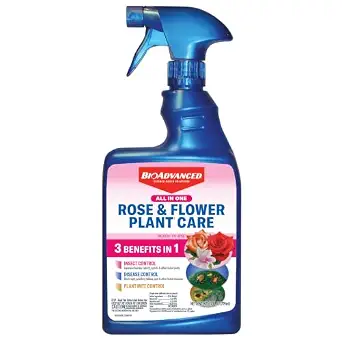 |
| Best Budget The cheapest option that still gets the job done reliably | BioAdvanced Rose & Flower Insect Killer Spray, 24 oz |  |
| Highest Rated A top-rated pick with lots of positive feedback | Monterey Spinosad Insecticide, 32 oz with Measuring Spoon |  |
| Most Popular A crowd favorite that many people choose with confidence | Bonide Captain Jack's Neem Oil Spray for Plants, 32 oz Ready-to-Use |  |
| Best Seller A high-volume bestseller chosen again and again | Bonide Systemic Insect Control Granules, 4 lb |  |
BioAdvanced 3-in-1 Insect, Disease & Mite Control Concentrate (32 oz)

| Unit Count | 32 Fluid Ounces |
|---|---|
| Item Type Name | Concentrate |
| Liquid Volume | 32 fluid ounces |
| Active Ingredients | Imidacloprid, Tau-fluvalinate, Tebuconazole |
| Specification Met | EPA |
This 3-in-1 concentrate is designed to protect ornamental plants, including hibiscus, by combining systemic insect control, disease prevention, and mite control in one product. You mix the concentrate with water to make spray solution (the 32 fl oz bottle makes up to 12 gallons), then apply to foliage and surrounding plants to treat pests such as aphids, caterpillars, Japanese beetles and spider mites while also helping prevent common fungal issues like black spot and powdery mildew. The formula contains three active ingredients to deliver both contact and systemic action, giving multi-week rainproof protection for up to 30 days. For hibiscus growers this means fewer separate treatments and simpler upkeep across the growing season. Important limitations are regulatory restrictions in several U.S. states and the need to follow label directions carefully because the active ingredients are chemically potent and not intended for indoor edible crops. It is best used as part of an integrated approach with cultural care and spot monitoring rather than as a blanket solution for all garden problems.
Best for: Hibiscus owners who want a single, science-based product to manage common pests and fungal issues with less frequent applications and straightforward spray treatment.
Less Ideal for: Growers seeking organic or contact-only products or those who primarily treat edible indoor plants should look at alternative, lower-toxicity options.
- Combines insecticide, fungicide, and miticide so one application addresses multiple hibiscus problems
- Systemic formula provides up to 30 days of rainproof protection after application
- Concentrate makes a large volume of spray so a single bottle treats many plants
- Effective against a broad list of pests including aphids, spider mites, caterpillars, and Japanese beetles
- Contains multiple synthetic active ingredients that require careful handling and strict adherence to label directions
- Not available for sale in several U.S. states which limits access for some users
Verdict: For hibiscus owners wanting a single, long-lasting treatment that controls insects, fungi, and mites, this concentrate simplifies care and reduces application frequency.
BioAdvanced All-in-One Rose & Flower Care Granules, 64 oz

| Unit Count | 64 Ounce |
|---|---|
| Item Form | Granules |
| Target Species | Insects |
| Specification Met | EPA |
BioAdvanced All-in-One Rose & Flower Care is a granular, no-spray product that feeds plants while providing systemic insect and disease control for up to six weeks. You apply the granules around the base of roses, hibiscus, and other flowering shrubs, where the active ingredients are taken up by the roots and protect foliage and blooms from listed pests and common fungal diseases. Notable features include a built-in fertilizer (N-P-K and sulfur), acephate for insect control, and tebuconazole for disease suppression; the systemic, rainproof action means a single application remains effective through wet weather. In practice it simplifies maintenance for gardeners who want measurable pest reduction without repeated foliar sprays. Important limitations are that it targets specific listed insects and diseases rather than offering broad-spectrum control, and it contains synthetic active ingredients so it is not suitable for organic gardens or for use where those chemistries are restricted. Follow label directions carefully when applying near pollinator-attractive blooms.
Best for: Gardeners who want a performance-focused, low-effort solution to reduce common pests and fungal diseases on hibiscus and other flowering shrubs while also feeding plants.
Less Ideal for: Growers who prioritize organic or chemical-free care, or those needing a product that controls a wider range of pests or offers immediate contact knockdown.
- Three-in-one formula: fertilizer plus systemic insecticide and fungicide in a single application
- Systemic, rainproof protection that lasts up to six weeks after application
- Easy granular application around the plant base with no spraying required
- Includes nutrients (N-P-K and sulfur) to support stronger roots and fuller blooms
- Active synthetic ingredients mean it is not appropriate for organic or pesticide-sensitive settings
- Targets listed pests and diseases only and will not control all garden insects
- Contains chemicals that may require caution around pollinators and certain regions with restrictions
Verdict: If you want a single, low-effort treatment that feeds hibiscus and delivers systemic, rainproof control of common pests and fungal diseases for several weeks, this product is a strong choice.
BioAdvanced All‑in‑One Rose & Flower Plant Care Spray, 24 fl oz

| Unit Count | 24 Fluid Ounces |
|---|---|
| Item Form | Liquid |
| Target Species | Fungus |
| Included Components | CARE ROSE&FLOWER RTU 3IN1 24OZ |
This ready-to-use BioAdvanced All-in-One Rose & Flower spray delivers three actions in a single bottle: it kills listed insects on contact, controls common fungal diseases, and targets spider mites with residual protection that can last up to 14 days. You apply it as a foliar spray to rose bushes, ornamentals, vines, shrubs and similar flowering plants; the formulation is rainproof within about four hours, so treatments hold up through light weather. Notable features are the combined bifenthrin insecticide and myclobutanil fungicide active ingredients, the claim of two-week protection, and the convenience of a 24-ounce spray-ready bottle. For everyday garden maintenance this simplifies treatment decisions by covering pests and disease in one pass, reducing the need for separate fungicide and miticide products. Important limitations are the product’s targeted list of pests and diseases rather than blanket control of every garden pest and the label warning to avoid spraying when pollinators are present or where use is restricted by state regulations.
Best for: Gardeners who want a practical, all-in-one treatment to simplify care of flowering shrubs and hibiscus-like plants and prefer a ready-to-spray solution that reduces separate product handling.
Less Ideal for: Organic gardeners or those who need pollinator-safe products should avoid this and consider softer, non-synthetic options instead.
- Three-in-one formula treats insects, fungal diseases, and mites with a single application
- Ready-to-use spray that is rainproof within about four hours
- Residual protection lasting up to 14 days reduces reapplication frequency
- Contains active ingredients known for effective contact kill of common rose pests
- Label restricts use when pollinators are present and is not allowed in some states
- Targets a defined list of pests and diseases rather than offering universal pest coverage
Verdict: A convenient ready-to-use spray that combines insect, mite, and disease control to simplify upkeep of hibiscus and other flowering plants.
BioAdvanced Rose & Flower Insect Killer Spray, 24 oz

| Unit Count | 24 Fluid Ounces |
|---|---|
| Item Form | Spray |
| Target Species | Insects |
| Active Ingredients | Cyfluthrin |
| Specification Met | EPA |
This ready-to-use BioAdvanced spray uses the active ingredient cyfluthrin to knock down common chewing and sucking pests on contact and give up to two weeks of residual protection. It is applied with a built-in sprayer: simply coat foliage until wet but not dripping, which makes it fast to treat hibiscus, roses, shrubs and nearby ornamentals when you spot aphids, whiteflies, caterpillars or Japanese beetles. The formula lists broad coverage of more than 100 pests and can also be used around doors and window frames for nuisance insects outside the house. Practical benefits are ease of use, no mixing or equipment needed, and a low concentration packaged in a 24 oz bottle that is convenient for small-to-medium gardens. Limitations are that it is a synthetic pyrethroid so it will impact beneficial insects if applied while pollinators are present and it is not a systemic treatment so it only protects foliage for about 14 days between applications.
Best for: A budget-minded gardener who wants a simple, no-mix spray to quickly control visible insect outbreaks on hibiscus and other flowering shrubs.
Less Ideal for: People managing pollinator-friendly plantings or those who prefer organic or systemic insect control should consider gentler or systemic alternatives.
- Ready-to-use spray with built-in applicator for quick spot treatments
- Kills a broad list of garden pests on contact including aphids and Japanese beetles
- Provides residual protection for up to 14 days after application
- Contains a synthetic pyrethroid that can harm beneficial insects and pollinators if used when they are present
- Not systemic, so it does not protect new growth once residue wears off
Verdict: A low-effort, affordable ready-to-use spray that quickly controls common hibiscus pests and gives up to 14 days of protection.
Monterey Spinosad Insecticide, 32 oz with Measuring Spoon

| Unit Count | 32 Fluid Ounces |
|---|---|
| Item Form | Oil |
| Target Species | Insects |
Monterey Spinosad is a liquid concentrate made from spinosad designed to control common chewing and leaf-feeding insects on ornamentals, vegetables, citrus and fruit trees. It is typically diluted and applied with a trigger, hand-held, backpack, or hose-end sprayer to treat caterpillars, leafminers, borers and other listed pests on plants such as hibiscus. Notable features include an OMRI listing for organic gardening, an odorless bacterial formulation, and a included measuring spoon for accurate mixing. In practice it works quickly and is easy to apply across beds or individual plants, making it convenient for routine preventive or targeted spot treatments. Important limitations are that it targets specific insects rather than acting as a broad-spectrum pesticide and label precautions require protective clothing and careful handling when mixing and applying the concentrate. For gardeners seeking a dependable, organic-compatible option to protect flowering shrubs like hibiscus, this product is straightforward and effective when used according to the label.
Best for: Gardeners who prioritize consistent, organic-compatible pest control for flowering shrubs and edible gardens and who want a proven, easy-to-apply concentrate for routine or targeted treatments.
Less Ideal for: Those looking for one-shot control of every pest type or users who prefer ready-to-use sprays without mixing and safety precautions.
- OMRI listed so it can be used in organic home gardens
- Made with spinosad, effective against caterpillars, leafminers and common chewing pests
- Concentrate works with multiple application methods including hose-end and backpack sprayers
- Odorless formulation that acts relatively quickly on target pests
- Requires careful mixing and protective gear during handling as noted on the label
- Not a broad-spectrum insecticide and will not control all pest types such as many sap-sucking insects
Verdict: A reliable OMRI-listed spinosad concentrate that gives gardeners a trusted, easy-to-apply option for protecting hibiscus and other ornamentals from common chewing pests.
Bonide Captain Jack's Neem Oil Spray for Plants, 32 oz Ready-to-Use

| Item Form | Liquid |
|---|---|
| Target Species | Insects |
| Liquid Volume | 32 fluid ounces |
| Active Ingredients | Clarified Hydrophobic Extract of Neem Oil |
Bonide Captain Jack's Ready-to-Use Neem Oil is an all-purpose spray that controls insects, mites, and common fungal diseases on ornamental and edible plants. Packaged in a 32 oz trigger bottle, it is used by shaking and spraying all plant surfaces, including leaf undersides, at the first sign of pests or mildew and repeating every 7 to 14 days as needed. The product’s clarified hydrophobic neem extract kills eggs, larvae, and adults, so it offers full-stage pest control for aphids, whiteflies, spider mites, and similar pests while also helping prevent powdery mildew and blight. Because it is labeled for organic gardening and safe up to day of harvest, it is practical for hibiscus grown in containers or beds where you want limited chemical residues. Limitations to note are the need to avoid spraying in peak sunlight to prevent leaf scorch and the routine reapplication schedule during active pest pressure; it is not a one-time systemic solution. For gardeners who prefer botanical controls with broad-purpose protection, this spray is straightforward and effective when applied correctly.
Best for: Gardeners who want a botanical, broad-spectrum spray to manage pests and fungal issues on flowering shrubs like hibiscus while prioritizing products with established user acceptance.
Less Ideal for: Gardeners seeking a systemic, long-duration insecticide or those who prefer single-application chemical controls for large-scale infestations.
- Multi-action formula that works as an insecticide, miticide, and fungicide
- Kills all life stages of common pests including eggs, larvae, and adults
- Ready-to-use trigger bottle is convenient for spot treatment and coverage
- Approved for organic gardening and safe to use up to day of harvest
- Requires repeat applications every 7 to 14 days during outbreaks
- Can cause leaf scorch if applied in direct midday sun
Verdict: A user-friendly, organic-approved neem spray that gives reliable, broad-spectrum pest and fungal control for hibiscus when applied regularly.
Bonide Systemic Insect Control Granules, 4 lb

| Unit Count | 64 Ounce |
|---|---|
| Item Form | Granules |
| Target Species | Insects |
| Active Ingredients | Imidacloprid |
Bonide Systemic Insect Control Granules are a ready-to-use granular treatment formulated with imidacloprid that is absorbed by roots and moves through the plant to protect against aphids, mealybugs, scale, whiteflies and other listed sap-feeding insects for up to eight weeks. Use by sprinkling the granules evenly into the topsoil around the root zone, working them in, and watering to activate systemic uptake. The product’s low odor and granular form make it easy to apply to established landscape shrubs and ornamentals without mixing or spray equipment. Because it acts systemically, insects that feed on treated plant tissue ingest the active ingredient, which can be more effective than contact sprays for hidden or hard-to-reach pests. Important limitations for hibiscus owners: this product is not labeled for edible plants and its active ingredient can affect some beneficial insects, so apply carefully and follow the label directions and safety precautions.
Best for: Best for gardeners who want a straightforward, low-odor systemic treatment to protect hibiscus and other ornamental shrubs from sap-feeding insects with minimal fuss and repeated applications every couple months.
Less Ideal for: Not a good choice for growers who prioritize organic or pollinator-safe solutions or who need a product approved for edible plants.
- Systemic action provides protection through plant tissue for up to eight weeks
- Ready-to-use granular form requires no mixing or spray equipment
- Low odor and easy to apply to established outdoor ornamentals
- Effective against common sap-feeding pests like aphids, whiteflies, scale and mealybugs
- Contains imidacloprid which can harm some beneficial insects if not used according to label
- Not labeled for use on edible herbs, vegetables, or fruiting plants
Verdict: A convenient, ready-to-use systemic granular treatment that gives up to eight weeks of protection against common sap-feeding pests on ornamental hibiscus.
Choosing the Right Insecticide for Hibiscus: Key Factors to Consider
Mode of Action and Target Pests
Understanding a product's mode of action tells you which pests it will control and how quickly. Contact insecticides kill pests on contact and work fast against visible infestations, but they lose effectiveness when pests are hidden on the undersides of leaves or inside buds. Systemic options move through plant tissue and can reach sap-feeding insects that are hard to hit with a spray.
Match the mode of action to the pest you see. For aphids and whiteflies, a systemic or translaminar product that reaches feeding sites is often more reliable. For caterpillars or beetles, a product with stomach and contact action is better because it will affect insects that chew foliage.
Safety for Flowers and Foliage
Hibiscus petals and young leaves are sensitive to phytotoxicity from certain insecticides, especially when applied in hot sun or at high concentrations. Look for products labeled safe for use on ornamental flowering shrubs and follow temperature and timing guidance to avoid scorch or bloom drop.
Perform a small spot test on new growth before treating the whole shrub if you are using a product you have not tried on that cultivar. Also observe label instructions about spraying during bloom; some products require avoiding open flowers to protect pollinators or because of plant sensitivity.
Impact on Pollinators and Beneficials
Hibiscus flowers are attractive to bees, butterflies, and other beneficial insects. Choose insecticides with lower toxicity to pollinators, or time applications for early morning or late evening when pollinator activity is low. Some options break down quickly and present less risk if used properly, while others require withholding bloom visits for a set period.
Consider non-chemical alternatives and targeted spot treatment where possible to preserve beneficial insects. If pollinators are actively visiting your plants, use physical controls, blast treatments with water, or insecticidal soaps as first lines of defense.
Residual Activity and Reapplication Interval
Residual protection affects how often you need to treat and how well the product prevents reinfestation. Products with longer residual activity reduce the need for repeat applications but can have greater non-target impacts. Short-residual contact products require more frequent sprays to manage ongoing pest pressure.
When planning a control program, balance residual needs against pollinator safety and label limits on application frequency. For persistent sap-feeders, a systemic with moderate residual activity often reduces labor compared with repeated contact sprays.
Formulation and Ease of Use
Insecticides come as ready-to-use sprays, concentrate liquids to mix, dusts, and granular formulations. Gardeners should choose a formulation that fits their application method and comfort level. Ready-to-use aerosols or pump sprayers are convenient for spot treatments; concentrates often cost less per use but require accurate mixing.
Consider whether you need a hose-end applicator, a handheld pump sprayer, or a backpack sprayer for larger plantings. Also check tank mix compatibility if you plan to combine the insecticide with a foliar feed or fungicide, and follow label guidance for mixing order and rates.
Resistance Management and Rotation
Repeated use of products with the same mode of action can select for resistant pest populations. Incorporate products with different modes of action into a rotation plan to reduce resistance risk. Use non-chemical tactics such as pruning out heavily infested shoots and encouraging natural predators to lower the overall pest load.
Keep records of what you applied and when, and avoid using a single active ingredient repeatedly across a season. Rotate classes of chemistry according to label recommendations and local extension guidance.
Common Hibiscus Pests and How They Behave
Hibiscus frequently hosts sap-feeding pests like aphids, whiteflies, and mealybugs, plus occasional chewing insects such as caterpillars and beetles. Sap-feeders hide on new growth and undersides of leaves, so visual checks require careful inspection of buds and young shoots.
Spider mites prefer hot, dry conditions and create a fine webbing that signals their presence. Understanding where and how each pest feeds helps you choose a product and application method that reaches the infestation site.
- Aphids and whiteflies congregate on new growth and can cause honeydew and sooty mold.
- Spider mites produce stippling and webbing; they often need thorough coverage to control.
- Caterpillars cause obvious chewing damage and are usually best controlled by contact or stomach poisons.
Timing Treatments for Best Results
Apply treatments when pests are most active or when early signs appear. For sap-feeders, morning checks and early evening sprays often catch feeding adults before dispersal. Avoid spraying in the heat of mid-day to prevent leaf scorch and rapid evaporation of contact sprays.
Rotate treatments seasonally. Early season control can prevent heavy infestations later, but heavy bloom periods may require more cautious choices to protect pollinators.
- Inspect weekly during warm spells and after new growth flushes.
- Apply systemic products according to label intervals to maintain plant protection.
Non-Chemical and Cultural Controls That Reduce Chemical Use
Regular pruning to improve air circulation, removing heavily infested shoots, and using a steady watering schedule all reduce pest pressure. Blast heavy infestations with a strong stream of water to dislodge soft-bodied pests on small shrubs.
Introduce or attract beneficial insects and avoid broad-spectrum sprays whenever possible. Sticky traps can help monitor flying pests and catch some adults before they reproduce.
- Prune crowded branches to reduce hiding places.
- Encourage predatory insects with diverse plantings and shelter.
Application Tips to Protect Blooms and Beneficials
When treating flowering hibiscus, avoid spraying open blooms unless the label explicitly allows it and indicates pollinator-safe timing. Spray in the early morning or late evening when pollinators are less active and temperatures are cooler.
Use targeted spot treatments for small infestations rather than blanket sprays. Ensure thorough coverage of undersides of leaves and new growth when you do spray, because incomplete coverage leaves many pests unaffected.
- Test spray a small area first to check for phytotoxic reactions.
- Rinse sprayers between different products to avoid adverse tank-mix effects.
When to Call in Professional Help
If infestations are severe, widespread, or involve pests that are difficult to identify, professional diagnostic help can save time and prevent repeated ineffective treatments. A specialist can confirm pest identity and recommend a control strategy that minimizes plant stress.
Professionals also have access to application equipment and formulations not commonly used by home gardeners, which can be appropriate for larger hedges or infestations that cover many shrubs.
- Seek help if damage continues despite correct application and timing.
- Consider lab diagnosis for unusual symptoms that might indicate disease rather than insects.
How We Chose the Best Insecticide for Hibiscus
We started by identifying products that are appropriate for hibiscus by focusing on modes of action and labeled use for flowering shrubs. We prioritized insecticides that deliver measurable pest control for the common hibiscus issues: aphids, whiteflies, thrips, spider mites, and caterpillars. Efficacy under realistic garden conditions was a core filter, including both fast knockdown for visible infestations and residual activity for ongoing protection where labeled. Safety for foliage and flowers was a deciding factor. We excluded products with application restrictions that make them impractical around open blooms or that carry high risk to pollinators when used as directed. We also considered ease of application for home gardeners, compatibility with foliar feeding or other regular care, and formulation flexibility for spot treatment versus blanket spray. Products that required complex mixing or specialized equipment were deprioritized unless they offered a clear performance advantage. Finally, we checked common resistance-management recommendations and favored options gardeners can rotate between to reduce the chance of resistant pest populations. Exclusions included products not labeled for ornamental shrubs or those with prohibitive bloom‑time restrictions.
FAQ
Can I use any insecticide on hibiscus blooms?
Not all insecticides are safe on open flowers. Many labels restrict application to avoid harming pollinators or causing petal damage. Choose products labeled for ornamental flowering shrubs and follow timing and reentry guidance to limit bloom exposure.
How often should I reapply treatments to control aphids on hibiscus?
Reapplication depends on the product and label interval. Contact sprays may need repeated applications a week apart until pressure drops, while systemic products often need longer intervals between treatments. Always follow the label for safe and effective timing.
Are systemic insecticides safe for potted hibiscus?
Systemic insecticides can be used on potted hibiscus if they are labeled for container use. Check application rates carefully because smaller root volumes can concentrate the active ingredient differently than in-ground plantings.
Will insecticidal soap hurt my hibiscus blooms?
Insecticidal soaps are generally gentle on plant tissue when used properly, but they can cause damage if applied in hot sun or at too-strong a concentration. Avoid spraying open flowers and test a small area first on sensitive cultivars.
What can I do to protect bees when treating hibiscus?
Avoid spraying during peak pollinator activity and remove or cover nearby flowering plants if possible. Use targeted treatments late in the day and choose products with lower toxicity to bees. Also follow label instructions for pollinator precautions.
Final Verdict
Select an insecticide for hibiscus based on the pest you are targeting, the safety profile for blooms and beneficials, and how the product fits your application routine. For sap-feeders, consider translaminar or systemic options that reach hidden pests. For chewing insects and heavy infestations, choose products with reliable contact and stomach action and ensure thorough coverage. Weigh residual needs against pollinator safety and plan rotations to avoid resistance. Prioritize spot treatments and cultural controls where practical, and use labeled timing and rates to protect both plants and pollinators.
