

Note: This article contains affiliate links. If you click on these links and make a purchase, I may earn a small commission at no extra cost to you. This helps support my research and content. Read my full affiliate disclosure here.
Choosing the right mulch for perennials changes how a planting bed looks and how well plants establish and return year after year. The wrong material can smother crowns, attract pests, or break down too quickly, while a good choice conserves moisture, suppresses weeds, and improves soil structure around roots. This guide covers seven shortlisted mulches suited specifically for perennial beds, with attention to how each type behaves through seasons and during maintenance. We evaluated materials based on moisture retention, decomposition rate, impact on soil life, and ease of seasonal upkeep. Read on to understand the tradeoffs so you can pick a mulch that fits your garden style and the perennials you grow.
Top Picks at a Glance
| Best Overall The best all-around choice for most situations | HealthiStraw GardenStraw Premium Garden Mulch, 3 cu ft |  |
| Best Quality Built to a higher standard if you want something more solid | Wood Smith USA 100% Natural Cedar Shavings Mulch (16 Quart) |  |
| Best Value The sweet spot between price and what you get | Plantonix Coco Chips Mulch Brick (10 lb) — Compressed Coconut Husk Chips |  |
| Best Budget The cheapest option that still gets the job done reliably | MAQIHAN Pine Needle Mulch for Orchids and Acid-Loving Plants, 11 oz |  |
| Highest Rated A top-rated pick with lots of positive feedback | Home And Country USA Triple Shredded Hardwood Mulch, 2 cu ft |  |
| Most Popular A crowd favorite that many people choose with confidence | Riare 2-Pack Organic Coco Coir Chips (Compressed Bricks) |  |
| Best Seller A high-volume bestseller chosen again and again | Wood Smith USA 100% Natural Cedar Chips, 4 Quart Bag |  |
HealthiStraw GardenStraw Premium Garden Mulch, 3 cu ft

| Net volume | 3 cu ft |
|---|---|
| Ideal use | Edible gardens, raised beds, lawn seeding |
| Approximate cut length | 2 inches (GardenStraw) |
HealthiStraw GardenStraw is a compressed 3 cubic foot bale of cleaned, non-GMO wheat straw sold as a garden mulch for beds, containers, and lawn repair. It is typically spread as a 2–3 inch layer around perennials or applied thinly for overseeding lawns; the cut straw fibers interlock when watered so the mulch stays put without adhesives. Key features are its low dust and seed-filtered processing, quick compostability, and stated moisture retention that can reduce watering needs. In practical use it helps suppress weeds, reduces erosion and compaction, and adds carbon to compost as it decomposes, supporting long-term soil structure and microbial activity. The bale covers a lot of area when fluffed out, which makes it convenient for larger perennial beds. Limitations are that straw can temporarily look untidy compared with shredded bark, may need occasional redistribution after heavy storms, and it will decompose over the season so you may need to refresh the layer annually for continuous weed control and insulation.
Best for: Gardeners who want a practical, soil-improving mulch for perennial beds that conserves water and breaks down to feed the soil rather than a permanent decorative layer.
Less Ideal for: Homeowners seeking a long-lasting, decorative mulch or a very tidy formal look should consider bark or rubber mulches instead.
- Sustainably sourced, 100% non-GMO wheat straw that is cleaned to reduce dust and seeds
- Locks together when watered so it resists wind and light rain without chemical binders
- Composts quickly and adds carbon to soil, improving structure and microbial activity
- Helps retain soil moisture and can reduce watering needs
- Covers a large area from a compressed bale, convenient for treating multiple perennial beds
- Will decompose over the season and requires replenishing for continuous coverage
- Less formal appearance than wood mulches and can need occasional redistribution after heavy weather
Verdict: A practical, compostable straw mulch that holds moisture, builds soil, and covers a lot of ground—ideal for gardeners focused on soil health in perennial beds.
Wood Smith USA 100% Natural Cedar Shavings Mulch (16 Quart)

| Material | Cedar Shavings |
|---|---|
| Indoor Outdoor Usage | Indoor, Outdoor |
| Unit Count | 595.68 Ounce |
| Pet Friendly | Yes |
This 100% natural cedar shavings mulch is a lightweight, pet-friendly option for topping potted perennials, hanging baskets, and garden beds where a fine, aromatic cover is desired. It is typically used as a surface mulch to reduce evaporation, suppress light weed germination, and add a pleasant cedar scent that can help mask odors around animal bedding. The product comes packaged in a 16-quart bag and is hand-packed, with natural variation in shaving size. Practical benefits include good moisture retention for containers and a natural, organic composition that breaks down over time and improves soil organic matter. Limitations are that the shavings are relatively fine and lightweight, so they can blow away in exposed sites and will decompose faster than heavier bark mulches, requiring more frequent top-ups for long-term beds. Also, the cedar aroma can be noticeable to some gardeners and may interact with nearby herbaceous plants sensitive to strong essential oils.
Best for: Gardeners who prioritize natural, moisture-retaining mulches for container perennials and want a pet-safe, organic material that adds a fresh cedar scent to pots and small beds.
Less Ideal for: People looking for a long-lasting, heavy-duty mulch for large exposed perennial beds or those who prefer a completely neutral, unscented mulch.
- 100% natural cedar shavings that are organic and biodegradable
- Helps retain moisture in potting mixes and container perennials
- Subtle cedar aroma that can freshen air and help mask odors
- Suitable for indoor and outdoor use including hanging planters and animal bedding
- Lightweight shavings can blow away in exposed garden beds
- Decomposes faster than heavier mulches so requires more frequent replenishing
Verdict: Choose this cedar shavings mulch when you want a natural, pet-safe topping that helps containers and small perennial plantings retain moisture while adding a pleasant cedar scent.
Plantonix Coco Chips Mulch Brick (10 lb) — Compressed Coconut Husk Chips

| Unit Count | 160 Ounce |
|---|---|
| Item Type Name | Soil and Soil Amendments |
| Volume | 15 gallons |
| Ingredients | Compressed Coconut Husk Chips |
Plantonix Coco Chips arrive as a compact 10 lb brick that you hydrate to yield coconut husk chips suitable for mulching perennials, containers, and tropical plants. The product is pre-screened and washed to reduce dust, sand, and rocks, and it expands into a light, airy mulch that helps hold moisture at the soil surface while maintaining airflow around roots. Use it as a top dressing for perennial beds to cut down on watering frequency, moderate soil temperature, and reduce surface compaction without the heavy, compacting feel of some wood mulches. The chips are 100% organic and made from recycled coconut husks, so they break down more slowly than fine compost and keep beds tidy for longer. Important limitations: the material can produce dust when handling so hydration and protective measures are needed, and because it is coarse it will not add fine organic matter quickly to soil structure the way compost or leaf mulch would. For gardeners wanting a clean, long-lasting mulch that supports moisture retention around perennial roots, this performs well.
Best for: Gardeners focused on making perennial beds lower-maintenance and more water-efficient who prefer a clean, long-lasting mulch that preserves soil aeration and a tropical aesthetic.
Less Ideal for: Those seeking a fast-decaying mulch to rapidly build fine organic matter or gardeners who need a completely dust-free product for immediate indoor use.
- Expands from a compact brick for easy storage and transport
- Washed and screened to remove dirt, sand, and rocks
- High moisture retention helps reduce watering frequency
- Lightweight, coarse chips preserve soil aeration and resist compaction
- Can produce dust during handling and needs hydration and care
- Coarse texture does not break down quickly to improve fine soil organic matter
Verdict: A practical, long-lasting organic mulch that expands from a compact brick to retain moisture and keep perennial beds tidy with minimal upkeep.
MAQIHAN Pine Needle Mulch for Orchids and Acid-Loving Plants, 11 oz

| Brand Name | MAQIHAN |
|---|---|
| Unit Count | 11 Ounce |
| Number of Packs | 1 |
| Item Highlight | Orchid Potting Mix for Landscaping Repotting Indoor Potted Plants,Gardening,Soil Moisture Retention |
This MAQIHAN pine needle mulch is a lightweight, natural mulch sold in an 11 ounce pack that works as a top dressing or component in mixes for acid-loving plants. You can layer it over potting bark or soil to improve aeration and add a slightly acidic buffering effect suited to orchids, blueberries, azaleas, and hydrangeas. The product is loose and breathable, so it helps reduce soil crusting and can retain moisture when used as a 2 to 4 inch top layer in container or garden beds. It is also usable as a compost ingredient where it will slowly release nutrients as it breaks down. Important limitations are the small unit size and the recommendation to compost or age fresh needles first, because fresh needles can temporarily tie up nitrogen as they decompose. For larger perennial beds you will need multiple bags or a bulk source, but for trialing pine-needle mulch on pots and small perennial plantings this package is convenient and easy to handle.
Best for: Gardeners testing pine-needle mulch on container orchids or a few acid-loving perennials who want a ready-to-use sample size before committing to bulk mulch.
Less Ideal for: Homeowners with large perennial beds or anyone wanting an immediate, large-volume mulch solution should look for bulk or bagged landscape-sized mulch instead.
- Formulated for acid-loving plants so it supports orchids, blueberries, azaleas and similar species
- Loose, breathable texture improves aeration when used in pot mixes or as a top layer
- Biodegradable and slowly releases nutrients as it decomposes
- Small, lightweight pack is easy to handle for potting and trial applications
- Small 11 ounce unit means you will need many bags for larger perennial beds
Verdict: A convenient small pack for trying pine-needle mulch on orchids and a few acid-loving perennials before moving to bulk supplies.
Home And Country USA Triple Shredded Hardwood Mulch, 2 cu ft
| Manufacturer | Home and Country USA |
|---|---|
| Item model number | HCM |
| Product Dimensions | 13 x 13 x 13 inches |
| ASIN | B0CVM9VW66 |
| Customer Reviews | 5.0 out of 5 stars |
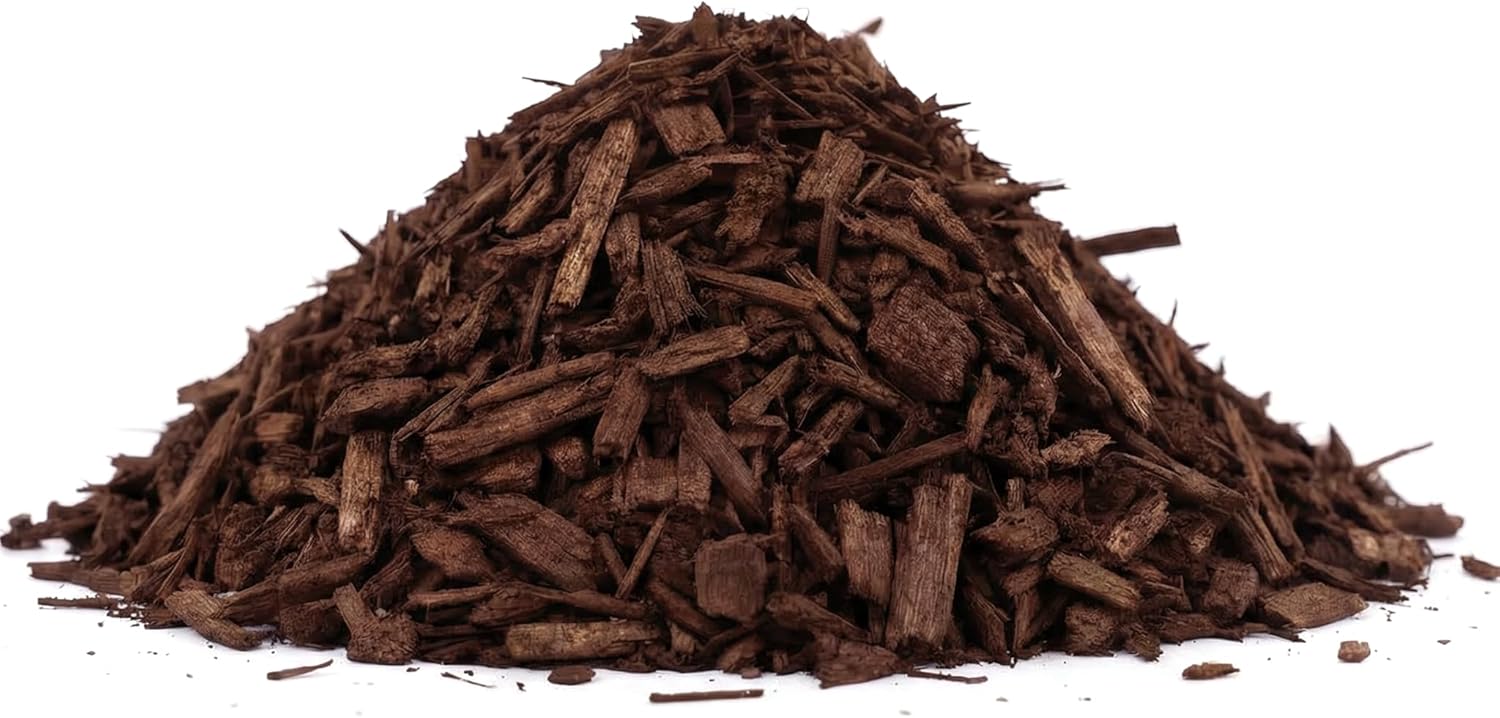
This triple-shredded hardwood mulch is designed for everyday landscape and perennial bed use. Spread in a 2-inch to 3-inch layer around perennials, shrubs, and garden borders it helps retain soil moisture, moderates soil temperature, and suppresses weed germination while slowly breaking down to feed soil life. The product highlights its organic composition and long-lasting color, which makes beds look neat through a growing season. Because it is triple shredded the pieces sit evenly and interlock to give consistent coverage instead of clumping, so application is straightforward with a rake or gloved hands. Practical limitations are that color will fade over time and organic mulches compress and decompose so annual top-ups are normal for long-term beds. Also the 2 cu ft bag covers a modest area, so larger perennial borders will require multiple bags and some handling effort to distribute evenly.
Best for: Home gardeners who want a reliable, natural mulch to protect and improve perennial beds with low-maintenance seasonal upkeep.
Less Ideal for: Large-scale landscapers or anyone needing a decorative, long-lasting color-stable synthetic mulch should look at bulk or alternative products.
- 100% natural organic hardwood that improves soil as it decomposes
- Triple-shredded texture gives even coverage and resists clumping
- Helps retain moisture and reduce watering frequency for perennials
- Provides weed suppression by creating a light-blocking barrier
- 2 cu ft bag size means frequent restocking for larger beds
Verdict: A dependable organic hardwood mulch that reliably conserves moisture and supports healthier perennial beds.
Riare 2-Pack Organic Coco Coir Chips (Compressed Bricks)

| Number of Packs | 2 |
|---|---|
| Item Type Name | Garden Soil |
| Volume | 7 gallons |
| Item Weight | 2.2 pounds |
Riare's 2-pack of compressed coco coir chips arrives as small bricks that expand when soaked to create a lightweight, porous growing medium. Use them alone as a soilless substrate for orchids and potted plants or mix them with garden soil, perlite, or compost to improve structure in perennial beds. The product is marketed as low-EC and pH-balanced, which reduces the risk of salt burn and supports nutrient uptake. Its high water retention helps reduce watering frequency while the coarse chip texture improves drainage and air flow to roots, lowering the chance of root rot in crowns and containers. Because each brick is compressed, you need to rehydrate and squeeze excess water before use, and coverage is modest from two 2.2 lb packs, so larger perennial borders will require multiple purchases. Overall this is a practical, organic mulch and soil amendment that is easy to store and mixes well into custom potting blends for long-term perennial health.
Best for: Gardeners who want an organic, low-salt soil amendment or mulch to improve root health in perennial containers and small beds and who prioritize products with positive user feedback and consistent performance.
Less Ideal for: Large-scale landscapers or gardeners needing immediate, bulk mulch coverage without preparation should consider bulk bagged alternatives instead.
- 100% natural coco coir chips that improve soil aeration and drainage
- Low electrical conductivity and pH-balanced for safer root and seed growth
- High water retention reduces watering frequency while still allowing good drainage
- Compressed bricks are compact to store and expand to usable volume when soaked
- Two small bricks provide limited coverage so multiple packs are needed for large beds or several perennials
- Must be soaked and excess water squeezed out before use which adds prep time
Verdict: A compact, low-salt coco coir option that reliably improves aeration and moisture retention in perennial potting mixes and containers.
Wood Smith USA 100% Natural Cedar Chips, 4 Quart Bag
| Brand Name | Wood Smith USA |
|---|---|
| Unit Count | 148.92 Ounce |
| Number of Packs | 1 |
| Volume | 1 |
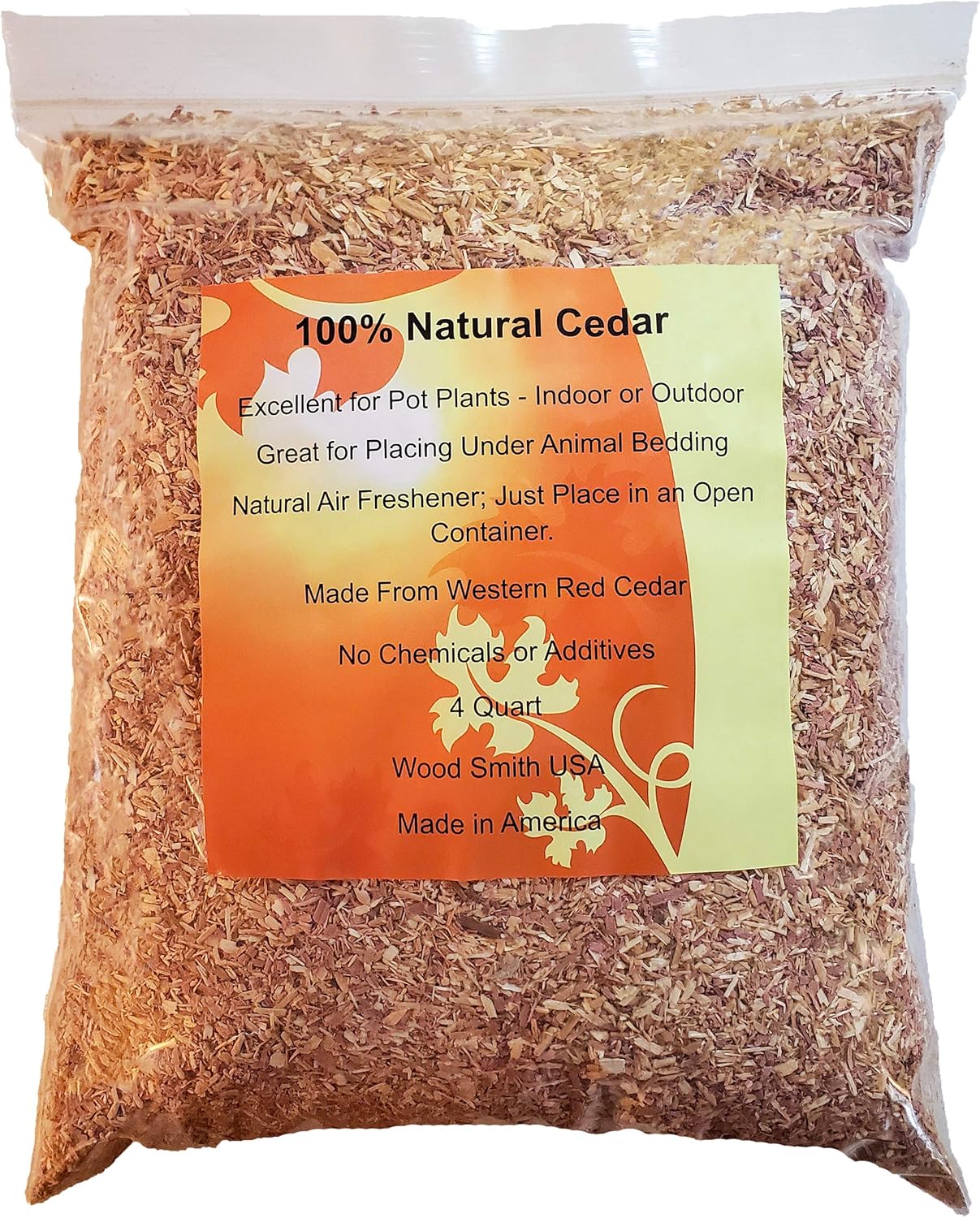
These cedar chips are a simple, natural mulch option sold in 4 quart bags for small-scale use around perennials or in containers. They work as a top dressing to help retain surface moisture, suppress light weed growth, and add a pleasant earthy cedar aroma that some gardeners use to deter ants and other insects. The product is hand sifted and packed, which can give a more consistent appearance in pots and hanging planters. Because the bags are small, they are convenient for spot applications, trial patches, or refreshing container soil without overbuying. Expect that you will need multiple bags to cover larger beds and that cedar will slowly break down over time and may shift color as it weathers. The fine chips can produce dust so handle gently and avoid inhalation; follow guidance if using around small animals. For perennial beds, it is best used as a light surface layer rather than a deep, long-term mulch layer.
Best for: Gardeners who want a natural, aromatic top dressing for containers, hanging baskets, or small perennial patches and prefer to buy in small quantities to test the material before committing to bulk mulch.
Less Ideal for: Large gardens or landscapers who need to mulch wide perennial beds efficiently should choose bulk mulch options rather than many small bags.
- Natural cedar helps retain surface moisture and adds a pleasant fragrance
- Hand-sifted packing provides a relatively consistent texture for pots and hanging planters
- Small 4 quart bag size is convenient for spot treatments and container gardeners
- Small volume requires buying many bags to cover larger perennial beds
- Fine chips can create dust during handling and may need gentle application
Verdict: A convenient small-bag cedar chip mulch that is ideal for testing and topping containers or small perennial areas when you want a natural, aromatic option.
Choosing the Right Mulch for Perennials: Key Factors to Consider
Moisture Retention and Drainage
Perennials benefit from consistent moisture without waterlogging. A mulch that holds moisture reduces watering frequency and buffers plants through dry spells. However, it must also allow excess water to drain so crowns and roots do not sit in saturated soil. Consider local rainfall patterns and soil texture; heavy clay combined with a dense, water-holding mulch can increase rot risk, while sandy soils may need a thicker layer to maintain available moisture.
Layer thickness matters. A light covering may not meaningfully change soil moisture, while an overly deep layer can prevent water from reaching the root zone quickly during storms. Choose a mulch and depth that balances retention with permeability for your bed conditions.
Decomposition Rate and Replenishment Frequency
Different mulches break down at markedly different speeds. Fast-decomposing organic mulches add nutrients and improve soil structure but require more frequent top-ups. Slow-decomposing or inorganic materials last longer but contribute less to soil organic matter. Match the decomposition rate to how often you are willing to refresh mulch and whether you want the mulch to actively feed the soil.
Decomposition also affects bed appearance and potential weed seed incorporation. Materials that break down unevenly may look untidy or form mat layers that prevent water infiltration if not managed.
Impact on Soil Biology and Nutrient Cycling
Mulches influence soil temperature, microbial activity, and earthworm presence, all of which affect perennial health. Organic mulches generally encourage a more active soil ecosystem as they are consumed and processed, releasing nutrients slowly. Some materials may temporarily tie up nitrogen as they decompose, so monitoring and supplemental feeding may be necessary for heavy feeders.
Consider whether boosting soil life is a priority for the bed. For established, low-maintenance perennial borders you may prefer an inert material that mainly suppresses weeds. For improving poor soil, choose a mulch that will contribute organic matter over time.
Winter Insulation and Frost Protection
Perennials face different challenges in winter depending on hardiness and local climate. Mulch can buffer roots and crowns against freeze-thaw cycles and reduce risk of heaving, which is especially important for shallow-rooted species. At the same time, some mulches can trap moisture against crowns or keep soil too warm, delaying dormancy and increasing susceptibility to disease.
Choose materials and apply them at a season-appropriate time. In many regions a light layer added after the ground has frozen provides insulation without encouraging late-season growth.
Weed Suppression and Maintenance Effort
A primary reason gardeners mulch perennial beds is weed control. Dense mulches and those that form a mat layer can significantly reduce weed emergence, saving time on hand weeding. However, very fine mulches may allow small-seeded weeds to germinate on the surface, and lightweight materials can blow away.
Consider how often you want to weed, whether you will be applying pre-emergent controls, and how mulch choice affects access for dividing or planting perennials. Ease of raking back or removing the material during planting season can influence long-term maintenance.
Aesthetic and Functional Suitability
Mulch plays a visual role in garden design and should complement the look of perennial plantings. Color, texture, and particle size affect both appearance and how the layer behaves. Larger bark chips create a coarse look and shed water quickly, while fine shredded materials create a uniform carpet that hides bare soil.
Also factor in practical needs like pathways adjacent to beds, where tracking of fine mulch might be a concern, and whether the material is pet- or child-friendly for gardens with frequent visitors.
How Different Mulches Behave Through Seasons
Mulch performance shifts from spring through winter. In spring a mulch that is slow to warm can delay soil warming and shoot emergence, while in summer a water-conserving layer reduces drought stress. In autumn and winter the same material may protect crowns from freeze-thaw cycles or trap excess moisture if drainage is poor.
Plan seasonal adjustments: rake back slightly in early spring to let the soil warm, add a top-up after a hot dry summer if decomposition has been high, and apply a final insulating layer in late fall if needed. These simple actions align mulch behavior with perennial life cycles.
- Spring: thin or pull back to allow warming and prevent rot
- Summer: maintain a consistent layer for moisture conservation
- Fall: add insulation for freeze protection when appropriate
- Winter: avoid sealing crowns with overly dense layers
Applying Mulch Without Damaging Crowns
Perennial crowns and stems are sensitive to being buried. When applying mulch, keep material pulled back a few inches from crowns to prevent rot and stem disease. For clumping perennials allow space so air circulates and moisture does not pool against tissue.
Measure layer depth with a ruler or use a marked tool. Recommended depths vary by material, but the goal is coverage that conserves moisture and suppresses weeds without creating an oxygen-poor environment at the crown.
- Maintain a gap of 1 to 2 inches from crowns for most perennials
- Apply thinner layers with fine mulches and slightly thicker with coarse materials
- Reapply only when previous layer has decomposed or thinned
Matching Mulch Choice to Soil Type
Soil texture changes how a mulch will affect moisture. Sandy soils drain quickly and benefit from mulches that increase water holding. Clay soils hold water and need mulches that allow good gas exchange and do not keep soil saturated near crowns.
If you want to improve soil structure over time choose an organic mulch that decomposes into the soil. For beds where drainage is already a challenge, consider coarser materials that shed rain and reduce compaction around roots.
- Sandy soil: choose water-holding organic mulches and apply slightly thicker
- Loam: balanced choices work well; focus on aesthetics and maintenance
- Clay soil: prefer coarse, well-draining materials and monitor for pooling
Seasonal Maintenance and Refreshing Strategies
A maintenance plan keeps beds healthy and attractive. Inspect mulch each season for compaction, matting, or significant thinning. Rake or gently fluff dense layers to restore aeration, and add fresh material only where needed rather than blanket-applying a full new depth every year.
When dividing or planting new perennials, remove mulch from the immediate area, complete the work, and then replace an appropriate amount. This reduces the need to lift and replace large quantities later and prevents burying new crowns.
- Check mulch depth each spring and fall
- Spot-top up decomposed areas rather than replacing entire beds
- Fluff matted mulch to restore water infiltration
Environmental and Wildlife Considerations
Some mulches attract wildlife or provide habitat for beneficial insects. Others may harbor pests or rodents if piled too deep near stems or trunks. Consider local wildlife and whether you want your garden to encourage ground-nesting pollinators or discourage burrowing animals.
Also weigh sustainability: some materials are byproducts and reuse organic waste, while others require shipping or harvesting that may carry environmental costs. Choose a mulch that aligns with your garden stewardship priorities.
- Avoid piling mulch against plant bases where rodents can nest
- Select materials that support beneficial soil organisms if improving soil is a goal
- Consider locally sourced options to reduce environmental footprint
How We Chose the Best Mulch for Perennials
We focused selection on materials that perform reliably around perennial root systems over multiple seasons. Evaluation emphasized moisture retention, because consistent soil moisture supports flowering and reduces transplant stress. Decomposition rate was considered to determine how often mulch needs replenishing and how it affects soil organic matter. We also assessed effect on soil temperature and crown health to avoid rot or winter heaving. Practical maintenance factors such as ease of application, tendency to blow away or mat, and how the material interacts with weeding and planting were included. Exclusions: materials that pose a high risk of crown rot, known allelopathic residues that inhibit perennial growth, or that require specialized installation were removed from consideration. We did not include products intended only for annual beds or for non-plant uses. The remaining options were compared on the same concrete dimensions so gardeners can match a mulch to plant type, climate, and desired maintenance frequency.
FAQ
How deep should mulch be around perennial plants?
Depth depends on material: generally 2 to 3 inches for most organic mulches is sufficient. Coarser materials can be slightly deeper, while fine shredded mulch should be kept thinner to avoid matting. Always keep mulch pulled back a couple of inches from crowns.
When is the best time to apply mulch to perennial beds?
Apply after soil has warmed in spring if you want earlier growth, or in late fall after ground freezes for winter insulation. Many gardeners add a light layer in spring and a protective top-up in late fall depending on climate and plant hardiness.
Will mulch cause crown rot in perennials?
Mulch can contribute to crown rot if piled against crowns or if the material holds excessive moisture in poorly drained soils. Prevent issues by leaving a small gap at crowns, using coarser mulch in wet soils, and avoiding very thick layers near plant bases.
Can I use the same mulch for all my perennial beds?
You can, but it may not be optimal. Beds with different soil types, exposure, or plant habits may benefit from different materials. For example, moisture-loving perennials may prefer a mulch that retains water, while drought-tolerant species need lighter, faster-draining options.
Does mulch improve soil over time for perennials?
Organic mulches break down and add organic matter, which improves soil structure and nutrient-holding capacity over seasons. The pace of improvement depends on the decomposition rate and how often you replenish the mulch.
Final Verdict
Choose a mulch that matches your bed conditions and management style. Prioritize moisture control, appropriate decomposition rate, and crown protection for long-lived perennials. Balance aesthetic preferences with functional needs like weed suppression and seasonal maintenance. A good mulch choice reduces watering and weeding while supporting soil life. Focus on how a material behaves in your climate and soil, and be prepared to adjust depth or type as beds mature and conditions change.
