

Note: This article contains affiliate links. If you click on these links and make a purchase, I may earn a small commission at no extra cost to you. This helps support my research and content. Read my full affiliate disclosure here.
Growing roses in containers or small beds starts with the right soil. A potting mix tailored for roses helps roots breathe, holds the right amount of moisture, and supplies the nutrients roses need during bloom. Choosing a mix that suits your climate, watering routine, and container size matters more than picking the most expensive bag. This guide shortlists six top potting mixes for roses and explains how each addresses drainage, nutrient balance, and long-term root structure. Read on to understand the evaluation criteria used and which features will make the biggest difference in your rose beds or pots.
Top Picks at a Glance
| Best Overall The best all-around choice for most situations | Coast of Maine Roses & Flowers Planting Soil, 20 qt (2 Pack) |  |
| Best Quality Built to a higher standard if you want something more solid | FoxFarm Ocean Forest Potting Soil, 12 Quart |  |
| Best Value The sweet spot between price and what you get | Burpee Premium Organic Potting Mix with Coco Coir (9 Quarts) |  |
| Highest Rated A top-rated pick with lots of positive feedback | KXUPOIAV Premium Potting Mix with Mycorrhizae, Compressed Bale (4 cu ft expanded) |  |
| Most Popular A crowd favorite that many people choose with confidence | Miracle-Gro Potting Mix, 16 qt. (2-Pack) |  |
| Best Seller A high-volume bestseller chosen again and again | Miracle-Gro Indoor Potting Mix for All Plants, 6 qt., 2-Pack |  |
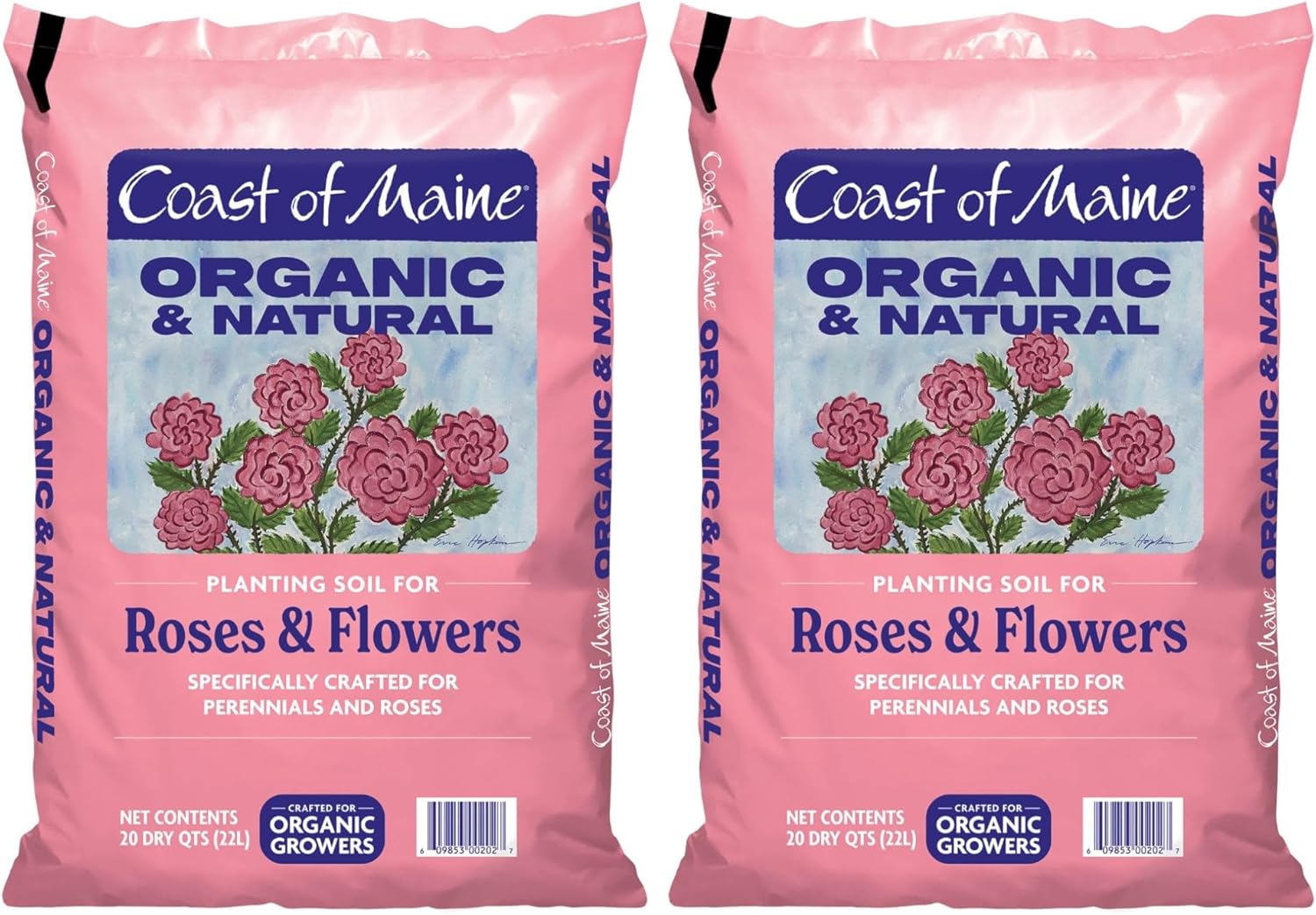
Coast of Maine Roses & Flowers Planting Soil, 20 qt (2 Pack)
| OMRI Listed | Yes |
|---|---|
| Unit Count | 2 Count |
| Volume | 20 quarts |
This Coast of Maine Roses & Flowers planting soil is an organic compost blend designed to revive and enrich garden soil for roses and flowering plants. You can use it as a topdress, a planting mix for new roses in beds or containers, or as an organic mulch to improve moisture retention and drainage. The formula emphasizes premium ingredients such as seaweed and lobster meal and is OMRI listed, which supports feeding soil biology and encouraging worms and microbes that benefit long-term plant health. Practical benefits include easier establishment of transplants, improved bloom potential from nutrient-rich amendments, and a planet-friendly profile thanks to recycled organic inputs. Limitations to note are that this is a soil amendment rather than a complete, long-term potting medium for large container-grown roses, so heavy feeders will still need periodic fertilization; also the 20 quart volume per bag means you may need several bags for larger beds or multiple shrubs. For gardeners who prefer organic inputs and want healthier soil structure and microbe activity, this is a useful go-to product.
Best for: Gardeners who want an organic, soil-building amendment to improve rose and flower performance and who prioritize plant health and ecological stewardship.
Less Ideal for: Those needing a high-volume bulk soil for large-scale landscaping or a ready-to-go, long-term potting medium for very large container roses should look elsewhere.
- OMRI listed organic blend that is safe for people, pets, and plants
- Contains nutrient-rich ingredients like seaweed and lobster meal to support soil biology
- Designed for both beds and containers, useful as topdress or planting mix
- Improves moisture retention while still promoting drainage and aeration
- Sold in relatively small 20 quart bags, requiring multiple bags for larger projects
- Not formulated as a standalone long-term potting mix for very large container-grown roses
Verdict: Choose this organic planting soil when you want a proven, ecology-focused amendment that improves soil health and helps roses and flowers establish and bloom.
FoxFarm Ocean Forest Potting Soil, 12 Quart

| Item Form | Granules |
|---|---|
| Specific Uses For Product | Dry Fertilizer |
| Coverage | 4.8 sq ft |
| Mixing Ratio | 1:1 |
FoxFarm Ocean Forest is a pre-mixed potting soil that combines aged forest products, sandy loam and sphagnum peat moss with organic amendments like fish meal, crab meal and earthworm castings. It is sold ready to use straight from the bag for planting in containers, seed starting or top dressing; the manufacturer recommends no additional nitrogen fertilizer for the first 30 days. The mix has a light, aerated texture that promotes drainage while still retaining moisture, and the built-in micronutrients make it practical for growers who want strong early growth without immediate feeding. Practical benefits include easy pot filling, good root zone aeration for roses in containers, and built-in organic fertility to support blooms. Limitations to consider are that the bag is best for containers or small beds only and heavier feeders may need supplemental feeding after the initial month; users should also follow handling precautions to avoid skin or eye irritation.
Best for: Gardeners who want a high-quality, nutrient-rich potting medium to get container roses or plant starts off to a strong, flowering start and prefer a ready-made organic blend.
Less Ideal for: Large in-ground rose beds or landscapers needing bulk soil amendments should look for bulk garden soil or custom rose mixes instead.
- Ready-to-use out of the bag so you can pot immediately
- Organic amendments (fish meal, crab meal, earthworm castings) supply early nutrients
- Light, aerated texture that supports drainage and root development
- pH adjusted for optimal nutrient uptake per product description
- Pack size (12 qt) covers a small area and may require multiple bags for several roses
- No long-term feeding provided after the first 30 days so additional fertilizer is needed for sustained heavy bloom
Verdict: Choose this soil if you want a ready-made, organically amended potting mix that jump-starts container roses and seedlings with good drainage and early fertility.
Burpee Premium Organic Potting Mix with Coco Coir (9 Quarts)

| Item Form | Powder |
|---|---|
| Specific Uses For Product | Plant Growth, Root Development, Seed Development, Soil Conditioning |
| Coverage | 9 Qt Container |
| Liquid Volume | 9 quarts |
Burpee Premium Organic Potting Mix is a ready-to-use container soil that blends organic nutrients with coco coir to improve aeration and water retention. In practice you fill pots or raised beds, plant seedlings or transplants, and water as usual; the mix supplies immediate nutrition and slow-release feeding for up to three months, which reduces the need for frequent fertilizing. The coco coir component helps maintain consistent moisture without waterlogging, so roots get oxygen as well as moisture — useful for roses grown in containers where drainage can be a problem. It is OMRI listed, so it fits organic rose care programs. Limitations to note: the bag is 9 quarts, so you will need multiple bags for large containers or mixes for established roses, and the three-month nutrient window means regular feeding after that period for heavy-feeding roses. The texture and moisture balance make it an efficient baseline potting medium for container roses when combined with periodic granular or liquid rose fertilizer.
Best for: Buyers who want a low-maintenance, organic starting medium for container roses and prefer a balanced mix that reduces watering frequency and promotes healthy root growth.
Less Ideal for: Gardeners planting large in-ground rose beds or those who want a complete multi-season fertilizer solution without follow-up feeding should look at bulk soils or amended garden mixes instead.
- OMRI listed organic mix suitable for organic rose care
- Coco coir improves aeration while retaining moisture to prevent waterlogging
- Provides immediate nutrients plus slow-release feeding for about three months
- Versatile for indoor and outdoor containers and seed starting
- Small 9-quart bag requires multiple units for medium to large rose containers or beds
- Nutrient supply lasts about three months so supplementary feeding is needed for long-season bloomers
Verdict: A compact OMRI-listed potting mix with coco coir that gives container roses a well-aerated, moisture-balanced root start while cutting early maintenance.
KXUPOIAV Premium Potting Mix with Mycorrhizae, Compressed Bale (4 cu ft expanded)

| Volume | 4 cubic feet |
|---|
This premium compressed potting mix is designed to expand from a compact bale into a ready-to-use planting medium enriched with mycorrhizae and slow-release nutrients. You compress the bale for transport and then rehydrate it to expand to roughly four cubic feet, making it convenient for potting roses, containers, or garden beds. The included mycorrhizae help stimulate root growth and improve stress resistance while the polymer gel increases water retention so you can water less frequently. A gradual-release fertilizer supplies nutrients for up to nine months, reducing the need for frequent feeding during the growing season. Practical benefits include easier handling thanks to the compressed format, improved root development for stronger rose plants, and better moisture stability in hot or windy conditions. Limitations are that the product is sold as a single pack and you may still want to amend with extra drainage material for heavy clay soils or very large rose specimens that need higher sand or grit content.
Best for: Gardeners who prioritize dependability and low-maintenance feeding for roses and container plantings and want a ready-to-use mix that supports strong roots and steady moisture retention.
Less Ideal for: Growers who need a custom soil blend for specialty roses that require very fast drainage or who prefer fully organic inputs without synthetic slow-release fertilizers.
- Enriched with mycorrhizae to promote larger root systems and improved nutrient uptake
- Slow-release fertilizer feeds plants for up to nine months
- Polymer gel increases water holding capacity to reduce watering frequency
- Compressed bale format expands to 4 cu ft for easier transport and storage
- Single-pack offering may require multiple bales for larger rose beds
- May need additional grit or drainage amendment for heavy or poorly draining soils
Verdict: Buy this mix if you want a dependable, low-maintenance potting medium that boosts root growth and reduces watering for healthier roses.
Miracle-Gro Potting Mix, 16 qt. (2-Pack)

| Item Highlight | Feeds up to 6 Months |
|---|---|
| Number of Packs | 2 |
| Volume | 16 quarts |
| Ingredients | Sphagnum Peat Moss, Peat, Perlite, Compost, Fertilizer |
Miracle-Gro Potting Mix is a general-purpose, fast-draining container soil designed to support outdoor potted flowers, vegetables, herbs and shrubs. It is typically used to fill planters and hanging baskets: the manufacturer recommends filling a pot about one third, seating the plant, topping off, and watering until drainage. The mix contains sphagnum peat moss, perlite, compost and fertilizer so it holds moisture while remaining airy for root oxygenation, and it states it will feed plants for up to six months. That makes it convenient for seasonal planting and repotting without immediate need for additional fertilizer. For roses grown in containers it provides a reliable, well-draining medium and built-in nutrients for early growth. Limitations to keep in mind are that this is a surface potting mix intended for containers rather than for in-ground beds and may require annual refresh to avoid compaction; heavy-feeding or long-season roses may need supplemental fertilizer after the claimed feeding period ends.
Best for: Gardeners who want a reliable, easy-to-use potting mix for outdoor containers and prefer a product with built-in feeding and wide user acceptance.
Less Ideal for: Gardeners looking to amend in-ground rose beds or those who prefer organic-only mixes should consider alternatives tailored to in-ground planting or certified organic products.
- Formulated for containers with ingredients that promote drainage and root aeration
- Includes fertilizer that the brand says feeds plants for up to six months
- Convenient 2-pack of 16 qt. bags suitable for filling multiple 12-inch containers
- Versatile for a range of outdoor container plants from flowers to vegetables
- Not formulated for in-ground beds so not ideal as a soil amendment for garden beds
- Feeding effect is limited to the stated period so additional fertilizer may be needed for long-season crops
Verdict: A convenient, proven container potting mix that gives outdoor potted roses immediate drainage and six months of built-in feeding.
Miracle-Gro Indoor Potting Mix for All Plants, 6 qt., 2-Pack

| Unit Count | 400.58 Ounce |
|---|---|
| Number of Packs | 2 |
| Item Highlight | Feeds for up to 6 Months |
| Ingredients | Sphagnum Peat Moss, Coir, Perlite, Fertilizer, Wetting Agent |
This two-pack of Miracle-Gro Indoor Potting Mix is a lightweight, ready-to-use soil blend intended for container-grown indoor plants. It combines sphagnum peat moss, coconut coir, and perlite with a built-in slow-release fertilizer and wetting agent so you can repot without pre-mixing amendments. Typical use is filling pots with good drainage, setting the plant, and watering; the manufacturer says one 6 qt. bag fills about four 6-inch containers. The absence of bark or compost helps reduce shelter for fungus gnats and keeps the texture light and airy. Practical benefits include consistent moisture retention and easier watering for everyday indoor plant care plus nutrient release that reduces the need for frequent feeding. Important limitations for rose growers: this mix is optimized for indoor houseplants and is lighter in organic matter than traditional rose mixes used for outdoor roses, so potted roses may need additional nutrient-rich compost or a rose-specific fertilizer regimen and careful watering to support heavy bloom production.
Best for: A cautious indoor gardener who wants a dependable, low-maintenance potting mix for common houseplants and potted ornamentals and prefers fewer pest issues and predictable watering behavior.
Less Ideal for: Gardeners growing outdoor landscape roses or serious rose exhibitors who need a richer, rose-specific soil blend and higher nutrient levels for heavy flowering.
- Ready-to-use blend with peat moss, coir, and perlite for good drainage and aeration
- Includes slow-release fertilizer that feeds plants for up to six months
- No bark or compost which helps reduce fungus gnat habitat
- Lightweight texture makes repotting and root inspection easier
- Formulated for general indoor houseplants rather than heavy-feeding outdoor roses
- May require supplemental organic matter or targeted rose fertilizer for repeat bloom and larger potted roses
Verdict: A reliable, ready-to-use indoor potting mix that simplifies repotting and reduces gnat problems, best for mainstream indoor gardeners rather than heavy-feeding roses.
Choosing the Right Potting Mix for Roses: Key Factors to Consider
Drainage and Aeration
Roses need soils that drain quickly enough to avoid waterlogging yet retain some moisture between waterings. In containers this means choosing a mix with coarse particles such as perlite, coarse sand, or aged bark to create pore space.
Poor aeration leads to shallow roots, fungal problems, and reduced flowering. When evaluating mixes, look for explicit mentions of coarse amendments and a crumbly texture. For in-ground use, mixes that improve structure without creating a heavy layer are preferable.
Nutrient Balance and Feeding Schedule
A rose-specific potting mix should provide an initial nutrient charge and allow for predictable supplemental feeding. Slow-release fertilizers blended into the mix give roses steady nourishment through the main growing season, while mixes high in inert media require more frequent feeding.
Understand whether the mix lists N-P-K values or indicates organic amendments like compost or bone meal. This affects how often you will need to top-dress or feed with liquid fertilizer to maintain continuous bloom.
Moisture Retention Versus Watering Frequency
Different potting mixes hold water differently. Heavier mixes with peat or coir retain moisture well, which reduces watering frequency but can risk poor oxygen at the roots in small pots. Lighter mixes with more inorganic amendment dry faster and suit gardeners who water often or who live in humid climates.
Match the mix to your container size and your typical watering routine. For large planters choose mixes that hold more water; for small pots pick fast-draining mixes and consider adding a water-retaining granule if you travel frequently.
Organic Matter Content and Texture
Organic amendments like compost, well-aged manure, or leaf mold provide nutrients and help improve soil biology, which benefits rose health. However, too much fine organic matter can compact over time and reduce aeration.
Look for mixes that balance stable organic matter with coarse structural components. Texture affects repotting intervals and how often you need to refresh the surface layer to maintain fertility and structure.
pH and Nutrient Availability
Roses prefer a slightly acidic to neutral pH range to access key nutrients. A potting mix that buffers pH helps prevent sudden swings after fertilization or watering with alkaline tap water.
Mixes that list lime or sulfur as stabilizers or describe pH ranges give you useful information. If a mix does not address pH, plan to test and adjust after planting to keep micronutrients available for healthy foliage and flower development.
Cleanliness and Disease Risk
Potting mixes should be free of weed seeds, pathogens, and excessive salts. Sterilized or pasteurized mixes reduce early-season disease pressure, especially important for grafted or young rose plants.
Avoid mixes that do not state cleanliness or sourcing. If you suspect contamination later, you can refresh the top layer or repot to reduce disease carryover, but starting with a clean mix reduces the need for corrective measures.
Matching Mix to Container Size
Container size changes how a potting mix performs. Small pots warm and dry out quickly, so they benefit from mixes with higher moisture retention and stable structure. Large containers can handle mixes with more coarse material because their greater soil volume buffers moisture swings.
When planting roses in hanging baskets or small decorative pots, prioritize mixes that retain water and include slow-release nutrients. For large decorative tubs and half-barrels, choose mixes with more aeration to encourage deep root growth and avoid soggy pockets.
- Small pots: higher moisture retention, more organic matter
- Large containers: increased drainage, more coarse amendments
- Planters exposed to wind: mixes that retain moisture to reduce drying
Adjusting Mixes for Climate
In hot, dry climates, mixes that retain some moisture help reduce daily watering. Adding a moisture-retaining amendment or increasing the proportion of peat or coir can be beneficial, but maintain coarse components for aeration.
In cool or maritime climates where overwatering is a greater risk, prioritize faster-draining formulations and increase inorganic porosity to prevent root rot. Always monitor soil moisture rather than relying solely on a mix's claims.
- Hot climates: increase water-holding components slightly
- Cool/wet climates: favor fast-draining, coarse mixes
- Variable climates: use a balanced mix and adapt feeding/watering
Preparing Roses for Repotting
When repotting, loosen old soil from the roots and inspect for girdling roots or disease. Use a clean pot and fresh potting mix that matches the desired drainage and nutrient profile for mature roses.
Repotting is an opportunity to refresh slow-release fertilizer and correct pH. Avoid burying the graft union deeper than before unless specific instructions indicate otherwise; maintain the rose at the same crown depth relative to the soil surface.
- Inspect roots for damage or compaction
- Replace old mix with fresh, matching formulation
- Refresh slow-release nutrients during repotting
Amendments to Customize a Mix
You can modify a bagged potting mix to better suit roses by adding coarse sand, perlite, or aged bark to increase drainage and aeration. For plants that need more feed, blend in compost or a measured amount of granular organic fertilizer.
Use moisture crystals sparingly and only when necessary for travel or extreme heat. Too much water-holding additive can reduce oxygen at the roots in smaller containers and increase disease risk.
- Improve drainage: perlite, coarse sand, bark
- Increase fertility: compost, slow-release organic fertilizer
- Hold moisture: coir or peat in moderation, or water crystals for temporary use
Testing and Maintaining Mix Quality
Periodically test the potting medium for pH and soluble salts, especially if you use regular liquid feeding. High salt levels signal the need for leaching and partial media replacement.
Refresh the top few inches of mix annually in containers to restore organic matter and nutrients. For roses in-ground that received a potting mix amendment, monitor settling and reapply organic mulch to maintain root health.
- Test pH and salts once per season
- Top-dress containers yearly to refresh nutrients
- Leach salts if foliage shows tip burn or stunted growth
How We Chose the Best Potting Mix for Roses
We focused on attributes that directly affect how roses grow in containers and restricted root spaces. Key evaluation criteria included drainage and aeration, because roses need both moisture retention and oxygen at the roots; nutrient profile and slow-release feeding to support repeated blooming; organic matter content and particle size to promote structure without compacting; pH buffering to keep nutrients available for roses; and moisture-holding capacity matched to typical container sizes and watering frequency. We also considered mix consistency and absence of common contaminants that can introduce pests or disease in small planting spaces. Products were excluded if they were general-purpose mixes lacking explicit drainage or nutrient balance suitable for roses, or if formulation details were not available. We prioritized mixes whose ingredient lists and technical claims aligned with real-world rose care needs. The scoring emphasized tangible, gardener-relevant specs rather than marketing language.
FAQ
How often should I repot roses grown in containers?
Usually every 2 to 3 years for mature roses in pots, though vigorous varieties may need repotting sooner. Repot when roots become crowded, the mix breaks down, or drainage declines.
Can I use garden soil instead of a potting mix for roses?
Garden soil is often too dense for containers and can compact, restricting root growth. A purpose-made potting mix or an amended blend gives better drainage and aeration for container-grown roses.
Should I look for mixes labeled specifically for roses?
Mixes formulated for roses can simplify choices because they typically balance drainage and nutrients for repeat bloom. However, reviewing ingredient lists and the drainage profile is more important than the label alone.
How do I adjust potting mix pH for roses?
Test the mix first. To lower pH slightly, incorporate elemental sulfur or use acidifying fertilizers. To raise pH, apply dolomitic lime according to soil test recommendations. Make adjustments gradually and retest.
Are organic potting mixes better for roses?
Organic mixes provide natural feeding and support beneficial soil life, which many gardeners prefer. They can require more frequent attention to structure and drainage, so balance organic content with coarse components to avoid compaction.
What signs indicate my potting mix is failing?
Look for poor drainage, water pooling on the surface, compacted or sour-smelling soil, and reduced bloom. These signs often mean the mix has degraded and needs partial or full replacement.
Final Verdict
Choose a potting mix for roses based on how you water, your container size, and local climate. Prioritize mixes that offer a balance of drainage and moisture retention, stable organic matter, and a predictable nutrient profile. Expect tradeoffs: mixes that hold more water reduce watering frequency but require careful aeration management, while fast-draining mixes need more frequent feeding. Ultimately pick the formulation that matches your routine and plan to monitor pH and salt levels seasonally. With the right mix and a little seasonal maintenance, container roses will establish stronger roots and produce more reliable blooms.
