

Note: This article contains affiliate links. If you click on these links and make a purchase, I may earn a small commission at no extra cost to you. This helps support my research and content. Read my full affiliate disclosure here.
Picking the right potting soil for a Meyer lemon tree makes a tangible difference in vigor, flowering, and fruit set. In containers the soil is the tree's entire root environment, so properties like drainage, water-holding capacity, and nutrient release affect growth more quickly than in ground beds. This guide covers seven top potting soils chosen for Meyer lemon tree use and explains the traits that matter for container citrus. You'll find why we shortlisted these mixes, what we evaluated, and clear guidance on soil texture, amendments, and watering strategies to keep a potted Meyer lemon productive. Read on for practical advice to match a soil choice to your pot size, climate, and watering routine.
Top Picks at a Glance
| Best Overall The best all-around choice for most situations | Soil Sunrise Citrus Tree Potting Soil Mix (30 Quarts) |  |
| Best Quality Built to a higher standard if you want something more solid | FoxFarm Ocean Forest Potting Soil, 12 Quart (4-Pack) |  |
| Best Value The sweet spot between price and what you get | Duspro Pre-Mixed 4-in-1 Citrus Tree Potting Soil Mix, 6 Quart |  |
| Best Budget The cheapest option that still gets the job done reliably | Doter Citrus Tree Potting Soil Mix (1 qt) |  |
| Highest Rated A top-rated pick with lots of positive feedback | E.B. Stone Organics Citrus & Palm Mix Potting Soil, 1.5 cu ft |  |
| Most Popular A crowd favorite that many people choose with confidence | Miracle-Gro Cactus, Palm & Citrus Potting Mix, 8 qt. |  |
| Best Seller A high-volume bestseller chosen again and again | Soil Sunrise Citrus Tree Potting Soil Mix (12 Quarts) |  |
Soil Sunrise Citrus Tree Potting Soil Mix (30 Quarts)

| Volume | 30 quarts |
|---|---|
| Ingredients | Peat moss, perlite, sand, worm castings, lime |
| Style Name | Sandy |
This Soil Sunrise Citrus Tree Potting Mix is a purpose-made, 100% natural blend for container citrus like Meyer lemons. The mix combines peat moss, perlite, coarse sand, worm castings, and lime to create an airy, well-draining medium that still holds nutrients for steady growth. Use it when potting or repotting dwarf citrus indoors or on a patio to reduce soggy roots and encourage healthy root development. The added worm castings provide slow-release organic nutrients while lime helps stabilize the pH that citrus prefer. Practical benefits include easier watering management in pots, less root rot risk thanks to perlite and sand, and a cleaner, chemical-free formula for edible plants. Limitations to note are that it is a potting mix rather than a complete fertilizer so occasional feeding will still be needed for fruit production, and peat-based mixes can compact over time compared with more mineral-heavy media. For gardeners who want a ready-to-use, citrus-focused soil, this simplifies repotting and early-season growth.
Best for: Home gardeners who want a ready-made, natural potting mix specifically tuned for container citrus and value ease of repotting and reliable drainage.
Less Ideal for: Growers seeking a complete feeding solution or those who prefer 100% mineral, soilless mixes for long-term greenhouse production should consider alternatives.
- Citrus-focused ingredient mix (peat, perlite, sand, lime, worm castings) tailored for potted lemons and limes
- Good drainage and aeration that reduces risk of root rot in containers
- Organic nutrient source from worm castings for steady feeding without synthetic additives
- pH support via added lime to help maintain citrus-preferred acidity
- Not a complete fertilizer so supplemental feeding is required for sustained fruiting
- Peat-based composition can settle or compact over time and may need refreshing sooner than mineral-dominant mixes
Verdict: A convenient, citrus-tailored potting mix that gives potted Meyer lemons the drainage, aeration, and pH balance they need to establish and grow well.
FoxFarm Ocean Forest Potting Soil, 12 Quart (4-Pack)

| Brand | FoxFarm |
|---|---|
| Volume | 12 quarts |
| Number of Packs | 4 |
| Style Name | Potting Soil |
FoxFarm Ocean Forest is a nutrient-rich, ready-to-use potting soil designed for container and indoor plants. It combines aged forest products, sandy loam and sphagnum peat moss to create a light, well-aerated medium that drains without compacting, which helps establish healthy root systems in potted trees like Meyer lemons. The mix is amended with fish emulsion, crab meal and earthworm castings so young plants get an initial supply of organic nutrients without immediate supplemental nitrogen. In practice you fill your pot, plant to just below the rim, water in and monitor moisture; feeding can begin later with a balanced fertilizer or FoxFarm liquids during active growth. Notable benefits are the texture that reduces root suffocation and the built-in organic amendments that support early vigor. Limitations are that nutrient levels will decline over time so periodic feeding is needed for fruiting citrus, and the peat-based component means heavier watering schedules compared with purely sandy mixes. For performance-focused growers it is a convenient, high-quality starting medium for container citrus with predictable handling and results.
Best for: Growers who want a high-performing, ready-made potting medium that gives container citrus and other potted plants a strong start without custom mixing.
Less Ideal for: Gardeners who prefer completely inorganic or extremely fast-draining cactus-style mixes or those who want full control over every amendment and nutrient level.
- Light, aerated texture promotes good drainage and healthy root development in containers
- Pre-amended with fish emulsion, crab meal and earthworm castings for initial organic nutrients
- Ready-to-use straight from the bag, saving time over custom mixes
- Blend of sandy loam and peat helps balance moisture retention and air porosity
- Organic nutrients are finite so regular feeding is required for fruiting citrus
- Peat content can hold more water than a coarse citrus-specific mix, requiring more attentive watering
Verdict: A performance-minded, ready-to-use potting soil that gives Meyer lemon trees and other container plants a nutrient-rich, well-aerated start.
Duspro Pre-Mixed 4-in-1 Citrus Tree Potting Soil Mix, 6 Quart

| Brand | Duspro |
|---|---|
| Style Name | 6 Quarts |
| Item Weight | 0.81 kg |
| Blend | Coco coir, coco fiber, perlite, vermiculite |
This Duspro 4-in-1 citrus potting mix is designed for repotting potted Meyer lemon and other citrus trees, offering a convenient all-in-one medium so you do not need to measure or blend components yourself. The mix pairs coco coir and fiber with vermiculite to hold even moisture while perlite increases drainage and root aeration, which helps prevent waterlogging in container-grown citrus. It is typically used by filling the bottom of a drainage pot, centering the tree, and backfilling around the roots before watering. Notable features include double-screened ingredients for a consistent texture, safety guidance about dusty material, and size options to match different potting needs. Practical benefits are time saved during repotting, a cleaner pourable mix, and a balanced structure that supports root health for indoor Meyer lemons. Limitations are the small 6 quart size for larger plants or multiple repots and the dry, dusty nature on opening which may require a mask or cautious handling.
Best for: Buyers who want a convenient, ready-made soil that saves time blending components and supports healthy root conditions for potted Meyer lemon trees.
Less Ideal for: Gardeners who need large volumes for multiple mature citrus trees or who prefer fully custom soil recipes for specialty growing conditions.
- Pre-mixed blend of coco coir, coco fiber, perlite and vermiculite for balanced moisture and drainage
- Double-screened ingredients for a consistent, pourable texture during repotting
- Formulated specifically for potted citrus, making it suitable for Meyer lemon trees
- Available in multiple sizes to match single or multiple repotting needs
- 6 quart size is small for larger trees or several repots
- Product can be dry and dusty out of the bag and may require careful handling
Verdict: Choose this pre-mixed citrus potting soil to save time and get a balanced, pourable medium tailored for repotting Meyer lemon trees.
Doter Citrus Tree Potting Soil Mix (1 qt)
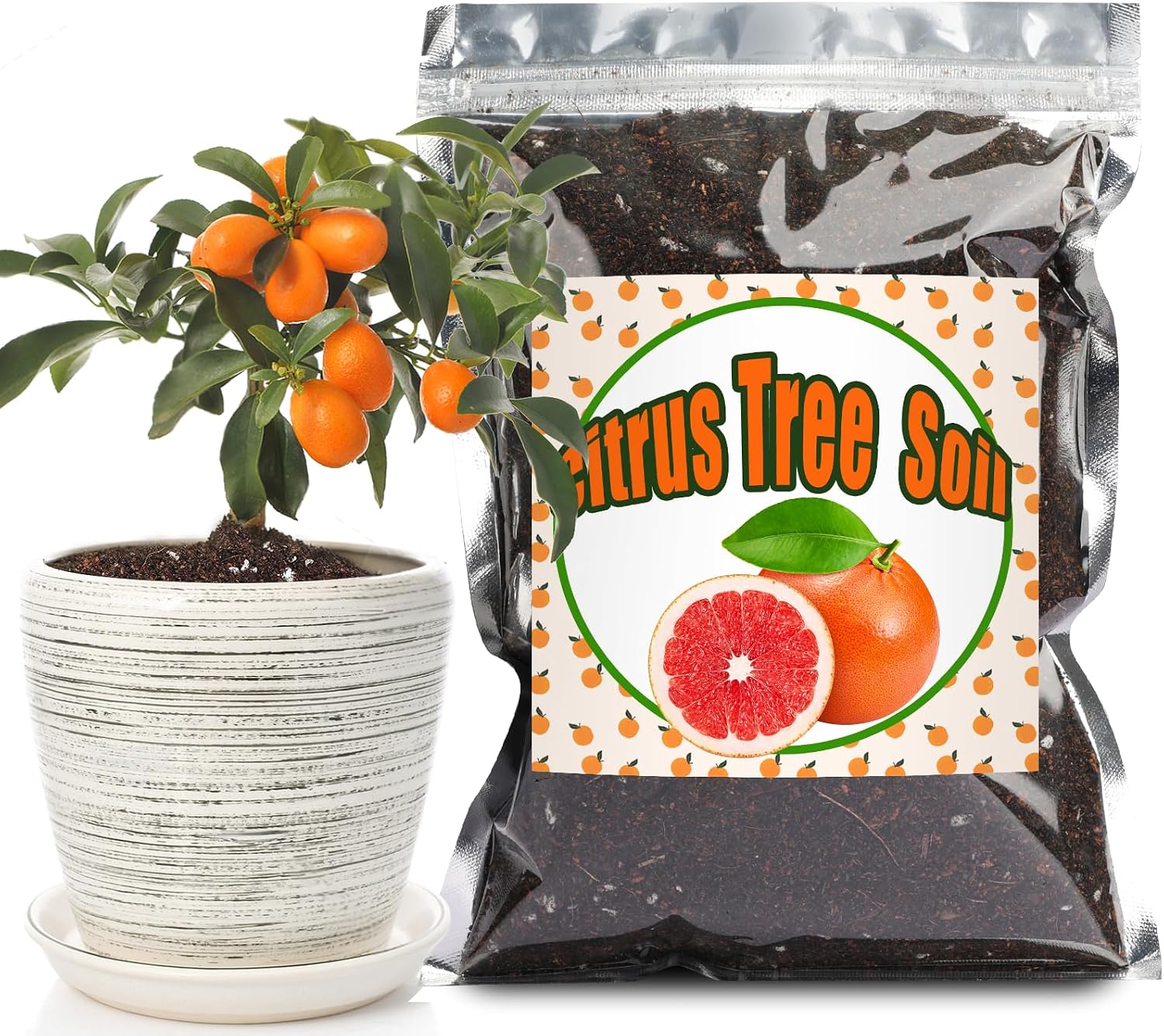
| Brand Name | Doter |
|---|---|
| Item Type Name | Garden soil |
| Volume | 1 quarts |
| Item Weight | 224 g |
This 1 qt Doter citrus potting soil is a small, ready-to-use blend aimed at potted lemon, lime, orange, and grapefruit trees. It is formulated to keep pH between about 6.0 and 7.1 and contains organic and mineral components to supply nutrients while improving aeration and drainage. In practice it works well for repotting young Meyer lemon saplings or topping up containers where good drainage is important to avoid root rot. The mix is convenient for container gardeners because it can be used straight from the bag and is tailored to citrus needs rather than being a generic potting soil. Limitations are its small volume for larger pots and that a single bag will not supply long-term fertilizer needs, so plan to supplement with regular feeding and larger quantities when repotting into half-gallon or bigger containers. For growers on a budget it is a practical sample-size option to try a citrus-specific mix before committing to bulk bags.
Best for: A cost-conscious container gardener with a young Meyer lemon who wants a citrus-specific, ready-made mix for repotting or topping up pots without buying bulk soil.
Less Ideal for: Those repotting mature trees or filling multiple large containers should choose larger quantity or bulk mixes instead.
- Formulated for citrus with a stated pH range ideal for nutrient uptake
- Enhanced drainage and aeration to reduce waterlogging risk in containers
- Contains organic and mineral nutrients to support growth and fruiting
- Ready-to-use mix convenient for quick repotting or top-dressing
- Very small 1 quart volume makes it unsuitable as the sole supply for larger pots
- Does not include long-term fertilizer so additional feeding is needed for sustained nutrition
Verdict: A convenient, citrus-tailored sample-size potting mix that lets budget-minded growers try a pH-balanced, well-draining medium for Meyer lemons before buying in bulk.
E.B. Stone Organics Citrus & Palm Mix Potting Soil, 1.5 cu ft

| Brand Name | E.B. Stone Organics |
|---|---|
| Volume | 1.5 cubic feet |
| Unit Count | 1536 Ounce |
This Citrus & Palm Mix is a purpose-built potting soil for citrus and other tropical-rooted plants. It combines aged fir bark and pumice to keep the mix fast-draining and well aerated while holding enough moisture for steady uptake, and it includes mycorrhizae to improve root nutrient and water absorption. Typical use is straight from the bag for container potting of a Meyer lemon or blended into planting holes for in-ground citrus. The 1.5 cubic foot bag provides enough media for repotting one to two medium-sized lemons or refreshing topsoil in containers. Practical benefits include reduced risk of root rot from overly wet soil, easier root growth in a chunky, airy mix, and improved establishment thanks to the added beneficial microbes. Limitations are that the bag is a single-use-sized volume which may require multiple bags for larger trees or multiple plants and it is a specialized mix so gardeners wanting a universal all-purpose potting soil may prefer a different blend.
Best for: Buyers who prioritize reliable, disease-resistant root environments for Meyer lemon trees and want a purpose-formulated, ready-to-use soil that promotes healthy establishment.
Less Ideal for: Gardeners who need large volumes of general-purpose potting soil for many mixed-species containers or who prefer heavy moisture-retaining mixes for moisture-loving plants.
- Formulated specifically for citrus and tropical plants for targeted root needs
- Aged fir bark and pumice provide fast drainage and good aeration to reduce root-saturation problems
- Contains mycorrhizae to help roots access water and nutrients more efficiently
- Ready to use straight from the bag for potting or mixing into planting holes
- Relatively small 1.5 cu ft bag which may be insufficient for larger trees or multiple repots
- Specialized mix may not be the best choice for plants that prefer heavier, moisture-retentive soils
Verdict: Choose this mix when you want a dependable, citrus-specific potting soil that promotes fast drainage, aeration, and stronger root uptake for a healthy Meyer lemon.
Miracle-Gro Cactus, Palm & Citrus Potting Mix, 8 qt.
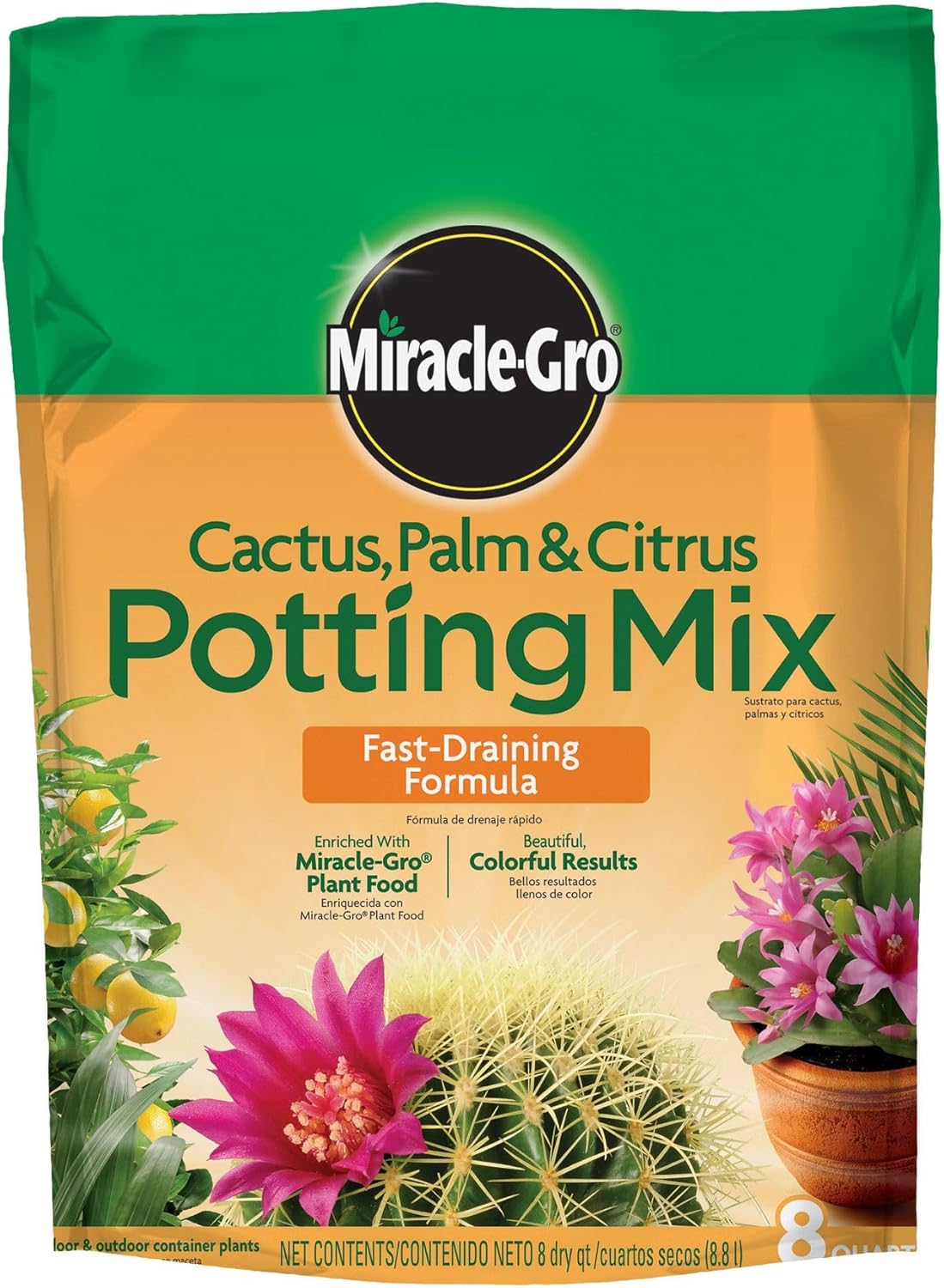
| Volume | 8 quarts |
|---|---|
| Enriched with | Miracle-Gro Plant Food |
| Formula | Fast-draining (peat moss, sand, perlite) |
This 8-quart Miracle-Gro mix is designed for container plants that need quick drainage and a lightweight growing medium, so it suits potted Meyer lemon trees grown in containers. The formula blends peat moss, sand, perlite and forest products to reduce compaction and help excess water move away from roots, while added Miracle-Gro plant food supplies the three basic nutrients to support early growth. Typical use is filling a drained pot, setting the root ball and topping up with the mix, then watering and allowing the surface to dry between waterings. Practical benefits include easier watering management for citrus in pots and a starting nutrient boost that can reduce the need for immediate supplemental feeding. Important limitations are the small 8 qt size, which means multiple bags are needed for larger trees or repotting, and the presence of peat moss, which some gardeners avoid for sustainability reasons. Also gardeners seeking a very gritty, mineral-only cactus mix may prefer a different blend.
Best for: Buyers who want an easy, ready-to-use container mix that helps control watering and gives potted Meyer lemons a nutrient head start without custom mixing.
Less Ideal for: Not ideal for gardeners who prefer large-volume bulk soil for repeated repots or who avoid peat-based products for environmental reasons.
- Fast-draining blend helps prevent root rot in container-grown citrus
- Pre-enriched with basic plant food for an initial nutrient boost
- Contains perlite and sand to reduce soil compaction and improve aeration
- Small 8‑quart bag may be impractical for repotting or larger Meyer lemon trees
Verdict: Choose this mix if you want a convenient, fast-draining potting soil that gives potted Meyer lemon trees improved drainage and an immediate nutrient boost.
Soil Sunrise Citrus Tree Potting Soil Mix (12 Quarts)

| Volume | 12 quarts |
|---|---|
| Ingredients | Peat moss, perlite, sand, worm castings, lime |
| Unit Count | 1 Count |
Soil Sunrise Citrus Tree Potting Soil Mix is a ready-made, 100% natural blend designed for growing Meyer lemons and other container citrus. The mix combines peat moss, perlite, sand, worm castings, and lime to create a light, airy medium that drains freely while holding enough moisture and nutrients for potted citrus. You would use it for repotting or starting young trees in indoor or outdoor containers where root rot risk and pH control matter. Notable features are the added worm castings for slow-release nutrients, lime to help stabilize citrus-preferred pH, and perlite plus sand to prevent soggy roots. In practice that means easier watering management, fewer soggy-root problems, and a soil base that supports steady growth without immediate fertilizer. Limits to expect are that it is a potting mix rather than a complete long-term potting program so trees will still need periodic fertilizing and larger bags or multiple purchases for mature trees in big containers. The resealable bag and natural ingredients suit cautious growers who prefer a no-frills, plant-focused mix.
Best for: A cautious home grower looking for a fuss-free, plant-focused potting mix to repot or start Meyer lemon and other container citrus with minimal initial adjustments.
Less Ideal for: Growers needing a single, large-volume soil solution for established large citrus in oversized containers or those seeking a pre-fertilized, all-in-one potting medium.
- Formulated specifically for citrus with ingredients that support pH balance and nutrient availability.
- Good drainage and aeration from perlite and sand to reduce root rot risk.
- Includes worm castings for natural nutrient support without synthetic additives.
- 100% natural, hand-blended composition which appeals to cautious gardeners.
- 12-quart bag may be small for repotting larger or multiple mature trees.
- Peat-based mix still requires periodic fertilizing for long-term fruit production.
Verdict: A straightforward, natural citrus potting mix that reduces soggy-root problems and gives beginners a reliable starting medium for Meyer lemons.
Choosing the Right Potting Soil for Meyer Lemon Tree: Key Factors to Consider
Soil Texture and Particle Size
Texture controls how easily roots move through the soil and how quickly water drains. A loamy, chunky mix with a range of particle sizes gives roots air pockets while still retaining contact with moist particles. Fine, compacted mixes can stay wet too long and suffocate roots; overly coarse mixes shed water too quickly and force frequent watering.
In practice look for a mix that lists components like compost, coconut coir or peat, and a chunky inorganic amendment such as pumice, perlite, or coarse sand. Those inorganic pieces keep pore space open and prevent compaction over time, which is especially important in pots where repeated wetting and drying can compress organic matter.
Drainage Rate and Pot Fit
Drainage is arguably the most important single factor for potted citrus because standing moisture leads to root rot and nutrient tie-up. Drainage is a function of mix composition and the container's drain hole size and elevation. A fast-draining potting soil lets excess water pass through quickly while still leaving enough moisture near the root ball.
When selecting soil consider the pot size and material. Large pots hold more moisture and can tolerate mixes that hold a bit more water, while small pots need faster-draining media. Also check how the mixture behaves when saturated: slumping or forming a crust indicates poor structure and slower drainage.
Water-Holding Capacity and Frequency of Watering
Meyer lemons like consistent moisture without saturation. Water-holding components such as well-rotted compost, coconut coir, and quality peat provide a buffer so the tree does not dry out between waterings. The goal is a mix that holds enough water to support growth for a few days but releases excess quickly after watering.
Consider your climate and how often you can water. In hot, dry locations choose a mix with higher water retention to reduce daily irrigations. If you water infrequently by design, aim for mixes with added organic matter that still drain well to reduce stress during dry spells.
Nutrient Content and Fertility Management
Potted Meyer lemon trees need steady access to nutrients for leaf growth, flowering, and fruit development. Some potting soils include a pre-charged nutrient load or slow-release fertilizer. While initial fertility helps, citrus are heavy feeders and will need supplemental feeding during the growing season.
Choose mixes that state nutrient sources and release profiles. Avoid mixes that lock up nutrients due to extremely high carbon-to-nitrogen organic inputs. Plan a feeding schedule that complements the soil's nutrient release so you do not overfeed or leave the tree deficient.
pH and Mineral Availability
Citrus prefer slightly acidic to neutral soil pH, typically around 5.5 to 6.5. pH affects the availability of iron, magnesium, and other micronutrients; incorrect pH can cause yellowing leaves even when total nutrients are adequate. A potting soil for Meyer lemon tree use should either sit in the citrus-friendly pH range or be easy to adjust.
Look for mixes that mention pH or include peat, coir, or composted bark that buffer toward slightly acidic. If your water or fertilizer is alkaline you will need additional acidifying inputs over time. Assess your local water and plan for pH checks and adjustments annually.
Long-Term Stability and Reuse
Soil in containers breaks down with time as organic matter decomposes and fine particles clog pore space. Stable mixes contain a balance of persistent inorganic materials such as pumice or expanded clay that preserve structure for multiple seasons. This reduces the need for full soil replacement and prevents sudden drainage changes.
If you plan to keep a Meyer lemon in the same pot for several years, choose a mix known for particle stability and add fresh amendments during repotting. Expect to refresh the top layer or replace part of the rootball every 2 to 4 years depending on decomposition rates and plant size.
Ideal Pot Sizes and How Soil Behavior Changes with Scale
Pot size dictates moisture fluctuation and root confinement. Small containers dry quickly and amplify mistakes in soil choice; a slightly more water-retentive mix can help in a small patio planter. Large containers buffer moisture swings but can hide slow drainage problems that cause root decline over time.
- Small pots (under 10 inches): favor mixes with higher water retention and finer organic matter.
- Medium pots (10 to 20 inches): use balanced mixes that emphasize both drainage and water-holding.
- Large pots (over 20 inches): prioritize drainage and particle stability to avoid long-term wet feet.
Amendments That Benefit Meyer Lemon Trees
Certain amendments give predictable benefits in container citrus. Inorganic materials like pumice, perlite, and poultry grit improve aeration and drainage without breaking down. Organic components such as compost and coconut coir supply slow-release nutrients and moisture retention but will decompose over time.
- Pumice or coarse perlite: improves drainage and keeps pores open.
- Coconut coir or peat: provides water retention and a slightly acidic buffer.
- Worm castings or compost: boost microbial activity and provide gentle fertility.
- Slow-release citrus fertilizer: evens out nutrient supply between feedings.
Adjusting Mixes at Home
If a ready-made potting soil does not perfectly match your needs, you can modify it. Adding 10 to 30 percent pumice or coarse perlite will noticeably increase drainage. Mixing in 10 to 20 percent compost or coir raises water retention and nutrient content. Make small changes and observe the tree over a season before major adjustments.
- To speed drainage: add coarse pumice or grit in 1:10 to 3:10 ratios.
- To increase retention: fold in moistened coir or well-composted material sparingly.
- Always rehydrate coir thoroughly before mixing to avoid future shrinkage.
Repotting Schedule and Soil Refresh Tips
Meyer lemon trees in containers usually need partial refresh or full repotting every 2 to 4 years depending on growth rate and the breakdown of organic components. Signs that the soil needs attention include rapid drying, poor drainage, or root crowding against the pot sides.
- Inspect roots when repotting and replace the bottom third of the soil with fresh mix if structure is degraded.
- Top-dress with compost or a controlled-release fertilizer in spring rather than a full soil swap for minor refreshes.
- When moving to a larger pot, blend old soil with new to preserve beneficial microbes while improving structure.
How We Chose the Best Potting Soil for Meyer Lemon Tree
We focused on characteristics that directly affect container-grown Meyer lemon trees and excluded mixes that are formulated for general houseplants without citrus-specific properties. Selection started with mixes designed for fruiting citrus or heavy-feeding container fruit and those with clearly stated ingredient lists. We prioritized media with fast but not excessive drainage, measurable water-holding amendments, and a pH range suitable for citrus. Evaluation criteria included particle size and texture to judge aeration and root penetration; drainage rate and runoff behavior to prevent root rot; water-holding capacity to reduce watering frequency while avoiding sogginess; nutrient content and release profile to support flowering and fruit set; and pH buffering to keep soil slightly acidic to neutral. We also examined ingredient transparency, such as the proportion of compost, peat or coir, pumice or perlite, and slow-release fertilizer types. Exclusions included purely decorative mixes, those lacking ingredient detail, and blends intended only for succulents or acid-loving ornamentals that do not match citrus needs.
FAQ
How often should I water a Meyer lemon in potting soil?
Watering frequency depends on pot size, soil mix, and weather. Typically water when the top 1 to 2 inches feel dry; small pots may need watering every few days in hot weather while large pots can go a week or more. Always check moisture at the root level rather than following a fixed schedule.
Can I use regular houseplant potting soil for a Meyer lemon tree?
Many houseplant mixes are too fine and retain too much moisture for container citrus unless amended. If using a general mix, improve aeration by adding coarse pumice or perlite and include some compost or coir for balanced retention.
Does potting soil pH need regular testing for citrus?
Yes, check pH annually because container amendments, water, and fertilizer can shift it. Maintaining a slightly acidic pH helps avoid micronutrient deficiencies common in citrus.
How much fertilizer should I expect to add with potting soil?
Even mixes with initial nutrients will require supplemental feeding during the growing season. Use a citrus-formulated fertilizer on a label-recommended schedule and adjust intensity based on leaf color and fruit production.
Is it better to repot into fresh soil or top-dress an existing pot?
Minor nutrient replenishment is often handled with top-dressing or adding slow-release fertilizer. Full repotting is best when the soil structure has broken down, drainage is poor, or the roots are root-bound. Timing repotting to spring gives the tree the longest recovery period.
Final Verdict
Choose a potting soil for Meyer lemon tree that balances quick drainage with enough water-holding organic matter and a citrus-friendly pH. Match the mix to your pot size and watering routine: smaller containers can tolerate more water retention while large pots need stable structure and strong drainage. Prioritize mixes with clear ingredient lists and persistent inorganic components so the soil holds structure season after season. With the right base mix and a predictable feeding schedule you can reduce stress, encourage flowering, and keep a potted Meyer lemon productive for years.
