

Note: This article contains affiliate links. If you click on these links and make a purchase, I may earn a small commission at no extra cost to you. This helps support my research and content. Read my full affiliate disclosure here.
Picking the right planting soil for tomatoes matters more than many gardeners expect. The wrong mix can hold too much water, starve roots of oxygen, or fail to supply the steady nutrients tomatoes need during flowering and fruit set. Whether you are planting in beds, containers, or a raised plot, a soil chosen for tomato culture makes establishment, consistent watering, and fruit production easier. This guide covers six shortlisted planting soils for tomatoes. We focus on how mixes handle moisture, release nutrients, and support root health so you can match a soil to your location and growing method. Below we explain our evaluation criteria and practical considerations before the product list.
Top Picks at a Glance
| Best Overall The best all-around choice for most situations | Gardenera Organic Tomato Potting Soil (2 Quart) |  |
| Best Quality Built to a higher standard if you want something more solid | Burpee Premium Organic Potting Mix with Coconut Coir (9 Quart) |  |
| Best Value The sweet spot between price and what you get | Garden Magic General Purpose Potting Soil Mix, 20 lb |  |
| Best Budget The cheapest option that still gets the job done reliably | Readi Soil Tomato Planting Blend with Worm Castings and Peat Moss, 8 qt |  |
| Highest Rated A top-rated pick with lots of positive feedback | FoxFarm Happy Frog Potting Soil (2 cu ft) with 2 Plant Tags |  |
| Most Popular A crowd favorite that many people choose with confidence | Miracle-Gro Moisture Control Potting Mix, 8 qt. (2-Pack) |  |
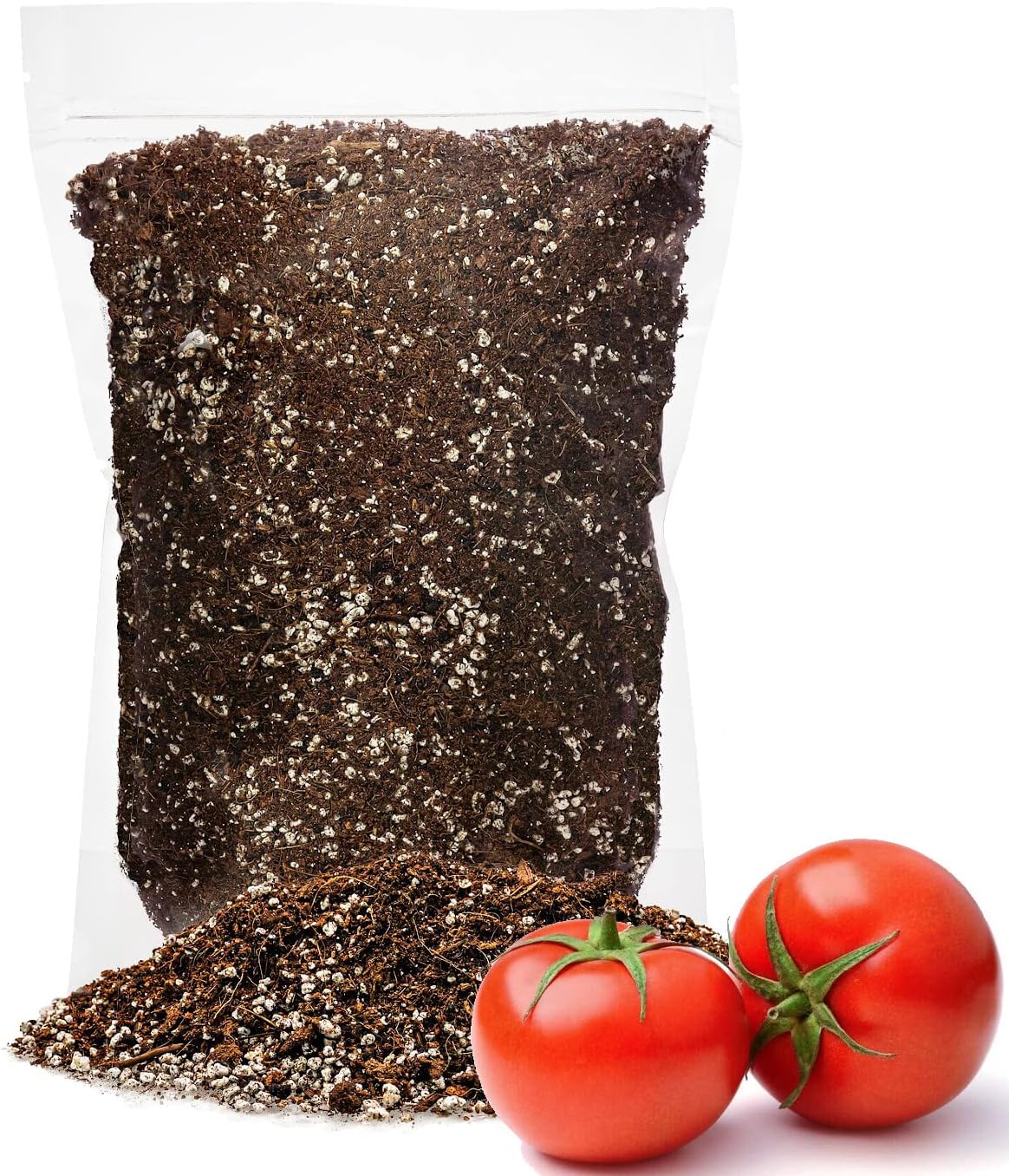
Gardenera Organic Tomato Potting Soil (2 Quart)
| Brand Name | Gardenera |
|---|---|
| Item Type Name | TOMATO Potting Mix |
| Volume | 2 quarts |
| Made in | USA |
Gardenera Organic Tomato Potting Soil is a purpose-built 2 quart mix aimed at starting or container-growing tomato plants. The blend of coco coir and peat moss holds moisture while perlite improves aeration and drainage, and worm castings add organic nutrients to support early root growth. It is hand-blended on a family farm and intended for both indoor and outdoor use, so it works well for seedlings, patio containers, and small raised beds. Practical benefits include improved root development, reduced risk of waterlogged roots due to extra perlite, and a formulation suitable for organic growing. Limitations are the small bag size, which means multiple bags are needed for larger containers or several plants, and the formulation does not list a specific fertilizer analysis so growers seeking a ready-to-go long-term feed may need to supplement with fertilizer as plants mature. Also handle with care to avoid inhaling dust during bagging.
Best for: Home gardeners who want an organic, ready-mixed small-batch soil for starting tomato seedlings or growing one to a few container tomatoes and who value a well-aerated, moisture-retentive mix.
Less Ideal for: Gardeners planting full-size in-ground tomato beds or equipping many large pots should choose bulk bagged soil or mixes formulated with a long-term fertilizer schedule.
- Organic, natural ingredient blend designed for edible plants
- Perlite and coco coir improve drainage and aeration for healthier roots
- Includes worm castings to provide organic nutrient support
- Suitable for both indoor seed starting and outdoor container use
- Only a 2 quart bag so not cost-effective for planting multiple or large containers
- No detailed nutrient analysis provided, likely needs supplemental feeding for fruiting stage
Verdict: A concentrated organic potting mix that gives tomato seedlings and small container plants improved root development and drainage in a ready-to-use 2 quart bag.
Burpee Premium Organic Potting Mix with Coconut Coir (9 Quart)

| Item Form | Powder |
|---|---|
| Specific Uses For Product | Plant Growth, Root Development, Seed Development, Soil Conditioning |
| Coverage | 9 Qt Container |
| Included Components | Fertilizer |
Burpee Premium Organic Potting Mix is a ready-to-use container soil designed to give potted vegetables and flowers a strong start. It blends coco coir with organic matter and a slow-release fertilizer to retain moisture while improving aeration, which helps seed germination and root development in pots or raised containers. Typical use is filling pots or seed-starting trays, planting seedlings or seeds, and relying on the mix to provide feeding for up to three months before additional fertilizer is needed. Notable features include an OMRI listing for organic growing, a coir base that reduces watering frequency without waterlogging, and a lightweight, consistent texture that makes filling many small containers easy. Because it is a potting mix rather than garden soil, it performs best in containers and does not substitute for in-ground beds. Also the bag size is modest at 9 quarts, so larger tomato containers or multiple plants will require multiple bags or mixing with compost and amendments. For growers focused on productive container tomatoes, this mix supplies the moisture balance and initial nutrients to support healthy early growth.
Best for: Gardeners growing tomatoes in containers who prioritize reliable early growth and consistent moisture control and want an organic, ready-to-use mix to reduce watering and feeding chores.
Less Ideal for: People planting large in-ground tomato beds or those who want a bulk soil solution for multiple large containers without mixing or frequent refills.
- OMRI listed for organic gardening
- Coconut coir improves moisture retention while enhancing aeration
- Contains slow-release nutrients that feed plants for up to three months
- Lightweight, consistent texture suitable for filling pots and seed trays
- Small 9 quart bag means frequent repurchasing or blending for large containers
- Not formulated as in-ground garden soil so additional amendments may be needed for beds
Verdict: A compact OMRI-listed potting mix with coco coir and slow-release nutrients that gives container-grown tomatoes dependable moisture balance and early-season vigor.
Garden Magic General Purpose Potting Soil Mix, 20 lb

| Unit Count | 320 Ounce |
|---|---|
| Volume | 20 liters |
| Item Highlight | Moisture Retaining Mix for Indoor and Outdoor Planting, Potting, and Garden Use |
| Style Name | Garden,Potting |
Garden Magic General Purpose Potting Soil is a ready-to-use mix designed for containers, raised beds, and in-ground planting where moisture retention matters. It combines reed sedge peat and organic peat moss into a dark, loose mix that is easy to fill into pots or amend into garden beds without pre-mixing. Typical uses include potting vegetables and flowers, filling planters and replacing tired topsoil in containers. The product’s moisture-retaining formulation helps plants through short dry spells and reduces watering frequency, which is useful for busy gardeners or summer tomato starts. It contains no added fertilizer, so you control feeding schedules with your preferred fertilizer or slow-release amendment. The bag is low on dust when handled but the safety guidance means gloves and a mask are wise during application. If you need a soil with built-in nutrients or a specialized vegetable-specific formula, plan to supplement this mix for heavy-feeding crops like mature tomatoes.
Best for: Gardeners who prioritize a low-maintenance, moisture-holding planting medium for container tomatoes and summer vegetables and who prefer to manage fertilizer separately.
Less Ideal for: Growers seeking a complete, fertilized tomato-specific mix or those who avoid peat-based products for environmental reasons should consider alternatives.
- Moisture-retaining peat-based blend reduces frequency of watering
- Ready to use out of the bag with minimal preparation
- Versatile for containers, raised beds, and outdoor potting
- Dark, loose texture makes transplanting and root establishment easy
- No added fertilizer so additional feeding is required for heavy-feeding plants
- Contains peat which some gardeners avoid for sustainability reasons
Verdict: Choose this peat-based, moisture-retaining potting mix when you want an easy, low-prep soil that keeps container tomatoes and other summer plants evenly moist while you control feeding.
Readi Soil Tomato Planting Blend with Worm Castings and Peat Moss, 8 qt

| Volume | 8 quarts |
|---|---|
| Brand Name | Readi Soil |
| Contains | Worm castings and peat moss |
| Intended use | Tomato transplants |
| Made in | USA |
This ready-to-use tomato planting blend is designed to make moving transplants into containers, raised beds, or garden plots quick and simple. The mix pairs on-site produced worm castings with peat moss, so it adds organic matter and a moisture-retaining component around developing roots without the need for heavy mixing or amendments for initial planting. In practice you scoop the blend into a container or planting hole, set the transplant, and water according to package directions. The convenience of an 8-quart bag suits small container projects or a few transplants, and the product is explicitly aimed at early-stage establishment rather than full-season feeding. Important limitations are that it does not contain added calcium or a complete fertilizer formula, so you will likely need to supplement nutrients as plants grow and to prevent issues like blossom-end rot. Safety guidance recommends avoiding skin and eye contact. For gardeners wanting an affordable, no-fuss starter medium for tomato transplants, this is an easy option; for larger plantings plan to mix or add additional fertility.
Best for: Budget-minded gardeners who need a simple, low-effort starter medium for a few tomato transplants in containers or small raised beds and prefer a product that conditions the root zone at planting.
Less Ideal for: Growers planting many tomatoes, large in-ground beds, or those who want an all-in-one fertilizing mix for the full season should choose a larger-volume or nutrient-complete soil instead.
- Ready-to-use formulation simplifies transplanting into containers, raised beds, or garden spaces
- Contains worm castings that add organic matter and naturally occurring nutrients to the root zone
- Peat moss component helps retain moisture around developing roots during establishment
- Convenient 8-quart size is suitable for small container projects or a few tomato transplants
- Not a complete fertilizer and lacks added calcium, so additional feeding or amendments are needed as plants mature
Verdict: A convenient, budget-friendly starter blend that conditions the root zone and saves time when transplanting a few tomato plants.
FoxFarm Happy Frog Potting Soil (2 cu ft) with 2 Plant Tags

| Brand Name | FoxFarm |
|---|---|
| Item Highlight | Amended Container Blend with Soil Microbes, Earthworm Castings, Bat Guano, and Aged Forest Products |
| Volume | 2 cubic feet |
| Style Name | Container Garden |
| Unit Count | 600 Ounce |
FoxFarm Happy Frog Potting Soil is a premixed container blend designed to give potted plants a nutrient-rich, biologically active growing medium. It is typically used to fill containers for vegetables, ornamentals, or small trees and comes ready to use straight from the bag. The mix contains earthworm castings, bat guano, aged forest products and beneficial soil microbes and mycorrhizal fungi, which help break down organic matter and improve nutrient uptake. For tomato growers using containers this means stronger root development and better access to nutrients compared with plain potting mixes. The included plant tags are a small convenience for labeling varieties or planting dates. Practical limitations are that it is a potting-specific blend so gardeners should monitor fertility for heavy feeders like tomatoes and supplement with fertilizer over the season, and large or repeated container plantings will require multiple bags. Moisture retention and pH are adjusted for general container culture but will still need routine watering and feeding for high-yield tomato production.
Best for: Gardeners who want a dependable, biologically active potting mix for container-grown tomatoes and other potted edibles and who prioritize reliable root health and consistent performance.
Less Ideal for: Growers who plan large in-ground beds or need an all-in-one fertilizing solution for intensive, high-yield tomato production should consider field soil mixes or integrated fertilizer programs instead.
- Ready-to-use mix with no on-site amendments required for initial planting
- Contains beneficial amendments: earthworm castings, bat guano, and aged forest products
- Formulated with soil microbes and mycorrhizal fungi to promote root development
- pH adjusted for improved nutrient uptake in containers
- Not a complete fertilizer for long-season, heavy-feeding crops so additional feeding is needed
- Sold by volume per bag so multiple bags are necessary for several large containers
Verdict: Choose this potting soil when you want a reliable, microbe-rich container mix that promotes strong root development for tomato plants.
Miracle-Gro Moisture Control Potting Mix, 8 qt. (2-Pack)

| Number of Packs | 2 |
|---|---|
| Unit Count | 512 Ounce |
| Item Type Name | Potting Mix |
| Feeds Plants | Up to 6 months |
Miracle-Gro Moisture Control Potting Mix is a ready-to-use container soil designed to reduce over- and under-watering while supplying nutrients for up to six months. In practice you fill a pot with the mix, loosen the plant root ball, set the plant and water through until drainage; the mix contains coir, sphagnum peat moss, and a wetting agent that the brand says increases water absorption by up to about a third versus basic potting soil. That higher water-holding ability helps containers retain moisture between waterings, and the airy texture is intended to keep roots from becoming waterlogged. Because it is formulated for outdoor and container use, it is well suited to potted tomatoes on patios and balconies where consistent moisture matters. The product comes as two 8-quart bags which makes it easy to refresh multiple 8-inch pots, but like most pre-mixed soils it will need annual repotting to prevent compaction and to refresh nutrients after the advertised feeding period ends. For heavy-feeding tomato varieties you may still want to supplement with fertilizer during the season.
Best for: Home gardeners who grow tomatoes in pots or containers and want a low-maintenance, moisture-stable potting mix that reduces watering worries and gives plants an initial nutrient boost.
Less Ideal for: Gardeners planting tomatoes directly in raised beds or in-ground vegetable plots should choose a garden soil or amendment formulated for in-ground use instead.
- Moisture-control formula that absorbs more water than basic potting soils, helping reduce watering frequency
- Feeds plants for up to six months, providing extended nutrition without immediate fertilizer top-ups
- Airy mix composition that promotes root breathing and helps prevent compacted, waterlogged roots
- Sold as two 8 qt. bags which covers multiple small to medium containers
- Feeds up to six months so nutrients will decline later in the season and additional fertilizer is likely needed
- Designed for containers so it is not formulated as an in-ground garden soil for raised beds
Verdict: A convenient moisture-control potting mix that makes container tomato growing easier by holding water longer and feeding plants for months.
Choosing the Right Planting Soil for Tomatoes: Key Factors to Consider
Drainage and Aeration
Tomatoes need oxygen at the roots as much as they need water. A soil that drains freely while holding enough moisture between waterings helps roots avoid rot and supports vigorous root growth. In practice, this means mixes with coarse components such as coarse sand, perlite, or aged bark that create pore space.
Poorly drained soils become compacted and limit oxygen exchange, especially in containers and raised beds. Assess how fast water moves through a sample cup of the mix and whether it dries out a few inches below the surface after a day or two. Good aeration also makes mechanical tasks like transplanting and rooting suckers easier and reduces stress when temperatures spike.
Water Retention Balance
Water retention matters because tomatoes experience stress from both drought and overwatering. An ideal planting soil keeps moisture available to roots for a couple of days while still releasing excess water after heavy rain or irrigation. Ingredients such as coconut coir or well-decomposed compost increase moisture-holding capacity without becoming waterlogged when they are blended with coarse aggregates.
For container growers, choose mixes with slightly higher retention than for in-ground beds because containers dry faster. For heavy clay sites, prefer lighter mixes or add amendments to improve percolation so the soil does not become a permanent sponge after rain.
Nutrient Release Profile
Tomatoes are heavy feeders, requiring a steady supply of nitrogen early and more phosphorus and potassium as fruit develops. Look for soils that combine immediate-available nutrients with a reserve of slow-release organic matter. That combination keeps foliage lush at first and supports sustained fruiting without frequent corrective fertilizing.
Avoid mixes that rely solely on quick-release soluble fertilizers unless you plan a strict feeding schedule. Soil with balanced organic inputs reduces the risk of nutrient burn and supports beneficial microbial activity that improves nutrient availability over the season.
Texture Stability and Compaction Resistance
A stable texture holds structure through wet-dry cycles and regular handling. Soils that break down into fines or slake into a paste will compact, diminishing drainage and root penetration. For tomatoes, which develop extensive root systems, a mix that resists compaction helps roots explore the container or bed more thoroughly.
Test texture by moistening a small clump and squeezing it gently. It should hold together loosely and crumble when disturbed. Long-term, look for mixes that contain fibrous components and limited fine silt to maintain porosity across the season.
pH and Mineral Availability
Tomatoes prefer a slightly acidic to neutral range where key nutrients remain available. Soil pH affects uptake of calcium and micronutrients, which influence blossom end rot and leaf health. A planting soil formulated for tomatoes will often sit near the ideal pH, but growers should still test and correct pH when necessary.
Adjustment is straightforward: lime raises pH and sulfur lowers it, but changes take time. Consider the existing soil or water chemistry where you grow and choose a mix whose baseline pH reduces the need for major corrections during the season.
Suitability for Containers Versus In-Ground Beds
Container-grown tomatoes have different demands than those in the ground. Containers require a lighter, more free-draining mix that retains enough moisture between watering events. In-ground beds benefit from higher organic content to improve native soil structure, but too much water retention will be problematic in heavy soils.
If you grow tomatoes in both settings, look for versatile mixes or plan to modify a base mix – add perlite or coarse sand for containers, increase compost content for in-ground planting. Consider how the mix behaves under your local rainfall and irrigation routine when making a choice.
Preparing Soil for Transplants and Established Plants
Before planting, loosen the top 8 to 12 inches of existing bed soil and work in a layer of the selected planting soil to improve structure. For containers, fill pots leaving space for a watering reservoir and avoid packing the soil tightly when backfilling around the root ball.
For transplants, mix a small amount of chosen planting soil with native soil to reduce shock. For established plants, top-dress with a thin layer of the planting soil and a slow-release organic feed to boost nutrient levels without disturbing roots.
- Loosen bed soil to promote root penetration
- Blend planting soil with native soil for transplants
- Top-dress established plants to add nutrients
Adjusting Watering to Match Soil Behavior
Once you know how the planting soil retains water, change your watering schedule accordingly. Soils with higher retention need less frequent but deeper waterings, while fast-draining mixes require shorter, more frequent watering to avoid stress.
Use a finger test or a moisture meter to gauge moisture in the root zone rather than relying on surface dryness. Consistent moisture during flowering and fruit set reduces blossom drop and yield fluctuations.
- Test moisture below the surface before watering
- Water deeply but less often with moisture-retentive mixes
- Increase frequency for quick-draining container mixes
Managing Fertility Through the Season
Planting soils that include compost or slow-release organic fertilizers supply baseline nutrition, but tomatoes will still need supplemental feeding as fruits develop. Plan a feeding regime that increases phosphorus and potassium after the initial vegetative phase to support fruit size and flavor.
Watch foliage color and fruit set as indicators. Pale leaves early in the season often signal a need for nitrogen, while blossom end rot or poor fruit set point to mineral imbalances that soil amendments and foliar feeds can correct.
- Start with a balanced feed early, then emphasize bloom and fruit nutrients
- Use compost teas or organic liquid feeds for quick correction
- Monitor plant symptoms before increasing fertilizer rates
Seasonal Amendments and Reuse
At season end, remove plant debris and refresh container soils. Reusing the same soil repeatedly without amendment depletes organic matter and reduces porosity. Add compost, fresh organic matter, and a light mineral supplement before storing or reusing a mix.
In beds, top-dress with compost in fall and allow freeze-thaw cycles to integrate organic matter. Consider cover cropping or green manures in the off-season to rebuild soil structure and nutrition for the next tomato crop.
- Refresh container mixes annually with compost and fresh material
- Top-dress beds in fall to rebuild structure
- Use cover crops to restore organic matter between seasons
Common Problems and Soil-Based Fixes
Many tomato issues stem from soil conditions. Blossom end rot, for example, often reflects inconsistent moisture and calcium availability rather than a single nutrient deficiency. Improving soil moisture-holding balance and ensuring moderate calcium levels can cut the problem substantially.
Compaction and poor drainage create root stress and increase susceptibility to disease. Amending with fibrous organic matter and coarse aggregates improves aeration and helps roots resist stress from heat or heavy rain.
- Address blossom end rot by stabilizing moisture and adding calcium sources
- Improve compaction with fibrous amendments and coarse particles
- Correct slow drainage by blending in coarse sand or perlite
How We Chose the Best Planting Soil for Tomatoes
We focused on characteristics that directly affect tomato growth and everyday gardening use. Key evaluation criteria included drainage and aeration to prevent root suffocation, nutrient release profile to match the single-season heavy feeding needs of tomatoes, and texture stability so the mix does not compact or float out of containers. We also considered water retention to reduce watering frequency without creating soggy conditions, and organic content and feed sources for sustained fertility over the season. We excluded mixes aimed only at seedlings or long-term native soil remediation because their composition and goals differ from production soils for fruiting tomatoes. We also excluded specialist hydroponic or soilless systems that require different feeding routines. Final selections emphasized mixes that perform well across beds, raised planters, and containers, and that suit a range of watering practices. The scoring focused on measurable, gardener-relevant dimensions rather than brand claims or packaging alone.
FAQ
Do tomatoes need a special soil or will general garden soil work?
General garden soil can work if it is well-draining and amended with organic matter. Many gardeners improve native soil by adding compost and coarse amendments to create the balance tomato roots need. Containers usually require a lighter, purpose-made mix.
How often should I fertilize tomatoes grown in a planting soil mix?
Frequency depends on the soil's nutrient release profile. Soils with slow-release organic matter often need only a few supplementary feeds during the season, while soilless or low-organic mixes require more frequent liquid feeding. Monitor plant growth and fruiting to adjust timing.
Can I reuse potting soil from last season for new tomatoes?
You can reuse container soil after removing debris, refreshing it with compost and a nutrient top-up, and adjusting texture with fresh amendments. For best results, replace a portion each year to avoid compaction and nutrient depletion.
What pH should I aim for when growing tomatoes?
Aim for a slightly acidic to neutral pH, generally around 6.0 to 6.8. This range keeps most nutrients available. Test your soil and make gradual adjustments with lime or sulfur as needed because big swings can stress plants.
How does container soil differ from in-ground planting soil for tomatoes?
Container soil is lighter and drains faster to prevent waterlogging in a confined root zone. In-ground soil benefits from higher organic content to improve structure and moisture retention. Adjustments to a base mix are common when switching between the two.
Final Verdict
Choose a planting soil for tomatoes that balances drainage, moisture retention, and steady nutrient delivery. Prioritize mixes that stay friable through wet-dry cycles and supply a base of slow-release organic matter so you do not need constant corrective feeding. For containers, favor lighter blends with good aeration; for beds, increase organic content to improve long-term structure. Decide based on how you water, where you grow, and how much seasonal maintenance you want to do. Matching soil behavior to your routine and site conditions is the simplest way to get reliable yields and healthy plants.
