

Note: This article contains affiliate links. If you click on these links and make a purchase, I may earn a small commission at no extra cost to you. This helps support my research and content. Read my full affiliate disclosure here.
If you spend time gardening, entertaining, or playing in a yard, the right outdoor tick spray changes how safe your outdoor space feels. Good products reduce tick numbers for weeks, target common hiding spots, and let you treat lawn edges, flower beds, and underdeck areas without constant retreatment. This guide shortlists six top-rated outdoor tick sprays chosen for real garden use and practical performance. We evaluated each option across measurable criteria like how long protection lasts and how easy it is to apply, plus safety and coverage for typical yard zones. Read on to understand which features matter most for your property and how these sprays behave in everyday garden conditions.
Top Picks at a Glance
| Best Overall The best all-around choice for most situations | Wondercide Outdoor Pest Control Spray, Ready-to-Use 32 oz |  |
| Best Quality Built to a higher standard if you want something more solid | Advantage Yard & Premise Spray, 32 oz |  |
| Best Value The sweet spot between price and what you get | Cutter Backyard Bug Control Spray Concentrate, 32 oz (2 pack) |  |
| Best Budget The cheapest option that still gets the job done reliably | Ortho BugClear Insect Killer for Lawns & Landscapes Ready-to-Spray, 32 oz |  |
| Highest Rated A top-rated pick with lots of positive feedback | Ortho Tick B-gon Tick Killer Ready-to-Spray, 32 fl. oz. | 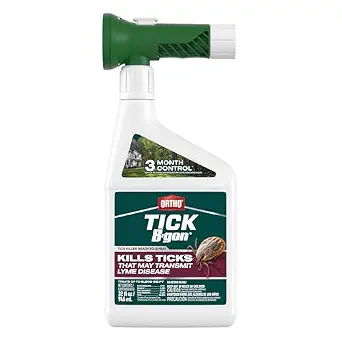 |
| Most Popular A crowd favorite that many people choose with confidence | Wondercide Flea & Tick Yard Spray, Ready-to-Use 32 oz |  |
Wondercide Outdoor Pest Control Spray, Ready-to-Use 32 oz

| Active ingredients | Cedarwood Oil 12.63%, Sesame Oil 2.73%, Sodium Lauryl Sulfate 1.09% |
|---|---|
| Coverage (general) | Up to 5,000 sq ft |
| Coverage (ticks) | Up to 2,500 sq ft |
| Formulation | Pre-mixed ready-to-use hose-end spray |
Wondercide Ready-to-Use Outdoor Pest Control is a pre-mixed, hose‑end spray that uses cedarwood and other plant-derived actives to kill and repel ticks, mosquitoes, fleas, ants, and several other yard pests. You attach the bottle to a garden hose, walk the perimeter and lawn with a sweeping motion, and the product treats up to 5,000 square feet for general repellency or 2,500 square feet when targeting ticks. Notable features include simple hose-end application with no dry time, plant-powered active ingredients, and label directions for both active treatment and ongoing prevention. In practice the spray is convenient for routine perimeter treatments and quick spot applications around patios, foundations, and pet areas, and it is formulated to be safe for families and pollinators when used as directed. Important limitations are that effectiveness can vary with pest pressure and may require repeat treatments every few days, heavy rain can wash it away, and the label warns of possible plant leaf burn if applied in temperatures above 90°F or in direct sun, so timing and coverage care matter.
Best for: Buyers who want a convenient, plant-based yard spray for routine perimeter protection and spot treatments to reduce ticks and other pests without complex mixing or long wait times.
Less Ideal for: People needing a single, long-lasting seasonal solution for very high infestations or those who must treat in extreme heat or immediately before heavy rain should consider alternative or professional options.
- Ready-to-use hose-end design makes whole-yard coverage fast without mixing.
- Plant-based active ingredients target ticks, fleas, and mosquitoes while being safe for pollinators when used as directed.
- Covers large areas (up to 5,000 sq ft for general use) so one bottle treats most suburban yards.
- No dry time required so pets and family can re-enter treated areas quickly.
- May need repeated applications every few days under high pest pressure.
- Can be washed away by heavy rain, requiring reapplication.
- Risk of phytotoxicity if applied in temperatures above 90°F or in direct sunlight.
Verdict: A fast, family- and pollinator-friendly hose-end spray that makes regular tick and mosquito perimeter protection easy for most yards.
Advantage Yard & Premise Spray, 32 oz

| Unit Count | 32 Fluid Ounces |
|---|---|
| Item Form | Aerosol |
| Target Species | Dog |
| Volume | 32 fluid ounces |
Advantage Yard & Premise Spray is a 32 oz. hose‑connect outdoor insecticide formulated to kill more than 110 types of insects including fleas, ticks and fire ants and to create a treated perimeter around your home. You attach the bottle to a garden hose and apply with a steady sweeping motion over lawns, under shrubs and around patios; one bottle is advertised to treat up to 16,000 sq. ft., which makes it suited for medium to large yards. The formula works on contact and is low in odor so treated areas dry quickly and are less intrusive to outdoor activities. Important practical points are clear label directions and the recommendation to keep people and pets off the treated area until dry. This product is best used as part of an integrated program that treats pets, indoor areas and the yard together rather than as a standalone long‑term solution. It is an effective, easy way to reduce outdoor tick exposure but requires careful application and adherence to safety instructions.
Best for: Buyers who prioritize rapid, yard‑level reduction of ticks and fleas and want a single, easy‑to‑apply product to protect outdoor spaces around homes and patios.
Less Ideal for: People looking for an all‑in‑one solution that treats pets directly or indoor infestations should consider complementary topical pet products or indoor sprays instead.
- Hose‑connect 32 oz bottle covers large areas up to 16,000 sq. ft. as advertised
- Kills fleas, ticks and over 110 insect types on contact for fast results
- Low‑odor formula for minimal outdoor smell during and after application
- Contains a pesticide so treated areas must be kept off until dry and label directions followed
- Not a pet treatment; requires separate flea control on animals and indoor treatment for full control
Verdict: Choose this hose‑connect yard spray when you need a fast, large‑area outdoor treatment to cut down ticks and fleas around your home.
Cutter Backyard Bug Control Spray Concentrate, 32 oz (2 pack)

| Unit Count | 64 Fluid Ounces |
|---|---|
| Item Form | Spray |
| Target Species | Insects |
| Active Ingredients | Lambda Cyhalothrin |
This Cutter Backyard Bug Control Spray Concentrate is a ready-to-use hose‑end concentrate formulated to control mosquitoes and a range of listed lawn and landscape insects. You attach the QuickFlip hose‑end sprayer, flip the switch and walk the area while spraying; the product mixes with water automatically so there is no measuring or mixing. It is intended for lawns, trees, shrubs and flowers and the label claims coverage up to 5,000 sq ft per bottle and up to 12 weeks of control for several pests. Practical features include the hose‑end applicator for fast coverage and an active ingredient, lambda‑cyhalothrin, that provides quick knockdown. Important limitations are the pesticide safety rules: do not treat when rain is expected, keep children and pets out until dry, and follow label restrictions for use near sensitive areas and edible plants. It is a conventional chemical control best used proactively when insects first appear rather than as a spot treatment after large infestations develop.
Best for: Buyers who want an easy, time‑saving way to treat lawns and landscape plants for a broad set of biting and nuisance insects and who prioritize fast application over organic or highly targeted tick control.
Less Ideal for: Those focused primarily on tick control in wooded yards or wanting an organic solution should consider a product formulated and labeled specifically for ticks or a lower‑toxicity alternative.
- Hose‑end QuickFlip sprayer for simple, no‑mix application and fast coverage
- Active ingredient lambda‑cyhalothrin delivers rapid knockdown of many common lawn insects
- Label claims long residual control up to 12 weeks for listed pests
- Covers large areas—one bottle treats up to 5,000 sq ft of lawn
- Includes two 32 oz bottles to treat larger properties or repeat applications
- Contains a synthetic pyrethroid so it requires careful handling around people, pets and pollinators
- Not formulated specifically for ticks so efficacy against ticks may be limited compared with targeted tick products
Verdict: If you need a quick, no‑mix hose‑end concentrate to treat large lawns for common insects, this Cutter product delivers fast, long‑lasting knockdown and easy application.
Ortho BugClear Insect Killer for Lawns & Landscapes Ready-to-Spray, 32 oz

| Item Form | Aerosol |
|---|---|
| Target Species | Ant |
| Liquid Volume | 32 fluid ounces |
Ortho BugClear Ready-to-Spray is an easy-to-use hose‑end insect spray formulated for homeowners who want quick backyard pest control without mixing concentrate. You attach the bottle to a garden hose, spray lawns, foundations, ornamental beds or around yard perimeters, and the formula starts killing listed insects within minutes while providing residual control. The product lists broad activity against ticks, ants, mosquitoes and many common lawn and landscape pests and is labeled for use on ornamentals and some edible plants when directions are followed. Practical benefits include no measuring or dilution, coverage large enough for most small to mid-size yards, and an odor-free, non-staining aerosol that simplifies spring and summer treatments. Important limitations are that it is a chemical insecticide containing bifenthrin and zeta-cypermethrin so you should avoid spraying blooming plants to protect pollinators and follow safety guidelines to limit runoff and exposure to children and pets. Also a hose-end format may use more product per treatment than concentrates paired with a tank sprayer, which matters if you plan repeated, large-area applications.
Best for: Buyers who want a low-effort, no-mix solution to control ticks and other yard pests around a typical backyard and prioritize convenience and immediate action.
Less Ideal for: Large‑property owners or applicators who prefer to minimize chemical use or need the cost-per-treatment efficiency of concentrated products for frequent, wide-area treatments.
- Ready-to-spray hose-end applicator requires no mixing or measuring
- Fast knockdown reported for a wide range of listed outdoor pests including ticks
- Covers up to a typical small-to-mid-size yard from a single 32 oz bottle
- Non-staining and low odor which makes outdoor application less intrusive
- Contains synthetic pyrethroid active ingredients that require precautions around pollinators and water runoff
- Hose-end delivery can be less product-efficient than concentrate options for very large properties
Verdict: If you want quick, no-mix tick and yard pest control for a typical backyard, this ready-to-spray Ortho bottle delivers convenient, fast-acting protection.
Ortho Tick B-gon Tick Killer Ready-to-Spray, 32 fl. oz.

| Item Form | Spray |
|---|---|
| Scent Name | Unscented |
| Target Species | Insects |
| Active Ingredients | Bifenthrin 0.300%, Zeta-Cypermethrin 0.075% |
Ortho Tick B-gon Ready-to-Spray is a hose-end insecticide designed to treat yards, perimeter areas, and ornamental beds for ticks, fleas and a long list of other pests. You attach the bottle to a garden hose, spray treated areas until wet, and the formula begins working within minutes while providing residual control claimed for up to three months. Notable features include a ready-to-spray applicator that covers up to several thousand square feet from a single bottle and active ingredients (bifenthrin and zeta-cypermethrin) that target a wide spectrum of listed insects. In practice this makes backyard treatment quick and repeatable without mixing concentrates, and it can be used on lawns, around foundations, and on ornamentals and some edible gardens following label directions. Important limitations are that treated areas must dry before people or pets re-enter and some vegetable/edible applications have specific wait times, so careful label reading is required. Also this is a chemical control rather than a biological or non-chemical option, so users preferring organic solutions will want alternatives.
Best for: Buyers who want a straightforward, dependable chemical treatment to reduce ticks and common yard pests across a full lawn and perimeter without measuring or mixing products.
Less Ideal for: Homeowners seeking all-natural, organic pest control or those who need a pet-safe on-animal treatment should consider alternative approaches.
- Ready-to-spray hose-end bottle for fast, no-mix application
- Claims up to 3 months control against ticks and fleas
- Broad-spectrum activity listed against 235 insects
- Formulation labeled safe for lawns and many ornamentals when used as directed
- Contains synthetic pyrethroid insecticides that require drying time before re-entry
- Some edible garden uses have specific restrictions and pre-harvest intervals
Verdict: If you want a reliable, no-mix hose-end treatment to knock down ticks and maintain multi-month protection across a yard, this product delivers straightforward coverage.
Wondercide Flea & Tick Yard Spray, Ready-to-Use 32 oz

| Item Form | Spray |
|---|---|
| Liquid Volume | 946 ml |
| Active Ingredients | Cedarwood Oil 12.63% ; Sesame Oil 2.73% |
| Coverage | Up to 5,000 sq ft (fleas/mosquitoes); 2,500 sq ft (ticks) |
Wondercide Flea & Tick Yard Spray is a ready-to-use, hose-end formula designed to treat and prevent fleas, ticks, and mosquitoes in home outdoor spaces. You attach the bottle to a garden hose, spray perimeter areas, lawns, and patios, and the cedarwood-based active ingredient targets pests while leaving no required reentry wait time. The bottle claims coverage up to 5,000 sq ft for fleas and mosquitoes and up to 2,500 sq ft for ticks, with instructions to reapply every few days until control is achieved and then monthly for maintenance. Notable features include plant-powered actives (cedarwood and sesame oils), a convenience-focused hose sprayer, and guidance about timing applications to avoid leaf burn in hot sun. Practical benefits are ease of use, a lower-risk ingredient profile for pollinators when used as directed, and integration with a broader pet-and-home line for heavier infestations. Important limitations are that efficacy depends on application thoroughness, water pressure, and weather; heavy rain may require retreatment, and the product is exempt from EPA registration rather than being EPA-registered, which some buyers track for regulatory assurance.
Best for: Buyers who prioritize lower-toxicity, plant-based control and want a convenient, ready-to-spray option for routine yard protection backed by broad customer use.
Less Ideal for: People seeking a fully EPA-registered conventional insecticide or those who need a one-time guaranteed knockdown in extreme infestations without repeated outdoor treatments.
- Ready-to-use hose-end bottle for fast backyard coverage
- Plant-based active ingredients (cedarwood and sesame oils) that target fleas, ticks, and mosquitoes
- Claims large coverage per bottle for treating or maintaining yards
- No reentry wait time after application when used as directed
- Formulated to be safe for pollinators when label directions are followed
- Performance depends on correct application, water pressure, and weather conditions
- Label warns of possible phytotoxic leaf burn if applied in hot sun or over 90°F
- Product is marketed under a FIFRA exemption rather than being EPA-registered
Verdict: A convenient, plant-powered hose-end yard spray that delivers practical, lower-toxicity protection against fleas, ticks, and mosquitoes for homeowners who value ease of use and socially proven results.
Choosing the Right Outdoor Tick Spray: Key Factors to Consider
Residual Control Duration
How long a spray continues to kill or repel ticks after application matters because it determines how often you need to reapply. Longer residual control reduces labor and schedule disruption, especially for larger yards. Expect variation based on formulation type and active ingredient. Sunlight, heavy rain, and mowing accelerate loss of effectiveness, so choose a product with a proven duration that matches how often you can realistically treat.
Also consider where you are treating. Areas that get little sun and are sheltered under shrubs often retain activity longer than open turf, so match product claims to the microclimates in your yard.
Coverage Per Application
Coverage per application is a practical metric that affects cost and time. This includes how much area a bottle or concentrate will treat and how evenly the active ingredient distributes across grass, mulch, and leaf litter. Sprays designed to cover border zones and underbrush often require different dilution or nozzle settings than those intended for open lawn.
For small yards, a ready-to-use spray with limited coverage may be fine. For larger properties, concentrates that mix for broadcast sprayers will cut down on refill downtime and ensure consistent application rates across larger zones.
Application Ease & Flexibility
How easy a product is to apply influences whether it will actually get used when needed. Look for options compatible with the tools you already own, such as pump sprayers, hose-end applicators, or handheld trigger bottles. Adjustable nozzles, clear mixing instructions, and compatibility with backpack or tow-behind sprayers make treating irregular beds and edge zones simpler.
Flexibility also means the ability to do spot treatments in play areas or sweeping applications along fence lines and hedgerows. Products with variable dilution rates let you switch between focused spot treatments and wider broadcast coverage without needing multiple formulations.
Plant & Pet Safety
Safety around children, pets, and desirable plants is a key buying factor. Some outdoor tick sprays leave residues that require treated areas to dry before re-entry or to keep pets away for a period. Read label guidance about when it is safe to let pets back onto treated turf and whether edible plants or ornamental beds need watering in or physical barriers.
Consider products formulated to minimize harm to pollinators when used according to label directions, and follow buffer recommendations for water features. If you have companion animals that frequently roam the yard, choose a product with clear, conservative pet-safety guidance and neutral impact on common ornamentals.
Weather Resistance
Weather resistance affects real-world performance. Heavy rainfall shortly after treatment can wash away applied active ingredients and shorten protection windows. Some formulations are designed to bind to vegetation or soil particles to resist wash-off and maintain longer residual activity.
Timing applications for dry weather and choosing products with documented rainfastness will improve results. Wind conditions matter, too; sprays that drift easily can result in uneven coverage and unintended exposure to nearby plants or pathways.
Where to Treat in Your Yard
Ticks are not evenly distributed across a landscape. Focus treatments along property edges, ornamental beds that border woodlines, shady leaf-litter zones, stone walls, and the perimeter of play spaces. These transitional areas between lawn and unmanaged vegetation are where ticks thrive and where targeted applications provide the best risk reduction.
Treating high-traffic zones differently from deep-woods areas helps conserve product and reduces unnecessary exposure. For example, treat the 10 to 15 foot strip where people and pets move most, and use spot treatments in the understory rather than broadcasting into wild pockets.
- Edge strips along fences and woodlines
- Under decks, porches, and shaded shrub borders
- Play and seating areas adjacent to planting beds
- Stone walls, woodpiles, and leaf-litter accumulations
Best Application Tools and Techniques
Pick an application method that matches yard size and the product format. For small patios and focused beds, a ready-to-use trigger sprayer gives control and minimal setup. For medium to large yards, hose-end or pump sprayers let you cover more area with consistent dilution and pressure. Backpack sprayers work well for dense shrub lines and underbrush.
When applying, walk at a steady pace, overlap swaths slightly to avoid untreated gaps, and avoid spraying on windy days to prevent drift. Label directions on dilution and pressure are important to maintain intended application rates and safety margins.
- Use low-pressure nozzles for even coverage
- Overlap passes by 10 to 20 percent
- Avoid application during high winds or when rain is expected within 24 hours
Timing Treatments Through the Season
Tick activity and abundance change throughout the season. Early spring treatments reduce the buildup of nymphs, while late spring to early summer applications can target peak activity. In many regions, a follow-up in mid-summer or early fall boosts control where long residuals are not claimed.
Schedule treatments shortly before heavy outdoor use such as yard parties or when children begin regular outdoor play. If you choose a product with long residual control, time the application for when it will cover the period of highest exposure to get maximum benefit.
- Early spring for nymph reduction
- Broad follow-up during peak summer activity
- Targeted late-summer spot applications for tick hotspots
Minimizing Impact on Beneficial Insects
Many tick sprays can affect non-target insects if applied directly to flowering plants or when drift reaches pollinator foraging areas. To minimize impacts, avoid spraying flowering ornamentals and apply when pollinators are least active, such as early morning or late evening. Using spot treatments in leaf litter and woodline edges instead of broad blooms helps retain pollinator activity in the garden.
Buffer untreated zones around pollinator-attractive plants and follow label guidance on pollinator precautions. Mechanical control methods such as clearing leaf litter and maintaining low vegetation near hardscapes can also reduce reliance on chemical treatments.
- Avoid spraying open flowers or plants in bloom
- Apply during low pollinator activity windows
- Create untreated buffer strips around pollinator plants
Integrating Sprays with Landscape Management
Chemical control is most effective when combined with habitat modification. Regularly removing leaf litter, mowing border strips, trimming back overgrown shrubs, and relocating woodpiles away from play areas reduces tick habitat and increases spray effectiveness. These simple changes lower the number of hiding spots and let residual sprays reach ticks more directly.
Consider targeted barrier treatments combined with habitat changes to concentrate effort where it matters most. This integrated approach can lower how much product you need and maintain yard usability for family activities.
- Reduce leaf litter and heavy mulch in high-traffic zones
- Keep grass trimmed along edges and paths
- Move woodpiles and compost away from play and seating areas
How We Chose the Best Outdoor Tick Spray
Our selection focused on products that perform reliably in typical yard and garden situations. We screened candidates for residual control duration, verified ability to cover both turf and landscaped edges, and assessed whether the formulation is appropriate for spot treatments as well as broader broadcast applications. We also prioritized easy-to-use delivery methods that work with common garden gear and that minimize drift and overspray when treating around ornamentals and play areas. Excluded from consideration were products intended only for indoor use, sprays that require specialized commercial licensing to handle, and formulations that cannot be applied safely near common garden plants. The final criteria emphasized measurable field-relevant factors: weeks of residual activity, coverage per application, ease and flexibility of application, and safety precautions for pets and garden beds. These same dimensions guided our per-product scoring and helped identify practical options for different yard sizes and use patterns.
FAQ
How soon after applying an outdoor tick spray can people and pets use the lawn?
It usually depends on the product label. Many sprays require treated areas to dry before casual use, which can take from 30 minutes to a few hours. Some formulations list specific re-entry times for children and pets, so follow those directions and keep animals off treated spots until the label allows.
Can I use tick spray around edible gardens or vegetable beds?
Most outdoor tick sprays are not formulated for direct use on edible plants. If treatment is needed near vegetables, choose products with specific guidance for edible landscapes or use physical barriers and spot-treat the perimeter rather than spraying directly over crops. Always follow label instructions regarding application near food-producing plants.
Will heavy rain wash away protection and require immediate reapplication?
Heavy rain can reduce residual activity, especially within the first 24 hours after application. Some formulations claim rainfastness and bind better to vegetation, but in general, avoid treating if heavy rain is forecast. If a downpour occurs shortly after treatment, check label guidance before reapplying; often waiting a day or two is recommended to assess remaining activity.
Are there nonchemical ways to reduce tick numbers that work with spraying?
Yes. Habitat management such as reducing leaf litter, trimming dense shrubs, creating gravel or wood-chip buffer zones, and relocating woodpiles can significantly reduce tick habitat. These measures complement targeted spray treatments and often extend the effectiveness of chemical control.
How often should I plan to re-treat my yard during the tick season?
Re-treatment frequency depends on the product's residual claims and your local tick pressure. Some sprays provide multiple weeks of control and may need only one to two applications per season, while others are designed for monthly or more frequent use. Match your schedule to product guidance and local tick activity patterns.
Final Verdict
Choose an outdoor tick spray that matches the size of your property, the microclimates where ticks hide, and your tolerance for reapplication. Prioritize products with adequate residual control for how often you can treat, clear instructions for safe application around pets and play areas, and formats that work with your existing sprayer equipment. Pair chemical treatments with habitat modification to reduce overall tick habitat and lower long-term reliance on sprays. With the right balance of duration, coverage, and safety, you can reduce tick exposure in the yard while keeping the landscape usable and welcoming.
