

Note: This article contains affiliate links. If you click on these links and make a purchase, I may earn a small commission at no extra cost to you. This helps support my research and content. Read my full affiliate disclosure here.
If you want to control unwanted plants without using glyphosate, choosing the right non glyphosate weed killer matters for the health of your lawn, beds, and nearby ornamentals. Different active ingredients behave differently on contact, through root uptake, or by desiccation, so the right product depends on the species you face and the planting context. This guide summarizes seven top-rated non glyphosate weed killers shortlisted for home and garden use and explains the practical tradeoffs gardeners should expect. We evaluate products for effectiveness on common weeds, safety around desirable plants, and ease of application to help you pick the best fit for your outdoor space.
Top Picks at a Glance
| Best Overall The best all-around choice for most situations | Natural Elements Ready-to-Use Weed Killer (1 Gallon) |  |
| Best Quality Built to a higher standard if you want something more solid | Ortho GroundClear Weed & Grass Killer with Comfort Wand, 1 gal. |  |
| Best Value The sweet spot between price and what you get | ECO Garden PRO Organic Vinegar Ready-to-Use Weed Killer (1 Gallon) | 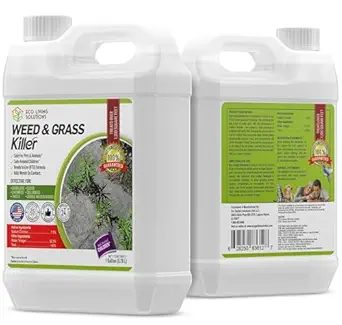 |
| Best Budget The cheapest option that still gets the job done reliably | Bonide Captain Jack's Deadweed Brew Ready-to-Use Spray, 32 oz |  |
| Highest Rated A top-rated pick with lots of positive feedback | Simply Vinegar Industrial Strength 49% Vinegar, 1 Gallon (Pack of 2) |  |
| Most Popular A crowd favorite that many people choose with confidence | Spruce Weed & Grass Killer Kit with Power Wand and 64 oz Refill |  |
| Best Seller A high-volume bestseller chosen again and again | Spectracide Weed & Grass Killer with AccuShot Power Sprayer, 1.33 gal |  |
Natural Elements Ready-to-Use Weed Killer (1 Gallon)

| Unit Count | 128 Fluid Ounces |
|---|---|
| Item Form | Spray |
| Coverage | Most broadleaf weeds and grasses |
| Active Ingredients | Sodium Chloride, Salt Water, Commercial Vinegar, Soap |
Natural Elements Ready-to-Use Weed Killer is a non-glyphosate, vinegar- and salt-based spray sold in a one-gallon container for straightforward spot or area treatments. It is applied by spraying weeds until wet; treated plants typically wilt and die within days. The formula lists vinegar, sodium chloride and soap as active ingredients, which makes it effective on many broadleaf weeds, grasses, moss and algae on hardscape and unplanted areas. Because it is ready to use, there is no mixing or measurement, which keeps application simple for homeowners. Practical benefits include biodegradability and being labeled safe for pets and children once the spray has dried. Important limitations are that it is non-selective to vegetation so it will damage desirable grass or plants if contacted, and it may require repeat applications for deep-rooted perennials. Also, it is not an EPA-registered synthetic herbicide so results can be slower or less persistent than professional chemical options.
Best for: Homeowners who want a straightforward, non-glyphosate weed control for hardscapes and unplanted areas and prefer products with simple, recognizable ingredients.
Less Ideal for: Gardeners seeking a selective lawn-safe solution or a long-lasting systemic herbicide for deep perennial root systems should look elsewhere.
- Ready-to-use gallon eliminates mixing and saves time
- Uses vinegar and salt-based ingredients instead of synthetic herbicides
- Labeled for use on driveways, patios, gravel and fence lines where non-selective control is acceptable
- Pet- and child-friendly once dry and described as biodegradable
- Non-selective formula will kill desirable grass and plants on contact
- May need multiple applications for stubborn or deep-rooted weeds
- Not as long-lasting as some synthetic, systemic herbicides
Verdict: A ready-to-use, vinegar-and-salt weed spray that gives homeowners a simple non-glyphosate option for killing weeds on hardscapes and unplanted areas.
Ortho GroundClear Weed & Grass Killer with Comfort Wand, 1 gal.

| Item Form | Spray |
|---|---|
| Coverage | 5120 square feet |
| Liquid Volume | 128 fluid ounces |
| Active Ingredients | Ammonium Nonanoate |
Ortho GroundClear is a ready-to-use, ammonium nonanoate based weed and grass killer designed for spot treatment of hardscapes and landscape beds. It sprays directly onto weeds with the included Comfort Wand for precise application around patios, walkways, and planted areas you want to keep clear. The formula shows visible browning in about 15 minutes and becomes rainproof roughly two hours after drying, so it works quickly and holds up to light weather if you allow drying time. Because it is OMRI listed, it is suitable where non-glyphosate options are preferred and it targets common weeds such as dandelions, chickweed, crabgrass and moss. Practical benefits include the easy-to-use wand for accuracy and coverage rated for large areas from a single gallon. Limitations are that tougher perennial or deeply rooted weeds may need repeat applications and the spray must not contact desired plants so careful masking or spot treatment is required; it is also not intended for use on lawns.
Best for: Buyers who prioritize quick, non-glyphosate weed control for patios, walkways, and landscape beds and want a product that delivers fast visible results and targeted application.
Less Ideal for: Gardeners looking for a lawn-safe selective herbicide or those seeking a single-application solution for deep perennial root systems should consider other options.
- Fast visible results with browning in about 15 minutes
- Ready-to-use formula with an included Comfort Wand for precise spot application
- Rainproof two hours after drying so treatments are not quickly washed away
- OMRI listed non-glyphosate active ingredient appropriate where glyphosate is avoided
- May require multiple applications for perennial or well-established weeds
- Must avoid contact with desirable plants because it is non-selective on contact
Verdict: Choose this OMRI listed, non-glyphosate spray when you want a fast-acting, targeted weed killer for hardscapes and landscape beds.
ECO Garden PRO Organic Vinegar Ready-to-Use Weed Killer (1 Gallon)

| Unit Count | 128 Fluid Ounces |
|---|---|
| Coverage | 1000 square_feet |
| Item Form | Liquid |
| Active Ingredients | Sodium Chloride |
ECO Garden PRO is a one-gallon ready-to-use herbicide that uses organic vinegar, rock salt (sodium chloride), and biodegradable additives to burn back weeds and grasses on contact. It is applied with a sprayer directly to foliage on sunny days above 70°F and typically shows visible results within 24 to 48 hours. The product is designed for spot treatments on driveways, sidewalks, mulch beds and around hardscapes where root control is less critical. Notable features include a no-dilution RTU formula, instructions for fine-mist application, and claimed safety for pets, children, and beneficial wildlife when used as directed. Practical benefits are fast visible knockdown of broadleaf weeds, suitability for repeated use in sensitive areas, and an organic ingredient profile that avoids glyphosate. Important limitations are that it works primarily on foliage so deep or perennial-rooted weeds may regrow from roots, it requires warm, dry weather for best effect, and repeated applications may be necessary for heavy infestations or turf replacement planning.
Best for: Buyers who want a quick, low-toxicity, no-mix solution to control visible weeds on driveways, paths, and beds and who prefer organic ingredients over synthetic herbicides.
Less Ideal for: Gardeners seeking a systemic, long-term root kill for large turf areas or for persistent perennial weeds should consider a different approach or follow-up mechanical control.
- Ready-to-use spray eliminates the need to mix or measure
- Visible results in 24–48 hours for annual and surface weeds
- Formulated without glyphosate and with biodegradable ingredients
- Suitable for spot treatment on hard surfaces, sidewalks, and mulch beds
- Does not reliably kill deep roots or established perennial weeds
- Requires warm, dry, sunny conditions for best performance
Verdict: A fast, ready-to-use non-glyphosate spray that delivers quick visible weed knockdown for spot treatments where low-toxicity ingredients are a priority.
Bonide Captain Jack's Deadweed Brew Ready-to-Use Spray, 32 oz

| Item Form | Spray |
|---|---|
| Liquid Volume | 32 fluid ounces |
| Coverage | Annual |
| Active Ingredients | Herbicide |
Bonide Captain Jack's Deadweed Brew is a ready-to-use spray herbicide designed to kill visible weeds, grasses, mosses, and algae quickly without mixing. You use it by aiming the sprayer at visible growth in flower beds, vegetable gardens, along sidewalks, driveways, fence lines, and other hardscapes; the formula acts within hours and becomes rainproof after it dries. Notable features include an easy nozzle for spot application, approval for organic gardening, and the ability to work in temperatures down to about 40 degrees Fahrenheit. Practical benefits are straightforward: no measuring or dilution, broad surface versatility, and fast visual results that simplify seasonal cleanup and spot treatments. Important limitations are that it is non-selective so care is required around desirable plants, it is a ready-to-use product so larger properties may be better served by concentrates, and label directions and safety precautions must be followed for safe use around edible gardens.
Best for: Buyers who want a simple, low-effort organic-friendly weed killer for spot treatments and small to medium outdoor areas and who prioritize ease of use over bulk coverage.
Less Ideal for: People needing a product to cover large lawns or extensive acreage who prefer concentrated formulas to reduce cost per treatment.
- Ready-to-use spray requires no mixing and is simple for quick spot treatments
- Fast-acting formula showing results within hours and becomes waterproof after drying
- Approved for organic gardening so it fits non-glyphosate organic approaches
- Versatile use on gardens, borders, driveways, patios, and around buildings
- Non-selective herbicide that can damage desirable plants if oversprayed
- Ready-to-use size may be less economical for treating large areas compared with concentrates
Verdict: A convenient ready-to-use, non-glyphosate option that delivers fast spot control for gardeners who want an organic-approved, no-mix weed treatment.
Simply Vinegar Industrial Strength 49% Vinegar, 1 Gallon (Pack of 2)

| Concentration | 49% Vinegar |
|---|---|
| Size | 1 gallon |
| Material Feature | Biodegradable |
| Manufacturer | Pure Origin Products |
Simply Vinegar 49% is a high-concentration acetic acid solution intended for heavy-duty cleaning and nonchemical weed control when diluted and applied carefully. In practice it is used diluted for spot-treating weeds, removing mineral deposits, and degreasing patios or equipment; its concentrated strength means small volumes mix down to large amounts of working solution. Key features are the 49% concentration for rapid action, a single-ingredient formula with no added dyes or bleach, and a biodegradable profile. For weed control it works best on young, actively growing weeds with direct foliar contact and will scorch foliage quickly; repeated applications may be needed for established perennial roots. Important limitations: it is a corrosive product not for food use and must be kept away from people, pets, and desirable plants because it can damage foliage and soil life. Use protective gear, avoid drift, and follow dilution guidance to limit surface or planting-area harm. For reliability-focused buyers who want a powerful nonglyphosate option, this product delivers predictable, strong acid action when handled responsibly.
Best for: Buyers who prioritize a dependable, nonglyphosate solution for aggressive spot weed control and heavy outdoor cleaning, and who are willing to follow safety and dilution practices.
Less Ideal for: People seeking a plant-safe selective herbicide for lawns, large-area broadcast weed control, or those unwilling to use protective equipment and careful application methods.
- Very high 49% acetic acid concentration provides fast visible damage to weed foliage
- Single-ingredient formula with no bleach, dyes, or added chemicals
- Biodegradable and marketed for home, garden, and outdoor use
- Concentrated gallon size yields many gallons of working solution when diluted
- Corrosive at full strength and not safe for food use or unprotected skin or eyes
- Nonselective and can harm desirable plants and soil biology if misapplied
Verdict: If you want a reliable, nonglyphosate option that delivers fast, powerful foliar control and heavy-duty cleaning when mixed and handled safely, this 49% vinegar is a practical choice.
Spruce Weed & Grass Killer Kit with Power Wand and 64 oz Refill

| Unit Count | 64 Fluid Ounces |
|---|---|
| Coverage | 1 bottle treats up to 400 weeds. |
| Item Highlight | Pet Safe Weed Killer Spray, Reusable Weed Sprayer, 2 AA Batteries Included |
This Spruce kit combines a 64 oz no-mix herbicide with a reusable powered wand to deliver quick spot treatments on driveways, cracks, mulch beds, and planting beds. The formula is water-based with essential oils and a surfactant so it works on contact and shows visible leaf darkening within an hour and complete death typically by 24 hours. The included Power Wand (two AA batteries supplied) makes aiming easier and helps avoid overspray when treating edges and small patches. Practical benefits include a premixed bottle that treats up to 400 weeds, a wand designed for repeat use, and rainproofing within about 10 minutes so light showers are less likely to wash treatments away. Important limitations are that the product is non-selective so it must not be applied to turf or desirable plants and the recommended window for best results is a dry day above 60°F. The wand may take a moment to prime between uses and repeated applications are needed for persistent or regrowing weeds.
Best for: Buyers who want a fast-acting, non-glyphosate spot treatment and prefer a premixed, easy-to-aim system with social proof of other users' success.
Less Ideal for: Homeowners seeking a selective lawn-safe herbicide or a granular/long-term residual product should look elsewhere.
- Ready-to-use no-mix formula for quick spot treatments
- Visible results in about one hour and dead weeds often within 24 hours
- Includes a battery-powered wand for more precise application
- Rainproof within 10 minutes, reducing reapplication after light showers
- Non-selective formula can damage nearby desirable plants if not carefully applied
- Effectiveness depends on weather conditions and may require reapplication on tough weeds
Verdict: A fast-acting, non-glyphosate ready-to-use kit with a powered wand that makes targeted, pet-friendly spot treatments quick and simple.
Spectracide Weed & Grass Killer with AccuShot Power Sprayer, 1.33 gal

| Unit Count | 170 Fluid Ounces |
|---|---|
| Liquid Volume | 1.33 gallons |
| Active Ingredients | Diquat Dibromide 0.12%, Fluazifop-p-butyl 0.06%, Dicamba DMA salt 0.04% |
| Item Form | Spray |
| Coverage | 1 gallon |
Spectracide Weed & Grass Killer is a ready-to-use non-selective herbicide formulated to kill broadleaf weeds and grasses down to the root and delivered with an AccuShot continuous-power sprayer. It is typically used on driveways, patios, walkways, and around fences or planting beds where you want to remove unwanted vegetation. The included battery-powered wand reduces hand pumping and extends for accuracy, making it easier to reach cracks and edges without bending. The formula has visible results in as little as three hours and is rainproof in about 15 minutes, so treatments are practical on variable days. Because it is non-selective, care is required to avoid drift or contact with desirable plants, and PPE and safe handling are recommended. The sprayer requires four AA batteries and occasional maintenance of the hose and nozzle. This product offers fast, reliable knockdown for homeowners wanting a straightforward non-glyphosate option, though it is a chemical solution that demands careful application and storage.
Best for: Homeowners who want a fast, easy-to-use non-glyphosate herbicide for clearing weeds from hardscapes and borders and who prefer a ready-to-use product with an included powered sprayer.
Less Ideal for: People who need selective lawn spot treatments or who prefer purely mechanical or organic weed control methods should consider alternatives.
- Non-glyphosate formula that kills weeds and grasses down to the root
- Included AccuShot battery-powered sprayer with extendable wand for targeted application
- Fast visible results in about three hours and rainproof within 15 minutes
- Designed for use on hard surfaces and around beds where you need to clear vegetation
- Non-selective formula will damage any plant it contacts so careful aiming is required
- Sprayer runs on four AA batteries which need replacement and occasional maintenance
Verdict: A fast-acting, non-glyphosate weed killer bundled with a powered AccuShot wand for accurate, low-effort removal of unwanted vegetation on hardscapes and beds.
Choosing the Right Non Glyphosate Weed Killer: Key Factors to Consider
Active Ingredient and Mode of Action
Different non-glyphosate active ingredients work in different ways. Contact desiccants burn foliage on contact and work fast but usually fail to kill deep-rooted perennials. Systemic alternatives move inside the plant and can reach roots, which matters when tackling dandelions, clover, or bindweed.
Knowing the mode of action helps you match the product to the weed species and your desired outcome. If you want immediate visual control on annuals, a contact herbicide may suffice. For long-term removal of perennials, choose a systemic product labeled for root control.
Selectivity and Plant Safety
Selectivity refers to whether the product targets weeds while sparing turf and ornamentals. Some non-glyphosate options are non-selective and will damage any green plant they contact, requiring careful spot treatment or shielding of desirable vegetation. Other formulas are selective for broadleaf weeds or for specific turfgrasses.
Assess how close treated weeds are to desirable plants and whether you can isolate applications. When treating beds or borders, physical barriers and precise application tools reduce risk. Read labels for buffer distances and replanting intervals to avoid accidental damage.
Application Method and Equipment
Products come as ready-to-use sprays, hose-end applicators, or concentrated liquids you dilute. Ready-to-use options are convenient for small patches, while concentrates offer economy for larger areas but require accurate mixing.
Consider the sprayer type too. A shielded wand or targeted foam applicator reduces drift and overspray, especially important near young plants. For spot treatments, choose formulations that cling to foliage rather than running off, which improves contact and reduces waste.
Speed of Results and Residual Effects
Some non-glyphosate treatments show visible browning within hours but may not prevent regrowth if roots survive. Others act more slowly but deliver longer control by translocating to the root system. Understand whether you need quick cosmetic control or long-term suppression.
Residual soil activity also matters. Products with little to no residual reduce the chance of damaging newly planted seedlings but may require repeat applications. Longer-residual materials suppress seedlings but can limit replanting and affect desirable seedlings.
Environmental and Soil Considerations
Consider how the product behaves in the environment. Biodegradability, persistence in soil, and runoff potential affect non-target organisms and site safety. Some non-glyphosate ingredients break down quickly and pose low risk to microbes, while others persist longer and may influence soil life.
Choose formulations and application practices that reduce runoff into storm drains and water features. Time applications to avoid rain within the period specified on the label, and avoid treating slopes or compacted soils where movement is possible.
Timing and Seasonal Use
Timing affects efficacy. Young, actively growing weeds are usually easier to control because sap flow aids systemic movement. Many products perform poorly on drought-stressed or newly emerged seedlings.
Plan applications when weeds are actively growing, typically in spring or fall for cool-season weeds and in mid-summer for warm-season species. Avoid treating when temperatures exceed label recommendations, and factor in the need for repeat applications to catch flushes of new seedlings.
When Non Glyphosate Makes Sense
Non glyphosate weed killers are a practical choice if you need alternatives to broad-spectrum systemic herbicides. They are useful when you want to avoid long-term soil activity associated with some chemicals or when you need options that fit organic or low-toxicity approaches.
Use non-glyphosate products for spot treatments near ornamentals or child- and pet-used areas where minimizing residuals is a priority. They are also suitable when you want multiple modes of action to manage resistant weed populations.
- Best for targeted spot treatments and visible leaf control
- Useful near ornamentals and recently planted areas when labels allow
- Can reduce selection pressure when rotated with different modes of action
Practical Application Tips
Protect desirable plants by wetting nearby soil first to reduce transfer risk and using shields or cardboard to block drift. Apply on calm days with low humidity and moderate temperatures to avoid evaporation and off-target movement.
For spot treatments, apply to the entire leaf surface and avoid excess runoff. If a product requires surfactant or wetter, follow label guidance to improve coverage while maintaining safety. Store mixed solutions only as long as the label permits.
- Wear appropriate protective gear as directed on the label
- Keep pets and children off treated areas until the label specifies
- Rinse equipment after use and dispose of leftover mix per instructions
Managing Tough Perennials Without Glyphosate
Deep-rooted perennials can be stubborn with contact-only herbicides. Combine mechanical control, such as digging or persistent cutting, with targeted systemic non-glyphosate products labeled for root uptake to increase the chance of success.
Repeat treatments timed to the plant's regrowth cycles often work better than a single heavy application. For vines and woody-rooted weeds, cut-and-treat techniques where a systemic is applied to fresh cuts can improve uptake while limiting off-target exposure.
- Pair physical removal with selective chemical spot treatment
- Schedule repeat applications when regrowth is actively green
- Use shielded applicators to protect adjacent desirable plants
Safety Around Children, Pets, and Pollinators
Minimizing exposure is the main safety principle. Apply when pollinators are not visiting flowers and avoid spraying bloom or areas where bees forage. Use the least toxic effective option and follow reentry intervals that appear on product instructions.
For lawns used by children and pets, prefer products with low residual activity and follow label recommendations for when it is safe to allow foot traffic or play. Clean hands and equipment after application to prevent accidental transfer.
- Avoid treating flowering plants and maintain buffer zones
- Use low-residual formulations for play areas and vegetable beds
- Follow label guidance for safe reentry and pet access
Integrating Chemical and Cultural Control
A long-term weed management plan combines good cultural practices with spot chemical control. Improving soil fertility, overseeding thin lawns, and using mulch in beds reduce weed pressure and the need for repeated herbicide use.
Mowing at the proper height, hand-pulling small weeds before they set seed, and addressing drainage or compaction issues will lower weed success and complement non-glyphosate treatments when you do need them.
- Mulch beds to suppress seed germination
- Overseed thin turf to outcompete annual weeds
- Address causes of weed proliferation such as compaction or poor fertility
How We Chose the Best Non Glyphosate Weed Killer
We selected products that offer real-world control of common garden weeds while avoiding glyphosate. Editorial filters favored ingredients and formulations with documented modes of action relevant to homeowner use, consistent label instructions for typical garden scenarios, and a range of application methods suited to lawns, beds, and hardscape edges. Key evaluation criteria included herbicide efficacy on annual and perennial broadleaf weeds and grasses, selectivity and safety near desirable plants, residual activity and reweed risk, and application practicality such as spray control and cleanup. We also considered formulation stability, clarity of label instructions, and suitability for common garden equipment. Exclusions: we excluded products intended only for industrial or agricultural use, concentrates with labeling that requires professional certification, and formulations lacking clear homeowner directions. The final list focuses on safe, usable options that match the needs of typical gardeners and small-property landscapes.
FAQ
Will non glyphosate weed killers harm my lawn?
It depends on the product. Some non-glyphosate options are selective for broadleaf weeds and safe on certain turf types when used as directed. Others are non-selective and will damage any green plant they contact, so choose a product labeled for your lawn type and follow application instructions.
How long before rain can I apply a non glyphosate product?
Rainfast times vary by formulation. Many contact products become rainfast within a few hours, while some systemic materials need longer to be absorbed. Always check the label for the specified rainfast interval and avoid applying if heavy rain is forecast within that window.
Can I use non glyphosate weed killers in vegetable gardens?
Some formulations are suitable for use in or around vegetable gardens when label directions permit, but many are not recommended for direct treatment on edible crops. Use physical barriers, spot treatments, or low-residual options and follow any crop-specific restrictions on the label.
How many applications will I need for persistent weeds?
Persistent perennials often require multiple treatments timed to periods of active growth. Mechanical removal combined with follow-up chemical spot treatment usually gives the best results. Expect to monitor and treat regrowth at least once or twice over a growing season for stubborn species.
Are non glyphosate weed killers safe for pollinators?
Risk to pollinators depends on timing and the product. Avoid spraying during bloom and apply when pollinators are least active. Some products have low toxicity to pollinators once dry, but following label precautions and creating buffer zones will reduce exposure.
Final Verdict
Choose a non-glyphosate option that matches the weeds you face and the planting context where you need control. Prioritize the mode of action and selectivity when working near desirable plants, and balance the need for fast visible control against the desire for root kill. Use precise application techniques, integrate cultural practices to reduce weed pressure, and plan for follow-up treatments for tough perennials. With careful selection and timing, non-glyphosate weed killers let you manage weeds while limiting residual impact on the garden ecosystem.
