

Note: This article contains affiliate links. If you click on these links and make a purchase, I may earn a small commission at no extra cost to you. This helps support my research and content. Read my full affiliate disclosure here.
Pavement ant infestations can start as tiny trails along driveways and quickly become a persistent nuisance around foundations, patios, and garage edges. Choosing the right Pavement ant killer matters because products behave differently outdoors: some lure foragers back to the nest as toxic bait, others provide contact kill and residual protection on hard surfaces, and a few work better in damp crevices. This guide covers seven shortlisted options that represent the most effective approaches for outdoor ant control. We evaluated each product for how well it attracts pavement ant foragers, how long its effect lasts on common outdoor surfaces, and how easy it is to apply safely in yards. Read on to see the practical tradeoffs and which control styles suit different infestation scenarios.
Top Picks at a Glance
| Best Overall The best all-around choice for most situations | Amdro Ant Killer for Outdoor Home Perimeter, 24 oz |  |
| Best Quality Built to a higher standard if you want something more solid | Syngenta Advion Ant Gel Bait, 30 g |  |
| Best Value The sweet spot between price and what you get | Amdro Ant Killer for Outdoor Home Perimeter, 12 oz |  |
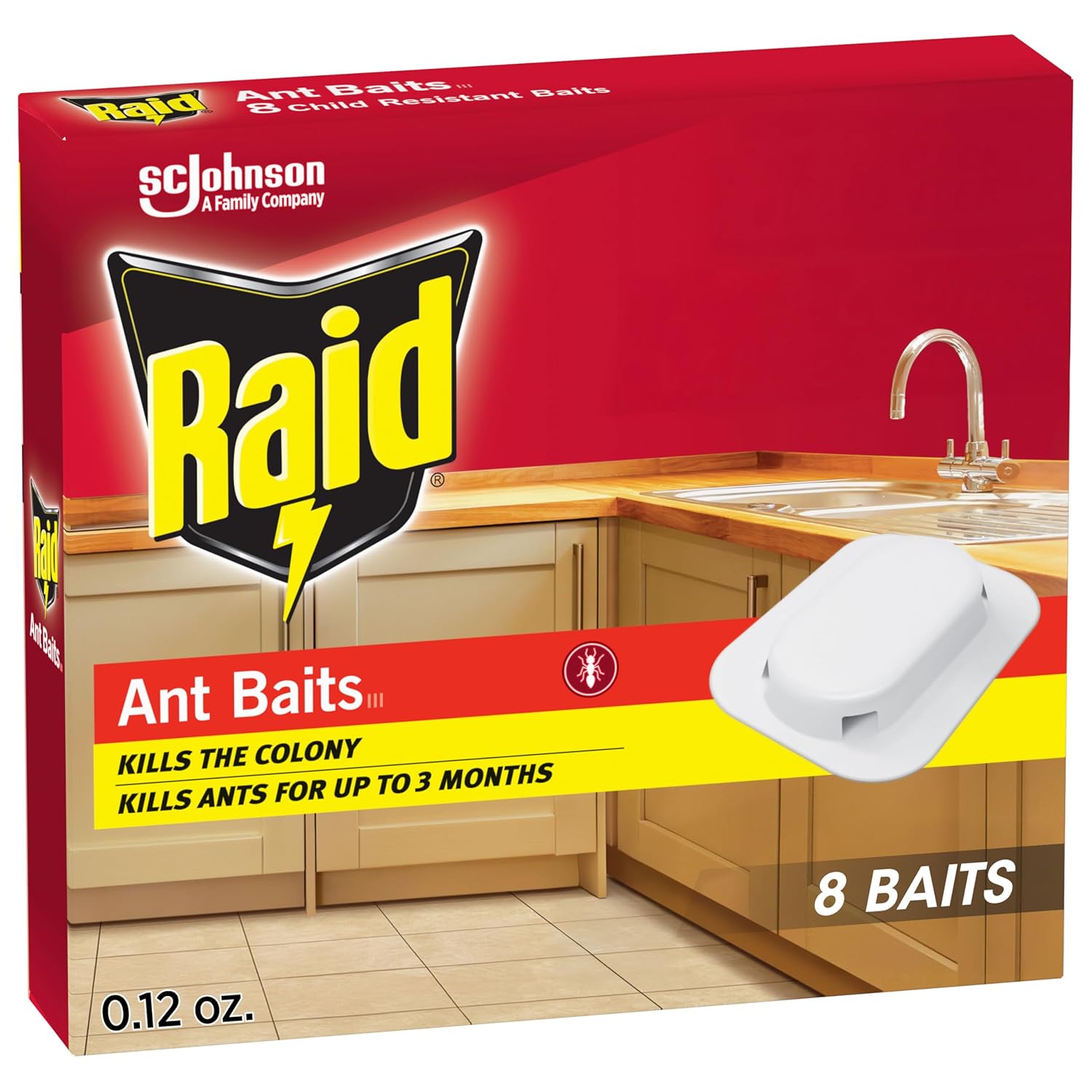
| Best Budget The cheapest option that still gets the job done reliably | Raid Ant Killer Baits, 8 Count (Child-Resistant) |  |
| Highest Rated A top-rated pick with lots of positive feedback | TERRO Liquid Ant Killer Bait Stations, 12-Pack |  |
| Most Popular A crowd favorite that many people choose with confidence | TERRO Outdoor Liquid Ant Bait Stakes, 12-Pack |  |
| Best Seller A high-volume bestseller chosen again and again | Ortho Home Defense Insect Killer Ready-to-Use with Comfort Wand, 1.33 gal |  |
Amdro Ant Killer for Outdoor Home Perimeter, 24 oz

| Item Form | Granules |
|---|---|
| Target Species | Insects |
| Special Features | Ant Killer for Outdoor Home Perimeter |
| Active Ingredients | Hydramethylnon |
Amdro Ant Killer for Outdoor Home Perimeter is a granular ant bait meant to be sprinkled as a band around foundations, lawns, and landscaped areas to control common outdoor ant species. You use it by applying a 12-inch-wide band along visible ant trails, cracks, and the lawn perimeter or by sprinkling directly onto individual mounds. The granules contain hydramethylnon and are formulated to be attractive to foraging workers so they carry the bait back to the colony and share it, which can reduce ants within a week and suppress colonies for up to three months. Practical benefits include easy broadcast application without specialized equipment and broad species coverage that addresses pavement ants and many other nuisance species. Important limitations are that it should not be applied to wet grass or before rain and it works seasonally when ants are active, so timing matters for best results and reapplication as directed may be needed to maintain protection.
Best for: Homeowners who want a straightforward, low-effort perimeter bait to reduce pavement ants and other common outdoor species around foundations and landscaped areas.
Less Ideal for: People who need an immediate knockdown of visible ant trails or who require non-chemical, pet-safe continuous control strategies.
- Granular bait formulation that foraging ants carry back to the colony to target queens and nests
- Designed to treat a continuous 12-inch band around a home and protect the perimeter
- Lasts up to three months under recommended conditions, reducing reapplication frequency
- Simple shake-and-sprinkle application suitable for lawns, landscaped areas, and ornamental gardens
- Ineffective if applied to wet ground or when rain is expected within 24 hours
- Requires ants to be actively foraging so it is seasonal and slower acting than contact sprays
Verdict: An easy-to-use granular perimeter bait that targets pavement ants and other common outdoor species by getting workers to carry the poison back to the colony for longer-lasting control.
Syngenta Advion Ant Gel Bait, 30 g

| Item Form | Gel |
|---|---|
| Target Species | Insects |
| Active Ingredients | Indoxacarb |
Advion Ant Gel is a professional-style ant bait that delivers targeted control by combining a highly attractive gel matrix with the active ingredient indoxacarb. You apply small amounts of the gel near trails, entry points, or nests where pavement ants and other sweet-feeding species are active. The no-odor, non-staining translucent formulation stays palatable over time so ants feed and carry it back to the colony for wider knockdown. Its primary benefits are strong attractiveness to ants, persistence of the gel, and the unique chemistry of indoxacarb that works through ingestion rather than broad-spray contact. The product is labeled for indoor and outdoor use, making it useful around foundations, patios, and garages. Limitations are that it is a bait, so control depends on ants finding and consuming it and results are slower than contact sprays for immediate knockdown; it also requires careful placement out of reach of children and pets. For pavement ant problems where colony elimination is the goal, this gel is a practical, performance-focused option.
Best for: Buyers who prioritize long-term colony control for pavement ants and prefer targeted baits over broadcast sprays; suited to homeowners and pros aiming to eliminate infestations rather than just suppress activity.
Less Ideal for: Not ideal for users who need immediate visible knockdown or who cannot reliably secure bait placements away from children and pets.
- Highly attractive gel formulation that encourages feeding and transfer to colony
- Active ingredient indoxacarb targets ants through ingestion rather than contact
- Translucent, low-odor, non-staining formula that maintains integrity over time
- Labeled for both indoor and outdoor placement for flexible use
- Effectiveness depends on ants locating and consuming the bait so placement matters
- Not an instant knockdown compared with contact insecticides
Verdict: Choose Advion Ant Gel when you want a high‑attraction, ingestion‑based bait designed to eliminate pavement ant colonies rather than just mask activity.
Amdro Ant Killer for Outdoor Home Perimeter, 12 oz

| Unit Count | 12 Ounce |
|---|---|
| Item Form | Granules |
| Target Species | Ant |
| Special Features | Outdoor home perimeter bait |
Amdro Ant Killer for Outdoor Home Perimeter is a ready-to-use granular bait intended to protect a home by treating the lawn and foundation edge. You sprinkle a 1 ft. band of granules around the outside perimeter where foraging ants will find and carry the bait back to the colony. The label says it controls about 25 common ant species and can keep working up to three months, so you can expect fewer ants within a week as workers distribute the bait. It is simple to apply and works best when ants are active and the ground is dry, with application recommended during early morning or evening in warm weather. Limitations are that it is an outdoor perimeter treatment only and depends on ants picking up the bait, so heavily trafficked or wet areas and cold conditions reduce effectiveness. For localized indoor infestations or instant knockdown you will need a complementary product or traps.
Best for: Homeowners who want a low-effort perimeter treatment to reduce outdoor ant pressure and prevent ants from entering the house, especially those who prefer season-long protection rather than spot sprays.
Less Ideal for: People needing rapid indoor ant elimination or a product for use in wet, shaded areas or at temperatures below 50°F should consider other targeted indoor baits or contact sprays.
- Granular bait draws foraging ants to carry poison back to the colony for colony-level control
- Labels lists control of about 25 common ant species including pavement ants
- Residual action advertised up to three months for longer protection around the home
- Easy, no-mix application for a quick perimeter treatment
- Not formulated for direct indoor use or immediate knockdown of visible workers
- Effectiveness depends on ants accepting and carrying the bait which can be reduced by competing food or wet conditions
Verdict: Amdro provides an easy granular perimeter bait that targets common outdoor ants and helps eliminate colonies so fewer ants reach your home.
Raid Ant Killer Baits, 8 Count (Child-Resistant)
| Application area | Indoor use |
|---|---|
| Contains | 8 bait stations |
| Safety feature | Child-resistant |
| Duration | Up to 3 months |
These bait stations are a simple, low-effort way to reduce indoor ant activity, including pavement ants that find their way inside. You place the child-resistant tubes along walls, in corners, or near entry points where ants are active; foraging ants take the bait back to the colony, sharing it so the whole nest can be affected. The product promises up to three months of control, so a single placement can provide extended suppression in many homes. Notable features are the ready-to-use bait tubes and the child-resistant housing, which make them safer around children and easier to deploy than loose granules or sprays. Limitations are that they are for indoor use only and will not address outdoor nests directly, so you may still see activity from colonies outside the structure; heavy or widespread infestations may need additional stations or complementary treatments. For budget-conscious users wanting a no-fuss indoor solution, these baits offer straightforward, long-lasting suppression of pavement ants when used as directed.
Best for: Buyers who want an affordable, low-effort indoor solution to suppress pavement ants and prefer products that are quick to deploy and safer around children.
Less Ideal for: Homeowners needing outdoor perimeter control or rapid knockdown of a very large infestation should consider professional treatment or complementary outdoor products.
- Ready-to-use bait tubes that require no mixing or equipment
- Child-resistant design improves safety in homes with children
- Bait transfer mechanism targets the colony rather than only killing visible workers
- Claims up to three months of control per placement
- Easy to place in corners, along walls, and near entry points
- Intended for indoor use only and will not treat outdoor nests directly
- May require multiple placements or additional methods for large or established infestations
Verdict: A budget-friendly, easy-to-use indoor bait option that quietly targets pavement ant colonies over several months.
TERRO Liquid Ant Killer Bait Stations, 12-Pack

| Unit Count | 12 Count |
|---|---|
| Item Form | Liquid |
| Target Species | Insects |
| Active Ingredients | Sodium Tetraborate Decahydrate (Borax), 5.40% |
| Specification Met | EPA |
TERRO Liquid Ant Killer Bait Stations are prefilled, low-profile stations designed for indoor use to control common household ants, including pavement ants. You open the tab and place the stations along baseboards, in corners, or near entry points where ants travel. The sweet liquid bait contains borax so worker ants feed, survive long enough to return to the nest, and share the poison with the colony, which helps remove queens and hidden populations rather than only killing foragers. The 12-pack gives broad coverage for multiple rooms and placements, and the stations remain active for weeks as long as ants continue to visit. Because the formulation is slow-acting, you may see more ants initially before activity declines over several days to a few weeks depending on infestation size. These are strictly for indoor spot placements and will be less useful outdoors or where non-sugar food sources dominate ant foraging.
Best for: Buyers who prioritize dependable, colony-level control of pavement and other sugar-loving household ants and who prefer a low-effort, set-and-forget indoor solution.
Less Ideal for: People needing immediate knockdown, outdoor perimeter protection, or a non-bait approach for ants that prefer protein or grease over sweets.
- Preloaded, ready-to-use stations for quick placement with no mixing
- Borax-based liquid bait is carried back to the nest to target the whole colony
- 12 stations provide coverage for multiple rooms or hotspots
- Low-profile design works well along baseboards and under appliances
- Intended for indoor use only and not formulated for outdoor or broad perimeter control
- Works more slowly than contact sprays and can take 2 to 4 weeks for full control
Verdict: A reliable, ready-to-use indoor bait system that eliminates pavement ants by getting worker ants to carry borax bait back to and poison the entire colony.
TERRO Outdoor Liquid Ant Bait Stakes, 12-Pack

| Unit Count | 12 Count |
|---|---|
| Material Type | Plastic |
| Target Species | Ant |
| Power Source | manual |
These TERRO Outdoor Liquid Ant Bait Stakes are designed to intercept ant colonies around yards, patios, and foundation perimeters before ants come inside. Each stake is pre-filled with a sweet liquid bait that worker ants feed on and transport back to the nest, so the active ingredient works through the colony rather than only killing visible foragers. Installation is simple: cut the tab, push the stake into soil near ant trails or nest openings, and monitor the see-through chamber to check consumption. In practice you can expect noticeable reductions in activity in a few days, with complete control often taking a few weeks as the bait cycles through the colony. The stakes are weatherproof and sold in a 12-count pack for covering multiple entry points. Limitations are that the bait is species-specific and may be less attractive if competing food sources are abundant, and stakes must be kept out of reach of children and pets and replaced every few months for ongoing protection.
Best for: Homeowners who want a low-effort, proven bait solution to stop pavement and other common outdoor ants before they enter the house and who prefer products backed by established brand use.
Less Ideal for: People who need immediate knockdown of visible ants on contact or who require non-chemical, pet-safe methods for active indoor infestations.
- Colony-level control using borax bait carried back by worker ants
- Ready-to-use stakes with simple cut-and-insert installation
- See-through reservoirs let you monitor bait consumption
- Weatherproof design suitable for outdoor placement around foundations and patios
- Effectiveness can be reduced if alternative food sources are available nearby
- Contains borax so must be placed where children and pets cannot access
Verdict: Use these ready-to-use bait stakes to intercept and eliminate pavement ant colonies around your home with a low-effort, colony-level approach.
Ortho Home Defense Insect Killer Ready-to-Use with Comfort Wand, 1.33 gal

| Unit Count | 170.24 Fluid Ounces |
|---|---|
| Item Form | Spray |
| Target Species | Insects |
| Liquid Volume | 1.33 gallons |
| Active Ingredients | Bifenthrin 0.05%, Zeta-Cypermethrin 0.0125% |
Ortho Home Defense Ready-to-Use is a large-format insect spray formulated for treating both indoor hard surfaces and the exterior perimeter of a home. It is applied with the included battery-powered Comfort Wand that delivers a continuous spray, which makes treating baseboards, doorways and foundation lines easier and less fatiguing than pump sprayers. The formula lists bifenthrin and zeta-cypermethrin as active ingredients and claims up to 12 months of protection for ants, roaches and spiders on non-porous indoor surfaces when applied as directed. Typical use is to spray a narrow band along foundations, patios and entry points or a 4-inch band indoors, letting surfaces dry before reentry. Practical benefits include wide coverage from a single 1.33 gallon container and a non-fuming, clear-drying finish that reduces visible residue. Limitations are that labeled long-term protection applies specifically to certain indoor uses on non-porous surfaces and reapplication or targeted spot treatments may be needed for heavy infestations or outdoor soil and nesting sites; safety precautions must be followed around children and pets.
Best for: Buyers who want a straightforward, low-effort solution to prevent and treat recurring indoor and perimeter ant problems and prefer a product that is easy to apply across larger areas.
Less Ideal for: People who need a soil or colony-specific treatment for outdoor pavement ant mounds or who prefer non-chemical control methods should consider other targeted options.
- Includes battery-powered Comfort Wand for continuous spray and reduced hand fatigue
- Large 1.33 gallon ready-to-use container covers large perimeter areas without mixing
- Active ingredients (bifenthrin and zeta-cypermethrin) target a broad range of common household insects
- Dries clear with no fumes, minimizing visible residue and strong odors
- 12-month barrier claim applies to specific indoor non-porous surface applications and may not reflect outdoor performance
Verdict: A ready-to-use, large-capacity perimeter spray with a comfort wand that makes preventing and reducing household ant activity fast and easy.
Choosing the Right Pavement Ant Killer: Key Factors to Consider
Bait Type and Forager Attraction
Pavement ants are often attracted to sweet or protein-rich foods depending on colony needs. A bait that matches the foragers current preference will be taken back to the nest more reliably, increasing the chances of colony-level control.
When selecting a product, consider whether it contains carbohydrate, lipid, or protein attractants and whether those attractants remain palatable after outdoor exposure. Some baits lose attractiveness when exposed to sun or moisture, so placement and timing relative to foraging windows can matter as much as the active ingredient itself.
Residual Activity on Hard Surfaces
Many infestations begin on sidewalks, driveways, and foundation edges where ants travel across concrete and mortar. Products that leave an effective residual can reduce visible surface traffic quickly and provide weeks of protection against returning foragers.
Assess how a formulation binds to porous surfaces and whether it degrades under UV and rain. Residuals that flake or wash away will need more frequent reapplication. Consider whether visible residues are acceptable on light-colored surfaces and how often you are willing to re-treat.
Application Method and Placement
Different Pavement ant killers are applied as granular baits, liquid baits, ready-to-use sprays, or concentrates. Application method affects the precision of placement in cracks, along expansion joints, and behind landscape edging.
Granules can be spread along travel routes but may be moved by wind or irrigation. Liquids and gels can be placed into crevices but may require syringes or bait stations for precise dosing. Think about access to infestation sites and whether you need a handheld applicator for tight joints or a wider spray for open pavement areas.
Weather and Moisture Tolerance
Outdoor ant control is strongly influenced by weather. Rain can wash away baits or dilute liquid residues, and direct sun can dry out sweet baits so they no longer attract ants. A product that maintains activity through light rain and fluctuating temperatures will reduce the need for repeat treatments.
Check product information for reapplication intervals after rainfall and prefer formulations designed to resist moisture loss on pavement and stone surfaces. Consider timing applications before dry spells or after soil has dried following heavy rains to maximize uptake by foragers.
Non-Target Safety and Garden Compatibility
Pavement ant control often occurs near planted areas, lawn edges, and patios. Choose products labeled for use around ornamentals and turf when treating close to vegetation to avoid crop or landscape harm.
Consider how granular or liquid residues interact with mulch and soil. Some active ingredients can affect beneficial insects if applied directly to flowering plants. Use spot treatments near planting beds and follow label guidance about reentry and watering intervals to minimize impacts.
Speed of Knockdown Versus Colony Control
Fast-acting contact sprays give immediate reduction in visible pavement ant trails but may not eliminate the colony if foragers are not carrying toxicants back to nestmates. Conversely, slow-acting baits may take days to reduce surface activity but can suppress the colony if workers share the bait.
Decide whether your priority is rapid cosmetic control around entry points or long-term colony elimination. Many gardeners use a combination approach: a quick surface control for immediate relief followed by targeted baiting to remove the source.
When to Use Baits Versus Contact Treatments
Baits are best when you can locate active foraging trails and want to eliminate the colony over time. Place baits along trails, near expansion joints, and at entry points where ants naturally travel so workers pick up the food and distribute it inside the nest.
Contact sprays or residuals are useful for fast reduction of visible activity on sidewalks, steps, and garage perimeters. Use them when you need immediate relief from large numbers of workers or when baits are being ignored because of competing food sources.
- Use baits when ants are consistently using the same routes.
- Use contact treatments for heavy surface traffic or urgent nuisance control.
- Combine both methods: contact for immediate knockdown, baiting for colony control.
Placement Tips for Pavement and Foundation Cracks
Ants prefer narrow, shaded cracks that retain moisture. Inspect joints, expansion gaps, and the interface between pavement and soil to locate likely entry corridors. Place small bait doses into cracks rather than broadcasting across the surface to reduce non-target exposure and keep bait in place.
For liquid treatments, apply small beads into crevices or use a narrow-stream nozzle to reach deep joints. Avoid overapplication that will simply run off onto adjacent planting areas.
- Treat along the edge of pavement where it meets soil or mulched beds.
- Avoid placing baits in direct sun where they will dry out quickly.
- Refresh bait stations when dry or after heavy rain reduces uptake.
Timing Treatments to Foraging Behavior
Pavement ants often forage during cooler parts of the day in hot climates and during warm daylight in cool seasons. Observe peak activity times on your property and apply baits when ants are actively moving so uptake is maximized.
Avoid treatments during heavy rain or immediately before irrigation. If a rainfall event washes away bait or residue, plan to reapply once surfaces have dried to restore control.
- Apply baits in early morning or late afternoon when foragers are active.
- Hold off on spraying when rain is expected within 24 hours.
- Check treated sites after a few days and refresh as needed.
Safe Practices Around Gardens and Pets
Keep granular baits and liquid concentrates away from play areas and water features. Use targeted placement in cracks and under edging to limit accessibility to children and pets. Always follow the label for pet reentry times and cleanup procedures.
When treating near flowering plants, avoid direct contact with blooms to protect pollinators. Consider using enclosed bait stations or localized applications that reduce exposure to beneficial insects while still reaching foraging ants.
- Store products in original containers and out of reach of children and animals.
- Use the smallest effective broadcast to reduce non-target exposure.
- Rinse equipment away from storm drains and water bodies.
Long-Term Prevention Strategies
After active control, reduce attractants by sealing gaps at the foundation, keeping lids on compost and trash bins, and removing food debris from patios and garages. Managing moisture by improving drainage and eliminating persistent damp crevices reduces the habitat that pavement ants prefer.
Periodic inspection and spot treatment of new trails will keep populations low. Regular maintenance of joints and edge sealing can prevent ants from establishing new foraging highways along paved surfaces.
- Seal cracks and apply flexible caulking to expansion joints where appropriate.
- Keep vegetation trimmed away from pavement edges to reduce shady corridors.
- Monitor and treat small trails early before colonies grow.
How We Chose the Best Pavement Ant Killer
We focused on tactics and formulations proven useful against pavement ants in outdoor settings. Selection criteria included bait attractiveness to common Pavement ant species, residual activity on concrete and soil, ease and safety of application for homeowners, and performance in variable weather. Also considered were application flexibility for cracks and crevices, visible residue on treated surfaces, and suitability near common yard features like patios, planters, and garage perimeters. Products were excluded if they were strictly indoor-only formulations, if they required professional-only equipment, or if they lacked adequate labeling for typical homeowner use. We prioritized options that offer at least one clear mechanism useful in the field: slow-acting baits for colony elimination, residuals for quick knockdown, or contact sprays for severe surface activity. The scoring emphasized bait uptake, persistence after rain, application control, and user safety to reflect real-world gardener needs.
FAQ
How long does it take for a bait to eliminate a pavement ant colony?
It often takes several days to a few weeks for slow-acting baits to reduce surface activity because foragers must find the bait, carry it back, and it must circulate through the nest. The timeline depends on colony size, bait uptake, and weather.
Will sprays stop pavement ants coming back?
Contact sprays can quickly reduce visible ants but often do not eliminate the colony unless combined with baiting. Residual sprays can provide temporary protection on treated surfaces but may require reapplication after heavy rain or prolonged sun exposure.
Are bait stations better than loose granules for outdoor use?
Bait stations protect bait from moisture and non-targets and keep food in place along forager routes. Loose granules can be effective but are more likely to be scattered by wind, irrigation, or foot traffic and may be less attractive after rain.
Can I use indoor ant baits outside on pavement cracks?
Indoor formulations are not always labeled for outdoor use and may lose effectiveness when exposed to sun and rain. Choose products labeled for outdoor pavement or foundation use to ensure proper performance and safety.
What should I do after a heavy rain washes away treatments?
Inspect treated areas after surfaces dry and reapply bait or residuals as directed on the product label. For baits, reset stations and replace saturated material. For residuals, follow label guidance on reapplication intervals post-rain.
Final Verdict
Focus first on how the product delivers its effect: whether it attracts foragers back to the nest, provides lasting residual on pavement, or quickly knocks down visible traffic. Match the approach to your immediate goal-fast relief versus colony elimination-and plan applications around foraging times and weather. Prioritize bait attractiveness and weather tolerance when treating outdoor cracks and edges, and use targeted placement to limit non-target exposure. With the right balance of baiting and targeted residual control, you can remove established trails and reduce the chance of reinfestation.
