

Note: This article contains affiliate links. If you click on these links and make a purchase, I may earn a small commission at no extra cost to you. This helps support my research and content. Read my full affiliate disclosure here.
Picking the right fertilizer for outdoor grow bloom matters because timing and nutrient balance directly affect flower production, plant vigor, and how long blooms last. In an outdoor setting, soil variability, weather, and plant type all change how a formula performs, so selecting a fertilizer that matches your garden conditions makes a big difference. This guide covers a shortlist of seven top options for outdoor bloom feeding. We evaluate each candidate on practical garden criteria like nutrient ratio, release profile, ease of application, and suitability for common outdoor situations so you can pick the best fit for your beds, borders, containers, or landscape plantings.
Top Picks at a Glance
| Best Overall The best all-around choice for most situations | FoxFarm Tiger Bloom Liquid Plant Food (16 fl oz) |  |
| Best Quality Built to a higher standard if you want something more solid | FoxFarm Big Bloom Liquid Plant Food, 16 fl oz |  |
| Best Value The sweet spot between price and what you get | Miracle-Gro Water Soluble Bloom Booster Flower Food, 4 lb |  |
| Best Budget The cheapest option that still gets the job done reliably | Miracle-Gro Water Soluble Bloom Booster Flower Food, 10-52-10, 1 lb |  |
| Highest Rated A top-rated pick with lots of positive feedback | Miracle-Gro Water Soluble All Purpose Plant Food, 12.5 lb |  |
| Most Popular A crowd favorite that many people choose with confidence | Miracle-Gro Water Soluble All Purpose Plant Food (1.5 lb) |  |
| Best Seller A high-volume bestseller chosen again and again | Miracle-Gro Water Soluble All Purpose Plant Food, 3 lb |  |
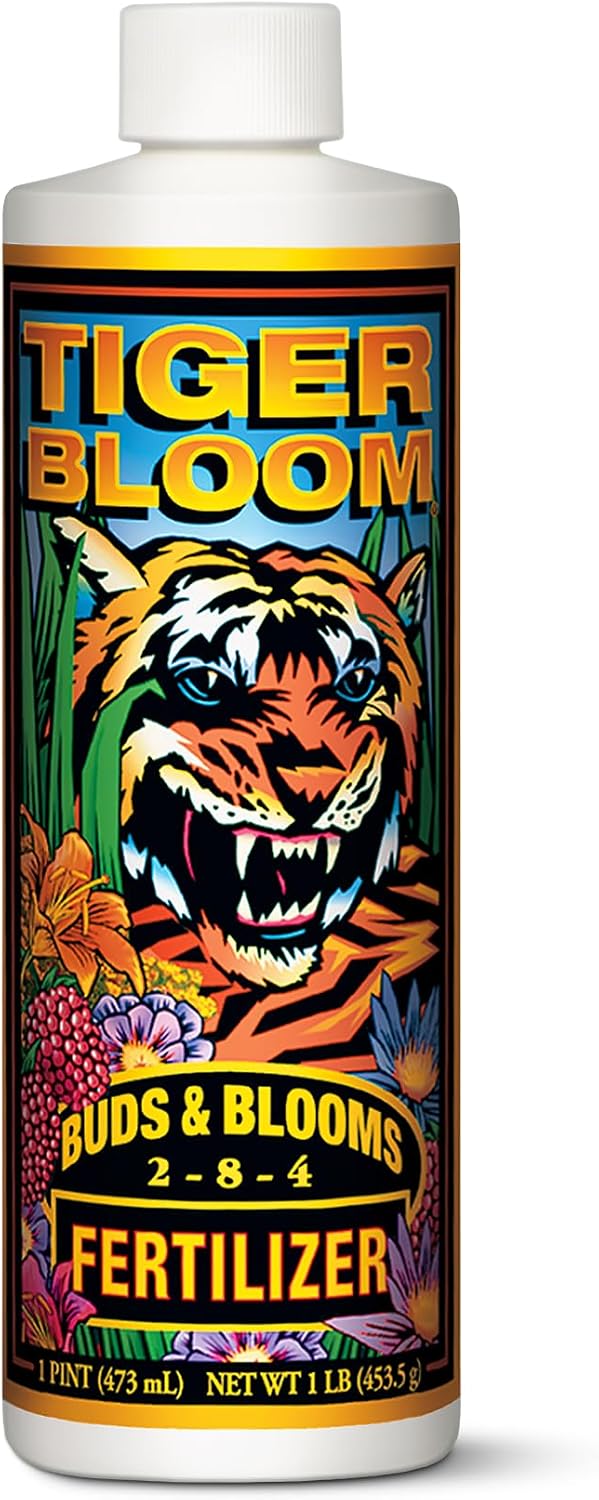
FoxFarm Tiger Bloom Liquid Plant Food (16 fl oz)
| Item Form | Liquid |
|---|---|
| Specific Uses For Product | Hydroponic |
| Application Method | Watering; Foliar spraying |
| Mixing Ratio | 1:200 or 1:300 (per product user guide) |
FoxFarm Tiger Bloom is a concentrated liquid fertilizer designed to push flowering and fruit set during the bloom phase. It is mixed into irrigation water or used as a foliar spray, with manufacturer guidance of roughly 2 to 3 teaspoons per gallon for regular feeding and up to 4 teaspoons per gallon for heavy feeding. The 2-8-4 NPK ratio and added micronutrients promote bloom development and are formulated for quick uptake, which is useful when plants move into flowering. It works in both soil and hydroponic setups, so you can use the same product across beds, containers, or recirculating systems. Practical benefits include easy dilution, compatibility with common application methods, and a low pH formula intended to keep micronutrients available. Important limitations are that it is bloom-focused rather than an all-purpose nutrient, so it should be paired with a vegetative formula earlier in the season, and phosphorus-containing fertilizers may be restricted in some areas due to runoff concerns. Follow label mixing and safety directions to avoid overfeeding and local regulatory issues.
Best for: Gardeners and small-scale growers who want a focused bloom booster to maximize flowers and fruit during the flowering stage and who use either soil beds or hydroponic setups.
Less Ideal for: Buyers looking for an all-in-one, season-long fertilizer or those who need a complete vegetative-to-bloom program without pairing separate products should consider multi-stage nutrient kits instead.
- High-phosphorus 2-8-4 formula targeted to support bigger buds and blooms
- Suitable for both soil and hydroponic systems, offering versatility across grow methods
- Quick nutrient uptake and low pH help micronutrients stay available to flowering plants
- Simple dilution ratios and usable as foliar spray or in irrigation for flexible application
- Designed specifically for flowering phase so not ideal as a stand-alone all-season feed
- Contains phosphorus which may be restricted for non-agricultural turf in some jurisdictions
Verdict: Use Tiger Bloom when you need a straightforward, high-phosphorus liquid boost to push larger buds and fuller blooms during the flowering stage.
FoxFarm Big Bloom Liquid Plant Food, 16 fl oz

| Item Form | Liquid |
|---|---|
| Specific Uses For Product | Organic |
| Application Method | watering can, sprayer, or drip system |
| Liquid Volume | 16 fluid ounces |
| Mixing Ratio | 4 |
Big Bloom is designed as an all-purpose liquid bloom booster for outdoor flowering and fruiting plants. It mixes at the recommended rate (4 tablespoons per gallon) and can be applied with a watering can, sprayer, or through drip systems, making it easy to add to regular watering routines. The formula is OMRI-listed and emphasizes natural inputs such as bat guano and earthworm castings to deliver fast-acting nutrients that promote blooms and fruit set. In practice this product is useful for extending flowering and reviving plants that look nutrient deficient because its components are readily available to roots and foliage. Expect noticeable perk-up and improved bloom production within a few feedings. Limitations are that it contains phosphorus so local runoff rules may restrict use on turf and heavy or frequent application can contribute to runoff risk; also the 16 fl oz bottle is concentrated but limited in volume for larger beds, so frequent repurchase or larger containers may be needed for extensive plantings.
Best for: Gardeners focused on boosting bloom and fruit performance who want a fast-acting, organic liquid they can integrate into regular watering routines.
Less Ideal for: Those managing very large beds or landscapes who need bulk fertilizer supplies or users who must strictly avoid phosphorus inputs due to local rules.
- OMRI-listed organic formula with natural inputs like bat guano and earthworm castings
- Can be applied several ways including watering can, sprayer, or drip system for flexible use
- Fast-acting liquid concentrate that plants can take up quickly
- Formulated specifically to support flowering and fruiting throughout growth stages
- Contains phosphorus which may be restricted by local regulations and poses runoff concerns
- Single 16 fl oz size may be small for large outdoor gardens
Verdict: Choose Big Bloom when you want a ready-to-use, organic liquid fertilizer that reliably drives bigger blooms and more fruit in outdoor flowering plants.
Miracle-Gro Water Soluble Bloom Booster Flower Food, 4 lb

| Item Form | Powder |
|---|---|
| Application Method | Water Soluble |
| Target Species | flowers |
| Mixing Ratio | 1 tablespoon per gallon |
This Miracle-Gro Bloom Booster is a water-soluble powder designed to be mixed with a watering can or used in the Miracle-Gro Garden Feeder to feed flowering annuals and perennials every 7 to 14 days. Its high-phosphorus formula (10-52-10 NPK) promotes more blooms and stronger color compared with unfed plants, and the powder dissolves quickly so you can apply nutrients while watering. It works well for containers, window boxes and in-ground flower beds and is straightforward to dose: 1 tablespoon per gallon for outdoor use. The practical strengths are fast uptake, compatibility with common watering tools, and a predictable feed schedule that suits routine garden maintenance. Limitations are that it is focused on bloom promotion rather than balanced vegetative growth, so it is not the best single product for foliage-heavy or general all-season feeding, and repeated applications are needed through the growing season to maintain results.
Best for: Gardeners who prioritize bigger, more frequent blooms and want a simple, repeatable feeding routine for outdoor flowers and containers.
Less Ideal for: Growers seeking an all-purpose or foliage-focused fertilizer or those who prefer slow-release products that need less frequent attention.
- High-phosphorus formula aimed specifically at increasing flower production and color
- Water-soluble powder that dissolves quickly for use with a watering can or Garden Feeder
- Clear mixing directions make dosing easy for routine feeding every 7–14 days
- Suitable for both containers and in-ground flower beds
- Formula emphasizes bloom production over balanced NPK for leaf growth
- Requires regular reapplication during the growing season to sustain results
Verdict: Use this if you want an easy, water-soluble booster that reliably increases bloom count and color in outdoor flowering plants.
Miracle-Gro Water Soluble Bloom Booster Flower Food, 10-52-10, 1 lb

| Item Form | Liquid |
|---|---|
| Application Method | Water Soluble |
| Coverage | 500 square feet |
| Target Species | all blooming plants |
| Mixing Ratio | 1 tablespoon/gallon (outdoor) |
This Miracle-Gro bloom booster is a water-soluble fertilizer designed specifically to increase flower production and color in outdoor flowering plants. It mixes easily in a watering can or can be used with a garden feeder; the label recommends feeding every 7 to 14 days during bud set and bloom. The high middle number in the N-P-K ratio (10-52-10) signals a strong phosphorus boost to encourage more blooms, and the product is marketed for both in-ground plantings and containers. Practical benefits include fast uptake through roots and leaves, simple mixing ratios for outdoor and indoor use, and coverage rated around 500 square feet per feeder refill. Limitations to keep in mind are that its bloom-focused formula is not balanced for general foliage growth and should be used on a feeding schedule to avoid overapplication. Also, heavy use on non-flowering plants will deliver limited benefits compared with balanced fertilizers.
Best for: Buyers who want an affordable, easy-to-use boost for flowering beds and containers and prioritize maximizing bloom size and color during the flowering season.
Less Ideal for: Gardeners looking for a single all-purpose fertilizer for overall plant health or for heavy-feeding foliage crops should consider a balanced formula instead.
- High-phosphorus formula (10-52-10) specifically promotes more and stronger blooms
- Water-soluble for quick uptake and easy foliar or root feeding
- Clear mixing instructions for outdoor and indoor use with measured coverage
- Works in both containers and in-ground plantings
- Formulation focuses on blooms and is not ideal as an all-purpose or foliage fertilizer
- Requires regular applications every 7–14 days during bloom period to be effective
Verdict: A budget-friendly, water-soluble bloom booster that reliably increases flower production and color on outdoor flowering plants.
Miracle-Gro Water Soluble All Purpose Plant Food, 12.5 lb

| Item Form | Powder |
|---|---|
| Specific Uses For Product | Plant Food |
| Coverage | general purpose, suitable for various plants |
| Mixing Ratio | 1 tablespoon per gallon of water |
| Unit Count | 200 Ounce |
Miracle-Gro Water Soluble All Purpose Plant Food is a bulk water-soluble fertilizer intended for regular feeding of flowers, vegetables, shrubs, trees and houseplants. It mixes into water (manufacturer directions: 1 tablespoon per gallon) so you can apply with a watering can or a compatible garden feeder and soak the soil at the plant base. The product’s high-nitrogen formula is designed to encourage fast, noticeable growth and is safe to use as directed across many plant types. A single 12.5 lb container covers a large area, which makes it convenient for season-long feeding in beds or containers. Practical benefits include predictable dilution instructions, quick uptake by roots when watered in, and versatility for both indoor and outdoor use. Limitations to consider are that it is a general-purpose formula rather than a bloom-specific or low-nitrogen formula, so gardeners seeking a dedicated flowering booster may prefer a bloom-focused fertilizer, and repeated use without following label intervals can risk overfeeding.
Best for: Gardeners who prioritize consistent, reliable feeding across mixed plantings and want a single product to maintain growth through the season.
Less Ideal for: Those focused specifically on maximizing flower production or tailoring nutrition to particular crop stages should consider a bloom booster or specialized formulas instead.
- Water-soluble formula absorbs quickly when watered in.
- Clear mixing directions for indoor and outdoor use.
- Large 12.5 lb container feeds a substantial garden area.
- Suitable for a wide range of plants from vegetables to shrubs.
- All-purpose NPK means it is not optimized specifically for bloom boosting.
- Requires correct dilution and regular reapplication to avoid overfeeding.
Verdict: A dependable, easy-to-mix all-purpose fertilizer that delivers fast, consistent feeding for large outdoor and mixed-plant gardens.
Miracle-Gro Water Soluble All Purpose Plant Food (1.5 lb)

| Item Form | Powder |
|---|---|
| Application Method | Watering Can |
| Target Species | For all flowers, vegetables, trees, shrubs and houseplants |
| Mixing Ratio | 24-8-16 |
Miracle-Gro Water Soluble All Purpose is a powdered, fast-acting fertilizer you mix into a watering can or garden feeder to feed flowers, vegetables, shrubs, trees and houseplants. With an NPK of 24-8-16 it provides a high nitrogen boost that promotes leafy growth and rapid greening, making it useful during active growing and bloom-prep stages for many outdoor plants. Typical use is straightforward: measure with the included scoop, dissolve in water and soak the soil at the base of plants every 7 to 14 days outdoors or every two weeks for houseplants. Notable features include broad compatibility with plant types, instant availability to roots because it is water-soluble, and clear dosing instructions for both hand-watering and feeder use. Practical benefits are quick visible results for hungry plants and flexibility to use in containers or in-ground beds. Important limitations are the high nitrogen ratio, which favors foliage over flower set if overused, and the need for regular reapplication versus slow-release granular fertilizers.
Best for: Buyers who want a reliable, fast-acting fertilizer to quickly correct nutrient needs and encourage vigorous outdoor growth and larger plants, relying on clear instructions and proven results.
Less Ideal for: Gardeners who prefer low-maintenance, infrequent feeding or strictly bloom-focused formulas should consider slow-release or bloom-specific fertilizers instead.
- Water-soluble formula delivers nutrients to roots quickly for fast results
- Wide compatibility across flowers, vegetables, shrubs, trees and houseplants
- Simple, predictable dosing with included scoop and clear directions
- Can be applied by watering can or with a compatible garden feeder for larger areas
- High nitrogen-focused NPK may encourage foliage more than blooms if used too frequently
- Requires frequent reapplication compared with slow-release granular fertilizers
Verdict: A fast-acting, easy-to-use water-soluble fertilizer that reliably boosts outdoor plant growth and produces quick, visible results.
Miracle-Gro Water Soluble All Purpose Plant Food, 3 lb

| Form | Powder |
|---|---|
| Application method | Mix with water in a watering can |
| NPK | 24-8-16 |
| Feeding frequency | Every 7–14 days |
| Coverage | Feeds approximately 1,200 sq. ft. |
Miracle-Gro Water Soluble All Purpose Plant Food is a fast‑acting powdered fertilizer you mix with water and apply with a watering can or compatible feeder. It supplies a balanced NPK (24-8-16) that promotes leafy growth and overall vigor for flowers, vegetables, shrubs, trees and houseplants. Typical use is straightforward: measure the included scoop, dissolve in the recommended volume of water, and soak the soil at the base of plants every 7 to 14 days depending on whether plants are indoors or out. Notable practical benefits are quick nutrient availability and flexible use across containers and in-ground beds, plus clear directions for small and large applications. Limitations to consider are that it is a high‑nitrogen, general formula rather than a bloom‑specific booster, so gardeners seeking maximum flower production may prefer a higher‑phosphorus bloom fertilizer; also it requires regular reapplication rather than providing long‑term slow release. For cautious gardeners who follow package directions, it is unlikely to burn plants and offers predictable, fast results.
Best for: Gardeners who want a reliable, easy‑to‑use fertilizer that produces fast, visible plant growth and prefer straightforward, low‑risk feeding routines.
Less Ideal for: Growers focused solely on maximizing flower set or bloom size who need a high‑phosphorus bloom booster or prefer long‑lasting granular fertilizers.
- Water‑soluble formula delivers nutrients quickly to roots
- Clear, simple mixing and application instructions for indoor and outdoor use
- Versatile for containers, raised beds and in‑ground gardens
- Included scoop helps measure recommended dose
- Feeds a large area from one container (feeds approximately 1,200 sq. ft.)
- High nitrogen ratio favors foliage growth over concentrated bloom boosting
- Requires reapplication every 1–2 weeks rather than offering slow release
Verdict: A dependable, fast‑acting all‑purpose soluble fertilizer that gives cautious gardeners predictable, quick growth across outdoor and indoor plants.
Choosing the Right Fertilizer for Outdoor Grow Bloom: Key Factors to Consider
Nutrient Ratio and N-P-K Balance
The macronutrient ratio heavily influences whether plants produce more flowers or more vegetative growth. Higher phosphorus relative to nitrogen is commonly recommended during bloom initiation and peak flowering because phosphorus supports bud set and root energy transfer. However, extreme imbalances can weaken stems or reduce overall vigor.
Look at the N-P-K numbers as a roadmap for how the fertilizer will steer plant development through the bloom cycle. For many outdoor ornamentals and flowering perennials, a moderate nitrogen level with elevated phosphorus and adequate potassium produces the best visual results.
Release Profile and Feeding Frequency
How the fertilizer releases nutrients affects bloom timing and labor. Quick-release formulas give a rapid bloom response but require more frequent applications and risk nutrient leaching in heavy rain. Slow-release or controlled-release fertilizers feed steadily over weeks to months, smoothing bloom production and reducing the need for repeat treatments.
Consider your garden schedule and local rainfall. If you want predictable blooms over a long period or cannot apply fertilizer often, controlled-release granules or time-release tablets are practical. If you need fast correction for a nutrient deficiency before an event, a soluble quick-release feed is useful.
Formulation Type and Application Method
Fertilizers come as granules, water-soluble powders, liquids, or spikes. Granules are easy to scatter in beds and work with seasonal tilling. Water-soluble feeds let you feed with irrigation or during hand-watering for a rapid boost. Liquid concentrates are efficient for foliar or root feeding before peak bloom.
Match the formulation to how you manage the garden. Containers and hanging baskets respond well to water-soluble or liquid applications, while larger beds often benefit from granular or slow-release types that need less frequent attention.
Soil Type and Local Weather Conditions
Soil texture, organic matter, and local precipitation determine nutrient retention and availability. Sandy soils drain quickly and may need more frequent, lower-dose feedings because nutrients leach. Clay soils hold nutrients longer but can lock them up if pH is off.
In wet climates, choose products with reduced leaching risk or apply slower-release formulas. In arid regions, ensure the fertilizer can be delivered effectively with the irrigation method you use so nutrients reach roots rather than remaining at the surface.
Micronutrients and Secondary Elements
Flowering depends not only on N-P-K but also on elements like magnesium, iron, boron, and calcium. Magnesium is critical for chlorophyll and energy transfer, which supports the energy-intensive process of blooming. Boron influences pollen viability and fruit or seed set for some species.
If you have pale foliage or irregular bud set, a formula that includes key micronutrients or a supplemental micronutrient application can correct hidden deficiencies that otherwise limit bloom production.
Application Safety and Environmental Impact
How a fertilizer behaves in the landscape affects not just plant health but runoff, soil biology, and pollinators. Highly soluble feeds can contribute to nutrient runoff if over-applied or applied before heavy rain. Some formulations are gentler on soil microbes and earthworms than high-salt synthetic concentrates.
Choose products with clear application instructions and consider split applications or targeted placement to reduce runoff. For pollinator-heavy plantings, avoid foliar sprays during peak pollinator activity and follow label guidance on timing to minimize unintended exposure.
Timing Fertilizer Applications Around Bloom Stages
Flowering plants go through distinct stages: bud initiation, bloom expansion, peak flowering, and post-bloom recovery. Adjusting feeding at each stage helps maintain energy supply without promoting excessive leafy growth at the expense of flowers.
- Apply a bloom-focused feed at bud initiation to support bud set.
- Switch to maintenance or lower-nitrogen feeds during peak flowering to sustain blooms without excessive foliage.
- Use a restorative, balanced feed after peak bloom to help plants rebuild energy reserves for the next cycle.
Feeding Strategies for Different Plant Types
Annuals, perennials, shrubs, and container plants have different nutrient needs and root environments. Annual bedding plants often tolerate higher-feeding schedules, while perennials benefit from steadier, lower-dose feeds that do not force short-lived surges of growth that reduce longevity.
- Containers: frequent, lower-dose soluble feeds to compensate for limited soil volume.
- Perennials: slow-release or granular applications in spring and light maintenance during flowering.
- Shrubs and woody plants: targeted root-zone applications, avoiding excess nitrogen late in the season.
Integrating Fertilizer with Soil Amendments and Mulch
Soil organic matter and mulch influence nutrient availability. Compost and well-rotted amendments improve structure and water retention, which in turn affects how fertilizer behaves in the root zone. Mulch reduces evaporation and can help keep slow-release granules working longer.
- Top-dress with compost annually to improve base fertility and reduce reliance on high-salt feeds.
- Apply granular fertilizers lightly before mulching to keep nutrients near the root zone.
- Avoid burying soluble feeds under a thick mulch layer where they will not reach the roots efficiently.
Troubleshooting Common Bloom Problems
When blooms are sparse or short-lived, the cause is often cultural rather than purely nutritional. Inspect light levels, pruning practices, and watering before assuming a fertilizer fix. Overly vigorous foliage from too much nitrogen is a common cause of poor flowering.
- Yellowing leaves with low bloom may indicate iron or magnesium deficiency rather than a missing macronutrient.
- Stunted buds can follow from inconsistent moisture or sudden fertilizer surges.
- Regular deadheading and light pruning can redirect energy into new blooms when combined with appropriate feeding.
Watering and Fertilizer Interactions
Irrigation schedules determine how nutrients move into the root zone. Heavy watering after a granular application can push soluble nutrients below the root zone in sandy soils, while too little water leaves granules inactive on the surface.
- Apply granular fertilizers before a light rain or irrigation to move nutrients into the root zone without heavy leaching.
- With soluble feeds, water plants thoroughly after application so nutrients reach roots instead of sitting on foliage.
- Match feed timing to your irrigation cycle for consistent uptake and predictable bloom responses.
How We Chose the Best Fertilizer for Outdoor Grow Bloom
We focused on products and formulations suited specifically to producing abundant, long-lasting blooms in outdoor garden settings. Selection began with fertilizers that advertise bloom promotion or balanced bloom-to-growth ratios, then filtered for real-world garden suitability including formulation type, nutrient profile, and application flexibility. Our evaluation emphasized concrete, gardener-facing dimensions: the macronutrient ratio and micronutrient content relevant to flowering, the release mechanism and timing for match with bloom cycles, ease of application in common outdoor setups, and compatibility with typical soil and watering conditions. We excluded indoor-only formulas, products intended purely for foliage production, and specialty lab-grade mixes that require advanced calibration. We also considered formulation practicality for home gardeners: whether the product is easy to store and apply, whether it integrates with routine watering or feeding schedules, and whether application rates are forgiving when users slightly over- or under-apply. Lab test claims alone were not enough; applicability across a range of outdoor gardens mattered most.
FAQ
How often should I fertilize outdoor flowering plants during bloom season?
It depends on formulation. Slow-release granular products often need one application in spring or at bud set, while water-soluble feeds may be applied every two to four weeks. Match frequency to the product label and monitor plant response.
Can I use a high-phosphorus fertilizer on all my flowering plants?
Not always. While phosphorus encourages bud set, many established soils already have sufficient phosphorus. Excessive phosphorus can be wasteful and may cause nutrient lockout. Test soil or use balanced bloom formulas rather than routine high-phosphorus feeds for every planting.
Will foliar feeding improve blooms quickly?
Foliar sprays can correct certain micronutrient deficiencies rapidly and provide a short-term carbohydrate boost. They are best as a supplement for specific issues, not as a primary long-term feeding strategy for bloom support.
How does soil pH affect bloom production?
Soil pH controls the availability of many nutrients. If pH is too high or too low, plants may show symptoms of deficiency even when nutrients are present in the soil. Regular pH checks and appropriate amendments help ensure fertilizers perform as expected.
Are organic fertilizers effective for encouraging blooms?
Organic fertilizers supply nutrients more slowly and also build soil health over time, which can support sustained flowering. They may not produce as rapid a visual response as soluble synthetic feeds, but they improve long-term soil biology and structure.
Final Verdict
When choosing a fertilizer for outdoor grow bloom, prioritize the nutrient ratio and release timing that match your plant types and local conditions. Consider formulation and application method to fit how you garden, and account for soil texture and existing nutrient levels so feeding supports flowers rather than excess foliage. Tradeoffs are inevitable: fast-release feeds give quick results but require more attention, while slow-release formulas reduce labor but act more slowly. Focus on predictable nutrient delivery, micronutrient support if needed, and responsible application to get the most reliable bloom performance for your outdoor plantings.
