

Note: This article contains affiliate links. If you click on these links and make a purchase, I may earn a small commission at no extra cost to you. This helps support my research and content. Read my full affiliate disclosure here.
When pests start chewing leaves or sucking sap, the right plant insect killer can mean the difference between a seasonal nuisance and a ruined bed. You want something that knocks down damaging insects quickly without stressing plants or wiping out pollinators. This guide covers seven shortlisted options chosen for common garden situations, from container plantings to backyard beds and greenhouse setups. We evaluate each option on practical criteria gardeners care about: how effective it is against the pests listed on the label, how safe it is for foliage and nearby beneficials, and how easy it is to apply in real garden conditions. Read on to find the type of treatment that best fits your planting style and pest pressure.
Top Picks at a Glance
| Best Overall The best all-around choice for most situations | BioAdvanced 3-in-1 Insect, Disease & Mite Control Spray, 32 fl oz |  |
| Best Quality Built to a higher standard if you want something more solid | Bonide Captain Jack's Deadbug Brew Ready-to-Use Spray, 32 oz |  |
| Best Value The sweet spot between price and what you get | Bonide Ready-to-Use Insecticidal Soap, 32 oz |  |
| Best Budget The cheapest option that still gets the job done reliably | BioAdvanced Rose & Flower Insect Killer Spray, 24 oz |  |
| Highest Rated A top-rated pick with lots of positive feedback | Sevin Insect Killer Concentrate II, 32 oz |  |
| Most Popular A crowd favorite that many people choose with confidence | Bonide Captain Jack's Ready-to-Use Neem Oil Spray, 32 oz |  |
| Best Seller A high-volume bestseller chosen again and again | Cleanuper 58-Pack Yellow Sticky Gnat Traps (Sunflower & Butterfly Shapes) |  |
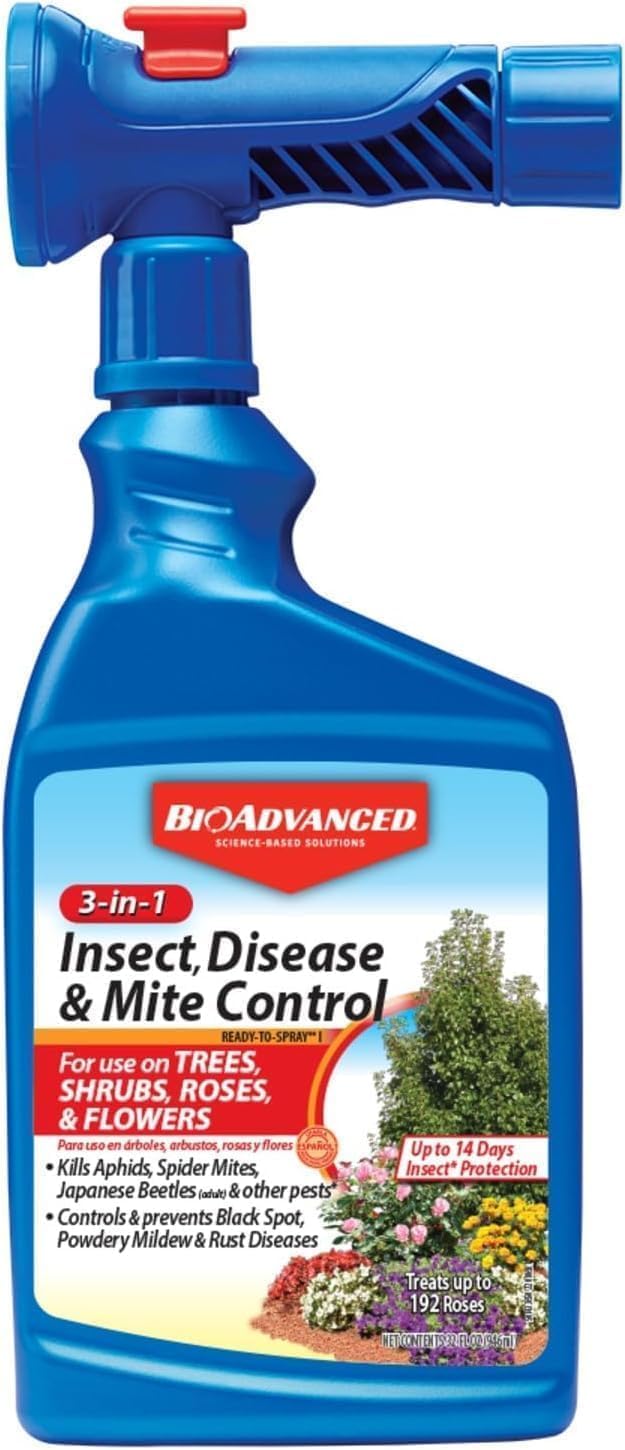
BioAdvanced 3-in-1 Insect, Disease & Mite Control Spray, 32 fl oz
| Unit Count | 32 Fluid Ounces |
|---|---|
| Item Form | Spray |
| Target Species | Aphids, caterpillars, leafminers, whiteflies and other listed pests |
| Active Ingredients | Tau-fluvalinate 0.61%, Tebuconazole 0.65%, Imidacloprid 0.47% |
The BioAdvanced 3-in-1 spray combines insecticide, fungicide, and miticide in a single ready-to-use hose-end bottle, so you can treat large areas without mixing concentrates. You attach the sprayer to a garden hose, spray foliage including leaf undersides, and the product claims systemic, rainproof protection that lasts up to two weeks per application. Notable features include control of common pests such as aphids, caterpillars, whiteflies and Japanese beetles, plus disease control for issues like black spot and powdery mildew. For practical gardening use this is convenient for routine maintenance on roses, ornamentals, and shrubs where you want broad coverage with minimal effort — the label says one bottle treats up to 192 rose bushes. Limitations are that it is a chemical pesticide with specific active ingredients, so follow safety directions and keep away from children and pollinators when spraying; also reapplication every 7 to 14 days may be needed for ongoing infestations. The hose-end format speeds application but offers less dosing control than a concentrate applied with a pump sprayer.
Best for: Gardeners who want a convenient, broad-spectrum product to manage common pests and foliar diseases across roses and ornamentals with minimal mixing or frequent spot treatments.
Less Ideal for: Organic gardeners or those with small container gardens who prefer highly targeted, low-toxicity options should consider alternative products.
- Three-in-one formula treats insects, fungal diseases, and spider mites in one application
- Hose-end ready format makes it fast to cover large beds and many plants without mixing
- Rainproof systemic protection that lasts up to 14 days reduces reapplication frequency
- Labeled to treat up to 192 roses, suitable for medium to large ornamental areas
- Contains chemical active ingredients requiring careful safety precautions
- Hose-end delivery limits precise dosing for small or delicate plants
- Not labeled for sale in some jurisdictions
Verdict: If you want an easy, single-step solution to control common insects, fungal diseases, and mites over large rose and ornamental beds, this ready-to-use 3-in-1 spray delivers fast coverage with minimal setup.
Bonide Captain Jack's Deadbug Brew Ready-to-Use Spray, 32 oz

| Unit Count | 32 Ounce |
|---|---|
| Item Form | Spray |
| Target Species | Insects |
| Active Ingredients | Spinosad 0.5% |
Bonide Captain Jack's Deadbug Brew is a ready-to-use spray that applies directly to plant foliage to control caterpillars, beetles, leaf miners, thrips and many other listed pests. You simply shake and spray the tops and undersides of leaves, making it convenient for spot treatments or treating several plants in a vegetable or ornamental bed. Its active ingredient is spinosad, a biologically derived compound accepted for organic gardening that tends to target chewing and some leaf-feeding pests while leaving many beneficial predatory insects less affected. The spray format and 32 ounce volume make it practical for repeated use across small to medium plots without mixing. Important limitations are that it only controls the pests listed on the label and must be applied thoroughly to affected foliage for good contact, and like all foliar insecticides it offers limited residual protection against reinfestation. Observe label precautions and keep away from children.
Best for: Gardeners who prioritize fast, effective control of chewing and leaf-feeding pests and want an organic-approved option that is easy to apply to vegetables, fruits, and ornamentals.
Less Ideal for: Large acreage growers or users needing long-lasting systemic control should look for concentrated formulas or systemic products suited to wide-scale applications.
- Ready-to-use spray requires no mixing for quick spot treatments
- Contains spinosad, an effective biologically derived active ingredient accepted for organic gardening
- Effective against a broad list of common foliage pests including caterpillars, beetles, thrips and leaf miners
- Spray nozzle and 32 oz size are convenient for treating multiple plants without frequent refills
- Provides control only for listed target pests and requires thorough coverage of foliage for effectiveness
- Limited residual protection so repeat applications may be needed during heavy infestations
Verdict: Choose this ready-to-use spinosad spray when you want an easy, organic-approved way to quickly knock down common foliage pests on garden plants.
Bonide Ready-to-Use Insecticidal Soap, 32 oz

| Unit Count | 32 Ounce |
|---|---|
| Item Form | Spray |
| Target Species | Insects |
| Active Ingredients | Potassium salt of fatty acids |
Bonide Ready-to-Use Insecticidal Soap is a plant-safe contact spray designed for home gardens, ornamentals, vegetables and houseplants. It uses potassium salts of fatty acids to kill insects on contact and by ingestion, so you spray visible pests directly or apply where leaf-feeding insects will encounter treated foliage. The product arrives pre-mixed in a 32 ounce spray bottle with a simple nozzle, which makes it convenient for quick spot treatments and repeated applications through the season. It is labeled for use up to the day of harvest and carries approvals for organic gardening, which is helpful for edible beds. Expect effective control of soft-bodied pests such as aphids, mites, whiteflies and caterpillars but limited activity against hard-shelled or systemic pests. Because it works on contact it requires thorough coverage and repeat applications after rain or heavy irrigation. Read and follow label safety instructions and avoid spraying beneficial pollinators while they are active.
Best for: Gardeners who prioritize practical, low-toxicity solutions and need a convenient ready-made spray for regular spot treatments on edibles and ornamentals.
Less Ideal for: Gardeners facing systemic pests, heavy infestations that need long-lasting residual control, or those who require a single-application solution for large acreage.
- Ready-to-use spray bottle for immediate spot treatments
- Active ingredient is plant-derived potassium salts suitable for organic gardening
- Labeled for use on vegetables, fruits, ornamentals and houseplants including up to day-of-harvest use
- Effective on a wide range of soft-bodied insects when applied directly
- Simple spray nozzle makes application quick and controllable
- Kills only on contact so requires good coverage and repeat treatments
- Not effective against pests requiring systemic control or with hard protective exoskeletons
Verdict: Choose this ready-to-use insecticidal soap when you want a low-toxicity, organic-approved spray for fast contact control of soft-bodied garden pests.
BioAdvanced Rose & Flower Insect Killer Spray, 24 oz

| Unit Count | 24 Fluid Ounces |
|---|---|
| Item Form | Spray |
| Target Species | Insects |
| Active Ingredients | Cyfluthrin 0.003% |
| Specification Met | EPA |
This ready-to-use BioAdvanced spray is formulated to control more than 100 listed pests — aphids, whiteflies, Japanese beetles and many common foliar insects — by killing on contact and leaving residual control for up to 14 days. You use it like any garden spray: hold the nozzle a few feet from foliage and mist leaves until evenly coated but not dripping. The built-in sprayer makes spot treatments quick and convenient for roses, ornamentals, shrubs and vegetable beds. Active ingredient cyfluthrin delivers fast knockdown and the product is EPA registered. Because it is ready-to-use there is no measuring or mixing, which saves time for routine spot applications. Limitations are that it is a conventional synthetic insecticide so it is not labeled for use on certain edible crops or where pollinator exposure could occur without following label safeguards, and repeated spraying may be needed for heavy infestations. Also the 24 ounce bottle is best for smaller gardens or targeted use rather than treating large areas.
Best for: Gardeners who need a simple, no-mix spot treatment to quickly control common rose and flower pests and prefer a convenient ready-to-use product on a budget.
Less Ideal for: Those managing large landscapes, organic gardens, or pollinator-focused plantings should look for a concentrate, broader coverage option, or organic-certified products instead.
- Kills over 100 listed insect pests on contact
- Provides residual protection for up to 14 days
- Ready-to-use sprayer requires no mixing and is easy for spot treatments
- Fast-acting active ingredient for quick knockdown
- Not suitable for broad area treatment of large lawns or landscapes
- Conventional insecticide that requires careful use around pollinators and edible crops
Verdict: An affordable, ready-to-use spray that delivers fast contact kill and up to two weeks of protection for spot-treating roses and ornamental plants.
Sevin Insect Killer Concentrate II, 32 oz

| Item Form | Liquid |
|---|---|
| Target Species | Insects |
| Liquid Volume | 32 fluid ounces |
| Active Ingredients | Zeta Cypermethrin |
Sevin Insect Killer Concentrate II is a garden spray concentrate you mix with water and apply with a handheld, tank or hose-end sprayer to protect ornamentals, fruits, vegetables, shrubs and lawns. The label directs measuring 4 fl. oz. per gallon of water and spraying about a foot from target plants; it kills by contact and lists more than 500 insects including aphids, Japanese beetles, cutworms and hornworms. The product includes a measuring cap for accurate dilution and claims residual control that can last up to three months for many pests. Because it is a concentrate you can treat larger areas economically and tailor application rates to the task. Important limitations are standard for synthetic contact insecticides: do not spray open blooms to protect pollinators and follow safety directions to avoid eye exposure. Also note some pests and uses such as mosquitoes, fleas and ticks are exceptions to the long residual, and regional restrictions apply for certain pests.
Best for: Gardeners who prioritize dependable, proven chemical control to protect vegetables, fruits and ornamentals and who follow label directions to minimize risk to pollinators.
Less Ideal for: Those seeking organic or nonchemical pest control or people who need a solution designed specifically for biting pests like mosquitoes and ticks.
- Broad-spectrum control listed for over 500 insect species
- Concentrated formula lets you mix only what you need and cover larger areas cost-effectively
- Includes a measuring cap for accurate dilution and easy application
- Works with common sprayers (handheld, tank, hose-end) for flexible use
- Contact-only action requires thorough coverage and may miss hidden pests
- Not safe to spray open blooms to protect foraging pollinators
Verdict: Buy this concentrate if you want a reliable, economical chemical insecticide that provides broad, contact control for common garden pests.
Bonide Captain Jack's Ready-to-Use Neem Oil Spray, 32 oz

| Item Form | Liquid |
|---|---|
| Target Species | Insects |
| Liquid Volume | 32 fluid ounces |
| Active Ingredients | Clarified Hydrophobic Extract of Neem Oil |
Bonide Captain Jack's Ready-to-Use Neem Oil Spray is a multi-purpose garden treatment formulated from clarified neem extract to control insects, mites, and common fungal diseases. It comes in a 32-ounce trigger bottle so you can spray directly on roses, vegetables, houseplants, shrubs, and trees without mixing. The product claims to kill eggs, larvae, and adults of pests such as aphids, whiteflies, and spider mites while also helping prevent powdery mildew, blight, and rust. Practical benefits include organic-appropriate active ingredient, year-round use, and simple application instructions for spot or blanket treatments; it is convenient for regular maintenance because labels recommend reapplying every 7 to 14 days. Important limitations are that it is a contact treatment so thorough coverage is required, it can require multiple applications to control heavy infestations, and you should avoid spraying in peak sun to reduce leaf burn. Keep away from children and pets and follow label directions for safe use.
Best for: Buyers who want an all-in-one, organic-compatible spray to manage common insect pests and fungal issues across ornamentals and edibles and who prefer a convenient ready-to-use format supported by many user reviews.
Less Ideal for: Gardeners needing a fast systemic treatment for severe infestations or those who require an instant one-application fix should consider alternative products or integrated approaches.
- Ready-to-use trigger bottle for direct application without mixing
- Controls insects, mites, and several fungal diseases in one product
- Kills multiple life stages including eggs, larvae, and adults
- Approved for organic gardening and safe to use up to day of harvest
- Works by contact so full coverage and repeat applications are necessary for best control
- Can cause plant sensitivity if applied in peak sunlight
Verdict: Choose this ready-to-use neem spray if you want a single organic-compatible product to regularly prevent and reduce common pests, mites, and fungal problems across home garden plants.
Cleanuper 58-Pack Yellow Sticky Gnat Traps (Sunflower & Butterfly Shapes)

| Unit Count | 58 Count |
|---|---|
| Target Species | Gnat |
| Material Type | Paper, Plastic, Glue |
| Style Name | Sunflower Shape, Butterfly Shape |
These sticky gnat traps are a simple, no-chemical way to monitor and reduce small flying pests around indoor and outdoor plants. Each rigid card is coated with adhesive on both faces and fits onto a plastic stake that pushes into potting soil or hangs by wire for baskets. The bright yellow sunflower and butterfly shapes attract gnats and fruit flies so you can spot infestations early and remove pests without sprays or mess. Setup is fast: peel protective films, attach the stake, and insert at soil level. The waterproof construction and UV-resistant stake mean traps can stay in place outdoors through watering and sun exposure. Because the adhesive covers both sides and the cards are rigid, they stay flat and do not fold or smear during placement. Limitations are that sticky cards only capture flying adults and must be replaced when full, and they do not treat soil-dwelling larvae directly, so combine with cultural controls for best results. For buyers who prefer low-risk, non-toxic pest control, these traps are practical and easy to use.
Best for: Buyers who want a low-risk, easy-to-use monitoring and control method for small flying pests around houseplants and container gardens without using sprays or chemicals.
Less Ideal for: Gardeners seeking a full soil treatment for larvae or those who need immediate knockdown of large, established infestations should consider additional control methods.
- Non-chemical, odorless adhesive offers family-friendly pest control
- Rigid stake and peel-off film make setup quick and mess-free
- UV-resistant and waterproof for use indoors, outdoors, and in hanging baskets
- Decorative sunflower and butterfly shapes blend into plant displays
- Only captures adult flying insects and does not address larvae or eggs
- Requires periodic replacement once the adhesive surface fills with pests
Verdict: An easy, family-friendly sticky trap pack that gives risk-averse plant owners a fast, non-chemical way to monitor and reduce gnats and fruit flies.
Choosing the Right Plant Insect Killer: Key Factors to Consider
Target Pest Spectrum
Know which insects are causing damage before choosing a treatment. Some products are broad-spectrum and will affect chewing and sucking insects alike, while others are formulated for specific groups such as caterpillars or sap-suckers.
Matching the product label to the pest reduces wasted applications and lowers risk to non-target organisms. A targeted product can be more effective with fewer repeat treatments, while a broad-spectrum material can be useful when multiple pest types are present but carries higher risk to beneficials.
Contact Versus Systemic Action
Contact insect killers must physically touch the pest to work and often provide fast knockdown. They are useful for treatments like foliar sprays or spot treatments but may miss pests hiding under leaves or inside stems.
Systemic products are taken up by the plant and can control pests that feed on sap. They protect new growth for a period of time but can have longer residual presence in plant tissues. Consider which action fits your planting: systemics suit container and well-established plants, while contact products are better for quick, localized outbreaks.
Phytotoxicity and Plant Type
Some active ingredients can burn tender foliage, especially in hot sun or on sensitive species. Always consider the range of plants in your garden – ornamentals, young transplants, and edible crops can have different tolerances.
Readability of label directions about temperature limits, dilution rates, and plant restrictions matters because incorrect use increases risk of damage. When in doubt, test on a small area or wait until cooler parts of the day to spray.
Safety for Beneficial Insects and Pollinators
Beneficial insects such as predatory beetles, lacewings, and parasitic wasps provide long-term biological control. Broad-spectrum sprays can reduce these allies and lead to pest resurgence. Consider products and application timing that minimize exposure to pollinators, such as applying at dusk or choosing selective options that spare beneficial families.
If you rely on pollinator activity for fruit set, avoid applications during bloom unless the product label explicitly allows bloom-safe use. Integrated approaches combining selective products with nonchemical methods preserve beneficial populations.
Residue and Reapplication Interval
Residual duration affects how often you must treat. Short-residual contact sprays may need repeated applications during heavy infestations, whereas longer-lasting options reduce labor but may persist in plant tissues or the soil.
Consider the tradeoff between convenience and environmental persistence. For produce meant for harvest, check pre-harvest intervals. For ornamentals, balance fewer applications against potential long-term impacts on soil fauna and beneficials.
Application Method and Garden Scale
Think about how you will apply the product. Pump sprayers, hose-end applicators, trigger bottles, and granular applications each suit different scales and planting arrangements. A small balcony garden benefits from precise trigger sprays or ready-to-use bottles, while larger beds may require pump sprayers or hose attachments for efficiency.
Ease of measuring, mixing, and equipment cleaning also matters. Choose a delivery method that you will use correctly and maintain, because improper dilution or clogged nozzles reduce effectiveness and increase risk of plant injury.
When to Use Quick Contact Treatments
Quick contact treatments are best for visible outbreaks where pests are exposed on foliage surfaces. They act fast, visibly reducing numbers within hours, which helps preserve tender new growth and prevents rapid aesthetic decline.
Reserve contact sprays for spot treatments or when beneficial insect populations are low. Because they do not move inside the plant, multiple applications may be necessary to catch newly emerged pests.
- Fast knockdown for visible pests
- Useful for spot treatments and container plants
- May require repeated sprays during heavy pressure
Using Systemic Options in Mixed Plantings
Systemic actives are absorbed by roots or foliage and protect new growth, which is helpful for plants that are difficult to spray thoroughly. They can simplify care in larger plantings and reduce spray drift when applied via soil or root drench.
Because systemics can persist in plant tissues, use them thoughtfully around pollinator-attractive plants and edibles, following label directions on harvest intervals and restrictions.
- Protects new growth and hidden feeders
- Good for containerized and well-established plants
- Requires careful timing to avoid pollinator exposure
Cultural Controls to Reduce Chemical Reliance
Cultural practices lower pest pressure and extend the useful life of any insect control. Regularly removing heavily infested leaves, maintaining plant vigor through proper watering and fertilization, and using physical barriers can reduce the number of chemical applications needed.
Encouraging beneficials by planting diverse flowering species and avoiding unnecessary broad-spectrum sprays helps maintain natural pest suppression in the long term.
- Sanitation and pruning reduce overwintering pest populations
- Diverse plantings support predators and parasitoids
- Mulches and barriers limit soil-dwelling stages of some pests
Application Timing and Environmental Conditions
Apply treatments when plants are not stressed by heat or drought. Early morning or late evening applications reduce risk to pollinators and lower evaporative loss for foliar sprays. Avoid spraying in strong winds to prevent drift onto non-target plants.
Monitor weather forecasts because rain within 24 hours of application can wash off contact products, while very hot conditions increase phytotoxicity risk for some formulations.
- Spray during calm, cool periods
- Avoid applications before rain when using contact sprays
- Follow label temperature and humidity guidance
Combining Products with Biological Controls
Integrating chemical treatments with biological controls often gives the best long-term results. Use selective products that spare predators and parasitoids, and time applications so beneficial releases are not immediately exposed to lethal residues.
Consider spot treating severe hotspots while leaving surrounding areas for natural enemies to forage. This mosaic approach supports population control without blanket suppression of beneficials.
- Use selective actives when possible
- Time sprays to avoid harming released beneficials
- Spot treat to preserve refuges for predators
How We Chose the Best Plant Insect Killer
We focused on real-world gardener priorities for controlling insects on ornamental and edible plants. Selection began with formulations commonly used in home gardens and greenhouse settings that list efficacy against frequent pests such as aphids, whiteflies, scale, thrips, caterpillars, and spider mites. We excluded products intended only for structural pest control or for use on turf. Key evaluation criteria included documented efficacy against labeled pests, phytotoxicity risk across common ornamental and vegetable species, application flexibility for small and large plantings, persistence and reapplication interval, and safety profile for beneficial insects and people when used as directed. We also considered formulation type and delivery options because spray, systemic, and contact products behave differently in mixed plantings. Products that required specialized equipment or had restricted garden uses were deprioritized. The result is a list of broadly applicable insect-control options suited to a range of garden scales and planting types.
FAQ
Can I use plant insect killers on edible vegetables?
Often you can, but it depends on the product label. Check pre-harvest intervals and approved crops. Many formulations list safe use on specific vegetables when applied according to label directions.
How soon will I see results after application?
Contact products can reduce pest numbers within hours, while systemics take longer as they move into plant tissue. Expect variable timing depending on the pest's life stage and the product type.
Will treating plants harm bees and other pollinators?
It can if you spray during bloom or use broad-spectrum materials. Apply at dusk or before dawn when pollinators are less active, and avoid treating flowering parts if the label warns against it.
How often should treatments be repeated?
Reapplication intervals depend on residual duration, pest pressure, and product label instructions. Short-residual contact sprays may need treatments every 7 to 14 days, while longer-residual options require less frequent applications.
Is it safe to mix products to broaden pest control?
Mixing can increase efficacy but also risk to plants and beneficials. Only mix products when labels explicitly permit combinations and follow recommended rates to avoid phytotoxicity.
Final Verdict
Choosing the right plant insect killer means balancing quick pest suppression with plant safety and protection of beneficial insects. Prioritize a product whose labeled pest spectrum matches the insects you face, pick an application method that fits your garden scale, and follow timing advice to reduce non-target impacts. When in doubt, start with spot treatments and cultural controls, then escalate to broader coverage if needed. Focus on the tradeoffs between residual convenience and environmental persistence so you can control pests while keeping plants and pollinators healthy.
