

Note: This article contains affiliate links. If you click on these links and make a purchase, I may earn a small commission at no extra cost to you. This helps support my research and content. Read my full affiliate disclosure here.
Thrips can quickly disfigure leaves, spread viruses, and reduce flowering if left unchecked. Choosing the right insecticide for thrips matters because some products act fast but stress plants, while others reduce population growth over time with gentler chemistry. This guide summarizes seven top insecticide options suitable for thrips control across patios, vegetable beds, and ornamentals. We shortlisted products that represent different modes of action, application methods, and safety profiles. Below you will find practical guidance on when each approach works best and the evaluation criteria used to compare them.
Top Picks at a Glance
| Best Overall The best all-around choice for most situations | Bonide Captain Jack's Insecticidal Super Soap Ready-to-Use, 32 oz | 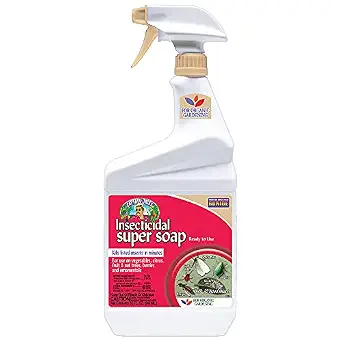 |
| Best Quality Built to a higher standard if you want something more solid | Atticus Contraxio SC Spinosad Insecticide Concentrate (32 oz) |  |
| Best Value The sweet spot between price and what you get | Bonide Captain Jack's Deadbug Brew 16 oz Concentrate |  |
| Best Budget The cheapest option that still gets the job done reliably | Garden Safe Insecticidal Soap Spray, 32 oz |  |
| Highest Rated A top-rated pick with lots of positive feedback | Monterey Spinosad Insecticide, 32 oz Concentrate |  |
| Most Popular A crowd favorite that many people choose with confidence | Safer 5118-6 Insect Killing Soap Concentrate (16 fl oz) |  |
| Best Seller A high-volume bestseller chosen again and again | Bonide Captain Jack's Deadbug Brew Ready-to-Use Spray, 32 oz |  |
Bonide Captain Jack's Insecticidal Super Soap Ready-to-Use, 32 oz

| Unit Count | 32 Ounce |
|---|---|
| Item Form | Spray |
| Target Species | Insects |
| Active Ingredients | Potassium Salts of Fatty Acids, Spinosad |
| Specification Met | USDA |
Bonide Captain Jack's Insecticidal Super Soap is a ready-to-use spray that combines potassium salts of fatty acids with spinosad to control a wide range of insects on vegetables, ornamentals, container plants and in greenhouses. You apply it with the built-in spray nozzle, targeting foliage and directly contacting pests like aphids, mites and thrips or allowing leaf-feeding insects to ingest treated tissue. The formula is fast-acting and USDA-approved for organic gardening, so it fits into eco-minded routines and can also help manage powdery mildew. Practical benefits include broad pest coverage, convenience of a pre-mixed bottle and a nozzle that simplifies spot treatment around the yard. Limitations are that it is a contact and ingestion product so thorough coverage is required for good control and repeated applications may be needed for heavy infestations; it is not a systemic long-term soil treatment. Users should also follow label directions for application intervals and avoid spraying when pollinators are active.
Best for: Gardeners who want a convenient, organic-approved spray to manage common foliage pests in vegetable beds, ornamentals and containers and who value an easy, one-step application.
Less Ideal for: Large-scale growers seeking long-lasting systemic control or people wanting a single-application cure for severe, established outbreaks should consider professional or systemic alternatives.
- Ready-to-use spray with an easy nozzle for spot treatments
- Contains spinosad plus soap for both contact and ingestion control
- Labeled and suitable for organic gardening
- Controls a broad list of outdoor pests including mites, aphids and thrips
- Requires thorough coverage and repeat applications for heavy infestations
- Not systemic so it will not protect new growth from later infestations
Verdict: A convenient, organic-approved ready-to-use spray that effectively targets thrips and other common garden pests when applied thoroughly.
Atticus Contraxio SC Spinosad Insecticide Concentrate (32 oz)

| Item Form | Liquid |
|---|---|
| Liquid Volume | 32 fluid ounces |
| Active Ingredients | Spinosad |
| Specification Met | EPA |
| Target Species | Insects |
Contraxio SC is a suspension concentrate formulated with 11.6% spinosad that delivers fast, targeted control of thrips and many other chewing and sucking pests in lawns, ornamentals, and edible gardens. You mix small measured amounts with water and spray foliage or drench specific areas according to label rates; for thrips the product recommends low-rate foliar sprays that reach upper and lower leaf surfaces. Its on-contact action often stops visible feeding within minutes and typically achieves full control in 1 to 3 days, with up to two weeks of residual activity against pests that ingest treated tissue. The product is labeled for broad use across turf, landscape ornamentals, greenhouse/nursery, and 100+ edible crops, which makes it useful for performance-minded gardeners who need one solution for multiple areas. Limitations to note are that it is a concentrated liquid that requires careful measuring and mixing and you must follow label directions for crop-specific rates and reentry intervals; also environmental conditions and very large infestations can reduce how quickly populations collapse. Pets may re-enter only after sprays are fully dry so plan applications accordingly.
Best for: Gardeners and turf managers who prioritize fast, reliable knockdown of thrips and other pests across multiple planting areas and want a single versatile product for edible and ornamental uses.
Less Ideal for: Casual users who prefer ready-to-spray formulations or those unwilling to follow specific label mixing rates and application precautions.
- Fast on-contact activity that typically stops feeding within minutes and controls pests in 1–3 days
- Effective against more than 50 pests including thrips, mites, caterpillars, and leafminers
- Versatile label for use on turf, ornamentals, greenhouse/nursery plants, and 100+ edible crops
- Provides up to two weeks of residual control against pests that ingest treated tissue
- Concentrated liquid requires precise measuring and mixing to achieve correct application rates
- Performance can be reduced in very heavy infestations or under unfavorable environmental conditions
Verdict: Choose Contraxio SC when you need a high-performance, spinosad concentrate that quickly knocks down thrips and protects edible and ornamental plantings with short residual control.
Bonide Captain Jack's Deadbug Brew 16 oz Concentrate

| Unit Count | 16 Ounce |
|---|---|
| Item Form | Spray |
| Target Species | Insects |
| Active Ingredients | Spinosad(A Mixture Of Spinosyna And Spinosad D) |
| Manufacturer | Bonide Products LLC |
Bonide Captain Jack's Deadbug Brew is a concentrated insecticide that mixes with water and is applied with a trigger, hand pump, backpack, or hose-end sprayer to control caterpillars, thrips, beetles, borers, and other listed pests on vegetables, fruits, flowers, and ornamentals. Its active ingredient, spinosad, is a naturally derived bacterial compound approved for organic gardening and selectively targets many chewing and immature insects while having less impact on certain predatory beneficials. The concentrate format means a single bottle covers multiple applications when diluted to label rates, which is convenient for medium and large beds. Practical users will appreciate that it works on common thrips and fits into regular spray routines, but it requires careful mixing, adherence to label directions, and reapplication timing for best control. Also be aware that spinosad can still affect some non target insects and should be applied when pollinators are not active.
Best for: Gardeners who prioritize effective, organic-approved pest control and want a concentrated product that treats thrips and other chewing pests across vegetables and ornamentals while fitting into existing spray routines.
Less Ideal for: People who need an immediate ready-to-use spray for a single small potted plant or who avoid any pesticide exposure and prefer purely mechanical pest removal methods.
- Contains spinosad, a naturally derived active ingredient approved for organic gardening
- Concentrated 16 oz formula dilutes for multiple applications, reducing trips to buy more
- Labeled for use on a wide range of edible and ornamental plants including vegetables and fruits
- Compatible with common application methods: trigger, hand-held, backpack, or hose-end sprayers
- Requires careful mixing and strict adherence to label instructions
- Can still affect some non target insects so timing of applications matters
Verdict: A concentrated, organic-approved spinosad spray that is a practical choice for gardeners needing targeted control of thrips and other common garden pests.
Garden Safe Insecticidal Soap Spray, 32 oz

| Item Form | Spray |
|---|---|
| Target Species | Insects |
| Liquid Volume | 32 fluid ounces |
| Active Ingredients | Potassium Salts Of Fatty Acids |
Garden Safe Insecticidal Soap is a ready-to-use contact spray designed to kill soft-bodied pests on contact, including thrips, aphids, whiteflies and mites. It is typically used by thoroughly spraying all plant surfaces, paying special attention to undersides of leaves, and can be applied to vegetables, fruit trees, ornamentals and greenhouse crops up to the day of harvest. The formula relies on fatty acid salts that break down insect outer coatings rather than systemic activity, so you will see quick knockdown only where the spray contacts pests. Practical benefits include no mixing, safe use on edibles when directions are followed, and suitability for indoor and outdoor use. Important limitations are that it provides no residual or systemic protection and requires repeated applications and direct coverage to control infestations; it can also harm aquatic invertebrates if it runs off into water. For thrips control, it works best as part of an integrated routine with careful coverage and frequent reapplication.
Best for: Gardeners looking for an inexpensive, easy-to-use spray to knock down thrips and other soft-bodied pests quickly, especially on edible plants where harvest-day use is important.
Less Ideal for: Users who need long-term residual control or prefer a single systemic treatment that protects new growth should consider other options.
- Ready-to-use formulation requires no mixing
- Labeled for use on edibles up to the day of harvest
- Effective on contact against thrips and other soft-bodied pests
- Suitable for indoor, outdoor and greenhouse use
- Only kills pests on direct contact and offers no systemic or long-lasting residual control
- Requires thorough coverage and frequent reapplication to manage heavy infestations
Verdict: A budget-friendly, ready-to-use contact spray that provides quick knockdown of thrips when plants can be thoroughly covered.
Monterey Spinosad Insecticide, 32 oz Concentrate

| Unit Count | 32 Fluid Ounces |
|---|---|
| Item Form | Oil |
| Target Species | Insects |
Monterey Spinosad is a 32-ounce concentrate built around spinosad, a naturally derived bacterial insecticide that targets many chewing and leaf-feeding pests. It is OMRI listed for organic gardening and formulated to be mixed into trigger, handheld, backpack, or hose-end sprayers, which makes it flexible for spot treatments or larger-area applications. The product lists fast knockdown and minimal odor, so you can treat ornamentals, vegetables, citrus and fruit trees with less disruption. Practical benefits include broad-spectrum control of caterpillars, leafminers, thrips and other common garden pests and the ability to integrate into an organic program. Safety directions and protective-wear recommendations are included, so users should expect to follow standard mixing and application precautions. The concentrate format requires dilution and correct calibration of sprayers, so occasional gardeners who prefer ready-to-use bottles may find it less convenient. Also, as with all contact insecticides, thorough coverage is needed for best results and multiple applications may be required for heavy infestations.
Best for: Gardeners who prioritize reliable, organically acceptable control of common chewing and leaf-feeding pests and who are comfortable diluting concentrates and using spray equipment.
Less Ideal for: Casual gardeners who want a ready-to-use product with minimal mixing or those who need systemic, long-residual control without frequent reapplication.
- Made with spinosad, an effective naturally derived insecticide for many chewing and leaf-feeding pests
- OMRI listed for use in organic gardening programs
- Concentrate format works with trigger, handheld, backpack, or hose-end sprayers for flexible application
- Fast acting and low odor, reducing disruption during treatment
- Concentrate requires dilution and accurate sprayer calibration, which adds setup time
- Provides contact control so complete coverage and repeat applications may be necessary for severe infestations
Verdict: Choose this spinosad concentrate when you want reliable, organic-compatible control of thrips and other chewing or leaf-feeding garden pests using adjustable spray equipment.
Safer 5118-6 Insect Killing Soap Concentrate (16 fl oz)

| Unit Count | 16 Fluid Ounces |
|---|---|
| Item Form | Spray concentrate |
| Target Species | Insects (aphids, whiteflies, thrips, spider mites, mealybugs) |
| Active Ingredients | Potassium Salts of Fatty Acids |
Safer 5118-6 is a concentrated insecticidal soap formulated from potassium salts of fatty acids to kill soft-bodied pests like aphids, whiteflies, mealybugs, spider mites, and thrips on contact. You mix the concentrate with water to make spray solution and apply thoroughly to plant surfaces, repeating every 7 to 10 days or sooner while pests are active. Because it works by breaking down the insect outer coating, it provides quick knockdown of visible infestations and is safe to use up until harvest when used as directed. Notable features include OMRI listing for organic gardening and the ability of a single 16 oz bottle to produce several gallons of spray for garden-scale use. Important limitations are that it is a contact killer so multiple applications and good coverage are required for full control, and it should not be applied in the heat of the day or above 90 degrees F to avoid leaf damage on sensitive plants.
Best for: Gardeners who prioritize organic-compliant pest control and want a proven, broad-spectrum contact spray for regular treatment of ornamental and edible plants, including focused control of thrips.
Less Ideal for: People who need a systemic or long-residual insecticide or who want one-application control for heavy infestations should consider other options.
- OMRI listed formula suitable for organic gardens
- Concentrated 16 fl oz bottle produces several gallons of spray for multiple applications
- Effective contact killer for a broad list of soft-bodied pests including thrips and spider mites
- Breaks down naturally within about a week so it does not linger in the environment
- Only kills on contact so thorough coverage and repeat treatments are required
- Can cause leaf damage if applied during hot conditions or above 90 degrees F
Verdict: Buy this if you want an organic-compliant, contact spray concentrate that quickly knocks down thrips and other soft-bodied pests when used with thorough coverage and repeat applications.
Bonide Captain Jack's Deadbug Brew Ready-to-Use Spray, 32 oz

| Liquid Volume | 32 fluid ounces |
|---|---|
| Item Form | Spray |
| Target Species | Insects |
| Active Ingredients | Spinosad 0.5% |
Bonide Captain Jack's Deadbug Brew is a ready-to-use insect spray built around spinosad to control caterpillars, thrips, beetles, leaf miners and other listed pests on vegetables, fruits and ornamentals. You use it like a typical garden spray: shake, then thoroughly coat tops and undersides of leaves with the nozzle provided. The product is approved for organic gardening and is designed to have minimal impact on many predatory beneficial insects when used as directed, which helps preserve natural pest control in the garden. The 32 ounce trigger bottle is convenient for spot treatments and small beds without mixing concentrates. Limitations are that it is a contact and stomach poison so coverage matters for good control and repeated applications may be needed for heavy infestations; it also carries standard safety cautions and should be kept away from children. For gardeners wanting an easy, organic-approved option to manage thrips and similar pests, this delivers a practical, familiar solution.
Best for: Gardeners who prioritize low-risk, organic-approved pest control and want a simple, ready-to-use spray for spot treatment of thrips and other common garden insects.
Less Ideal for: Large-scale growers or those seeking a long-lasting systemic product for preventive protection should consider concentrated or systemic alternatives.
- Ready-to-use trigger spray requires no mixing and is easy to apply to plants.
- Contains spinosad, an organically approved active ingredient effective against thrips and common foliage pests.
- Labeled for use on a wide range of vegetables, fruits, flowers and ornamentals.
- Formulation is designed to have limited impact on many predatory beneficial insects when directions are followed.
- As a contact/stomach-active product it requires thorough coverage and may need repeat applications for heavy infestations.
- Not a systemic treatment so it will not protect new growth once applied.
Verdict: A convenient, organic-approved ready-to-use spinosad spray that reliably controls thrips and similar foliage pests when applied thoroughly.
Choosing the Right Insecticide for Thrips: Key Factors to Consider
Mode of Action and Resistance Management
Thrips reproduce quickly and can develop resistance if the same chemistry is used repeatedly. Choose insecticides with clearly stated modes of action and rotate among different classes across treatment cycles to reduce selection pressure. Combining a fast-acting contact material with a different residual or systemic class can help knock down adults while suppressing future generations.
Understanding whether a product is contact-only, systemic, or has translaminar movement changes how and where you apply it. Systemic materials move within plant tissues and can protect new growth, while contact sprays require thorough coverage of all leaf surfaces where thrips hide. Read labels for resistance-group codes and plan rotations accordingly.
Plant Safety and Phytotoxicity Risk
Many effective thrips insecticides can cause leaf burn or blossom injury under heat or if applied at wrong rates. Consider the sensitivity of your plants-tender new foliage, thin-leaved ornamentals, and plants in full sun during hot weather are at higher risk. Choose formulations labeled safe on your crop type and follow timing restrictions for blooming plants and edible crops.
Tank-mixing with surfactants or applying during midday heat increases phytotoxicity risk. A small test spray on a few leaves and waiting 48 hours for a reaction can prevent widespread damage. When in doubt, favor products with explicit plant-safety guidance for ornamentals or vegetables.
Application Method and Equipment Needs
Different products require different application approaches: foliar sprays, systemic drenches, soil incorporation, or targeted stem injections. For home gardeners, ease of use with a handheld pump sprayer or hose-end applicator is important. Choose materials that are straightforward to mix, label-compatible with common sprayers, and do not need complex calibration.
Coverage matters for thrips because they hide on undersides of leaves and in buds. A product that requires only a light mist may be easier to use but might not reach hidden insects. Consider whether you can achieve the spray coverage the label recommends before selecting a product.
Timing, Residual Activity, and Reapplication Interval
Thrips populations can rebound quickly from eggs or migrating adults, so residual activity and recommended reapplication intervals determine how often you must treat. Short-residual contact products may require frequent reapplications during peak infestation, increasing labor and potential plant stress. Longer-residual or systemic options reduce treatment frequency but may have more restrictions for edible crops or beneficial insects.
Plan treatments to target early nymph stages when control is easier. Check label guidance on rainfastness and interval timing to align treatments with weather and bloom periods.
Spectrum of Activity and Impact on Beneficials
Broad-spectrum products will reduce thrips but also harm predatory mites, lacewings, and other beneficial insects that naturally suppress thrips. If you rely on biological control, choose selective materials or reduced-risk options that spare predators. In enclosed settings like greenhouses, select products compatible with integrated pest management programs.
When using broad-spectrum chemistries, plan spot treatments and minimize bloom sprays to protect pollinators and natural enemies. Consider adding biological or botanical options as part of a rotation to preserve beneficial populations.
Safety for People and Pets
Home gardeners should weigh toxicity labels and re-entry or harvest intervals. Some insecticides require the treated area to be off-limits for hours or days, while others have minimal re-entry restrictions. For vegetable gardens, follow preharvest intervals exactly to avoid residues on produce.
Keep pets away from treated areas until residues have dried or the label indicates it is safe. Choose formulations with clear, manageable safety instructions and appropriate personal protective equipment recommendations for routine garden use.
When to Treat Thrips Versus Using Cultural Controls
Not every thrips sighting requires an insecticide. Inspect buds, new growth, and the underside of leaves to determine population levels. Low numbers can sometimes be held in check with sticky traps, increased humidity, and removal of heavily infested foliage.
Use insecticides when you see active feeding damage, widespread stippling, or when thrips are transmitting viruses. Integrating cultural tactics before and after chemical treatments improves long-term control and reduces the number of sprays needed.
- Use blue or yellow sticky traps to monitor adult activity
- Improve air circulation and reduce plant stress to make plants less attractive
- Remove heavily infested shoots to reduce breeding sites
Application Tips to Reach Hidden Thrips
Thrips often shelter on leaf undersides, within flowers, and in tight leaf axils. Effective spray technique is as important as product choice. Use a fine-to-medium spray and tilt foliage to reach undersides where possible. Treating in the evening or early morning can improve contact while avoiding midday heat.
For systemic materials, soil drench or root uptake ensures new growth is protected, but drenches take longer to provide knockdown. For contact products, ensure thorough coverage and repeat applications according to label directions to catch newly hatched nymphs.
- Test spray on a small area to check for phytotoxicity
- Wear appropriate protective gear and avoid windy conditions
- Follow label mixing directions precisely for best coverage
Integrating Biological and Botanical Options
Biological controls and botanicals can be part of an integrated program against thrips. Predatory mites and predatory bugs can reduce populations in ornamental beds and enclosed spaces. Botanical insecticides often have lower persistence and are safer for beneficials but may require more frequent applications.
Combine selective chemistries with biological agents when possible. Avoid broad-spectrum sprays during release periods for predators and choose tank mixes that are labeled compatible with natural enemies.
- Release beneficial predators in sheltered or greenhouse settings
- Use botanical sprays for spot treatment and during bloom when pollinators are active
- Monitor predator populations before switching to a broad-spectrum product
Safe Use Around Edible Crops and Blooms
If you grow vegetables or flowering ornamentals, pay close attention to preharvest intervals and bloom restrictions. Some insecticides are not labeled for use on crops that will be eaten soon after treatment or during full bloom because of pollinator risk.
Choose products with short preharvest intervals for kitchen gardens and avoid treatments during peak pollinator activity. Rinsing produce according to label guidance helps reduce surface residues.
- Apply treatments when pollinators are least active, typically early morning or late evening
- Observe label preharvest intervals before harvesting fruits or vegetables
- Use targeted spot applications to minimize exposure of flowers
Record-Keeping and Monitoring Post-Treatment
Keep notes on treatment dates, product chemistry, application rates, and observed effects. Monitoring after treatment will tell you whether a rotation is needed and how quickly populations rebound. Photographs and trap counts are useful for tracking progress over a season.
If thrips return quickly, review timing, coverage, and whether eggs or alternate hosts are present. Good records support better resistance management and more effective long-term strategies.
- Mark application dates on a calendar and set reminders for follow-up scouting
- Use sticky trap counts to compare pre- and post-treatment activity
- Rotate chemistries when repeat applications are necessary
How We Chose the Best Insecticide for Thrips
We evaluated insecticides for thrips using criteria that reflect real garden performance and safety. Primary filters included proven efficacy against thrips in foliar or contact applications and clear mode-of-action information so gardeners can rotate chemistries. We checked plant safety on common garden hosts, giving attention to systemic versus contact activity and any restrictions for blooms, edible crops, or tender foliage. Application practicality was another key filter: products had to be usable in small-scale settings with standard spray equipment or drench options. Persistence on foliage and rainfastness were measured to estimate reapplication intervals. We excluded broad, poorly defined general insect controls with no thrips-specific data and products marketed only for industrial or commercial agriculture without clear home-garden directions. Final selection balanced rapid knockdown options, residual controllers, biological or reduced-risk materials, and formulations suited to sensitive plants. The scoring dimensions reflect these priorities and guided the shortlist.
FAQ
How quickly will an insecticide reduce thrips numbers?
Response time depends on the product type. Contact sprays can knock down active adults within a day or two, while systemic options may take several days to move into new growth. Expect follow-up treatments to address eggs and newly hatched nymphs.
Can I spray during bloom without harming pollinators?
Often it depends on the product. Some materials have bloom restrictions or long pollinator-risk windows. If treating during bloom is necessary, use targeted spot treatments in the evening and select materials labeled as low risk to pollinators when possible.
Will water alone or insecticidal soaps control thrips?
High-pressure water sprays and insecticidal soaps can dislodge and kill many thrips on contact and are useful for light infestations. They require thorough coverage and repeated applications because they have little residual activity and do not affect eggs.
How should I rotate chemistries to prevent resistance?
Rotate products with different mode-of-action groups between treatment cycles. Avoid repeating the same class for consecutive generations and alternate fast-acting contact materials with systemic or botanical options to reduce selection pressure.
Are natural or botanical insecticides effective against heavy infestations?
Botanical options can be part of a program but often lack the residual activity needed for heavy infestations. They work best as spot treatments or in combination with other methods and may require more frequent applications.
Can thrips develop resistance to reduced-risk products?
Resistance development is possible with any repeated selection pressure. Reduced-risk products with novel modes of action tend to have lower resistance history, but rotation and integrated tactics remain important to maintain long-term effectiveness.
Final Verdict
Choosing the best insecticide for thrips depends on balancing rapid knockdown, plant safety, and disruption to beneficial insects. Prioritize the mode of action, application method, and phytotoxicity risk for the plants you grow. Rotate chemistries, integrate cultural and biological controls, and record treatments to maintain control while reducing resistance risk. When in doubt, select an option that matches your crop type and application capability, then monitor results and adapt your plan based on observed efficacy and plant response.
