

Note: This article contains affiliate links. If you click on these links and make a purchase, I may earn a small commission at no extra cost to you. This helps support my research and content. Read my full affiliate disclosure here.
A well-chosen lawn edging garden shovel makes the difference between ragged borders and a neat, professional-looking yard. If you spend time defining beds, trimming turf edges, or digging narrow trenches for edging material, the right shovel saves effort and protects grass and plants. This guide covers our shortlisted top picks for Best Lawn Edging Garden Shovel and explains the practical features that matter in real garden work. We evaluate build durability, blade geometry, handle comfort, and ease of use to help you pick a tool that fits your yard and workload. Read on for focused guidance before you inspect individual options.
Top Picks at a Glance
| Best Overall The best all-around choice for most situations | CKLT 40-inch One-Piece Manual Lawn Edger with Serrated Spring Steel Blade |  |
| Best Quality Built to a higher standard if you want something more solid | Fiskars 38.5" Steel Long-Handled Garden Edger |  |
| Best Value The sweet spot between price and what you get | KYEEN-TOOLS Half Moon Lawn Edger with Serrated Blade and T-Handle |  |
| Best Budget The cheapest option that still gets the job done reliably | Orcela Half Moon Lawn Edger with T-Grip Handle, 37 in |  |
| Most Popular A crowd favorite that many people choose with confidence | CKLT 41in Lawn Border Edger with Spring Steel Serrated Blade |  |
| Best Seller A high-volume bestseller chosen again and again | CKLT 41in One-Piece Manual Lawn Edger with Serrated Spring Steel Blade |  |
CKLT 40-inch One-Piece Manual Lawn Edger with Serrated Spring Steel Blade

| Blade type | Serrated spring steel blade |
|---|---|
| Construction | One-piece manganese steel tube |
| Handle | Rubber grip |
| Fasteners | 304 stainless steel screws |
The CKLT 40-inch hand edger is a straightforward one-piece tool built for clean lawn and garden edges. Its serrated spring steel blade cuts into soil and turf with less effort than a plain blade, and the 40-inch shaft reduces stooping so you can work longer with less strain. One-piece manganese steel construction and an inserted handle aim to resist bending during heavier use, while stainless fasteners and rust-resistant materials keep the tool low-maintenance. The rubber grip improves comfort and control when levering the half-moon blade along sidewalks, driveways, and flower beds. Because it is a manual edger, it is best for routine edging and light-duty trenching rather than large commercial jobs or very compacted ground where a powered tool or sharpened replacement blade would perform better. It ships ready to use with a protective strip for the blade, and its simple design makes storage and cleaning easy for typical homeowners.
Best for: Homeowners who want a durable, low-maintenance manual edger for regular borders, sidewalks, and flower beds and who value ease of use over mechanized speed.
Less Ideal for: Landscapers or users who need to edge large properties quickly or break up extremely compacted ground should choose powered or specialized heavy-duty equipment instead.
- Serrated spring steel blade designed to maintain sharpness and cut soil efficiently
- One-piece manganese steel construction for rigidity and reduced risk of bending
- 40-inch length reduces bending and improves leverage for extended use
- Rust-resistant materials and stainless steel screws simplify cleaning and upkeep
- Manual operation can be slow on large areas or very compacted soil
- Not suited for commercial heavy-duty edging where powered equipment is preferred
Verdict: A durable, low-maintenance manual edger that delivers precise, comfortable edging for typical home lawns and garden borders.
Fiskars 38.5" Steel Long-Handled Garden Edger

| Material Type | Alloy Steel |
|---|---|
| Item Type Name | 38.5" Steel Edger |
| Power Source | manual |
| Operation Mode | Manual |
The Fiskars 38.5" Steel Edger is a heavy-duty manual tool built for performance-oriented gardeners who need clean, repeatable lawn borders. Its welded 14-gauge hardened steel blade and large foot platform let you drive the blade into compact or turf-covered soil with focused force while the sharpened edge slices through grass for a neat cut. The long steel handle and T-grip enable two-handed control so you can apply more power without kneeling or stooping. Powder-coated steel resists rust and is easy to wipe clean after use. Because it is a straightforward manual edger there is no motor or moving parts to maintain, but it does require physical effort on very hard ground and periodic blade sharpening to keep the best results. For routine edging along sidewalks, garden beds, and pathways it delivers precise, durable performance, though users working in rock-heavy soil may find a powered alternative easier to use.
Best for: Gardening homeowners who prioritize durable, precise manual edging and want a tool that delivers clean borders without power equipment.
Less Ideal for: People with limited upper-body strength or yards with frequent buried rocks who would benefit from a powered or motorized edger.
- Welded 14-gauge hardened steel blade for long-lasting cutting performance
- Large foot platform concentrates force for easier penetration of compacted turf
- Long handle with T-grip gives two-handed control and reduces bending
- Powder-coated steel finish resists rust and cleans easily
- Requires physical effort and blade sharpening for best results on very hard or rocky soil
Verdict: Choose this Fiskars steel edger for reliable, high-performance manual edging that produces clean, long-lasting lawn borders.
KYEEN-TOOLS Half Moon Lawn Edger with Serrated Blade and T-Handle

| Blade material | High-carbon steel |
|---|---|
| Handle length | 38" |
| Blade type | Serrated |
| Weight | 2.75 pounds |
This KYEEN-TOOLS half-moon edger is a straightforward manual tool for creating crisp lawn and bed edges. The serrated high-carbon steel blade and weighted half-moon design slice through turf and compacted soil when used with controlled foot pressure, while the wide footrest helps stabilize each cut. A 38 inch T-handle keeps you more upright and reduces hand strain during longer edging sessions, and the rust-resistant coating simplifies cleaning and storage. It works well for straight and curved edges around sidewalks, flower beds, and decorative borders and can handle minor roots and moderately compacted soil without mechanical assistance. Limitations are the usual ones for manual edgers: it requires physical effort for long runs or very hard ground, and blade maintenance—cleaning and periodic sharpening—is necessary to keep performance consistent. The tool is compact to store but not suited to fully replacing powered sod cutters for large projects.
Best for: Buyers who want a durable, low-maintenance manual edger to create precise edges around lawns and beds and who prefer a simple tool that minimizes bending and hand strain.
Less Ideal for: People with large lawns, very rocky soil, or those who prefer a powered solution for long continuous edging should consider a mechanical edger instead.
- Serrated high-carbon steel blade for easier cuts through turf and compacted soil
- Ergonomic T-handle reduces bending and hand fatigue during use
- Wide footrest and weighted frame provide stable, controlled edging
- Rust-resistant finish simplifies cleaning and extends usable life
- Manual operation requires significant physical effort for long runs or very hard ground
- Blade needs periodic sharpening and drying to prevent corrosion over time
Verdict: A sturdy, ergonomic manual half-moon edger that delivers precise, controlled edges for gardeners who prioritize durability and reduced bending.
Orcela Half Moon Lawn Edger with T-Grip Handle, 37 in

| Handle length | 37in |
|---|---|
| Blade material | Manganese steel |
| Grip type | Rubber T-grip |
This Orcela half-moon edger is a straightforward, no-frills tool for creating clean borders around sidewalks, driveways, and flower beds. The 37-inch handle and rubber T-grip let you work standing up for less bending, while the serrated manganese-steel blade slices through turf, compacted soil, roots, and small weeds. A wide footplate gives even leverage so you can press the blade steadily into the ground and keep a controlled line. Assembly is simple with the included hardware and two small wrenches. Practical strengths are its lightweight feel and focused design that make short edging jobs quick and predictable. Expect to apply body weight for tougher cuts and to sharpen or replace the blade over time if you use it on rocky or rooty ground. It lacks adjustable handle length and advanced ergonomic features found on premium models, but for routine border maintenance on small to medium lawns this tool delivers the essential performance at a budget-friendly level.
Best for: Buyers who want an inexpensive, effective manual edger for routine border work and prefer a simple tool that is quick to assemble and use.
Less Ideal for: People who need a heavy-duty professional edger for frequent commercial use or those who want powered or highly adjustable edging tools.
- Serrated manganese-steel blade cuts through turf, compacted soil, roots, and weeds
- T-grip handle and 37-inch length allow upright use to reduce bending
- Wide footplate provides stable, even leverage for controlled edging
- Includes assembly hardware and small wrenches for quick setup
- No adjustable handle length or advanced ergonomics for taller or shorter users
- Blade may require sharpening or replacement with heavy or frequent use
Verdict: A budget-friendly manual edger that delivers reliable, upright edging performance for routine home lawn border maintenance.
CKLT 41in Lawn Border Edger with Spring Steel Serrated Blade

| Material Type | Manganese Steel |
|---|---|
| Blade Type | Serrated Spring Steel |
| Footplate Width | 8-inch |
| Handle | Long Rubber Handle |
The CKLT 41in lawn edger is a straightforward manual tool for creating clean edges along driveways, sidewalks, and flower beds. It uses a serrated spring steel blade that resists bending and holds an edge longer than standard flat blades, and a rust-resistant finish that simplifies cleaning after use. The 8-inch wide footplate gives good leverage so you can apply steady pressure without awkward footing, while the long rubber handle improves reach and control for straight lines and smooth curves. Assembly is basic and guided with included fasteners and an L-shaped wrench. This is best for homeowners who prefer a quieter, eco-friendly alternative to powered trimmers and who want a durable hand tool for regular lawn maintenance. Limitations are those common to manual edgers: it requires physical effort for long runs and is slower than a powered trimmer for large properties, and deep compacted soil may need prior loosening for optimal cutting performance.
Best for: Homeowners who want a reliable, low-maintenance hand tool to keep lawn and garden borders tidy without using powered equipment, and who value durability and precise, neat edging.
Less Ideal for: Large properties or commercial landscaping where faster, motorized edging is needed or where users have limited ability to perform physical yard work.
- Serrated spring steel blade holds a sharp edge and resists deformation
- Rust-resistant finish and water-resistant design for easier cleaning and durability
- 8-inch wide footplate provides good leverage for comfortable pressure application
- Long rubber handle improves reach and control for straight and curved edging lines
- Manual tool requires physical effort and is slower for large areas
Verdict: Choose this edger if you want a durable, low-tech tool that delivers crisp, precise lawn edges without power tools.
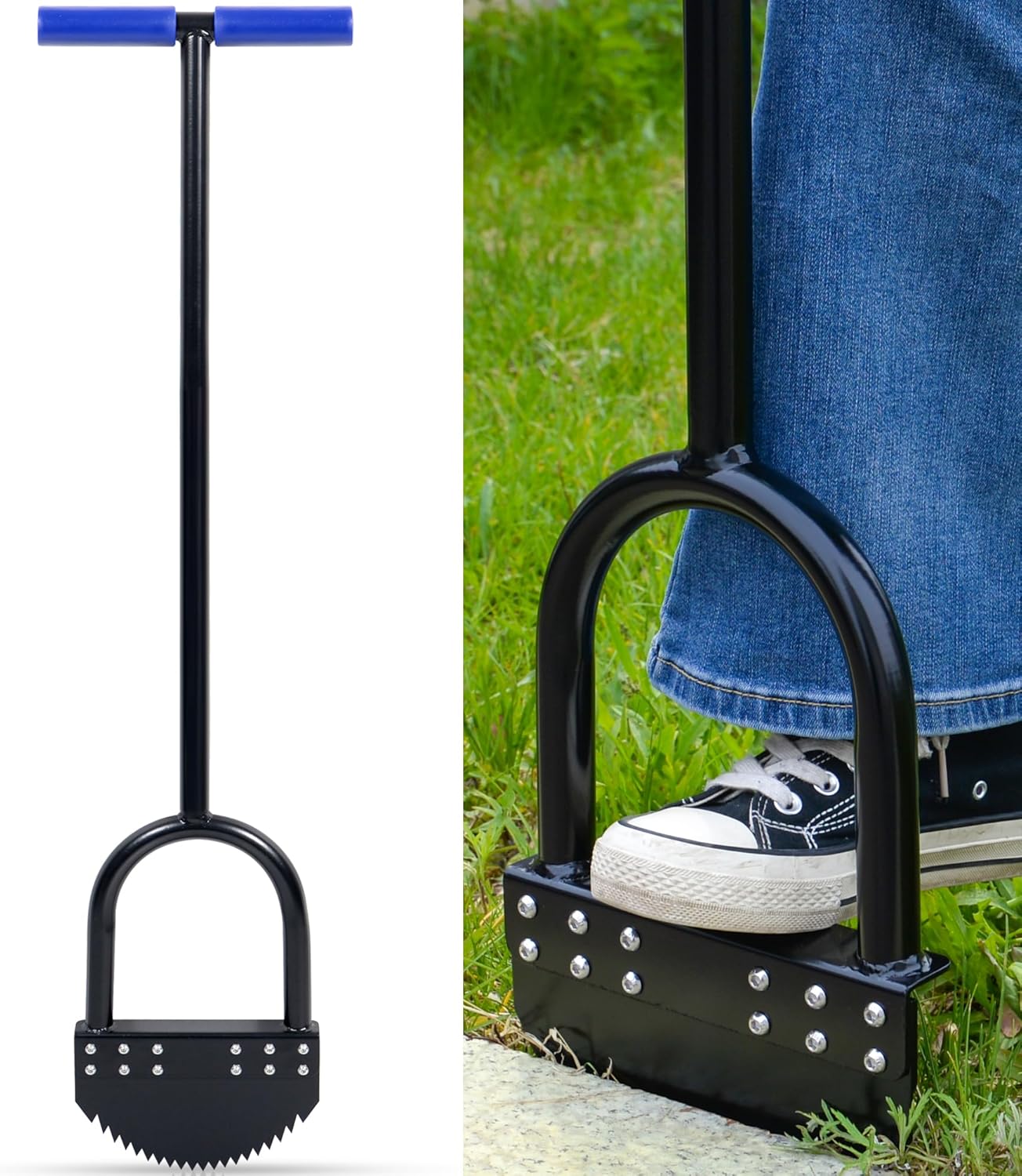
CKLT 41in One-Piece Manual Lawn Edger with Serrated Spring Steel Blade
| Material Type | Manganese Steel |
|---|---|
| Blade Type | Spring Steel Serrated |
| Footplate Width | 8-Inch Wide |
| Handle | Rubber Handle |
The CKLT 41-inch one-piece lawn edger is a straightforward, heavy-duty hand tool for creating crisp borders around lawns and planting beds. Its welded one-piece manganese steel shaft removes assembly and adds strength so the shaft resists bending during frequent use. The serrated spring steel blade is rust-resistant and holds an edge well, which helps cut through turf and soil more cleanly than a plain shovel edge. An 8-inch footplate provides extra leverage for comfortable pressure with any shoe size, and the rubber handle improves grip during repetitive steps. Typical uses include trimming edges along sidewalks and driveways, cutting shallow grooves for planting or irrigation, and refreshing established borders. Limitations are that it is a manual tool so it requires physical effort for compacted soil or heavy clay and it lacks adjustable features found on multi-part or telescoping edgers. For homeowners who prefer a simple, durable hand tool this model balances durability and cutting performance, but those needing power or mechanized speed should consider alternatives.
Best for: Homeowners who want a low-maintenance, robust manual edger for regular yard upkeep and tidy borders without fussing with assembly or complex controls.
Less Ideal for: People who need fast mechanized edging across large properties or who cannot perform repetitive manual tasks should consider powered or assisted edging tools instead.
- One-piece manganese steel construction for durability and no assembly required
- Serrated spring steel blade resists bending and stays sharper for cleaner cuts
- 8-inch wide footplate for improved leverage and comfortable use with most shoe sizes
- Rust-resistant blade and water-resistant design for easier cleaning and low maintenance
- Manual operation can be strenuous in compacted or heavy clay soils
- No telescoping or adjustable length for users who prefer variable handle reach
Verdict: Choose this edger if you want a simple, sturdy, no-assembly hand tool that delivers reliable, clean lawn edges with low maintenance.
Choosing the Right Lawn Edging Garden Shovel: Key Factors to Consider
Blade Shape and Width
Blade profile dictates how cleanly you can cut turf and define bed lines. Narrow, slightly tapered blades slice into turf more easily than wide, flat heads and reduce tearing of grass roots. A pointed or semi-pointed tip helps start a cut, while a straight or slightly curved cutting edge lets you pare back soil and undercut roots for a crisp edge.
Blade width also affects versatility. A very narrow blade is great for tight edging and trenching for small borders, while a slightly wider edging shovel can move more material when reshaping beds. Consider the typical job in your yard when choosing blade geometry.
Steel Grade and Thickness
Material quality determines how long the cutting edge will stay true under regular use. Thicker steel resists bending when you pry against compacted soil or roots, and higher-grade alloys take an edge better and tolerate sharpening. Look for blades made from durable carbon or tempered steel rather than thin stamped metal that may deform.
A balance is needed: overly heavy, thick blades increase fatigue, while very thin blades can warp. For edging work, moderate thickness combined with a hardened cutting lip is usually the best compromise between durability and manageability.
Handle Length and Ergonomics
Handle length affects leverage and posture. Taller handles let you work upright and use leg and hip power for long cuts, reducing back strain. Shorter handles can offer better control for detail work near plants or in tight spaces. The diameter and shape of the grip influence hand comfort-round shafts suit varied hand sizes, while flattened or contoured grips can reduce slipping.
Materials matter too. Wooden handles absorb shock and are easy to replace, while fiberglass and composite shafts resist rot and can be lighter. Consider your height, typical working posture, and whether you prefer shock absorption or low maintenance when selecting a handle type.
Shaft Attachment and Construction
The joint between blade and shaft is where most shovel failures occur. A welded socket or generous riveted tang provides better long-term strength than thinly attached heads. For edging shovels that get pried against roots and curbs, a secure connection keeps the tool working under lateral stress.
Check whether the blade is forged as part of the shaft or attached with robust fasteners. Reinforced collars or gussets at the junction add durability, and replaceable heads or handles can extend a tool's service life if one component wears out.
Weight, Balance, and Fatigue
A tool that is too heavy causes fatigue and limits endurance on longer jobs. Conversely, an underweighted shovel may feel flimsy when cutting dense turf. Balance between head and shaft helps control the cut and reduces wrist strain. Heavier heads can assist in cutting through sod by using gravity, while lighter designs are easier to swing for repeated passes.
Think about how long you will use the shovel in a session and whether you will need to lift soil frequently. Ergonomic choices that reduce vibration and distribute force evenly will keep you working longer with less discomfort.
Ease of Sharpening and Maintenance
A sharp edge makes cleaner cuts and reduces plant damage, so consider how easy the blade is to sharpen. Simple bevels and accessible cutting lips are straightforward to regrind with a file or grinder, whereas complex profiles can be harder to maintain. Protective coatings slow rust but may need occasional touch-up.
Also consider replaceability and corrosion resistance. A blade that accepts routine sharpening and resists rust will stay serviceable for many seasons with minimal upkeep.
When to Use a Lawn Edging Garden Shovel
Use an edging shovel when you need crisp borders between turf and beds, to cut clean turf lines before installing edging material, or when creating narrow trenches for irrigation or low-profile edging. These shovels are best for linear work rather than moving bulk material.
They excel at paring back sod, severing root bands, and creating planting trenches a few inches wide. If you frequently redefine beds or keep formal paths, an edging shovel speeds the job and produces a tidier result than a generic garden spade.
- Cutting clean turf edges for mowing and planting
- Creating narrow trenches for edging material
- Separating root masses along bed lines
Using Proper Technique to Protect Your Lawn
Stand on one side of the border and sink the blade vertically, using body weight rather than forceful twisting. For long runs, work in short sections and remove a small strip of turf at a time to avoid tearing. After cutting, use a flat spade or edging tool to undercut the sod for a clean lift.
Finish by pressing the soil back and tamping the edge so grass roots are less exposed. Regular touch-ups every few months reduce the need for heavy corrective work in the future.
- Start with vertical cuts then undercut for neat removal
- Use body weight and leg muscles to avoid back strain
- Tamp and tidy the finished edge to protect exposed roots
Maintenance Tips to Extend Tool Life
Keep the blade clean and dry after each use to slow corrosion. Wipe off soil and remove plant debris; occasionally sand minor rust spots and apply a light oil or wax coating to protect exposed metal.
Sharpen the cutting lip periodically with a mill file or grinder to maintain a crisp bevel. Inspect the handle-to-head junction and tighten or replace loose fasteners. Store the shovel in a dry, covered area and consider hanging it to avoid contact with wet ground.
- Dry and oil the blade after use
- Sharpen the cutting edge when it starts to drag
- Check and reinforce handle attachments annually
Alternatives and Complementary Tools
Depending on the job, you may combine an edging shovel with a half-moon edger for ornamental beds or a trenching tool for deeper channels. Power edges and string trimmers can clean visible turf lines faster but do not remove the sod strip; a shovel is still useful for defining durable edges.
For very narrow or decorative edging, a cobbler-style edger or a hand trowel may be more accurate. Choose tools that complement the edging shovel rather than replace it when a clean, long-lasting border is the goal.
- Half-moon edgers for ornamental, curved beds
- Trenching tools for deeper or wider channels
- Hand trowels for precise small-edge work
Sizing the Right Shovel for Your Yard
Match blade length and handle height to the scale of tasks. For large yards with long runs of edging, longer-handled shovels reduce bending. For small urban yards or raised beds, a shorter handle and narrower blade offer better maneuverability.
Consider storage and transportation as well. If you have limited space or need to carry tools to multiple sites, a mid-length shaft and a compact blade balance portability and functionality.
- Long handles reduce bending on long runs
- Shorter shafts improve control in tight spaces
- Blade width should align with typical trench sizes
How We Chose the Best Lawn Edging Garden Shovel
We limited our selection to shovels specifically designed or commonly used for lawn edging tasks and narrow-bed digging. Primary evaluation criteria were blade geometry and edge holding because a narrow, sharp profile controls cuts and resists tearing turf. Durability and material quality were assessed to ensure blades hold shape against recurring soil and root contact. Handle ergonomics and length were included because leverage and hand comfort determine how long you can work without fatigue. Shaft and head attachment strength were checked to avoid failures when levering against compacted soil. Practical considerations like weight balance and ease of sharpening also guided selection. We excluded general-purpose digging shovels that lack a narrow, tapered blade profile or edging tools that are single-purpose without a digging blade. We did not consider decorative or novelty items that sacrifice functionality for looks. The final shortlist emphasizes useful dimensions, robust construction, and ergonomic handling suited to repeated lawn-edge maintenance.
FAQ
How deep should I cut when edging lawn beds?
Usually cutting 2 to 4 inches deep is sufficient to sever turf roots and create a visible edge. Deeper cuts may be needed if you are installing edging material or removing a thick sod strip.
Can a regular digging shovel work for lawn edging?
A regular digging shovel can be used in a pinch but often tears turf because of a wider blade profile. Edging shovels are narrower and shaped to produce cleaner cuts and easier paring of sod.
How often should I sharpen an edging shovel?
Sharpening frequency depends on use, but many gardeners sharpen lightly once or twice per season and more often if you hit roots or compacted soil regularly. A dull blade makes tearing more likely, so tune it when you notice increased effort.
Is a pointed or flat tip better for lawn edging?
Pointed tips are useful for starting cuts and handling compacted ground, while flat or squared lips are better for creating straight, uniform edges. Choose the profile that matches the typical conditions and edge style you prefer.
What handle material holds up best outdoors?
Fiberglass and composite shafts resist rot and weathering better than wood, and they are often lighter. Wooden handles absorb shock and are easy to replace, but they require more maintenance to avoid splitting and decay.
Final Verdict
Prioritize blade geometry and durable construction when choosing a lawn edging garden shovel, because those features determine how cleanly you can cut turf and how long the tool lasts. Balance steel strength with manageable weight and choose a handle length that keeps your posture comfortable during long runs. Decide whether you need a narrow, precision cutting profile or a slightly wider blade for moving more material. With those tradeoffs in mind, pick the shovel that best matches your yard size, the frequency of edging, and how much maintenance you want to do on the tool itself.
