

Note: This article contains affiliate links. If you click on these links and make a purchase, I may earn a small commission at no extra cost to you. This helps support my research and content. Read my full affiliate disclosure here.
Choosing the right organic fertilizer for houseplants matters because indoor containers have limited soil and plants quickly use up available nutrients. The wrong feed can cause salt buildup, leaf burn, or weak growth, while the right choice restores vitality and supports steady development without harsh chemicals. This guide covers our shortlisted top picks across different formats and gardener needs, explaining how each option performs in real indoor growing situations. We evaluated products for nutrient balance, feeding convenience, and indoor safety. Read on to understand what to consider and how to match a fertilizer to your plants, light levels, and watering habits before the product details.
Top Picks at a Glance
| Best Overall The best all-around choice for most situations | Grow Queen Organic Liquid Indoor Plant Food 5-5-5 with Sea Kelp, 8 oz | 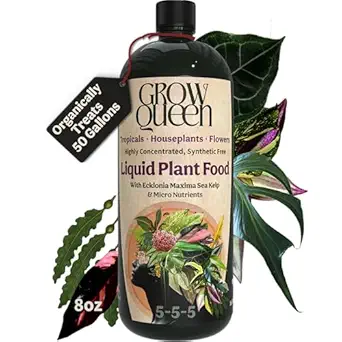 |
| Best Quality Built to a higher standard if you want something more solid | FoxFarm Big Bloom Liquid Plant Food, 16 fl oz |  |
| Best Value The sweet spot between price and what you get | Purived All-Purpose Liquid Houseplant Fertilizer, 16 fl oz (Makes 50 Gallons) |  |
| Best Budget The cheapest option that still gets the job done reliably | True Organic All Purpose Liquid Plant Food (16 fl oz) |  |
| Highest Rated A top-rated pick with lots of positive feedback | Pegmapri Organic Liquid Plant Food, 8.45 fl oz Concentrated |  |
Grow Queen Organic Liquid Indoor Plant Food 5-5-5 with Sea Kelp, 8 oz

| Item Form | Liquid |
|---|---|
| Mixing Ratio | 1:1 |
| Specific Uses For Product | Plant Growth |
| Application Method | Watering |
| Target Species | Plants |
Grow Queen's 8 oz concentrated liquid plant food is a balanced 5-5-5 organic fertilizer designed for regular use on houseplants, tropicals and container gardens. You mix one capful (about 4 ml) per gallon of water and either drench the soil or apply as a foliar mist every one to three weeks, which makes it straightforward to fold into a weekly watering routine. The formula includes Ecklonia maxima sea kelp and trace micronutrients, which help support greener foliage, stronger stems and root development without the burning risk of high-strength synthetic feeds. At the stated dilution the bottle treats up to 50 gallons so it will last a small collection for months. It is also labeled safe for aerated hydroponic systems when reservoirs are changed regularly, though it can form a film in stagnant water so fresh mixes are recommended. The product has an earthy ocean scent from real kelp and excludes perfumes and dyes, but that natural smell may bother some users. Directions are simple and the fertilizer pairs well with slow-release feeds for longer-term nutrition.
Best for: Buyers who want a simple, one-bottle solution to feed a mixed collection of houseplants regularly and prefer organic ingredients and seaweed benefits.
Less Ideal for: Growers who need precision nutrient formulas for specific flowering or high-yield vegetable crops or those who require ready-to-use sprays without mixing.
- Balanced 5-5-5 NPK suitable for general indoor plant feeding
- Concentrated formula stretches up to 50 gallons from an 8 oz bottle
- Contains sea kelp and micronutrients to promote foliage color and root strength
- Safe for regular use at recommended dilution with low burn risk
- Natural kelp scent may be noticeable indoors
- Can form a film in standing water so not ideal for non-aerated reservoirs
Verdict: A concentrated, easy-to-use organic 5-5-5 liquid fertilizer with sea kelp that provides straightforward, all-purpose nutrition for indoor plant collections.
FoxFarm Big Bloom Liquid Plant Food, 16 fl oz

| Item Form | Liquid |
|---|---|
| Specific Uses For Product | Organic |
| Application Method | watering can, sprayer, or drip system |
| Unit Count | 16 Fluid Ounces |
| Mixing Ratio | 4 |
Big Bloom is a ready-to-mix liquid plant food intended for flowering and fruiting plants; you dilute 4 tablespoons per gallon of water and apply with a watering can, sprayer, or through drip systems. The formula centers on natural inputs such as bat guano and earthworm castings and is OMRI listed for organic gardening, so it supplies readily available nutrients that can boost blooms and help struggling plants recover quickly. Because it is a low-NPK, bloom-focused concentrate it is useful through multiple growth stages without overwhelming foliage with high nitrogen. Practical benefits include easy integration into existing irrigation, fast uptake for visible response, and suitability for organic beds, containers, and fruiting ornamentals. Important limits are that it contains phosphorus, which some local regulations restrict for turf or lawns, and the small 16 fl oz bottle means frequent refills for larger plantings. Users should follow dilution guidance and local rules to avoid runoff issues.
Best for: Buyers focused on maximizing blooms and fruit on ornamentals, container plants, and small fruiting crops who prefer organic, fast-acting feeding and want a product that fits existing watering systems.
Less Ideal for: People managing large turf areas, large-scale vegetable plots, or those who need a high-nitrogen general-purpose fertilizer should look for formulations designed specifically for those uses.
- Organic certified and OMRI listed, suitable for certified organic gardens
- Natural nutrient sources (bat guano and earthworm castings) that support flowering and fruit set
- Versatile application: watering can, sprayer, hose-end, or drip irrigation compatible
- Low-NPK bloom-focused formula that can be used throughout flowering stages without excessive foliage growth
- Contains phosphorus, which may be restricted by local regulations for some lawn or turf applications
- Smaller 16 fl oz bottle may require frequent repurchasing for medium to large gardens
Verdict: Choose Big Bloom if you want an OMRI-listed, easy-to-use liquid fertilizer that reliably boosts flowering and fruiting in small to medium organic gardens.
Purived All-Purpose Liquid Houseplant Fertilizer, 16 fl oz (Makes 50 Gallons)

| Item Form | Liquid |
|---|---|
| Application Method | soil drench, foliar feed, full & semi hydroponics |
| Target Species | Houseplants |
| Mixing Ratio | 320:1 |
Purived All-Purpose Liquid Houseplant Fertilizer is a concentrated 16 fl oz bottle that mixes 1 cap per gallon to treat up to 50 gallons of water. It is formulated for indoor potted plants and supports multiple application methods including soil drench, foliar spray, and full or semi-hydroponics, so you can use the same product whether you water, mist, or run nutrient solutions. The formula lists primary macronutrients and a range of micronutrients, which helps correct common deficiencies and supports steady growth when used at the recommended dilution. Practical benefits include an easy-to-follow mixing ratio, an odorless solution that is simple to store, and broad compatibility with different feeding routines. Important limits are that the label gives no N-P-K percentages, so precise nutrient planning for sensitive seedlings or specialty plants is not possible, and safety precautions mean you must handle and store it carefully. For new plants, start at or below the recommended dilution and observe growth before increasing frequency.
Best for: Buyers who want a versatile, no-fuss fertilizer for establishing and maintaining new houseplants and who value a single product that works across watering, misting, and basic hydroponic setups.
Less Ideal for: Growers who need exact N-P-K formulations for seedlings, specialty plants, or strict hydroponic nutrient regimens should consider a product with full nutrient breakdown and concentration details.
- Very concentrated so one bottle treats up to 50 gallons, reducing repurchase frequency
- Suitable for multiple application methods: soil drench, foliar feed, and hydroponics
- Includes a range of micronutrients in addition to primary NPK components
- Simple, clear mixing ratio (320:1) that is easy to follow
- No N-P-K ratio listed on the product information, limiting precise nutrient management
- Requires careful handling and storage due to safety warnings
Verdict: A concentrated, easy-to-use all-purpose fertilizer that covers feeding, foliar, and basic hydroponic needs for new houseplants.
True Organic All Purpose Liquid Plant Food (16 fl oz)

| Item Form | Liquid |
|---|---|
| Specific Uses For Product | Agriculture, Gardening |
| Coverage | Full |
| Mixing Ratio | 2 fl oz per gallon, every two weeks |
True Organic All Purpose Liquid Plant Food is a ready-to-mix liquid fertilizer intended for regular feeding of vegetables, herbs, flowers and houseplants. You shake and dilute 2 fl oz per gallon of water and soak the soil every two weeks during the growing season, which makes it easy to add into an existing watering routine. The formula uses farm-grade organic inputs such as fish solubles, kelp extract and molasses designed to supply macronutrients and support microbial activity in soil rather than synthetic salts. The bottle size and mixing rate suit small beds, containers or indoor collections where you need frequent light feedings. Because it is concentrated and OMRI listed for organic gardening, it is a good choice for gardeners who prioritize organic inputs. Expect slower, steadier nutrient release compared with fast-release synthetic fertilizers and plan for repeated applications to see sustained results across a season.
Best for: Gardeners who want an easy-to-use, certified organic liquid fertilizer for containers, small beds, or indoor plants and who prefer steady, biology-friendly feeding.
Less Ideal for: Large-scale vegetable plots or landscapers who need bulk, fast-release fertilizers for one-off applications should consider higher-volume or synthetic options.
- OMRI listed and made with organic inputs suitable for organic gardens
- Concentrated liquid formula is easy to mix and apply with a regular watering schedule
- Contains multiple nutrient sources and kelp to support both plants and soil biology
- Made in the USA with farm-grade ingredients and clear mixing instructions
- Smaller 16 fl oz bottle requires frequent repurchasing for larger gardens
Verdict: A concentrated, OMRI-listed liquid fertilizer that makes regular organic feeding simple for containers and small garden plots.
Pegmapri Organic Liquid Plant Food, 8.45 fl oz Concentrated

| Item Form | Liquid |
|---|---|
| Specific Uses For Product | Plant Growth, Root Development, Seed Development, Soil Conditioning |
| Application Method | Watering can, Drip irrigation, Soil drenching |
| Target Species | Houseplants |
| Liquid Volume | 8.45 fluid ounces |
This Pegmapri liquid plant food is a small, concentrated bottle designed to stretch into multiple gallons of ready-to-use nutrient solution for houseplants, herbs, vegetables, and flowers. You use it by diluting the concentrate in water for routine watering, soil drenching, drip irrigation, or hydroponic feedings. Notable features include an all-purpose organic nutrient blend, fast root uptake compared with granular slow-release feeds, and a low-residue formula meant to avoid clogging pumps and lines. In practice it provides quick, visible green-up and supports root and stem development when applied at regular intervals. The compact, leak-resistant bottle is convenient for storage and precise pouring. Limitations are that the product listing does not show an NPK breakdown or specific dosing chart on the product page, so users should follow included directions carefully or start at reduced strength to avoid overfeeding sensitive plants.
Best for: Buyers who prioritize a dependable, easy-to-use feed for routine indoor container gardening and want a concentrated organic option that works across watering and hydroponic systems.
Less Ideal for: Growers who require exact nutrient formulations for advanced fertilization schedules or commercial-scale nutrient management should consider products with full lab-verified analyses and detailed dosing charts.
- Concentrated formula that dilutes to feed multiple gallons, saving shelf space
- Organic nutrient blend suitable for indoor and outdoor container plants
- Water-soluble and low-residue so it works with watering cans, drip systems, and hydroponics
- Fast root uptake to encourage quicker green-up and root development
- No explicit NPK ratio or full ingredient breakdown provided in the product details
Verdict: A compact, concentrated organic liquid fertilizer that reliably feeds indoor container plants and hydroponic setups for steady growth and stronger roots.
Choosing the Right Organic Fertilizer for Houseplants: Key Factors to Consider
Nutrient Ratio and Plant Needs
The N-P-K ratio tells you what a fertilizer prioritizes: nitrogen for leaf growth, phosphorus for roots and blooms, and potassium for overall vigor. For foliage-heavy houseplants you usually want a formula with moderate to higher nitrogen, while flowering indoor plants benefit from a balanced or bloom-focused ratio.
In containers the total amount of available nutrients is small, so the chosen ratio has a stronger immediate effect than it does in garden beds. Consistent, moderate feeding aligned to the plant's growth phase helps avoid foliage scorch or overly rapid, weak growth.
Release Pattern and Salt Management
Organic fertilizers vary from quick-release liquid feeds to slow-release granules or dry amendments that break down over time. Fast feeds produce rapid visible changes but can concentrate salts if overused. Slow-release and microbial-based options supply a steadier nutrient flow, reducing the risk of salt buildup in small pots.
Consider your watering schedule and pot drainage. Frequent waterers who flush pots regularly can use water-soluble organics more safely, while less frequent waterers may prefer low-dose slow-release options to prevent root stress between waterings.
Application Method and Dosing Clarity
Application formats include water-soluble concentrates, ready-to-use sprays, dry granules, and organic-rich soil amendments. Clear dosing instructions for different pot sizes and plant stages are essential for indoor use because over-application is a common cause of plant damage.
Choose products with measured spoons, dilution charts, or graduated applicators to match small container volumes. Consider whether you want a product suitable for foliar feeding versus soil drench, and whether you need a no-mess option for indoor use.
Plant Safety, Household Comfort, and Odor
Indoor gardeners must account for people and pets. Some organic fertilizers have strong smells, particularly those with fish or manure derivatives, which can be unpleasant in small living spaces. Others are virtually odorless but may require more frequent applications.
Assess the tradeoff between potency and household comfort. Also consider safety labels and any guidance on pet exposure; even organic inputs can irritate curious pets if misused. Products that minimize dust and spills reduce indoor mess and make routine feeding easier.
Soil Health and Microbial Support
Many organic fertilizers include sources of carbon and microbial food that stimulate soil life. For potted plants, improving microbial activity can enhance nutrient uptake and soil structure, which helps roots access nutrients more effectively.
If you repot or top-dress frequently, choose inputs that complement potting mixes and do not throw off pH balance. Products that build long-term soil health are useful for plants in long-term containers where replacing substrate is infrequent.
Convenience for Your Routine
Practical convenience affects whether you will use the product consistently. Consider how often you want to fertilize and how much time you will invest. Granules and slow-release spikes are low-effort once applied, while liquid feeds need regular mixing but allow precise control.
Also think about storage, shelf life, and mess. Indoor gardeners often prefer compact packaging and units that measure easily into small cups or watering cans without creating dust or sticky residue.
Choosing a Feed for Different Houseplant Types
Match the fertilizer style to the plant's growth habit. Leafy tropicals usually respond best to steady nitrogen-rich feeds, while succulents and cacti prefer sparse, low-nitrogen approaches. Flowering indoor plants benefit from a switch to formulas with slightly higher phosphorus and potassium during bloom periods.
Adjust strength and frequency as plants move through active growth, dormancy, and repotting. Many houseplants grow more slowly in winter and will tolerate reduced feeding, whereas a spring restart calls for a modest uptick in nutrients.
- Leafy ornamentals: moderate nitrogen, steady dosing
- Flowering types: balanced or bloom-focused ratio during bloom
- Succulents: infrequent, low-strength feeding
How to Apply Organic Fertilizer Indoors
For water-soluble concentrates follow dilution charts and measure by pot diameter rather than plant count. Apply during active growth and water the pot first if dry to avoid concentrating salts near roots.
Top-dressing with slow-release granules or composted amendments works well for larger pots. Lightly scratch the soil surface and avoid burying coarse materials too deep. For newly potted plants wait a few weeks before starting regular fertilization to allow roots to establish.
- Dilute liquid feeds to half strength if unsure
- Flush pots occasionally if salts accumulate
- Record application dates to avoid overfeeding
Managing Common Indoor Fertilizer Problems
Yellowing leaf tips, brown margins, or stunted growth can signal overfeeding, underfeeding, or salt buildup. If you suspect salt damage, a thorough flush with clean water and a pause in fertilizing often helps the plant recover.
Leaf drop or poor new growth may indicate insufficient nutrients or that the fertilizer ratio does not match the plant's needs. Adjust frequency, strength, or switch to a more balanced formula if growth stalls.
- Flush with water if you see salt crusts on the soil surface
- Reduce dose before switching products to avoid compounding effects
- Observe new growth for two to four weeks after changes
Seasonal Feeding Schedules for Indoor Plants
Most houseplants benefit from active feeding during spring and summer when growth is strongest. Aim for lighter or no feeding during fall and winter unless plants are actively growing under supplemental light.
Set a simple schedule that matches plant type and light levels. A monthly low-dose liquid feed or a single application of slow-release granules at the start of the growing season are both workable approaches depending on your time and preference.
- High-light, fast-growing plants: biweekly or monthly feeding
- Low-light or slow growers: every 6 to 8 weeks or seasonal application
- Dormant plants: reduce or skip feeding
Combining Organic Fertilizers with Potting Mix Amendments
Top-dressing with compost, worm castings, or well-aged amendments adds slow-release nutrition and supports beneficial microbes. These materials are especially helpful when repotting into fresh mix or refreshing the top layer of long-standing pots.
Be cautious combining multiple concentrated feeds. If you use a rich soil amendment, reduce supplemental liquid feed strength to avoid overapplication.
- Use amendments sparingly in small pots
- Allow composted materials to settle before heavy feeding
- Check pH if using large amounts of organic amendments
How We Chose the Best Organic Fertilizer for Houseplants
We focused on criteria that reflect how organic fertilizers behave in container-grown houseplants and that help gardeners pick an appropriate feed for specific indoor situations. Key evaluation points included nutrient profile and N-P-K balance, since the ratio determines support for foliage versus blooms and affects fertilizing frequency. We also checked nutrient release behavior, preferring formulas that feed steadily without sudden salt spikes that can stress sensitive roots. Application ease and versatility were important. We favored products that offer clear dosing for different pot sizes and plant types and that work with common methods such as top-dressing, soil drench, or water-soluble feeding. Safety and odor were considered because indoor use requires low smell and reduced risk for pets and people. Finally, formulation transparency and ingredient sourcing matter to gardeners who want true organic inputs and predictable results. Exclusions: we excluded synthetic-only formulations, fertilizers designed exclusively for outdoor lawn or large-scale agricultural use, and any products lacking clear dosing guidance. The scoring labels below reflect the concrete dimensions used to compare options in this category.
FAQ
How often should I fertilize my houseplants with organic fertilizer?
It depends on the product and plant. Many organic liquid feeds work well every two to four weeks during active growth, while slow-release granules may only need application once per season. Adjust based on growth rate and pot size.
Can I use garden compost or manure in indoor pots?
Use well-aged, finished compost in small amounts as a top-dress. Fresh manure or unfinished compost can be too strong and may contain pathogens or excess salts, so these are usually unsuitable for indoor containers.
Will organic fertilizer prevent pests or diseases on houseplants?
Organic fertilizers support plant health by improving nutrition and soil biology, which can make plants more resilient. They are not pest or disease treatments and should be used alongside proper cultural care and targeted controls when problems arise.
Is odor from organic fertilizers always a problem indoors?
Not always. Some organic inputs, especially fish or manures, can be noticeably odorous. Many indoor-focused formulations are designed to minimize smell. Choosing low-odor options or using them in well-ventilated areas reduces household impact.
How do I avoid fertilizer burn with organic products?
Follow dilution and dosing instructions closely and start at reduced strength if unsure. Flush the pot with water if you see signs of burn and pause feeding until new growth appears healthy.
Final Verdict
Focus first on the fertilizer format and nutrient ratio that match your plant types and your indoor routine. For steady foliage growth choose nitrogen-focused, low-salt options; for blooms select balanced or bloom-supporting ratios and adjust during peak flowering. Consider release behavior, dosing clarity, and household comfort when narrowing options. Ultimately prioritize a product you will apply consistently and safely. A modest, regular feeding plan that complements potting mix health and watering habits will produce the most reliable results for indoor plants over time.
