

Note: This article contains affiliate links. If you click on these links and make a purchase, I may earn a small commission at no extra cost to you. This helps support my research and content. Read my full affiliate disclosure here.
Mature trees have different nutritional needs than young transplants. Over time, soil nutrient availability and root function change, so the right fertilizer helps maintain canopy health, resistance to stress, and long-term vigor. This guide looks at seven carefully shortlisted fertilizers for mature trees and explains how each option fits common yard realities from established shade trees to older fruit trees. We evaluate products on practical garden criteria like nutrient balance, root delivery method, and ease of application so you can pick a solution that matches your maintenance routine and site conditions.
Top Picks at a Glance
| Best Overall The best all-around choice for most situations | Miracle-Gro Shake 'N Feed Flowering Trees & Shrubs Plant Food, 8 lb |  |
| Best Quality Built to a higher standard if you want something more solid | Espoma Organic Tree-Tone 6-3-2 Natural & Organic Tree Fertilizer, 4 lb (pack of 2) |  |
| Best Value The sweet spot between price and what you get | Farmer's Secret Fruit Tree Booster Liquid Fertilizer (32 oz) |  |
| Best Budget The cheapest option that still gets the job done reliably | Jobe's Slow Release Tree & Shrub Fertilizer Spikes, 5 Count |  |
| Highest Rated A top-rated pick with lots of positive feedback | Jobe's Organics Tree & Shrub Fertilizer Spikes, 16-4-4 (30 count, 2-pack) | 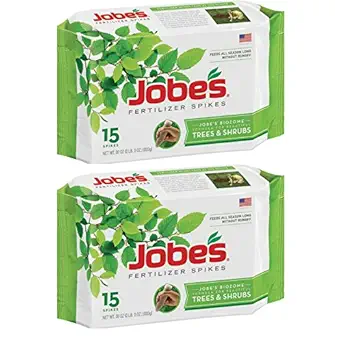 |
| Most Popular A crowd favorite that many people choose with confidence | Miracle-Gro Tree & Shrub Plant Food Spikes, 12 Spikes |  |
| Best Seller A high-volume bestseller chosen again and again | BioAdvanced 12-Month Tree & Shrub Protect and Feed Granules, 4 lb |  |
Miracle-Gro Shake 'N Feed Flowering Trees & Shrubs Plant Food, 8 lb

| Item Form | Granules |
|---|---|
| Application Method | shake evenly onto the soil |
| Coverage | Medium |
| Target Species | flowering trees, shrubs and other acid-loving plants |
| Mixing Ratio | 18:6:12 |
This granular Shake 'N Feed formula is designed to feed flowering trees and shrubs for up to three months with a continuous-release 18-6-12 NPK balance. You apply it by shaking evenly onto the soil beneath branch spread or working it into potting soil for containers, then watering to activate feeding. The mix includes organic additions such as kelp, earthworm castings, feather meal, and bone meal intended to support soil microbes and root health, which can improve water efficiency and foliage vigor in mature specimens. Its medium coverage makes it practical for patching beds or treating individual trees and shrubs without complex measuring. Limitations to consider are that it is targeted at acid-loving and flowering species rather than all tree types and that feeding is on a three-month cycle so seasonal timing matters for maintenance. For gardeners who prefer a simple granular application and want to encourage blooms and lush foliage, this is a straightforward option for established trees and shrubs.
Best for: Gardeners who want a low-effort granular fertilizer to promote blooms and lush foliage on established flowering trees and shrubs and who value microbial soil amendments over quick soluble feeds.
Less Ideal for: Landscapers or tree owners seeking a universal fertilizer for large non-flowering or alkaline-tolerant trees should consider broader-spectrum or specialist tree fertilizers instead.
- Continuous-release formula feeds plants for up to three months
- Contains organic amendments (kelp, earthworm castings, feather meal, bone meal) to support soil microbes and root health
- Easy granular application: shake onto soil or work into planting medium
- Formulated specifically for flowering trees, shrubs and acid-loving plants
- Not formulated for non-acid-loving trees or all-purpose tree nutrition
- Requires reapplication every three months rather than providing season-long adjustment
Verdict: A simple, low-effort granular feed that supports blooms and root health in mature flowering trees and shrubs with three-month continuous feeding.
Espoma Organic Tree-Tone 6-3-2 Natural & Organic Tree Fertilizer, 4 lb (pack of 2)

| Item Form | Powder |
|---|---|
| Specific Uses For Product | Plant Growth |
| Coverage | Medium |
| Target Species | trees |
| Unit Count | 128 Ounce |
Espoma Tree-Tone is a ready-to-use organic tree fertilizer designed for spring and fall feeding of mature shade, fruit, and ornamental trees. It comes as a powdered/granular product that requires no mixing, so you can apply it directly under the drip line according to label directions. The 6-3-2 N-P-K ratio with added calcium and Espoma’s Bio-tone formula supplies balanced nitrogen for leaf and shoot growth while supporting root and flowering performance over the season. Because it is formulated for trees and approved for organic gardening, it suits growers who want steady, slow-release nutrient delivery without synthetic inputs. Practical benefits include straightforward application, suitability for fruit trees like apple and peach, and a medium coverage per bag for multiple trees. Limitations are that results are gradual rather than immediate and heavier nutrient needs or rapid correction of deficiencies may require supplemental feeding or a higher-nitrogen product. For performance-focused gardeners, it is best used as part of a seasonal fertility plan rather than a quick fix.
Best for: Gardeners who prioritize steady, reliable seasonal performance for mature trees and want an organic, low-maintenance fertilizer to include in spring and fall feeding routines.
Less Ideal for: Growers who need fast corrective feeding or who manage intensive high-yield orchards that require targeted, high-nitrogen or soluble nutrient applications.
- Organic formulation approved for organic gardening
- Ready-to-use product that requires no mixing
- Balanced 6-3-2 N-P-K with added calcium for steady tree growth
- Designed specifically for shade, fruit, and ornamental trees
- Slow-release organic nutrients produce gradual results rather than rapid correction
- May be inadequate alone for trees with acute nutrient deficiencies or very high demand
Verdict: A practical organic choice for steady, seasonal feeding of mature shade and fruit trees when you want reliable, low-maintenance performance.
Farmer's Secret Fruit Tree Booster Liquid Fertilizer (32 oz)

| Item Form | Liquid |
|---|---|
| Specific Uses For Product | Fruit Tree Care |
| Coverage | 1 teaspoon per gallon |
| Target Species | Apple, Banana, Peach |
| Mixing Ratio | 1 teaspoon per gallon of water |
Farmer's Secret Fruit Tree Booster is a super-concentrated liquid fertilizer made to support fruit trees through the growth cycle after dormancy. It is mixed at a ratio of 1 teaspoon per gallon and applied weekly either as a soil drench around the drip line or as a foliar spray. The formula emphasizes phosphorus and includes nitrogen, potassium and trace minerals to encourage stronger roots and higher fruit set, and the concentration means one 32 oz bottle treats mature trees for a full season. Practical features include easy dilution, compatibility with watering cans, sprayers and irrigation systems, and clear guidance for higher-feed rates for young versus mature trees. Limitations are that it is a general fruit-tree formula rather than a low-nitrogen finishing feed and it relies on frequent weekly applications to see results, so it requires regular attention during the growing season. For a homeowner managing multiple mature fruit trees this product delivers a concentrated, ready-to-use liquid option that is straightforward to apply and fast-acting when diluted as directed.
Best for: Homeowners who manage mature fruit trees and want a concentrated, easy-to-mix liquid fertilizer they can apply weekly to boost root strength and fruit production.
Less Ideal for: Gardeners who prefer one-time slow-release granular programs or those who want a specialized low-nitrogen finish fertilizer for ripening fruit.
- Very concentrated formula so a small amount treats trees for the season
- Phosphorus-rich blend and added trace minerals to support root growth and fruit set
- Flexible application: soil drench, foliar spray, or through irrigation systems
- Clear dilution and feeding guidance for young versus mature trees
- Requires weekly applications to be effective which adds ongoing maintenance
- Formulation is general-purpose and may not be ideal when you want a low-nitrogen bloom/fruit finish feed
Verdict: A highly concentrated, phosphorus-forward liquid that makes weekly feeding simple for gardeners who want to boost root health and fruit yield on mature trees.
Jobe's Slow Release Tree & Shrub Fertilizer Spikes, 5 Count

| NPK | 15-3-3 |
|---|---|
| Unit Count | 5 Count |
| Application Method | Insert spikes into the ground |
| Target Species | Tree and Shrub |
Jobe's Slow Release Tree and Shrub Fertilizer Spikes are a simple, low-effort way to feed mature trees and acid-loving shrubs twice a year. You insert the pre-measured sticks around the drip line and the slow-release 15-3-3 formula gradually supplies nitrogen, phosphorus, and potassium where roots are active, which supports leaf growth and root development without messy granular spreading. The spikes reduce runoff and odor and are convenient for yards where frequent granular applications are impractical. Practical benefits include easy placement, season-long nutrient delivery, and a reduced risk of overfertilizing because each spike is pre-dosed. Limitations are that the pack contains only five spikes so coverage is small for large trees or multiple specimens, and installation requires spacing at the drip line and care not to place spikes too close to trunks. Also the spikes provide broad NPK feeding but do not address specific micronutrient needs or soil pH adjustments that some mature trees require.
Best for: Homeowners who want a low-cost, low-effort way to keep one or two established trees or shrubs fed without frequent applications or messy granules.
Less Ideal for: Landscapers, large properties, or gardeners managing many mature trees who need bulk coverage, tailored nutrient programs, or soil amendments.
- Pre-measured spikes deliver controlled slow-release nutrients directly to root zone
- Easy application around the drip line with minimal mess or runoff
- Season-long feeding with a single spring and fall application
- Balanced NPK 15-3-3 formula suitable for general leaf and root growth
- Only five spikes per package provide limited coverage for large or multiple mature trees
- Does not supply specific micronutrients or correct soil pH issues
Verdict: A budget-friendly, low-maintenance option to deliver season-long basic nutrition to one or two mature trees with minimal fuss.
Jobe's Organics Tree & Shrub Fertilizer Spikes, 16-4-4 (30 count, 2-pack)

| Item Form | Sticks |
|---|---|
| Application Method | Insert spikes around each tree's dripline |
| Coverage | Medium |
| Target Species | Trees and shrubs |
| Mixing Ratio | 16:4:4 |
Jobe's Organics Tree & Shrub Fertilizer Spikes deliver season-long feeding to mature trees and shrubs by placing slow-release nutrient sticks directly into the root zone around the dripline. You use them by pushing the spikes into the soil in a ring around each tree so nutrients release gradually without mixing, measuring, or liquid application. The 16-4-4 formula supplies a steady dose of nitrogen, phosphorus, and potassium suited to general maintenance and recovery; the manufacturer recommends applications in early spring and late fall. Practical benefits include minimal runoff, no messy spreading, and ease of use for large or established trees where surface fertilizing is inefficient. Limitations are that spikes provide medium coverage so you will need enough spikes to encircle larger tree canopies, and they are not a quick fix for severe nutrient deficiencies because release is gradual. For gardeners who want a dependable, low-effort feeding method for mature trees, these spikes simplify seasonal maintenance.
Best for: Gardeners and property owners who prioritize a reliable, low-effort feeding method to maintain the health of established trees and shrubs throughout the season.
Less Ideal for: Users needing fast-acting corrective fertilization or those managing very small potted trees where spike insertion is impractical.
- Slow-release formula provides season-long nutrient delivery to the root zone
- Very easy to apply with no mixing or measuring required
- Designed to minimize runoff and surface mess compared with granular or liquid fertilizers
- Works for both trees and shrubs with a balanced 16-4-4 nutrient ratio
- Medium coverage means multiple spikes are needed around larger trees to ensure even feeding
- Not formulated for rapid correction of acute nutrient deficiencies
Verdict: Choose these spikes when you want a simple, dependable seasonal feeding method that delivers slow-release nutrients directly to mature tree roots.
Miracle-Gro Tree & Shrub Plant Food Spikes, 12 Spikes

| Number of Items | 12 |
|---|---|
| Item Form | Sticks |
| Application Method | Place spikes around the tree's drip line |
| Mixing Ratio | 15-5-10 |
These Miracle-Gro Tree & Shrub Plant Food Spikes are pre-measured, slow-release sticks that you place around a tree or shrub's drip line and drive into the soil to deliver nutrients directly to the root zone. They are typically used twice a year in early spring and mid-fall: water the drip line to soften soil, space spikes around the drip line at least three feet apart, and press or mallet them below the surface. The spikes have a 15-5-10 NPK mix, so they supply a higher proportion of nitrogen to promote foliage color and growth while still providing phosphorus and potassium. Practical benefits include simple, low-mess application and targeted feeding that reduces surface runoff and the need for measuring liquid fertilizers. Limitations are that one 12-spike pack covers only a few trees depending on dripline size and the spikes are season-timed rather than for emergency summer feeding, so you may need a different product if you need faster correction or more frequent feedings.
Best for: Practical gardeners who want a straightforward, low-maintenance seasonal feeding for mature in-ground trees and shrubs and who prefer targeted root-zone nutrition over frequent liquid applications.
Less Ideal for: People needing frequent or fast corrective feeding during the growing season or those caring primarily for potted or small container plants.
- Delivers slow-release nutrients directly to roots for efficient uptake
- Easy, low-mess installation with no measuring required
- NPK 15-5-10 formulated to encourage foliage color and healthy growth
- Suitable for a range of trees and shrubs including acid-loving species
- Pack size (12 spikes) may not be enough for multiple large trees in one season
- Designed for two seasonal applications so not ideal for mid-season corrective feedings
Verdict: An easy, low-mess way to give mature trees and shrubs targeted, seasonal nutrition directly at the roots.
BioAdvanced 12-Month Tree & Shrub Protect and Feed Granules, 4 lb

| Item Form | Granules |
|---|---|
| Target Species | Aphids, Leafminers, Japanese Beetles, Scale |
| Unit Count | 64 Ounce |
| Active Ingredient | Imidacloprid 1.1% |
BioAdvanced 12-Month Tree and Shrub Protect and Feed is a granular, one-application system designed to protect mature trees and shrubs from listed pests while providing season-long nutrition. You measure the built-in cup, sprinkle the granules around the root zone, and water in; the active ingredient moves systemically through the plant to control adelgids, aphids, leafminers, Japanese beetles, scale and similar pests for up to 12 months. The product also includes a slow-release nitrogen fertilizer that feeds from the roots to branch tips, which can help restore vigor in trees showing insect damage or nutrient stress. Application is straightforward with no mixing or spraying, making it convenient for homeowners or landscapers to treat established specimens and containers. Important limitations are legal restrictions in several states and the use of imidacloprid as the active ingredient, which some buyers may avoid for environmental reasons; follow label safety directions during handling and application.
Best for: Homeowners or property stewards who want a low-effort, long-lasting protective treatment for established trees and shrubs and prefer a single annual application to reduce maintenance time.
Less Ideal for: Buyers who prioritize avoidance of neonicotinoids for pollinator or ecosystem concerns or who manage trees in states where this product is restricted should seek alternative treatments.
- Provides systemic insect control that lasts up to 12 months with one application
- Includes slow-release fertilizer to support root health and gradual growth
- No spraying or mixing required so application is simple and low-effort
- Built-in measuring cup simplifies correct dosing for different tree sizes
- Contains imidacloprid, a neonicotinoid active ingredient that some users avoid for environmental impact concerns
- Not legal for sale or use in several U.S. states, so availability is restricted
Verdict: Use this granular one‑time annual treatment when you want simple, year‑long insect protection plus slow‑release feeding for mature trees and shrubs.
Choosing the Right Fertilizer for Mature Trees: Key Factors to Consider
Nutrient Balance and N-P-K Ratios
Mature trees need a balanced supply of macronutrients over time rather than large pulses of nitrogen alone. A fertilizer with an appropriate nitrogen-phosphorus-potassium ratio helps maintain leaf health, woody growth, and root development. Excessive nitrogen can force soft foliage growth that is more susceptible to pests and storm damage, while too little potassium or phosphorus limits stress tolerance and root function.
Beyond N-P-K, look for micronutrients such as iron, manganese, and zinc, which can be limiting in older trees grown on depleted soils. Slow-release forms of nutrients reduce the risk of leaching and provide a steadier supply that matches a tree's seasonal uptake patterns.
Delivery Method and Root Zone Access
How nutrients reach the active roots is crucial for mature trees because surface applications may not penetrate deeply enough. Soil-applied granules need to be distributed under the dripline and watered in, while deep-root feeding techniques like root injections or soil probes place nutrients closer to the feeder roots. Drench applications can be effective if the soil texture and drainage allow even distribution without runoff.
Consider the depth and spread of the root system for the species you are treating. Larger trees often have widely distributed feeder roots near the dripline, so application patterns should target that area rather than the trunk. Delivery choice also affects labor and risk to the tree; invasive injection methods can be effective but should be used judiciously to avoid unnecessary wounding.
Release Rate and Longevity
Slow-release fertilizers gradually supply nutrients over months, reducing the need for repeated applications and lowering the chance of nutrient spikes that can stress mature trees. Controlled-release formulations are preferable for large trees because they provide steadier nutrition aligned with seasonal growth cycles.
Rapid-release products produce an immediate green-up but may necessitate frequent reapplication and increase risk of nutrient loss through leaching. Match the product's release profile to your maintenance schedule and the tree's growth habit to avoid overfeeding.
Soil Type and pH Interaction
Soil texture and pH strongly influence nutrient availability. Clay soils hold nutrients but may restrict root penetration and oxygen, while sandy soils drain quickly and can lose soluble nutrients. pH affects micronutrient solubility; for example, iron becomes less available in alkaline soils. Choose fertilizers that address the specific limitations of your soil, and consider pairing fertilization with soil amendments or pH adjustments if persistent deficiencies appear.
A soil test is the best way to determine specific nutrient shortfalls and pH issues. Applying fertilizer without knowing the soil conditions can waste product or create imbalances that harm the tree or nearby plants.
Application Safety and Environmental Impact
When fertilizing large trees, runoff and groundwater movement are practical concerns. Products with high soluble nutrient content can leach from sandy soils or run off hard surfaces, contributing to local water quality issues. Choose formulations and application rates that minimize environmental risk and follow label guidance for buffer zones near water features or storm drains.
Safety for people, pets, and understory plants is another factor. Granular blends can leave residues that contact turf and garden beds; water-in or targeted deep-root methods reduce surface exposure. Always follow recommended rates to avoid salt buildup in the root zone.
Timing and Seasonal Considerations
Mature trees respond best when fertilization aligns with their growth cycle. Many species benefit from early spring feeding to support leaf-out and root activity, while late-season high-nitrogen applications can stimulate tender growth that is vulnerable to frost. Slow-release products or late-spring applications can extend feeding into the summer without provoking excessive late growth.
Consider local climate and species-specific timing. In drought-prone regions, avoid heavy feeding during water stress periods and prioritize soil moisture management first.
Interpreting a Soil Test Before Fertilizing
A basic soil test tells you what your mature tree is missing and helps avoid unnecessary or harmful applications. Tests usually report pH, available phosphorus and potassium, and sometimes micronutrients. Match recommendations from the test to a fertilizer that supplies the lacking elements rather than guessing with broad blends.
If the test shows adequate macronutrients but low micronutrients, you can target treatments that supply iron or manganese without adding excess nitrogen. For trees in alkaline soils, iron chelates or foliar applications may correct deficiencies more reliably than mass soil applications.
- Take samples from the root zone at several points under the canopy.
- Test every few years for established trees to monitor trends.
- Compare results to species-specific nutrient guidance when available.
Spread Patterns and Coverage for Large Canopies
Apply fertilizer in a broad band under the tree canopy, focusing roughly from the trunk out to and slightly beyond the dripline where feeder roots are concentrated. For very large trees, break the application into multiple passes to ensure even coverage.
Avoid piling granules against the trunk. For liquid or drench applications, use sufficient water to move soluble nutrients into the topsoil without causing runoff.
- Measure canopy radius to estimate application area.
- Use a broadcast spreader for uniform granule distribution on lawns under trees.
- For landscaped beds, hand broadcasting and gentle raking helps integrate granules.
When to Use Foliar or Trunk Applications
Foliar sprays and trunk injections can correct certain micronutrient shortages more quickly than soil feeding. Foliar feeding is least invasive and works well for deficiencies that show in leaves. It is most effective during periods of active leaf growth and when leaves are healthy enough to absorb nutrients.
Trunk or root injections deliver nutrients directly into the vascular system or root zone and can be useful in severe deficiency cases or when root uptake from soil is restricted. These approaches carry greater risk and should be used selectively, following best-practice application rates and timing.
- Use foliar sprays for quick micronutrient correction during the growing season.
- Reserve trunk injections for persistent problems where soil methods have failed.
- Always follow label guidance and consider professional assistance for injections.
Adjusting Fertilizer Plans for Different Tree Types
Deciduous shade trees, mature fruit trees, and established evergreens have varied nutrient priorities. Fruit trees may benefit from slightly higher phosphorus for root and flower development, while established shade trees require balanced feeding to support canopy density and structural wood health.
Evergreens often show nutrient stress differently and may need tailored micronutrient support. Consider species growth habit and whether the tree is ornamental or productive when choosing nutrient emphasis and timing.
- Match fertilizer timing to flowering and fruiting cycles for productive trees.
- Monitor spring leaf-out for signs of deficiency in deciduous species.
- For evergreens, assess needle color and retention before adjusting plans.
Practical Maintenance Tips to Complement Fertilization
Fertilizer works best when combined with good cultural practices. Mulching conserves moisture, moderates soil temperature, and gradually adds organic matter which improves nutrient-holding capacity. Keep mulch depth shallow near the trunk and extend mulch to the dripline when possible.
Irrigation ensures nutrients move into the root zone. Water deeply after granular applications and maintain consistent moisture during dry spells. Avoid mechanical damage to roots from trenching or construction near mature trees.
- Apply a 2 to 4 inch layer of organic mulch, keeping it pulled away from the trunk base.
- Water in granular fertilizers with a slow, deep soak rather than frequent shallow sprays.
- Minimize root zone disturbance during other yard projects.
How We Chose the Best Fertilizer for Mature Trees
We focused on fertilizers formulated or commonly recommended for established, large-rooted trees rather than mixes aimed at seedlings or quick green-up. Selection prioritized nutrient formulas that address long-term tree health, with emphasis on balanced macronutrients and adequate micronutrients that support woody growth and stress resilience. We also considered delivery formats and application methods that work for deep-root feeding and large canopy canopies, including soil-applied granules, slow-release options, and products suitable for root-injection or soil drench. Practical handling factors such as safety for surrounding lawn or understory plants, ease of measuring and spreading, and clear application rates for large trees were weighted heavily. Longevity and seasonality were evaluated to favor options that reduce frequent disturbance of root zones. We excluded fertilizers designed solely for lawns, high-nitrogen quick-release blends for turf-only use, and specialty products meant for seedlings or container trees. The final shortlist reflects products that suit mature root systems, support sustained nutrient availability, and offer clear application guidance for homeowners and landscape professionals alike.
FAQ
How often should I fertilize a mature tree?
It depends on the product's release rate and the tree's condition. Slow-release fertilizers often require only one application per year, while some granular or soluble products might be applied once or twice during the growing season. Use soil tests and observe tree vigor to refine timing.
Can I use lawn fertilizer under my mature trees?
Many lawn fertilizers have high nitrogen tailored to turf needs and may not supply the balanced nutrition mature trees require. If using a lawn product, choose formulations with appropriate micronutrients and avoid overapplication, which can create imbalances or burn roots.
Will mulching replace the need for fertilizing?
Mulch improves soil structure and slowly releases nutrients as it decomposes, but it may not fully replace targeted fertilization for trees with known deficiencies or long-term nutrient depletion. Combine regular mulching with periodic soil testing to determine if supplemental fertilizer is needed.
Are slow-release fertilizers better for mature trees?
Often yes. Slow-release products supply nutrients over an extended period, matching a tree's uptake and reducing leaching. They minimize the risk of sudden growth flushes and lessen the frequency of applications, which is convenient for large trees.
How do I apply fertilizer to a very large or old tree?
Target the feeder root zone under and slightly beyond the dripline. For very large trees, break the total recommended amount into multiple, evenly spaced applications around the canopy. Consider professional deep-root feeding or soil injection if surface methods fail to reach active roots.
Can fertilizing harm a mature tree?
Incorrect rates, poor timing, or inappropriate formulations can stress roots, cause excessive soft growth, or lead to salt buildup. Follow recommended application rates, match nutrient profiles to soil test results, and avoid heavy feeding during drought or dormancy.
Final Verdict
Prioritize a fertilizer strategy that matches the tree's root distribution, soil conditions, and seasonal growth pattern. Balanced nutrient profiles, delivery methods that reach feeder roots, and slow-release formulations reduce risk and support steady canopy health. Pair fertilization with soil testing, proper mulching, and timely irrigation. Focus on correcting specific deficiencies and avoiding unnecessary high-nitrogen pulses. With the right combination of product type and application approach, you can maintain vigor in mature trees while minimizing environmental impact and maintenance frequency.
