

Note: This article contains affiliate links. If you click on these links and make a purchase, I may earn a small commission at no extra cost to you. This helps support my research and content. Read my full affiliate disclosure here.
Picking the right granular fertilizer for vegetable gardens matters because vegetables respond quickly to both shortages and excesses of nutrients. The wrong formulation can waste time and harm flavor, while the right one supports steady growth, reliable fruit set, and resilient roots. This guide covers seven shortlisted granular fertilizers selected for common vegetable garden situations, from raised beds to in-ground rows and container veggies. We considered nutrient ratios, how nutrients are released over time, and how easy each product is to apply. Below you will find practical notes about when and how to use granular fertilizer and what to expect in typical backyard garden conditions.
Top Picks at a Glance
| Best Overall The best all-around choice for most situations | Osmocote Smart-Release Plant Food Plus, Outdoor & Indoor, 1 lb |  |
| Best Quality Built to a higher standard if you want something more solid | Dr. Earth Organic Tomato, Vegetable & Herb Granular Fertilizer (64 oz) |  |
| Best Value The sweet spot between price and what you get | Jobe's Organics Granular All Purpose Fertilizer, 16 lb |  |
| Best Budget The cheapest option that still gets the job done reliably | Miracle-Gro Shake 'N Feed All Purpose Plant Food, 1 lb |  |
| Highest Rated A top-rated pick with lots of positive feedback | FoxFarm Happy Frog Tomato & Vegetable Fertilizer, 5-7-3 Granules, 4 lb |  |
| Most Popular A crowd favorite that many people choose with confidence | Miracle-Gro Shake 'N Feed All Purpose Continuous-Release Plant Food, 4.5 lb |  |
| Best Seller A high-volume bestseller chosen again and again | Burpee Organic Tomato & Vegetable Granular Plant Food, 4 lb |  |
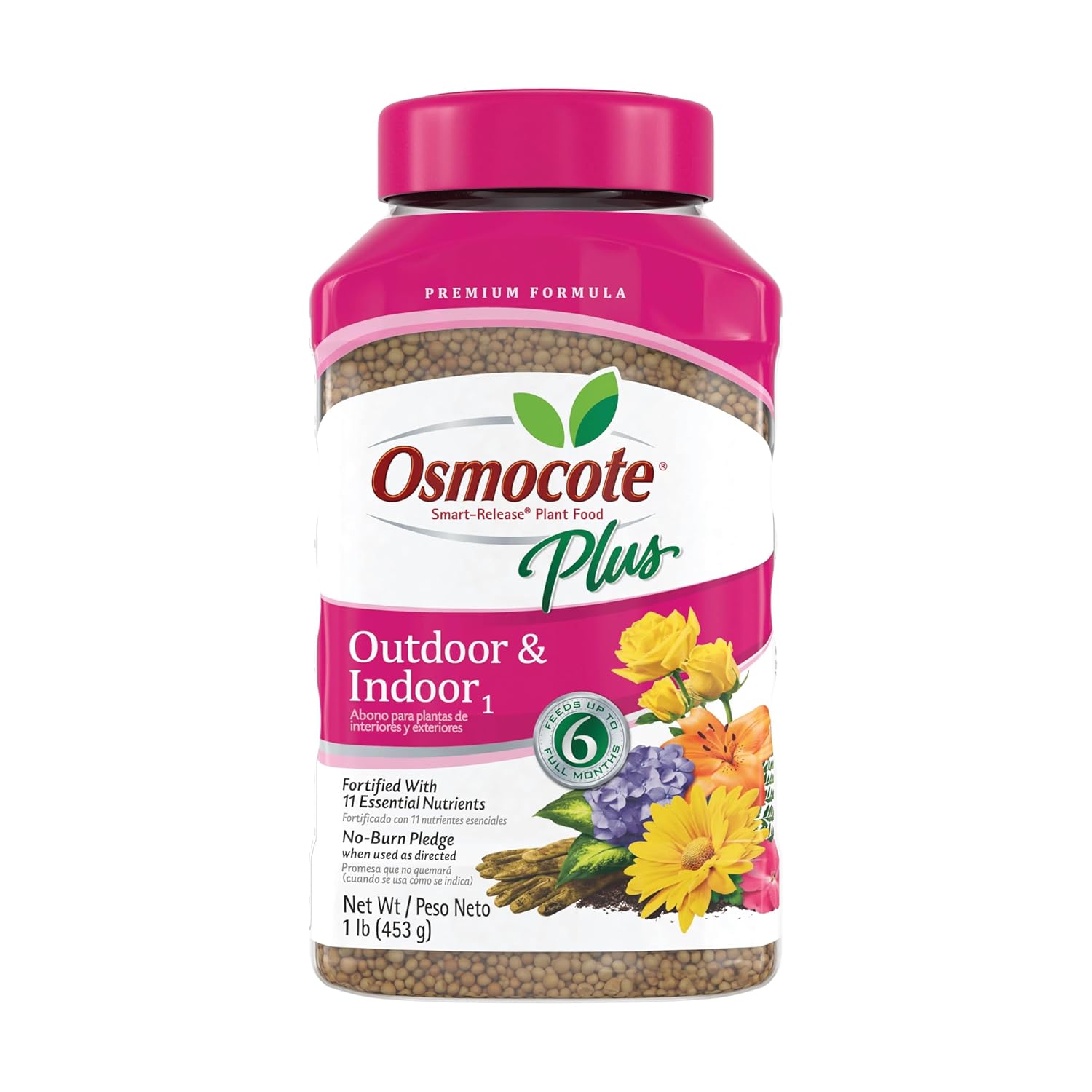
Osmocote Smart-Release Plant Food Plus, Outdoor & Indoor, 1 lb
| Item Form | Granules |
|---|---|
| Specific Uses For Product | Plant Food |
| Application Method | sprinkle around the base and work into the soil |
| Unit Count | 16 Ounce |
| Mixing Ratio | 1:19 |
Osmocote Smart-Release Plant Food Plus is a granular, resin-coated fertilizer designed to feed a wide range of plants gradually for up to six months from a single application. You sprinkle the granules around the base of potted plants or garden beds, work them into the top inch or so of soil, and water; for indoor pots the directions recommend half the outdoor rate. The resin coating times nutrient release so plants receive steady nutrition instead of a quick flush, and the formula includes 11 essential nutrients aimed at supporting foliage, flowers, and vegetables. Practical benefits for a vegetable garden include fewer feedings through the season and a low risk of burning when used as directed. Limitations are that coverage from a 1 lb container is modest so larger beds will need multiple packages, and fixed-release granular formulas offer less immediate correction for acute deficiencies than soluble feeds. Follow the label rates and reapply at roughly six-month intervals for continuous results.
Best for: Gardeners who want a low-maintenance, all-purpose fertilizer that reduces feeding frequency and supports mixed vegetable beds and containers.
Less Ideal for: Growers who need rapid nutrient correction, are managing very large vegetable plots, or who prefer liquid fertilisers and precise, frequent dosing.
- Controlled-release resin coating provides steady nutrient delivery over months
- Contains a broad mix of 11 essential nutrients suitable for many plant types
- Simple granular application works for containers, raised beds, and in-ground planting
- 1 lb package only covers a limited area so larger vegetable plots require multiple bags
- Not a quick-fix soluble feed for correcting sudden nutrient shortages
Verdict: A convenient, all-purpose granular fertilizer that supplies steady, long-lasting nutrition for mixed vegetable beds and container crops with minimal reapplication.
Dr. Earth Organic Tomato, Vegetable & Herb Granular Fertilizer (64 oz)

| Item Form | Granules |
|---|---|
| Specific Uses For Product | Organic |
| Coverage | Medium |
| Unit Count | 64 Ounce |
Dr. Earth Organic Tomato, Vegetable & Herb is a granular, 100 percent organic fertilizer designed to boost yields and improve flavor in vegetable gardens, raised beds and containers. It supplies primary nutrients in a balanced formulation and includes eight strains of endo- and ecto-mycorrhizae plus probiotic soil microbes to improve nutrient uptake and drought tolerance. Typical use is at planting, transplanting or mid-season side-dressing and for container plants every six weeks; the product also works as a component for compost tea. The granules release nutrients quickly and continue feeding for several months, so you do not need to reapply constantly. Practical benefits include the organic ingredient list, absence of chicken manure and GMOs, and microbes that can enhance soil biology over time. Limitations are that it contains phosphorus so local restrictions may apply and it is a medium-coverage product that may require multiple bags for larger vegetable plots.
Best for: Gardeners focused on measurable performance in vegetable and herb production who prefer organic inputs and want better nutrient uptake and drought resilience for their crops.
Less Ideal for: Homeowners who need a low-phosphorus or turf-specific fertilizer or those managing very large acreage where a high-coverage commercial product would be more efficient.
- Certified organic formula with natural ingredients suitable for organic gardens
- Contains multiple strains of mycorrhizae and beneficial microbes to improve nutrient uptake
- Quick nutrient release with feeding that lasts for several months reducing reapplication frequency
- Versatile for use at planting, transplanting, mid-season feeding, in raised beds and containers
- Contains phosphorus which may be restricted by local regulations for non-agricultural turf
- Medium coverage means larger gardens may need several bags for full-season feeding
Verdict: Choose this organic granular if you want a performance-oriented vegetable fertilizer that combines quick nutrient release with beneficial microbes to boost yields and flavor.
Jobe's Organics Granular All Purpose Fertilizer, 16 lb

| Unit Count | 256 Ounce |
|---|---|
| Included Components | 16lbs Granular Fertilizer |
| Item Form | Granules |
| Mixing Ratio | 4-4-4 |
| Specific Uses For Product | Plant Growth, Root Development, Seed Development, Soil Conditioning |
Jobe's Organics Granular All Purpose Fertilizer is a slow-release, OMRI-listed granular product formulated with a balanced 4-4-4 NPK and added calcium, magnesium and sulfur to support general plant health. It is applied to soil every 2 to 3 weeks during the growing season and can be used across vegetable beds, flower borders, shrubs and established trees. The granular form makes it easy to measure and spread without special equipment, and the organic feedstocks such as feather meal and bone meal provide steady nutrient release that reduces the risk of burning when used as directed. Practical benefits for vegetable gardeners include reliable, broad-spectrum nutrition and compatibility with organic growing systems. Limitations are that it is an all-purpose formula rather than crop-specific, so high-demand crops may need additional targeted inputs, and repeat applications are required through the season rather than a single long-term feeding.
Best for: Vegetable gardeners who want a simple, organic, easy-to-apply granular fertilizer to provide steady baseline nutrition across beds and mixed plantings.
Less Ideal for: Growers seeking a single-season, high-strength feed for heavy feeders or those who prefer water-soluble, fast-acting formulations for foliar or fertigation use.
- OMRI-listed formula suitable for certified organic vegetable production
- Balanced 4-4-4 NPK with calcium, magnesium and sulfur for steady, broad nutrition
- Granular form is easy to measure and apply to beds without special tools
- Slow-release, lower risk of burning when used as directed
- All-purpose NPK may not meet high nutrient demands of certain heavy-feeding vegetables
- Requires repeated applications every 2–3 weeks during the growing season
Verdict: A dependable organic granular fertilizer that delivers balanced, slow-release nutrition ideal for practical vegetable gardeners managing mixed beds.
Miracle-Gro Shake 'N Feed All Purpose Plant Food, 1 lb

| Item Form | Granules |
|---|---|
| Application Method | Shake and work into soil |
| Target Species | Flowers, Vegetables, Herbs |
| Mixing Ratio | 10-10-10 |
| Unit Count | 16 Ounce |
Miracle-Gro Shake 'N Feed All Purpose is a granular, continuous-release fertilizer intended for in-ground beds and containers. You apply the granules directly to the soil around the root zone, lightly work them into the top inch or two, then water to begin feeding; a single application carries on for about three months. Notable features are its all-purpose NPK balance listed as 10-10-10, micronutrients aimed at supporting root development and soil microbes, and clear, simple dosing instructions for new and established plants. For vegetable gardeners this product is convenient to use at planting and for seasonal top-ups because it avoids daily feeding and dissolving. The 1 lb container covers roughly 30 sq ft, so it is best for small beds or trial plots rather than large vegetable plots. Users should follow the label rates closely and reapply every three months for steady nutrition. If you want a straightforward, easy-to-apply granular fertilizer to keep small vegetable beds and containers fed with minimal fuss, this does the job well.
Best for: Vegetable gardeners looking for a low-effort, cost-conscious granular fertilizer for small beds, raised beds, or container vegetables who prefer a set-and-forget feeding schedule.
Less Ideal for: Large-scale vegetable gardeners or those who want crop-specific nutrient ratios and bulk coverage for multiple beds should consider larger or specialized fertilizers.
- Continuous-release granules feed plants for up to three months after a single application
- All-purpose 10-10-10 formula suitable for vegetables, herbs, and flowers
- Contains micronutrients and ingredients that support soil microbes and root development
- Simple shake-on application works for both in-ground and container plants
- One-pound size only covers about 30 square feet so multiple containers are needed for larger gardens
- Not tailored to specific vegetable needs like high-phosphorus bloom boosters or tomato formulas
Verdict: An easy, low-maintenance granular fertilizer that keeps small vegetable beds and containers fed for three months with one application.
FoxFarm Happy Frog Tomato & Vegetable Fertilizer, 5-7-3 Granules, 4 lb

| Item Form | Granules |
|---|---|
| Specific Uses For Product | Vegetables, Tomatoes, Soft Fruits, and Berries |
| Mixing Ratio | 5:7:3 |
| Unit Count | 64 Ounce |
FoxFarm Happy Frog Tomato & Vegetable Fertilizer is a granular, OMRI-listed feed designed for vigorous feeders like tomatoes, peppers, and berries. You apply it to in-ground beds, rows, or containers following the package instructions; the 5-7-3 blend emphasizes phosphorus and potassium to support flowering and fruit development while still supplying nitrogen for leafy growth. Included calcium helps reduce blossom end rot risk and added mycorrhizal fungi aim to improve root nutrient and water uptake. As a practical garden product it is easy to store and scatter or incorporate into potting mixes and topdressings, and the granule form gives predictable, controllable applications compared with liquids. On the downside it is not a quick-fix soluble feed for instant greening and requires regular reapplication per directions, and the fixed N-P-K ratio may not suit lawns or non-fruiting ornamentals. For vegetable gardeners wanting a proven, organic granular option that supports fruit set, this performs reliably in typical home garden scenarios.
Best for: Home vegetable gardeners who prioritize consistent, organic nutrition for tomatoes and other fruiting crops and prefer predictable, easy-to-apply granular feeds.
Less Ideal for: Gardeners who need an immediate foliar or soluble boost or who are focused on non-fruiting ornamentals or lawn care should consider other formulations.
- OMRI-listed organic formula suitable for edible gardens
- 5-7-3 N-P-K targets flowering and fruit development
- Contains calcium to help prevent blossom end rot
- Includes mycorrhizal fungi to support root nutrient and water uptake
- Granular form is not a fast-acting soluble feed for immediate results
- Fixed N-P-K ratio may require supplementing for non-fruiting plants
Verdict: A dependable OMRI-listed granular fertilizer that supplies targeted nutrients and calcium for reliable fruit development in vegetable gardens.
Miracle-Gro Shake 'N Feed All Purpose Continuous-Release Plant Food, 4.5 lb

| Item Form | Granules |
|---|---|
| Application Method | Shake onto soil and work into top 1-3 inches |
| Target Species | flowers, vegetables, herbs |
| Unit Count | 72 Ounce |
Miracle-Gro Shake 'N Feed is a ready-to-use granular fertilizer designed to be shaken or worked into the top few inches of soil to feed flowers, vegetables and herbs for up to three months. You apply it directly to in-ground beds or established containers, lightly rake or mix it into the top 1–3 inches of soil, then water to activate gradual nutrient release. The formula includes natural amendments such as kelp and other organic-derived ingredients intended to support soil microbes and root development, and the granules provide slow, continuous feeding that reduces the need for frequent applications. For vegetable gardeners this is convenient for routine maintenance of raised beds and container vegetables because one application covers a season and is simple to dose. Limitations are that it is an all-purpose blend rather than a vegetable-specific NPK tailored for heavy feeders, so very hungry crops may still benefit from additional targeted feeding, and granular spread requires care to avoid over-application near seedlings or newly transplanted starts.
Best for: Vegetable gardeners who want a low-effort, season-long maintenance fertilizer for raised beds and containers and who prioritize proven products with a strong track record.
Less Ideal for: Growers looking for high-N or crop-specific formulations for heavy-producing vegetables or for precise nutrient control during critical fruiting stages.
- Continuous-release granules feed plants up to three months after a single application
- Works for both in-ground and container plants for flexible use
- Contains natural amendments aimed at supporting soil microbes and root health
- Simple application: shake on, work into topsoil, and water to activate
- All-purpose formulation is not specialized for heavy-feeding vegetable varieties
Verdict: A simple, reliable granular feeder that gives vegetable beds and containers three months of continuous nutrition with one easy application.
Burpee Organic Tomato & Vegetable Granular Plant Food, 4 lb

| Item Form | Granules |
|---|---|
| Specific Uses For Product | Gardening,Plant Growth,Root Development |
| Application Method | Sprinkle |
| Coverage | 160 Square Feet |
| Mixing Ratio | 3-6-4 |
Burpee Organic Tomato & Vegetable Granular Plant Food is an all-purpose, OMRI-listed granular fertilizer designed for vegetable gardens, containers, and starter plants. You apply it by sprinkling granules around the plant base and watering in; the formula delivers an immediate nutrient boost and continues releasing nutrients for up to three months. The listed N-P-K mixing ratio of 3-6-4 and inclusion of calcium and minor nutrients support flowering and fruit set for tomatoes and other vegetables. Practical benefits include easy application without measuring liquids, good coverage (advertised for about 160 square feet per bag), and an organic label that suits home gardeners who prefer certified inputs. Limitations are that the bag is a single 4 pound unit so larger beds will need frequent replenishment, and granular products can be less precise for rapid correction of specific nutrient deficiencies compared with soluble fertilizers. For steady seasonal feeding of a small to medium vegetable plot or container collection, this provides convenient, low-maintenance nutrition.
Best for: Home gardeners who prioritize organic, low-maintenance feeding for tomatoes and mixed vegetable beds and want a straightforward seasonal fertilizer they can apply without special tools.
Less Ideal for: Vegetable growers who manage large plots or need quick corrective feeding for a specific nutrient deficiency should look at larger bulk products or soluble fertilizers instead.
- OMRI-listed formula suitable for organic vegetable production
- Granular form is simple to apply by sprinkling and watering
- Provides immediate nutrients plus slow release for up to three months
- Includes calcium and minor nutrients to support fruiting and plant health
- 4 lb bag has limited coverage for larger garden beds
- Not as fast-acting or easily adjusted as water-soluble fertilizers
Verdict: A convenient OMRI-listed granular fertilizer that gives steady, season-long feeding for small to medium vegetable gardens and containers.
Choosing the Right Granular Fertilizer for Vegetable Gardens: Key Factors to Consider
Nutrient Ratio and Stage Suitability
Vegetables need different nutrient balances at seedling, leaf, and fruiting stages. A higher nitrogen ratio helps leafy growth early on but can reduce fruit set if overused during flowering. Look for granular formulations that either match the typical needs of the vegetables you grow or come in multiple N-P-K blends so you can switch as plants mature.
Choosing the right ratio reduces the need for corrective applications and helps avoid excess vegetative growth at the expense of flowers and fruit. Also consider whether the product includes secondary nutrients like calcium or magnesium when growing crops prone to blossom end rot or other physiological disorders.
Release Type and Timing
Granular fertilizers vary from water-soluble quick-release to coated slow-release and blends of both. Quick-release granules give an immediate nutrient pulse useful at transplanting or for correcting deficiencies. Slow-release options supply steady feeding over weeks, reducing the need for frequent reapplication and lowering the risk of nutrient spikes that can stress roots.
Match release timing to your garden schedule. For short-season crops, a faster-acting product or a combined approach may be best to accelerate early growth. For longer crops and succession plantings, a slow-release or polymer-coated granule can provide more consistent nutrition and reduce labor.
Application Method and Ease
How easy a granular fertilizer is to measure, spread, and incorporate affects whether you actually follow feeding schedules. Some granules are uniform and spread smoothly with a hand spreader or by hand. Others clump or produce fine dust that makes accurate dosing difficult. Clear labeling with per-square-foot or per-plant rates is important for consistent results.
Consider whether the fertilizer needs to be mixed into soil, side-dressed, or broadcast. Products that allow flexible application methods are more useful across raised beds, in-ground rows, and containers. If you plan to use a spreader, check that the granule size and flow characteristics suit common handheld or walk-behind spreaders.
Soil Interaction and Salt Index
Some granular fertilizers have high soluble-salt content that can burn young roots or stress drought-sensitive plants. Knowing a product's salt behavior and how it interacts with your soil texture matters, especially in containers where salts can build up quickly. Sandy soils drain faster and may need more frequent, lower-dose feedings, while clay soils retain nutrients longer.
Look for guidance on safe incorporation depth and watering after application to move nutrients into the root zone. If you garden in saline-prone areas or use recycled water, prioritize low-salt or slow-release formulations to protect seedlings and sensitive crops.
Micronutrients and Secondary Elements
Vegetables rely on trace elements like iron, manganese, zinc, and boron for healthy development and quality. A basic N-P-K formula may correct major deficiencies but leave minor ones unaddressed, which can show up as chlorosis, poor fruit set, or off-flavors. Some granular fertilizers include chelated micronutrients or a suite of secondary nutrients that support consistent yields.
If your soil test shows specific micronutrient gaps, choose a fertilizer that supplies them or plan supplemental applications. For general backyard gardens with mixed crops, a formulation that includes a balanced complement of secondary elements reduces the chance of subtle nutrient-driven problems.
Environmental Impact and Runoff Risk
Granular fertilizers can contribute to nutrient runoff if overapplied or left on the soil surface before heavy rain. Consider formulation and application guidance that reduce leaching potential and state whether the product is designed for minimal runoff. Slow-release and stabilized nitrogen sources typically lower the immediate loss risk compared with highly soluble options.
Apply fertilizer according to label rates and incorporate or water in when recommended. In sloped gardens or near water features, favor low-leaching profiles and time applications when heavy rain is not forecast to limit environmental impact.
When to Feed Different Vegetable Types
Leafy greens, brassicas, and herbs usually benefit from higher nitrogen early in the season to build foliage. Root crops need a balanced approach where excess nitrogen is avoided to prevent overly lush tops and small roots.
Fruiting crops such as tomatoes, peppers, and squash need a shift toward phosphorus and potassium as they set flowers and fruit. Timing feed changes with flowering and early fruit set helps encourage better yields and fruit quality.
- Start seedlings with a light, balanced feed and increase nitrogen for leafy crops.
- Switch to a bloom-fruit oriented ratio or boost potassium when flowers appear on fruiting plants.
- Side-dress or top-dress with granular fertilizer at key growth milestones rather than continuous heavy feeding.
Applying Granular Fertilizer in Raised Beds and Containers
Containers and raised beds dry out and concentrate salts faster than in-ground soil. Use lower per-application rates, and prefer slow-release or low-soluble options for planted containers. Mix granular fertilizer into potting mix before planting for even distribution or top-dress and water in for established plants.
For raised beds, broadcast lightly and incorporate into the top few inches of soil before planting. When side-dressing, keep granules a few inches from stems to prevent root burn and water after application to move nutrients into the root zone.
- Reduce standard broadcast rates by about 25% in containers due to limited soil volume.
- Always water after applying granular fertilizer to distribute nutrients.
- Avoid piling granules against stems or crowns to prevent localized burning.
Interpreting Soil Test Results for Feeding Plans
A soil test gives actionable information that can change the best fertilizer choice. If tests show adequate phosphorus or potassium, choose a product that focuses on nitrogen or includes gentler supplementation. If micronutrients are lacking, select a granular blend that contains them or plan separate applications.
Balance test recommendations with common crop needs and your past garden observations. Adjust rates down from label maximums if your soil already tests moderately high to avoid overapplication and nutrient lockup.
- Use soil test phosphorus and potassium levels to avoid unnecessary additions.
- Correct pH issues first since nutrient availability depends on soil pH.
- Keep records of test results and fertilizer applications to refine your feeding plan over seasons.
Storage and Handling Best Practices
Keep granular fertilizer in a dry, cool area to prevent caking and nutrient loss. Moisture exposure can cause clumping and uneven application. Seal bags or transfer to airtight containers with moisture-absorbing packets if necessary.
Label and store different formulations separately to avoid mixing incompatible products. Wear gloves and avoid inhaling dust. Clean spreaders and measuring tools after use to prevent cross-contamination between products.
- Store off concrete floors to avoid moisture wicking into bags.
- Use powder-free gloves and eye protection when handling fine granules.
- Rotate stock by using older supply first to maintain uniform performance.
Combining Granular Fertilizer with Organic Amendments
Mixing granular fertilizers with compost or well-rotted manure can provide both quick and slow nutrient sources. Organic matter improves soil structure, moisture retention, and microbial activity that helps make nutrients available to roots. However, plan rates so you are not duplicating nutrient inputs.
If you apply a nutrient-rich organic amendment, reduce synthetic granular rates accordingly. Allow fresh manures to age and compost to stabilize so you do not create ammonia spikes that can harm seedlings.
- Use compost primarily for long-term soil health and granular fertilizer for targeted crop nutrition.
- Account for nutrient contributions from organic inputs when calculating granular application rates.
- Incorporate organic matter before planting to integrate it evenly into the root zone.
How We Chose the Best Granular Fertilizer for Vegetable Gardens
We prioritized criteria that reflect how granular fertilizer behaves in real vegetable gardens. Nutrient balance was primary: formulations that match common vegetable needs at different stages of growth earn higher marks. Release profile was next, focusing on whether nutrients are immediately available, slow-release, or a controlled blend so gardeners can time feeding with planting and fruiting. Application practicality guided selection. We evaluated spreadability, whether the product dusts or clumps, and clear dosing instructions for beds and containers. Soil interaction was assessed by looking at salt index and recommended incorporation methods to avoid root burn. Environmental considerations were included by preferring products with clear guidance on runoff and low soluble-salt options for sensitive sites. We excluded products intended solely for lawns, specialty greenhouse formulas, and straight micronutrient mixes that do not provide full N-P-K support for vegetables. The final picks meet the needs of common backyard scenarios and perform well across nutrient balance, release control, ease of use, and soil friendliness.
FAQ
How often should I apply granular fertilizer to vegetables?
It depends on the release type. Quick-release granules may be applied every 3 to 4 weeks during active growth, while slow-release formulations can last 8 to 12 weeks or more. Follow label rates and observe plants for signs of deficiency or excess.
Can I use the same granular fertilizer for seedlings and mature plants?
Often you should not. Seedlings need gentler, lower-dose nutrition to avoid burning delicate roots. Mature plants can handle stronger formulations or higher rates. Choose a balanced product for transplants and shift to a stage-appropriate ratio as plants develop.
Will granular fertilizer affect soil pH?
Some formulations can influence soil pH over time, particularly ammonium-based nitrogen sources that can acidify the soil. Making adjustments based on periodic pH testing is advisable if you apply synthetic fertilizers regularly.
Is it safe to mix granular fertilizer with compost before planting?
Yes, mixing granular fertilizer with finished compost can be effective, but reduce rates to account for nutrients already in the compost. Avoid fresh manures that may release ammonia or create uneven nutrient pockets.
How do I avoid fertilizer burn when side-dressing?
Keep granules a few inches away from stems and crowns and follow recommended rates. Watering after application helps move nutrients into the root zone and reduces the risk of concentrated salts contacting roots.
Should I choose fertilizer based on crop type or soil test?
Both matter. Use soil tests to understand baseline fertility and select formulations that address measured deficits. Then fine-tune based on the nutrient demands of the crops you grow to optimize growth and yield.
Final Verdict
Choose a granular fertilizer by matching nutrient ratios and release profile to the crops and season in your vegetable garden. Prioritize options that offer clear dosing guidance, low-salt behavior for containers, and nutrient completeness if you manage a diverse set of crops. Balance convenience against control: slow-release granules reduce labor and stabilize nutrition, while quicker-release products give you a fast corrective tool. Use soil tests and observe crop responses to refine applications so you get steady growth and consistent harvests.
