

Note: This article contains affiliate links. If you click on these links and make a purchase, I may earn a small commission at no extra cost to you. This helps support my research and content. Read my full affiliate disclosure here.
When you want a neat, long-lasting border that keeps soil, mulch, and plants where they belong, the right sturdy garden edging makes all the difference. In practical garden use, edging that resists frost heave, stays straight under foot traffic, and anchors securely into variable soil saves time and maintenance. This guide presents six shortlisted sturdy garden edgings chosen for how they perform in real yards, patios, and planting beds. We assessed options against durability in outdoor conditions, how they anchor and hold soil, and how straightforward they are to install and maintain. Read on for the features that matter and the criteria we used to select these top picks before the product list that follows.
Top Picks at a Glance
| Best Overall The best all-around choice for most situations | SJPULMO Galvanized Steel Landscape Edging Kit, 6-Pack (21 ft total) |  |
| Best Quality Built to a higher standard if you want something more solid | Edge Right COR‑TEN Steel Hammer‑In Landscape Edging, 48-inch Strips (5-Pack) |  |
| Best Value The sweet spot between price and what you get | LAVEVE Corrugated Galvanized Steel Garden Edging, 6" x 40 ft |  |
| Best Budget The cheapest option that still gets the job done reliably | gardmate Corrugated Metal Garden Edging (40 ft x 6 in) |  |
| Highest Rated A top-rated pick with lots of positive feedback | Hemikaki 6 in x 40 ft Galvanized Corrugated Metal Garden Edging |  |
| Most Popular A crowd favorite that many people choose with confidence | STIRLINGEAR 33 ft Powder-Coated Galvanized Steel Landscape Edging (10-Pack) |  |
SJPULMO Galvanized Steel Landscape Edging Kit, 6-Pack (21 ft total)

| Material Type | Galvanzied Steel with Powder Coating |
|---|---|
| Panel Length | 42" per panel |
| Total Length | 21FT per 6-pack |
| Item Type Name | Garden Edging |
This SJPULMO kit provides a robust, all-in-one solution for defining garden beds, pathways, and tree rings. Each pack includes six 42-inch steel panels, matching stakes and latch connectors so panels lock together and stay put once hammered into the soil. The panels are galvanized and powder coated, which helps resist rust and weathering, and the design sits low to the ground for a tidy edge without creating a trip hazard. The steel is bendable enough to form curves or straight runs, and the heavier spikes plus smaller stabilizing spikes improve holding power in typical garden soils. Installation requires a rubber mallet or hammer and some elbow grease when working in compacted ground, and very rocky sites may need pre-drilling or alternative anchoring. The kit covers about 21 feet of edging per 6-pack, so larger projects will need multiple packs and some cutting or joining. If you want a clean, long-lasting metal edge that stands up to weather and creates professional-looking beds, this kit does the job; expect basic manual installation and occasional maintenance if your soil shifts over seasons.
Best for: Gardening homeowners who want a durable, professional-looking metal edge for flower beds and paths and are comfortable doing basic manual installation and layout work.
Less Ideal for: People who need a temporary or very low-effort solution for large areas or those with extremely rocky soil where hammering stakes is impractical.
- Galvanized steel with powder coating offers good corrosion resistance for outdoor use.
- Included latch stakes and spikes secure panels together for a stable continuous edge.
- Panels are flexible enough to form curves as well as straight runs for varied layouts.
- Low-profile design produces a tidy edge without creating a trip hazard.
- Covers only 21 feet per 6-pack so multiple packs are needed for larger yards.
- Manual hammer-in installation can be strenuous in compacted or rocky soils.
Verdict: A sturdy, rust-resistant metal edging kit that creates clean, long-lasting borders for small to medium garden projects.
Edge Right COR‑TEN Steel Hammer‑In Landscape Edging, 48-inch Strips (5-Pack)

| Material Type | COR-TEN Steel |
|---|---|
| Number of Items | 5 |
| Unit Count | 5 Count |
| Product Style | Heavy Duty |
This Edge Right COR‑TEN steel hammer‑in edging is built for long service and professional-looking borders. Each pack includes five 48‑inch strips with angled teeth along the bottom so you set the edge in place by tapping it with a hammer or mallet; optional clamps secure adjoining pieces. The COR‑TEN material is stiff enough to resist repeated contact from trimmers and foot traffic yet thin enough to bend into curves if you need to shape beds. Over time the steel forms a rust patina that blends into natural landscapes and eliminates the need for paint or coatings. Installation is fast for experienced DIYers and landscapers but does require tapping into soil and occasional use of an edger or shovel to loosen compacted ground. Because it is bare weathering steel it will develop surface rust by design and can have sharp edges during handling, so gloves and caution are recommended. For anyone who wants a permanent, low‑profile barrier that holds mulch and stops grass encroachment, this is a workhorse solution.
Best for: Buyers who prioritize long‑term, high‑performance edging for frequent garden use and want a permanent, low‑maintenance barrier that withstands landscaper tools and traffic.
Less Ideal for: Those who need a temporary or easily removable edging solution or who prefer non‑rusting finishes for a clean, unweathered look.
- Durable COR‑TEN steel construction designed to last and develop a protective patina.
- Hammer‑in teeth make installation fast without specialized tools.
- Stiff enough to withstand weed trimmer hits and foot traffic.
- Flexible enough to form gentle curves for custom layouts.
- Low visual profile that contains mulch and prevents grass encroachment.
- Forms a rust patina by design which may transfer to hands or nearby surfaces during installation.
- Requires physical hammering into soil which can be difficult in very compacted ground.
Verdict: Choose this Edge Right COR‑TEN edging when you want permanent, professional‑grade borders that tolerate heavy use and improve in appearance with age.
LAVEVE Corrugated Galvanized Steel Garden Edging, 6" x 40 ft

| Material Type | Metal |
|---|---|
| Item Highlight | Galvanized Steel Garden Border |
| Color | Black |
| Number of Packs | 1 |
This LAVEVE corrugated metal garden edging is a heavy-duty border solution intended to make clean, durable edges around beds and paths. The galvanized steel construction with a weather-resistant finish and 3D corrugated profile increases rigidity while still allowing the strip to be bent to follow curves. Installation is typical: dig a shallow trench, set the edging, then backfill and compact; the U-shaped rolled hems protect hands and pets and a rubber hammer is recommended to avoid distortion. In practice the product performs as a long-lasting barrier against soil creep and grass intrusion and gives a neat, low-profile look to most landscapes. It is available in multiple heights and lengths and can be cut to fit irregular runs, but heavier gauge metal may require two people to shape on tight curves and a saw for cutting. While sturdy, the finish may eventually show surface wear in very abrasive soils, so sites with continuous wet contact should be monitored for long-term appearance changes.
Best for: Buyers who want a durable, long-lasting edging solution that creates tidy, low-profile borders and who prioritize structural strength and longevity over easy one-person shaping.
Less Ideal for: If you need a very lightweight, temporary, or decorative-only edging or plan very frequent reconfiguration, a more flexible or modular plastic option is a better fit.
- Galvanized steel construction for greater strength and weather resistance
- Corrugated roll-formed profile adds stiffness and impact resistance
- U-shaped rolled hems provide smoother, safer edges for family and pets
- Flexible enough to bend into curves and can be cut to fit custom layouts
- Thicker metal can be harder to bend on tight curves and may need two people to install
- May show surface wear over many seasons in persistently wet or abrasive soils
Verdict: Choose this LAVEVE galvanized corrugated edging when you need a sturdy, weather-resistant metal border that holds shape and keeps soil and grass neatly contained.
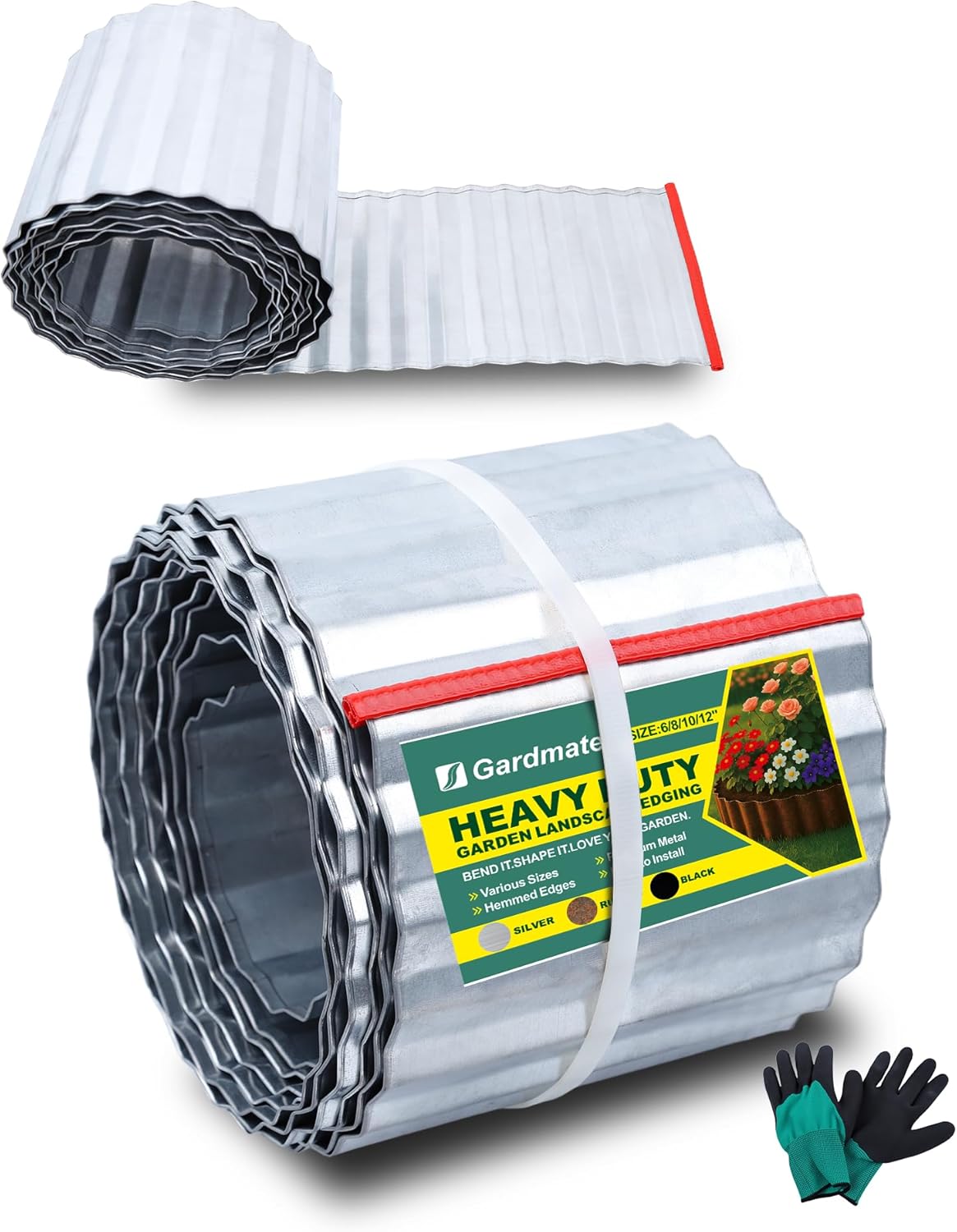
gardmate Corrugated Metal Garden Edging (40 ft x 6 in)
| Material Type | Metal |
|---|---|
| Unit Count | 1 Count |
| Number of Packs | 1 |
| Product Style | Modern |
This corrugated metal edging is a practical, long-lasting border solution for defining flower beds, pathways, tree rings, and vegetable plots. Made from corrugated metal with hemmed, rolled edges, it resists weather, lawn equipment impacts, and everyday wear better than typical plastic or wood borders. The material is flexible enough to form smooth curves and sharp corners while staying rigid against soil pressure, so you can lay clean straight lines or gentle shapes without constant re-adjusting. Installation is straightforward: soften soil and tap the edging in with a rubber mallet or set it into a shallow trench for firmer ground, then backfill for extra hold. It prevents mulch, gravel, and grass from migrating, which reduces maintenance and preserves neat beds. Expect a professional look and long service life, but plan to use basic tools for installation and consider ground conditions since very rocky or frozen soil will require trenching or extra effort. The finish is modern and low-profile but will show scratches over time if struck by heavy equipment.
Best for: Buyers who want a long-lasting, maintenance-reducing edging solution that looks tidy and holds up to regular yard work while staying affordable.
Less Ideal for: People who need a decorative, painted, or colored edging option to match a specific landscape palette or those who cannot do any hand installation work.
- Durable corrugated metal construction resists weather and lawn equipment damage
- Rolled hem edges reduce cut risk for family and pets
- Flexible yet stiff enough to form curves and hold shape against soil
- Keeps mulch, gravel, and grass from migrating for lower maintenance
- May require digging a shallow trench or extra effort in very hard or rocky soil
- Finish can show scratches if struck by heavy tools or equipment
Verdict: A tough, no-nonsense metal edging that delivers long-term durability and tidy, low-maintenance borders for everyday gardens.
Hemikaki 6 in x 40 ft Galvanized Corrugated Metal Garden Edging

| Material | Galvanized steel |
|---|---|
| Height | 6INCN |
| Length | 40FT |
| Number of Items | 40 |
This Hemikaki corrugated metal edging is built from galvanized steel and meant to provide a long-lasting, low-maintenance border for beds and walkways. The 6-inch height and corrugated profile give the strip rigidity while still allowing it to be bent into curves or circles for custom layouts. Hemmed top and bottom edges reduce sharpness during handling and installation. In practice it is installed by pressing into soft soil or by cutting and setting into a narrow trench in harder ground, then backfilling for a clean, rooted edge that keeps mulch and turf separate. The galvanized finish resists corrosion outdoors, so it holds up in damp conditions better than uncoated metal. It is not a rigid modular system, so prolonged heavy loading or constant foot traffic on the lip can create deformation, and cutting requires metal shears and safety gloves which are not included. For homeowners wanting a dependable, long-lived metal border this product delivers straightforward performance with simple installation steps.
Best for: Homeowners who prioritize a durable, low-maintenance border and want a metal edging that holds up in wet or long-term outdoor conditions and can be formed to custom shapes.
Less Ideal for: People who need a decorative snap-together or modular edging system or who expect to step repeatedly on the top edge should consider alternative rigid or reinforced products.
- Galvanized steel construction offers good corrosion resistance for outdoor use
- Corrugated profile adds stiffness while still allowing the edging to bend into curves
- Hemmed top and bottom edges reduce sharpness during handling
- Suitable for multiple landscaping uses including flower beds, tree rings, and paths
- Requires metal cutting tools and protective gloves for trimming which are not included
- Can deform under heavy, concentrated loads or constant foot traffic on the edge
Verdict: Choose this galvanized corrugated edging when you want a straightforward, corrosion-resistant metal border that bends to shape and lasts in outdoor conditions.
STIRLINGEAR 33 ft Powder-Coated Galvanized Steel Landscape Edging (10-Pack)

| Total length | 33 ft (10 panels) |
|---|---|
| Material Type | Powder-Coated Galvanized Steel |
| Package count | 10 panels |
| Included stakes | 11 stakes |
This 10-pack of galvanized steel panels is designed to form a low, durable border around lawns, flower beds, and pathways. Each 40-inch panel includes integrated hammer-in stakes that drive into the soil for quick installation and a slim 2-inch visible edge that keeps beds tidy without a raised lip. The powder-coated galvanized finish gives corrosion resistance and a clean black look that fits modern garden styles, and the included 11 stakes help hold the run steady against light soil movement. The panels are flexible enough to be cut or gently bent for gentle curves, which makes them useful for custom layouts. Expect a straightforward, time-efficient install for defined edges, though the low profile is not suitable where a high containment barrier is needed to stop erosion or heavier soil movement. Assembly requires a mallet and some manual effort to seat the stakes fully, and very rocky or compacted ground will slow installation or need pre-drilling.
Best for: Buyers who want a sturdy, professional-looking permanent edge quickly and prefer products with solid user feedback and proven materials for standard lawns and flower beds.
Less Ideal for: Not a good fit for gardeners who need a tall containment barrier or who work primarily in rocky, compacted, or erosion-prone sites requiring heavy-duty anchoring solutions.
- Durable powder-coated galvanized steel resists rust and weathering
- Hammer-in stake design speeds installation without trenching
- Low-profile 2" visible edge creates a neat, unobtrusive border
- Panels can be cut or gently bent for gentle curves and custom layouts
- Low visible height is not effective as a high containment barrier for heavy soil or mulch
- Hammer-in installation can be difficult in very rocky or compacted soils
Verdict: A durable, low-profile steel edging kit that quickly creates neat, long-lasting borders for lawns and flower beds backed by strong user approval.
Choosing the Right Sturdy Garden Edging: Key Factors to Consider
Material and Weather Resistance
The material determines how the edging reacts to moisture, sunlight, and temperature swings. Metal options resist being chewed by roots but can rust unless treated. Plastic is lightweight and resists rot but may become brittle under long sun exposure or cold. Natural stone and concrete are heavy and weather-stable but require secure setting to prevent settling.
Consider the local climate: repeated freeze-thaw cycles, salty coastal air, and intense sun each stress materials differently. Choosing a material suited to those conditions reduces long-term warping, corrosion, or fragmentation and extends the time before repairs or replacement are needed.
Anchoring Method and Soil Compatibility
How the edging anchors to the ground affects whether it will stay put over seasons. Some edging uses deep stakes or rebar-style anchors that transfer loads below frost lines; others rely on interlocking ribs or wide base plates for lateral stability. In sandy or loose soils, deeper anchoring or backfilling is required. In heavy clay, you want edging that resists heaving and can be shimmed or adjusted.
Match the anchoring approach to your soil profile. If you expect mowing and foot traffic along the edge, prioritize systems that lock into the ground firmly. For raised beds or areas with lots of irrigation, choose edging with secure vertical resistance to prevent soil washout.
Installation Complexity and Tools Required
Installation ranges from simple push-into-ground strips to products that need a trench, concrete footing, or mechanical compaction. Time, available tools, and DIY skill all influence which option is realistic. Simpler systems are faster but may compromise long-term straightness or strength. More involved installs give better permanence but cost more labor and may need extra helpers.
Think about how long you want the job to last and whether you can access basic tools like a mallet, level, spade, tamper, or saw. Also consider whether the edge runs around curves or long straight lines; some systems flex for smooth curves while others are best for straight runs.
Edge Profile and Landscape Function
The cross-sectional shape of the edging affects how it holds soil and how it interfaces with lawn mowing and foot traffic. Taller profiles retain more soil and mulch but may be a trip hazard if not set flush; low-profile edges are subtle but less effective at holding steep slopes. Some designs include a flange to create a mechanical barrier between turf and bed.
Consider how you will mow and reach into the bed. Choose an edge height and profile that accomplishes the barrier you need while fitting the way you maintain the space.
Flexibility Versus Rigidity
Flexible edging is useful for organic, curving beds and allows fewer cuts and joints, but it can be harder to keep perfectly straight over long runs. Rigid edging delivers crisp lines and strong resistance to movement but requires precise placement, may demand more excavation, and can be more visible. The right balance depends on your garden style and whether you prioritize a crisp modern look or relaxed natural curves.
Consider whether you plan to change the bed layout in coming years. Flexible systems are easier to reposition. Rigid systems are better for permanent, high-traffic borders.
Maintenance Needs and Repairability
Over time edging can shift, sections can break, and fasteners can corrode. Some systems are modular so individual sections are simple to replace, while others require partial reinstallation. Think about accessibility and whether repairs would disturb plants or require heavy work. Low-maintenance materials and finishes reduce the frequency of interventions.
Also consider how easy it is to clean the edge from soil buildup or to re-anchor sections after a winter. Choosing a system with straightforward repair options minimizes long-term labor.
Preparing the Site Before Installation
Mark the planned line clearly using a length of string, garden hose, or marking paint so you can visualize curves and junctions before digging. Remove turf stripe by stripe along the line instead of cutting deep trenches at once; this helps preserve nearby roots and makes a cleaner edge.
Check the grade and soil type along the run. For slopes, plan for extra anchoring or a stepped installation to prevent soil slippage. If the soil is compacted, loosen a narrow zone where the edging base will sit so stakes or anchoring ribs can penetrate more easily.
- Locate underground utilities before digging.
- Lay out long runs in sections to keep lines straight.
- Dry-fit pieces to check how they join, curve, and terminate at corners.
Tools and Materials to Have on Hand
Basic installs often require only a spade, mallet, level, and measuring tape. For firmer anchoring or rigid materials you may need a post driver, tamper, saw for cutting sections, or concrete for setting base plates. Use gloves and eye protection when cutting metal or concrete.
Collect spare stakes, connectors, and a small stash of backfill material in case you need to re-seat sections. A compact level helps keep the top edge even, which improves appearance and mowing reliability.
- Spade or trenching tool
- Rubber mallet or post driver
- Level and measuring tape
- Hacksaw or angle grinder for cutting
- Work gloves and eye protection
How to Handle Curves Versus Straight Runs
For gentle curves use longer, flexible sections and take a few extra stakes so the edging maintains its intended shape. Press flexible edging into place and stake at closer intervals around tight bends to avoid kinking. Cut sections at a slight angle where needed to create smoother transitions.
For long straight runs install in measured sections with an alignment string as a guide. Rigid edging benefits from a shallow, compacted trench so every section sits at the same level. Check straightness frequently during installation rather than correcting later.
- Stake more frequently on curves
- Use alignment string for straight lines
- Make relief cuts in rigid material to negotiate gentler curves
Dealing with Freeze-Thaw and Seasonal Movement
In climates with significant freeze-thaw cycles, deeper anchoring or use of heavy bases reduces frosty heaving. Allow for a small gap at joints to accommodate seasonal expansion and contraction, especially with metal and plastic edging. Inspect edges each spring and re-drive anchors that have shifted.
For areas prone to heavy surface runoff, tie the edge into a swale or use anchor plates to resist soil washout. Routine checks after extreme weather events keep small movements from becoming long runs of bowed or separated edging.
- Drive anchors below expected frost depth when possible
- Allow expansion gaps between sections
- Inspect and re-secure after winter and heavy storms
Integrating Edging with Planting and Mulch
Set edging so the top sits at the intended finished height relative to mulch and lawn. Too high and it creates a lip that collects debris and trips mowers; too low and it will not hold mulch. Align heights when installing and check again after backfilling and compacting.
When planting close to the edge leave a small working gap to avoid damaging roots during installation or future repairs. Use edging that allows a clean hand-cut line for sod or turf to reduce invasion of grass into beds.
- Match edging height to maintenance practices
- Leave planting buffer to avoid root damage
- Use edging that creates a visible mowing line for ease of lawn care
How We Chose the Best Sturdy Garden Edging
We selected entries that demonstrate dependable structural strength and real-world resilience for garden borders. Core evaluation criteria included material durability outdoors, anchoring and ground-holding ability, installation complexity, and long-term maintenance needs. Durability focused on resistance to rot, rust, UV, and freeze-thaw cycles depending on material. Anchoring was judged on how well the edging resists lateral movement and frost heave in compacted and looser soils. Installation criteria emphasized whether a homeowner or gardener can achieve a straight, level run with basic tools and whether sections interlock or require additional stakes. Maintenance looked at how easy it is to clean, repair, or replace sections without disturbing adjacent plantings. We excluded products that are primarily decorative without structural anchoring, items intended only for temporary seasonal use, and anything requiring heavy machinery to set. The final list reflects options that balance ground-holding performance with manageable installation and upkeep for typical garden situations.
FAQ
How deep should I set garden edging to prevent it from shifting?
Depth depends on material and soil. As a rule, set edging deep enough that at least one third of its visible height remains below grade, and drive anchors or stakes into stable subsoil when possible. Deeper anchoring helps in sandy soils and freeze-thaw climates.
Can flexible plastic edging hold up against regular mowing and foot traffic?
Flexible plastic can work well with regular mowing if it is properly staked and installed so the top edge stays level. However, very lightweight plastic may deform under heavy foot traffic or when edging is repeatedly struck by mower wheels.
Is it better to use rigid or flexible edging for curved garden beds?
Flexible edging makes forming curves easier and reduces cutting, while rigid edging gives a crisp, formal line. For gentle curves, flexible systems usually suffice; for tight radii or a formal look, make relief cuts or use short rigid sections to maintain shape.
How often will edging need maintenance or replacement?
Maintenance depends on material and exposure. Metal and stone options often last many years with minor resetting, while some plastics may show UV or brittleness after several seasons. Plan to inspect edging annually and after major weather events to re-secure or replace sections as needed.
Can I install sturdy edging myself or do I need a contractor?
Many sturdy edging systems are suited to DIY installation with basic tools and an extra pair of hands for long runs. Very heavy materials, deep footings, or installations into rocky ground may require specialized tools or professional help.
Final Verdict
Prioritize anchoring method and material compatibility with your local climate when choosing sturdy garden edging. Think about how the edge will be installed and maintained, and whether you need flexibility for curves or rigidity for a formal border. Tradeoffs between ease of installation and long-term stability are normal; choose the option that balances how permanent you want the border to be with the labor you can commit. With the right approach, a well-chosen, properly set edge keeps beds tidy and reduces ongoing maintenance.
