

Note: This article contains affiliate links. If you click on these links and make a purchase, I may earn a small commission at no extra cost to you. This helps support my research and content. Read my full affiliate disclosure here.
If you manage a small to mid-size lawn and want faster mowing without overspending, choosing the right budget 42-inch riding lawn mower matters. The wrong machine can leave uneven stripes, clog under the deck, or cost you time with frequent maintenance. This guide focuses on compact, budget-conscious 42-inch riding mowers that balance cutting performance, reliability, and ease of upkeep. We shortlisted five top options that suit tight storage, typical suburban lots, and gardeners who prefer simple mechanics over advanced features. Below you will find clear evaluation criteria and practical notes about what each mower does well and where compromises commonly occur.
Top Picks at a Glance
| Best Quality Built to a higher standard if you want something more solid | Husqvarna Z242F 42" Zero Turn Mower — Kawasaki 21.5 HP |  |
| Best Budget The cheapest option that still gets the job done reliably | GIYI 42" Electric Riding Lawn Mower with Six 40V 6.0Ah Batteries |  |
| Highest Rated A top-rated pick with lots of positive feedback | Husqvarna TS 120 42" 19 HP Briggs Lawn Tractor |  |
| Most Popular A crowd favorite that many people choose with confidence | EGO Power+ TR4204 42" Electric Riding Lawn Tractor |  |
| Best Seller A high-volume bestseller chosen again and again | PRORUN PLT60V42 42-Inch Battery Riding Lawn Mower |  |
Husqvarna Z242F 42" Zero Turn Mower — Kawasaki 21.5 HP

| Power Source | Gas Powered |
|---|---|
| Cutting width | 42 |
| Maximum Adjustable Cutting Height | 4 inches |
| Number of Positions | 9 |
The Husqvarna Z242F is a performance-focused 42-inch zero-turn mower built around a 21.5 HP Kawasaki V-twin and a fabricated two-blade deck for fast, clean cuts on medium to large lawns. It uses a Hydro-Gear EZT transmission for smooth speed control and maneuvering around obstacles, plus all-terrain tires and a comfortable seat that make longer mowing sessions less fatiguing. The welded deck and adjustable cutting height across nine positions let you fine-tune finish quality, and the 3.5 gallon fuel tank reduces refill frequency during longer jobs. Practical limitations are its heavy weight and gas power, which make transport and storage more demanding and add maintenance compared with electric or lighter models. This Husqvarna is best when you prioritize cutting performance, speed, and a sturdy build over compactness or minimal upkeep.
Best for: Buyers who prioritize cutting speed, deck durability, and reliable engine power for medium to large residential lawns and want a mower that performs well under frequent or demanding use.
Less Ideal for: People with very small yards, limited storage space, or those who prefer low-maintenance electric or battery-powered machines.
- Powerful 21.5 HP Kawasaki V-twin engine for strong, consistent cutting performance
- Fabricated 42-inch welded two-blade deck delivers a durable, high-quality cut
- Hydro-Gear EZT transmission provides smooth speed control and tight maneuverability
- Comfort features including a roomy seat and all-terrain tires reduce operator fatigue
- 3.5 gallon fuel capacity extends run time between refuels
- Heavy and bulky, making transport and storage more difficult
- Gas-powered design requires routine maintenance and fuel management
Verdict: A rugged, performance-oriented 42-inch zero-turn mower built for fast, high-quality residential mowing with a powerful Kawasaki engine.
GIYI 42" Electric Riding Lawn Mower with Six 40V 6.0Ah Batteries

| Power Source | Battery Powered |
|---|---|
| Cutting width | 42 inches |
| Number of Positions | 9 |
| Maximum Adjustable Cutting Height | 4.52 inches |
This GIYI electric riding mower is a cordless 42-inch deck tractor built for residential yards where riders want quieter, lower-maintenance mowing than a gas machine. It ships with six 40V 6.0Ah lithium batteries and a charger, giving an advertised runtime of about 60–80 minutes and coverage of roughly 1.2 acres at speeds up to 6 mph. The stamped steel deck offers nine height positions from about 1.5 to 4.5 inches so you can adapt to different grass types, and the brushless, belt-free drive reduces routine upkeep and improves durability versus belt-driven gas mowers. The riding position and low-back seat are comfortable for routine neighborhood lawns and the unit claims uphill capability on slopes up to 15 degrees. Important trade-offs are its large physical footprint and weight, which require storage space and may complicate delivery and handling, and dependence on multiple batteries which adds replacement cost down the road. For buyers prioritizing lower ongoing maintenance and cordless convenience in a 42-inch platform, this mower provides a strong, battery-first alternative to small gas tractors.
Best for: Homeowners who need a full-width 42-inch mower for about an acre of lawn and prefer lower maintenance, quieter operation, and cordless convenience over a gas tractor.
Less Ideal for: People with very limited storage or those who frequently mow much larger properties where extended runtime or fast refueling is essential.
- Includes six 40V 6.0Ah lithium batteries and charger for extended runtime out of the box
- Brushless, belt-free motor design lowers routine maintenance compared with gas tractors
- 42-inch stamped steel deck with nine adjustable heights to suit different turf conditions
- Advertised runtime and speed let it cover about 1.2 acres per charge and handle modest slopes
- Heavy and large footprint requires substantial storage space and may complicate handling
- Dependence on multiple proprietary batteries increases replacement cost over time
Verdict: A low-maintenance, battery-first 42-inch riding mower that delivers cordless convenience and enough runtime to handle typical one-acre residential lawns.
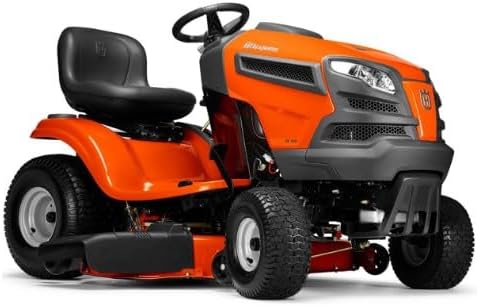
Husqvarna TS 120 42" 19 HP Briggs Lawn Tractor
| Cutting width | 42 inches |
|---|---|
| Power Source | Gas Powered |
| Operation Mode | Manual |
The Husqvarna TS 120 is a straightforward 42-inch riding lawn tractor aimed at homeowners who want reliable, no-frills mowing. It pairs a 19 HP Briggs & Stratton engine with a pedal-operated hydrostatic transmission so you can keep both hands on the wheel while smoothly changing speed. The stamped twin-blade deck delivers wide cutting coverage for small to mid-size yards, and side ejection comes standard with optional mulching and collection accessories for different cleanup preferences. The seat and control layout are designed for comfortable, predictable operation during regular mowing sessions, and the simple mechanical design makes routine maintenance and repairs easier for most owners. Limitations include the manual operation mode and a basic feature set compared with higher-end tractors, so it is not geared toward heavy commercial work or very large properties. For someone prioritizing dependable performance and straightforward maintenance on a budget, the TS 120 covers the essentials without unnecessary complexity.
Best for: Homeowners who need a dependable, easy-to-maintain riding tractor for small to mid-size lawns and who prioritize reliable, straightforward operation over premium features.
Less Ideal for: Large properties, commercial users, or buyers seeking advanced comfort or automated features should consider higher-end models with larger decks and more amenities.
- Robust 19 HP Briggs & Stratton engine for consistent mowing power
- Pedal-operated hydrostatic transmission allows smooth, hands-on steering control
- 42-inch twin-blade stamped deck covers more ground per pass for faster jobs
- Simple, homeowner-friendly design that is easier to maintain and service
- Basic feature set with manual operation not suited for heavy commercial use
- No integrated collector included as standard
Verdict: A dependable, budget-friendly 42-inch tractor that delivers straightforward power and easy maintenance for homeowners.
EGO Power+ TR4204 42" Electric Riding Lawn Tractor

| Power Source | Battery Powered |
|---|---|
| Battery Average Life | 60 minutes |
| Cutting width | 42 inches |
| Number of Positions | 12 |
| Maximum Adjustable Cutting Height | 4 inches |
The EGO Power+ TR4204 is a cordless 42-inch riding lawn tractor designed to replicate gas-mower performance without fumes or constant maintenance. It combines up to six 56V ARC Lithium batteries and dual brushless cutting motors to deliver the equivalent of about 21 horsepower and a claimed run time sufficient to cut roughly 1.5 acres on a single charge with the six included 6.0Ah batteries. Controls are user-friendly: a digital LCD offers three blade settings, three drive speeds, cruise control, and easy deck-height adjustment across 12 positions. The stamped steel deck, anti-scalp wheels, LED lights, USB port, Bluetooth, and a rear tow hitch add practical value for property chores. Because it is belt-free and uses brushless motors, routine mechanical upkeep is reduced versus gas tractors. Important limitations are the tractor's reliance on multiple batteries for top runtime and the relatively heavy package, which means storage and charging planning are necessary; cutting significantly more than the claimed area will require additional batteries or recharges. For buyers prioritizing lower ongoing maintenance and quieter operation, this model is a compelling electric alternative to small gas tractors.
Best for: Homeowners who want a quieter, low-maintenance riding mower that approximates gas performance for lawns up to about 1.5 acres and who value modern controls and convenience features.
Less Ideal for: Large properties well over 1.5 acres or users who need continuous, all-day mowing without planning battery swaps should consider larger gas or higher-capacity electric options.
- Battery platform delivers gas-equivalent power using up to six 56V ARC Lithium batteries
- Dual brushless cutting motors and stamped steel 42-inch deck reduce mechanical maintenance
- Digital display with three blade settings, three drive speeds and cruise control for easy customization
- Premium convenience features such as LED lights, USB charging port, Bluetooth and a rear tow hitch
- Top runtime depends on carrying and managing six batteries which requires charging logistics
- Heavier and larger footprint requires dedicated storage space and handling
Verdict: Choose the TR4204 if you want a near-gas riding mower experience with quieter operation and much lower mechanical upkeep thanks to EGO's multi-battery electric platform.
PRORUN PLT60V42 42-Inch Battery Riding Lawn Mower

| Power Source | Battery Powered |
|---|---|
| Cutting width | 42 inches |
| Battery Average Life | 1.33 hours |
| Maximum Adjustable Cutting Height | 4.5 inches |
| Number of Positions | 7 |
The PRORUN PLT60V42 is an all-electric 42-inch riding mower intended to replace a small gas tractor for typical suburban lawns. It uses three brushless direct-drive motors and a stamped steel twin-blade deck to deliver cutting power while avoiding fuel and exhaust. Operation is largely automatic with a digital dashboard that shows battery charge, blade settings, and speed, and the mower accepts multiple 60V batteries with auto switchover for extended runtime. Practical benefits include quieter operation, lower routine maintenance without oil or spark plugs, and a washout port for easier deck cleaning. Important limitations are battery runtime—manufacturer figures suggest about 1.33 hours average or up to about 80 minutes depending on battery configuration—which may require a second battery set for larger properties, and the residential warranty is limited to three years. Assembly and charging logistics are additional considerations compared with a gas machine. For budget-minded buyers who want a cleaner, lower-maintenance alternative to gas, this mower delivers core performance in a familiar riding format.
Best for: Buyers who want a lower-maintenance, quieter alternative to a gas riding mower for routine lawn care and prioritize reliability and simple operation over maximum run time.
Less Ideal for: Large acreage owners who need continuous long runtimes or contractors who require the nonstop operation of a fuel-powered tractor.
- Brushless direct-drive motors for efficient, low-maintenance power
- Accepts multiple 60V batteries with auto switchover to extend runtime
- 42-inch stamped steel twin-blade deck suitable for typical suburban lawns
- Digital dashboard that displays battery level and blade/speed settings for easy operation
- Battery runtime may be insufficient for larger properties without extra batteries
- Heavier unit and battery system mean it requires proper storage and charging space
Verdict: A practical, lower-maintenance electric 42-inch riding mower that suits homeowners who want a quieter, easier-to-own alternative to a gas tractor.
Choosing the Right Budget 42-Inch Riding Lawn Mower: Key Factors to Consider
Deck Construction and Material
The mower deck controls airflow and blade stability, so material thickness and bracket design affect how even the cut is over varied turf. Thicker stamped steel decks resist denting and hold blade geometry longer, which reduces vibration and uneven clipping. Reinforcements around the spindles and discharge opening help resist distortion from knocks against hidden objects. Tell-tale signs of a poorly built deck include thin flanges, wide gaps at mounting points, and easily bent deflectors.
Deck shape and anti-scalp wheels matter for lawns with dips and rises. A well-shaped deck keeps grass from bunching at the blades and directs clippings to the discharge or mulching system more predictably. On budget models, pay attention to how the deck mounts to the frame and whether blade spindles are serviceable without full disassembly.
Cutting System and Blade Quality
Blade type, length, and mounting affect striping, mulching, and the ability to cut thick or wet grass. Wider 42-inch decks use blade overlap to avoid gaps; look for blades that maintain a stable edge and bolt pattern that resists loosening. A properly balanced blade reduces vibration and wear on the deck and spindle bearings.
Consider whether the mower supports mulching plugs, side discharge, and bagging attachments. Each option changes the airflow and can require different engine power to maintain RPM under load. For budget riders, a robust basic blade and an easy way to swap cutting modes are more valuable than extra specialty blades that are costly to replace.
Engine Reliability and Access
A dependable engine is central to low-cost ownership. Engines with simple, widely used components are easier and cheaper to service locally. Look for accessible oil drains, straightforward air filter access, and carburetors that can be tuned without specialized tools. Engines that run cool and have good breathing ducts reduce clogging and overheating during repeated passes.
On budget machines, factory tuning can be conservative. Good access to the spark plug, fuel shutoff, and battery terminals speeds seasonal servicing. Also confirm that parts such as belts, blades, and filters are standard sizes common across the industry to avoid long lead times.
Transmission and Maneuverability
Transmission type – hydrostatic versus gear-driven – influences how smoothly the mower changes speed and handles varying terrain. Hydrostatic drives offer variable speed control and easier handling around obstacles, while gear-driven systems are simpler and can be more durable if properly maintained. For small yards with tight turnarounds, responsive steering and a short turning radius reduce time spent trimming edges by hand.
Also consider ground clearance and tire tread. Tires with a modest tread pattern will provide traction without tearing up turf on wet days, and appropriate clearance prevents frequent scalping on uneven ground.
Maintenance Access and Frequency
Budget mowers should minimize the time you spend maintaining them. Features that matter include tool-free access panels, centralized grease points, and clear service intervals. Simpler machines that let you change oil or replace belts from the top without lifting the entire deck save time and discourage deferred maintenance.
Expect more regular belt and blade attention on budget units; check how easy it is to remove the deck and reach common wear items. A design that allows owners to perform routine checks quickly will lower lifetime operating costs even if initial features are modest.
Operator Comfort and Controls
Operator comfort affects mowing speed and the length of time you can work without fatigue. Seat support, shock isolation, and vibration damping are useful even on budget machines. Intuitive control placement for throttle, choke, and deck engagement means fewer interruptions while mowing.
Also assess how simple it is to adjust cutting height and to fit accessories like headlights or a tow hitch. Machines that require tools for every small adjustment add time to routine tasks and make seasonal changes more cumbersome.
Sizing the Mower to Your Yard
A 42-inch deck suits small to mid-size lawns where a balance between mowing speed and maneuverability is needed. If your yard has many trees, narrow gates, or tight beds, a 42-inch deck lets you pass through wider openings while still covering ground faster than a walk-behind.
Factor in storage space and transport. A compact footprint helps if you store the mower in a single-car garage or garden shed. Also plan for routine maintenance space so you can tilt or access the deck without heavy lifting.
- 42-inch decks cut faster than walk-behinds but require more turning room than zero-turn mowers
- Measure gate and shed clearances before committing to a rider
Mulching, Bagging, and Discharge Options
Different mowing modes change how clippings are handled and affect engine load. Mulching chops clippings finely and returns nutrients to the lawn, but it can demand more consistent blade speed. Side discharge clears clippings quickly and is less likely to clog in tall grass, while bagging keeps clippings contained for composting or disposal.
On budget riders, ensure attachments are easy to fit and do not require complex brackets or electrical hookups. A machine that accepts a simple bagging system or a mulching plug gives you flexibility for seasonal lawn care.
- Mulching reduces yard waste but may need more frequent blade sharpening
- Bagging yields cleaner beds and is useful when overseeding or collecting clippings
Routine Winterizing and Off-Season Care
Proper off-season care extends the life of a budget mower. Winterizing steps include cleaning clippings from the deck, changing the oil, and stabilizing fuel. For small engines that sit unused, draining the carburetor or running the fuel dry prevents varnish build-up that causes starting issues in spring.
Store the mower in a dry, ventilated space and protect the battery if temperatures regularly drop below freezing. Creating a short checklist for end-of-season tasks saves hours of troubleshooting later.
- Clean the deck to prevent rust and maintain airflow
- Run the engine to circulate fresh oil and stabilize components before storage
Common Repairs and DIY Fixes
Budget riding mowers are designed to be serviceable by owners with basic tools. Common fixes include replacing blades, changing belts, cleaning or replacing air filters, and tightening deck brackets. Learning to perform these tasks reduces downtime and keeps a mower on the schedule.
Keep a small kit of spare belts, a balancer for blades, and replacement filters. Many issues trace back to clogged decks or dull blades rather than deep mechanical failure, so start troubleshooting there.
- Check blade balance after sharpening to avoid vibration
- Inspect belt tension periodically to prevent slippage under load
Safety Tips for Residential Riders
Operate the mower on clear grass and avoid slopes beyond the machine's rated capability. Keep children and pets well away while you mow and before you start the engine, remove any thrown-object hazards like rocks or toys.
Always engage parking brakes, remove the key before servicing, and follow manufacturer guidelines for removing or fitting blades. Even budget units require the same basic safety diligence as higher-end machines.
- Avoid mowing on wet grass to reduce slipping and clumping
- Use ear and eye protection when operating or servicing the mower
How We Chose the Best Budget 42-Inch Riding Lawn Mower
We prioritized real-world mowing factors that affect day-to-day ownership of a budget 42-inch riding lawn mower. Key evaluation criteria included deck construction and blade geometry because a well-built deck determines cut quality and reduces scalping. Engine durability and serviceability were assessed since simpler, easily serviced engines keep running longer on a budget. Transmission type and drive responsiveness matter for maneuvering around obstacles and on modest slopes. Ease of maintenance covers access to filters, battery, belts, and grease points so routine upkeep stays quick. Comfort and control look at seat support, steering feel, and control layouts because operator fatigue changes how often you mow. We excluded machines with deck widths other than 42 inches and models marketed for heavy commercial use to keep the list focused on residential, budget-minded riders. We also filtered out units with known safety compliance gaps or insufficient parts availability. The result is a practical, gardener-focused shortlist that emphasizes cut quality, serviceability, and day-to-day reliability.
FAQ
Is a 42-inch deck too big for a small yard?
A 42-inch deck is often a good compromise for small yards because it reduces mowing time while remaining maneuverable. If your yard has many narrow passages or very tight beds, a smaller deck may be more practical.
How often should I sharpen the blades on a budget rider?
Sharpen blades every 20 to 25 hours of use or when you notice tearing instead of clean cuts. Lawns with sandy soil or hidden debris may require more frequent attention.
Can I fit a bagging system or mulching kit to a basic 42-inch riding mower?
Most residential 42-inch riders accept aftermarket or manufacturer attachments for bagging and mulching. Check mounting points and whether the mower provides adequate engine power under load for the chosen attachment.
Are hydrostatic drives worth it on a budget mower?
Hydrostatic drives offer smoother, variable speed control that makes turning and speed adjustments easier, which is helpful in yards with obstacles. However, they can be more complex to service than gear drives, so weigh smooth operation against potential maintenance complexity.
What maintenance tasks should I do before storing the mower for winter?
Before storage, clean the deck, change the oil, remove or stabilize fuel, and disconnect the battery if cold temperatures are expected. Inspect belts and blades so the mower is ready when the season returns.
Final Verdict
Focus on a 42-inch rider that balances deck strength and serviceability for the best long-term outcome on a budget. Prioritize machines with straightforward engine access, standard replacement parts, and a deck that resists distortion. Expect tradeoffs such as fewer comfort features or simpler transmissions, but choose the combination of cut quality, ease of maintenance, and maneuverability that suits your yard layout. With practical upkeep and the right match to your lawn size, a budget 42-inch riding mower can deliver reliable, efficient mowing year after year.
