

Note: This article contains affiliate links. If you click on these links and make a purchase, I may earn a small commission at no extra cost to you. This helps support my research and content. Read my full affiliate disclosure here.
Picking the right soil for an indoor herb garden changes how quickly seedlings root, how often you need to water, and how flavorful your foliage becomes. Indoor herbs face unique constraints: limited pot volume, lower light than outdoors, and the need for reliable but not waterlogged roots. The shortlisted soils in this guide represent top choices suited to container-grown herbs in kitchens, balconies, or sunrooms. We evaluated mixes for drainage, nutrient profile, and texture so you can choose a potting medium that helps herbs establish quickly and produce steady harvests. Read on to see which soil characteristics matter most and why each shortlisted option made the cut.
Top Picks at a Glance
| Best Overall The best all-around choice for most situations | Miracle-Gro Organic Indoor Potting Mix (16 qt) |  |
| Best Quality Built to a higher standard if you want something more solid | Rosy Soil Herb Mix Organic Potting Soil, 4 Quart |  |
| Best Value The sweet spot between price and what you get | Burpee Premium Organic Potting Mix with Coco Coir (9 Qt) |  |
| Best Budget The cheapest option that still gets the job done reliably | Back to the Roots Organic Indoor Potting Mix, 6 Quart |  |
| Highest Rated A top-rated pick with lots of positive feedback | circle soil Houseplant Potting Mix (Peat-Free, 4 qt) |  |
| Most Popular A crowd favorite that many people choose with confidence | Miracle-Gro Indoor Potting Mix for All Plants, 6 qt. (2-Pack) |  |
| Best Seller A high-volume bestseller chosen again and again | ZeeDix 30mm Peat Seed Starter Pellets (55 pcs) |  |
Miracle-Gro Organic Indoor Potting Mix (16 qt)

| Item Highlight | Protects Against Over & Under Watering |
|---|---|
| Volume | 1 cubic feet |
| Style Name | Indoor |
| OMRI Listed | Yes |
This 16 qt Miracle-Gro Organic Indoor Potting Mix is a ready-to-use soil blend designed for indoor containers and seed starting. It combines coir and sphagnum peat moss to balance aeration and moisture retention while a quick-start natural fertilizer gives seedlings and transplants an initial nutrient boost. Typical uses are filling pots for houseplants and herbs, topping up containers at repotting, and seed trays where consistent moisture is important. The OMRI listing makes it suitable for organic indoor gardening, and the bag is sized to fill roughly a 12-inch pot. Practical benefits include improved water regulation compared with plain garden soil, easier seed germination when kept consistently moist, and convenience from a pre-mixed product. Limitations are that the bag is relatively small for repeated herb garden repots, and indoor gardeners who prefer completely peat-free or custom soil recipes may find the fixed blend restrictive. For best results use pots with drainage and monitor watering since indoor conditions still affect moisture needs.
Best for: Best for home gardeners building or maintaining a small indoor herb garden or houseplant collection who want a convenient, ready-made organic mix that promotes reliable moisture balance and easier seed starting.
Less Ideal for: Not the best choice for growers who need large quantities for many pots, or those who want to create fully custom or peat-free soil recipes from individual components.
- Formulated for indoor use to reduce risk of over- and under-watering
- Contains coir and peat moss for a balance of aeration and moisture retention
- Includes a quick-start natural fertilizer to support seedlings and recently transplanted herbs
- OMRI listed for organic gardening use
- 16 qt bag is modest in volume for building or refreshing a multi-pot indoor herb garden
- Contains peat moss which some gardeners avoid for sustainability or peat-free preferences
Verdict: A convenient OMRI-listed indoor potting mix that gives small indoor herb gardens better moisture control and an immediate nutrient boost for easier seed starting and repotting.
Rosy Soil Herb Mix Organic Potting Soil, 4 Quart

| Unit Count | 64 Ounce |
|---|---|
| Volume | 4 quarts |
| Item Highlight | Biochar, Worm Castings, Mycorrhizae Blend, Peat-Free, Fast Draining |
Rosy Soil Herb Mix is a ready-to-use, peat-free potting blend made specifically for herbs grown in pots or planters. It combines wood biochar, compost, worm castings, bark fines, and beneficial mycorrhizae so roots can access nutrients more efficiently while the medium stays light and airy. Typical uses are filling 6-inch to medium containers for basil, cilantro, lavender, thyme, mint, and rosemary on a windowsill or balcony; the resealable 4-quart bag fills two to three medium pots and can also be used for seed starting. Notable features include the biochar for nutrient and moisture retention without becoming soggy, a living-microbe component to improve nutrient uptake, and a peat-free recipe aimed at sustainability. In practice you get fast drainage that reduces root rot risk and a fertile environment that helps herbs establish quickly and produce fuller growth and flavor. The main limitations are bag size for larger projects and that concentrated mixes like this may still benefit from occasional supplemental feeding for continuous heavy harvests.
Best for: Herb growers who prioritize fast-establishing, high-performing potted herbs and want a ready-made, microbially active, peat-free mix for windowsill or balcony planters.
Less Ideal for: People needing large volumes for in-ground beds or those who want exact, quantified fertilizer ratios built into their potting medium.
- Formulated for herbs with ingredients (biochar, worm castings, mycorrhizae) that support root health and nutrient uptake
- Peat-free, using upcycled components for a more sustainable potting choice
- Light, fast-draining texture that reduces standing moisture and root disease risk
- Resealable 4-quart bag sized to fill 2–3 medium pots and ready to use without mixing
- 4-quart bag is small for larger windowsill collections or multiple planters
- No guaranteed NPK or detailed nutrient analysis on the label for precision feeding
Verdict: Choose this mix when you want a compact, peat-free, microbially active potting soil that helps potted herbs establish quickly and produce stronger, more flavorful growth.
Burpee Premium Organic Potting Mix with Coco Coir (9 Qt)

| Item Form | Powder |
|---|---|
| Specific Uses For Product | Plant Growth, Root Development, Seed Development, Soil Conditioning |
| Coverage | 9 Qt Container |
| Included Components | Fertilizer |
Burpee Premium Organic Potting Mix is a 9-quart, OMRI-listed mix formulated for container gardening and seed starting. It combines organic nutrients and coconut coir to improve moisture retention while keeping soil airy, so seedlings and herb transplants establish roots without sitting in water. The manufacturer states it feeds plants for up to three months, making it useful for short-term container crops and seasonal herb pots. Typical use is filling pots or raised beds, planting seeds or seedlings, and watering to establish growth; it also works indoors where drainage and consistent moisture are important. Notable features are the coco coir component for balanced moisture, organic certification for eco-conscious gardeners, and a fine, powdery texture suited to small pots and seed trays. Limitations are the small bag size, which means frequent repurchasing for larger herb collections, and that longer-term containers will need additional feeding after the stated nutrient period. This is a practical, low-maintenance base mix for gardeners who want an organic, ready-made soil that reduces watering and supports reliable root development.
Best for: Ideal for gardeners who want a convenient, organic-ready potting mix to start seeds and maintain a small to medium indoor herb collection with minimal fuss.
Less Ideal for: Not a good fit for growers who maintain large container herb gardens or year-round heavy-feeding plants that require bulk soil or long-term nutrient supply.
- OMRI listed organic mix suitable for organic herb growing
- Coco coir improves moisture retention without waterlogging
- Formulated to support seed germination and root development
- Feeds plants for up to three months, reducing immediate fertilizing needs
- 9-quart bag is small for larger or year-round herb gardens
Verdict: A compact, OMRI-listed potting mix with coco coir that gives indoor herb gardeners an easy, low-maintenance start for seeds and container transplants.
Back to the Roots Organic Indoor Potting Mix, 6 Quart

| Volume | 6 quarts |
|---|---|
| Ingredients | Coconut Coir, Yucca, Mycorrhizae, Perlite, Horticultural Sand |
| Type | Indoor Potting Mix |
| Made in | USA |
This 6 quart Back to the Roots Indoor Potting Mix is a ready-to-use soil blend designed for potted houseplants and small indoor herb gardens. It combines coconut coir, yucca extract, mycorrhizae, perlite, and horticultural sand to give light, well-draining media that holds moisture without becoming waterlogged. The added yucca extract helps the mix retain moisture longer so you do not need to water as frequently, and the mycorrhizae support root development and nutrient uptake for faster establishment of seedlings and transplants. Because it is peat-free and labeled organic, it is a better choice for growers avoiding peat or synthetic inputs. At 6 quarts this bag is convenient for repotting a few small pots or filling starter trays, but you will need multiple bags for a larger herb garden. The mix is simple to use straight from the bag and is formulated to reduce indoor pests by excluding bark and compost, though heavy feeders may still need supplemental fertilizer over time.
Best for: Ideal for budget-conscious indoor gardeners who want an affordable, ready-to-use organic potting mix for a handful of herb pots, starter seedlings, or routine repotting of common houseplants.
Less Ideal for: Not a good fit for growers setting up larger indoor herb beds or for those who need a fertilized all-in-one growing medium.
- Peat-free and 100% organic blend suitable for environmentally minded growers
- Contains yucca extract to improve moisture retention and reduce frequent watering
- Includes mycorrhizae to help root development and nutrient uptake
- Light, well-draining formula with perlite and sand that suits potted herbs and seedlings
- Small 6 quart volume means multiple bags are needed for larger indoor herb setups
- Does not include nutrients for heavy-feeding plants so additional fertilization is required
Verdict: A compact, peat-free organic potting mix that makes it easy and inexpensive to pot a few indoor herbs or start seedlings with improved moisture retention and root support.
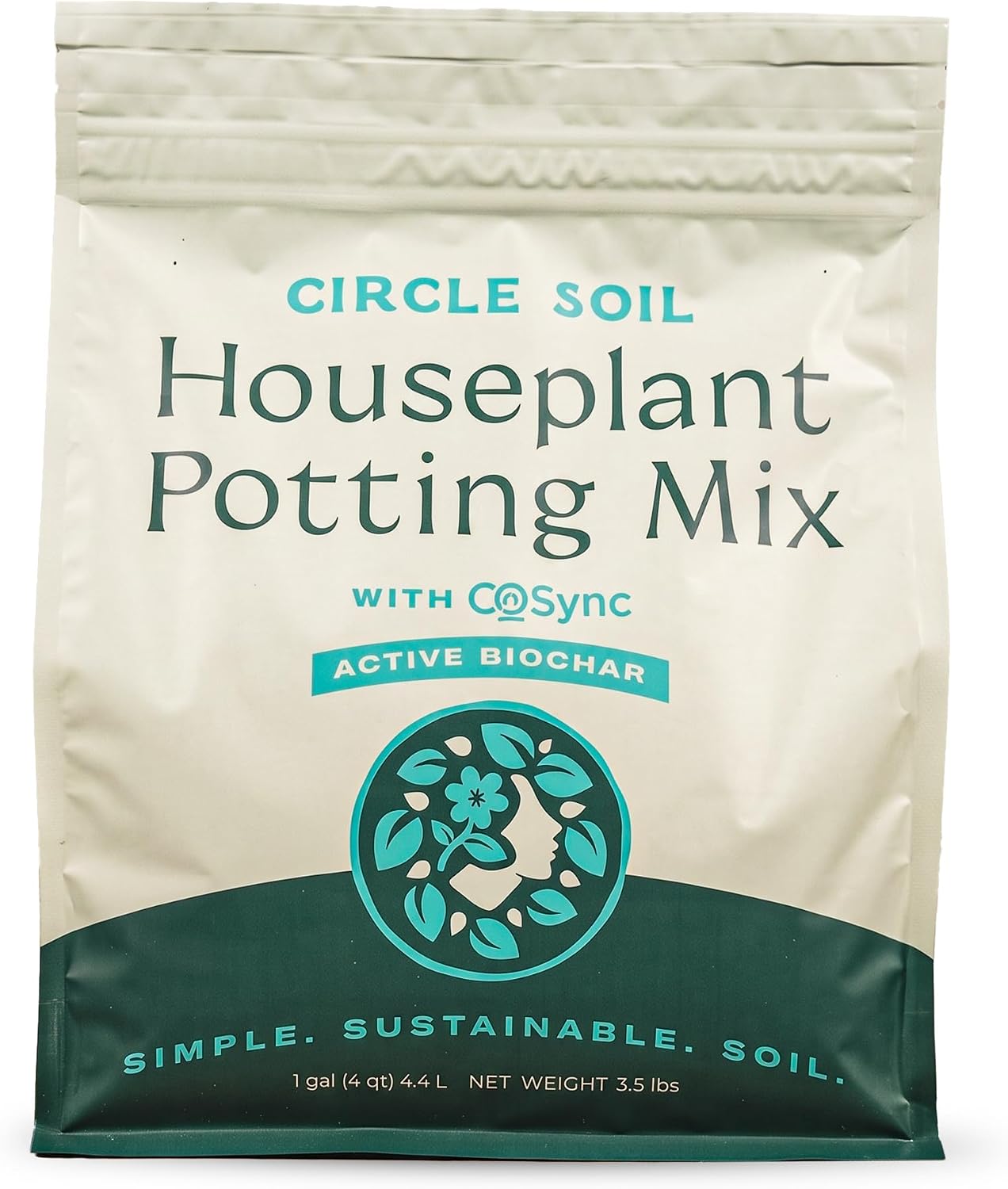
circle soil Houseplant Potting Mix (Peat-Free, 4 qt)
| Unit Count | 56 Ounce |
|---|---|
| Item Highlight | Active Biochar, Worm Castings, Expanded Shale, Peat-Free, Organic |
| Number of Packs | 1 |
| Brand Name | circle soil |
This peat-free houseplant potting mix is designed as an all-purpose indoor soil that balances water retention, aeration, and nutrient availability for herbs and common houseplants. It blends active biochar made from recycled tree waste with coconut coir, expanded shale, compost and worm castings to hold moisture where roots can access it while preventing waterlogging. Typical use is repotting potted herbs or top-dressing containers that need improved drainage and root oxygenation. Notable features are the biochar for microbial support and nutrient retention, expanded shale for steady aeration, and organic inputs that reduce the need for immediate fertilizer. Practical benefits include easier root development, less risk of overwatering, and a peat-free formula for gardeners avoiding peat moss. Limitations are package size and unit count if you need soil for many pots at once and the mix may feel moist out of the bag, which is normal but could surprise growers expecting dry retail soils.
Best for: Home gardeners who prioritize dependable, low-maintenance soil for indoor herbs and common houseplants and want a peat-free, microbially supportive mix that reduces watering mistakes.
Less Ideal for: Growers who need bulk potting soil for many containers or commercial-scale herb production should choose larger-volume landscaping or grower mixes.
- Active biochar supports microbial life and helps retain nutrients near roots
- Expanded shale and coconut coir provide consistent aeration and drainage
- Contains compost and worm castings for organic nutrient input
- Peat-free formula uses recycled materials and avoids strip-mined peat
- Small 4 quart unit may require multiple bags for a larger herb garden
- May feel moist in the bag which can be mistaken for pre-watering
Verdict: A reliable peat-free potting mix with biochar and organic amendments that makes repotting and maintaining indoor herbs easier and less error-prone.
Miracle-Gro Indoor Potting Mix for All Plants, 6 qt. (2-Pack)

| Number of Packs | 2 |
|---|---|
| Item Highlight | Feeds for up to 6 Months |
| Unit Count | 400.58 Ounce |
| Ingredients | Sphagnum Peat Moss, Coir, Perlite, Fertilizer, Wetting Agent |
This two-pack of Miracle-Gro Indoor Potting Mix is a lightweight, ready-to-use soil blend meant for repotting and filling indoor containers. It combines sphagnum peat moss, coconut coir, and perlite with a built-in fertilizer and wetting agent so it retains moisture yet releases it to roots, helping small herb pots and foliage plants establish quickly. The formula is bark- and compost-free, which the brand says reduces places where fungus gnats breed. Use it straight from the bag: fill a drained pot, set the plant, top off and water. Practical benefits for an indoor herb garden include ease of use, predictable water handling, and a nutrient boost that lasts weeks to months so seedlings and transplants get a good start. Limitations are that the bagged mix contains pre-mixed fertilizer so you should delay additional feeding to avoid overfertilizing, and gardeners who prefer fully organic or custom drain-fast mixes for succulents may want different blends. You will still need to repot annually to refresh nutrients and avoid compaction for best results.
Best for: Best for herb growers who want an easy, reliable potting mix that establishes plants quickly and reduces common indoor pest habitat while minimizing mixing and prep work.
Less Ideal for: Not a great choice for growers who insist on fully organic-certified soil or those who need a specialized ultra-fast-draining blend for succulents or orchids.
- Ready-to-use blend with peat, coir, and perlite for consistent water retention and drainage
- Includes fertilizer that feeds plants for up to six months, reducing immediate need to supplement
- Bark- and compost-free formula reduces common hiding places for fungus gnats
- Lightweight mix that makes repotting and handling small pots easier
- Pre-mixed fertilizer means you must delay or adjust additional feeding to avoid overfertilizing
- Not targeted to specialty needs like extra-fast drainage for cacti or strictly organic-certified gardeners
Verdict: A convenient, pest-conscious potting mix that gives indoor herbs a quick, low-effort start with built-in nutrition.
ZeeDix 30mm Peat Seed Starter Pellets (55 pcs)

| Unit Count | 50 Count |
|---|---|
| Material | Sphagnum peat moss |
| Style Name | Indoor & Outdoor Gardening |
| Item Weight | 0.28 kg |
These compressed peat pellets are designed to make indoor herb seed starting straightforward. Each 30mm pellet expands when watered into a small peat plug wrapped in a non-woven net so you can sow seeds directly into the plug and transplant the whole unit without disturbing roots. For an indoor herb garden you get tidy, uniform plugs that retain moisture well and promote root development thanks to sphagnum peat moss. The netting helps keep the medium intact during handling and transplanting into pots or planters. Use them in seed trays or small pots under grow lights; they are especially handy for basil, parsley, cilantro, and chives. Important limitations are that peat is a single-component medium so seedlings will need feeding or potting-up into richer mix after a few weeks, and care is needed to avoid overwatering during germination. Also the pellets are small, so they suit herb seeds and other small-seeded plants rather than larger seedlings that need more initial root space.
Best for: Home gardeners who want a low-effort, low-risk way to start many herb seeds indoors and prefer predictable, easy transplanting.
Less Ideal for: Growers who want an all-in-one nutrient-rich start or who need larger initial root volume for big seedlings should consider seedling trays with potting mix instead.
- Biodegradable plugs that can be transplanted without removing roots, reducing transplant shock.
- Good water retention and aeration from sphagnum peat to support early root development.
- Non-woven netting keeps the pellet intact during handling and makes transplanting cleaner.
- Compact, uniform size suitable for starting many herb seeds at once.
- Single-component peat medium requires fertilizing or potting mix after seedlings establish.
- Pellets are small and may not provide enough room for larger seedlings before transplanting.
Verdict: A simple, low-effort way to start multiple herb seeds indoors and transplant them with minimal root disturbance.
Choosing the Right Soil for Indoor Herb Garden: Key Factors to Consider
Drainage and Aeration
Good drainage prevents root rot in small pots. Indoor herb containers often have limited depth and less evaporative demand than outdoor beds, so a mix that lets excess water pass through while keeping pore space for oxygen is essential. Look for ingredients like coarse perlite, pumice, or coarse sand that create channels inside the pot.
Aeration affects root branching and microbial activity. If the mix compacts easily, roots will struggle to access oxygen and you will see slowed growth or yellowing leaves. For indoor herbs, choose a soil whose structure remains open over months of watering and harvesting.
Nutrient Balance and Release
Herbs need a steady supply of nitrogen, phosphorus, and potassium but not an overly rich starter mix that forces excessive leaf growth at the expense of flavor. A balanced, slow-release nutrient profile supports consistent growth across several weeks between feedings.
Consider whether the mix contains built-in slow-release fertilizer or relies on added liquid feeds. Built-in nutrients are convenient for new plantings, while neutral mixes give you control over fertilization timing and strength.
Texture and Particle Size
Fine potting soils can hold water but may compact, while coarse textures drain well but may dry too quickly in small pots. Particle size affects how roots explore the container and how evenly water distributes through the root zone.
For most indoor herb pots, a medium-textured mix that blends fine compost or coir with larger particles like perlite or pine bark provides a good balance. That texture supports both rooting and moisture balance in shallow containers commonly used for herbs.
Water Retention Relative to Pot Volume
Indoor herb pots are small, so a soil that holds too much water will leave little oxygen for roots, and one that sheds water too rapidly will force daily watering. Assess how a mix performs in the volume you plan to use.
Look for mixes designed specifically for containers rather than garden beds, and consider supplements like water-retaining crystals only if you often forget to water. Matching retention to your routine and pot size reduces stress on plants and keeps harvests consistent.
Cleanliness and Contamination Risk
Soils intended for indoor herbs should be free of weed seeds, pathogens, and excessive salts. Contaminated mixes introduce pests or fungal problems into a confined indoor space and can quickly ruin small plantings.
Choose sterilized or professionally processed mixes and check packaging for statements about pasteurization or testing. Clean mixes also reduce the chance of bringing soil-based odor or pests into living spaces.
pH and Compatibility with Herb Varieties
Most culinary herbs prefer a slightly acidic to neutral pH. A mix with a pH in the 6.0 to 7.0 range suits a broad range of common herbs, from basil to thyme. Extreme pH levels can lock out nutrients even when they are present in adequate amounts.
If you grow more specialist herbs, check the expected pH and amend the mix accordingly with lime to raise pH or sulfur to lower it. pH stability over time is also helpful in indoor settings where water chemistry can affect the root environment.
Preparing Pots and Containers for Better Soil Performance
Container choice influences how a potting mix performs. Ensure each pot has adequate drainage holes and enough volume for the herb's root system. Shallow saucers and narrow pots will change how quickly the soil dries and should be paired with mixes that retain slightly more moisture.
Before filling pots, rinse them if they are reclaimed or store-bought to remove dust. Place a small layer of coarse material like broken terracotta or mesh to prevent drain holes from clogging while keeping the soil level appropriate for planting depth.
- Match pot depth to herb root habits: shallow for thyme, deeper for rosemary.
- Use breathable pots when possible to reduce overwatering risks.
- Line plastic pots with landscape fabric if soil loss through holes is a concern.
Amending Soil for Different Herb Types
Not all herbs have the same moisture or nutrient needs. Mediterranean herbs such as rosemary and oregano prefer a grittier, faster-draining mix with lower organic content, while basil and parsley do better with slightly richer, more moisture-retentive soils.
Amend a base container mix by adding extra perlite or sand for drought-tolerant herbs. For herbs that demand steady moisture, blending in more compost or coir can buffer the root zone between waterings.
- Add perlite for increased drainage and aeration.
- Mix in compost or well-aged organic matter for more fertility.
- Use a small percentage of sand to mimic Mediterranean soil texture.
Watering Practices That Match the Soil
Watering frequency should be tied to how the chosen soil holds moisture. For quick-draining mixes, water thoroughly and allow the top inch of soil to dry before the next watering. For more moisture-retentive mixes, reduce frequency and check root conditions regularly.
Always water until excess flows from the drainage holes to avoid dry pockets. Indoor humidity and seasonality affect moisture loss, so adjust the schedule as light levels and indoor heating change throughout the year.
- Use a finger test or moisture meter to confirm dryness before watering.
- Water in the morning to reduce standing moisture overnight.
- Top-dress with a thin layer of compost in spring for a nutrient refresh.
Storing and Refreshing Potting Soil
Store unopened bags in a cool, dry place away from direct sunlight to maintain structure and nutrient integrity. Once a bag is opened, seal it to prevent moisture uptake and contamination. Avoid using soil that smells sour or shows mold growth.
Refresh container soil annually by replacing the top few inches or repotting entirely. Refreshing replenishes nutrients and corrects compaction that can occur with repeated watering and root growth.
- Keep opened bags off damp floors to prevent mold.
- Sterilize reused soil by solarizing small batches if necessary.
- Replace the entire root ball and fill with fresh mix every 1 to 2 years for long-term plants.
Common Mistakes Indoor Gardeners Make With Soil
A frequent error is using garden soil or heavy outdoor mixes in pots, which compacts and holds too much water. Another common mistake is over-amending with organic matter in small pots, making drainage poor.
Also avoid assuming all bagged potting mixes behave the same; particle size, ingredient ratios, and any added fertilizers vary widely. Read ingredient lists and choose a mix aligned with your herbs and container sizes.
- Do not use untreated garden soil for potted herbs.
- Avoid over-fertilizing shortly after potting as it can burn young roots.
- Do not ignore pot drainage; even the best soil will fail in a sealed container.
How We Chose the Best Soil for Indoor Herb Garden
We started by identifying the qualities that most directly affect herb health in indoor containers and then filtered candidate mixes against those standards. Primary evaluation criteria included drainage and aeration, nutrient availability and release pattern, texture and particle size for small pots, water retention relative to pot volume, and contamination risk such as pathogens or weed seeds. We favored mixes formulated for herbs or general-purpose indoor container use rather than bulk garden soils. We excluded outdoor topsoil blends and mixes designed exclusively for high-water plants because they do not suit small, well-drained herb containers. We also filtered out products with unclear ingredient lists or poor packaging that could affect shelf life. Final recommendations reflect a balance between fast drainage, steady nutrient supply, and particle structure that supports frequent harvesting and repotting. These criteria align with the scoring metrics used for each shortlisted soil.
FAQ
How often should I repot herbs in container soil?
Most herbs benefit from repotting or a top-dress every 12 to 24 months. Repotting refreshes nutrients and relieves compaction. If roots are circling the pot or growth slows significantly, move to a slightly larger container with fresh mix.
Can I mix my own soil for an indoor herb garden?
Yes, many gardeners blend their own mix to control texture and fertility. A common DIY ratio is one part compost or coco coir, one part peat-free lightweight base, and one part coarse perlite or pumice. Adjust ratios for moisture needs of specific herbs.
Should I use a soil with fertilizer already added?
Pre-fertilized mixes can be useful for new plantings because they reduce initial feeding needs. However, they may not match long-term nutrient plans. For precise control, use a neutral mix and apply dilute liquid feeds on a schedule.
How do I tell if my indoor soil is compacted or unhealthy?
Signs include poor drainage, water pooling on the surface, slow growth, and wilting despite adequate watering. Gently remove the plant to inspect roots; healthy roots are white and spread through the mix. If the soil feels dense and roots are congested, repot with a lighter mix.
What potting soil pH is best for common culinary herbs?
Most culinary herbs prefer slightly acidic to neutral soil, typically around pH 6.0 to 7.0. This range allows broad nutrient availability. Test pH if you grow specialist herbs and amend the mix gradually rather than making large sudden changes.
Final Verdict
Choose a soil that balances fast drainage with enough moisture retention to match your pot size and watering habits. Prioritize mixes with an open texture, moderate nutrient content, and a clean, sterile profile to reduce indoor pest and disease risk. Balancing these tradeoffs will help you pick a soil that minimizes watering headaches and supports consistent harvests. Focus on drainage, particle size, and nutrient approach to make a confident choice for indoor herb gardening.
