

Note: This article contains affiliate links. If you click on these links and make a purchase, I may earn a small commission at no extra cost to you. This helps support my research and content. Read my full affiliate disclosure here.
Picking the right manure for gardens matters because organic manures feed soil biology, improve texture, and release nutrients on a timeline that affects plant health. The wrong choice can introduce weed seeds, create odor issues, or shift soil pH in ways that complicate planting. This guide looks at six shortlisted manures suited to garden use and different growing situations. We evaluate each option on nutrient content, weed seed risk, odor and handling, and how it affects soil structure so you can pick the right amendment for your beds and containers.
Top Picks at a Glance
| Best Quality Built to a higher standard if you want something more solid | BRUT Worm Farms Cow Compost — 10 Quart Bag |  |
| Best Value The sweet spot between price and what you get | R&M Organics Cow Manure Compost Soil Amendment (10 lb) |  |
| Best Budget The cheapest option that still gets the job done reliably | Home and Country USA Organic Composted Cow Manure (1 Quart) |  |
| Highest Rated A top-rated pick with lots of positive feedback | Lancaster Agriculture Chicken Manure Pellets, 16 lb |  |
| Most Popular A crowd favorite that many people choose with confidence | Espoma Organic Chicken Manure Granules, 3.75 lb |  |
BRUT Worm Farms Cow Compost — 10 Quart Bag

| Unit Count | 192 Ounce |
|---|---|
| Volume | 10 quarts |
| Brand Name | BRUT WORM FARMS |
| UPC | 860000284295 |
Brut Cow Compost is a ready‑to‑use bagged cow manure compost aimed at improving soil fertility and structure. It is made from 100% composted cow manure that has been finely sifted, which makes it easy to mix into potting mixes, top‑dress containers, or incorporate into garden beds. Notable features include an OMRI listing for organic use, a nutrient profile with nitrogen, calcium and iron, and a low‑odor, non‑burning formula that is safe around seedlings and houseplants. In practice the compost increases microbial activity and helps retain moisture, so plants show healthier foliage and better growth when used regularly. The 10 quart bag is convenient for small gardens, potted plants, or spot treatments without handling bulk loads. Limitations are the modest volume per bag for larger beds and the product is a general amendment rather than a complete, balanced fertilizer, so heavier feeding or specific NPK management may still be needed for high‑demand crops.
Best for: Gardeners who want an easy, certified organic soil amendment to boost soil life and moisture retention in containers, small beds, or targeted spots without handling raw manure.
Less Ideal for: People establishing large garden plots or those seeking a complete NPK fertilizer for heavy feeding crops should consider bulk compost or supplemental fertilizers instead.
- OMRI‑listed organic compost safe for edible and ornamental plants
- Finely sifted, low‑odor formula suitable for indoor use and seedlings
- Adds organic matter and beneficial microbes to improve moisture retention and soil structure
- Versatile application as top dressing, mix‑in amendment, or container soil enhancer
- Small 10 quart volume requires multiple bags for larger garden projects
- Not formulated as a balanced complete fertilizer for high‑demand crops
Verdict: A compact, OMRI‑listed bag of finely composted cow manure that reliably adds organic matter and microbial life to containers and small garden beds.
R&M Organics Cow Manure Compost Soil Amendment (10 lb)

| Item Form | Solid |
|---|---|
| Specific Uses For Product | Organic |
| Application Method | Apply a thin layer around plants or mix into soil |
| Coverage | All-purpose |
| Target Species | fruits, vegetables, flowers, lawns, trees |
This 10 lb bag of R&M Organics compost is a straightforward, all-purpose soil amendment aimed at improving soil health in garden beds, containers, and raised beds. Made from cured cow manure and fully composted, it is low-odor and easy to work with — apply a thin quarter-inch layer around established plants or mix into planting soil at the recommended 5:1 ratio for new beds. The compost enhances moisture retention, aeration, and organic matter, which helps roots establish and reduces watering frequency. Its small bag size and modest weight make it convenient for small to medium projects and for gardeners who prefer incremental soil improvements. Because the product is pure compost rather than a balanced fertilizer, it is best used as a long-term soil builder rather than a quick nutrient fix; you may still need targeted fertilizers for heavy-feeding vegetables or to correct specific nutrient deficiencies. The simplicity and low odor make it a practical choice for backyard growers who want a reliable organic amendment without handling fresh manure or bulk deliveries.
Best for: Gardeners who prefer incremental, low-effort soil improvement for beds and containers and who prioritize organic, low-odor amendments for everyday maintenance.
Less Ideal for: Large-scale gardeners or landscapers who need bulk amendments or immediate corrective fertilizers for specific nutrient deficiencies should look for bulk compost or formulated plant foods.
- Fully composted cow manure reduces pathogens and minimizes odor compared with raw manure
- Improves soil structure and moisture retention for beds, containers, and raised beds
- Small 10 lb bag is easy to carry, store, and apply for small to medium gardens
- Versatile all-purpose amendment suitable for fruits, vegetables, flowers, lawns, and trees
- Not a formulated fertilizer so it may not supply immediately available nutrients for heavy feeders
- Bag size is small for larger beds or bulk soil rebuilding projects
Verdict: A convenient, low-odor organic compost that steadily improves soil structure and moisture retention for small to medium garden beds.
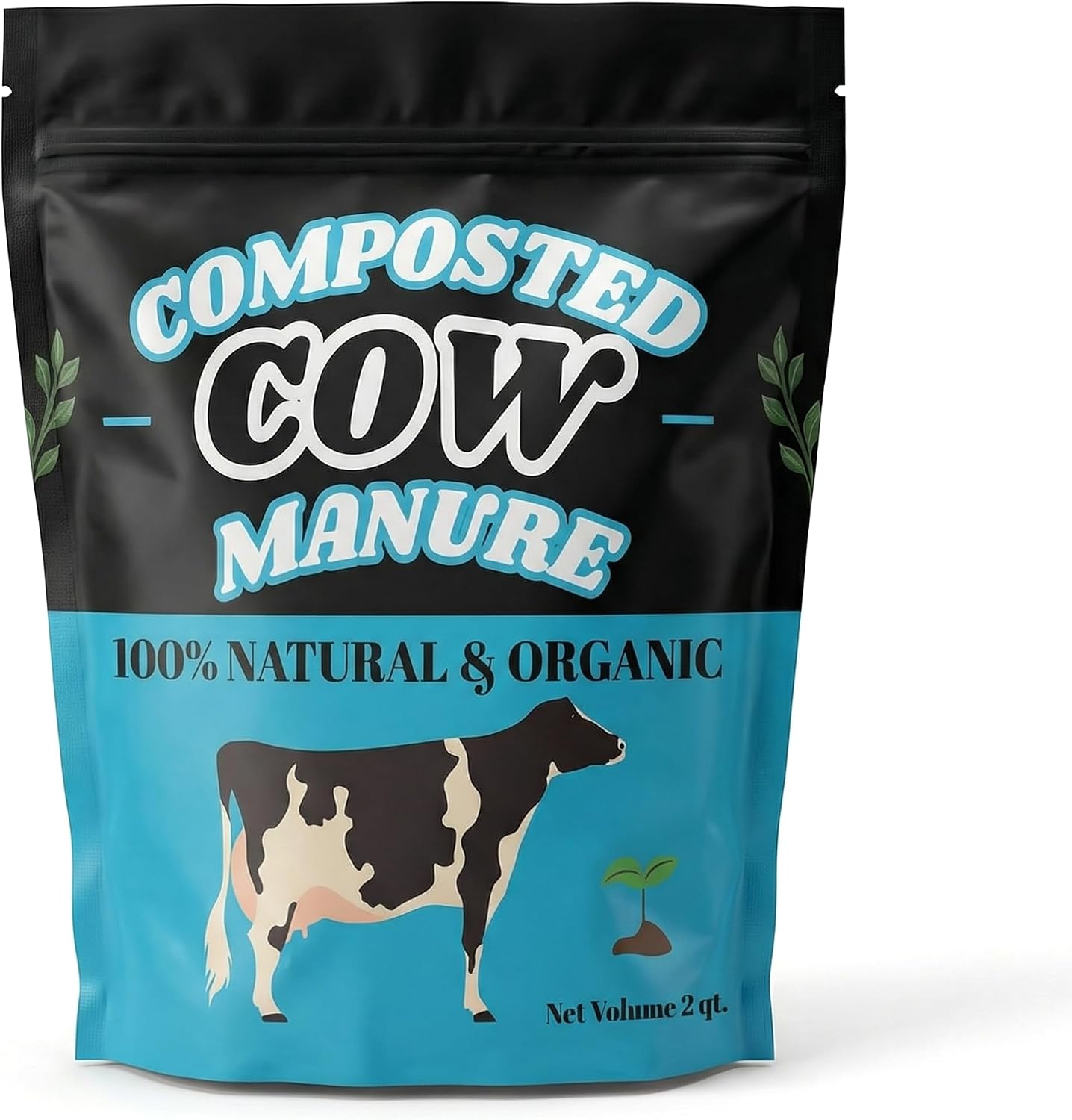
Home and Country USA Organic Composted Cow Manure (1 Quart)
| Item Form | Liquid |
|---|---|
| Application Method | Incorporate into soil |
| Target Species | vegetables, flowers, shrubs |
| Liquid Volume | 1 quarts |
| Mixing Ratio | 1:10 |
This 1-quart organic composted cow manure is a concentrated liquid fertilizer designed to be mixed and incorporated into garden soil. Typical use is blending the product at the recommended 1:10 ratio and applying it to raised beds, vegetable plots, potted plants or around shrubs to boost soil fertility and water retention. Notable features include an organic formulation from U.S. farms, a liquid form that makes even application and quick integration into soil, and guidance for full garden coverage. Practical benefits are faster distribution than bulky bagged manure, suitability for small-plot gardeners who want organic inputs, and an easy mixing ratio for dilute feeding. Limitations are the small container size, which means you will need multiple bottles for larger beds, and the liquid form may require more frequent applications than slow-release amendments. It is most useful as part of a regular feeding routine or to quickly refresh potted soils rather than as a sole long-term soil builder.
Best for: Gardeners working with small beds, containers or raised planters who want an easy-to-apply organic feed on a budget and prefer quick soil refreshes.
Less Ideal for: Large-scale vegetable growers or those seeking a single-product soil-building amendment for extensive beds should consider bulk compost or bagged manure instead.
- Certified organic composted manure sourced from U.S. farms
- Liquid form mixes easily with water for even application
- Targets vegetables, flowers and shrubs so it is versatile for garden beds and containers
- Small 1-quart volume requires multiple purchases for medium to large gardens
- Liquid feed works faster but does not provide long-term bulk organic matter
Verdict: A convenient, wallet-friendly organic liquid manure for quickly boosting soil fertility in small beds and containers.
Lancaster Agriculture Chicken Manure Pellets, 16 lb

| Item Form | Pellets |
|---|---|
| Mixing Ratio | 4:2:2 |
| Ingredients | Chicken Manure |
| Unit Count | 256 Ounce |
These chicken manure pellets are a ready-to-use organic fertilizer designed to feed flowers, vegetables, trees, and shrubs. The product arrives as dehydrated, heat-treated pellets so you can sprinkle around the plant drip line without mixing; the manufacturer recommends watering after application. With a 4-2-2 N-P-K ratio and about 8% calcium, the pellets provide a steady, slow-release source of nitrogen and supplemental phosphorus and potassium that supports leafy growth and general soil improvement. Practical benefits include ease of use versus raw manure, suitability for monthly applications during the growing season, and certification-friendly composition for organic gardening. Because the material is pelleted and heat-treated, it handles and stores more cleanly than wet manure and spreads evenly from a scoop or broadcast spreader. Limitations are that nutrient release is not immediate for rapid correction of deficiencies and the product requires regular reapplication for sustained fertility; gardeners seeking fast-acting synthetic feeds or precise soluble fertilizers will need to supplement. Use as directed around the drip line and water in to integrate nutrients into the root zone.
Best for: Gardeners who prioritize reliable, natural fertility and prefer a low-fuss, ready-to-apply organic amendment for vegetables, flowers, and landscape plants.
Less Ideal for: People who need rapid, precise nutrient correction or soluble fertilizers for container plants and fast-turnaround crops should consider alternatives.
- Pelleted, heat-treated form is easy and clean to apply with no mixing required
- Balanced 4-2-2 N-P-K with added calcium supports steady plant growth and soil health
- Suitable for organic gardens and sourced from a regenerative family farm
- Clear application guidance for seasonal and monthly use makes scheduling simple
- Slow-release nature means it will not correct acute nutrient deficiencies quickly
- Requires repeated applications through the season to maintain fertility
Verdict: A convenient, heat-treated pelleted chicken manure that delivers steady organic nutrition for gardeners who want reliable, low-maintenance soil feeding.
Espoma Organic Chicken Manure Granules, 3.75 lb

| Item Form | Granules |
|---|---|
| Application Method | Scatter around plants |
| Target Species | Flowers, Vegetables, Trees, Shrubs |
| Specific Uses For Product | Gardening, Organic, Plant Food |
Espoma Organic Chicken Manure is a ready-to-use, granulated poultry manure fertilizer aimed at home gardeners who want an organic nitrogen-rich soil amendment. With a 5-3-2 NPK analysis and added calcium, it is scattered around the plant drip line and watered in to release nutrients; the granulated, heat-treated form makes application tidy and eliminates the need for mixing. It is labeled for monthly use on vegetables and for seasonal use on trees and shrubs, which makes it practical for routine feeding of tomatoes, peppers and other vegetable beds. The product is registered for organic production and contains no fillers, so you get mostly poultry manure rather than blended proprietary mixes. Because it is dehydrated and granulated there is minimal odor and easier storage than fresh manure, but nutrient levels are moderate so heavy-feeding crops may need larger or repeated applications. Also it does not supply specific micronutrient balances or slow-release polymers, so pairing it with a balanced organic program will give best results.
Best for: Gardeners who prioritize certified organic inputs and want a simple, easy-to-apply manure fertilizer for regular feeding of vegetable beds and common garden plants.
Less Ideal for: Growers seeking a single-product, high-analysis or slow-release fertilizer for intensive commercial production should consider concentrated or formulated alternatives.
- Certified for organic gardening and made from dehydrated poultry manure
- Granulated, heat-treated form is easy to apply and has lower odor than fresh manure
- Straightforward 5-3-2 NPK plus calcium provides usable nitrogen for vegetables
- Ready-to-use with no mixing required and simple scatter-and-water application
- Moderate nutrient analysis may require more frequent applications for heavy feeders
- Does not list a full micronutrient profile or slow-release formulation
Verdict: A simple, certified organic chicken manure in granule form that makes monthly feeding of vegetable beds easy and low-odor.
Choosing the Right Manure for Gardens: Key Factors to Consider
Nutrient Profile and Release Rate
Different manures vary widely in nitrogen, phosphorus, and potassium concentrations. A high-nitrogen manure can green up leafy vegetables quickly but may burn seedlings if applied fresh. Slow-release manures are better for long-term beds and perennials because they feed soil biology and reduce spikes in plant-available nitrogen.
Think about when you need nutrients to be available. Apply fast-release manures well ahead of transplanting or use them in side-dress applications. For spring planting in recently amended beds, prefer manures with gentler release or well-composted material to avoid nutrient imbalances.
Weed Seed Content and Pathogen Safety
Manures vary in how many viable weed seeds they carry, depending on the animal diet and whether the material was heat-treated. Manure with many weed seeds can introduce persistent weeds into beds, turning a short-term savings into long-term extra work.
Pathogen risk is another concern for edible gardens. Properly aged or composted manures heat to levels that reduce pathogens. When using manure on vegetable beds, follow recommended waiting times after application before harvesting to reduce food-safety risk.
Effect on Soil Structure and Drainage
One of the best long-term benefits of manure is improved soil tilth. Some manures add organic matter that increases water retention in sandy soils and improves aggregation in heavy clay. Others, especially those mixed with bedding materials, can also lighten compacted soils and increase pore space.
Consider the starting soil: heavy clay benefits from manures that boost structure and encourage worm activity, while sandy soils need manures that hold moisture. Repeated annual applications build structure over seasons, so think in multi-year terms.
Odor, Handling, and Storage
Odor and ease of handling affect where you store and use manure around a home garden. Fresh manures tend to be smellier and can attract pests; composted or cured manures are usually milder and easier to work with.
Storage needs matter for small-space gardeners. Bags or well-sealed bins keep cured manures usable through a season, while loose piles require containment and occasional turning. Consider proximity to living spaces and neighbors when choosing a manure that has stronger smells.
Curing, Composting, and Maturity
Fresh manure must be cured or composted before routine garden use unless you plan to age it in place. Proper curing reduces nitrogen volatility, kills many weed seeds, and stabilizes the material so it does not overheat or tie up soil nitrogen after application.
Check maturity by smell, texture, and temperature. Mature manure is dark, crumbly, and earthy-smelling. When unsure, compost manure into a mix and let it mature for several months before incorporating into planting beds to avoid harming seedlings.
pH and Long-Term Soil Chemistry
Manures have different pH effects depending on the animal source and bedding materials. Repeated use can shift soil pH and alter nutrient availability, so consider starting soil tests to track changes over seasons.
If you garden in containers or raised beds, choose manures that match your crop needs and monitor pH annually. Adjust lime or sulfur as needed if manure applications move your soil away from an optimal range for vegetables or ornamentals.
How to Apply Manure Safely
Apply manure based on its maturity and the planting schedule. Well-cured manure can be worked into beds in fall or early spring. Fresh or only partially cured manure is best composted first or applied several months before planting to avoid nitrogen burn.
For established plants, side-dress with a thin layer and work it lightly into the topsoil to encourage microbial activity without disturbing roots. For new beds, mix composted manure into the top 6 to 8 inches and allow a settling period before planting heavy feeders.
- Use gloves and a mask when handling dusty material.
- Avoid applying to frozen ground where runoff is possible.
- Water new applications lightly to start microbial activity.
Timing and Planting Considerations
Different crops tolerate recent manure applications differently. Root crops and leafy greens are more sensitive to fresh, high-nitrogen materials. Fruiting crops like tomatoes benefit from a steady nutrient supply and usually do well with composted manures applied earlier in the season.
If you must use fresher manure, reserve it for beds that will host heavy feeders later in the season and leave a longer waiting period before harvest for edible crops.
- Apply composted manure in fall to feed soil biology over winter.
- Side-dress with small amounts during rapid growth phases.
Using Manure in Containers and Raised Beds
Containers and raised beds need well-balanced, mature manures because root zones are confined and nutrient concentrations build quickly. Mix composted manure with finished compost and local soil to create a stable planting medium.
Avoid placing large volumes of fresh manure in containers. Instead, blend small amounts of mature manure into mixes or top-dress with a thin layer and monitor plant response closely.
- Use a higher ratio of finished compost in smaller containers.
- Refresh top layers annually rather than over-amending.
Storing and Preparing Bulk Manure
If you buy or collect manure in bulk, set up a covered, well-draining area for curing. Turn piles occasionally to ensure even decomposition and to prevent anaerobic odors. Keep fresh piles away from water sources to avoid nutrient runoff.
Bagged or pelleted manures are easier to store in small gardens. Keep them dry and off bare soil to maintain quality. Label storage dates so you can track curing time and maturity.
- Cover piles with breathable tarp to retain heat while preventing excess moisture.
- Keep cured manure separate from fresher material to avoid accidental mixing.
Environmental and Regulatory Notes
Be aware of local regulations around spreading organic waste near waterways and property lines. Even backyard applications can contribute to nutrient runoff if applied before heavy rains.
Use buffer strips between amended beds and drains. Avoid over-application, especially of high-phosphorus manures, to limit long-term accumulation that can affect local water quality.
- Check municipal rules for composting and manure storage if applicable.
- Use soil tests to guide application rates and avoid excess nutrient buildup.
How We Chose the Best Manure for Gardens
We focused on practical, garden-tested attributes that determine whether a manure works well in small-scale vegetable beds, flower borders, raised beds, and container mixes. Selection prioritized manures with clear nutrient profiles and predictable decomposition behavior so gardeners can plan planting timelines. Evaluation criteria included nutrient content and release rate, weed seed and pathogen risk, influence on soil structure and drainage, odor and handling difficulty, and compatibility with common garden plants. We excluded fresh, uncomposted piles sold with no maturity information and any mixes that masked manure content with large amounts of wood chips or synthetic additives. Editors also considered sourcing practicality and common availability to make sure options are realistic for backyard gardeners. The scoring dimensions reflect everyday tradeoffs gardeners face: some manures deliver quick fertility but require more careful curing, while others improve long-term soil health with lower immediate nutrient release.
FAQ
Can I use fresh manure directly in vegetable beds?
It depends. Fresh manure can be high in soluble nitrogen and may contain weed seeds or pathogens. Most gardeners compost or age fresh manure before using it in vegetable beds, or apply it months before planting to reduce risks.
How long should manure cure before use?
Curing time varies with temperature and pile management but typically ranges from several months to a year. Properly composted manure is dark, crumbly, and earthy-smelling, indicating maturity and reduced risk of burning plants.
Will manure change my soil pH?
Some manures can shift soil pH over repeated applications, especially if bedding materials are alkaline or acidic. Regular soil tests will show trends so you can correct pH with lime or sulfur as needed.
Is manure safe for organic vegetable gardening?
Manure is commonly used in organic gardening when it is properly composted and applied with appropriate waiting periods before harvest. Safety depends on maturity, pathogen reduction during composting, and following recommended application intervals.
How often should I apply manure to garden beds?
Annual or biennial applications are common for building soil organic matter. Lighter top-dressings can be applied more frequently, but avoid heavy, repeated applications that can lead to nutrient imbalances or runoff.
Final Verdict
Choose a manure based on the timing you need nutrients, whether you can compost or cure material, and how it affects your soil texture and pH. Prioritize mature, weed-free manures for vegetable beds and use higher nitrogen options sparingly or earlier to avoid seedling damage. Balance short-term fertility needs with long-term soil building. With the right manure and proper handling, you can improve soil life and plant health while minimizing odor and weed issues.
