

Note: This article contains affiliate links. If you click on these links and make a purchase, I may earn a small commission at no extra cost to you. This helps support my research and content. Read my full affiliate disclosure here.
Growing dragon fruit in containers or beds starts with soil that matches the plant's cactus-like needs. The right soil for dragon fruit gives excellent drainage, moderate water retention, and steady nutrient supply so roots stay healthy and fruiting is reliable. This guide shortlists seven top soils suitable for dragon fruit growing situations, from containers on a sunny patio to raised beds in the yard. We evaluated mixes for how they handle water, root oxygenation, and nutrient availability to help you pick the best option for your setup.
Top Picks at a Glance
| Best Overall The best all-around choice for most situations | Perfect Plants Succulent & Cactus Soil, 8 qt Organic Potting Mix |  |
| Best Quality Built to a higher standard if you want something more solid | FoxFarm Ocean Forest Potting Soil, 12 Qt (4 Bags) |  |
| Best Value The sweet spot between price and what you get | LGM Cactus & Succulent Soil Mix, 0.5 cu ft |  |
| Best Budget The cheapest option that still gets the job done reliably | Hoffman Organic Cactus & Succulent Soil Mix, 4 Quart |  |
| Highest Rated A top-rated pick with lots of positive feedback | FoxFarm Happy Frog Potting Soil, Container Garden, 2 cu ft (with 2 Plant Tags) |  |
| Most Popular A crowd favorite that many people choose with confidence | Miracle-Gro Indoor Potting Mix for Cactus & Succulent, 8 qt. (2-Pack) |  |
| Best Seller A high-volume bestseller chosen again and again | Back to the Roots Organic Expanding Coco Coir Potting Soil Brick (10 lb) |  |
Perfect Plants Succulent & Cactus Soil, 8 qt Organic Potting Mix

| Unit Count | 256 Ounce |
|---|---|
| Volume | 8 quarts |
| Item Highlight | Fast draining blend of peat moss, composted pine bark, perlite and lime |
| Style Name | Peat Moss,Bark,Soil Mix,Potting |
This succulent and cactus mix is formulated to keep roots dry and healthy by combining peat moss, composted pine bark, perlite, sand, and lime for improved drainage and aeration. You typically use it for repotting or top-dressing desert-type houseplants and small outdoor cacti where quick water runoff and oxygen around the roots matter. The resealable zip bag makes storage easy and the professional blend means less need to amend with extra perlite for most common succulent species. Practically, the mix holds enough moisture to supply nutrients while shedding excess water so root rot risk is reduced. Limitations are its peat content, which can compact over time in heavier watering routines, so gardeners who persistently overwater may still want to add extra coarse grit or perlite. The 8-quart volume suits multiple small pots but is not meant for large landscape jobs, and the product recommends handling carefully to avoid dust contact.
Best for: Gardeners who want a ready-made, well-draining potting mix for repotting or caring for indoor and small outdoor succulents and cacti and who prefer a convenient resealable bag.
Less Ideal for: People replanting large outdoor beds or those who consistently overwater and expect a mix that tolerates heavy moisture without additional grit.
- Fast-draining blend tailored for succulents and cacti using peat moss, pine bark, perlite, and sand
- Resealable zip bag keeps unused mix fresh and reduces mess
- Professionally mixed formulation reduces need for additional amendments for typical house succulents
- Light, airy texture improves root aeration to help prevent overwatering-related rot
- Contains peat which can compact over long term under frequent watering
- 8-quart bag is small for larger projects or many pots
Verdict: Buy this if you want an off-the-shelf, well-draining organic mix that makes repotting succulents and cacti quick and low-effort.
FoxFarm Ocean Forest Potting Soil, 12 Qt (4 Bags)

| Brand | FoxFarm |
|---|---|
| Item Highlight | Ready-to-use, aerated soil with fish emulsion, crab meal and earthworm castings. |
| Number of Packs | 4 |
| Volume | 12 quarts |
FoxFarm Ocean Forest is a pre-mixed potting soil designed to give seedlings, container plants, and raised-bed plantings a nutrient-dense, well-aerated growing medium straight from the bag. The mix combines aged forest products, sandy loam and sphagnum peat moss for good drainage and air porosity while organic inputs such as fish emulsion, crab meal and earthworm castings provide immediate feeding for young plants. In practice it is most useful for transplanting seedlings, filling pots and topping raised beds where you want plants to establish quickly without a long wait for soil amendments. Notable features include an airy texture that reduces compaction and a built-in nutrient profile that can delay the need for early fertilizers. Important limitations are that it is sold in 12 quart bags which may require many bags for large raised beds and that the peat-based content may dry faster than heavier garden soils, so more frequent watering can be necessary. For gardeners focused on vigorous starts and faster establishment, it is a straightforward, high-performance potting mix.
Best for: Gardeners who prioritize fast, vigorous establishment in containers and raised beds and want a high-performance, plug-and-play soil to get plants growing quickly.
Less Ideal for: Those building large in-ground beds who need bulk topsoil or want a lower-maintenance, water-retentive soil for drought-prone sites should consider bulk garden soil alternatives.
- Ready-to-use, no mixing required for quick planting
- Aerated, light texture that reduces compaction and improves root oxygenation
- Contains organic amendments (fish meal, crab meal, earthworm castings) for immediate nutrient availability
- Small bag volume means multiple bags are needed for larger raised beds
- Peat-based mix can dry out faster than heavier soils, requiring more frequent watering
Verdict: Choose this mix when you want a ready-made, nutrient-rich potting soil that gives seedlings and raised-bed plantings a fast, high-performance start.
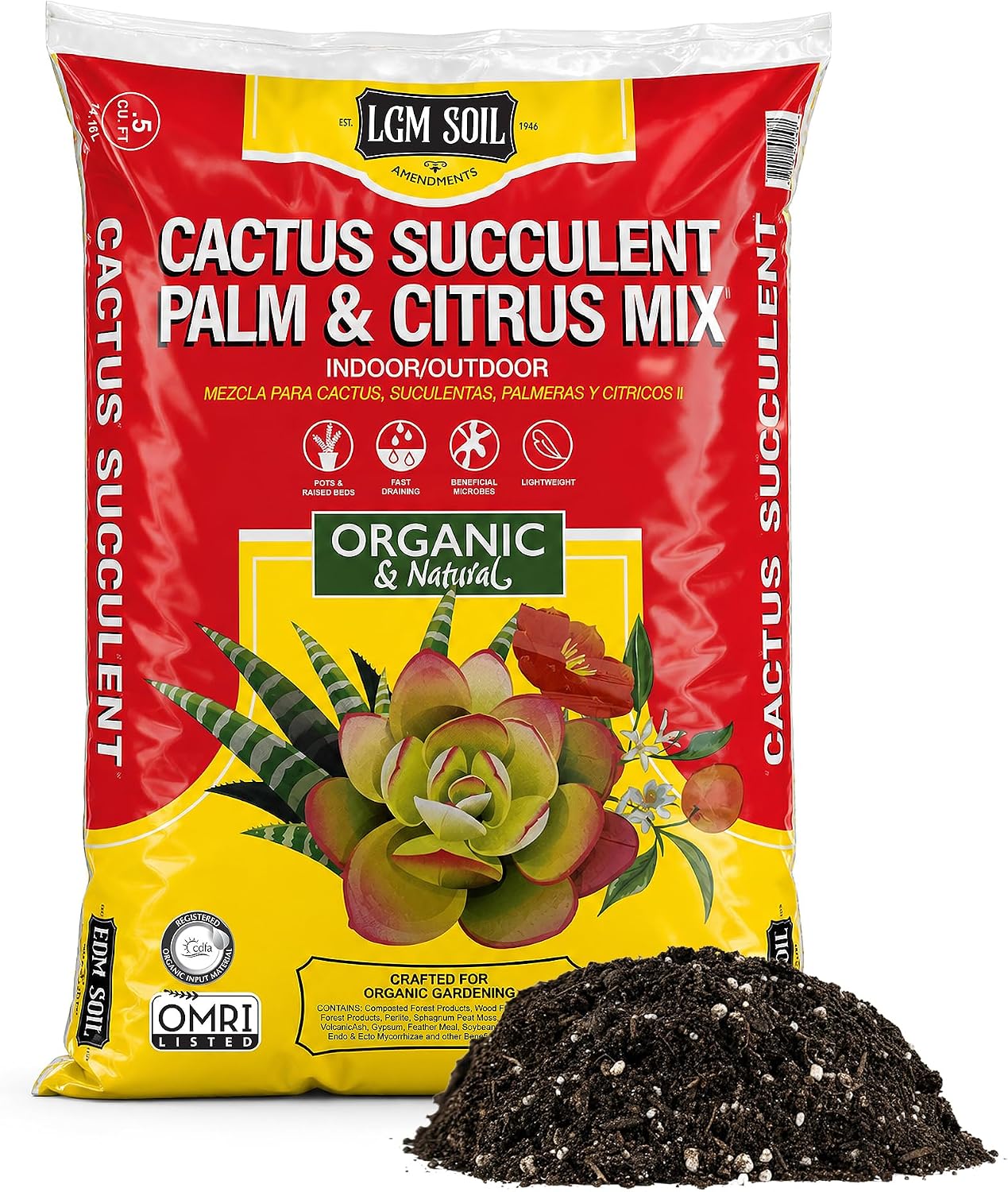
LGM Cactus & Succulent Soil Mix, 0.5 cu ft
| Unit Count | 475 Ounce |
|---|---|
| Item Type Name | Cactus Succulent Palm & Citrus Mix |
| Item Highlight | Root Support | Volcanic Ash | Chicken Manure | Fast Draining | Organic | OMRI Listed |
| Manufacturer | LGM Soil |
This half-cubic-foot bag supplies a fast-draining, nutrient-bearing potting mix meant for potted succulents, cacti and other container plants that dislike waterlogged roots. The formula combines volcanic ash and perlite for airy structure so water moves through quickly, while chicken manure, kelp meal and iron sulfate provide slow-release organic nutrition. It is OMRI-listed and designed to be used straight from the bag without additional amendments, which makes repotting, propagation and small container top-ups simple and low-effort. Practical features include root-supporting components that help establish stable plants and a blend that also suits citrus and palms when extra drainage is needed. Limitations are the small bag size, which is geared toward hobby collections rather than landscape-scale projects, and the absence of specific texture ratios or exact nutrient analysis for growers who need precise mixes. Also, because it relies on organic nutrient sources, heavier-feeding plants may still require supplemental fertilization over time.
Best for: Gardeners who want a low-fuss, organic potting mix that promotes fast drainage and steady growth for container succulents, cacti, and other drought-tolerant or drainage-sensitive plants.
Less Ideal for: Growers planning to pot many large dragon fruit plants or undertake large containers should look for larger-volume or custom mixes tailored to heavy feeders and vine support needs.
- Fast, well-aerated drainage from volcanic ash and perlite for fewer root rot problems
- Organic nutrient sources (chicken manure, kelp meal, iron sulfate) that feed plants gradually
- Ready-to-use mix suitable for indoor and outdoor containers with no additional blending
- OMRI-listed formulation for gardeners who prefer certified organic inputs
- Small 0.5 cu ft volume is insufficient for large pots or multiple repots
- No detailed N-P-K or particle-size breakdown provided for precision mixing
Verdict: A ready-to-use, organic fast-draining mix that makes repotting and small-container drainage management simple and reliable.
Hoffman Organic Cactus & Succulent Soil Mix, 4 Quart

| Unit Count | 40 Ounce |
|---|---|
| Style Name | Organic |
| Ingredients | Compost, Peat Moss, Sand, Limestone |
This Hoffman organic cactus and succulent mix is a pre-blended medium designed to give drought-tolerant plants the fast drainage they need. It arrives in a 4 quart bag and combines compost, peat moss, sand, and limestone so you do not have to measure and mix components yourself. In practice the mix helps prevent waterlogging and promotes root growth and flowering for plants that prefer lean, airy substrates, which makes repotting small agave pups and succulents quick and tidy. The bag is easy to pour and store, and the organic ingredients mean you are using a natural base rather than a synthetic substitute. Limitations are the small bag size if you are potting larger agaves or multiple plants at once and the inclusion of peat moss may be a consideration for gardeners avoiding peat for sustainability reasons. For small to medium container projects this saves time and delivers the gritty, well-draining texture agaves need.
Best for: Ideal for gardeners who want a convenient, time-saving soil that produces the gritty, well-draining conditions agaves need in containers or small planting projects.
Less Ideal for: Not a good choice for landscaping large agave specimens or bulk projects where buying larger volumes or making a custom mix is more cost effective.
- Pre-mixed formula of compost, peat moss, sand, and limestone for consistent drainage
- Ready to use straight from the bag, saving time when repotting
- Organic ingredients that support root development and flowering
- Easy to pour and store packaging for neat application
- Small 4 quart bag may not be economical for large agave plants or multiple repots
- Contains peat moss, which some gardeners avoid for environmental reasons
Verdict: Buy this if you want a ready-made organic mix that gives agaves the fast drainage they need without the hassle of blending your own soil.
FoxFarm Happy Frog Potting Soil, Container Garden, 2 cu ft (with 2 Plant Tags)

| Brand | FoxFarm |
|---|---|
| Style Name | Container Garden |
| Unit Count | 600 Ounce |
| Volume | 2 cubic feet |
FoxFarm Happy Frog Potting Soil is a premixed container blend made to nourish potted plants without additional amendments. It comes ready to use and is formulated with beneficial microbes and mycorrhizal fungi alongside organic inputs such as earthworm castings, bat guano, and aged forest humus to support root development and nutrient uptake. For growing hot peppers in containers this mix offers a nutrient-rich, well-amended medium that encourages strong vegetative growth and flowering when paired with proper watering and feeding. The included plant tags make keeping track of varieties and planting dates convenient. Practical limits to note are that this is a potting soil designed for containers rather than field beds, so peppers in ground or very large planters may still need different soil or additional bulk amendments. Also, while the mix is nutrient-dense at planting, active growers should plan a feeding schedule because high-demand fruiting crops benefit from supplemental fertilizer over the season.
Best for: Growers who want a dependable, ready-made potting medium for container-grown hot peppers and prefer a product that supports root health out of the bag.
Less Ideal for: Gardeners planting directly in raised beds or open ground who need large volumes of soil or want to custom-blend base soil at scale.
- Pre-amended with earthworm castings, bat guano, and aged forest products for immediate nutrient availability
- Contains beneficial microbes and mycorrhizal fungi to improve root health and nutrient uptake
- Ready to use straight from the bag for quick potting and repotting
- Includes plant tags to track varieties and planting dates
- Formulated specifically for containers so may not be ideal for in-ground garden beds
- Nutrient levels diminish over time for heavy-feeding crops and require supplemental fertilization
Verdict: A reliable, microbe-rich potting mix that simplifies container pepper growing by delivering immediate nutrients and strong root support.
Miracle-Gro Indoor Potting Mix for Cactus & Succulent, 8 qt. (2-Pack)

| Item Highlight | Fast-Draining Cactus and Succulent Potting Mix with Plant Food |
|---|---|
| Number of Packs | 2 |
| Included Components | 2 bags |
| Item Type Name | Soil |
| Ingredients | Sphagnum Peat Moss, Sand, Perlite |
This two-pack of Miracle-Gro Indoor Potting Mix is designed for repotting indoor cacti, succulents and other desert-loving container plants like Thanksgiving cactus. The mix combines sphagnum peat moss, sand, perlite and other forest products to promote fast drainage and reduce water retention that can cause root rot. Each bag is pre-mixed and ready to use, so you simply fill a pot with drainage, add the plant and firm the soil around the root ball. It also contains a measured amount of plant food to support early growth so you may not need extra fertilizer right away. Practical benefits include easier watering schedules for moisture-sensitive plants and a light, airy texture that helps roots establish after repotting. Limitations are that the bags are small for larger specimens and the formula is focused on drainage rather than long-term nutrient reserve, so plan to feed or repot periodically for established or heavy-feeding plants.
Best for: Buyers who prioritize protecting moisture-sensitive indoor succulents and want a trusted, ready-to-use mix that reduces the chance of overwatering issues when repotting.
Less Ideal for: Gardeners who prefer to custom-blend potting mixes for long-term nutrient delivery or who need large-volume soil for many or large containers.
- Formulated for cacti and succulents with fast-draining components like sand and perlite
- Pre-mixed and ready to use so no additional amendments are required at potting
- Includes plant food to give new repots an initial nutrient boost
- Light texture helps roots establish and reduces risk of overwatering-related rot
- 8 qt. bag size is limited for repotting larger plants or multiple sizable pots
Verdict: A convenient, fast-draining potting mix that makes repotting Thanksgiving cactus and other succulents safer and simpler.
Back to the Roots Organic Expanding Coco Coir Potting Soil Brick (10 lb)

| Item Highlight | 10 lb compressed coco coir brick; peat-free; OMRI Listed |
|---|---|
| Item Type Name | Coconut Coir |
| Volume | 2 cubic feet |
| Ingredients | Coconut Coir |
| Style Name | Expanding Potting Soil |
This compressed coco coir brick provides a lightweight, peat-free potting medium that expands when you add water to create loose, airy substrate for containers and seed flats. It is typically used by hydrating the 10 lb block to about 2 cubic feet of coir and then using it alone for potted plants, mixing it into garden soil to improve drainage and aeration, or blending with compost for starting seeds. Notable features include OMRI listing for organic use, a balanced pH suited to a wide range of plants, and compact storage before expansion which saves space. Practical benefits are improved root aeration and water retention compared with heavy garden loam, easier handling than bulky bags, and versatility across vegetables, herbs, and ornamentals. Important limitations are that coco coir is a soilless substrate and does not supply significant nutrients on its own so you will need to add fertilizer or compost for long-term potted herbs like rosemary, and the product requires time and a water source to expand before use.
Best for: Buyers who prioritize low-risk, easy-to-handle, organic potting media and want a versatile base for container herbs and seed starting without dealing with heavy bags.
Less Ideal for: Gardeners who want a ready-to-plant, nutrient-rich potting mix out of the box or those who prefer soil with built-in slow-release fertilizer.
- Peat-free OMRI listed organic coco coir suitable for organic growing
- Expands from a compact brick to about 2 cubic feet for easy storage and transport
- pH balanced and airy texture that improves drainage and root aeration
- Versatile use: can be used alone, for seed starting, or mixed into existing soil
- Provides little inherent fertility so supplemental feeding or compost is needed for nutrient-hungry plants
Verdict: A compact, peat-free coco coir brick that expands into an airy, pH-balanced base ideal for low-risk organic container gardening and seed starting when paired with fertilizer or compost.
Choosing the Right Soil for Dragon Fruit: Key Factors to Consider
Drainage and Porosity
Dragon fruit originates from arid to semi-arid climates and needs a soil that sheds excess water quickly. Good porosity means large pore spaces where oxygen can reach roots between waterings. In practice this translates to mixes with chunky components like coarse sand, perlite, pumice, or bark to prevent compaction.
Poor drainage leads to root oxygen deprivation and elevated risk of root rot, especially in containers where water can pool at the bottom. When choosing a soil, look for explicit references to particle size, aerating amendments, or 'fast-draining' in the product description because those elements change how often you need to water and how tolerant the plant will be of brief wet periods.
Moisture Retention Balance
While dragon fruit dislikes standing water, it still needs reliable moisture between feedings and waterings. A balanced mix holds enough water in finer pores and organic particles so the root zone does not dry out completely between regular watering cycles.
Materials like coconut coir, small amounts of well-aged compost, or fine bark can provide that buffering effect without turning the mix into a sponge. The ideal blend dries from the top down but retains moisture around the root ball long enough to support flower and fruit development.
Nutrient Profile and Feeding
Dragon fruit benefits from a steady supply of nitrogen early in the season for vegetative growth and more phosphorus and potassium when flowering and fruiting. A soil with some built-in slow-release nutrients reduces the need for frequent feeding, but gardeners should still plan a fertilization schedule tuned to growth stage.
Avoid mixes overloaded with high-nitrogen amendments that can encourage leggy, weak growth at the expense of flowers. A balanced, slightly lean starting mix lets you control fertility with known-rate fertilizers as the plant matures.
pH and Mineral Balance
Dragon fruit performs best in a slightly acidic to neutral range. Soils that are too alkaline or too acidic can lock up essential nutrients like iron or phosphorus, leading to yellowing or poor fruit set. When selecting a soil, consider whether the mix lists lime, dolomite, or other pH-adjusting components.
If you live in an area with very acidic or alkaline tap water, choose a mix with some buffering capacity or plan to test and adjust pH over time. Balanced mineral content also supports healthy flowering and prevents common micronutrient deficiencies.
Structure and Longevity
Soil structure affects how often you need to repot or refresh container-grown dragon fruit. Durable components like pumice, crushed rock, or coarse sand maintain porosity longer than fine peat that compacts with time.
Choose mixes that balance fresh organic matter with stable inorganic elements so the mix does not break down quickly. For in-ground raised beds, aim for mixes that improve long-term tilth without turning heavy after several seasons of wet weather.
Cleanliness and Disease Prevention
Because dragon fruit can be sensitive during establishment, starting with a clean, pathogen-free mix reduces the risk of damping-off, root rot, and soil-borne pests. Look for products labeled sterilized or pasteurized when possible, or mixes that use inert components that are less likely to harbor pathogens.
Avoid garden soils or unprocessed composts that may contain weed seeds, pathogens, or unwanted organisms. Clean mixes also make it easier to diagnose problems later because the growing medium is a known quantity.
Container Growing Versus In-Ground Beds
Dragon fruit adapts well to containers when the potting mix mirrors its need for drainage and root aeration. Containers dry faster than ground soil, so mixes for pots must hold a little moisture while still allowing excess to escape quickly. Use larger particle amendments and avoid heavy, water-retentive components in containers.
In raised beds or well-draining garden plots, you can use a richer mix with more organic matter because the surrounding soil and deeper profile help buffer moisture. However, ensure the bed has good vertical drainage and does not sit on compacted clay that holds water against roots.
- Choose coarser blends for small pots and mixes with more organic content for beds.
- Use pots with adequate drainage holes and a breathable rim material when possible.
Mixing Your Own Dragon Fruit Soil
If you prefer to blend your own soil, aim for a base of chunky, well-draining material combined with a modest portion of organic binder. A typical DIY approach uses coarse sand or grit, pumice or perlite, and a small amount of coir or well-aged compost to add nutrients and moisture buffering.
Measure by volume and err on the side of more drainage media than organic matter. Test any homemade mix by filling a container, saturating it, then observing drying over several days to ensure it does not remain soggy at the bottom.
- Typical ratio example: 40-50% drainage media, 20-30% coarse mineral, 20-30% organic binder.
- Sterilize reused soil or components by solarization or heat treatment before repotting.
Watering and Irrigation Tips for Chosen Soils
How you water interacts directly with the soil you pick. Fast-draining mixes require more frequent, measured watering, while richer mixes need less frequent irrigation but careful monitoring to avoid saturation. Use the finger test or a moisture meter to guide watering decisions rather than a rigid schedule.
For container plants, water until excess runs from the drainage holes, then allow the top inch or two to dry. In raised beds, deep, infrequent watering encourages deeper root systems and better drought tolerance once plants are established.
- Adjust irrigation frequency seasonally-more in active growth and fruiting, less during dormancy.
- Consider soaker hoses or drip lines for beds to deliver water to the root zone without wetting stems and pads.
Adapting Soil Choices to Climate and Season
In hot, arid climates, mixes with slightly higher organic content can help maintain steady moisture around roots during heat spikes. In cool or rainy climates, prioritize very free-draining mixes and raise beds or containers off cold, wet ground to avoid prolonged saturation.
Seasonal adjustments to the top layer, such as adding a light mulch or replacing a portion of the mix before the growth season, help manage temperature and moisture swings and protect root health.
- Add extra drainage materials in regions with frequent heavy rain.
- Use insulating mulches in climates with occasional frost risk to protect root crowns.
How Soil Affects Flowering and Fruit Set
Soil influences the timing and quality of flowering because it governs root health, nutrient availability, and water stress levels. A slightly lean, well-aerated mix encourages the plant to direct energy into flowering rather than excessive vegetative growth.
Consistent, balanced nutrition delivered through a suitable soil or measured fertilization program supports fruit set and reduces blossom drop. Avoid dramatic swings in moisture and fertility during bloom to prevent stress-induced flower loss.
- Apply bloom-focused nutrients in moderation and monitor plant response.
- Keep moisture predictable during flowering to support pollination and fruit development.
How We Chose the Best Soil for Dragon Fruit
We focused on characteristics that directly affect dragon fruit establishment and fruit production. Key evaluation points included drainage and porosity, because dragon fruit dislikes waterlogged roots; nutrient profile and slow-release capability, to support flowering and fruit development without frequent fertilizing; pH and mineral balance, since extreme acidity or alkalinity limits nutrient uptake; organic matter and structure, for steady moisture holding without compaction; and pest and disease cleanliness, to reduce the chance of damping-off and root rot. We also considered how mixes perform in containers versus in-ground raised beds, since container mixes need lighter texture and faster drying. We excluded mixes formulated for heavy water retention, typical houseplant potting soil without amendment, and any product lacking clear ingredient or composition information. The shortlist favors soils and mixes that explicitly address drainage and aeration while providing an appropriate nutrient base for dragon fruit culture. Those criteria are reflected in the scoring metrics used to evaluate each soil.
FAQ
Can I use standard potting soil for dragon fruit?
Standard potting soil often holds too much water for dragon fruit unless amended with coarse drainage materials. If you use potting soil, mix in sand, pumice, or perlite to improve aeration and reduce water retention.
How often should I repot dragon fruit when using commercial mixes?
Repotting frequency depends on mix breakdown and root growth. Many container-grown plants benefit from partial mix refresh every 1 to 3 years to restore porosity and nutrient levels. If the mix compacts or drainage slows, repot sooner.
What pH range is ideal for dragon fruit soil?
Dragon fruit prefers slightly acidic to neutral soil, roughly in the 6.0 to 7.0 pH range. Test periodically and adjust with lime or sulfur only if tests show persistent drift outside that range.
Should I add fertilizer to a premixed soil for dragon fruit?
Yes. Many premixed soils include baseline nutrients, but supplemental feeding during active growth and especially before and during flowering improves yields. Use a balanced, controlled-release or liquid fertilizer on a schedule suited to your chosen mix and plant response.
Is sand a good amendment for dragon fruit soil?
Coarse sand improves drainage and adds weight to the mix, which helps tall, top-heavy plants. Avoid fine builder's sand that compacts; choose horticultural or coarse sand for best results.
How do I prevent root rot in heavy soils or after heavy rains?
Improve drainage by amending with coarse mineral materials, raise bed height, or move plants into containers with free-draining mixes. Reduce watering until the soil dries and remove any visibly rotten roots when repotting to a fresh, cleaner mix.
Final Verdict
Choose a soil that prioritizes drainage and root aeration while providing modest moisture retention and a balanced nutrient base. Your decision will depend on whether you grow in containers or beds, your local climate, and how often you want to water and repot. In practice, favor mixes with chunky drainage components plus a controlled portion of organic matter. That approach reduces root rot risk, supports flowering, and makes management straightforward so you can focus on pruning and pollination rather than constant soil troubleshooting.
